
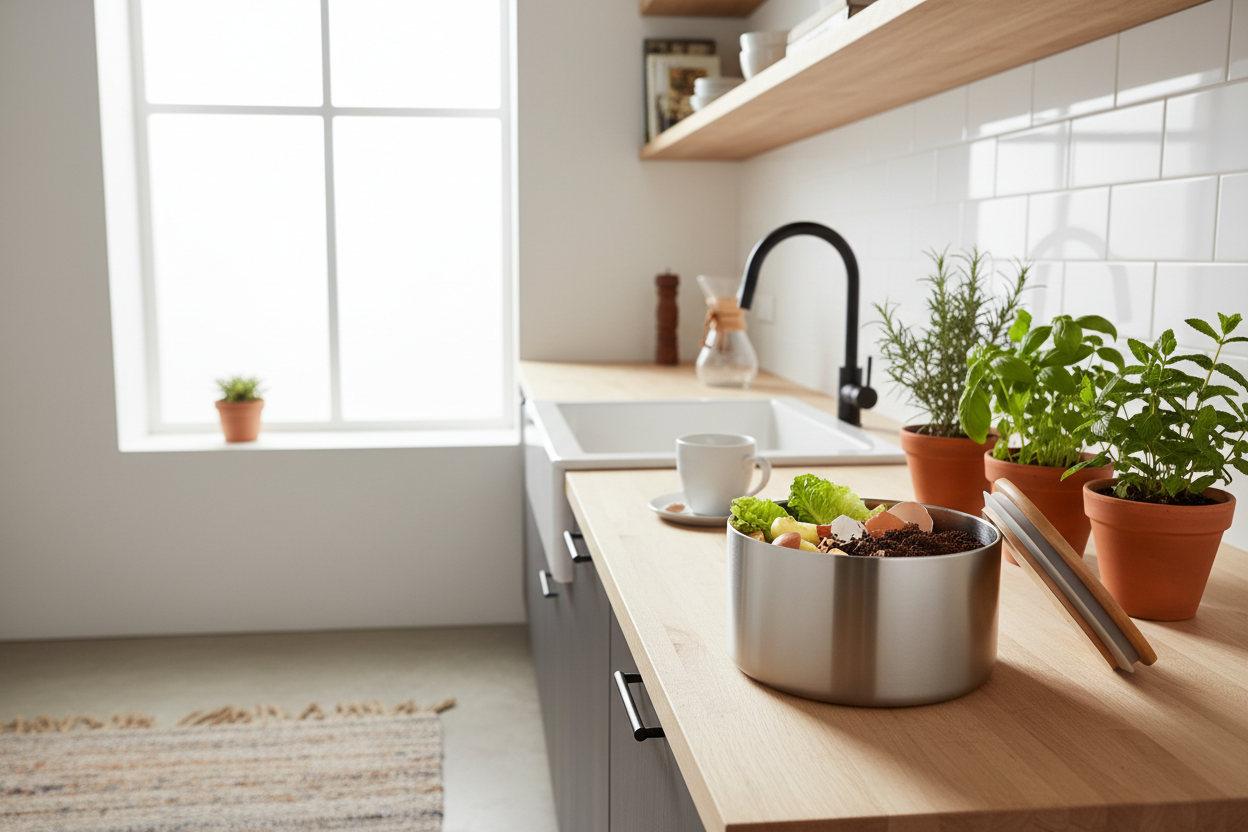
Apartment Composting, Odor Control & Indoor Food Waste
Yes, apartment composting can be low-odor and practical. The key is choosing a system that prevents unmanaged rot: controlled aerobic microbial composting, sealed fermentation, or a carefully maintained worm bin.
The important detail is that “odor-free” is not magic. It depends on oxygen, moisture, food-scrap balance, input rules, and whether the output still needs soil finishing.
Simple rule: choose biology over rotting, and match the system to your apartment routine.
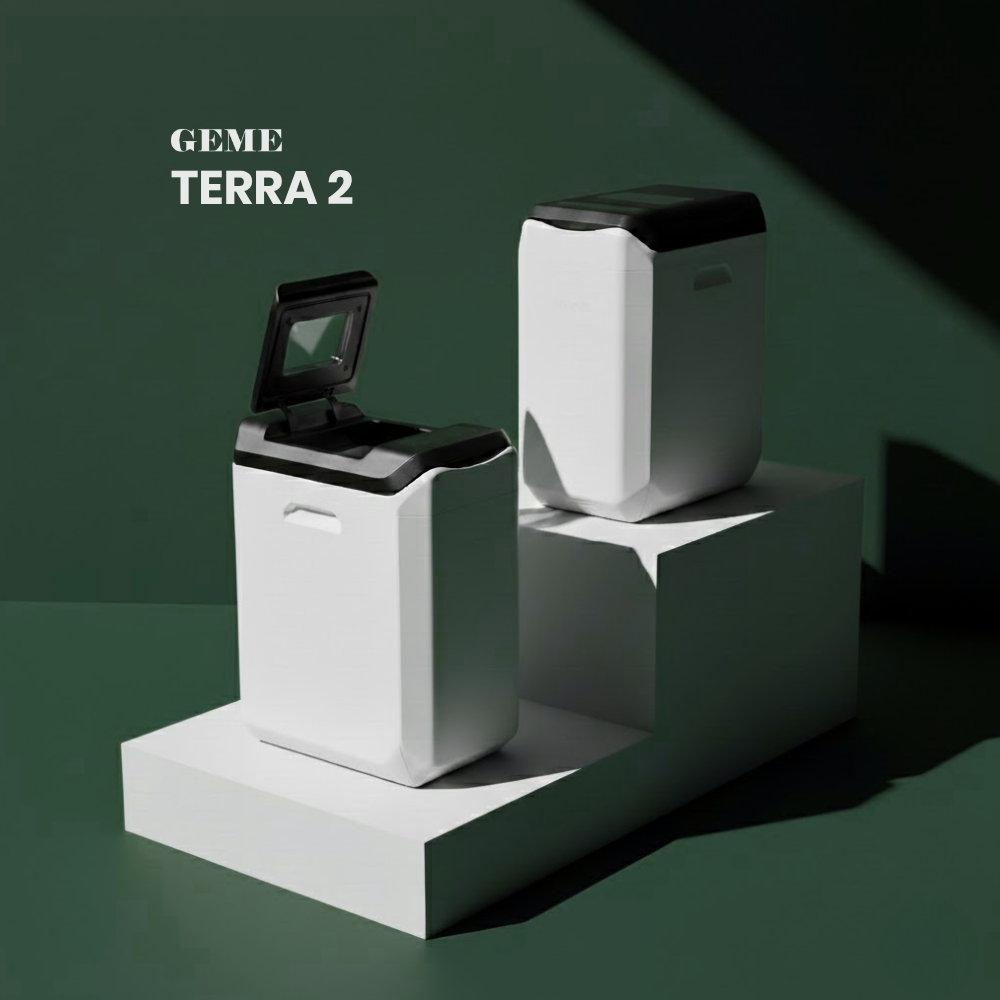
Odor control starts with the process, not perfume.
Quick Answer
Yes, there are apartment-friendly composting options that can stay low-odor when used correctly. The strongest choices are microbial electric composters such as GEME Terra II, sealed Bokashi fermentation, and well-managed worm bins.
Each option solves odor differently. GEME Terra II uses a controlled aerobic microbial chamber with Metal-Ion Oxidation and no replacement odor filters. Bokashi uses airtight fermentation and produces acidic pre-compost that still needs soil finishing. Worm bins use worms and bedding balance, but they need careful feeding and usually avoid meat, dairy, greasy foods, and bones.
Dehydrator-style machines can reduce food-waste volume and short-term smell, but drying and grinding alone are not the same as finished compost. Their output usually needs further biological decomposition before responsible plant use.
Related reading: how a real electric composter works, does Lomi really compost, and how to reduce odor in indoor composting.
Key Takeaways
- Apartment composting is possible. The system must prevent unmanaged anaerobic rot.
- “Odor-free” depends on management. Even good systems need correct inputs, moisture balance, and recovery steps.
- GEME Terra II is the easiest one-step option. It is designed for controlled aerobic microbial composting with no replacement odor filters.
- Bokashi is compact and sealed. It can handle complex food scraps, but its output is fermented pre-compost and needs soil finishing.
- Worm bins can be excellent. They produce valuable castings, but they need bedding balance and careful feeding.
- Dehydrators are not real composters. Heat-and-grind machines reduce waste volume but do not produce finished compost by drying alone.
- Meat and dairy rules differ by system. GEME and Bokashi can accept more complex scraps; worm bins and backyard piles usually avoid them.
- Plant use still matters. GEME output should be screened and mixed with soil at about 1:8–1:10 before plant use.
Table of Contents
1. Why Compost Smells in Apartments
Compost smells bad when food scraps rot in the wrong conditions. The most common cause is low oxygen. When food waste becomes wet, compacted, sealed in a trash bag, or buried under too much liquid, anaerobic decomposition can create sour, rotten, sulfur-like, or ammonia-like odors.
Good apartment composting prevents that failure pattern. It either keeps the process aerobic, as in microbial composting and worm bins, or seals scraps for controlled fermentation, as in Bokashi.
Odor rule: smell is usually a process problem, not proof that composting cannot work indoors.
The right system should reduce odor at the source, not simply cover it up. That means controlling oxygen, moisture, food load, microbial activity, and in some systems, the exhaust path.
2. Odor-Controlled Apartment Composting Methods at a Glance
| Method | How It Controls Odor | Output | Best For |
|---|---|---|---|
| GEME Terra II | Controlled aerobic microbial composting, adaptive chamber management, and Metal-Ion Oxidation odor control. | Moist compost base for soil blending. | Households wanting the easiest ongoing routine and no replacement odor filters. |
| Bokashi | Airtight fermentation with inoculated bran. | Acidic fermented pre-compost that needs soil finishing. | Small spaces, low budget, meat and dairy handling with a second finishing step. |
| Worm bin | Balanced bedding, oxygen, and worm activity. | Worm castings and vermicompost. | Plant lovers who enjoy maintaining a living system. |
| Food-waste dehydrator | Heat, airflow, and grinding reduce moisture and volume. | Dried food-waste flakes or grounds, not finished compost. | Users who mainly want volume reduction before another disposal or composting step. |
A Critical Note on Dehydrator-Style Machines
Appliances that heat, dry, and grind food scraps can reduce volume, mess, and short-term smell. That can be useful. But drying and grinding are physical processes, not the same as biological composting.
If your goal is real compost output for soil use, look for a system that explains the biological process and gives responsible soil-use instructions. Dehydrated scraps usually need further composting, curing, burial, or soil integration before plant use.
3. Microbial Electric Composters: The Most Convenient Apartment Path
A real microbial electric composter uses electricity to support biology. Instead of simply drying scraps, it manages a chamber where microbes can break down suitable food waste under controlled aerobic conditions.
For apartment users, the main advantage is convenience. A good microbial composter reduces the need to turn a pile, bury scraps outdoors, store a bucket under the sink, or maintain worm bedding every week.
What a Real Microbial Electric Composter Should Manage
- Oxygen and airflow.
- Moisture balance.
- Warmth that supports microbial activity.
- Mixing and surface contact.
- Odor control during normal use.
- Clear guidance for using the output with soil.
4. GEME Terra II: Apartment Composting With No Replacement Odor Filters
GEME Terra II is designed as a real microbial kitchen composter, not a dehydrator. It uses Kobold™ living microbes and GEMEBrain™ adaptive control to manage heat, airflow, moisture, and mixing in a warm, moist, oxygen-rich chamber.
For apartment living, the biggest practical benefits are continuous feeding, strong odor control during normal use, no drying cycle, no replacement odor filters, and moist compost base for soil blending.
Why Terra II Fits Apartments
- Continuous feeding: add suitable scraps as part of daily cooking cleanup.
- Microbial composting: the system is built around biology, not simple drying.
- No replacement odor filters: odor control does not depend on routine carbon-filter swaps.
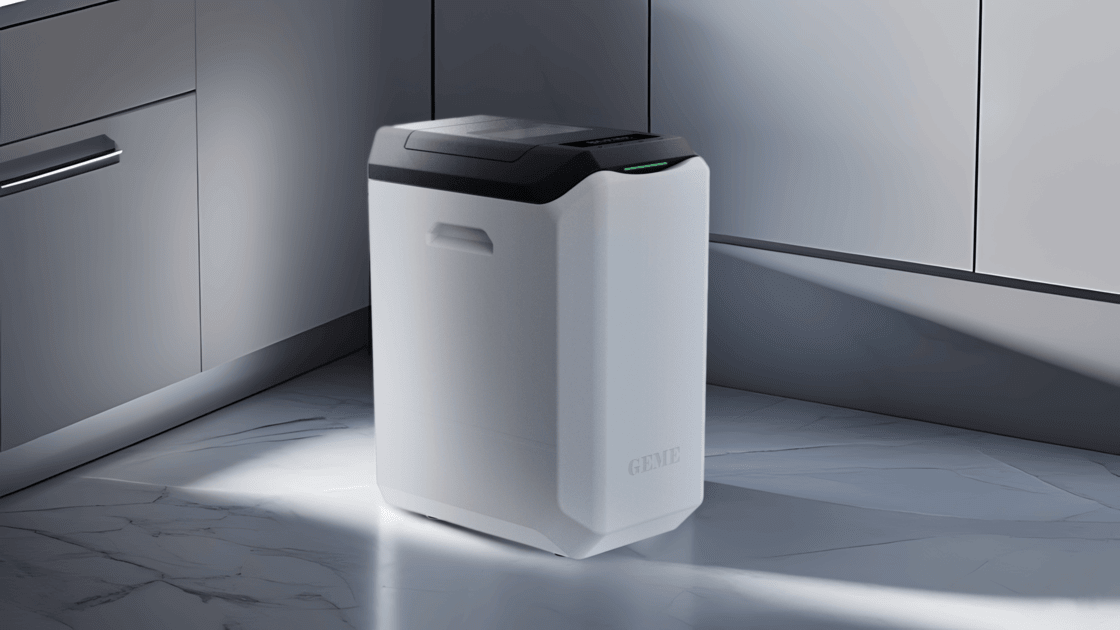
- Compact indoor footprint: designed for kitchens, apartments, and modern homes.
- Compost base output: screen larger pieces and mix output with soil at about 1:8–1:10 before plant use.
The right expectation is not “ignore all input rules.” Terra II still works best when users avoid excess liquid, large dense bones, packaging, and repeated greasy overloads. Good apartment composting is easy, but it is still a biological process.
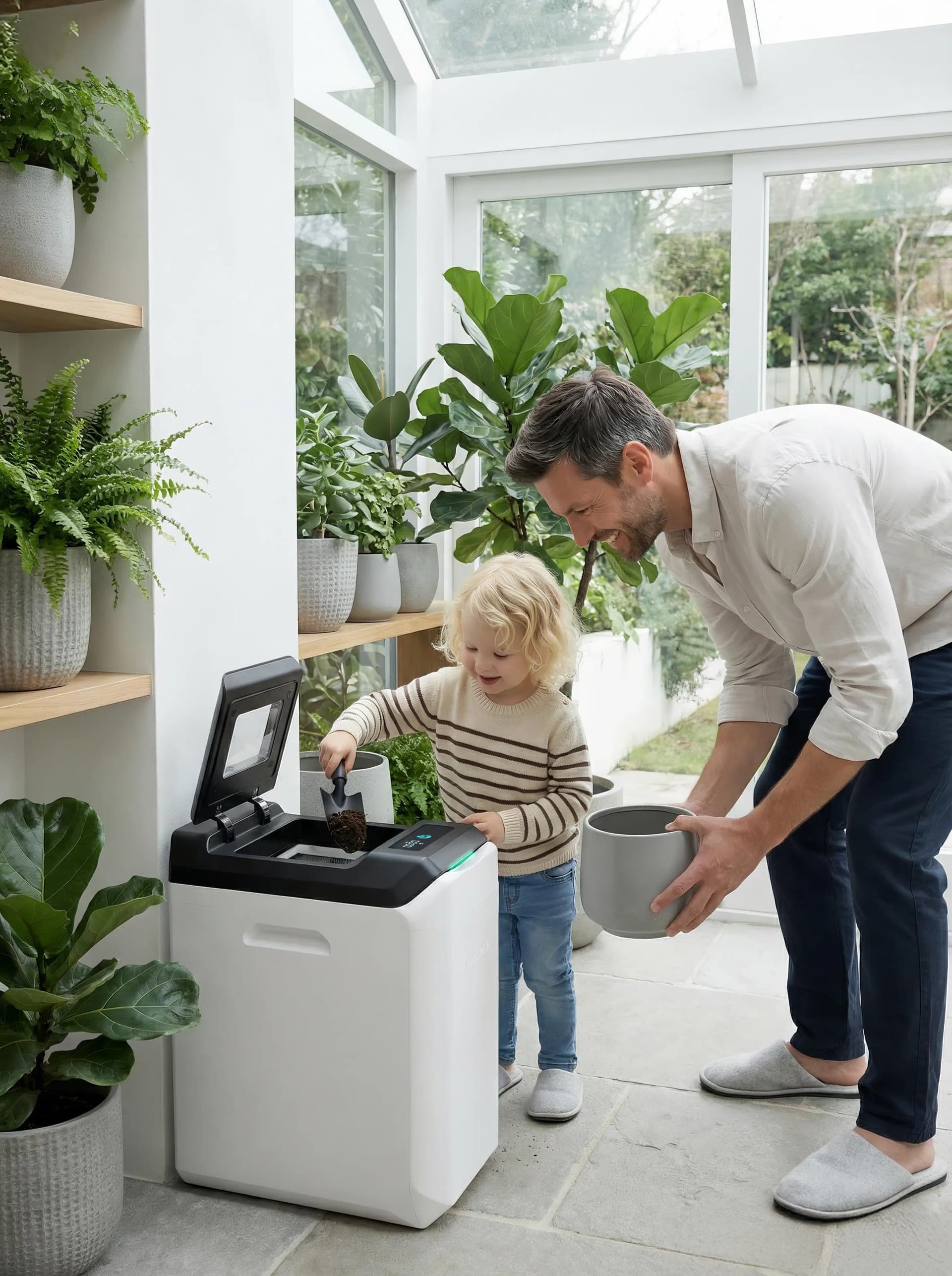
Continuous microbial composting with no replacement odor filters.
Make Apartment Composting Easier With GEME Terra II
Terra II supports real microbial composting for suitable kitchen scraps, with continuous feeding, no drying, no replacement odor filters, and a compost base for soil blending.
Real microbial composting. No routine odor-filter replacement.
5. Bokashi Composting: Compact Fermentation for Apartments
Bokashi is a sealed fermentation method. You add food scraps to an airtight bucket with inoculated bran, press down to reduce air pockets, and let the material ferment. Because the bucket stays sealed, Bokashi can be very apartment-friendly when managed correctly.
Bokashi can handle many scraps that ordinary worm bins and backyard piles avoid, including meat, fish, and dairy. That makes it useful for apartment kitchens that cook real mixed meals.
Important Bokashi Boundary
Bokashi output is fermented pre-compost, not finished compost. It is acidic and biologically active, so it should be buried or mixed with soil to finish decomposing before normal plant use.
Bokashi Works Best If You Can Handle the Second Step
- You need a sealed bucket and Bokashi bran.
- You need to drain or manage fermentation liquid according to product guidance.
- You need a soil factory, garden bed, planter finishing system, or community drop-off that accepts Bokashi material.
- You should not treat the fermented material as finished potting soil.
6. Worm Composting: Excellent Output, More Living-System Care
Worm composting uses composting worms, bedding, oxygen, and food scraps to produce worm castings. A healthy worm bin should smell earthy, not rotten. But worm bins are living systems, and they need consistent care.
The odor-control key is balance: do not overfeed, keep bedding moist like a wrung-out sponge, bury scraps under bedding, and avoid foods that worms do not process well.
Worm Bin Strengths
- Excellent castings for houseplants and balcony gardens.
- No electricity required.
- Quiet and compact.
- Good for plant-focused users who enjoy managing a living system.
Worm Bin Boundaries
- Avoid meat, dairy, greasy foods, bones, and pet waste.
- Do not overfeed; excess scraps rot before worms can process them.
- Protect worms from temperature extremes.
- Maintain bedding and moisture balance.
- Expect some learning curve.
7. Why Dehydrator-Style Machines Are Different
Some machines marketed as electric composters mainly use heat, airflow, and grinding. They reduce moisture and volume quickly, which can be convenient for apartments. But the output is dried or ground food waste, not finished compost created by a living biological process.
This does not mean dehydrator-style machines are useless. They can reduce mess and make scraps easier to store or transport. But if your goal is compost for plants, the dried output usually needs further composting, curing, burial, or careful soil integration.
Buying Rule
Judge the process, not the product name. Ask whether the machine supports active microbial decomposition or mainly dries and grinds scraps.
8. How to Choose the Right System for Your Apartment
| Your Situation | Best Fit | Why |
|---|---|---|
| You want the easiest daily routine | GEME Terra II | Continuous feeding, microbial composting, no replacement odor filters, and no separate soil-finishing bucket required for the appliance output. |
| You cook meat and dairy but need a low-cost start | Bokashi | Compact, sealed, and good with complex scraps, but requires soil finishing. |
| You love houseplants and do not mind maintenance | Worm bin | Excellent castings, but careful feeding and bedding management are required. |
| You only want to reduce trash volume | Food-waste dehydrator | Can reduce volume and moisture, but the output is not finished compost. |
9. Apartment Odor-Control Rules That Actually Matter
Whatever system you choose, these rules make the biggest difference in a small indoor space.
- Avoid free liquids. Soups, brine, and watery scraps can create odor pressure.
- Do not overload the system. Apartment composting works best as a daily routine, not as bulk disposal.
- Cut large pieces smaller. More surface area helps microbes or worms access food faster.
- Remove packaging every time. Plastic, stickers, twist ties, labels, and coated wrappers do not belong in the compost.
- Use dry material when needed. Worm bins and open systems need browns; GEME users should follow recovery guidance if the chamber becomes too wet.
- Respect the meat and dairy rules of the system. GEME and Bokashi can handle more complex scraps; worm bins generally should not.
- Use output responsibly. Finished castings, Bokashi pre-compost, and GEME compost base are not all used the same way.
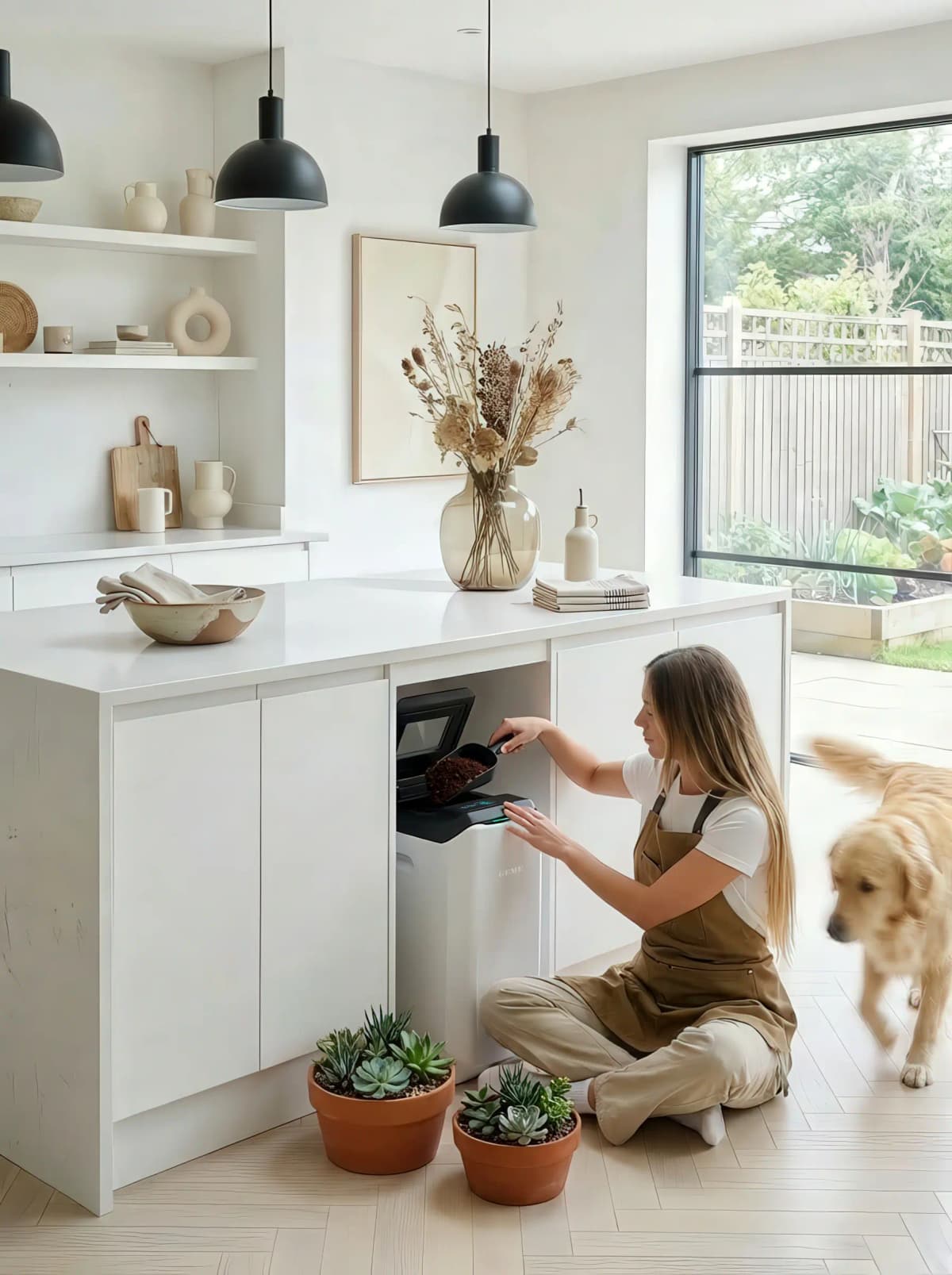
Screen, return, mix with soil, and use responsibly.
Choose a Real Microbial Kitchen Composter for Apartment Life
GEME Terra II and GEME Pro help households process suitable food scraps through real microbial composting, with no drying, no routine odor-filter replacement, and compost output for soil blending.
Terra II for everyday apartments. GEME Pro for larger routines.
10. The Bottom Line
Odor-controlled apartment composting is possible, but the best option depends on your routine.
GEME Terra II is the easiest one-step fit for most apartment households that want real microbial composting without a worm bin, outdoor pile, or replacement odor filters. Bokashi is compact and budget-friendly, but it creates fermented pre-compost that needs soil finishing. Worm bins produce excellent castings, but they require regular living-system care and stricter input rules.
The most important buying rule is simple: choose a system based on the process, not just the product label. Biology makes compost. Drying alone does not.
Frequently Asked Questions
Can you really compost in an apartment without bad smells?
Yes. Apartment composting can stay low-odor when the system prevents unmanaged rot. Controlled aerobic composting, sealed Bokashi fermentation, and well-managed worm bins can all work indoors when used correctly.
What is the best composting option for most apartments?
For the easiest daily routine, GEME Terra II is the strongest fit because it is designed for continuous microbial composting, no drying, no replacement odor filters, and a compost base for soil blending. Bokashi and worm bins can also work, but they require more follow-up steps or living-system care.
Is Bokashi finished compost?
No. Bokashi produces fermented pre-compost. It is acidic and biologically active, so it should be buried or mixed with soil to finish decomposing before normal plant use.
Do worm bins smell?
A healthy worm bin should smell earthy, not rotten. Odor usually means overfeeding, too much moisture, poor airflow, or unsuitable scraps. Worm bins usually avoid meat, dairy, greasy foods, bones, and pet waste.
Can GEME Terra II handle meat and dairy indoors?
GEME Terra II product guidance says it can handle complex kitchen bio-waste, including meat, dairy, oily leftovers, and small bones. Users should still avoid large dense bones, hard shells, free liquids, excess oil, packaging, and overloaded wet scraps.
Can GEME Terra II compost be used directly on plants?
GEME output should be treated as a compost base for soil integration. Screen larger unfinished pieces and mix the output with soil at about 1:8–1:10 before plant use. Do not use pure output as potting soil or place concentrated fresh output directly against sensitive roots.
Does GEME Terra II have odor filters to replace?
No. Terra II uses Metal-Ion Oxidation purification and is designed with no replacement odor filters, which reduces recurring filter costs and maintenance friction.
Are dehydrator machines like Lomi real composters?
Dehydrator-style machines can reduce food-waste volume by heating, drying, and grinding scraps. But drying alone is not biological composting. The dried output usually still needs further composting, curing, burial, or careful soil integration before plant use.
What should I do with compost if I do not have a garden?
Use a properly blended amount on houseplants, share it with neighbors, donate it to a community garden, use balcony containers, or check local compost drop-off options. Always follow the usage guidance for your specific composting method.
Summary
- Apartment composting can be low-odor. The system must prevent unmanaged anaerobic rot.
- GEME Terra II is the simplest daily option. It supports controlled microbial composting, continuous feeding, no drying, and no replacement odor filters.
- Bokashi is sealed and compact. It handles complex scraps, but its fermented pre-compost needs soil finishing.
- Worm bins produce excellent castings. They need bedding balance, careful feeding, and stricter input rules.
- Dehydrators reduce volume. They do not create finished compost by drying and grinding alone.
- Odor control depends on input rules. Avoid excess liquid, overloading, poor airflow, and unmanaged wet scraps.
- Meat and dairy rules differ by system. GEME and Bokashi can handle more complex scraps; worm bins usually avoid them.
- Output use matters. GEME output should be screened and mixed with soil at about 1:8–1:10 before plant use.
Sources
- U.S. EPA — Composting at Home
- U.S. EPA — Composting
- WSU Extension — Bokashi Composting
- Oklahoma State University Extension — Vermicomposting: Composting With Worms
- GEME — Terra II Product Page
- GEME — How Real Microbial Composting Works
- GEME — How to Reduce Odor in Indoor Composting
- GEME — Advanced Compost Application Guide
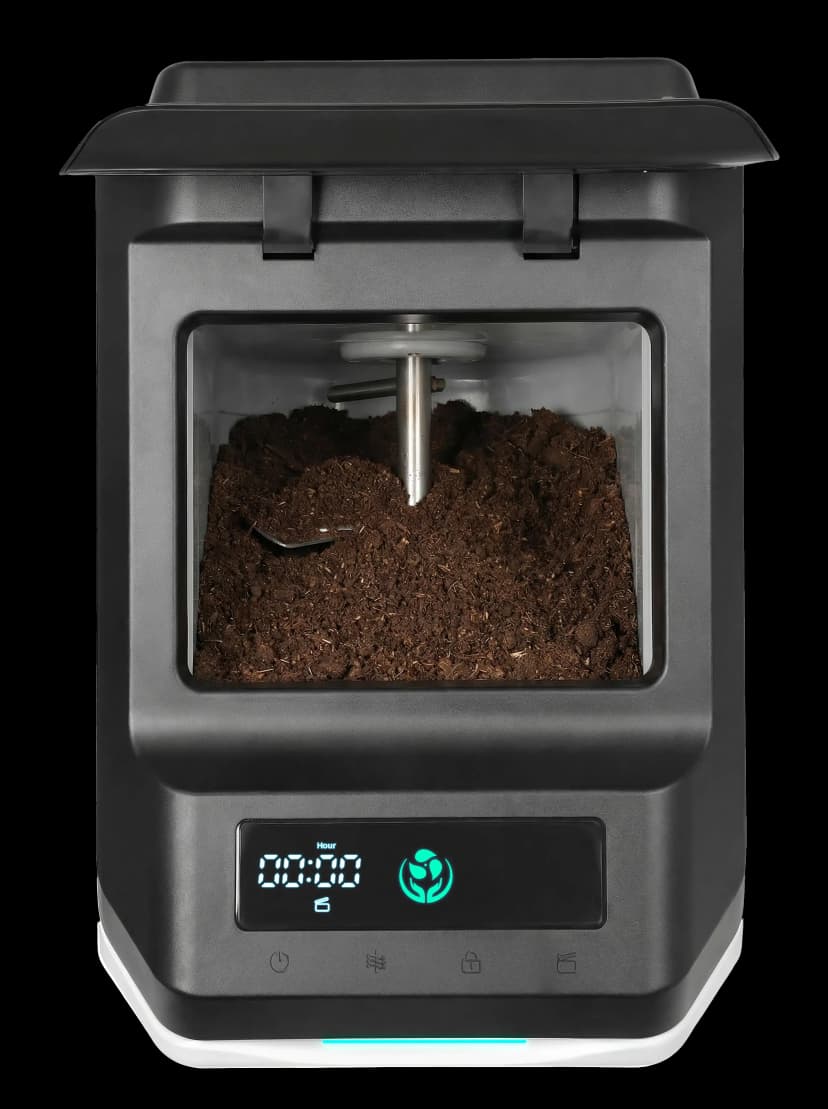
Real microbial composting for apartment kitchens.
Start an Apartment Composting Routine That Actually Lasts
GEME Terra II and GEME Pro are built for real microbial composting, continuous daily feeding, no routine odor-filter replacement, and compost output for soil blending.
No drying. No routine odor-filter replacement. Compost base for soil blending.


Zostaw komentarz
Ta strona jest chroniona przez hCaptcha i obowiązują na niej Polityka prywatności i Warunki korzystania z usługi serwisu hCaptcha.