


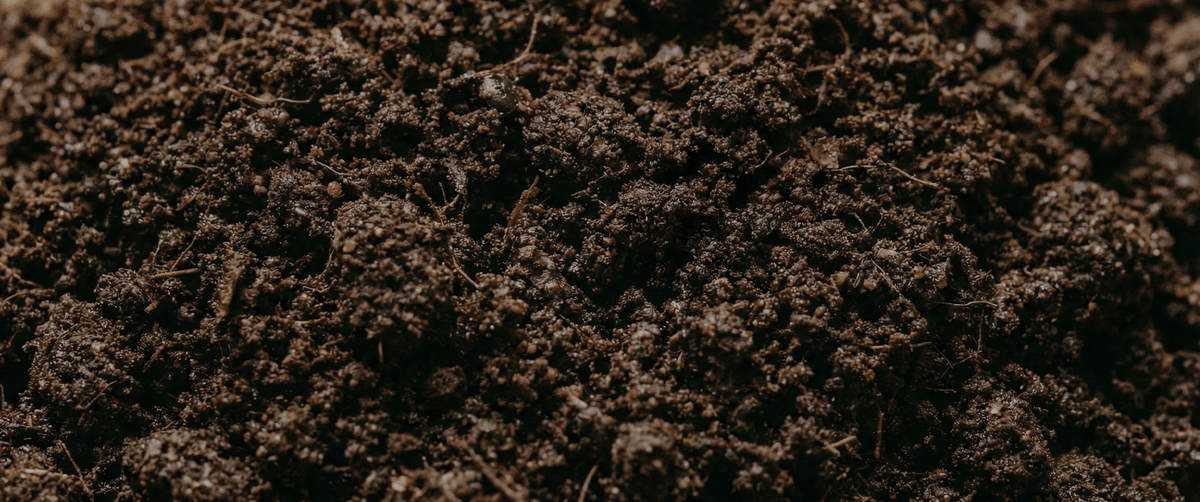
Poradnik GEME Compost Base: mieszanie z ziemią i pielęgnacja roślin
GEME to system kompostowania mikrobiologicznego z ciągłym dodawaniem odpowiednich resztek. W komorze mogą więc znajdować się materiały na różnych etapach rozkładu: bardziej przetworzony Compost Base, świeższe resztki, włókna, pestki, małe kości i inne składniki rozkładające się wolniej.
Takie połączenie jest częścią normalnego działania żywego systemu biologicznego. Aby prawidłowo wykorzystać odebrany materiał, stosuj prostą procedurę: przesiej, włóż niedokończone resztki z powrotem, wymieszaj z ziemią, przykryj, przechowuj z dostępem powietrza i obserwuj rośliny.
Nie umieszczaj skoncentrowanego Compost Base bezpośrednio przy korzeniach. Wymieszaj go z ziemią i dodaj ochronną warstwę samej ziemi.
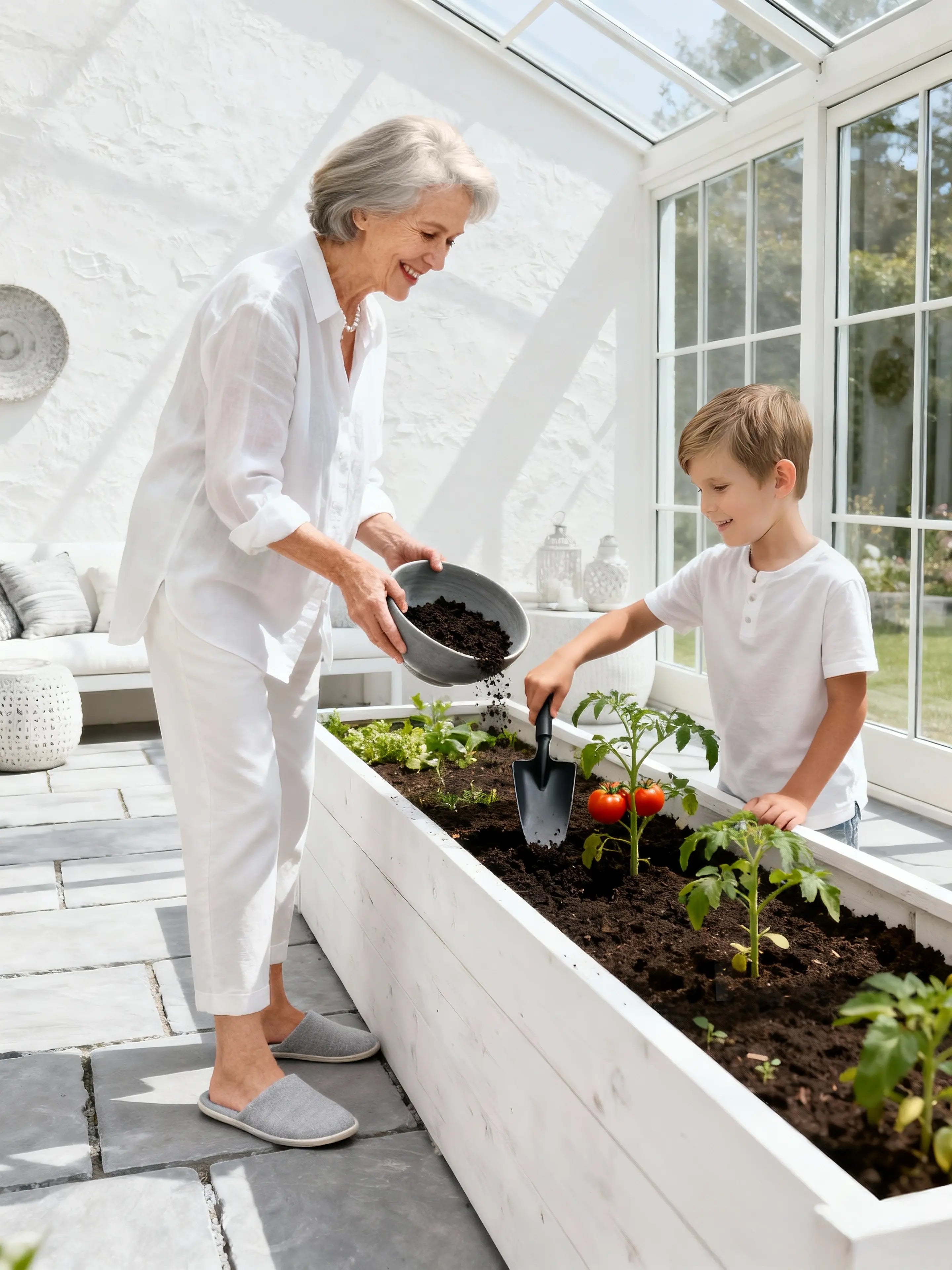
Przesiej. Włóż niedokończone resztki z powrotem. Wymieszaj w proporcji 1:8. Przykryj ziemią. Podlej i obserwuj.
Szybka odpowiedź
Aby ostrożnie stosować materiał z GEME, należy przesiać większe kawałki, włożyć niecałkowicie rozłożone resztki z powrotem do komory, wymieszać około jedną część Compost Base z ośmioma częściami samej ziemi i przykryć warstwą samej ziemi przed sadzeniem lub podlewaniem.
Przy nowych nasadzeniach umieść mieszankę 1:8 pod oddzielającą warstwą samej ziemi. Przy roślinach już rosnących zastosuj ją w pierścieniu z dala od łodygi lub szyjki korzeniowej, następnie przykryj ziemią i dokładnie podlej.
Więcej informacji znajdziesz w poradnikach: kiedy kompost jest gotowy do użycia, jak prawidłowo stosować kompostoraz jaka powinna być wilgotność żywego Compost Base.
Spis treści
- Jak działa GEME z ciągłym dodawaniem resztek
- Krok 1: odbiór, przesiewanie i ponowne dodanie niedokończonych resztek
- Krok 2: proporcja mieszania 1:8
- Krok 3: ochronna warstwa ziemi
- Przypadek A: nowe rośliny i przesadzanie
- Przypadek B: rośliny już rosnące
- Krok 4: odczekaj, obserwuj i przechowuj z dostępem powietrza
- Częste błędy, których warto unikać
- Tabela zastosowań
- Najczęstsze pytania
- Podsumowanie
- Źródła
- Powiązane artykuły
Jak działa GEME z ciągłym dodawaniem resztek
Różne rodzaje kompostu mogą wymagać innego sposobu stosowania. GEME jest przeznaczony do ciągłego dodawania odpowiednich resztek kuchennych, gdy system mikrobiologiczny nadal pracuje.
W pryzmie prowadzonej partiami materiały mogą dojrzewać razem. Do komory pracującej w sposób ciągły trafiają w różnych momentach. Dlatego obok bardziej rozłożonej bazy mogą występować duże, wolniejsze w rozkładzie kawałki. Przesiej odebrany materiał i włóż niedokończone resztki z powrotem do komory.
Prosta zasada: przesiana baza trafia do mieszanki z ziemią, a niedokończone kawałki wracają do komory.
Krok 1: odbiór, przesiewanie i ponowne dodanie niedokończonych resztek
Przy ciągłym dodawaniu resztek w odbieranym materiale mogą znajdować się pestki, włókniste łodygi, grube skórki, kości, muszle lub zbite bryłki.
Nie umieszczaj ich bezpośrednio w ziemi przy roślinach. Ich obecność nie musi oznaczać usterki: mogą po prostu wymagać dalszego przetwarzania.
Procedura przesiewania i ponownego dodawania
- Odbierz Compost Base o wyglądzie bardziej rozłożonego materiału gdy poziom w komorze uzasadnia odebranie części zawartości.
- Przesiej materiał przez sito ogrodnicze, kratkę lub za pomocą narzędzia do ręcznego sortowania.
- Oddziel duże niedokończone kawałki takie jak pestki, gęste włókna, kości, muszle i duże bryłki.
- Włóż niedokończony materiał organiczny z powrotem do GEME, aby kontynuować rozkład.
- Używaj tylko przesianego Compost Base do mieszania z ziemią.
Taki obieg wspiera również ciągłość mikrobiologiczną: na zwracanych kawałkach często znajduje się aktywny Compost Base, który ponownie trafia do komory.
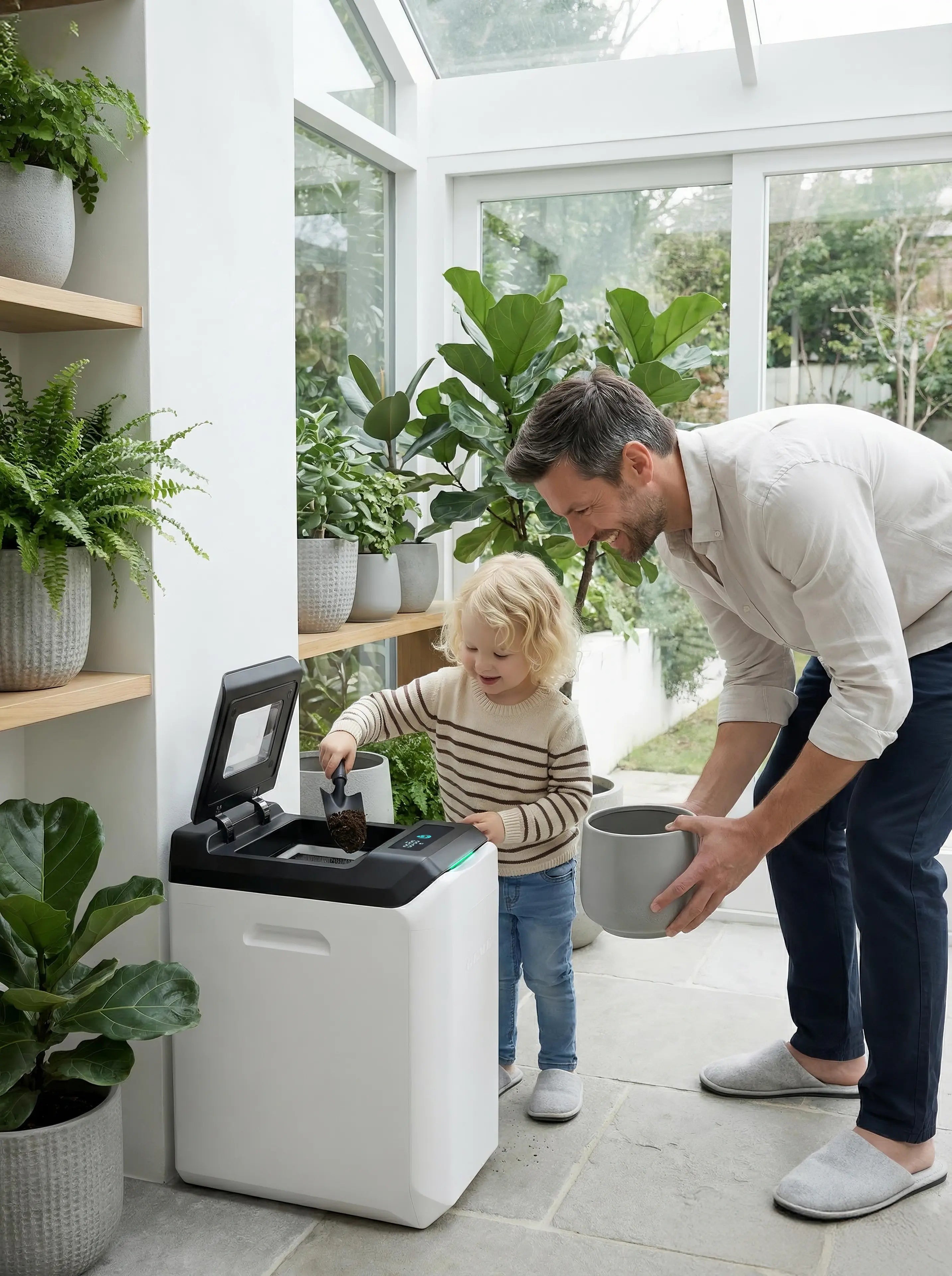
Dodawaj odpowiednie resztki, przesiewaj odebrany materiał i wkładaj niedokończone kawałki z powrotem.
GEME Terra 2 prowadzi rzeczywiste kompostowanie mikrobiologiczne
GEME Terra 2 utrzymuje wilgotny proces mikrobiologiczny z ciągłym dodawaniem resztek, bez cyklu suszenia i okresowej wymiany filtra zapachów. Przygotuj odebrany materiał: przesiej większe kawałki, wymieszaj z ziemią, przykryj samą ziemią i obserwuj rośliny.
Rzeczywiste kompostowanie mikrobiologiczne. Bez okresowej wymiany filtra zapachów. Compost Base do mieszania z ziemią.
Krok 2: proporcja mieszania 1:8
Materiał odbierany z GEME jest skoncentrowaną bazą do mieszania z ziemią. Nie jest gotowym podłożem i nie powinien być stosowany w czystej postaci przy korzeniach.
Praktyczna proporcja GEME to:
1 część GEME Compost Base + 8 części samej ziemi
Dokładnie wymieszaj przed zastosowaniem. Nie sadź bezpośrednio w samym materiale GEME.
Dlaczego proporcja ma znaczenie
Skoncentrowany materiał organiczny może być zbyt zasobny dla młodych korzeni lub małych pojemników, szczególnie w glebie już nawożonej. Wymieszanie z samą ziemią zmniejsza stężenie składników w strefie korzeni.
- Używaj zwykłej ziemi ogrodowej, ziemi bez dodanych nawozów lub odpowiedniego, słabo nawożonego podłoża.
- Unikaj łączenia materiału GEME z silnie nawożonym podłożem doniczkowym, jeśli nie znasz zawartości składników pokarmowych.
- Zachowaj szczególną ostrożność przy roślinach wrażliwych, siewkach i uprawie w pojemnikach. Proporcja 1:8 nie jest sprawdzoną recepturą podłoża do siewu: przed delikatnymi zastosowaniami przygotuj i oceń materiał.
- Przy powtarzanych zastosowaniach rozważ badanie gleby, aby uniknąć nadmiaru składników pokarmowych.
Krok 3: przykrycie mieszanki samą ziemią
Technika polega na przykryciu mieszanki GEME Compost Base i ziemi warstwą samej ziemi. Taka warstwa oddzielająca pomaga chronić korzenie, ograniczyć odsłonięcie, zapach i niepożądane zwierzęta oraz osłonić materiał przed trudnymi warunkami na powierzchni.
Postępuj następująco:
- Przygotuj mieszankę GEME Compost Base i ziemi w proporcji 1:8.
- Umieść ją pod strefą korzeniową lub wokół niej, zależnie od rośliny.
- Przykryj samą ziemią.
- Dokładnie podlej.
- Obserwuj reakcję rośliny w kolejnych dniach i tygodniach.
Przypadek A: nowe rośliny i przesadzanie z warstwą oddzielającą
Metoda nadaje się do przesadzania, zmiany doniczki i przygotowania nowych grządek. Umieszcza mieszankę pod rośliną, oddzielając młode korzenie od skoncentrowanego materiału.
- Wymieszaj: połącz jedną część GEME Compost Base z ośmioma częściami samej ziemi.
- Warstwa dolna: umieść mieszankę na dnie doniczki, dołka do sadzenia lub przygotowanej strefy.
- Przykryj: dodaj co najmniej 5 cm, około 2 cale, samej niewymieszanej ziemi.
- Posadź: umieść roślinę w warstwie samej ziemi, aby uniknąć bezpośredniego kontaktu z mieszanką.
- Podlej: dokładnie podlej, aby ziemia osiadła i woda mogła się przemieszczać.
Metoda tworzy strefę oddzielającą. Gdy roślina się przyjmuje, a woda przemieszcza przez ziemię, składniki pokarmowe i materia organiczna stają się dostępne bardziej stopniowo.
Przypadek B: rośliny już rosnące i aplikacja w pierścieniu
Metoda nadaje się do rozwiniętych krzewów, drzew, dużych roślin doniczkowych i bylin. Zachowaj odstęp od łodygi, pnia, nasady pędów i szyjki korzeniowej.
- Wybierz miejsce: wybierz strefę oddaloną od głównej łodygi lub szyjki korzeniowej. Przy roślinach zdrewniałych wykorzystaj w miarę możliwości zewnętrzną część strefy korzeniowej lub obrzeże rzutu korony.
- Wykop: utwórz płytki pierścień lub małe zagłębienia około 5–10 cm od wrażliwych łodyg w małych doniczkach, a przy większych roślinach zachowaj większy odstęp.
- Wypełnij: dodaj mieszankę GEME Compost Base i ziemi w proporcji 1:8.
- Zasłoń: całkowicie przykryj mieszankę samą ziemią.
- Podlej: dokładnie podlej, aby ziemia osiadła i wspierała aktywność mikrobiologiczną.
Aplikacja w pierścieniu ogranicza bezpośredni kontakt z łodygami i umieszcza materię organiczną bliżej stref drobnych korzeni pobierających wodę i składniki pokarmowe.
Tabela zastosowań
| Zastosowanie | Zalecana metoda | Najważniejsza uwaga |
|---|---|---|
| Nowa doniczka lub przesadzanie | Mieszanka 1:8 pod warstwą 5 cm samej ziemi. | Unikaj kontaktu korzeni z samym materiałem GEME. |
| Rozwinięta roślina doniczkowa | Mały pierścień lub zagłębienia z mieszanką 1:8, następnie przykryte ziemią. | Zachowaj odstęp od łodygi i szyjki korzeniowej. |
| Grządka ogrodowa | Wprowadź mieszankę 1:8 do gleby lub umieść ją pod warstwą samej ziemi. | Unikaj nadmiernych dawek rok po roku. |
| Drzewo lub krzew | Zastosuj w przykrytym pierścieniu oddalonym od pnia. | Nigdy nie usypuj materiału przy korze. |
| Siewki | Stosuj bardzo ostrożnie albo poczekaj, aż rośliny się rozwiną. | Młode korzenie są bardziej wrażliwe na stężenie składników pokarmowych. |
Krok 4: odczekaj, obserwuj i przechowuj z dostępem powietrza
Jeśli odbierzesz więcej materiału GEME, niż możesz od razu wykorzystać, przechowuj go z dostępem powietrza. GEME opiera się na tlenowym kompostowaniu mikrobiologicznym, dlatego szczelne zamknięcie nie jest odpowiednie.
Odpowiednie sposoby przechowywania
- Worek tkany.
- Torba papierowa.
- Wiadro z otworami wentylacyjnymi.
- Przewiewny pojemnik w chłodnym, zacienionym miejscu.
Przechowywanie, którego należy unikać
- Szczelnie zamknięte torby plastikowe.
- Hermetyczne szklane słoiki.
- Zamknięte pojemniki bez dostępu powietrza.
- Ciepłe, mokre warunki bez tlenu.
Zbyt szczelnie zamknięty wilgotny materiał może stać się beztlenowy i pachnieć kwaśno lub zgnilizną. Przy dostępie powietrza może dalej dojrzewać w lepszych warunkach przed użyciem w glebie.
Częste błędy, których warto unikać
- Używanie samego materiału GEME jako podłoża doniczkowego: przed zastosowaniem przy roślinach wymieszaj go z ziemią.
- Pomijanie przesiewania: niedokończone kawałki powinny wrócić do komory.
- Umieszczanie zbitych bryłek bezpośrednio przy korzeniach: przesiej je i włóż z powrotem do GEME.
- Mieszanie z silnie nawożonym podłożem: może zwiększyć stężenie składników pokarmowych.
- Usypywanie materiału przy łodygach lub pniach: może sprzyjać nadmiernej wilgoci i gniciu.
- Pozostawianie materiału odkrytego na powierzchni: przykryj ziemią, aby ograniczyć zapach, niepożądane zwierzęta i odsłonięcie.
- Przechowywanie w hermetycznych pojemnikach: wilgotny materiał tlenowy może bez dostępu powietrza stać się beztlenowy.
- Wielokrotne stosowanie nadmiernych ilości: badaj glebę, jeśli regularnie dodajesz organiczne środki poprawiające jej właściwości.
Odpowiedzialne stosowanie dostosowuje ilość Compost Base do ziemi, korzeni, wilgotności i potrzeb roślin.
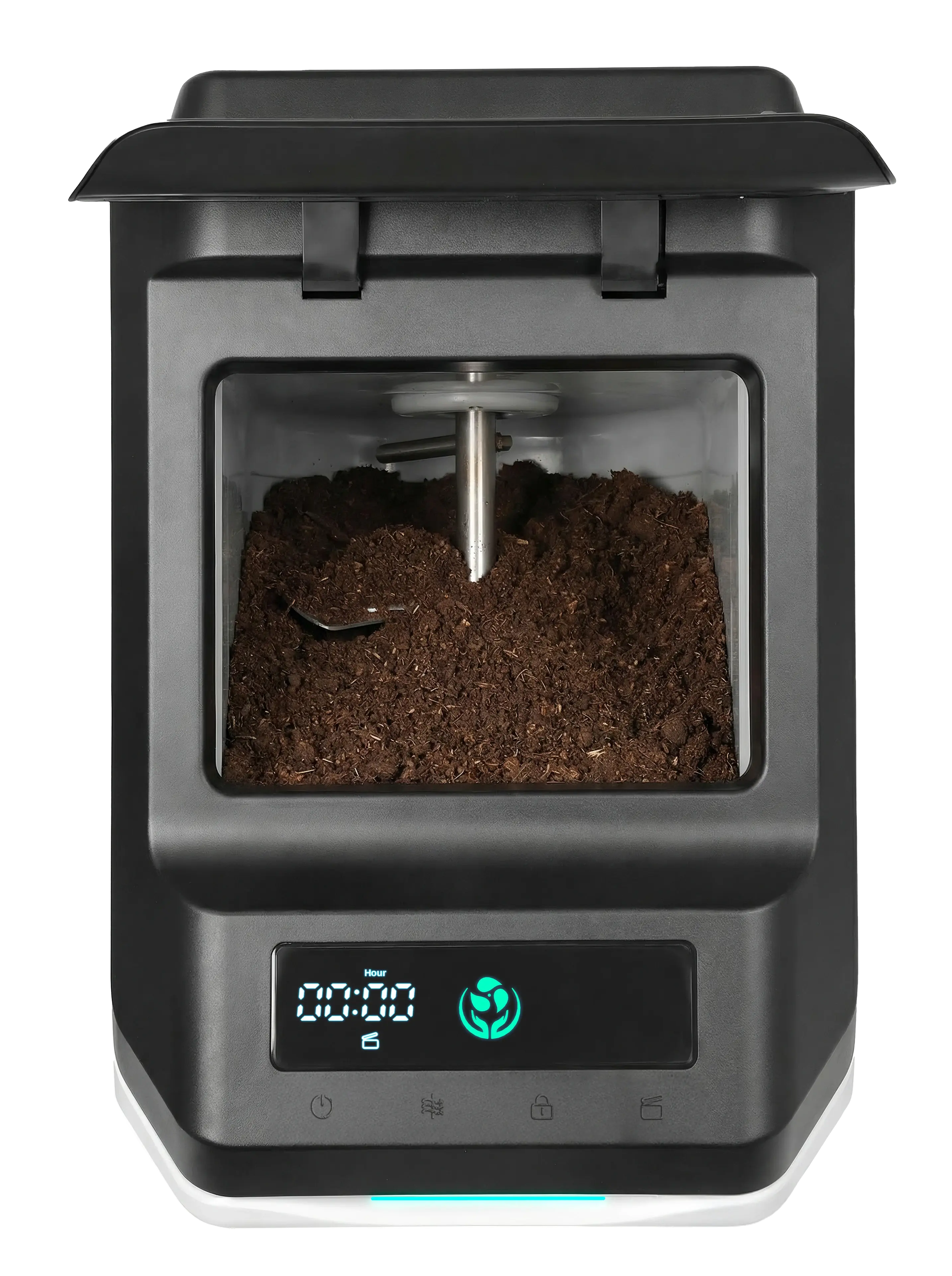
Wymieszaj w proporcji 1:8, przykryj ziemią i obserwuj rośliny.
Przygotuj materiał GEME przed zastosowaniem w glebie
GEME Terra 2 i GEME Pro przetwarzają odpowiednie resztki żywności poprzez rzeczywiste kompostowanie mikrobiologiczne. W ogrodzie stosuj kolejne kroki: przesiej, włóż niedokończone resztki z powrotem, wymieszaj, przykryj, podlej i obserwuj.
Terra 2 do codziennej rutyny domowej. GEME Pro do większych ilości.
Procedura GEME w ogrodzie: przesiej, wymieszaj, przykryj i obserwuj
Wygoda w kuchni wynika z ciągłego kompostowania mikrobiologicznego. Dobre wykorzystanie w ogrodzie zależy również od prawidłowego przygotowania odebranego materiału.
Stosuj GEME Compost Base jako bazę do mieszania z ziemią: przesiej duże kawałki, włóż niedokończony materiał z powrotem, wymieszaj w proporcji około 1:8, przykryj samą ziemią, dokładnie podlej i obserwuj rośliny.
Ta procedura przywraca resztki kuchenne do obiegu glebowego z zachowaniem ostrożności odpowiedniej dla roślin.
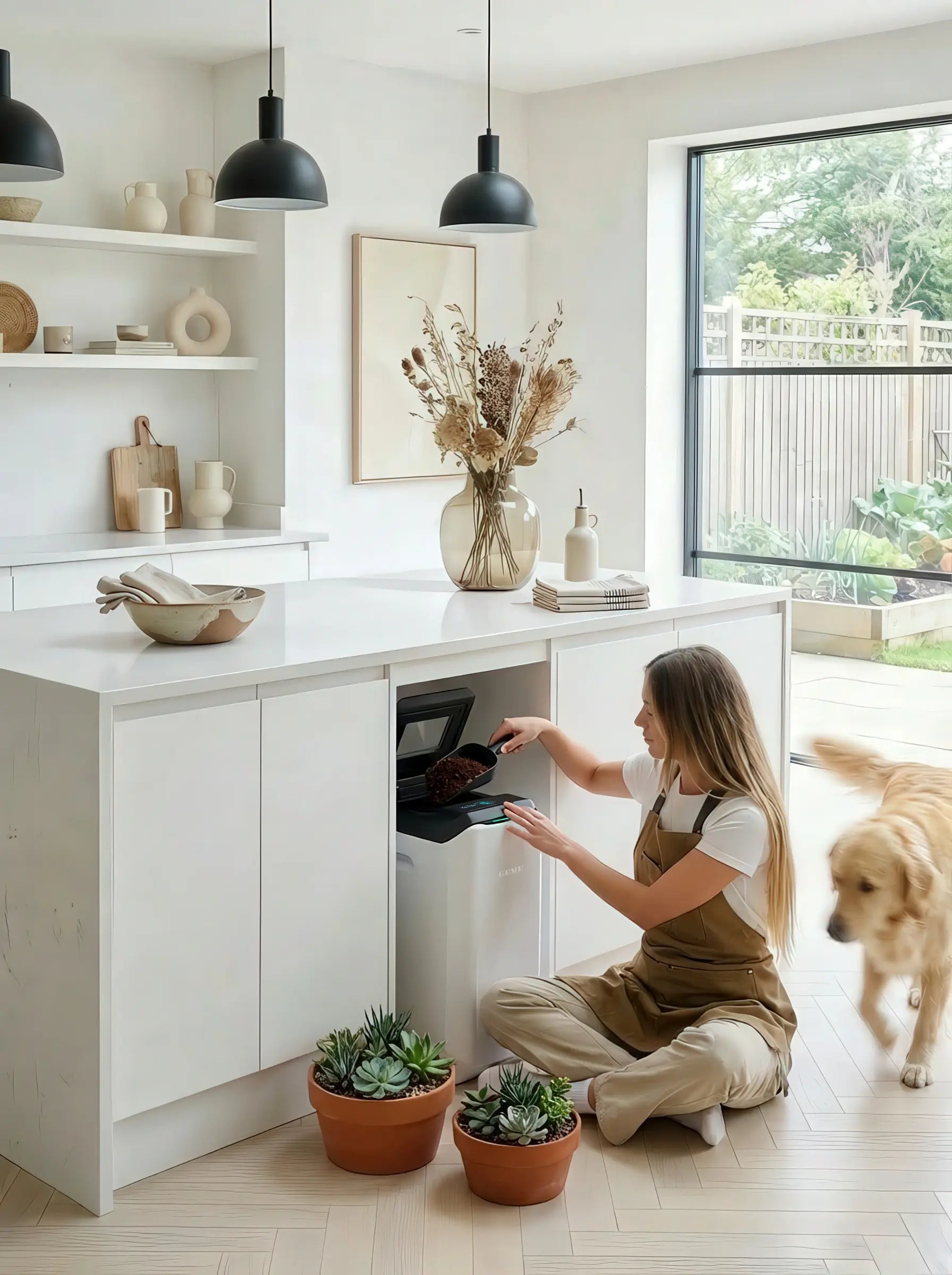
Rzeczywiste kompostowanie mikrobiologiczne we współczesnym domu.
Poznaj cykl GEME: z kuchni do ogrodu
GEME Terra 2 i GEME Pro przekształcają odpowiednie resztki żywności w Compost Base do mieszania z ziemią poprzez rzeczywiste kompostowanie mikrobiologiczne, bez okresowej wymiany filtra zapachów i powtarzalnych kosztów jego zakupu.
Przesiej. Włóż z powrotem. Wymieszaj. Przykryj. Podlej. Obserwuj.
Najczęstsze pytania
Dlaczego materiał GEME wygląda inaczej niż ziemia w worku?
GEME działa poprzez kompostowanie mikrobiologiczne z ciągłym dodawaniem resztek. Odebrany materiał może zawierać Compost Base i większe kawałki dodane później lub rozkładające się wolniej. Przesiej je i włóż niedokończony materiał organiczny z powrotem do komory.
Czy mogę sadzić bezpośrednio w materiale odebranym z GEME?
Nie. Nie używaj samego materiału GEME jako podłoża doniczkowego. Wymieszaj około jedną część Compost Base z ośmioma częściami samej ziemi i dodaj warstwę samej ziemi oddzielającą korzenie.
Co zrobić z nierozłożonymi kośćmi, pestkami lub włóknami?
Oddziel je sitem i włóż odpowiedni materiał organiczny z powrotem do GEME, aby kontynuować przetwarzanie. Unikaj umieszczania zbitego i niedokończonego materiału przy roślinach.
Co oznacza proporcja GEME 1:8?
Oznacza wymieszanie około jednej części GEME Compost Base z ośmioma częściami samej ziemi przed zastosowaniem przy roślinach. Mieszanka zmniejsza ryzyko nadmiernego stężenia składników pokarmowych.
Do czego służy ochronna warstwa ziemi?
Przykrywa mieszankę GEME Compost Base i ziemi. Przy nowych nasadzeniach pozostaw co najmniej około 5 cm samej ziemi między korzeniami a mieszanką.
Czy mogę stosować materiał GEME przy roślinach już rosnących?
Tak, jako mieszankę 1:8 umieszczoną w pierścieniu lub płytkich zagłębieniach z dala od łodyg, szyjek korzeniowych i pni. Przykryj samą ziemią i dokładnie podlej.
Czy mogę przechowywać materiał GEME w zamkniętej torbie?
Unikaj hermetycznego przechowywania. Materiał GEME jest wilgotny i biologicznie aktywny. Nadmiar przechowuj w papierowej torbie, tkanym worku lub wentylowanym wiadrze w chłodnym, zacienionym miejscu.
Czy materiał GEME zastępuje nawóz?
Nie automatycznie. GEME Compost Base jest bazą do mieszania z ziemią i środkiem poprawiającym właściwości gleby. Potrzeby pokarmowe są różne: dostosowuj powtarzane zastosowania do stanu gleby i reakcji roślin.
Podsumowanie
- Materiał GEME: baza do mieszania z ziemią, nie do stosowania w czystej postaci jako podłoże doniczkowe.
- Ciągłe dodawanie resztek: niektóre kawałki są mniej rozłożone i wymagają oddzielenia sitem.
- Przesiewanie i ponowne dodawanie: wkładaj większe niedokończone kawałki organiczne z powrotem do GEME.
- Proporcja 1:8: wymieszaj około jedną część GEME Compost Base z ośmioma częściami samej ziemi.
- Warstwa ochronna: przykryj mieszankę samą ziemią, szczególnie w pobliżu nowych korzeni.
- Rośliny już rosnące: zastosuj w pierścieniu z dala od łodyg, szyjek korzeniowych i pni, potem przykryj i podlej.
- Przechowywanie: zapewnij nadmiarowi materiału dostęp powietrza.
- Pielęgnacja roślin: zacznij od umiarkowanych ilości i obserwuj reakcję przed zwiększeniem dawki.
- GEME Terra 2: rzeczywiste kompostowanie mikrobiologiczne, bez cyklu suszenia i okresowej wymiany filtra zapachów, z Compost Base do mieszania z ziemią.
Źródła
- GEME — Strona produktu Terra 2
- GEME — Jak działa rzeczywiste kompostowanie mikrobiologiczne
- GEME — Wprowadzenie do Kobold
- Amerykańska EPA — Kompostowanie w domu
- Amerykańska EPA — Kompostowanie
- Amerykańska EPA — Korzyści ze stosowania kompostu
- Służba doradztwa Uniwersytetu Minnesoty — Jak skorygować nadmiar kompostu i obornika



Zostaw komentarz
Wszystkie komentarze są moderowane przed opublikowaniem.
Ta strona jest chroniona przez hCaptcha i obowiązują na niej Polityka prywatności i Warunki korzystania z usługi serwisu hCaptcha.