


Deklaracja inżynieryjna GEME i nauka o kompostowaniu
Mielenie zmniejsza resztki jedzenia. Kontrolowane tlenowe mikrobiologiczne kompostowanie zmienia to, czym te resztki się stają. Ta różnica ma znaczenie, ponieważ mniejsze odpady nie dają automatycznie stabilnego kompostu.
GEME używa określenia „tlenowa fermentacja” w praktycznym, domowym znaczeniu kompostowania: mikrobiologiczny rozkład wspomagany tlenem. Nie jest to twierdzenie, że mielenie jest bezużyteczne, ani skrótowe określenie zwykłego suszenia lub szatkowania odpadów spożywczych.
Rozmiar cząstek pomaga uzyskać dostęp. Tlen, wilgotność, mieszanie, temperatura i czas tworzą proces kompostowania.
Mielenie zmienia rozmiar. Kompostowanie zmienia materiał.
Szybka odpowiedź
GEME wybrało kontrolowane tlenowe mikrobiologiczne kompostowanie zamiast zwykłego mielenia, ponieważ kompostowanie to nie tylko zmniejszanie rozmiaru. System kompostowania musi kontrolować tlen, wilgotność, mieszanie, temperaturę, rozmiar cząstek i czas przebywania, aby mikroorganizmy mogły rozkładać materię organiczną w warunkach tlenowych.
Mielenie może wspomóc rozkład poprzez zwiększenie powierzchni, ale może również tworzyć drobniejsze cząstki, które się zagęszczają, zatrzymują wodę i ograniczają przepływ powietrza. Innymi słowy, mielenie jest przydatne tylko wtedy, gdy system nadal zapewnia transfer tlenu i równowagę wilgotności.
W podobnym kontekście przeczytaj: czy Mill naprawdę kompostuje?, standard wilgotności oraz zaawansowany przewodnik zastosowania kompostu GEME.
Spis treści
- Błędne przekonanie: „Jeśli jest zmielone, jest skompostowane”
- Co mielenie robi dobrze
- Czego mielenie nie potrafi zrobić
- Co naprawdę oznacza tlenowe mikrobiologiczne kompostowanie
- Inżynieryjny kompromis: Mniejsze cząstki nie zawsze są lepsze
- Dlaczego GEME wybrało tlenowe mikrobiologiczne kompostowanie
- Co twierdzimy, a czego nie twierdzimy
- Jak oceniać dowolne twierdzenia dotyczące kuchennych komposterów
- Metody i ograniczenia
- FAQ
- Podsumowanie
- Źródła
- Powiązane artykuły
Błędne przekonanie: „Jeśli jest zmielone, jest skompostowane”
Powszechnym błędnym przekonaniem dotyczącym kuchennych komposterów jest, że jeśli resztki jedzenia zostaną posiekane, poszatkowane lub zmielone na mniejsze kawałki, zostały skompostowane. To nieprawda.
Mielenie może sprawić, że odpady spożywcze będą wyglądać bardziej jednolicie. Może zmniejszyć ich objętość. Może zwiększyć powierzchnię dostępną dla mikroorganizmów. Jednak samo w sobie nie powoduje pełnego tlenowego biologicznego rozkładu.
Prosta zasada: zmielone resztki to mniejsze resztki. Kompostowanie wymaga tlenowego procesu mikrobiologicznego.
Co mielenie robi dobrze
Mielenie nie jest złe. W dobrze zarządzanym procesie kompostowania zmniejszenie rozmiaru cząstek może pomóc mikroorganizmom dotrzeć do większej powierzchni i zapewnić bardziej równomierne mieszanie. Dlatego właśnie poszatkowanie dużych resztek na mniejsze kawałki często pomaga w kompostowaniu.
- Większa powierzchnia: mniejsze kawałki odsłaniają więcej materiału na działanie mikroorganizmów.
- Równomierniejsze mieszanie: poszatkowane resztki mogą bardziej równomiernie mieszać się z istniejącą bazą kompostową.
- Szybszy wczesny rozkład: duże kawałki mogą rozkładać się dłużej niż mniejsze.
- Łatwiejsze obróbka: mniejszy materiał może być łatwiejszy do przenoszenia, mieszania i przetwarzania.
Problem zaczyna się, gdy mielenie traktuje się jako cały proces. Urządzenie kuchenne, które tylko mieli i suszy resztki, może zmniejszyć objętość odpadów, ale zmniejszenie objętości nie jest tym samym, co dojrzałość kompostu.
Czego mielenie nie potrafi zrobić?
Mielenie nie zastępuje dostarczania tlenu, metabolizmu mikroorganizmów, kontroli wilgotności, mieszania, zarządzania temperaturą i czasu przebywania. To są parametry procesu, a nie funkcje ostrzy.
| Pytanie | Samo mielenie | Tlenowe mikrobiologiczne kompostowanie |
|---|---|---|
| Czy zmniejsza rozmiar? | Tak. | Może obejmować zmniejszenie rozmiaru, ale rozmiar jest tylko jednym z czynników. |
| Czy wymaga mikroorganizmów? | Nie. | Tak, aktywność mikroorganizmów jest kluczowa. |
| Czy potrzebuje tlenu? | Nie jako wymóg procesu. | Tak, tlen wspomaga tlenowy rozkład. |
| Czy kontroluje wilgotność? | Nie. | Tak, wilgotność musi mieścić się w odpowiednim zakresie. |
| Czy wytwarza kompost? | Nie samo w sobie. | Zaprojektowane do przekształcania materii organicznej w kompost przeznaczony do mieszania z glebą. |
Co naprawdę oznacza tlenowe mikrobiologiczne kompostowanie
Tlenowe kompostowanie to biologiczny proces wymagający tlenu. Mikroorganizmy wykorzystują tlen podczas rozkładu materiałów organicznych, takich jak resztki jedzenia, liście i roślinne odpadki. Celem końcowym jest bardziej stabilny materiał organiczny wspierający glebę.
W systemie kuchennym oznacza to, że maszyna musi robić więcej niż tylko szatkowanie odpadów. Musi pomagać utrzymywać odpowiednie warunki, aby biologia mogła trwać.
Cztery główne parametry procesu
1. Tlen
Tlenowe mikroby potrzebują tlenu. Przepływ powietrza i mieszanie pomagają ograniczać martwe strefy i beztlenowe obszary sprzyjające powstawaniu nieprzyjemnych zapachów.
2. Wilgotność
Biologia potrzebuje wody, ale zbyt duża ilość wody wypełnia pory i ogranicza ruch tlenu.
3. Temperatura
Ciepłe warunki mogą wspomagać szybszą aktywność, ale ekstremalne ciepło może obciążać lub spowalniać społeczności mikrobiologiczne.
4. Czas
Rozkład mikrobiologiczny to proces, a nie pojedyncze zdarzenie mechaniczne. Produkt może nadal wymagać przesiewania, dojrzewania i mieszania z glebą.
Inżynieryjny kompromis: Mniejsze cząstki nie zawsze są lepsze
W kompostowaniu rozmiar cząstek jest kompromisem. Większe kawałki odsłaniają mniejszą powierzchnię i mogą rozkładać się powoli. Bardzo drobny materiał może się zagęszczać, zatrzymywać zbyt dużo wilgoci i ograniczać przepływ powietrza.
Dobrze zaprojektowany proces nie dąży do „najmniejszej możliwej cząstki”. Dąży do odpowiedniej równowagi między dostępnością dla mikroorganizmów a ruchem tlenu.
| Stan cząstek | Potencjalna korzyść | Potencjalne ryzyko |
|---|---|---|
| Duże kawałki | Lepsze kieszenie powietrzne i struktura. | Powolny rozkład i rozpoznawalne resztki. |
| Umiarkowane kawałki | Dobra równowaga powierzchni, przepływu powietrza i mieszania. | Wciąż wymaga kontroli procesu. |
| Bardzo drobne cząstki | Duża powierzchnia. | Ubijanie, mokre grudkowanie, zmniejszony transfer tlenu i ryzyko odorów. |
Dlatego logika projektowa GEME nie brzmi „zmiel wszystko jak najmocniej”. Celem jest utrzymanie komory w stanie umożliwiającym pracę biologiczną.
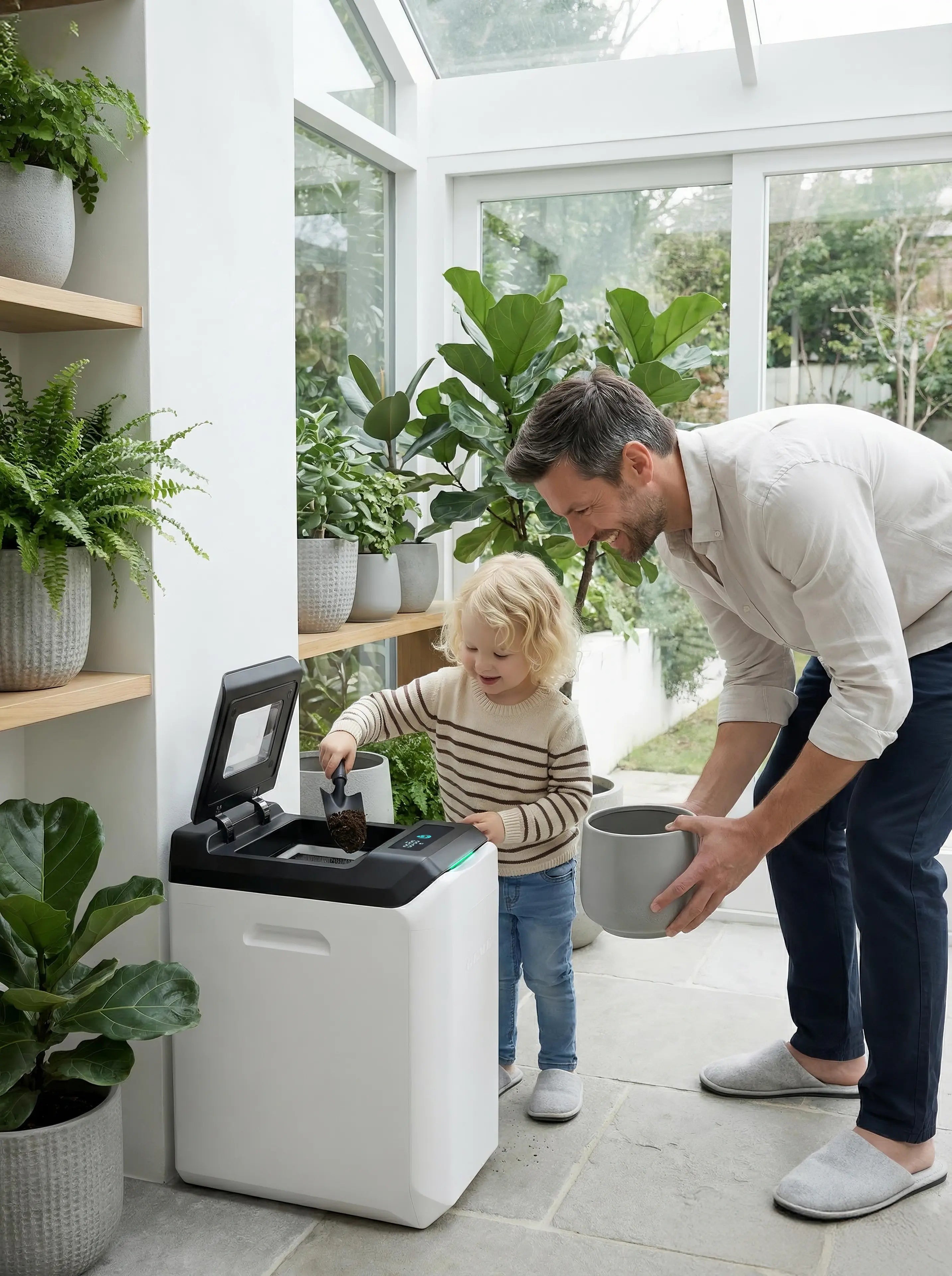
Kontrolowany proces mikrobiologiczny dla uzyskania kompostu.
GEME Terra II zostało zbudowane wokół prawdziwego kompostowania mikrobiologicznego
GEME Terra II wykorzystuje żywe mikroby Kobold™ i kontrolę procesu, aby wspierać warunki kompostowania tlenowego. Bez suszenia. Bez wymiany filtrów zapachowych. Uzyskany kompost należy przesiać i wymieszać z ziemią przed użyciem do roślin.
Prawdziwe kompostowanie mikrobiologiczne. Bez wymiany filtrów. Kompost do mieszania z ziemią.
Dlaczego GEME wybrało tlenowe kompostowanie mikrobiologiczne
Priorytetem projektowym GEME nie jest sprawienie, by resztki jedzenia wyglądały na mniejsze jak najszybciej. Priorytetem jest utrzymanie środowiska w komorze, w którym rozkład mikrobiologiczny może trwać w warunkach tlenowych.
1. Aby zachować przepływ tlenu
Tlen nie jest opcjonalny w kompostowaniu tlenowym. System, który nadmiernie przetwarza resztki w mokre drobinki, może utrudnić przepływ powietrza. Podejście GEME polega na wspieraniu mieszania, ruchu powietrza i dostępu mikroorganizmów bez traktowania mielenia jako jedynego rozwiązania.
2. Aby utrzymać wilgotność w odpowiednim zakresie
Prawdziwe kompostowanie jest wilgotne, a nie wysuszone jak w piekarniku. Ale zbyt duża ilość wody może wypełnić przestrzenie porowe i ograniczyć dostęp tlenu. Problem inżynieryjny nie polega na „usunięciu całej wody”. Polega na „utrzymaniu bazy kompostowej w stanie umożliwiającym pracę biologiczną”.
3. Aby umożliwić ciągłe dozowanie
Kuchnie domowe nie produkują ustandaryzowanych surowców. Pewnego dnia mogą to być resztki warzyw; innego dnia ryż, skórki owoców, fusy kawowe lub gotowe resztki. System ciągłego dozowania musi radzić sobie z różnorodnością bez polegania na jednej czynności mechanicznej.
4. Aby produkować kompost do mieszania z ziemią
Uzysk z GEME należy używać odpowiedzialnie: przesiać większe kawałki, zwrócić niedokończony materiał do komory, przeprowadzić leżakowanie, gdy to konieczne, i wymieszać bazę kompostową z ziemią przed użyciem do roślin.
Co zapewniamy, a czego nie zapewniamy
Dobra komunikacja inżynieryjna powinna być konkretna. Stanowisko GEME nie brzmi, że mielenie jest złe. Stanowisko GEME brzmi, że mielenie nie wystarcza, aby zdefiniować kompostowanie.
| Co zapewniamy | Czego nie zapewniamy |
|---|---|
| GEME zostało zaprojektowane wokół tlenowego kompostowania mikrobiologicznego, a nie prostego mielenia i suszenia. | Że mielenie jest bezużyteczne lub zawsze szkodliwe. |
| Wielkość cząstek ma znaczenie, ale musi być zrównoważona tlenem i wilgotnością. | Mniejsze cząstki zawsze produkują lepszy kompost. |
| Uzyskany kompost należy przesiać i wymieszać z ziemią przed użyciem do roślin. | Że każdy zbior jest natychmiast gotową ziemią do roślin. |
| Do systemu kontroli zapachów GEME Terra II nie są potrzebne filtry zapachowe do wymiany. | Że jakikolwiek proces kompostowania jest odporny na zapachy przy wszystkich warunkach niewłaściwego użytkowania. |
Jak oceniać jakiekolwiek zapewnienia dotyczące kompostera kuchennego
Porównując kompostery kuchenne, nie zatrzymuj się na redukcji objętości, czasie cyklu lub na tym, czy uzysk wygląda jednolicie. Zapytaj, jaki proces faktycznie miał miejsce.
Zadaj te pytania
- Czy maszyna głównie mieli i suszy, czy wspiera kompostowanie mikrobiologiczne?
- Czy uzysk po rehydratacji pachnie jak stare odpady spożywcze?
- Czy proces wymaga wymiany filtrów węglowych?
- Czy uzysk jest opisany jako kompost, przedkompost, zmielone odpady spożywcze, wysuszone płatki lub baza kompostowa?
- Czy produkt daje odpowiedzialne wskazówki dotyczące użycia ziemi?
- Czy większe niedokończone kawałki można zwrócić do dalszego przetwarzania?
- Czy marketing opiera się tylko na szybkości i redukcji objętości?
Poważne zapewnienie dotyczące kompostowania powinno wyjaśnić biologię, tlen, wilgotność i granice użycia ziemi — a nie tylko pokazać mniejszą stertę resztek.
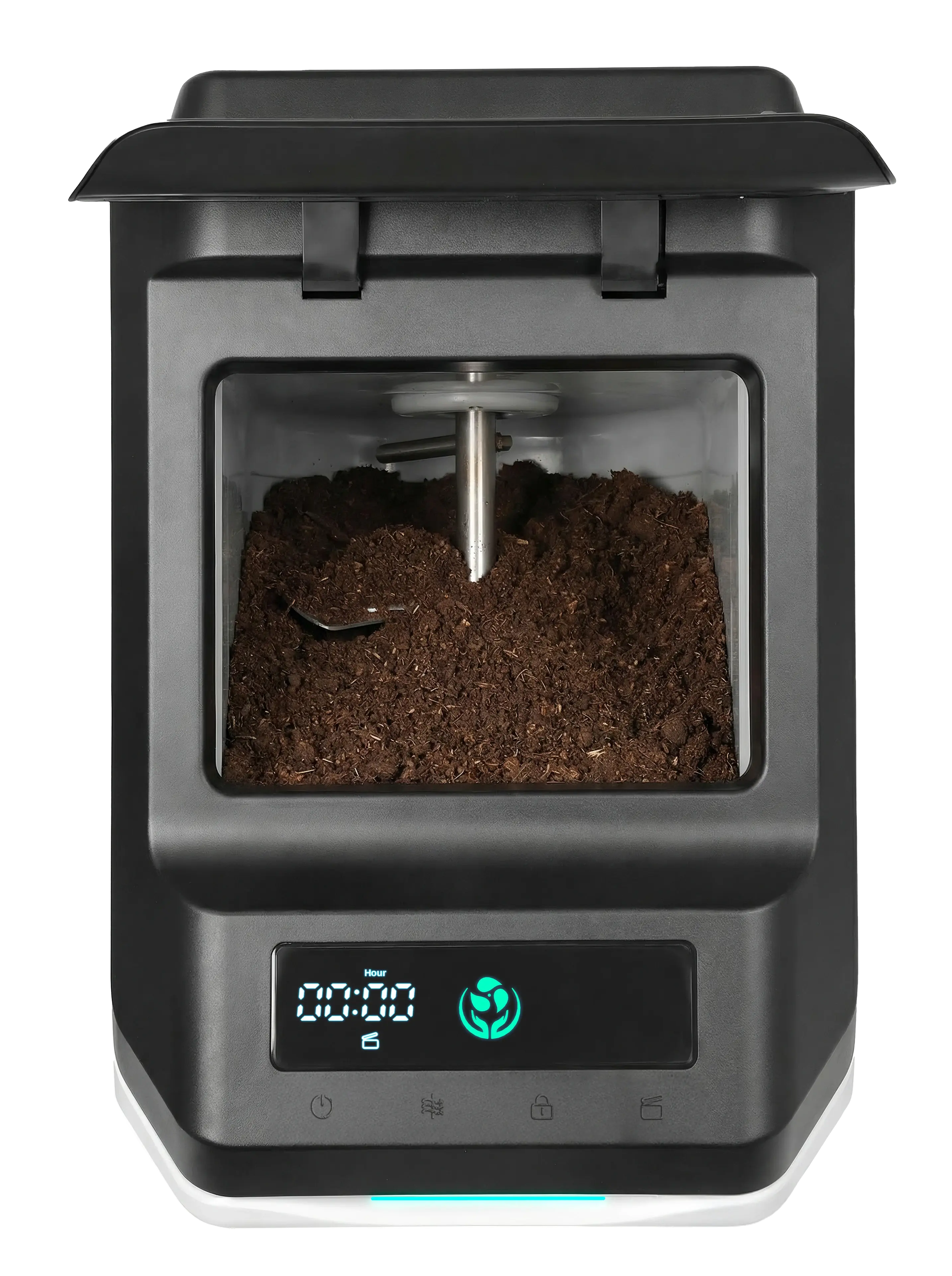
Bez suszenia. Bez wymiany filtrów zapachowych. Kompost do mieszania z ziemią.
Wybierz prawdziwe kompostowanie mikrobiologiczne zamiast prostego przetwarzania odpadów
GEME Terra II i GEME Pro zostały zbudowane do prawdziwego kompostowania mikrobiologicznego, a nie tylko do redukcji objętości poprzez mielenie i suszenie. Używaj uzysk odpowiedzialnie: przesianie większe kawałki, zwróć niedokończony materiał i wymieszaj z ziemią przed użyciem do roślin.
Terra II do codziennych domów. GEME Pro do większych rutyn.
Metody i granice
Ten artykuł używa „tlenowego trawienia” jako skrótu dla użytkownika dla kontrolowanego tlenowego rozkładu mikrobiologicznego w domowym systemie kompostowania odpadów spożywczych. Nie należy go mylić z trawieniem beztlenowym, ani czytać jako zapewnienie, że każdy zebrany uzysk jest automatycznie gotowym kompostem ogrodowym bez przesiania, leżakowania lub mieszania z ziemią.
Wydajność kompostowania tlenowego zależy od mieszanki dozowanej, wilgotności, transferu tlenu, wielkości cząstek, wzoru mieszania, aktywności mikroorganizmów i czasu przebywania. Jakiekolwiek zapewnienie oparte tylko na redukcji objętości, czasie cyklu lub mniejszej wielkości cząstek jest niekompletne.
Metody i granice → Otwórz weryfikację GK
Ostateczne wnioski: Mielenie to narzędzie, a nie proces kompostowania
Mielenie może pomóc, zmniejszając resztki, ale nie może zastąpić biologicznego procesu kompostowania tlenowego. Aby przekształcić resztki jedzenia w kompost, system musi zarządzać tlenem, wilgotnością, temperaturą, mieszaniem, wielkością cząstek i czasem.
Wybór projektowy GEME nie jest zatem „biologia kontra inżynieria”. To biologia kierowana przez inżynierię: utrzymanie warunków umożliwiających pracę, aby mikroby mogły robić to, czego same ostrza nie potrafią.
Mniejsze odpady to wciąż odpady. Zarządzane tlenowe kompostowanie mikrobiologiczne jest drogą do uzyskania kompostu przydatnego do ziemi.
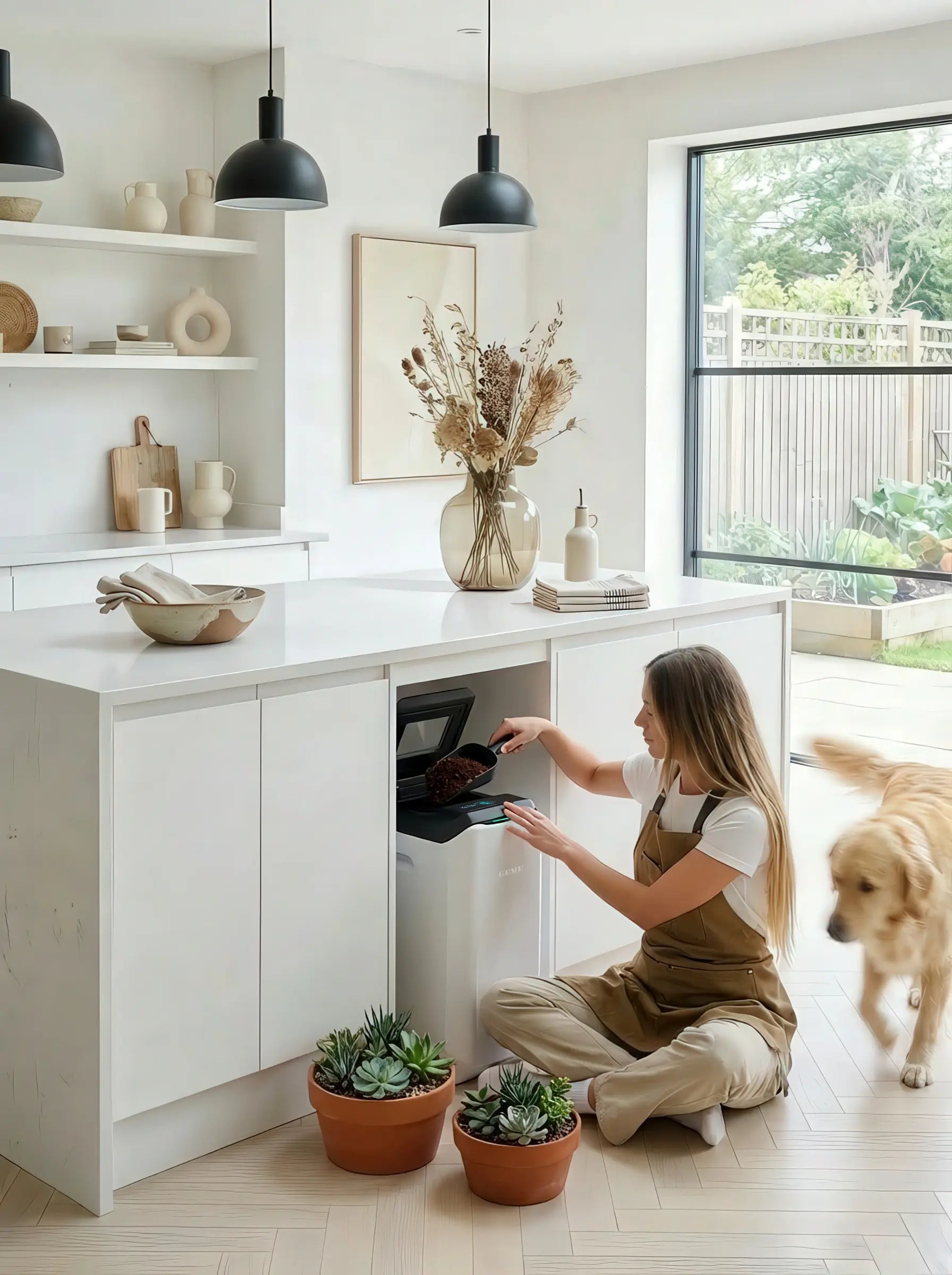
Bez suszenia. Bez wymiany filtrów zapachowych. Kompost do mieszania z ziemią.
Zbuduj lepszą rutynę przetwarzania odpadów spożywczych z GEME
GEME Terra II i GEME Pro pomagają gospodarstwom domowym przekształcać odpowiednie resztki jedzenia w kompost do mieszania z ziemią, dzięki prawdziwemu kompostowaniu mikrobiologicznemu, bez wymiany filtrów i zerowym powtarzającym się kosztom filtrów.
Terra II do codziennych domów. GEME Pro do większych rutyn.
Często zadawane pytania
Dlaczego GEME wybrało tlenowe trawienie zamiast mielenia?
GEME wybrało kontrolowane tlenowe kompostowanie mikrobiologiczne, ponieważ mielenie zmienia tylko wielkość cząstek. Kompostowanie wymaga tlenu, wilgotności, mieszania, temperatury, mikroorganizmów i czasu.
Czy mielenie resztek jedzenia jest złe?
Nie. Mielenie może pomóc, jeśli system kompostowania pozostaje tlenowy i dobrze zrównoważony. Problem polega na traktowaniu mielenia jako substytutu kompostowania.
Czy mielenie tworzy kompost?
Nie, nie samo w sobie. Mielenie tworzy mniejsze resztki. Kompostowanie to tlenowy proces biologiczny prowadzony przez mikroorganizmy w odpowiednich warunkach.
Dlaczego tlen ma znaczenie w kompostowaniu?
Tlenowe mikroorganizmy potrzebują tlenu, aby rozkładać materię organiczną. Bez wystarczającej ilości tlenu części materiału mogą stać się beztlenowe, co często powoduje zapachy i niestabilny uzysk.
Czy mniejsze cząstki są zawsze lepsze do kompostowania?
Nie. Mniejsze cząstki zwiększają powierzchnię, ale bardzo drobny materiał może się ubijać, zatrzymywać wodę i ograniczać przepływ powietrza. Dobre kompostowanie równoważy wielkość cząstek z napowietrzaniem i wilgotnością.
Czy GEME Terra II to suszarka?
GEME Terra II jest pozycjonowane jako prawdziwy mikrobiologiczny komposter kuchenny, a nie prosty sprzęt do suszenia. Zostało zaprojektowane do wilgotnego kompostowania mikrobiologicznego i uzyskiwania kompostu do mieszania z ziemią.
Czy uzysk z GEME można używać bezpośrednio jako ziemi do roślin?
Nie. Uzysk z GEME należy traktować jako bazę kompostową do mieszania z ziemią. Przesiać większe kawałki, przeprowadzić leżakowanie, gdy to konieczne, i wymieszać z ziemią przed użyciem do roślin.
Podsumowanie
- Mielenie: zmniejsza wielkość, ale nie tworzy automatycznie kompostu.
- Kompostowanie tlenowe: zależy od tlenu, mikroorganizmów, wilgotności, temperatury, mieszania i czasu.
- Wielkość cząstek: pomocna, gdy jest zrównoważona, ryzykowna, gdy jest zbyt drobna i ubita.
- Wilgotność: niezbędna dla aktywności mikroorganizmów, ale nadmiar wody może zmniejszyć transfer tlenu.
- Redukcja objętości: nie jest dowodem na dojrzałość kompostu ani wartość dla ziemi.
- Wybór projektowy GEME: kontrolowane kompostowanie mikrobiologiczne zamiast prostego mielenia i suszenia.
- Użycie uzysków: przesiać większe kawałki, zwrócić niedokończony materiał, przeprowadzić leżakowanie, gdy to konieczne, i wymieszać z ziemią.
- GEME Terra II: prawdziwe kompostowanie mikrobiologiczne, bez suszenia, bez wymiany filtrów zapachowych, kompost do mieszania z ziemią.


Zostaw komentarz
Wszystkie komentarze są moderowane przed opublikowaniem.
Ta strona jest chroniona przez hCaptcha i obowiązują na niej Polityka prywatności i Warunki korzystania z usługi serwisu hCaptcha.