
Mill Alternative Buying Guide
The best Mill alternative depends on whether you want to preserve and transport dried food material, or biologically compost food scraps inside the appliance.
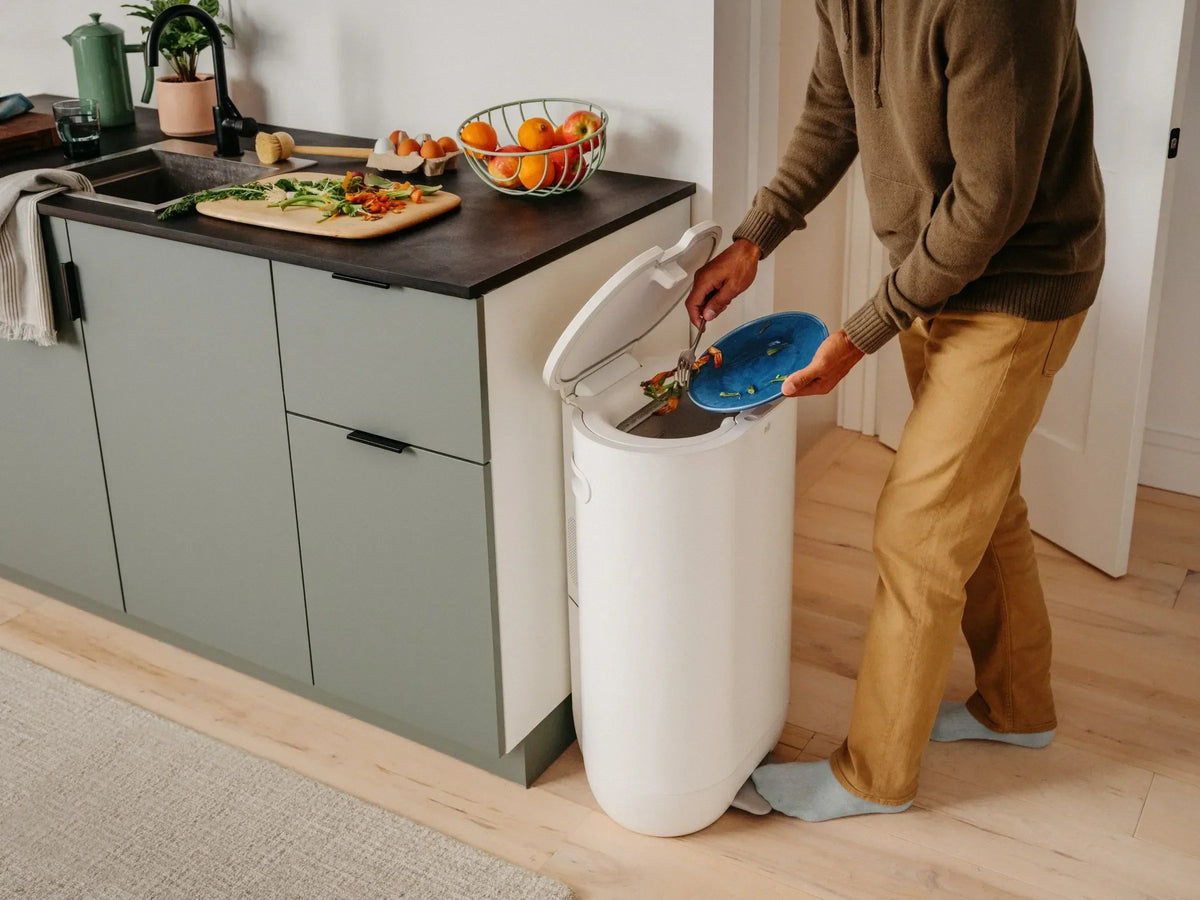
Mill is an automated food recycler. It dries and grinds food scraps into shelf-stable Food Grounds that can be used in a garden, added to another composting pathway, placed in an organics bin or sent to a participating farm through an optional pickup service.
GEME Terra II follows a different route. It uses Kobold™ living microbes and GEMEBrain™ adaptive control to maintain a warm, moist and oxygen-rich chamber where biological decomposition continues around the clock.
Choose Mill when you want highly automated food-scrap drying and storage. Choose Terra II when you want continuous real microbial composting and a direct kitchen-to-soil routine.
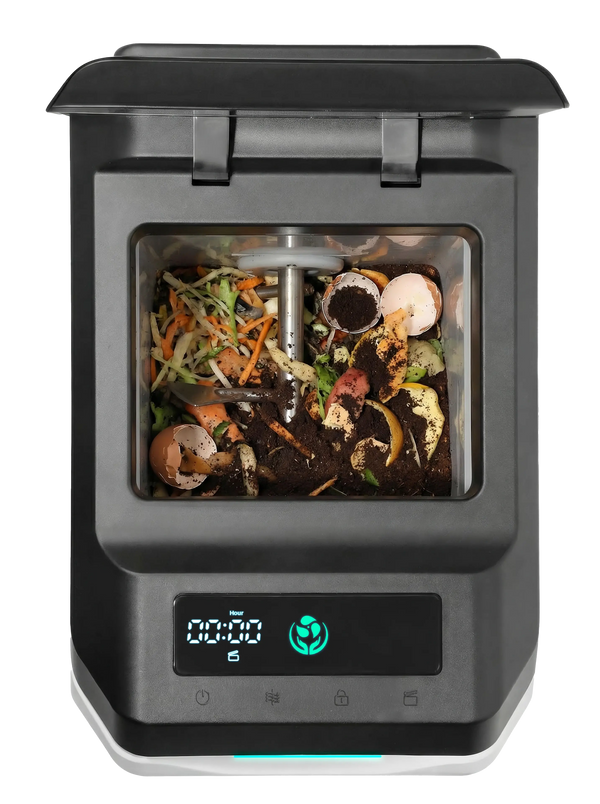
Dry and preserve Food Grounds or keep microbial decomposition alive.
Quick Answer: What Is the Best Mill Alternative?
GEME Terra II is the strongest Mill alternative for households that want real microbial composting, no required pickup service and no routine replacement odor filter.
Mill is not accurately described as a composter. Mill’s own support documentation states that its Food Grounds are still food with the water, bulk and odor removed. The appliance is designed to conserve that material for another use rather than biologically break it down inside the bin.
Terra II maintains a living microbial ecosystem. GEMEBrain™ automatically adjusts heat, airflow, moisture and mixing, while users follow a simple feeding and periodic harvesting routine.
For the category distinction, read Kitchen Composter vs Food Waste Recycler and Real Compost vs Dehydrated Scraps.
Important: Mill Does Not Currently Require Every Buyer to Subscribe
Mill Essential and Mill Plus can currently be purchased outright. Financing is also available, and some rental arrangements use subscription billing.
Mill Pickups is a separate optional service for households that want Mill to collect Food Grounds and route them to participating farms. The current official price is $192 plus tax per year.
The more accurate comparison is therefore not “subscription product versus non-subscription product.” It is optional pickup service and recurring carbon filters versus a household composting route with permanent odor purification.
The 60-Second Buying Verdict
Choose Mill
You want a large, automatic food recycler that dries scraps overnight, stores compact Food Grounds for weeks and offers an optional pickup route.
Choose Terra II
You want continuous microbial composting, a moist compost base, adaptive chamber management and no routine carbon-filter replacement.
Compare Carefully
You have no garden or compost-output plan. Mill’s optional pickup route may be useful, while Terra II’s compost base still needs a responsible destination.
Table of Contents
- Why Look for a Mill Alternative?
- Mill vs GEME Terra II
- Food Grounds vs Real Composting
- Subscriptions, Filters and Recurring Costs
- Daily Workflow
- Capacity and Throughput
- Automation and Process Management
- Odor Control
- What Happens to the Output?
- Food Inputs and Material Boundaries
- Space, Installation and Energy
- When Mill Is the Better Choice
- When Terra II Is the Better Choice
- Frequently Asked Questions
- Final Verdict
- Sources
- Related Guides
Why Look for a Mill Alternative?
Mill has several genuine strengths. It accepts food scraps throughout the day, automatically runs Dry & Grind cycles, reduces scrap volume by approximately 80% and can hold dry Food Grounds for weeks before emptying.
Buyers typically begin searching for a Mill alternative when they want a different outcome or ownership structure:
- They want food scraps to undergo microbial decomposition inside the appliance.
- They want compost base rather than dry Food Grounds.
- They do not want to depend on an optional shipping or pickup service.
- They want to avoid routine carbon-filter replacement.
- They want a living compost ecosystem rather than scheduled drying cycles.
- They want to use compost locally instead of sending dried material elsewhere.
- They prefer a simpler feed-and-harvest routine without managing pickup boxes.
These priorities do not make Mill ineffective. They indicate that the buyer is moving from food-scrap preservation and routing toward on-site biological composting.
Mill vs GEME Terra II: Head-to-Head Comparison
| Comparison Point | Mill Food Recycler | GEME Terra II |
|---|---|---|
| Product category | Automated food recycler. | Continuous microbial bio-composter. |
| Main process | Scheduled drying and grinding. | Aerobic microbial decomposition using heat, moisture, airflow and mixing. |
| Official output description | Dry Food Grounds that are not compost yet. | Moist, microbe-active compost base for soil integration. |
| Feeding workflow | Add scraps throughout the day; scheduled cycles dry and grind them. | Add scraps anytime; biological processing continues 24/7. |
| Capacity | 6.5 L bucket for Mill Essential and Mill Plus. | 14 L continuous-feed microbial chamber. |
| Current throughput reference | Official specifications state the bucket can hold up to 10 lb of new wet scraps per cycle. | Official specifications list processing capacity up to 2 kg per day. |
| Hardware subscription required | No, when purchased outright. Rental options may involve subscription billing. | No mandatory hardware or service subscription. |
| Optional collection service | Mill Pickups, currently $192 plus tax per year where eligible. | No collection service required for households using or sharing the compost base locally. |
| Odor filtration | Replaceable activated-carbon filter. | Permanent metal-ion oxidation without routine replacement filters. |
| Process automation | Automatic scheduled Dry & Grind cycles, app settings and alerts. | GEMEBrain™ continuously adjusts heat, airflow, moisture and mixing. |
| Best for | Drying, compacting, storing and routing food material. | Continuous microbial composting and local soil return. |
Food Grounds vs Real Microbial Composting
Mill is unusually clear about this distinction. Its official support documentation states that Mill is not a composting device and that the Food Grounds remain food after water, volume, odor and mess have been removed.
Mill’s approach preserves the material so it can be stored and routed to another destination. The Food Grounds may be mixed into soil according to Mill’s guidance, added to a curbside organics program, composted further, fed to suitable chickens or sent to a participating farm.
EPA distinguishes this type of preprocessing from composting. Residential grinders and dehydrators reduce weight and volume but do not directly produce biologically stable compost.
Terra II maintains the biological process inside the appliance. Kobold™ microbes remain active in a warm, moist and oxygen-rich chamber while GEMEBrain™ adapts the operating environment.
The Terra II output is therefore wet and soil-like rather than dry and shelf-stable. It should be screened, mixed with plain soil and used as a concentrated compost base—not treated as a replacement for potting soil.
Buying rule:
Mill preserves food material for another route. Terra II continues biological decomposition inside the machine.

Keep microbial decomposition active inside the appliance.
Looking for Real Composting Without Routine Filter Replacement?
Terra II combines a 14 L continuous-feed chamber, Kobold™ living microbes, GEMEBrain™ adaptive control and permanent metal-ion odor purification to create a direct kitchen-to-soil routine.
Check live pricing, delivery status, dimensions and regional purchase terms on the product page.
Explore the full explanation in How Does a Real Electric Composter Work?
Subscriptions, Pickup Services and Recurring Filter Costs
Some older reviews describe Mill primarily as a subscription product. That is no longer a complete description of the current buying options.
Current Mill models can be purchased outright. Mill also supports financing and certain rental arrangements. Buyers should separate three different expenses:
- The machine purchase or rental payment.
- Optional Mill Pickups for Food Grounds.
- Replacement activated-carbon filters.
| Recurring Item | Mill Essential | Mill Plus | Terra II |
|---|---|---|---|
| Mandatory ownership subscription | No when purchased outright. | No when purchased outright. | No. |
| Optional pickup plan | Currently $192 plus tax per year, subject to address eligibility. | Not required for local soil use or sharing. | |
| Carbon-filter lifespan | Typically up to 5–6 months. | Typically up to 10–12 months. | No routine carbon filter. |
| Current filter reference price | $49 per replacement. | $89 per replacement. | No routine replacement cost for odor purification. |
| Microbial consumable | Not used for Mill’s drying and grinding process. | Kobold™ starter is included; later top-ups are optional under normal use. | |
For a household that will use Mill Pickups, the service can provide a convenient destination for Food Grounds. For a household that already has a garden, curbside organics or another local route, the subscription may be unnecessary.
Compare filter ownership models in Electric Composter Filter Costs and Permanent Odor Control vs Disposable Carbon.
Daily Workflow: Both Are Continuous to the User, but the Process Is Different
Mill should not be grouped with small food recyclers that require users to wait for every batch to finish before adding more scraps. Mill allows scraps to be added throughout the day and runs automatically according to its configured schedule.
Mill Workflow
- Add suitable food scraps throughout the day.
- Mill weighs or estimates the load and follows the configured schedule.
- The Dry & Grind process removes moisture and reduces volume.
- Dry Food Grounds accumulate inside the bucket.
- Empty the Grounds when needed, potentially after several weeks.
- Use, compost, collect or ship the Grounds through the selected route.
Terra II Workflow
- Complete the one-time Kobold™ microbial setup.
- Add suitable food scraps whenever they appear.
- GEMEBrain™ manages the chamber environment continuously.
- Microbes biologically break down the food inside the chamber.
- Keep part of the living compost base inside as the working ecosystem.
- Harvest mature-looking material periodically and return unfinished pieces.
Mill minimizes how often dry material must be emptied. Terra II minimizes the need to transfer food material to another composting process.
Capacity: 6.5 L Food-Grounds Bucket vs 14 L Microbial Chamber
The capacity numbers describe different types of working space.
Mill Essential and Mill Plus both use a 6.5 L bucket. Mill’s official specifications state that the bucket can hold up to 10 lb of newly added wet scraps per processing cycle. Drying and grinding then reduce the volume so Food Grounds can accumulate over time.
Terra II uses a 14 L chamber containing both the working microbial bed and newly added food. Its official daily processing reference is up to 2 kg of suitable household scraps.
Mill Capacity Advantage
Drying and volume reduction allow a relatively compact bucket to hold accumulated Food Grounds for weeks.
Terra II Capacity Advantage
The larger chamber supports an active microbial ecosystem and continuous biological processing.
Automation: Scheduled Drying vs Adaptive Biological Control
Both products are designed to reduce daily labor, but they automate different processes.
| Automation Question | Mill | Terra II |
|---|---|---|
| What is automated? | Scheduled Dry & Grind cycles, load monitoring and app alerts. | Heat, airflow, moisture and mixing around a living microbial process. |
| What is the objective? | Remove water, reduce volume and stabilize material for storage. | Maintain conditions that allow biological decomposition to continue. |
| Does the user turn or measure a pile? | No. | No. GEMEBrain™ manages key chamber conditions automatically. |
| Is Wi-Fi part of normal setup? | Yes. The app provides setup, scheduling and status features. | Normal composting begins automatically after feeding without selecting a cycle. |
Mill is highly automated as a food recycler. Terra II is highly automated as a microbial composter. The relevant question is which process you want automated.
Odor Control: Replaceable Carbon vs Permanent Purification
Mill and Terra II both aim to improve the kitchen experience compared with an open food-scrap caddy, but their odor systems use different ownership models.
Mill
Mill uses activated carbon made from upcycled coconut shells. The filter absorbs odors and eventually requires replacement. Mill Essential filters typically last up to 5–6 months, while Mill Plus filters typically last up to 10–12 months, depending on household use and food inputs.
Terra II
Terra II combines managed aerobic operation with industrial metal-ion oxidation. The purification system is built into the machine and does not require routine charcoal-filter replacement.
Neither product should be interpreted as immune to every odor condition. Excessive wetness, improper inputs, blocked airflow, expired carbon, power interruption, or neglected maintenance can affect performance.
Read Odor-Controlled Composting Options for the wider household comparison.
What Happens to the Output?
Output planning may be the most important decision after process type.
Mill Food Grounds
Mill Food Grounds are dry, compact and shelf-stable. Mill presents several possible routes:
- Mix with soil according to Mill’s garden guidance.
- Add to another composting process.
- Place in a compatible curbside organics bin.
- Use as supplemental chicken feed where appropriate.
- Use optional Mill Pickups to route the material to participating farms.
Terra II Compost Base
Terra II produces moist compost base from an active microbial process. Users should:
- Harvest only part of the chamber material.
- Keep enough living material inside as the microbial bed.
- Screen larger unfinished pieces back into the chamber.
- Mix approximately one part compost base with eight parts plain soil.
- Use a plain-soil cap around sensitive roots.
Review the Advanced GEME Compost Application Guide.
Food Inputs and Material Boundaries
Mill’s powerful grinding system and Terra II’s biological system have different strengths.
Mill’s official product page says it can handle a broad range of food, including turkey bones and avocado pits. Its stainless-steel augers are designed to apply substantial grinding force.
Terra II is optimized for biological decomposition rather than crushing every hard object. It can process ordinary fruits, vegetables, grains, coffee grounds, cooked food, meat, dairy and suitable small bones.
Large dense bones, hard pits, metal, glass, plastic, long strings, oversized shells and excessive free liquid should remain outside Terra II.
Fair comparison:
Mill may have an advantage with certain hard materials. Terra II’s advantage is what happens biologically to suitable material after it enters.
Space, Installation and Energy
| Factor | Mill Essential | Mill Plus | Terra II |
|---|---|---|---|
| Dimensions | 23 × 17 × 14 in. | 27 × 17 × 14 in. | Approximately 22.3 × 11.7 × 17.2 in. |
| Weight | Approximately 45 lb. | Approximately 56 lb. | Approximately 28 lb / 13 kg. |
| Placement | Indoor floor placement with ventilation clearance and Wi-Fi access. | Indoor floor or suitable low-surface placement with lid and airflow clearance. | |
| Operating model | Scheduled Dry & Grind cycles, commonly run overnight. | Continuous adaptive biological operation. | |
Mill is not a small countertop appliance. All three products require meaningful installation space, access to power and sufficient lid clearance.
Energy comparisons should be based on actual household usage rather than comparing one processing cycle with one full day of adaptive biological operation.
When Mill May Be the Better Choice
Mill may be the better fit when:
- You want dry Food Grounds that can be stored for weeks.
- You want strong grinding capability for certain bones and pits.
- You value app-based scheduling, alerts and impact tracking.
- You want to add scraps continuously but do not require composting inside the appliance.
- You have curbside organics collection that accepts Food Grounds.
- You keep chickens or have another approved use for the dried material.
- You value an optional pickup route more than avoiding an annual service.
- You are comfortable replacing activated-carbon filtration periodically.
Mill’s strongest argument is convenience without requiring the household to manage wet scraps or empty the machine frequently.
When GEME Terra II Is the Better Mill Alternative
Terra II is likely the better Mill alternative when:
- You want microbial decomposition to happen inside the appliance.
- You want a moist compost base rather than dry Food Grounds.
- You want a direct kitchen-to-soil routine.
- You do not want an optional shipping or pickup plan to complete the process.
- You want to avoid routine activated-carbon filter purchases.
- You want GEMEBrain™ to manage heat, airflow, moisture and mixing.
- You prefer periodic compost harvesting over packaging material for shipment.
- You have plants, a garden, community-garden access or another local compost outlet.
Terra II is not simply another food recycler without a subscription. Its real distinction is that it performs a different biological process.
Choose Terra II because you want composting—not merely because you want to avoid one particular recurring fee.
Frequently Asked Questions
What is the best Mill alternative?
GEME Terra II is a strong Mill alternative for households that want continuous microbial composting, a moist compost base, no routine carbon-filter replacement and no required pickup subscription.
Is Mill a composter?
Mill’s official support documentation says that it is not a composting device. It dries and grinds food scraps into Food Grounds that remain food material and require another use or treatment route.
Does Mill require a subscription?
Not when a current Mill is purchased outright. Financing and rental arrangements may have different payment structures. Mill Pickups is an optional annual service rather than a requirement for every owner.
How much does Mill Pickups cost?
Mill’s current official support page lists Mill Pickups at $16 per month, billed annually as $192 plus tax. Service eligibility depends on the address.
Does Mill require replacement filters?
Yes. Mill Essential uses an activated-carbon filter that typically lasts up to 5–6 months, while Mill Plus filters typically last up to 10–12 months. Actual lifespan varies with use.
Does Terra II require replacement odor filters?
No routine odor-filter replacement is required. Terra II uses permanent metal-ion oxidation together with managed aerobic airflow.
Can Mill Food Grounds go directly into soil?
Mill provides guidance for mixing Food Grounds with soil, but its official documentation also states that the Grounds are not compost yet. Follow Mill’s current application instructions and avoid treating the Grounds as finished bagged compost.
Does Terra II produce finished compost instantly?
No biological composting process is instant. Terra II continuously creates a moist compost base. Dense pieces may need more time, and the output should be screened and mixed with plain soil.
Which one accepts more food scraps?
The comparison depends on the material. Mill has strong grinding capability for certain bones and pits. Terra II accepts broad everyday food waste but excludes large dense bones, hard pits, excessive liquid and unsuitable non-organic material.
Is Terra II better for someone without a garden?
Terra II can still provide convenience and odor control, but its compost base needs a destination. Mill’s optional pickup route may be more convenient for a household with no local soil-use or compost outlet.
Which one is better for real composting?
Terra II is designed for continuous aerobic microbial composting. Mill is designed to dry and preserve Food Grounds for later use or processing route.
Final Verdict: Best Mill Alternative for Real Composting
GEME Terra II is the better Mill alternative when the objective is continuous real microbial composting.
Terra II maintains an active biological chamber, automatically manages key environmental conditions and produces a moist compost base without routine carbon-filter replacement.
Mill remains a strong food recycler. Its advantages include automatic drying, broad grinding capability, long storage between emptying, app features and an optional collection route.
Mill can currently be purchased without a mandatory pickup subscription, so the decision should not rely on outdated claims that every Mill owner must subscribe.
Choose Mill when you want dry, storable Food Grounds. Choose Terra II when you want microbial decomposition to continue inside the appliance.
Academic, Regulatory and Official Product Sources
- U.S. EPA — Approaches to Composting
- U.S. EPA — Composting at Home
- Mill — Official Food Recycler Product Page
- Mill Support — How Mill Differs From Composting Devices
- Mill Support — Mill Essential Technical Specifications
- Mill Support — Mill Plus Technical Specifications
- Mill Support — Mill Pickups Pricing
- Mill Support — Carbon Filter Lifespan and Cost
- GEME — Official Terra II Product Page
- GEME — GK Technology, Methods and Boundaries
- GEME — Real Compost vs Dehydrated Scraps
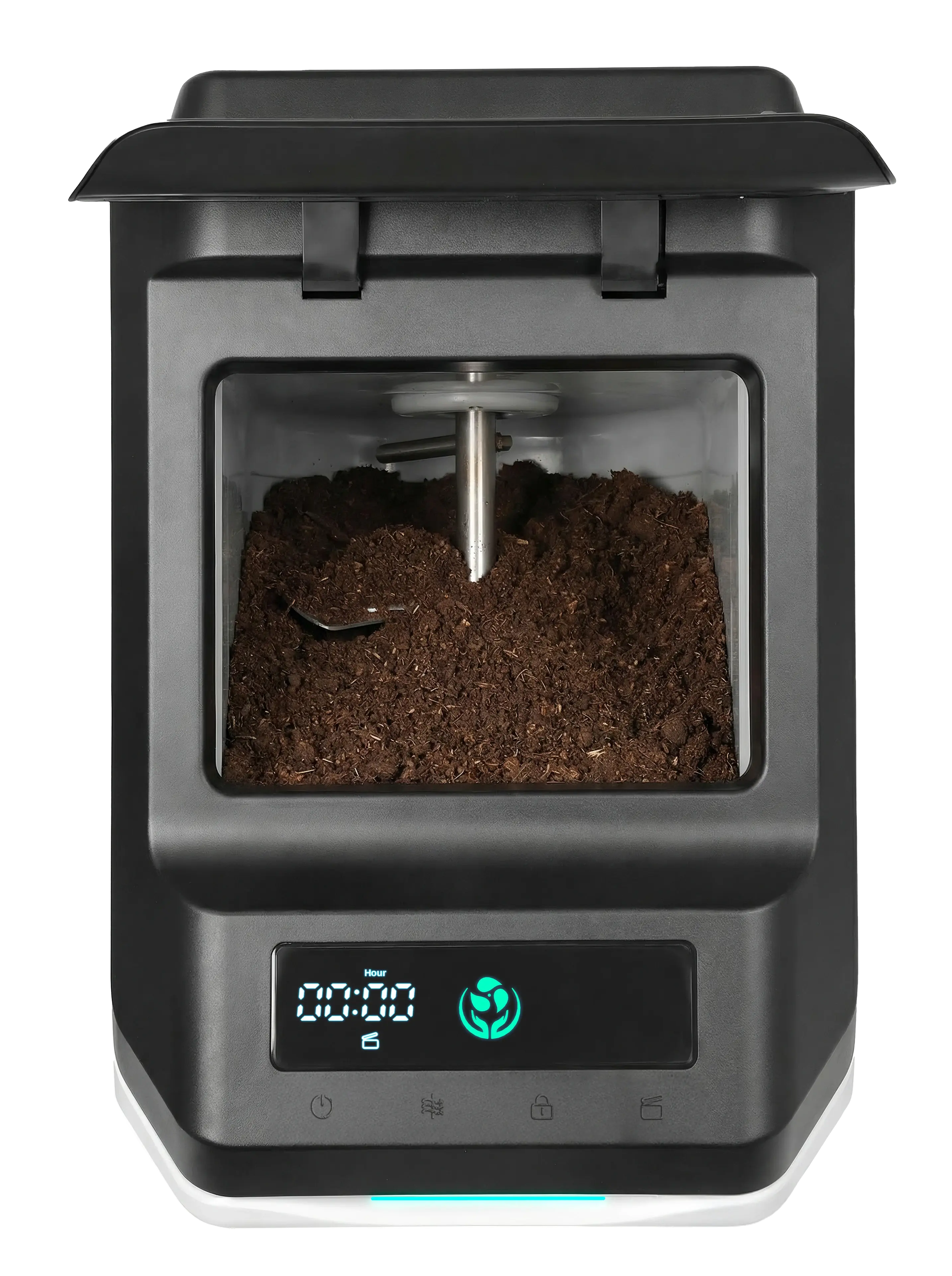
No pickup box is required when the nutrients return to soil locally.
Choose the Mill Alternative Built for Real Composting
Terra II is designed for households that want continuous microbial decomposition, adaptive biological control, permanent odor purification and a moist compost base, not another stream of dried Food Grounds.
Continuous microbial composting. GEMEBrain™ adaptive control. No routine replacement odor filters.


Hinterlasse einen Kommentar
Alle Kommentare werden vor der Veröffentlichung geprüft.
Diese Website ist durch hCaptcha geschützt und es gelten die allgemeinen Geschäftsbedingungen und Datenschutzbestimmungen von hCaptcha.