
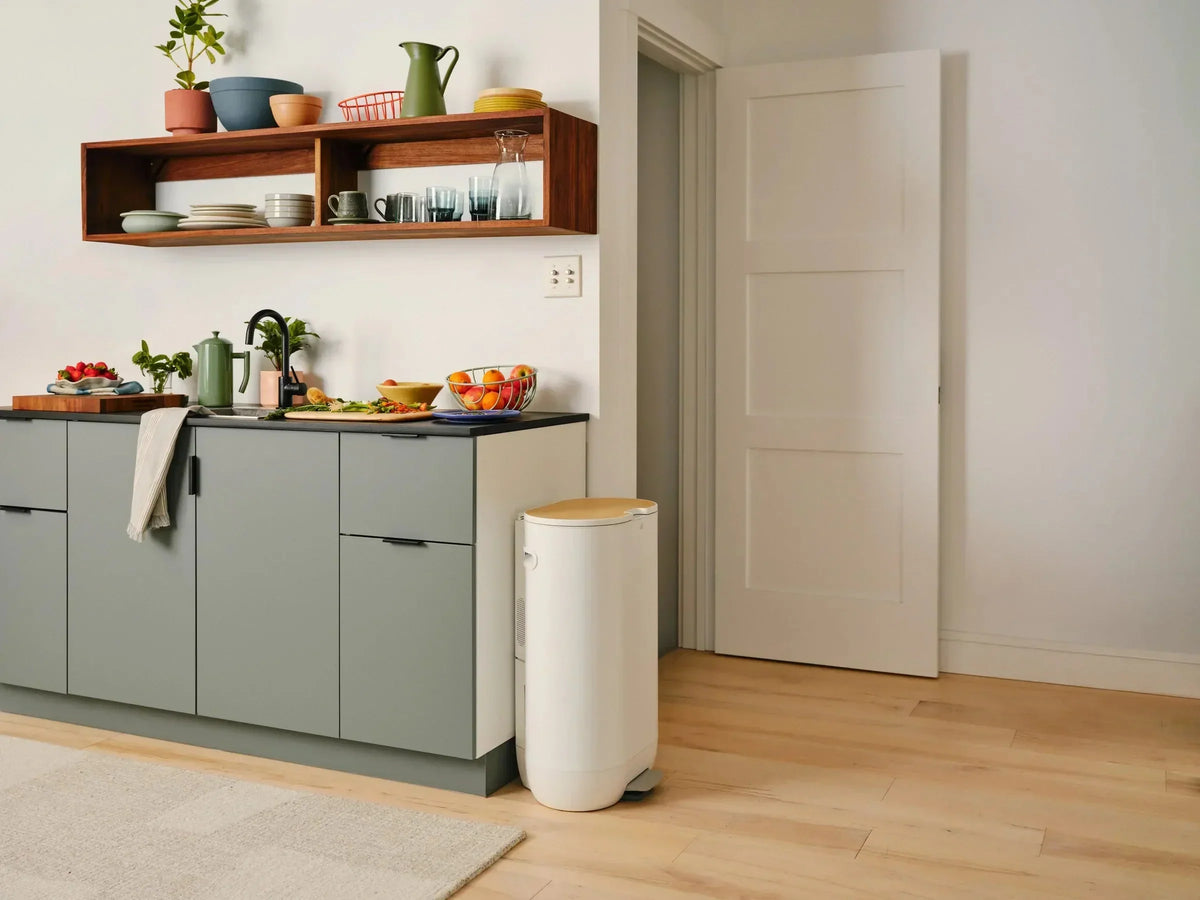
Mill Food Recycler Buying Guide
Mill can be worth it when your priority is effortless food-scrap drying, odor control and infrequent emptying, not composting inside the appliance.
Mill accepts scraps throughout the day, runs scheduled Dry & Grind cycles, and stores compact Food Grounds for weeks. It is polished, highly automated, and designed to remove much of the inconvenience associated with a wet kitchen scrap bin.
The main buying question is whether dry Food Grounds are the outcome you actually want. Mill itself states that it is a food recycler rather than a composting device.
Buyers who want microbial decomposition, a moist compost base and no routine carbon-filter replacement should also compare GEME Terra II.
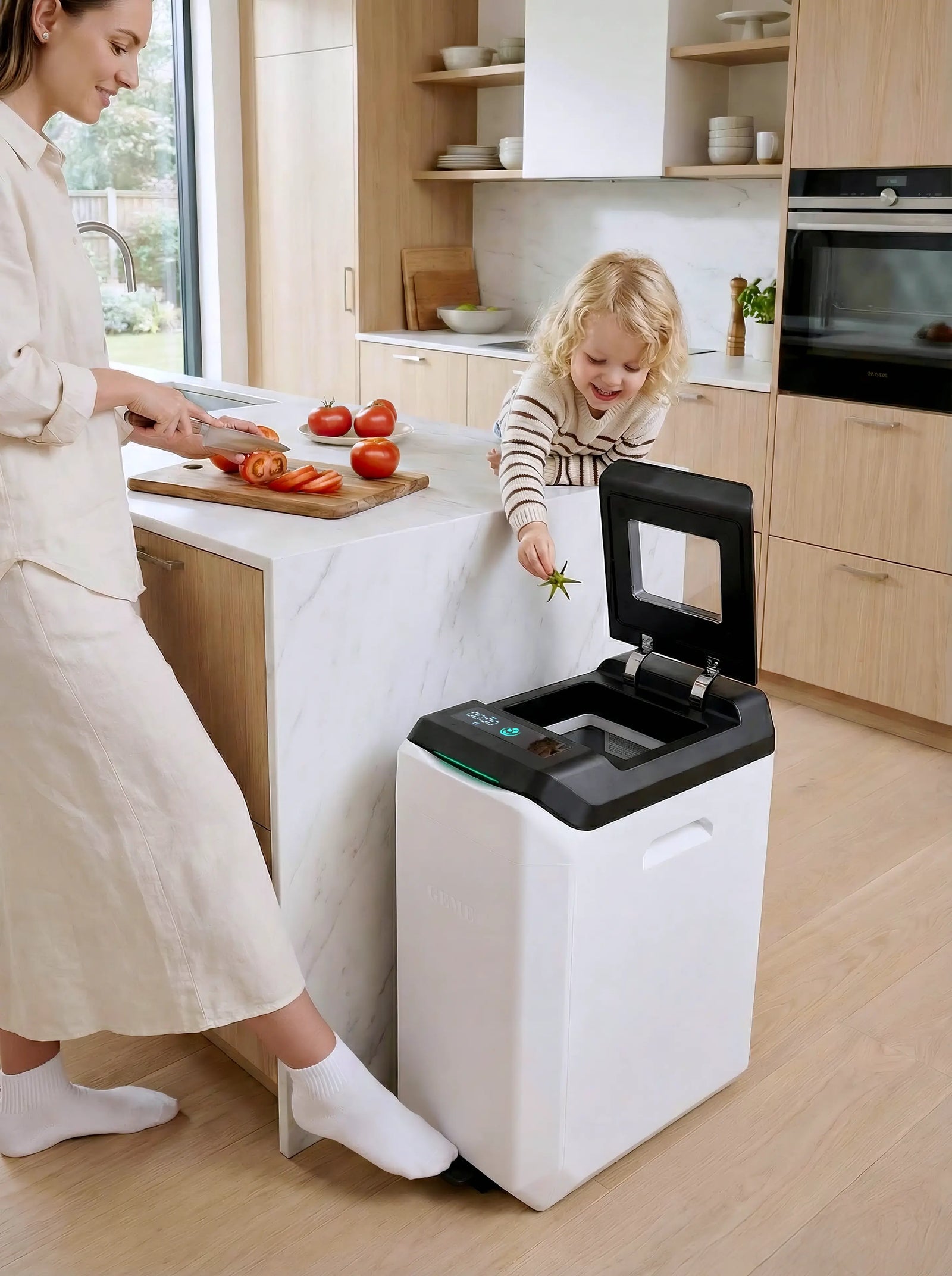
Dry and store Food Grounds, or keep microbial decomposition active.
Quick Answer: Is the Mill Composter Worth It?
Mill is worth it for households that want a premium, low-touch food recycler capable of drying, grinding and storing food scraps with strong odor control.
It is especially compelling when you generate substantial scraps, dislike emptying a wet organics bin frequently, value app-based scheduling and already have a useful destination for the resulting Food Grounds.
Mill may not be worth it when you expect finished compost, want to avoid replacement carbon filters, do not need a large floor-standing appliance or have no convenient use for dry Food Grounds.
Searchers often call it the “Mill composter,” but Mill officially categorizes the product as a food recycler. Read Best Mill Alternative for the direct Mill vs GEME comparison.
The 60-Second Verdict
Mill Is Worth It
You want maximum convenience, long intervals between emptying, strong grinding capability and dry Food Grounds that already have a destination.
Mill May Not Be Worth It
You expect real compost, dislike recurring filters, do not want app-dependent setup or have no route for the dry output.
Consider Terra II
You want continuous microbial decomposition, a moist compost base and permanent odor purification without routine carbon-filter replacement.
Table of Contents
- What Does Mill Actually Do?
- Why Mill Can Be Worth It
- Price and Total Ownership Cost
- Does Mill Require a Subscription?
- Convenience and Maintenance
- Odor Control and Filters
- Are Food Grounds Compost?
- Space, Noise, Energy and Wi-Fi
- What Can Go Into Mill?
- When Mill Is Not Worth It
- Mill vs GEME Terra II
- Which One Should You Buy?
- Frequently Asked Questions
- Final Verdict
- Sources
- Related Guides
What Does the Mill Food Recycler Actually Do?
Mill is a premium food recycler designed to make kitchen scraps cleaner, drier and easier to store.
Users can add food scraps throughout the day. At the configured time, Mill runs a Dry & Grind cycle that removes water and mechanically reduces the material into dry Food Grounds.
Because the output is dry and compact, most households do not need to empty the bucket after every meal or every cycle. Food Grounds can accumulate for weeks.
Mill’s own documentation is clear that this is not composting. Biological decomposition is intentionally not completed inside the machine. The objective is to preserve the material so it can be reused, composted or routed elsewhere.
Mill’s value proposition:
Remove the water, bulk, odor and mess so food scraps become easier to store and redirect.
For the broader category difference, read Kitchen Composter vs Food Waste Recycler.
Why the Mill Food Recycler Can Be Worth It
1. It Reduces Daily Food-Scrap Friction
Mill allows users to add scraps whenever they appear. There is no need to keep a separate freezer bag, wait for a small batch cycle to finish or carry wet food waste outside after every meal.
2. It Can Go Weeks Between Emptying
Drying and grinding substantially reduce food-scrap volume. For households that dislike frequent bin emptying, this may be Mill’s strongest practical advantage.
3. It Accepts a Broad Range of Food Scraps
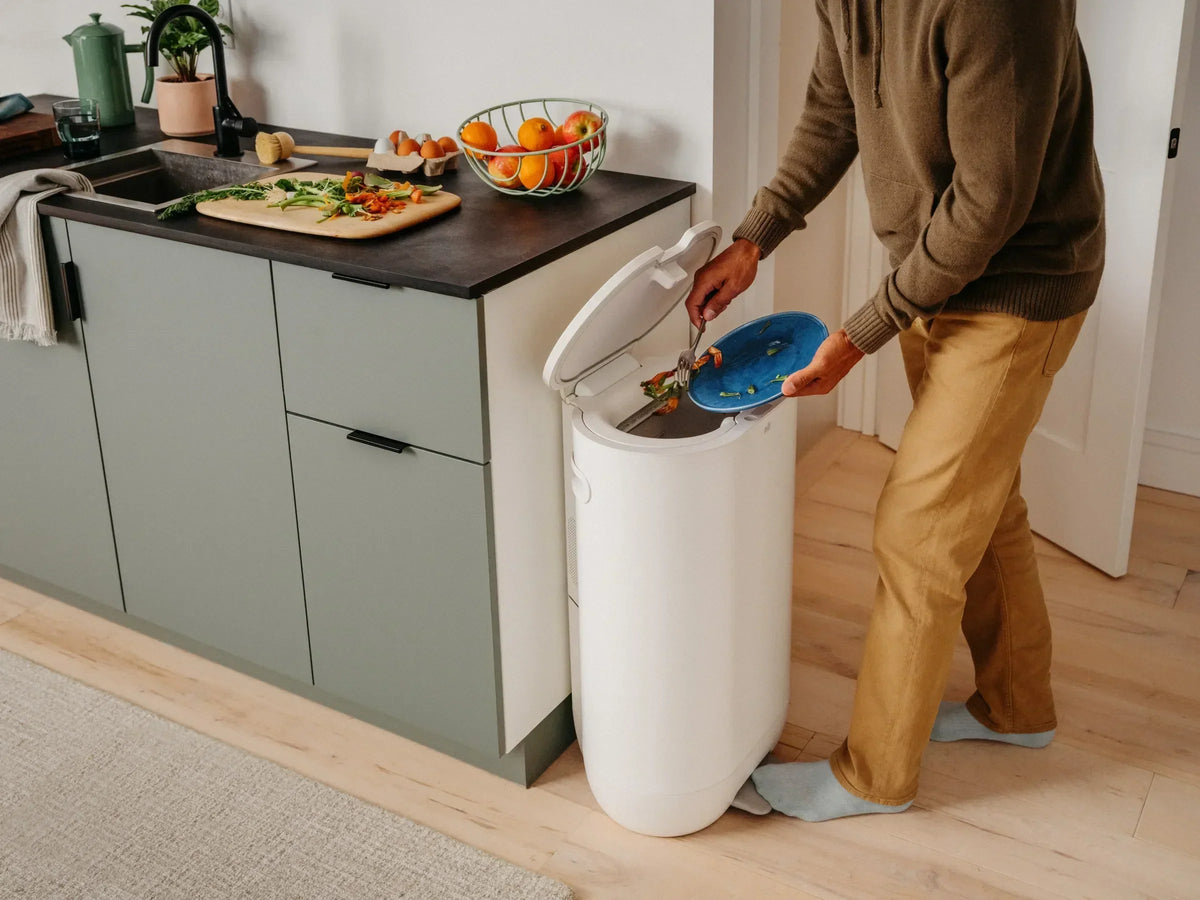
Mill accepts fruits, vegetables, meat, dairy, eggs, coffee grounds, small bones and many pits. Its grinding system can handle some dense materials that are less suitable for a biological composter.
4. It Is Highly Automated
The appliance can weigh or assess incoming material, run on a schedule, adjust processing time and provide app-based status information and impact tracking.
5. It Creates Flexible Downstream Options
Dry Food Grounds can enter another compost pile, qualified curbside organics collection, selected garden applications, chicken-feed routes or Mill’s optional pickup service.
Mill Price and Total Ownership Cost
Mill is a premium appliance. Buyers should calculate ownership cost rather than comparing only the checkout price.
| Ownership Item | Mill Essential | Mill Plus |
|---|---|---|
| Purchase price | $999. | $1,149 in white or matte black; $1,299 in stainless steel. |
| Included carbon filter | One filter, typically up to 5–6 months. | One filter, typically up to 10–12 months. |
| Replacement filter price | $59 each. | $114 each. |
| Optional Mill Pickups | $192 plus tax per year where eligible. | |
| Average electricity reference | Mill estimates approximately 0.7 kWh per day across typical real-world use. | |
| Extended warranty option | Currently offered for an additional $199 at checkout. | |
Illustrative Three-Year Filter Cost
Because the first filter is included, a typical three-year ownership period may require approximately:
- Mill Essential: roughly five to six additional replacements, or approximately $295–$354.
- Mill Plus: roughly two to three additional replacements, or approximately $228–$342.
- Optional Mill Pickups: an additional $576 plus tax over three years at the current annual rate.
Actual replacement frequency depends on food volume, odor load and household use. Electricity must also be calculated using the local rate.
For a wider ownership framework, read Are Kitchen Composters Worth It? and Electric Composter Filter Costs.
Does Mill Require a Subscription?
No, not when a current Mill Essential or Mill Plus is purchased outright.
Some older reviews describe Mill mainly as a subscription appliance because earlier ownership models were different. Current buyers can purchase or finance the machine.
Mill Pickups is a separate optional service. It provides prepaid boxes, liners and eligible USPS pickups so Food Grounds can be routed to participating farms.
The Accurate Buying Question
Do not ask only, “Does Mill require a subscription?” Ask whether you need the optional pickup service, how often you will replace carbon filters and what you will do with the Food Grounds without a collection plan.
Convenience and Maintenance: Mill’s Strongest Purchase Case
Mill is designed around low daily effort. Owners can add scraps while cooking, allow the machine to run on schedule and wait until enough dry Food Grounds have accumulated before emptying.
What Mill Automates
- Scheduled Dry & Grind cycles.
- Processing-time adjustments based on the load.
- App notifications and status information.
- Energy and food-scrap impact tracking.
- Long-term dry storage inside the bucket.
What the Owner Still Does
- Keep unsuitable materials and excess liquid out.
- Clean debris from the dust filter when needed.
- Keep the heating plate and bucket connection clear.
- Replace the activated-carbon filter periodically.
- Empty and route the Food Grounds.
- Maintain app and connectivity settings for full automation features.
Mill’s internal bucket and paddles generally require little cleaning. This makes it a strong option for buyers who value a polished, appliance-like routine over hands-on compost management.
Does Mill Control Food-Scrap Odor?
Odor control is another major Mill advantage. The appliance keeps slight negative air pressure inside the bin and passes exhaust through activated-carbon filtration.
Drying the food also removes the wet conditions that normally make an ordinary scrap bucket smell, leak, or attract pests.
The trade-off is that activated carbon is a consumable. When the filter becomes exhausted, users may notice a vinegar-like smell and need to purchase a replacement.
| Odor-Control Question | Mill | Terra II |
|---|---|---|
| Main method | Drying, negative pressure and activated-carbon adsorption. | Managed aerobic chamber and industrial metal-ion oxidation. |
| Routine filter replacement | Yes. | No routine replacement odor filter. |
| Main ownership trade-off | Proven adsorption model with recurring consumable cost. | Permanent purification system with no disposable carbon subscription. |
Read Permanent Odor Control vs Disposable Carbon for the technology comparison.
Are Mill Food Grounds Compost?
No. Mill Food Grounds are not finished compost.
Mill describes Food Grounds as food with the water, bulk, odor and mess removed. The underlying organic material has been dried and mechanically reduced, not fully digested by a compost ecosystem.
EPA likewise classifies household grinders and dehydrators as pre-processing technologies. Their outputs still need further composting, curing or another treatment route before they should be treated as biologically stable compost.
Possible Food-Ground Routes
- Add them to an existing compost pile.
- Use them according to Mill’s current garden guidance.
- Place them in a compatible curbside organics program.
- Use an approved chicken-feed pathway.
- Purchase Mill Pickups where eligible.
If you already have one of these destinations, Mill’s dry output may be highly convenient. If you expected the machine itself to complete the composting process, the output may feel incomplete.
Continue to Real Compost vs Dehydrated Scraps.
Space, Noise, Energy and Connectivity
| Factor | Mill Essential | Mill Plus | Terra II |
|---|---|---|---|
| Dimensions | 23 × 17 × 14 in. | 27 × 17 × 14 in. | Approximately 22.3 × 11.7 × 17.2 in. |
| Lid clearance | Approximately 33.5 in. | Approximately 37 in. | Measure installation and full lid-opening clearance. |
| Weight | Approximately 45 lb. | Approximately 56 lb. | Approximately 28 lb / 13 kg. |
| Noise reference | Mill reports approximately 42 dB during Dry & Grind operation. | Approximately 35–40 dB under test conditions; perceived sound varies. | |
| Energy model | Mill estimates about 0.7 kWh per day across typical use. | Continuous adaptive biological operation; usage varies with chamber conditions. | |
| Connectivity | Smartphone and internet are required for initial pairing and full scheduling features. | Normal feeding begins automatically without choosing a batch cycle. | |
Mill is not a small countertop composter. Both Mill models require substantial floor space, lid clearance, a standard power outlet and a stable indoor installation surface.
Mill may continue to work manually after initial setup without consistent Wi-Fi, but automatic scheduling, detailed impact reports and some support capabilities rely on connectivity.
What Food Can Go Into Mill?
Mill accepts a broad range of ordinary food scraps, including:
- Fruits and vegetables.
- Peels, rinds and many pits.
- Meat, dairy and eggs.
- Coffee grounds and paper filters.
- Small chicken and fish bones.
- Cooked food and plate scraps.
Mill should not receive large dense bones, hard shells, large amounts of liquid, grease or oil, excessive sugary foods, non-food packaging, pet waste or inappropriate fibrous loads.
Mill has a genuine advantage with some hard pits and bones because its purpose includes mechanical grinding. Terra II is optimized for biological decomposition and therefore uses different material boundaries.
Review What Can You Put in an Electric Composter? for the GEME input framework.
When Is the Mill Food Recycler Not Worth It?
Mill is less likely to be worth the investment when:
- You expect finished compost. Mill preserves and reduces food material but does not complete microbial composting.
- You have no destination for Food Grounds. Dry output still requires gardening, collection, composting, chicken-feed or pickup planning.
- You want no recurring consumables. Mill requires periodic activated-carbon replacement.
- You generate very little food waste. A $999–$1,299 appliance may be difficult to justify for occasional scraps.
- You already have clean, convenient organics collection. A simple kitchen caddy may solve the problem at much lower cost.
- You do not want a connected appliance. Initial setup and full scheduling functionality rely on a smartphone and internet connection.
- You lack suitable floor space. Mill requires more room than many countertop food recyclers.
- You want nutrients returned directly to local soil. Mill may introduce a separate transfer or shipping step before the material completes its next life.
Mill vs GEME Terra II
Mill and Terra II both reduce the inconvenience of storing ordinary food scraps, but they create value in different ways.
| Comparison Point | Mill | GEME Terra II |
|---|---|---|
| Product category | Food recycler. | Continuous microbial bio-composter. |
| Main process | Scheduled drying and grinding. | Aerobic biological decomposition. |
| Output | Dry Food Grounds that require a next route. | Moist, microbe-active compost base for soil blending. |
| Feeding | Add scraps throughout the day; automatic cycles run on schedule. | Add scraps anytime; biological processing continues continuously. |
| Capacity | 6.5 L bucket. | 14 L microbial chamber. |
| Process automation | Automated Dry & Grind scheduling, load response and app reporting. | GEMEBrain™ adjusts heat, airflow, moisture and mixing. |
| Odor system | Replaceable activated-carbon filter. | Permanent metal-ion oxidation without routine filter replacement. |
| Pickup service | Optional paid service for eligible households. | Not required when compost base is used or shared locally. |
| Hard-material advantage | Strong grinder can handle some pits and bones. | Focused on biologically suitable food waste rather than crushing every hard object. |
| Best fit | Households prioritizing dry storage, low emptying frequency and flexible routing. | Households prioritizing real composting and direct kitchen-to-soil use. |
Mill is not an inferior version of Terra II, and Terra II is not simply a less powerful Mill. They automate different processes.
The deciding question is whether you want the machine to preserve food material for another destination or continue microbial decomposition inside the chamber.

Terra II keeps microbial decomposition active inside the appliance.
Compare Mill With a Real Microbial Composter
GEME Terra II combines a 14 L continuous-feed chamber, Kobold™ living microbes, GEMEBrain™ adaptive control and permanent odor purification to create a direct kitchen-to-soil routine.
Review live pricing, delivery status, dimensions and regional purchase terms on the Terra II product page.
Which One Should You Buy?
Buy Mill If:
- You want dry, shelf-stable Food Grounds.
- You want to empty the appliance infrequently.
- You value strong grinding capability.
- You want app controls and detailed impact tracking.
- You already have a destination for the Grounds.
- You accept periodic carbon-filter purchases.
Buy Terra II If:
- You want continuous microbial composting.
- You want a moist compost base for soil blending.
- You want no routine replacement odor filter.
- You want GEMEBrain™ to manage the chamber environment.
- You prefer local soil return over shipping Food Grounds.
- You accept biological material boundaries.
Frequently Asked Questions
Is the Mill composter worth it?
Mill can be worth it for households that want highly automated food-scrap drying, infrequent emptying, strong odor control and dry Food Grounds. It is less suitable for buyers expecting the appliance to produce finished compost.
Is Mill actually a composter?
No. Mill’s official support documentation identifies it as a food recycler rather than a composting device. It dries and grinds food into Food Grounds.
Are Mill Food Grounds compost?
No. They are dried, ground food material. They can enter a composting, gardening, chicken-feed, organics-collection or pickup pathway, but they are not biologically stable finished compost.
Does Mill require a subscription?
Current Mill Essential and Mill Plus models can be purchased outright. Mill Pickups is an optional annual service, while rental or financing arrangements may use different payment structures.
How much does Mill Pickups cost?
Mill currently lists Pickups at $16 per month, billed upfront as $192 plus tax per year. Address eligibility applies.
How much do Mill carbon filters cost?
Mill Essential replacements currently cost $59 and typically last up to 5–6 months. Mill Plus replacements currently cost $114 and typically last up to 10–12 months.
How often does Mill need to be emptied?
Drying and grinding reduce the volume substantially, so many households may go several weeks before emptying. Actual frequency depends on food-scrap volume and material type.
Does Mill smell?
Mill is designed for strong odor control through drying, negative pressure and activated-carbon filtration. Odor may appear if the filter is exhausted, the dust filter is blocked or unsuitable wet material is added.
Is Mill loud?
Mill reports approximately 42 dB for current Essential and Plus models during Dry & Grind operation. Hard bones or pits may create occasional snaps or grinding sounds.
Does Mill need Wi-Fi?
A smartphone and internet connection are required for initial pairing. Manual cycles can operate later without continuous Wi-Fi, but automatic scheduling, impact reports and some support functions may be limited.
Is GEME Terra II a better alternative?
Terra II is a better fit when the goal is continuous microbial composting, a moist compost base, adaptive biological-process management and no routine replacement odor filters.
Which is better: Mill or GEME?
Mill is better for dry storage, broad grinding capability, infrequent emptying and flexible Food-Ground routing. GEME Terra II is better for continuous biological decomposition and local kitchen-to-soil compost use.
Final Verdict: Is Mill Worth It?
Mill is worth it when you want one of the most convenient ways to dry, grind and store household food scraps.
Its strongest benefits are continuous user feeding, automatic scheduled operation, long intervals between emptying, strong grinding capability, app features and effective odor containment.
Its main limitations are the high purchase price, periodic carbon-filter costs, connectivity requirements and the fact that Food Grounds still require a downstream use or treatment route.
Mill should not be purchased under the assumption that it creates finished compost. Mill itself does not make that claim.
Choose Mill for dry, low-maintenance food recycling. Compare GEME Terra II when your objective is continuous real microbial composting and a direct return to soil.
Academic, Regulatory and Official Product Sources
- U.S. EPA — Approaches to Composting
- U.S. EPA — Composting at Home
- Mill — Official Food Recycler Page
- Mill Support — How Mill Differs From Composting Devices
- Mill Support — Mill Essential Price
- Mill Support — Mill Plus Price
- Mill Support — Mill Pickups Price
- Mill Support — Carbon Filter Lifespan and Cost
- Mill Support — Energy Usage
- Mill Support — Cleaning and Maintenance
- GEME — Official Terra II Product Page
- GEME — GK Technology, Methods and Boundaries
- GEME — Real Compost vs Dehydrated Scraps
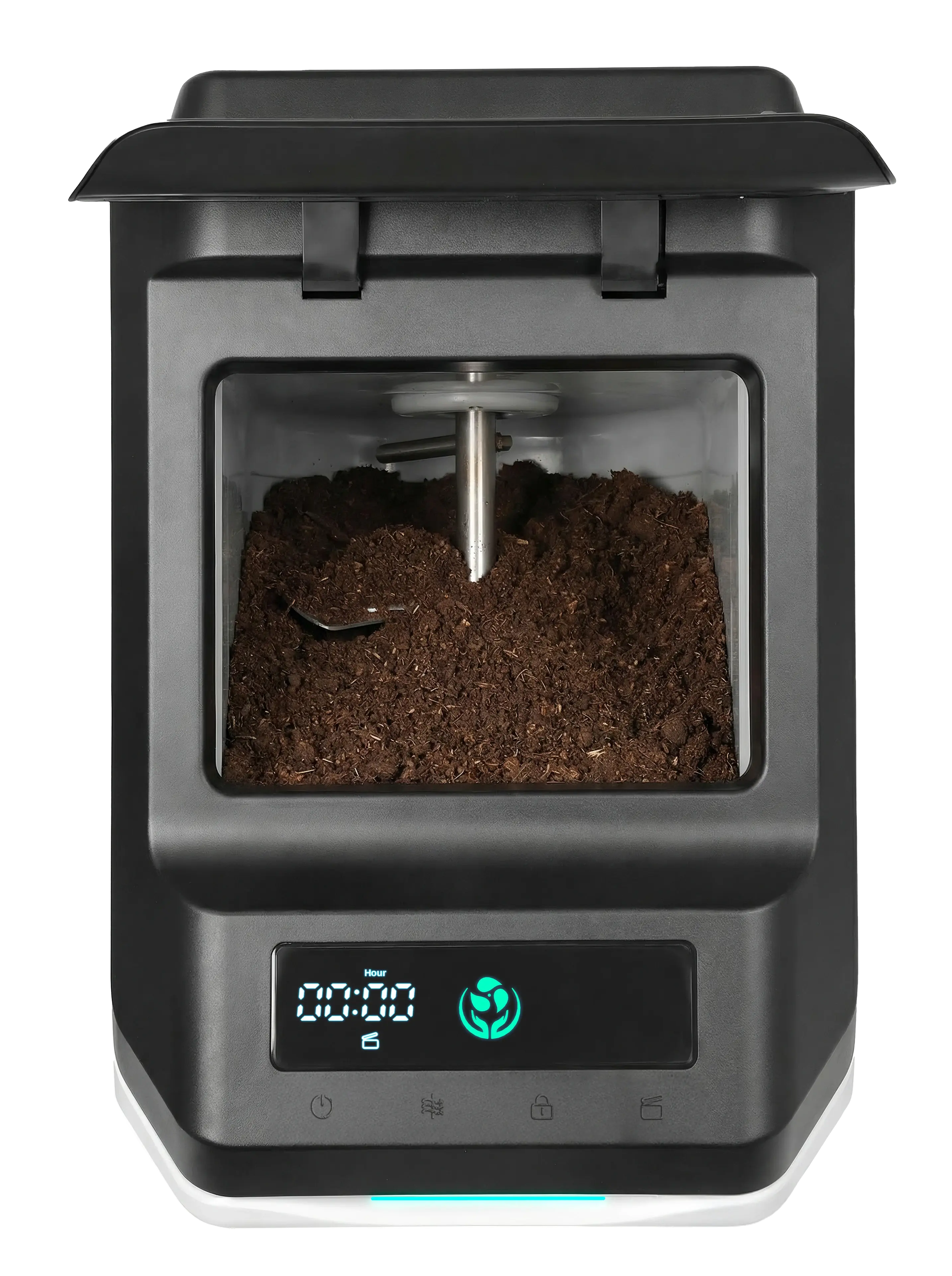
Keep the biological process alive and return the output to soil.
Compare Mill With Terra II Before You Buy
Terra II is designed for households that want continuous microbial decomposition, GEMEBrain™ adaptive chamber management, permanent odor purification and a moist compost base for soil integration.
Continuous microbial composting. GEMEBrain™ adaptive control. No routine replacement odor filters.


Hinterlasse einen Kommentar
Alle Kommentare werden vor der Veröffentlichung geprüft.
Diese Website ist durch hCaptcha geschützt und es gelten die allgemeinen Geschäftsbedingungen und Datenschutzbestimmungen von hCaptcha.