


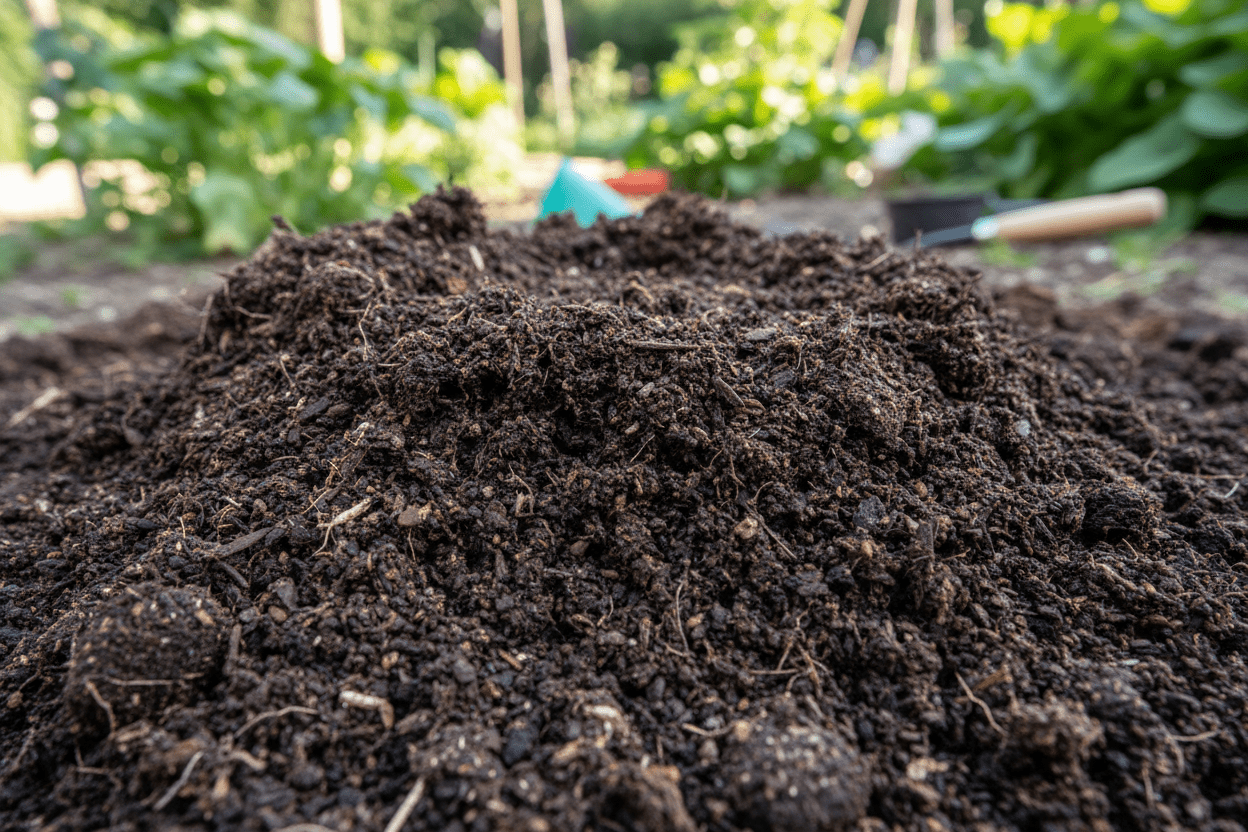
Producto de GEME, estándar de humedad y uso con tierra
Muchas personas asumen que un mejor compostador doméstico debe producir un producto más seco. En el caso de GEME, ese es el estándar equivocado. GEME está diseñado para el compostaje microbiano real, por lo que el producto previsto es una base de compost húmeda y similar al suelo, no virutas secas.
La humedad es parte del proceso biológico. El verdadero estado de alerta no es que esté «húmedo» en general. El estado de alerta se da cuando la cámara se vuelve fangosa, pegajosa, compacta o difícil de airear.
Regla sencilla: juzga el producto de GEME por su utilidad biológica y su aptitud para integrarse con la tierra, no por su aspecto deshidratado.
Es normal que sea húmedo y similar al suelo. Si está fangoso o pegajoso, necesita recuperación.
Respuesta rápida
El producto de GEME debe ser húmedo y similar al suelo, no seco y desmenuzable como virutas deshidratadas. Esto se debe a que GEME está diseñado para favorecer el compostaje microbiano en lugar de simplemente eliminar el agua de los restos de comida.
Que esté húmedo no significa automáticamente que algo haya salido mal. Es normal que la base de compost sea húmeda, ligeramente húmeda y similar al suelo. La cámara necesita atención cuando el material se vuelve fangoso, pegajoso, pastoso, compacto o dificulta el paso del aire.
GEME tampoco significa «compost terminado cada vez en 6–8 horas». La interpretación correcta es que el sistema forma rápidamente una base de compost de alta actividad, mientras que el grado de madurez varía en un sistema de flujo continuo. Los trozos más grandes se pueden tamizar y devolver al siguiente ciclo.
Lecturas relacionadas: cómo funciona un compostador eléctrico real, guía avanzada de aplicación del compost de GEME y prueba NPK del compost producido en casa.
Índice
- Preguntas y respuestas en breve
- La verdad en 90 segundos
- Comprobación de idoneidad para la cocina
- Decisión rápida
- Por qué es importante el estándar húmedo
- Por qué es más honesto
- Lógica del producto de Terra II
- Lógica del producto de GEME Pro
- Trabajo oculto vs. espacio libre
- Reglas prácticas para decidir
- Preguntas frecuentes
- Resumen
- Fuentes
- Artículos relacionados
1. Preguntas y respuestas en breve
¿El producto de GEME debe ser seco y desmenuzable como virutas?
No. El producto de GEME debe ser húmedo y similar al suelo. Los usuarios esperan virutas secas de la deshidratación. GEME está diseñado para favorecer un proceso microbiano vivo, por lo que el estándar del producto es una base de compost utilizable para mezclar con tierra.
¿Que esté «húmedo» significa que algo ha salido mal?
No necesariamente. El objetivo correcto es una base de compost húmeda y con actividad microbiana. El estado de alerta se da cuando el material está demasiado húmedo, fangoso, pegajoso, pastoso o compacto.
¿Se supone que el producto debe ser compost terminado cada vez?
No. La orientación de 6–8 horas debe entenderse como la formación de una base de alta actividad, no como una garantía de que cada resto de cada aporte se convierta uniformemente en compost terminado en pocas horas.
¿Qué ocurre si hay trozos más grandes en el producto?
Es normal que haya trozos más grandes en un sistema de flujo continuo. Tamízalos y devuélvelos a la cámara para que se descompongan más.
¿Cómo debo utilizar el producto con la tierra?
Tamiza el producto, devuelve los restos sin terminar y mezcla la base de compost con tierra. Un punto de partida práctico es mezclar 1 parte de base de compost de GEME con 8–10 partes de tierra, ajustando la proporción según la sensibilidad de las plantas.
2. La verdad en 90 segundos
La mayoría de la gente asume que «un mejor compostador» significa «un producto más seco». Parece lógico porque muchos aparatos domésticos para restos de comida principalmente calientan, secan y trituran los restos. Pero ese no es el estándar adecuado para GEME.
GEME está diseñado como un sistema microbiano aeróbico de flujo continuo, no como un deshidratador de restos de comida. El producto previsto es una base de compost húmeda y similar al suelo que puede integrarse con la tierra, no un residuo inerte y quebradizo obtenido al eliminar el agua.
Esto también significa que hay un límite importante que debe quedar claro: GEME no garantiza compost terminado cada vez en pocas horas. La afirmación correcta es que GEME favorece la formación de una base de compost de alta actividad y el procesamiento microbiano continuo, mientras que el grado de madurez varía según el patrón de alimentación, el tipo de aporte, el curado y el tamizado.
Si el producto está húmedo, similar al suelo y ocasionalmente contiene trozos más grandes que deben tamizarse y devolverse, suele ser parte normal del funcionamiento de flujo continuo, no una prueba de que la máquina haya fallado.
3. Comprobación de idoneidad para la cocina
P1. ¿Qué te daría más tranquilidad?
- Que el producto se mantenga húmedo y biológicamente útil.
- Que el producto se vea completamente seco de inmediato.
P2. Cuando compruebas el compost, ¿qué es lo que más te preocupa?
- Ver humedad.
- Ver algunos trozos más grandes.
- No saber si está listo para usar con tierra.
P3. ¿Cómo quieres utilizar el producto?
- Mezclarlo con tierra para macetas o tierra de jardín.
- Utilizarlo como un ligero acolchado.
- Comprobar principalmente si la textura es normal.
Conclusión en una frase: la pregunta correcta no es «¿Está lo suficientemente seco?», sino «¿Es el tipo de base de compost adecuado para integrarlo con la tierra?»
4. Decisión rápida
Elige la lógica del producto de GEME si...
- Quieres una base de compost, no virutas deshidratadas.
- Te resulta normal tamizar y devolver los restos como un paso habitual.
- Entiendes que usarlo con tierra significa mezclarlo, no plantar directamente en el producto puro.
- Prefieres un sistema vivo de flujo continuo a un residuo seco por lotes.
Recalibra tus expectativas si...
- Asumes que más seco siempre es mejor.
- Esperas que cada cosecha se vea perfectamente uniforme.
- Consideras cualquier trozo más grande como prueba de fallo.
- Esperas compost terminado de cada aporte fresco en pocas horas.
GEME está diseñado para producir primero una base de compost biológicamente útil y, en segundo lugar, una apariencia visual perfectamente uniforme.
5. Por qué es importante el estándar húmedo
Un producto de aspecto seco no es lo mismo que un producto vivo
La sequedad puede resultar tranquilizadora, pero la sequedad por sí sola no demuestra un compostaje biológico. En un sistema de compostaje vivo, un secado agresivo puede ralentizar la actividad microbiana. El objetivo de GEME no es obtener el residuo de aspecto más seco. Es mantener una base de compost húmeda que pueda integrarse con la tierra.
«Húmedo» no es lo mismo que «demasiado húmedo»
Los usuarios suelen agrupar varios estados diferentes en una sola palabra. En la práctica, estos estados deben diferenciarse:
- Húmedo y similar al suelo: objetivo normal.
- Base activa, ligeramente húmeda y exprimible: a menudo sigue siendo normal.
- Pasta fangosa, pegajosa, pastosa o compacta: demasiado húmeda y necesita recuperación.
La humedad favorece la actividad microbiana. El problema comienza cuando el exceso de humedad reduce el flujo de aire, compacta el material y reduce el margen de actividad aeróbica.
Los sistemas de flujo continuo producen naturalmente una madurez mixta
GEME es un sistema de flujo continuo. Pueden entrar nuevos materiales mientras los más antiguos continúan descomponiéndose. Eso significa que la uniformidad visual no es el único indicador de éxito. La integración funcional con la tierra, el equilibrio de humedad y el flujo de trabajo de tamizar y devolver son más importantes.
6. Por qué el «estándar húmedo» es más honesto
Muchos consumidores solo conocen dos modelos mentales: una pila de compostaje al aire libre o un dispositivo de cocina que produce un resultado seco. GEME pertenece a una categoría diferente. Es un sistema microbiano controlado para interiores que utiliza electricidad para favorecer la biología, no simplemente para secar los residuos de alimentos.
Si una marca promete compost terminado, perfectamente uniforme y completamente seco en todo momento, está simplificando demasiado la biología. El estándar más útil de GEME consiste en explicar que el resultado es húmedo, similar a la tierra, variable y destinado a mezclarse con el suelo.
El estándar visual incorrecto conduce a la decisión de compra equivocada.
Las virutas secas pueden parecer ordenadas, pero una base de compost húmeda se acerca más a la lógica biológica en la que se basa GEME.
7. Lógica de producción de Terra II
Terra II está diseñada para ofrecer a los hogares una rutina práctica de compostaje microbiano. No está pensada para convertir todos los restos en gránulos secos idénticos. Su lógica de producción se basa en una base viva, alimentación continua, cribado y retorno, y mezcla con el suelo.
Para la mayoría de los hogares, esa es la promesa más útil. Una base de compost húmeda puede favorecer la integración con el suelo, mientras que los residuos secos de la deshidratación suelen requerir un procesamiento biológico adicional antes de usarse responsablemente con las plantas.
Lógica de uso de Terra II
- Mantén una base viva en la cámara.
- Añade restos de cocina adecuados según las indicaciones.
- Deja que el sistema mantenga un entorno cálido, húmedo y rico en oxígeno.
- Criba las piezas más grandes durante la cosecha.
- Devuelve los fragmentos sin terminar a la cámara.
- Mezcla el resultado cribado con tierra antes de usarlo con las plantas.

Diseñado para una base de compost húmeda, no para virutas secas.
Conoce GEME Terra II
Terra II favorece el compostaje microbiano real de restos de cocina adecuados, con alimentación continua, sin secado, sin filtros de olor de repuesto y una base de compost húmeda para mezclar con el suelo.
Base de compost húmeda. Mezcla con el suelo. Sin estándar de virutas secas.
8. Lógica de producción de GEME Pro
GEME Pro sigue la misma filosofía de producción, pero con un margen de funcionamiento mayor. Una mayor capacidad no convierte el sistema en una máquina de virutas secas. Sigue aplicándose la misma lógica biológica: sustrato activo, funcionamiento continuo, cribado y retorno, e integración con el suelo.
Para hogares más grandes, tiendas de plantas o rutinas más intensas, Pro ofrece más margen. Pero los clientes aún deben esperar una base de compost húmeda, no un producto terminado perfectamente seco y visualmente uniforme.
9. Trabajo oculto frente a margen
Una cantidad sorprendente de fricción del usuario proviene de esperar el resultado visual incorrecto. Si un cliente asume que el éxito debe verse completamente seco y uniforme, el resultado normal de GEME puede generar preocupaciones innecesarias.
- «¿Por qué sigue húmedo?»
- «¿Por qué hay una pieza más grande?»
- «¿Por qué no parece compost en bolsa?»
Esas son preguntas sobre expectativas, no sobre fallos automáticos de la máquina. Una vez que el estándar está claro, el modelo de responsabilidad se vuelve más tranquilo:
- Que sea húmedo y similar a la tierra es normal.
- Que esté embarrado o pegajoso es la verdadera señal de alerta.
- Las piezas más grandes se devuelven.
- La mezcla con el suelo es el siguiente paso previsto.
10. Reglas prácticas para tomar decisiones
Juzga el resultado por su utilidad biológica, no por su estética deshidratada.
- Si el resultado está húmedo y similar a la tierra, generalmente es normal.
- Si el resultado se vuelve embarrado o pegajoso, pausa la entrada y deja que el sistema se recupere.
- Si ves piezas más grandes, cribalas y devuélvelas.
- Si quieres usarlo con plantas, mézclalo con tierra en lugar de tratarlo como sustrato puro para plantas.
- Si esperas que cada cosecha se vea idéntica, recalibra la expectativa: este es un sistema vivo de flujo continuo, no una máquina de lotes secos.
Lista de verificación para copiar/pegar
- Entiendo que el resultado de GEME debe ser húmedo y similar a la tierra, no virutas secas.
- Entiendo que «6–8 horas» no significa compost terminado en todo momento.
- Entiendo que el cribado y retorno es parte del uso normal.
- Entiendo que embarrado o pegajoso es la verdadera señal de alerta de «demasiado húmedo».
- Entiendo que el resultado está destinado a mezclarse con tierra, no a usarse como sustrato puro para plantas.

Criba, devuelve y mezcla con tierra.
Elige un compostador diseñado para el retorno al suelo
GEME Terra II y GEME Pro ayudan a los hogares a convertir restos de cocina adecuados en una base de compost para mezclar con el suelo. El resultado debe usarse como base de compost, no juzgarse como virutas de residuos deshidratados.
Terra II para hogares cotidianos. GEME Pro para rutinas diarias más intensas.
Preguntas frecuentes
¿Cómo debe sentirse el resultado de GEME?
Generalmente debe sentirse húmedo y similar a la tierra, no seco y desmenuzable como virutas. El resultado debe tratarse como una base de compost para mezclar con el suelo.
¿Es normal que el resultado de GEME esté húmedo?
Sí, si «húmedo» significa húmedo y similar a la tierra. El estado de alerta es cuando el material se vuelve embarrado, pegajoso, pastoso o compactado.
¿GEME produce compost terminado en 6–8 horas?
No. El límite más preciso es que 6–8 horas se refiere a la formación de una base de compost de alta actividad, no a compost terminado garantizado en todo momento a partir de cualquier entrada.
¿Por qué a veces todavía hay piezas más grandes en el resultado?
Porque la madurez varía en un sistema de flujo continuo. Criba las piezas más grandes y devuélvelas a la cámara para un mayor procesamiento.
¿El resultado de GEME debe estar seco para demostrar que funcionó?
No. La sequedad no es el estándar de éxito adecuado para GEME. GEME está diseñado para el compostaje microbiano húmedo, no para la simple deshidratación.
¿Cómo se ve «demasiado húmedo» en GEME?
Demasiado húmedo generalmente significa embarrado, pegajoso, pastoso, compactado o difícil de airear. En ese caso, pausa la entrada de nuevos materiales y deja que el sistema se recupere según las indicaciones del producto.
¿Puedo usar el resultado de GEME directamente como tierra para macetas?
No. No uses el resultado puro de GEME como tierra para macetas. Criba, devuelve las piezas grandes y mezcla la base de compost con tierra antes de usarla con plantas.
¿Qué proporción de tierra debo usar con el resultado de GEME?
Un punto de partida práctico es aproximadamente 1 parte de base de compost de GEME por 8–10 partes de tierra. Usa menos para plantas sensibles, plántulas o macetas pequeñas.
¿El cribado y retorno es una señal de que la máquina falló?
No. El cribado y retorno es un flujo de trabajo normal para un sistema de compostaje continuo.
¿Cuál es la regla visual más importante para el resultado de GEME?
No lo juzgues por su sequedad. Juzga si es una base de compost húmeda y similar a la tierra que puede cribarse y mezclarse con tierra.
Resumen
- El resultado de GEME no debe juzgarse por estándares de virutas secas. Húmedo y similar a la tierra es la base correcta.
- La humedad favorece la actividad microbiana. La sequedad por sí sola no es prueba de un mejor compostaje.
- Demasiado húmedo significa embarrado, pegajoso, pastoso o compactado. Es entonces cuando se necesita la recuperación.
- 6–8 horas no significa compost terminado en todo momento. Se refiere a la formación de una base de alta actividad.
- El resultado de flujo continuo varía. Pueden aparecer piezas más grandes y deben devolverse al ciclo.
- El cribado y retorno es normal. Es parte del mantenimiento de un sistema de compostaje vivo.
- El uso con tierra significa mezclar. El resultado de GEME debe mezclarse con tierra aproximadamente en una proporción de 1:8–1:10, no usarse como sustrato puro para plantas.
- El mejor estándar: base de compost húmeda, similar a la tierra y utilizable para la integración con el suelo.
Fuentes
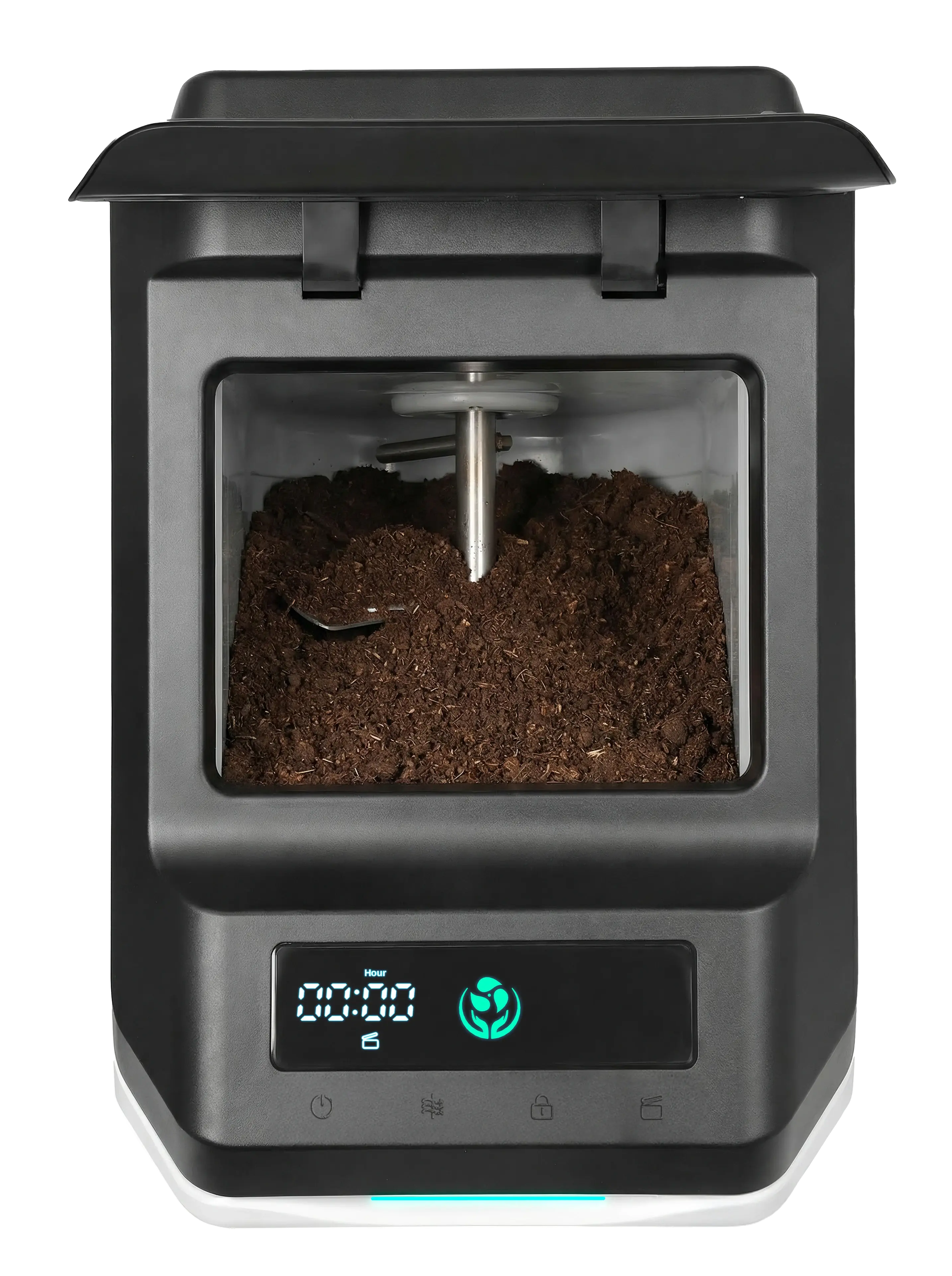
Use el estándar adecuado para el compostaje microbiano real.
Comience con el estándar adecuado de compost resultante
GEME Terra II y GEME Pro están diseñados para el compostaje microbiano real, alimentación diaria continua, sin necesidad de reemplazar los filtros de olores de forma rutinaria, y una base de compost húmedo para mezclar con la tierra.
Base de compost húmeda, similar a la tierra. Tamice, devuelva y mezcle con la tierra.



Dejar un comentario
Todos los comentarios se revisan antes de su publicación.
Este sitio está protegido por hCaptcha y se aplican la Política de privacidad de hCaptcha y los Términos del servicio.