


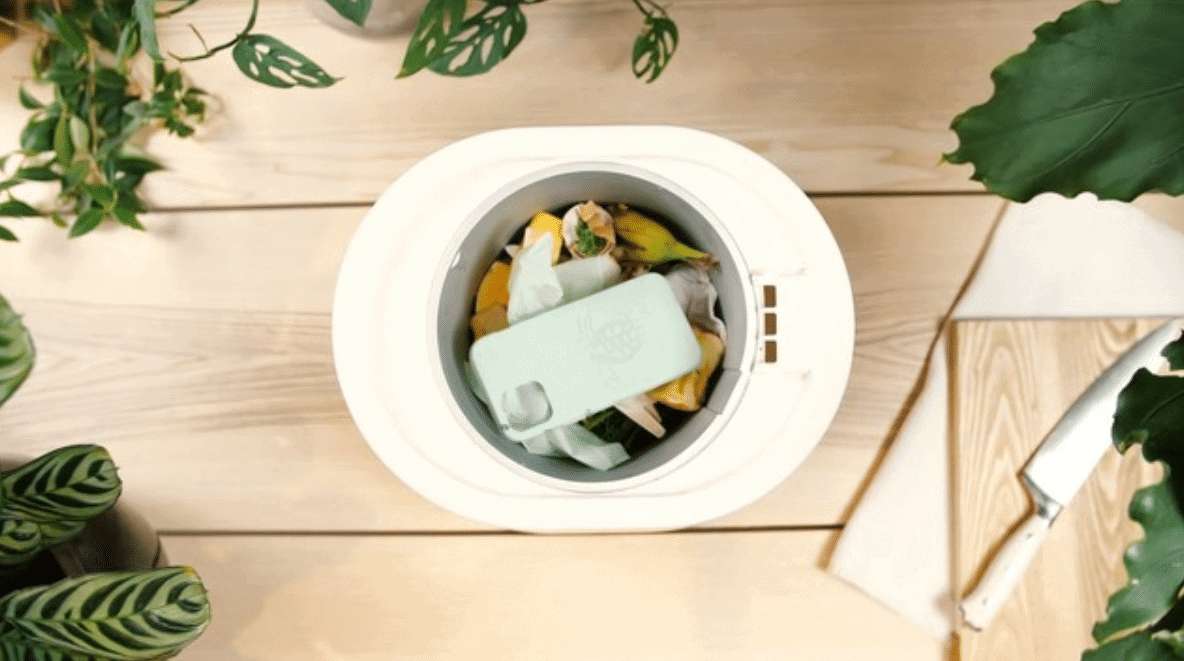
Lomi Alternative Buying Guide
The best Lomi alternative is not simply another machine that dries food scraps faster. It is the machine that delivers the outcome Lomi does not fully prioritize for you.
Lomi 3 is a compact countertop food recycler built around batch heating, grinding, volume reduction and charcoal-filter odor control. Its own product page describes the output as technically being pre-compost.
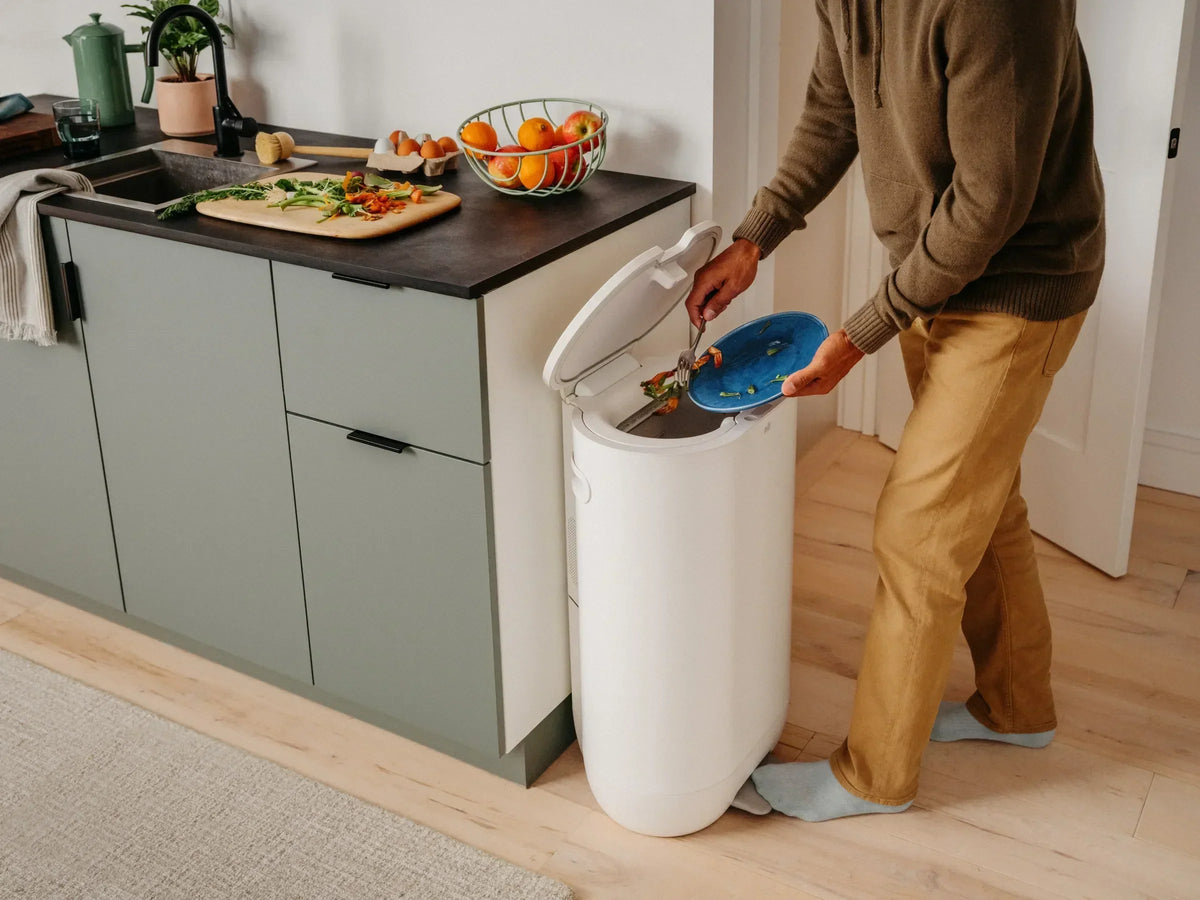
GEME Terra II is a floor-standing, continuous-feed microbial composter. It maintains a warm, moist and oxygen-rich chamber so living microbes can biologically break down food scraps into a moist compost base for soil integration.
Choose based on the process and output you want, not on which product uses the word “composter” most prominently.
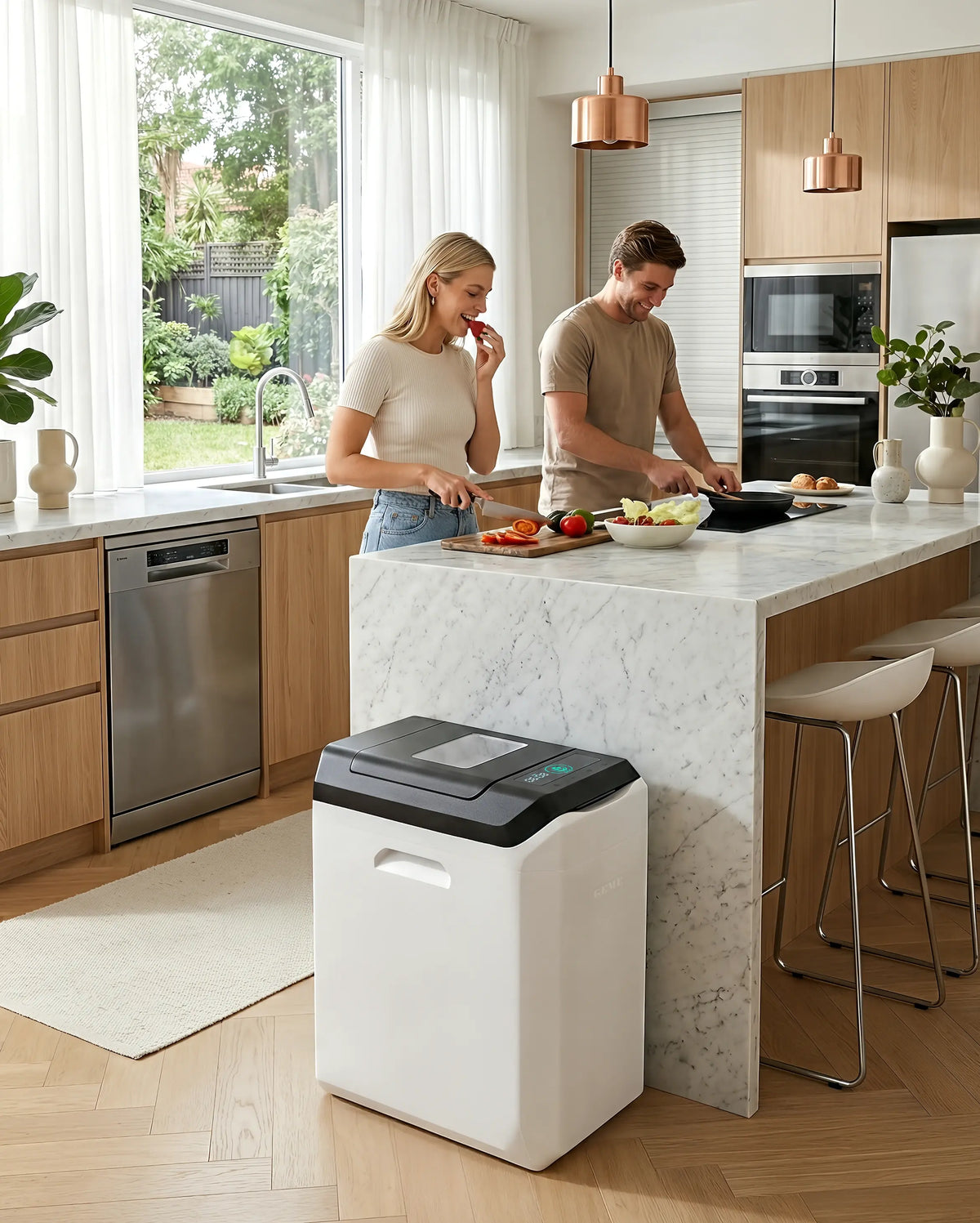
Batch food-scrap reduction versus continuous microbial composting.
Quick Answer: What Is the Best Lomi Alternative?
GEME Terra II is the strongest Lomi alternative for households that want real microbial composting rather than batch drying and grinding.
Terra II offers a 14 L continuous-feed chamber, adaptive biological-process management through GEMEBrain™, permanent metal-ion odor purification without routine replacement filters and a moist compost base designed to be mixed with soil.
Lomi remains a reasonable choice when compact countertop placement, quick batch processing and dry volume reduction matter more than continuous feeding or biologically processed compost output.
For the underlying category distinction, read Does the Lomi Composter Really Compost? and Real Compost vs Dehydrated Scraps.
The 60-Second Verdict
Choose Lomi 3
You want a compact countertop appliance, prefer fill-run-empty batch cycles and mainly want to reduce food-scrap moisture, smell and volume.
Choose Terra II
You want continuous feeding, microbial decomposition, higher household capacity, automatic chamber management and a compost base for soil use.
Compare Carefully
You have very limited space or no use for compost output. Placement and output management may matter more than the biological process.
Table of Contents
- Why Look for a Lomi Alternative?
- Lomi 3 vs GEME Terra II
- Which One Produces Real Compost?
- Batch Cycles vs Continuous Feeding
- Capacity and Household Throughput
- Automation and Process Management
- Odor Control and Filter Costs
- Food Inputs and Boundaries
- Space, Noise and Energy
- Long-Term Ownership
- When Lomi Is the Better Choice
- When Terra II Is the Better Choice
- Frequently Asked Questions
- Final Verdict
- Sources
- Related Guides
Why Look for a Lomi Alternative?
Lomi helped make electric food-scrap processing understandable to a large consumer audience. Its countertop format, one-button cycles and odor-control system can make wet food waste easier to store and manage.
Buyers usually start looking for a Lomi alternative when one or more priorities change:
- They want continuous feeding instead of waiting for batch cycles.
- They generate more scraps than a 3 L bucket comfortably supports.
- They want biological composting rather than mainly heating and grinding.
- They want a moist compost base rather than dry or pre-compost output.
- They want to avoid routine charcoal-filter purchases.
- They want a self-sustaining microbial ecosystem rather than adding a pod for selected cycles.
- They prefer an appliance that automatically manages a living compost environment.
These priorities do not make Lomi a bad appliance. They indicate that the buyer is moving from a food-recycling objective toward a composting objective.
Lomi 3 vs GEME Terra II: Head-to-Head Comparison
| Comparison Point | Lomi 3 | GEME Terra II |
|---|---|---|
| Product category | Countertop food recycler. | Continuous microbial bio-composter. |
| Main process | Heating, grinding, airflow and moisture control during a batch cycle. | Aerobic microbial breakdown in a warm, moist, oxygen-rich chamber. |
| Workflow | Fill, select mode, run cycle and manage output. | Add scraps anytime and harvest compost base when needed. |
| Capacity | 3 L bucket. | 14 L continuous-feed chamber. |
| Cycle or throughput | Express Mode 3–6 hours; Grow Mode 11–17 hours. | Continuous operation; current specifications list up to 2 kg per day. |
| Output description | Lomi Earth; Lomi’s official page also describes it as technically pre-compost. | Moist, biologically active compost base for soil integration. |
| Process automation | Sensors optimize defined batch cycles; app control is available. | GEMEBrain™ adjusts heat, airflow, moisture and mixing continuously. |
| Odor system | Replaceable charcoal filtration. | Permanent metal-ion oxidation; no routine odor-filter replacement. |
| Microbial input | LomiPod recommended with water for Grow Mode. | Kobold™ starter establishes a self-replicating microbial ecosystem; top-ups are optional. |
| Placement | Compact countertop design. | Floor-standing design requiring dedicated space. |
| Best for | Fast, compact, batch-based food-scrap reduction. | Continuous household composting and soil return. |
Which Lomi Alternative Produces Real Compost?
This is the most important distinction in the comparison.
EPA defines composting as the managed, aerobic biological decomposition of organic materials by microorganisms. The end product is a biologically stable soil amendment.
EPA separately states that residential grinders and dehydrators do not produce compost directly. They produce a dried food-scrap mixture that should be composted, cured or otherwise further treated before use.
Lomi’s current product page is more transparent than many category descriptions: it states that Lomi Earth is technically pre-compost. Lomi recommends mixing the output with soil and provides different modes for different output goals.
Terra II follows a different process. Kobold™ microbes remain active inside a controlled aerobic chamber, while GEMEBrain™ manages the environment that supports biological breakdown. The output is moist and soil-like rather than dry grounds.
Buying rule:
If the main goal is smaller food waste, evaluate the recycling workflow. If the main goal is compost, evaluate the biology.
Continue to Kitchen Composter vs Food Waste Recycler for the complete category framework.
Batch Cycles vs Continuous Feeding
Lomi 3 Workflow
- Fill the 3 L bucket with an appropriate mix.
- Select Express Mode or Grow Mode.
- Allow the cycle to run for several hours.
- Remove or retain the output according to the next intended use.
- Run another cycle when the bucket is ready.
- Use the cleaning cycle when needed.
Terra II Workflow
- Complete the one-time microbial setup.
- Add suitable food scraps whenever they appear.
- Allow GEMEBrain™ to manage the chamber continuously.
- Keep part of the living compost base inside the machine.
- Harvest mature-looking material when needed.
- Sift larger pieces back into the chamber.
Neither workflow is universally better. Batch operation creates a defined start and finish. Continuous operation removes the need to schedule each load.
Daily cooks often benefit more from continuous feeding because scraps appear after breakfast, preparation, dinner and cleanup rather than in one perfectly timed batch.
Capacity: 3 L Countertop Bucket vs 14 L Living Chamber
Lomi 3 and Terra II should not be compared only by exterior size. Their internal capacity reflects two different operating models.
Lomi 3 uses a 3 L removable bucket. That compact size is a major advantage for small countertops, but it also means larger households may need to store scraps while a cycle is running or operate multiple batches.
Terra II uses a 14 L chamber that retains an active microbial bed. Its current specifications list processing capacity up to 2 kg per day for ordinary household use.
Lomi Capacity Advantage
Compact placement and a removable bucket that is easy to carry and manage.
Terra II Capacity Advantage
More room for continuous household input without waiting for each batch to finish.
Measure both your physical space and your weekly scrap volume. A smaller machine saves space only when its batch capacity still matches the household.
Automation: Smart Cycles vs Adaptive Biological Control
Both products use sensors, but they automate different processes.
Lomi 3 controls temperature, moisture and airflow within a selected batch mode. The app can start or stop cycles and provide remote control.
Terra II uses GEMEBrain™ to continuously adjust airflow, moisture, heat and mixing around an active microbial ecosystem. The purpose is not merely to complete a cycle but to maintain biological conditions over time.
| Automation Question | Lomi 3 | Terra II |
|---|---|---|
| What is being optimized? | A selected batch cycle. | A continuous microbial chamber. |
| Does the user choose a mode? | Yes. | Normal composting begins automatically after feeding. |
| Does it reduce manual compost management? | It replaces traditional pile work with an automated processing cycle. | It automates the environmental management of a living compost process. |
Learn more in How Does a Real Electric Composter Work?
Odor Control and Replacement Filters
Both products are designed to improve the odor experience compared with leaving wet food scraps in an open kitchen bin. The ownership model is different.
Lomi 3
Lomi 3 uses a charcoal filtration system. Its official product page includes starter filters and currently offers a membership with recurring filter shipments. The page lists four filter refills as approximately one year of supply, billed at $120 plus tax per year under the membership terms displayed at the time of review.
Terra II
Terra II uses industrial metal-ion oxidation to break down odor molecules. The odor system is built in and does not require routine replacement charcoal filters.
Terra II also keeps the chamber aerobic through managed airflow. This matters because stagnant, oxygen-poor food waste is more likely to develop unpleasant odors.
Ownership question:
Do you prefer a replaceable adsorption filter or a permanent purification system?
Review the full cost framework in Electric Composter Filter Costs and Permanent Odor Control vs Disposable Carbon.
What Food Can Go In?
Both machines accept a broad range of ordinary food scraps, including fruits, vegetables, grains and many cooked leftovers. Neither machine is an unrestricted garbage disposal.
Lomi Boundaries
Lomi’s official input guide warns against hard bones, hard shells, fruit pits, excess oils, liquids, high-sugar loads and excessive starch because they can damage the grinder or produce burnt, sticky or clumpy output.
Terra II Boundaries
Terra II can process meat, dairy and suitable small bones as part of a varied input mix. Large dense bones, hard pits, shells, plastics, metal, glass, long stringy materials and excessive free liquid should remain outside the chamber.
GEMEBrain™ can respond to chamber conditions, but automation cannot make plastic biodegradable or turn every hard object into an appropriate input.
Use the complete Electric Composter Input Guide and Salt & Oil Boundaries .
Space, Noise and Energy
| Factor | Lomi 3 | Terra II |
|---|---|---|
| Dimensions | 11 × 11 × 12 inches. | Approximately 11.7 × 17.2 × 22.3 inches. |
| Placement | Countertop. | Dedicated floor space. |
| Official noise specification | Under 45 dB for Lomi 3. |
≤ 40 dB continuous operation; perception varies by placement and operating stage.
|
| Energy model | Approximately 1.0 kWh for Express and 1.1 kWh for Grow, according to the current product page. | Continuous adaptive operation rather than a fixed per-batch cycle. |
Lomi has the clear space advantage. Terra II has the capacity and continuous-workflow advantage.
Energy should be evaluated using the household’s actual use pattern. A per-cycle machine may run repeatedly in a high-scrap household, while a continuous machine maintains its environment throughout the day.
Long-Term Ownership: Look Beyond the Machine Price
Checkout price is only one part of the comparison. A useful ownership calculation includes:
Purchase price
+ electricity
+ charcoal filters
+ microbial pods or optional top-ups
+ cleaning and replacement parts
+ the time required to load, run, empty and manage output
| Ownership Item | Lomi 3 | Terra II |
|---|---|---|
| Odor-filter replacement | Yes; charcoal is replaced periodically. | No routine replacement odor filter. |
| Microbial product | LomiPod recommended for Grow Mode output. | Starter included; Kobold™ top-up is optional under normal conditions. |
| Routine workflow | Repeated batch loading, cycle selection and output emptying. | Continuous feeding with periodic harvesting. |
| Main ownership trade-off | Smaller footprint but recurring filtration and batch management. | Larger footprint but lower routine consumable dependence and continuous operation. |
Verify the live prices and subscription terms on both official product pages. Avoid using an old review’s purchase price as the sole basis for a current decision.
When Lomi 3 May Be the Better Choice
Lomi 3 may be the better fit when:
- You need an appliance that fits on a countertop.
- You generate relatively small batches of food scraps.
- You prefer a clear fill-run-empty routine.
- You want dry, reduced-volume output within hours.
- You prefer app-based remote cycle control.
- You are comfortable replacing charcoal filters.
- Your main goal is cleaner food-waste storage rather than continuous composting.
A fair alternative page should acknowledge these strengths. Terra II is not the best replacement for a buyer whose highest priority is fitting a machine into a very small countertop space.
When GEME Terra II Is the Better Lomi Alternative
Terra II is likely the better Lomi alternative when:
- You want real microbial decomposition rather than primarily dehydration.
- You want to add food scraps throughout the day.
- Your household regularly exceeds a small countertop bucket.
- You want a moist compost base for gardening or soil use.
- You want GEMEBrain™ to automate airflow, moisture, heat and mixing.
- You want to avoid routine charcoal-filter replacement.
- You prefer periodic harvesting over repeated batch emptying.
- You can provide dedicated floor space.
The strongest Terra II purchase case is not that it performs the same task as Lomi more aggressively. It is that it performs a different biological task.
Terra II keeps the microbial process alive and continuous. That is why it should be evaluated as a Lomi alternative for composting—not simply as a larger Lomi.

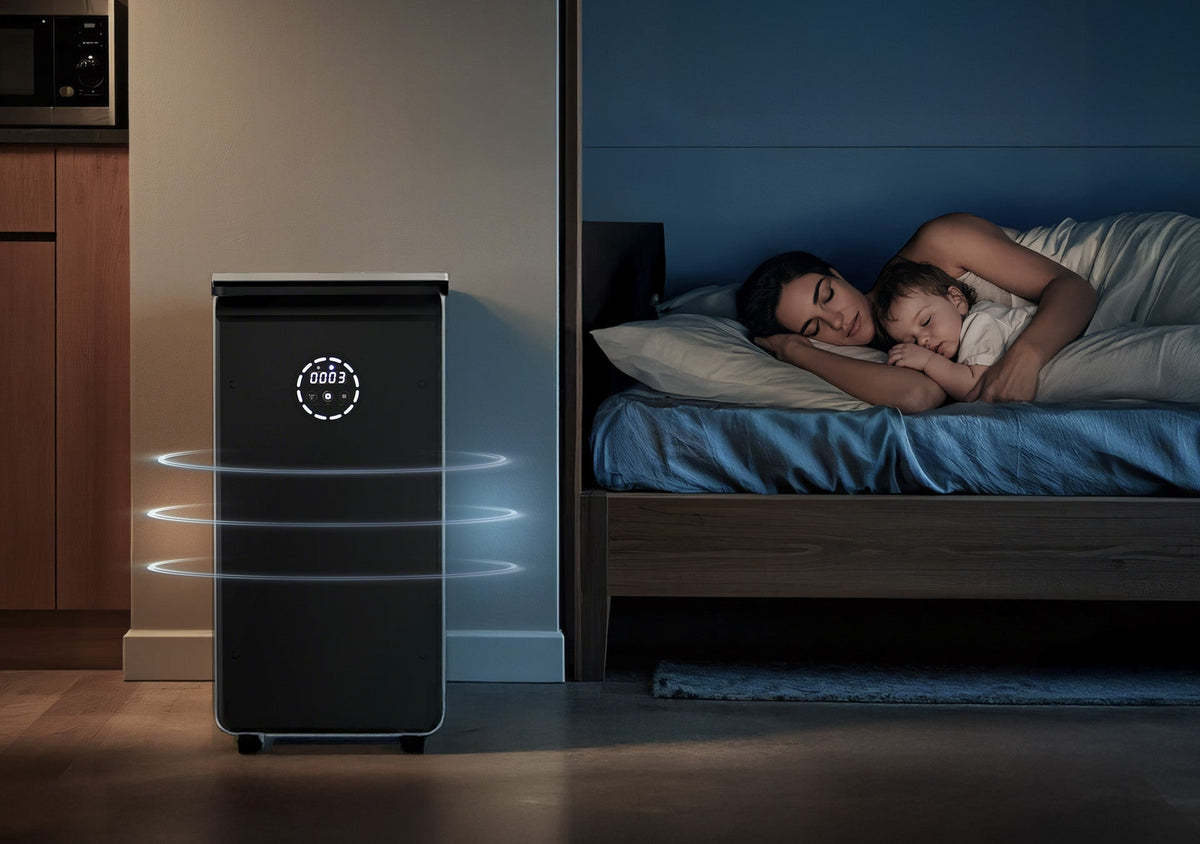
A continuous microbial chamber built for composting.
Looking for Real Compost Instead of Pre-Compost?
Terra II combines a 14 L continuous-feed chamber, Kobold™ living microbes, GEMEBrain™ adaptive control and permanent odor purification to create a simpler kitchen-to-soil routine.
Review live pricing, delivery status, dimensions and regional purchase terms on the product page.
Frequently Asked Questions
What is the best Lomi alternative?
GEME Terra II is a strong Lomi alternative for households that want continuous microbial composting, a larger chamber, no routine replacement odor filters and a moist compost base for soil integration.
Is Terra II the same kind of machine as Lomi?
No. Lomi is positioned as a countertop food recycler using heating and grinding cycles. Terra II is a continuous aerobic microbial composter that maintains a living biological chamber.
Does Lomi produce compost?
Lomi’s official product page describes Lomi Earth as technically pre-compost. EPA states that residential grinding and dehydrating appliances do not directly produce compost and that their output needs further composting, curing or treatment.
Does Terra II produce finished compost instantly?
No real biological system should be described as instant. Terra II continuously breaks down scraps into a moist compost base. Larger pieces may need to be sifted and returned, and the output should be mixed with soil.
Which machine has greater capacity?
Lomi 3 has a 3 L bucket. Terra II has a 14 L continuous-feed chamber and is currently specified for processing up to 2 kg of suitable kitchen scraps per day.
Does Lomi require replacement filters?
Yes. Lomi uses charcoal filters that are replenished periodically. Check the current official Lomi page for filter and membership pricing.
Does Terra II require replacement odor filters?
No routine odor-filter replacement is required. Terra II uses permanent metal-ion oxidation for odor purification.
Does Terra II require daily manual compost management?
No. GEMEBrain™ automatically adjusts airflow, moisture, heat and mixing. Users mainly add suitable scraps, keep unsuitable materials out and harvest compost base periodically.
Is Lomi better for a small kitchen?
Lomi has a clear footprint advantage because it is designed for countertop placement. Terra II requires dedicated floor space and should be measured before purchase.
Which one is better without a garden?
Lomi may be more straightforward when the goal is dry volume reduction and the output will enter an organics bin. Terra II can still be worthwhile for convenience and odor control, but its compost base needs a responsible destination.
How should Terra II compost output be used?
Sift larger unfinished pieces back into the chamber and mix approximately one part compost base with eight to ten parts soil. Do not use it as a one-to-one replacement for potting soil.
Final Verdict: The Best Lomi Alternative for Real Composting
GEME Terra II is the better Lomi alternative when the purchase goal is continuous real microbial composting.
Terra II offers a larger continuous-feed chamber, automated biological-process management, permanent odor purification and a moist compost base for soil integration.
Lomi 3 remains a credible compact food recycler. Its advantages are countertop placement, clear batch cycles, fast volume reduction, low per-cycle waiting time and app-based control.
Choose Lomi when you want compact food-scrap reduction. Choose Terra II when you want the biological process to continue beyond drying.
Academic, Regulatory and Official Product Sources
- U.S. EPA — Approaches to Composting
- U.S. EPA — Composting at Home
- U.S. EPA — Composting Definition and Benefits
- Lomi — Official Lomi 3 Product Page
- Lomi — Official Inputs, Modes and Output Guidance
- GEME — Official Terra II Product Page
- GEME — Official Inputs, Output and Maintenance FAQ
- GEME — Real Compost vs Dehydrated Scraps
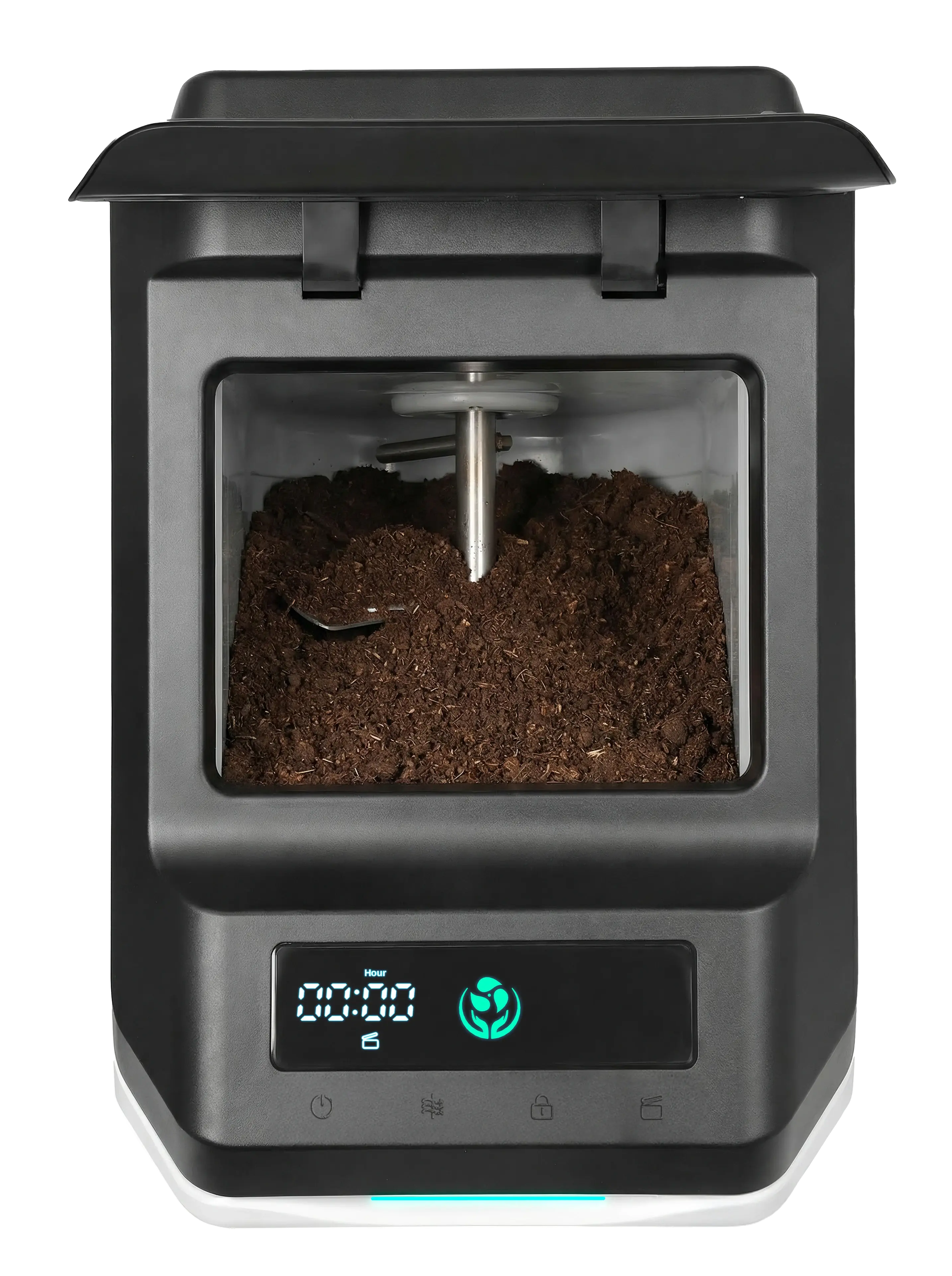
Keep the biology alive and return the output to soil.
Choose the Lomi Alternative Built for Real Composting
Terra II is designed for households that want continuous feeding, automatic microbial-process management, permanent odor purification and a moist compost base, not another batch of dried food grounds.
Continuous microbial composting. GEMEBrain™ adaptive control. No routine replacement odor filters.


Dejar un comentario
Todos los comentarios se revisan antes de su publicación.
Este sitio está protegido por hCaptcha y se aplican la Política de privacidad de hCaptcha y los Términos del servicio.