


Complete Home Composting Guide
Composting at home is the managed biological decomposition of food scraps and other organic materials into material that can support soil.
You can compost with an outdoor pile, enclosed bin, tumbler, worm system, bokashi bucket or a managed microbial home composter. The right method depends on your space, climate, food-waste volume, available time and what you intend to do with the output.
This guide connects the full GEME composting library so you can move from basic principles to practical input limits, odor management, compost maturity and responsible soil use.
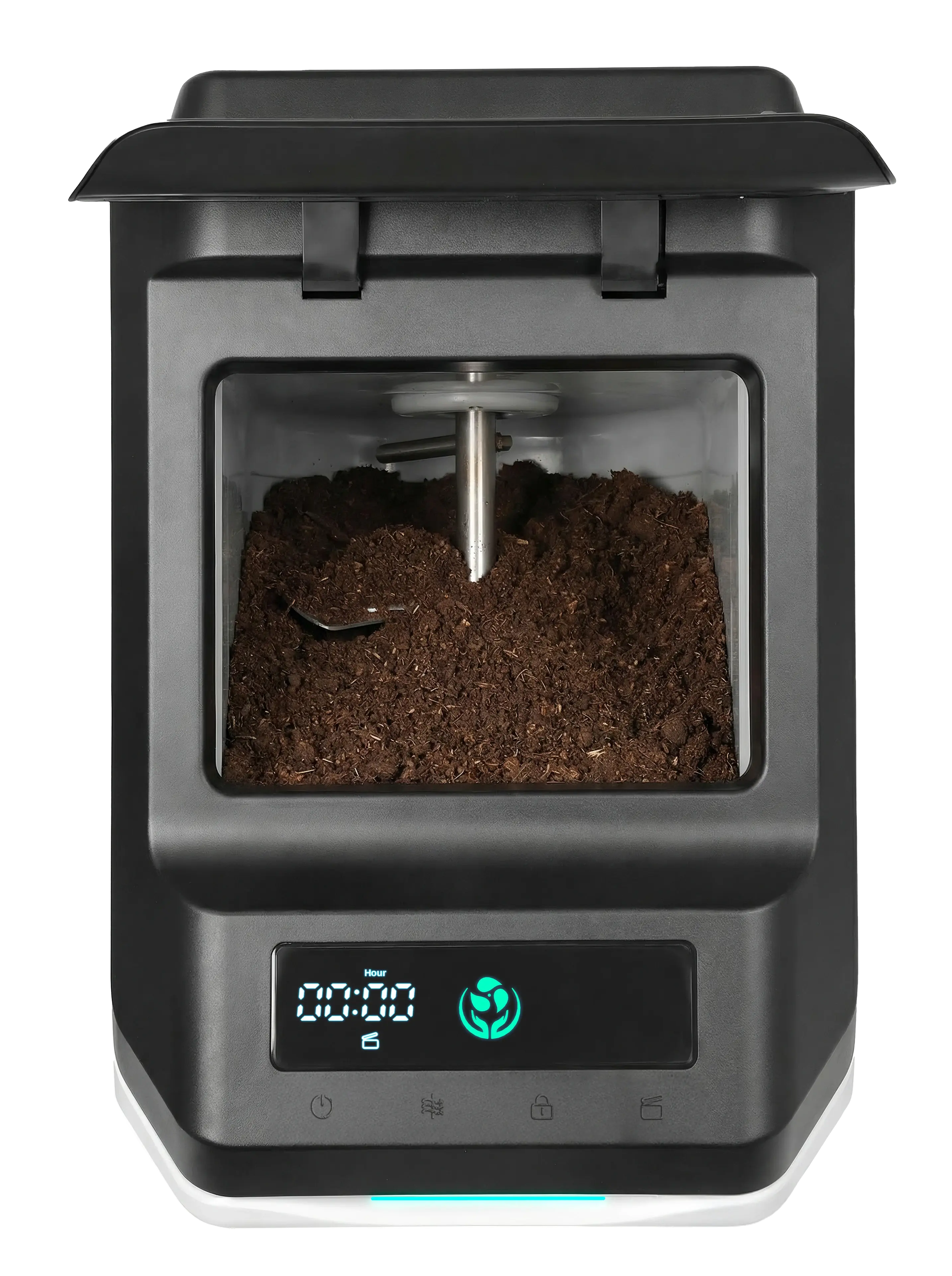
Composting depends on microorganisms, oxygen, moisture, suitable organic inputs and enough time.
How Do You Compost at Home?
Start by choosing a composting system that matches your space and food waste. Add suitable organic materials, maintain oxygen and moisture, avoid overloading the system and give microorganisms enough time to break the material down.
For a traditional outdoor pile, combine food scraps with dry carbon-rich materials such as leaves or shredded cardboard. For worm composting, feed suitable plant scraps gradually. For bokashi, ferment food in a sealed bucket before completing the process in soil or another composting system.
A continuous microbial home composter manages warmth, airflow, moisture and mixing inside a controlled chamber, making it more suitable for households without a garden or those producing food scraps throughout the year.
New to the topic? Begin with the shorter beginner’s guide to composting at home , then return here for the full method and internal resource map.
A Necessary Definition
Composting is a biological process. Food that has only been dried, heated, ground or reduced in volume has not necessarily become biologically stable compost.
Before comparing appliances, read Kitchen Composter vs Food Waste Recycler and How Does a Real Electric Composter Work?.
Table of Contents
- What Is Composting?
- How Composting Works
- Choose a Home Composting Method
- How to Compost at Home Step by Step
- What Can You Compost?
- Indoor and Apartment Composting
- Odor, Moisture and Troubleshooting
- When Is Compost Ready?
- How to Use Compost in Soil
- Real Microbial Composting
- Frequently Asked Questions
- Bottom Line
- Sources
- Related Articles
What Is Composting?
Composting is the managed decomposition of organic materials by microorganisms. In aerobic composting, those microorganisms use oxygen while breaking down food scraps, leaves, paper fibres and other biodegradable materials.
The process transforms recognisable organic waste into a more stable material containing organic matter, nutrients and microbial by-products that may support soil structure and biological activity.
Compost is not the same as ordinary garden soil. Soil contains mineral particles, pore spaces, organisms, water and air. Compost is an organic amendment that is normally blended into or applied over soil.
The distinction is explained in Garden Soil vs Compost .
How Does Composting Work?
Successful composting requires an environment where decomposer organisms can remain active. The exact balance varies by method, but the following factors are fundamental.
Microorganisms
Bacteria, fungi and other organisms break complex organic materials into simpler compounds.
Oxygen
Aerobic microorganisms need airflow. Turning, mixing or controlled ventilation helps prevent anaerobic conditions.
Moisture
Microbial activity requires water, but excess liquid can fill air spaces and contribute to odor.
Temperature
Temperature affects which microorganisms dominate and how quickly biological reactions occur.
Feedstock
A varied mixture is normally easier to manage than repeatedly adding one highly wet, salty, oily or dense material.
Time
Food can become visually unrecognisable before the resulting material becomes stable enough for its intended use.
Powered systems can manage some of these conditions automatically. Read What Is an Electric Composter? for an overview of the category.
Choose the Right Home Composting Method
| Method | Best For | Main Requirement | Read the Detailed Guide |
|---|---|---|---|
| Backyard pile or bin | Homes with gardens, leaves and outdoor space | Carbon material, moisture control, aeration and time | Compost Pile vs Electric Composter |
| Worm bin | Small volumes of suitable plant-based scraps | Stable moisture, temperature and controlled feeding | Electric Composter vs Worm Composting |
| Bokashi bucket | Compact fermentation of mixed food scraps | Sealed fermentation followed by a finishing process | GEME vs DIY Bokashi |
| Continuous microbial composter | Daily indoor kitchen food-waste processing | Balanced feeding and preservation of the microbial base | How a Real Electric Composter Works |
| Food recycler | Drying and reducing the volume of food scraps | A destination for the dried material after processing | Composter vs Food Waste Recycler |
Bokashi users should also review how long bokashi takes to complete its fermentation and finishing stages .
How to Compost at Home Step by Step
Step 1: Identify Your Food Waste
Observe what your household discards for at least one week. Separate preparation scraps from cooked leftovers and note how much wet, oily, salty or animal-based food is produced.
This determines whether a backyard pile, worm bin, bokashi bucket or managed indoor system is realistic.
Step 2: Decide Where the Output Will Go
Before buying or building a system, decide whether the output will be used in a garden, cured outdoors, sent to a community program or managed through another route.
Households without access to soil should not select a system only because the output looks like dirt.
Step 3: Prepare the Composting System
Outdoor piles require a base with drainage and airflow. Worm bins require bedding and suitable moisture. Bokashi requires a sealed bucket and fermentation material. A microbial home composter requires its starter material and initial operating procedure.
Step 4: Add Food in Manageable Amounts
Cut oversized scraps into smaller pieces where appropriate. Add food gradually instead of overwhelming the system with one large, wet load.
A powered composter does not eliminate biological limits. Daily input and maximum single-addition guidance still matter.
Step 5: Maintain Oxygen and Moisture
Turn or mix outdoor compost when necessary. Prevent worm bedding from drying out or becoming saturated. In managed microbial systems, follow guidance for wet and dry inputs rather than manually forcing the material toward a dry appearance.
Step 6: Watch for Process Signals
A healthy system should show progressive breakdown without persistent rotten, sewage-like or strongly anaerobic odors.
Moisture, smell, mixing resistance, visible food and temperature changes can all provide clues about system balance.
Step 7: Harvest and Use the Material Responsibly
Check whether the material requires screening, curing, soil blending or additional decomposition before plant use.
Continue to When Is Compost Ready to Use? before applying a newly harvested material.

Maintain one active microbial environment for regular kitchen food waste.
Bring Biological Composting Indoors
GEME Terra II is a continuous microbial home composter designed to manage suitable everyday kitchen food waste through living microorganisms, controlled airflow, moisture management, warmth and mixing.
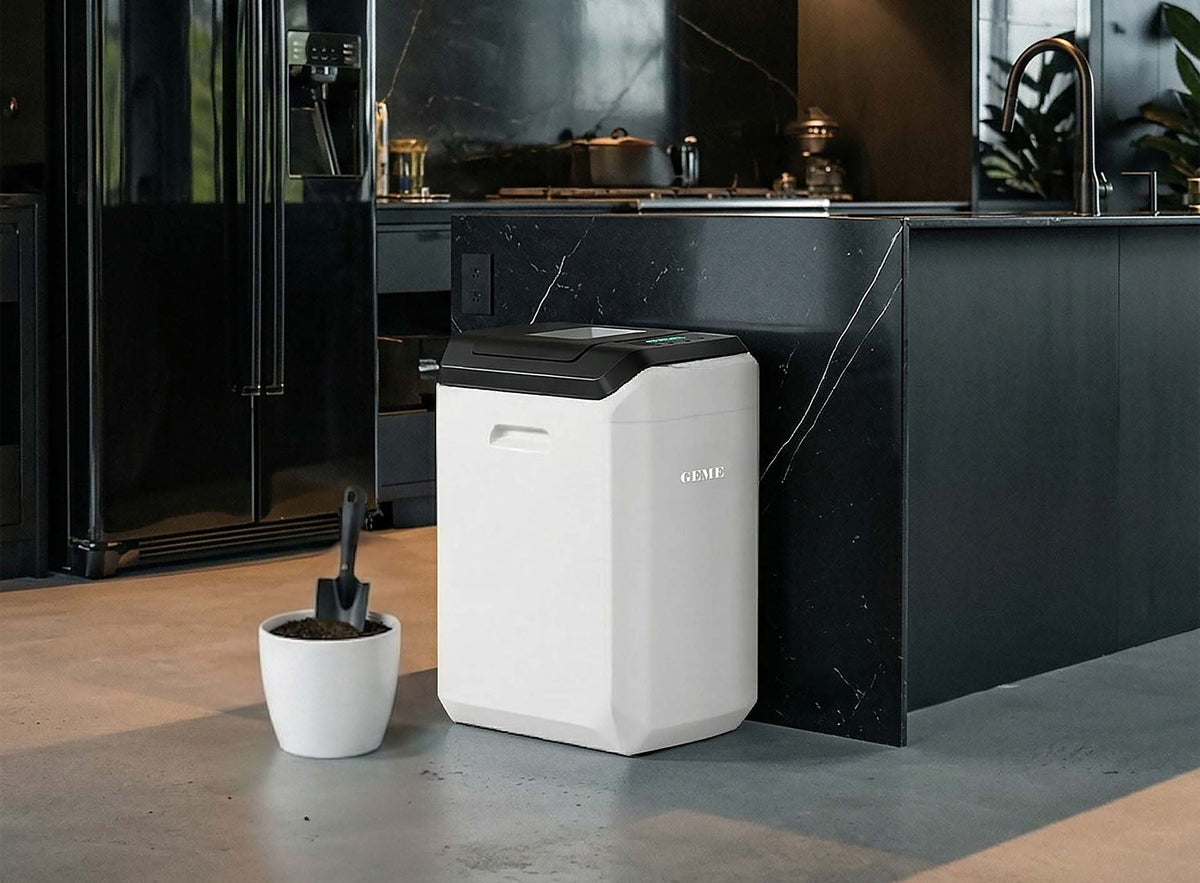
GEME Terra II is a floor-standing kitchen composter, not a small countertop appliance.
What Can You Compost at Home?
Accepted materials depend on the composting method. A basic backyard pile, worm bin and managed microbial composter do not have the same input boundaries.
| Material | General Consideration | Detailed GEME Guide |
|---|---|---|
| Fruit and vegetable scraps | Suitable for most systems, but large wet loads can require balancing. | Can You Compost Moldy Grapes? |
| Coffee grounds | Useful organic input, but repeated heavy additions can create dense wet zones. | How to Compost Coffee Grounds |
| Eggshells | Break down slowly and are easier to disperse when crushed. | How to Compost Eggshells |
| Bread and grains | Can attract pests outdoors and should not dominate a microbial system. | Can You Compost Moldy Bread? |
| Cut flowers | Remove plastic, wire, ribbons, foam and non-compostable decorations. | How to Compost Cut Flowers |
| Meat, dairy and bones | Usually avoided in basic outdoor piles but accepted by some managed systems. | Electric Composter Input Guide |
| Salty and oily leftovers | Small quantities may be manageable; concentrated inputs can disrupt biology. | Salt and Oil Boundaries |
Remove Packaging First
Plastic bags, stickers, synthetic tea bags, elastic bands, coated packaging, glass and metal should not be treated as food waste.
Read Can I Put Plastic in a GEME Composter? for the material boundary.
Indoor and Apartment Composting
Indoor composting is possible, but it requires a method designed for confined spaces. Simply moving an outdoor compost bin into a kitchen does not solve airflow, insects, drainage or odor.
Apartment residents should consider:
- Available floor or balcony space
- Ventilation and indoor temperature
- Amount and type of food waste
- Noise during mixing or grinding
- Odor-control technology
- Access to soil, collection or another output destination
- Whether the system operates continuously or in batches
See How to Compost in an Apartment for method-by-method guidance.
Buyers comparing equipment can continue to Best Indoor Composter 2026.
Odor, Moisture and Composting Problems
A healthy composting system may have an earthy, fermented or organic smell, depending on the method. Persistent rotten, sewage-like or strongly putrid odor usually indicates an imbalance.
| Problem | Possible Cause | First Response |
|---|---|---|
| Rotten odor | Excess wet food, insufficient oxygen or overloading | Pause heavy feeding and restore airflow according to the system instructions. |
| Material is waterlogged | Too much liquid or too many wet inputs | Reduce wet additions and add appropriate dry structure where the method allows. |
| Material is inactive and dry | Insufficient moisture or low biological activity | Review moisture guidance before adding water directly. |
| Food remains visible | Large pieces, excessive input or insufficient time | Reduce new additions and allow the system to recover. |
| Flies or insects | Exposed food, poor covering or open access | Cover fresh inputs and correct access or sealing problems. |
Start with How to Reduce Odor in Indoor Composting and the broader odor-control options for apartment composting .
GEME’s odor-control architecture is explained in Permanent Odor Control: Catalyst Path vs Disposable Carbon .
For microbial systems, do not assume that dry powder is the ideal condition. Review The Wet Standard: What Living Compost Base Should Feel Like .
When Is Compost Ready to Use?
Compost readiness depends on the method and intended use. Food scraps may become unrecognisable before the material has reached sufficient biological stability for direct use near sensitive roots.
Useful maturity indicators may include:
- Most original food structures are no longer recognisable
- The smell is earthy or neutral rather than rotten
- The material is no longer producing strong internal heat
- Texture and moisture are reasonably uniform
- The material does not contain large fresh food pieces
- The intended application matches its maturity level
Read the complete compost readiness guide before deciding based only on appearance.
Continuous microbial systems should normally retain part of their active composting base. GEME explains this in Why You Should Not Fully Empty the Chamber Every Time.
How to Use Compost in Soil
Compost is normally used as a soil amendment, not as a complete replacement for garden soil or potting mix.
| Use | Recommended Approach | Avoid |
|---|---|---|
| Garden beds | Blend mature compost into the upper soil or use it as a controlled top dressing. | Burying large pockets of fresh concentrated material next to roots. |
| Containers | Use compost as one component of a well-drained growing medium. | Filling the entire container with compost alone. |
| Trees and shrubs | Apply a controlled layer over the root zone without touching the trunk. | Piling wet compost directly against bark. |
| GEME compost output | Screen where necessary, mix approximately one part output with eight parts soil and cover with at least 5 cm of soil. | Using concentrated fresh output as pure potting soil. |
Begin with How to Use Compost Correctly.
GEME users can follow the more detailed Advanced GEME Compost Application Guide.
Compost nutrient values vary according to feedstock and process conditions. Review the GEME compost-output NPK test before treating compost as a standardized fertilizer.
For a broader explanation of compost’s value to soil, read Unlocking Black Gold: The Power of High-Quality Compost.
Real Microbial Composting at Home
A real composter does more than make food scraps smaller. It maintains conditions in which microorganisms actively transform organic material.
↓
Managed Biological Decomposition
↓
Microorganisms + Oxygen + Moisture + Time
↓
Organic Matter for Responsible Soil Use
↓
Real Microbial Composter
↓
Continuous Home Composting System
↓
Kitchen Food Waste Solution
GEME chose aerobic microbial digestion rather than relying only on drying and grinding. The engineering rationale is explained in Why GEME Chose Aerobic Digestion Over Grinding.
This does not mean that all freshly removed material is automatically identical to fully matured commercial compost. Feedstock, residence time, stability, screening and intended application still matter.
Frequently Asked Questions
What is the easiest way to compost at home?
The easiest method depends on your space and food waste. A backyard bin is affordable when outdoor space and dry leaves are available. A managed microbial home composter can be easier for households wanting year-round indoor processing of regular kitchen scraps.
What are the basic requirements for composting?
Aerobic composting requires active microorganisms, oxygen, moisture, suitable organic inputs and time. Outdoor composting also normally requires carbon-rich materials that maintain structure and airflow.
Can I compost in an apartment?
Yes. Apartment options include worm bins, bokashi systems, community collection and managed indoor microbial composters. Choose according to space, odor control, food volume and where the output will go.
Do composters smell?
A balanced aerobic system should not produce a persistent rotten smell. Strong odor may indicate excessive moisture, unsuitable inputs, overloading, insufficient oxygen or delayed maintenance.
Can meat and dairy be composted?
Meat and dairy are normally avoided in basic backyard piles because they can attract animals and create odors. Some enclosed bokashi and managed microbial systems accept them within specific input limits.
Can cooked food be composted?
Some systems can process cooked food, but large quantities of salt, oil, liquid or sauces may destabilize microbial conditions. Add cooked leftovers in moderation and follow the relevant system guidance.
How long does composting take?
Processing time ranges from weeks to many months depending on the method, feedstock, climate and definition of finished compost. Visible food breakdown can occur before full biological stability.
How do I know when compost is ready?
Ready compost is generally more uniform, earthy-smelling and stable, with few recognisable food pieces. Its temperature should be closer to ambient conditions when active decomposition has slowed.
Is dried food waste the same as compost?
No. Drying and grinding can reduce volume and make food scraps easier to store, but the material may still need biological decomposition before it becomes stable compost.
Can compost replace garden soil?
Compost is normally used as a soil amendment. It should usually be blended with soil or potting mix rather than used alone as the entire growing medium.
Should a continuous composter be emptied completely?
Not normally. Continuous microbial systems rely on a resident composting base. Removing all material can remove much of the active microbial environment and require the system to be restarted.
Bottom Line
Home composting works when the method matches the household. Outdoor piles suit homes with gardens, carbon materials and time. Worm bins suit modest amounts of plant-based scraps. Bokashi suits sealed fermentation with a planned finishing route.
Continuous microbial composters suit households that generate kitchen scraps regularly and want to maintain an active biological process indoors.
Whichever method you choose, manage oxygen, moisture, input quantity and output use. Do not judge compost only by how quickly food disappears or how dark the material looks.
Composting is a biological cycle: food scraps feed microorganisms, microorganisms transform organic material, and responsibly used compost helps return organic matter to soil.
Sources
Build a continuous microbial composting routine at home.
Start Real Composting at Home
GEME Terra II and GEME Pro use managed microbial activity to continuously process suitable household food waste without relying on a drying-and-grinding shortcut or routine activated-carbon filter replacement.
Let’s feed the earth.



Dejar un comentario
Todos los comentarios se revisan antes de su publicación.
Este sitio está protegido por hCaptcha y se aplican la Política de privacidad de hCaptcha y los Términos del servicio.