


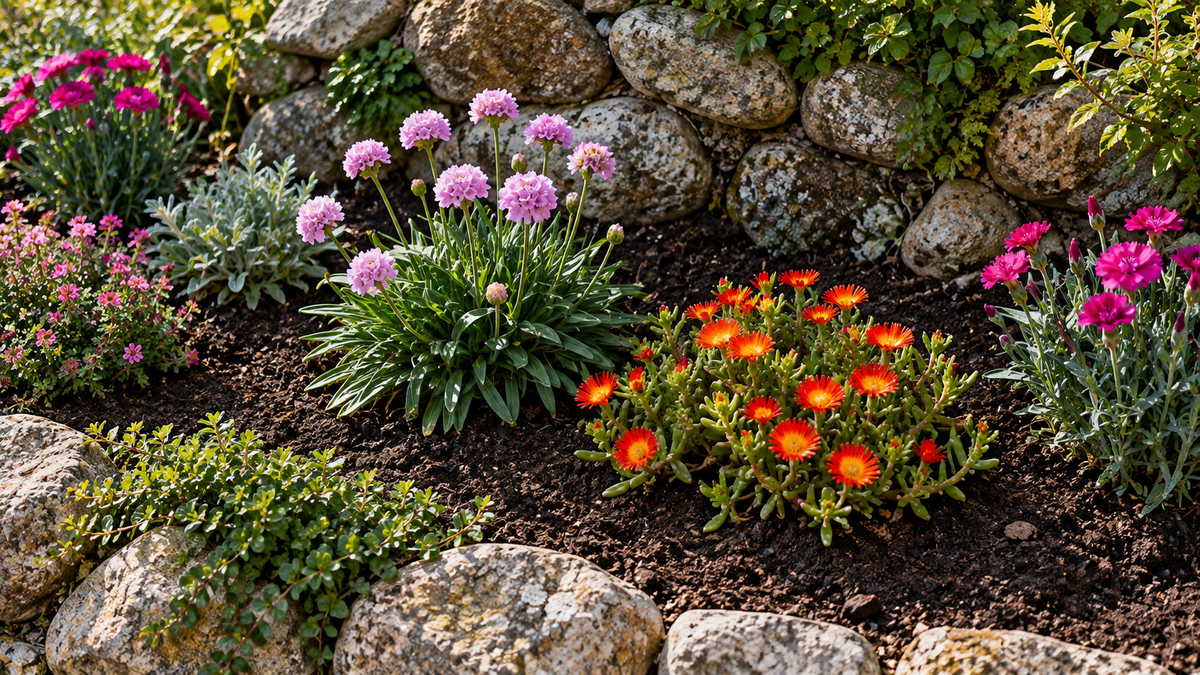
Raised Beds · Soil Mix · Compost Application
A good raised bed should not be filled with pure compost. The root zone needs a balanced growing medium that can hold plants upright, retain enough moisture, drain excess water, provide air space, store nutrients, and support soil biology.
For a conventional soil-based raised bed, a useful starting point is roughly 70% good mineral soil and 30% mature compost. Other extension recommendations fall within a broader range of roughly one-third to one-half compost depending on the existing soil, bed location, compost type, and whether a soilless growing medium is being used.
That means there is no universal “perfect three-ingredient recipe.” The goal is soil function, not hitting a fashionable ratio.
And if you are using GEME Compost Base, there is an important distinction: do not substitute fresh GEME Compost Base for the 30–50% finished-compost portion of a generic raised-bed recipe. GEME is a continuous-flow system, so its Compost Base follows the more conservative GEME soil-use workflow: screen, return unfinished pieces, mix about 1 part Compost Base with 8 parts plain soil, and use a plain-soil cap where appropriate.

Quick Answer: What Is a Good Raised Bed Soil Mix Ratio?
For a typical soil-based raised bed, about 70% good topsoil or garden soil + 30% mature compost is a strong general starting point.
But adjust the mix to the site:
- Good mineral soil available: approximately 70% soil + 30% mature compost is a simple starting blend.
- Many extension recommendations: roughly one-third to one-half compost can work depending on soil and compost quality.
- Heavy or compacted native soil: improve drainage and structure rather than simply adding more compost.
- Bed over hard pavement: a lighter soilless growing medium may need to provide part of the physical structure.
- Existing productive raised bed: do not rebuild the whole mix every year; replenish organic matter according to actual need.
- GEME Compost Base: follow the GEME-specific 1:8 soil-blending rule rather than using it as one-third or one-half of the entire bed.
Simple rule: soil provides the mineral framework; compost improves that soil; other growing media are used when you need to change drainage, weight, aeration, or water retention.
1. What Does Raised Bed Soil Need to Do?
A raised bed is still a root zone.
The growing medium needs to perform several jobs at the same time:
- anchor roots;
- hold plant-available water;
- drain excess water;
- contain enough pore space for oxygen;
- retain nutrients;
- support microbial life;
- and remain physically stable over multiple seasons.
This is why pure compost is not automatically the best raised-bed medium.
Compost contributes organic matter and biological value, but mineral soil provides much of the long-term physical framework.
The Three Functions to Think About
Mineral particles provide long-term body, nutrient-holding capacity, and physical support for roots.
Mature compost contributes decomposed organic matter, biology, nutrients, and improvements to soil function.
Coir, peat, vermiculite, perlite, or similar materials may modify weight, aeration, drainage, or moisture behavior where needed.
For the basic distinction between soil and compost, read How to Use Compost Correctly.
2. What Is the Best Raised Bed Soil Mix Ratio?
There is no single scientifically required ratio for every raised bed.
Extension recommendations vary because raised beds themselves vary.
| Source / Situation | Suggested Mix | What It Tells You |
|---|---|---|
| Penn State Extension | 70% soil + 30% compost | A simple, conservative general-purpose soil-based mix |
| University of Minnesota | About ½–⅔ topsoil + ⅓–½ plant-based compost | A practical range rather than one fixed recipe |
| University of Maryland | 1:2 or 1:1 compost:topsoil in some new-bed situations | Site conditions can justify higher compost content |
| Oregon State University | Up to about 25% compost when filling with excavated soil | A more conservative compost percentage can work well |
The useful conclusion is not that one university must be “right.”
The useful conclusion is that compost percentage should respond to the actual material and site.
If you want one easy starting point for a conventional soil-based raised bed, start around 70% good soil and 30% mature compost, then adjust only for a real reason.
3. What Does Each Raised Bed Ingredient Actually Do?
Topsoil or Garden Soil
Good mineral soil gives the bed long-term physical stability.
A suitable loam or sandy loam contains a useful balance of:
- sand;
- silt;
- clay;
- mineral nutrients;
- and pore space.
Unlike many lightweight organic ingredients, mineral soil does not simply disappear as microbes decompose it.
Compost
Mature compost contributes:
- organic matter;
- microbial activity;
- some plant nutrients;
- improved aggregation;
- water-management benefits;
- and nutrient-holding capacity.
But compost continues to change and decompose.
That is one reason raised beds containing substantial organic material often settle over time.
Soilless Growing Media
Materials such as peat or coconut coir are often used to change water retention and reduce bulk density.
They can be useful where mineral soil is unavailable or where the bed needs a lighter mix.
But they are not automatically required simply because a recipe on the internet lists them.
Perlite and Vermiculite
These materials may help modify pore structure, aeration, drainage, and water retention.
They are particularly familiar in container mixes.
A large outdoor raised bed with good loamy soil may not need large quantities of either one.

4. How Much Compost Should Be in a Raised Bed?
Enough to improve the soil, not enough to replace the soil.
For a new soil-based raised bed, approximately 25–33% mature compost is a conservative and easy-to-manage starting point.
Some conditions and extension recipes use more, including compost percentages approaching 50%.
Before increasing the percentage, ask:
- Is the compost mature?
- Is it low enough in soluble salts?
- Is it manure-based?
- Is the native soil poor or compacted?
- Will the bed drain through soil below?
- Is the entire root zone confined to the raised bed?
- What crops will be grown?
“More Organic” Does Not Automatically Mean “Better Soil”
A raised bed is not a compost storage container.
The objective is a stable root-zone medium with the right combination of mineral structure, organic matter, water, air, and nutrients.
5. Can You Put Too Much Compost in a Raised Bed?
Yes.
University of Minnesota specifically cautions that excessive compost can create water-management problems, while several extension programs warn about nutrient and salt buildup from repeated or high-rate organic amendments.:contentReference[oaicite:2]{index=2}
Potential problems include:
- excess phosphorus;
- high soluble salts from some composts;
- excessive nutrient loading;
- rapid drying when highly organic material becomes dry;
- too much settling as organic material continues decomposing;
- and a root zone with too little stable mineral structure.
Manure-based compost deserves particular attention because it can contain relatively high phosphorus or salts.
Compost is an amendment, not a volume-filler you should keep adding simply because the bed still has space.
6. What Kind of Topsoil Should You Use?
“Topsoil” on a bag is not a guarantee of quality.
University of Maryland notes that topsoil sales are not uniformly defined or regulated, and recommends inspecting the material and buying from a reputable supplier.:contentReference[oaicite:3]{index=3}
Good raised-bed soil should generally be:
- crumbly;
- well-drained;
- free of obvious construction debris;
- not excessively clayey;
- not almost pure sand;
- not foul-smelling or waterlogged;
- and appropriate for food gardening if vegetables will be grown.
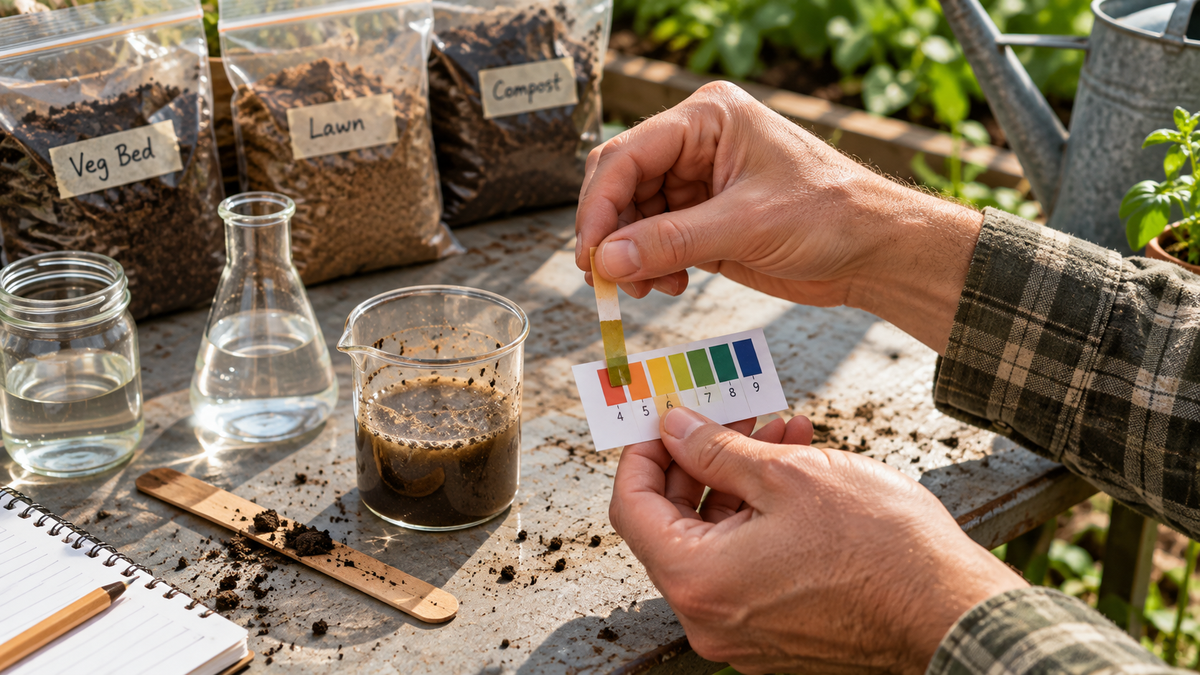
If using existing garden soil, testing is especially useful.
For beds used to grow food, contaminated urban soil and lead risk should be considered where relevant.
7. Do Raised Beds Need Peat Moss, Coir, Vermiculite, or Perlite?
Not necessarily.
These materials solve particular physical problems.
| Material | Main Role | When It May Help | Is It Mandatory? |
|---|---|---|---|
| Peat moss | Lightweight organic material; water retention | Soilless or lightweight blends | No |
| Coconut coir | Water retention and physical structure | Alternative component in soilless blends | No |
| Perlite | Air space and drainage | Dense or container-like mixes | No |
| Vermiculite | Water and nutrient retention | Light growing mixes and seedling systems | No |
| Good loamy mineral soil | Primary structural root medium | Most conventional soil-based raised beds | Usually the foundation |
| Mature compost | Organic matter and soil amendment | Most raised beds | Useful in moderation |
Do not add an ingredient merely because a popular recipe has three equal parts.
Start with the physical behavior you need from the bed.
8. What About an Existing Raised Bed?
An established raised bed usually does not need to be emptied and rebuilt every year.
As plants grow and organic matter decomposes, the soil level may gradually fall.
Annual maintenance can include:
- adding mature compost according to need;
- replacing lost soil volume;
- testing soil periodically;
- adjusting nutrients based on crops and soil results;
- using mulch to protect the surface;
- and avoiding unnecessary deep disturbance.
University of Maryland recommends about 2–4 inches of compost incorporated into the upper portion of good existing garden soil when establishing a raised bed in an existing productive garden.
Maintenance is not the same as initial filling. A bed that started with 30% compost does not automatically need another 30% compost every spring.
9. What If the Raised Bed Is on Concrete or Another Hard Surface?
This is a genuinely different system.
Roots cannot move into the native soil below, so the entire root zone must function inside the raised bed.
University of Maryland recommends greater bed depth on hard surfaces and gives compost + soilless growing mix as one possible filling strategy, with limited topsoil in deeper beds.
Compared with a bed open to native soil, pay more attention to:
- bed depth;
- drainage outlets;
- summer drying;
- heat from surrounding pavement;
- water-holding capacity;
- and structural stability of the mix.
Do Not Copy a Ground-Based Recipe Blindly
A 12-inch bed sitting directly on healthy garden soil and a 20-inch planter sitting on concrete have different root-zone physics. Their ideal mixes do not have to be identical.
10. How Does GEME Compost Base Fit Into a Raised Bed?
GEME Compost Base can be used in raised-bed soil, but it should not be treated as ordinary bulk finished compost straight from the chamber.
GEME Terra 2 and GEME Pro are continuous-flow microbial systems.
That means the material you harvest may include:
- older, more processed Compost Base;
- newer material;
- fibrous fragments;
- small bones or shells;
- and other slower-decomposing pieces.
The correct workflow is therefore different from buying a cubic yard of fully cured commercial compost.
GEME Raised-Bed Rule
Screen → Return → Mix 1:8 → Cap → Plant.
That means:
- screen the harvested Compost Base;
- return larger unfinished organic pieces to GEME;
- mix about 1 part screened Compost Base with 8 parts plain soil;
- place the blend into the raised-bed soil zone;
- cover with plain soil where appropriate;
- then plant and water normally.
Do not fill one-third or one-half of a raised bed with fresh GEME Compost Base simply because a generic raised-bed recipe calls for 30–50% mature compost.
Why the Generic 70/30 Recipe Does Not Apply Directly to GEME Output
The 70/30 recommendation assumes you are using suitable mature compost as the compost component.
Freshly harvested GEME Compost Base is different because GEME operates continuously.
Its advantages come from that continuous process:
- you can keep adding kitchen scraps;
- you do not need to wait for an entire batch to finish before using the machine again;
- the active microbial environment remains established;
- food waste can be processed as part of daily life.
But the garden-side consequence is that harvested output must be used as Compost Base for blending, not assumed to be identical to fully cured batch compost.
Do You Need to Mature GEME Compost Base First?
Further maturation can be useful where you want a more uniform material or where the harvested Compost Base still contains obvious recently processed fragments.
For direct plant use, the standard GEME workflow remains:
screen → approximately 1:8 with plain soil → cap with soil → water → observe plant response.
Can You Use GEME Compost Base to Refill an Existing Raised Bed?
Yes, through the normal soil-blending method.
If an established raised bed settles over time:
- screen the harvested Compost Base;
- prepare the 1:8 Compost Base and plain-soil blend;
- use the blend to replenish appropriate areas of the bed;
- avoid piling concentrated Compost Base directly against stems or crowns;
- cover with plain soil as appropriate.
Is GEME Compost Base Fertilizer?
No, it should not be treated as a standardized N-P-K fertilizer.
Household feedstock changes from day to day, so the nutrient profile of Compost Base changes too.
GEME's own N=50 output testing also supports the same principle: nutrient levels are measurable but variable rather than standardized.
For the nutrient distinction, read Compost vs Fertilizer: What Your Plants Actually Need.
The Bigger GEME Advantage: A Soil-Return Pathway
A raised bed makes the soil-return loop especially tangible.
Kitchen scraps → Terra 2 or Pro → Compost Base → soil blending → raised bed → plants.
That is fundamentally different from grinding and drying food scraps into a waste product with no clearly defined soil-use pathway.
For the complete application method, use the Advanced GEME Compost Application Guide.
11. A Practical Raised Bed Build Sequence
Is the bed over native soil, poorly compacted soil, or an impermeable surface?
Use good mineral soil or an appropriate raised-bed growing mix as the main root-zone framework.
Around 30% is a useful starting point for many conventional soil-based beds.
Modify drainage, water retention, nutrition, or organic matter based on the actual bed—not a universal recipe.
For GEME Compost Base, insert the GEME-specific 1:8 blend into this framework rather than replacing the mature-compost percentage one-for-one.
12. Common Raised Bed Soil Mix Mistakes
Filling the Entire Bed With Compost
Compost is useful, but it is not an ideal standalone long-term mineral root medium.
Using the Same Recipe Everywhere
A bed on concrete, a bed over healthy garden soil, and a bed over compacted clay do not have identical needs.
Assuming “Topsoil” Means High Quality
Inspect bulk soil and buy from a reputable supplier.
Adding More Compost Every Year Without Testing
Repeated heavy additions can create excessive nutrients, particularly phosphorus, and may increase salt levels depending on the compost.
Using Fresh GEME Compost Base Like Bagged Raised-Bed Mix
Do not do this.
Screen it and follow the GEME 1:8 soil-blending workflow.
Thinking a Raised Bed Never Needs Soil
Some soilless systems can work, but a conventional raised bed is not improved simply by removing all mineral soil from the recipe.
Build the Raised Bed Around Soil Function, not a Viral Recipe
A strong raised bed needs structure, organic matter, water, oxygen, nutrients, and enough depth for roots.
For a conventional soil-based bed, roughly 70% good soil and 30% mature compost is a practical place to start, but the site and materials should decide the final mix.
With GEME, the household cycle goes one step further: suitable kitchen scraps can become Compost Base that returns to the raised bed through a defined 1:8 soil-blending workflow.
Kitchen → GEME → Compost Base → soil → raised bed.
Frequently Asked Questions
What is the best soil mix ratio for a raised bed?
There is no single ratio for every raised bed. For a conventional soil-based bed, about 70% good mineral soil and 30% mature compost is a practical general starting point. Some extension recommendations use compost percentages from roughly one-quarter to one-half depending on site and materials.
Is a 50/50 topsoil and compost mix good for raised beds?
It can work in some situations, and some extension recommendations use a 1:1 compost-to-topsoil mix. However, 50% compost is not necessary for every bed. A more conservative 70% soil and 30% mature compost mix is often an easier starting point.
Can I fill a raised bed with pure compost?
Pure compost is generally not the best long-term raised-bed growing medium. Compost works best as part of a balanced mix that also provides stable mineral or structural growing media.
How much compost should be in a raised bed?
About 25–33% mature compost is a useful conservative starting range for many soil-based raised beds. Some site-specific recommendations use up to about 50%, depending on soil quality, bed design, compost type, and drainage.
Is one-third compost and two-thirds soil good for raised beds?
Yes. Roughly one-third mature compost and two-thirds suitable soil is a practical general-purpose raised-bed starting mix and is close to Penn State's 70% soil and 30% compost recommendation.
Do I need peat moss in a raised bed?
No. Peat can be useful as part of a lightweight or soilless mix, but it is not mandatory in a raised bed that already has suitable soil structure and water management.
Can I use coconut coir instead of peat in a raised bed?
Coir can be used as one component of a growing mix where additional lightweight organic structure and water retention are desired. It is not required in every raised bed.
Do raised beds need perlite?
Not necessarily. Perlite can increase air space in dense or lightweight mixes, but a good loamy soil-and-compost raised bed may already have suitable drainage and aeration.
Should raised bed soil contain topsoil?
For conventional beds open to the ground, good mineral topsoil or garden soil is usually a valuable structural component. Fully soilless systems are possible, especially on hard surfaces, but they require different management.
What is the best soil for vegetables in raised beds?
Use a loose, well-drained growing medium with stable mineral or structural material, mature organic matter, adequate moisture retention, and appropriate fertility. A good loam amended with mature compost is a strong starting point.
Should I replace raised bed soil every year?
No. Established raised beds usually need maintenance rather than complete replacement. Replenish lost volume and organic matter according to soil condition, crop needs, and periodic soil testing.
Why does raised bed soil sink over time?
Organic components continue decomposing, particles settle, and soil is removed with roots and harvest. Beds containing large amounts of compost or other organic material may settle more noticeably.
Can I use GEME Compost Base in raised beds?
Yes. Screen the Compost Base, return larger unfinished organic pieces to GEME, mix approximately 1 part screened Compost Base with 8 parts plain soil, and use a plain-soil cap where appropriate.
Can GEME Compost Base make up 30% of my raised bed mix?
Freshly harvested GEME Compost Base should not automatically replace the 30% mature-compost component of a generic raised-bed recipe. GEME is continuous-flow, so use the GEME-specific approximately 1:8 Compost Base-to-plain-soil method.
Can I fill a raised bed with GEME Compost Base?
No. GEME Compost Base is a concentrated soil-amendment base, not a complete raised-bed growing medium. It should be screened and blended with soil before plant use.
What is the GEME raised bed mixing ratio?
Use approximately 1 part screened GEME Compost Base with 8 parts plain soil. Return larger unfinished organic pieces to the machine and use a plain-soil cap where appropriate.
Should GEME Compost Base be matured before using it in a raised bed?
Further maturation can be useful when a more uniform material is desired or when harvested output still shows recently processed fragments. For direct plant use, follow the standard screen, 1:8 soil blend, soil-cap, water, and observe workflow.
Is GEME Compost Base the same as commercial raised-bed compost?
No. GEME is a continuous-flow microbial system, so freshly harvested Compost Base can contain material with different residence times. Commercial mature compost is typically processed as a more uniform cured material.
Is GEME Compost Base fertilizer?
It should not be treated as a standardized fertilizer because nutrient levels vary with household feedstock and process conditions. Use it as a soil amendment within the GEME soil-blending method.
Sources
- Penn State Extension — Soil Health in Raised Beds
- University of Minnesota Extension — Raised Bed Gardens
- University of Maryland Extension — Growing Vegetables in Raised Beds
- Oregon State University Extension — How to Use Compost in Gardens and Landscapes
- Utah State University Extension — Raised Bed Gardening
- GEME — How to Use Compost Correctly
- GEME — Advanced Compost Base Application Guide
- GEME — How Does a Real Electric Composter Work?



Dejar un comentario
Todos los comentarios se revisan antes de su publicación.
Este sitio está protegido por hCaptcha y se aplican la Política de privacidad de hCaptcha y los Términos del servicio.