


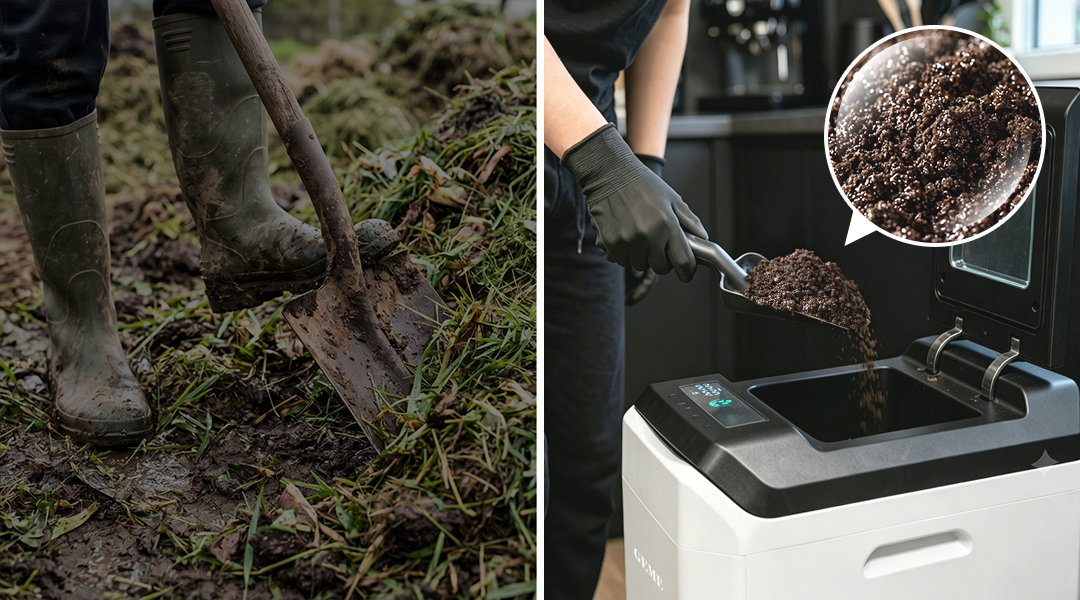
Zero Waste Kitchen Guide 2026
A zero-waste lifestyle does not start with perfection. It starts with better daily kitchen habits: prevent food waste first, reuse what you can, and compost unavoidable scraps instead of sending them to landfill.
This guide compares practical food-waste habits, microbial kitchen composters, and food recyclers so you can build a cleaner kitchen-to-soil routine at home.

Prevent waste first. Compost what remains.
Quick Answer
A zero-waste lifestyle starts in the kitchen because food waste is one of the easiest household waste streams to reduce. Start by planning meals, storing food better, using leftovers intentionally, and composting unavoidable scraps.
GEME Terra II helps close the loop by supporting daily microbial kitchen composting and producing compost-like organic material that can be used as a compost base for soil blending. Food recyclers such as Mill and Lomi can still reduce waste volume, but their output path and soil-use expectations are different.
For deeper reading, pair this with how to reduce food waste at home, real compost vs dehydrated food waste, and our best kitchen composters in 2026 comparison.
Key Takeaways
- Zero waste begins with prevention. Meal planning, smarter storage, and leftover use reduce the waste before composting is needed.
- Composting is for unavoidable scraps. Peels, cores, coffee grounds, eggshells, and trimmings still need a better destination than a landfill.
- Not every electric composter works the same way. Some systems support microbial composting, while others mainly dry, grind, or reduce food-waste volume.
- GEME Terra II fits daily zero-waste kitchens. It is designed for indoor microbial composting, continuous feeding, and no routine odor filter replacement.
- Output use still matters. GEME output should be treated as compost base and blended with soil according to plant-use guidance.
Table of Contents
- Who This Guide Is For
- Understanding Food Waste at Home
- How to Reduce Food Waste Every Day
- Zero Waste Kitchen Options Compared
- What Makes a Kitchen Composter “Real”?
- GEME Terra II: Best Zero Waste Kitchen Composter
- GEME Pro: Best for Larger Households
- Mill, Lomi, and Reencle Compared
- Which Zero Waste Solution Should You Choose?
- FAQ
- Sources
Who This Guide Is For
This guide is for households that want to reduce trash without falling into greenwashing. It is especially useful if you are comparing a kitchen composter, a food recycler, a freezer-scrap routine, or a city food-waste pickup program.
- Families trying to reduce household food waste.
- Apartment dwellers building a zero-waste kitchen.
- Gardeners who want compost base for plants and soil.
- People comparing GEME Terra II, GEME Pro, Lomi, Mill, and Reencle.
- Anyone who wants less trash, fewer odors, and a more circular kitchen routine.
If you are just getting started, read our beginner's guide to composting at home. If you live in an apartment, start with the best indoor composter for apartments.
Understanding the Food Waste Problem at Home
Every zero-waste lifestyle begins with a simple question: what leaves your home every day, and could any of it become useful again?
In most households, food waste is one of the biggest opportunities. Coffee grounds, fruit peels, vegetable trimmings, eggshells, bread scraps, and leftovers often go directly into the trash.
When organic waste goes to a landfill, it can break down without enough oxygen. That is why food-waste reduction and composting both matter: one prevents waste before it happens, while the other gives unavoidable scraps a better route.
The Two-Step Zero Waste Kitchen Rule
- Prevent food waste first. Plan meals, store food properly, and use leftovers before they spoil.
- Compost unavoidable scraps. Peels, cores, grounds, shells, and trimmings can support a kitchen-to-soil routine.
How to Reduce Food Waste Every Day
A zero-waste lifestyle is not about perfection. It is about building simple systems that make waste less likely.
Before composting, start with prevention. These habits reduce the amount of food entering your scrap bin in the first place.
- Plan meals before shopping: buy what your household will actually eat.
- Store food properly: use airtight containers, freezer storage, and visible “eat first” zones.
- Use leftovers intentionally: turn them into soups, stir-fries, grain bowls, fried rice, or lunch portions.
- Freeze before food spoils: bread, cooked rice, soup, fruit, and some cooked meals can often be saved.
- Compost unavoidable scraps: peels, cores, coffee grounds, eggshells, and trimmings still need a better end path.
For more daily tactics, read how to reduce food waste at home. For fruit-specific storage, see how to make bananas last longer and how long apples last in the fridge.
At a Glance: Zero Waste Kitchen Composting Options
Different tools solve different parts of the zero-waste kitchen problem. The best option depends on whether your priority is compost-oriented output, volume reduction, odor control, convenience, or capacity.
| Option | Best For | Main Process | Output Path | Zero Waste Fit |
|---|---|---|---|---|
| GEME Terra II | Daily indoor composting | Microbial kitchen composting | Compost base for soil blending | Best overall |
| GEME Pro | Larger households | Microbial kitchen composting | Compost base for soil blending | Best high-capacity option |
| Mill | Food-scrap storage and volume reduction | Dry and grind food recycling | Grounds for later use or collection pathway | Partial loop |
| Lomi | Compact volume reduction | Food recycling workflow | Material may need further composting or careful use | Partial loop |
| Reencle | Microbial alternative | Microorganism-based processing | May benefit from curing depending on soil-use expectations | Good alternative |
What Makes a Kitchen Composter “Real”?
A kitchen composter should do more than make food scraps smaller. The important question is how the machine processes food waste and what kind of output the user gets.
Microbial composting depends on microorganisms, oxygen, moisture, temperature, and time. Food recyclers can still be useful, but many primarily dry, grind, or reduce volume. That difference matters if your goal is soil use.
| Question | Food Recycler / Dehydrator | Microbial Kitchen Composter |
|---|---|---|
| Main process | Drying, grinding, heating, or storage | Microbial breakdown under controlled conditions |
| Typical output | Dry residue, grounds, or reduced food waste | Compost-like organic material or compost base |
| Soil use | May need further composting or product-specific guidance | Blend with soil according to compost-use guidance |
| Best role in zero waste living | Cleaner food-waste handling and volume reduction | Closing the kitchen-to-soil loop |
For soil use, do not skip the final step. Read the advanced GEME compost application guide before applying compost base around plants.
GEME Terra II: Best Zero Waste Kitchen Composter
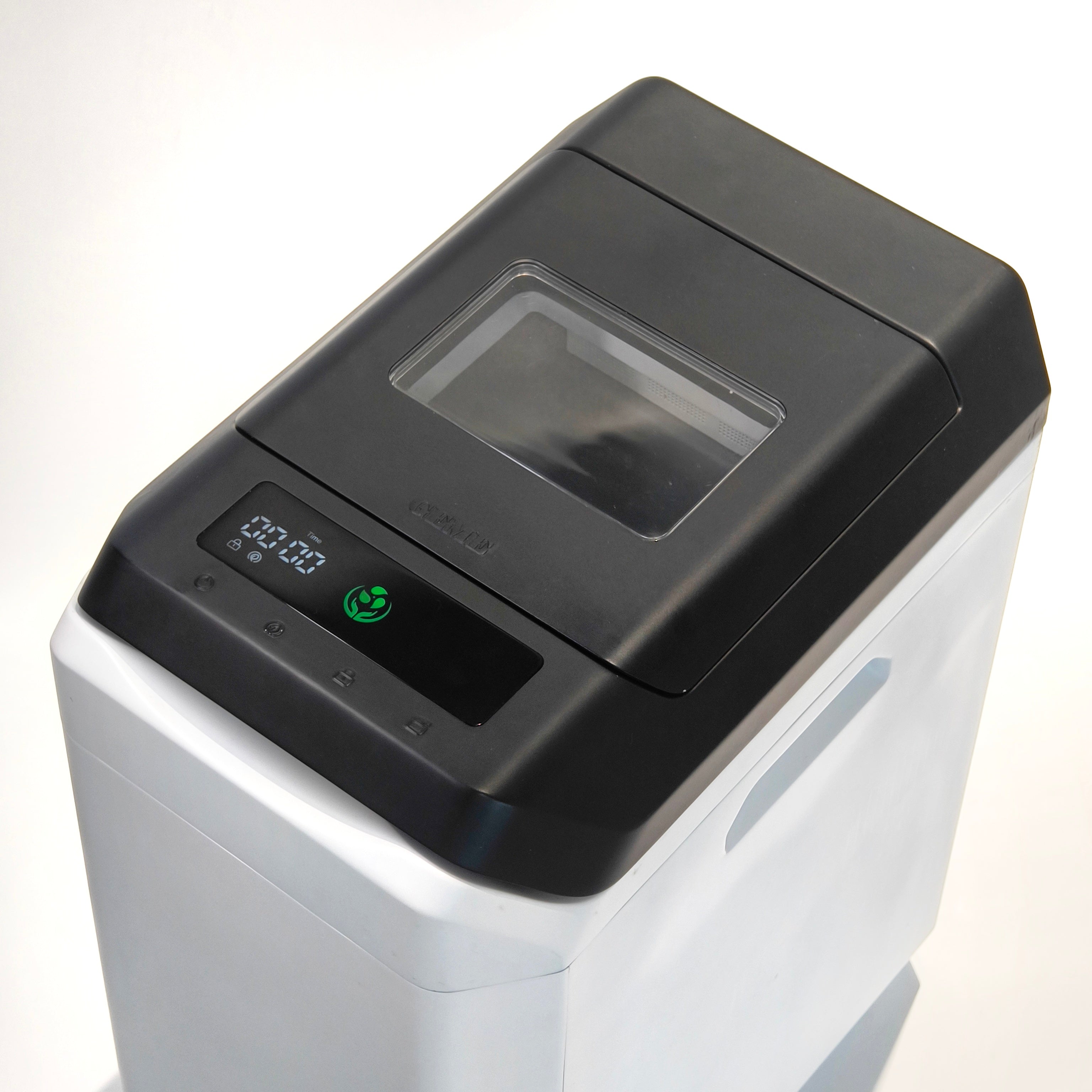
GEME Terra II is the best fit for households that want a zero-waste kitchen routine built around microbial composting, daily food-scrap processing, and a compost base for soil blending.
Instead of treating food scraps only as trash to shrink, Terra II helps users keep organic material in a kitchen-to-soil loop. It is designed for indoor use, continuous feeding, and no routine odor filter replacement.
Why Terra II Fits a Zero Waste Lifestyle
- Microbial kitchen composting: supports biological breakdown rather than only drying scraps.
- Indoor-friendly design: built for kitchens, apartments, and busy households.
- Continuous feeding: add scraps as part of daily kitchen life.
- No routine odor filter replacement: avoids the recurring filter habit common in many systems.
- Compost base output: helps return organic material to the soil when blended and used properly.
Learn how the system works in How GEME Composting Works, or explore Kobold™ microbial technology.
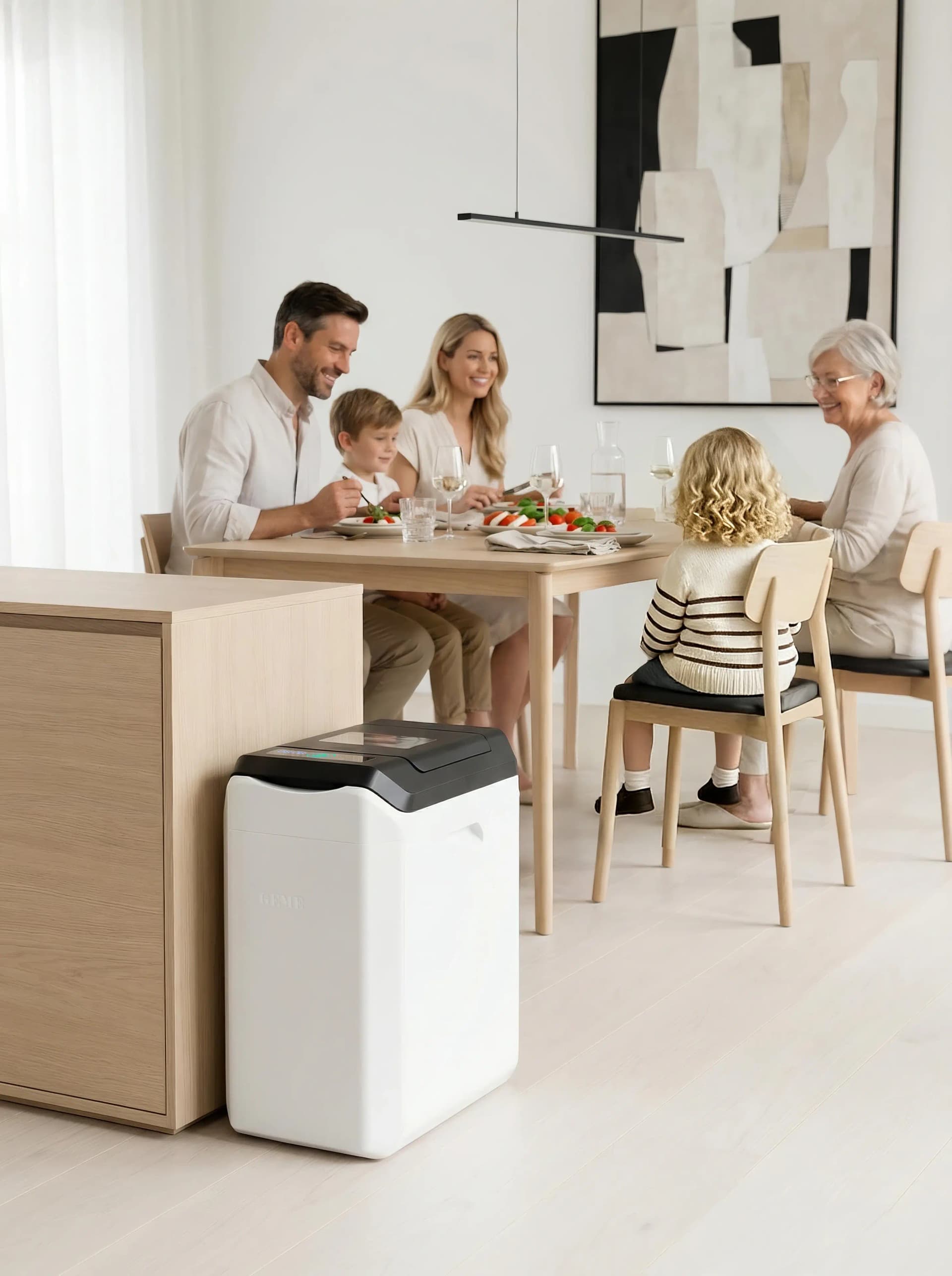
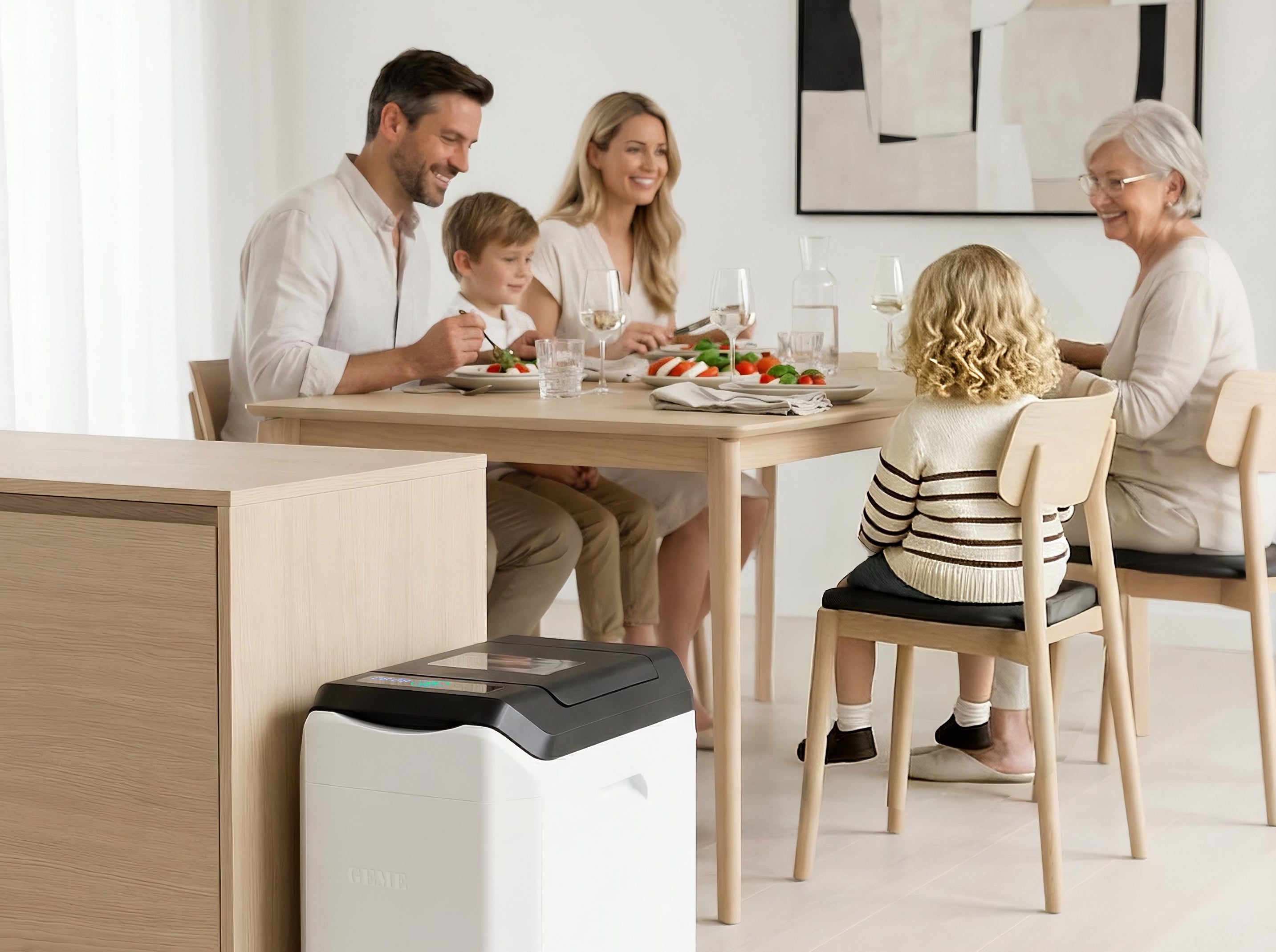
Built for daily composting routines.
Meet Terra II
Turn everyday food scraps into compost base for soil blending, without building your zero-waste routine around batch drying or routine odor filter replacement.
Designed for less waste and better soil routines.
GEME Pro: Best for Larger Households
GEME Pro is the stronger fit when your household produces heavier daily food waste. Larger families, frequent cooks, and users with bigger scrap volumes may need more capacity than a smaller kitchen system can comfortably handle.
Like Terra II, GEME Pro belongs in the microbial kitchen composter category rather than the dehydrator-style food recycler category. It is designed for households that want a compost-oriented route for daily organic waste.
Mill, Lomi, and Reencle Compared
A zero-waste kitchen needs honest language. Some appliances reduce waste volume very well, but they do not necessarily complete the composting process inside the machine.
Mill Food Recycler
Best for: food-scrap storage and volume reduction.
Output: dry, shelf-stable grounds.
Mill can reduce odor and volume with a dry-and-grind workflow. It is useful for cleaner food-waste handling, but buyers should understand that this is different from producing finished compost at home.
Lomi Food Recycler
Best for: compact food-waste volume reduction.
Output: processed organic material that may need further composting or careful soil-use guidance.
Lomi is convenient and compact. It fits users who mainly want less trash, but it should not be treated as the same category as a microbial composting system.
Reencle
Best for: users who want a microbial alternative.
Output: microorganism-processed material that may benefit from curing depending on use expectations.
Reencle is closer to microbial composting than to dehydrator-style systems. Compare it carefully with Terra II on capacity, maintenance, filter model, and soil-use guidance.
For direct comparisons, read GEME vs Lomi, GEME vs Mill, and GEME vs Reencle.
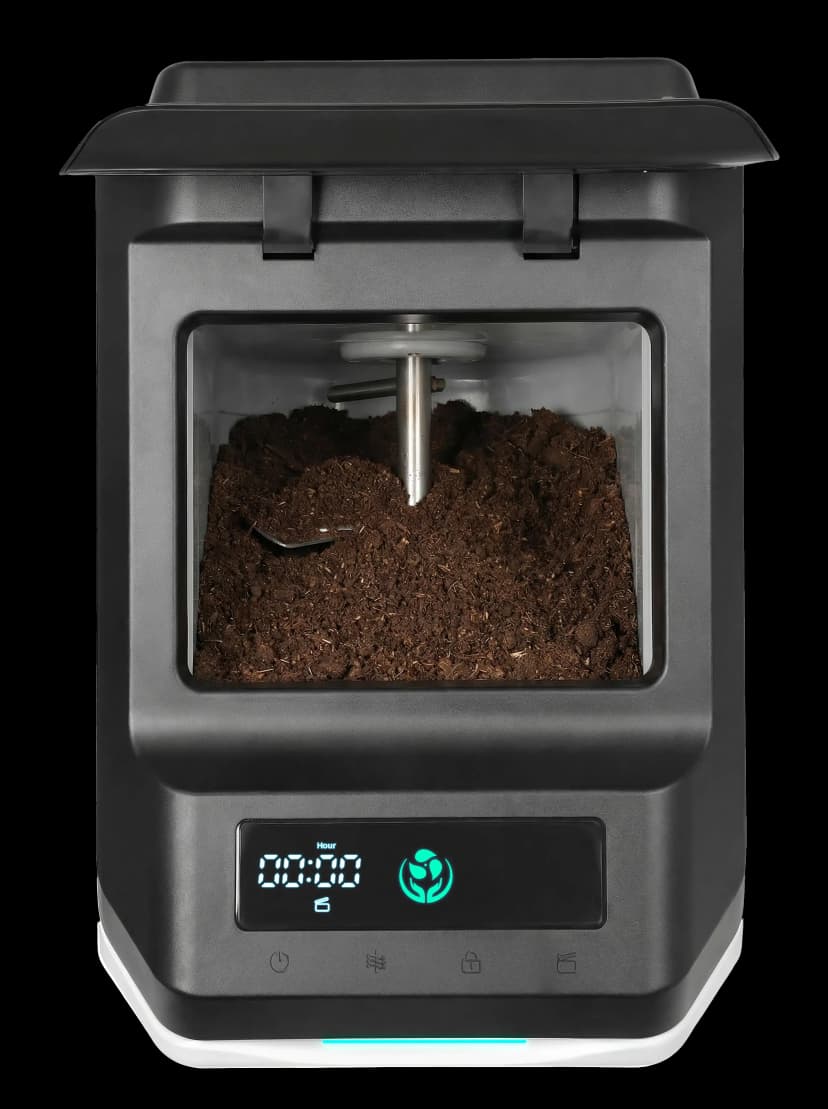
Compost base for better routines.
From Scraps to Soil
Turn everyday kitchen scraps into compost-like organic material for soil blending, while keeping your food-waste routine indoors and low-maintenance.
Built for kitchen-to-soil routines.
Which Zero Waste Solution Is Right for You?
Choose GEME Terra II if...
- You want microbial kitchen composting.
- You live in an apartment or an urban home.
- You cook daily and want continuous feeding.
- You want a compost base for soil blending.
- You prefer no routine odor filter replacement.
Choose GEME Pro if...
- You have a larger household.
- You produce more daily scraps.
- You want a higher-capacity microbial composter.
- You want a compost-oriented route rather than simple volume reduction.
Choose a food recycler if...
- Your main goal is to reduce trash volume.
- You do not need a compost base at home.
- You are comfortable with possible filters, consumables, or service models.
- You understand the output may need further composting or program-specific handling.
TL;DR
Living a zero-waste lifestyle does not require perfection. It starts with better daily habits: buy smarter, store food better, use leftovers, and compost unavoidable scraps.
Food recyclers can reduce trash volume, but microbial kitchen composters are better suited for households that want a kitchen-to-soil routine.
GEME Terra II is the strongest zero-waste kitchen choice for most households because it combines microbial composting, continuous feeding, indoor use, and no routine odor filter replacement.
Frequently Asked Questions
What is a zero-waste kitchen?
A zero-waste kitchen aims to minimize waste by preventing unnecessary food loss, reusing materials where possible, recycling packaging, and composting unavoidable organic scraps.
Can an electric composter help reduce food waste?
Yes. Electric composters and food recyclers can help reduce household food waste, but they work differently. Some mainly reduce volume, while microbial kitchen composters support biological breakdown.
What is the difference between a food recycler and a composter?
Food recyclers generally reduce food-scrap volume through drying, grinding, or storage. Composters use biological decomposition to transform organic matter into compost-like material or compost base.
Is GEME Terra II suitable for apartments?
Yes. GEME Terra II is designed for indoor kitchen use, making it suitable for apartments, houses, and homes without easy access to outdoor compost piles.
Does GEME Terra II create finished compost?
GEME Terra II supports microbial composting and produces compost-like organic material. For plant use, treat it as a compost base, screen large unfinished pieces, and blend it with soil according to guidance.
Do I still need to reduce food waste if I compost?
Yes. Preventing food waste should always come first. Composting is the best route for unavoidable scraps, not an excuse to waste edible food.
Sources
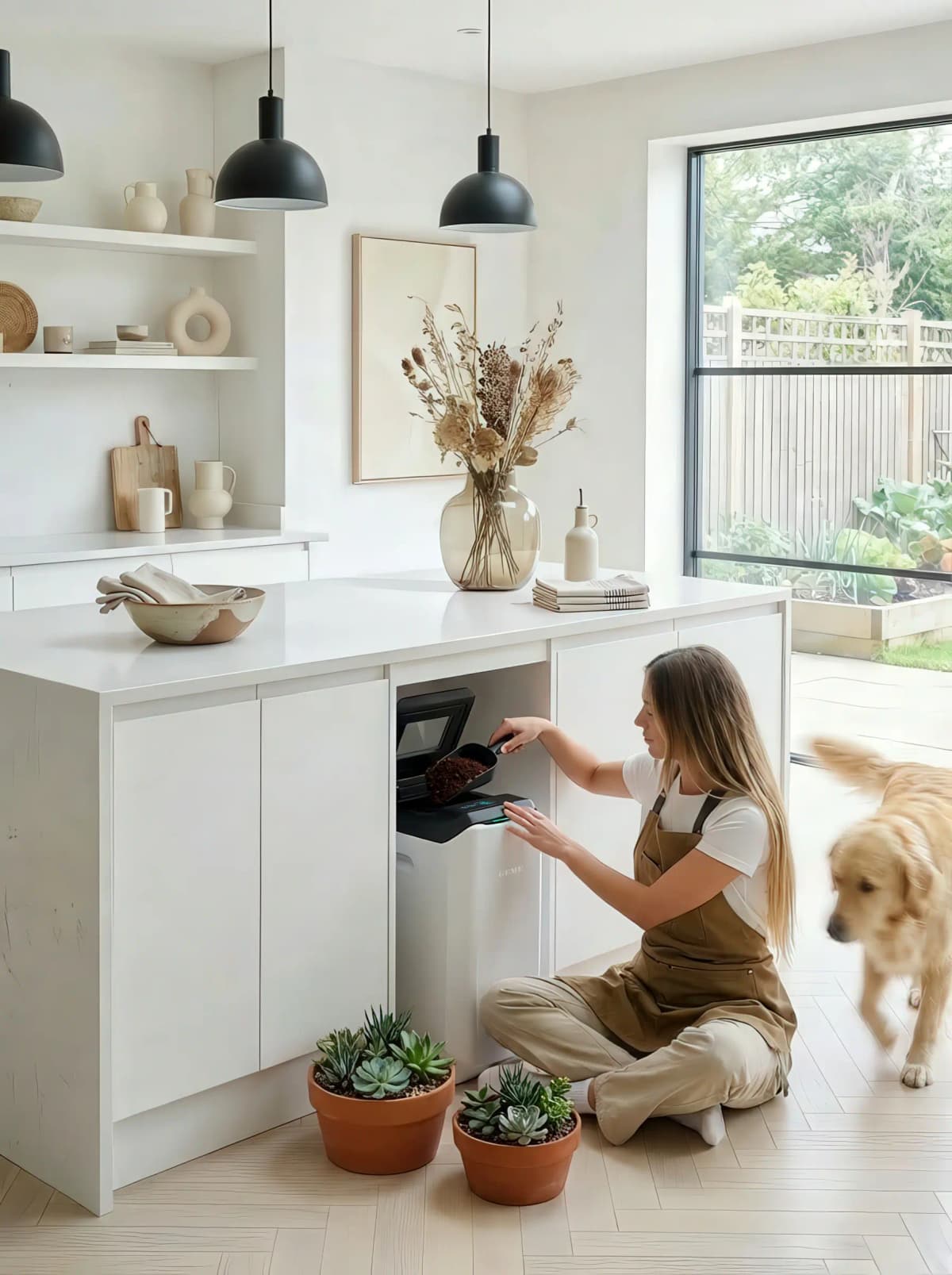
Scraps become soil support.
Start Composting
Make unavoidable food scraps useful again with a microbial kitchen composter built for everyday zero-waste routines.
Built for kitchen-to-soil routines.

Laisser un commentaire
Ce site est protégé par hCaptcha, et la Politique de confidentialité et les Conditions de service de hCaptcha s’appliquent.