


Independent Review · Media Coverage
GEME Terra 2 Reviewed by Digital Trends
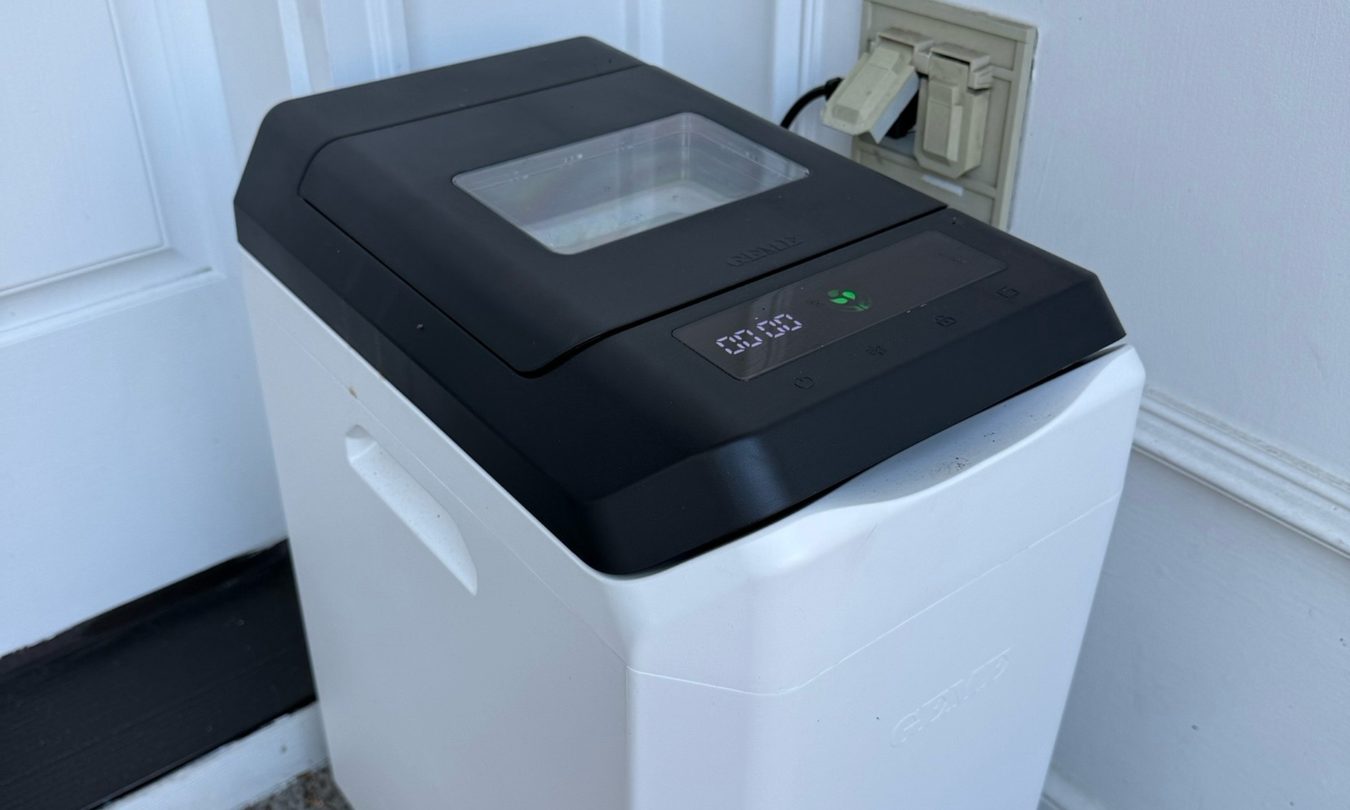
Digital Trends put GEME Terra 2 through weeks of real-world use in a five-person household. The review confirmed the core value of continuous microbial composting while also pushing the system beyond the household size we normally recommend for Terra 2. Here is what the test revealed, and the operating context behind the reviewer's observations.
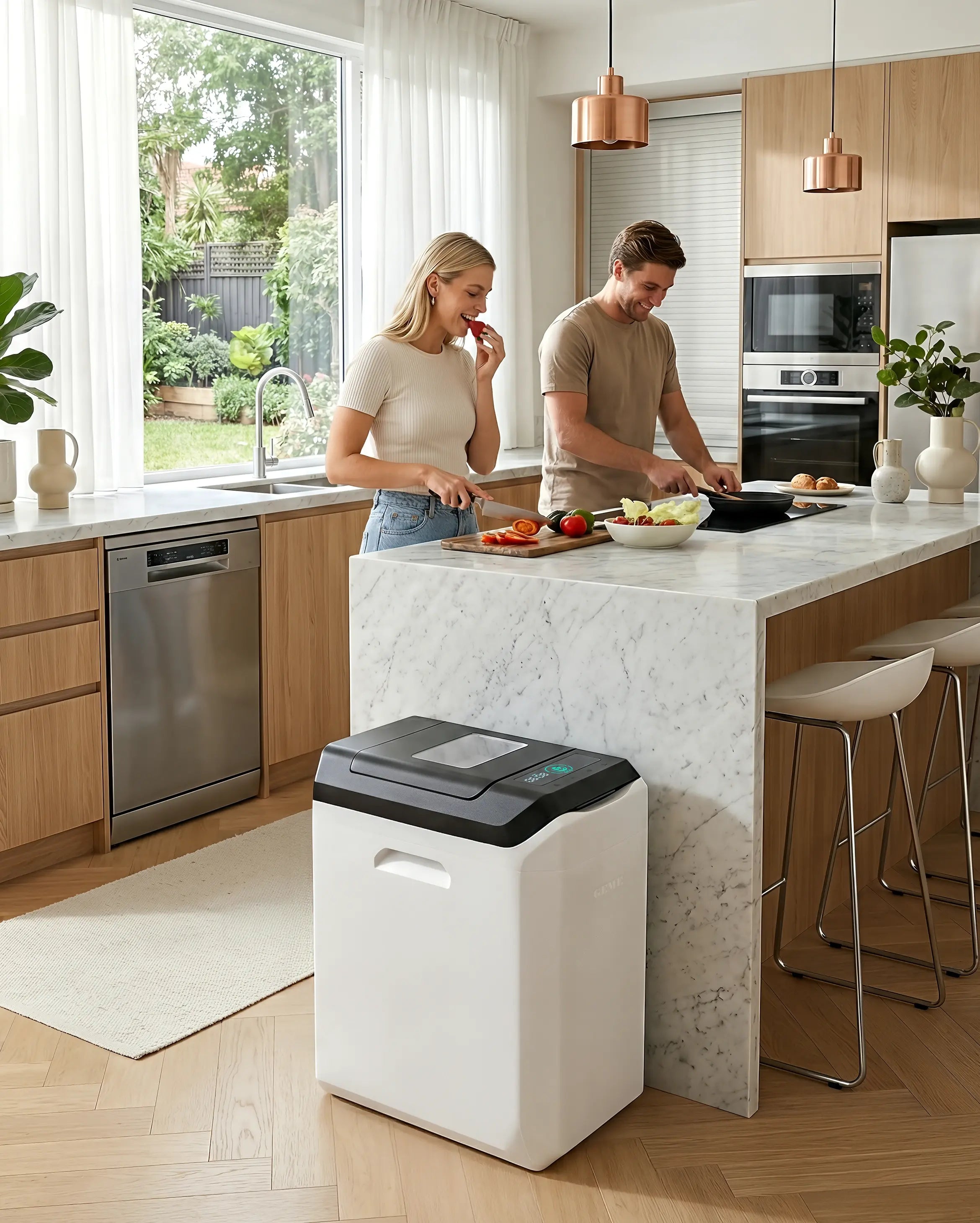
A demanding five-person household put Terra 2 under sustained load.
Editorial transparency: The Digital Trends review was independently authored and published by Digital Trends. This article is GEME's own response and operating-context clarification. We are not editing, disputing or re-characterizing the reviewer's lived experience.
What Digital Trends Found
Digital Trends published its GEME Terra 2 review after using the system over several weeks in a household of five. The review found that Terra 2 was straightforward to set up, easy to integrate into a daily routine and capable of processing a broad range of kitchen scraps through an actual microbial composting process.
The reviewer also found the resulting material useful enough to mix with soil while repotting plants, and described the ability to turn household food scraps into something useful as one of the most meaningful parts of the experience.
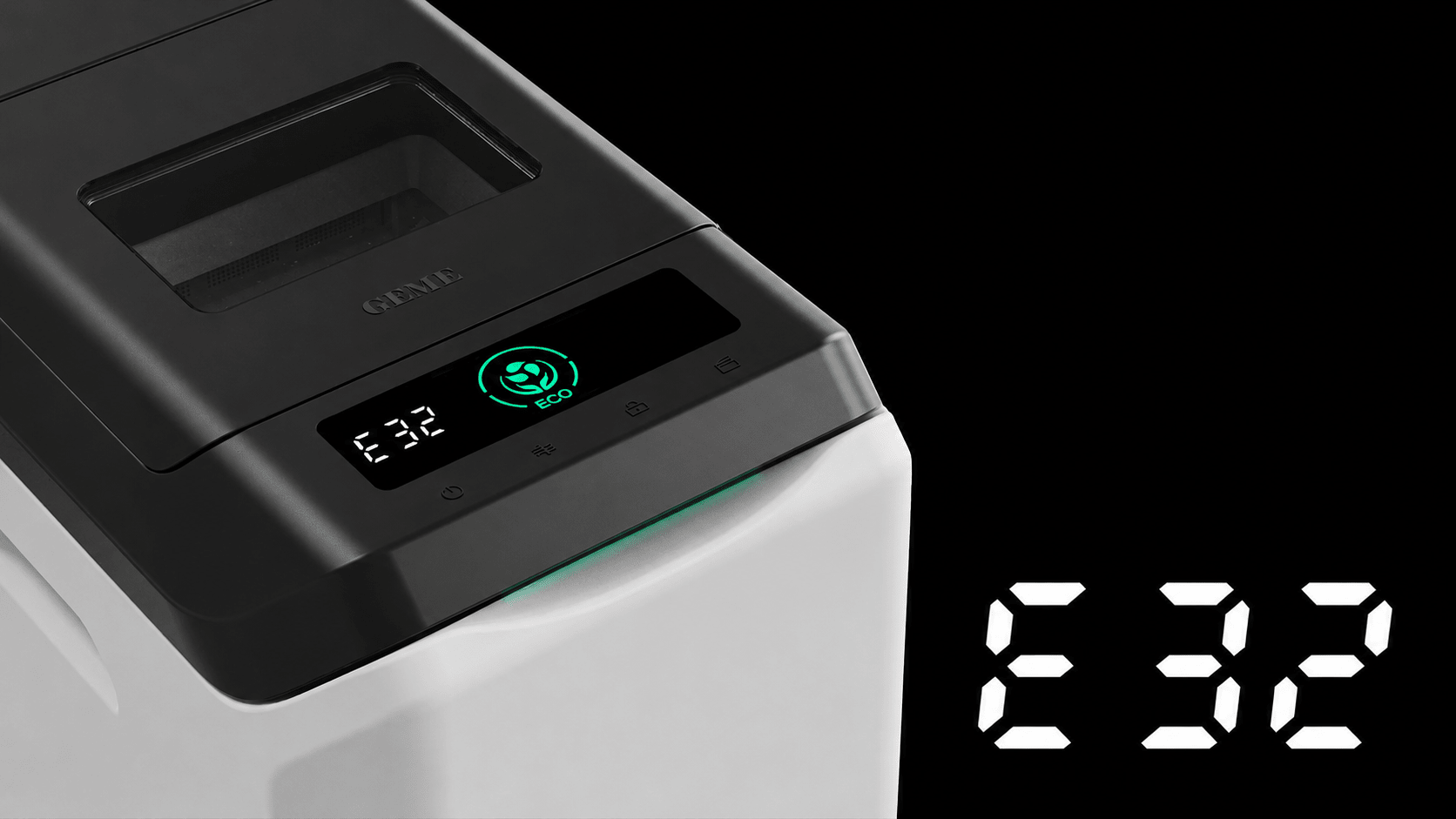
The review's main reservations were equally practical: food performed better when cut into smaller pieces, a five-person household could generate scraps faster than Terra 2 comfortably processed them, noticeable odor appeared during some high-load periods, and overload conditions sometimes triggered an E32 notification.
Those observations are valuable because they show both what Terra 2 does well and where matching the machine to the household matters.
Table of Contents
- Why the Digital Trends Review Matters
- What Worked Well in Real-World Testing
- Clarification 1: Terra 2 Is Rated for 2 kg/day
- Clarification 2: Five-Person Homes Should Consider GEME Pro
- Clarification 3: What Odor During Overload Actually Means
- Clarification 4: Why E32 Is a Protective Alert
- What We Learned From the Review
- Which GEME Model Fits Your Household?
- FAQ
1. Why the Digital Trends Review Matters
A controlled laboratory test can tell us whether a system meets a specification. A household review tells us something different: whether the machine fits into real kitchens, real habits and real food-waste patterns.
That is why the Digital Trends review is useful to us.
The test did not baby the product. The reviewer used Terra 2 in a household of five people, continuously generated food scraps and tested the machine with vegetable trimmings, cooked food, coffee grounds, eggshells and other ordinary kitchen waste.
That household size is important because it created a more demanding test than the one Terra 2 is currently positioned for.
Instead of treating that difference as something to hide, we think it helps clarify an important principle:
A kitchen composter should be matched to the household's actual waste load, not simply to the number of features on the specification sheet.
That is also why GEME now provides a dedicated Terra 2 vs GEME Pro model comparison based on household size, throughput and placement.

2. What Digital Trends Found Terra 2 Did Well
The reviewer's experience validated several of the reasons Terra 2 was designed as a continuous microbial system rather than a short-cycle food dehydrator.
This last point is particularly important. Terra 2 creates a warm, moist and oxygen-rich environment for Kobold™ microbes while GEMEBrain™ manages airflow, moisture, heat and mixing. The system's purpose is to maintain the biological conditions required for aerobic breakdown. You can see the mechanism in How GEME Works.
3. Clarification: Terra 2 Is Recommended for Up to 2 kg of Daily Input
The Digital Trends review references capacity language that does not match GEME's current Terra 2 operating position.
Our current recommendation is:
Recommended Daily Capacity
Up to 2 kg/day
Single Feeding
≤ 1 kg at a time
Recommended Household
1–3 people
The distinction between daily throughput and single-load size matters.
A continuous system is designed to receive scraps throughout the day while material already inside continues breaking down. Two kilograms spread across normal feedings is not biologically or mechanically equivalent to dropping two kilograms of wet scraps into the chamber at once.
A sudden large load can temporarily change moisture distribution, reduce free air space and increase resistance around the mixing system before the existing microbial bed has had time to process the new material.
For best performance, feed Terra 2 in normal meal-sized amounts and keep each individual addition at or below approximately 1 kg.
4. Clarification: A Five-Person Household Is GEME Pro Territory
The Digital Trends test household had five people.
That made the review a useful stress test—but it also placed Terra 2 in a use case above the household size for which we currently recommend it.
Terra 2 is optimized for 1–3 people and up to 2 kg/day of normal household food-scrap input.
For households of four or more people, especially families that cook heavily every day, we recommend GEME Pro.
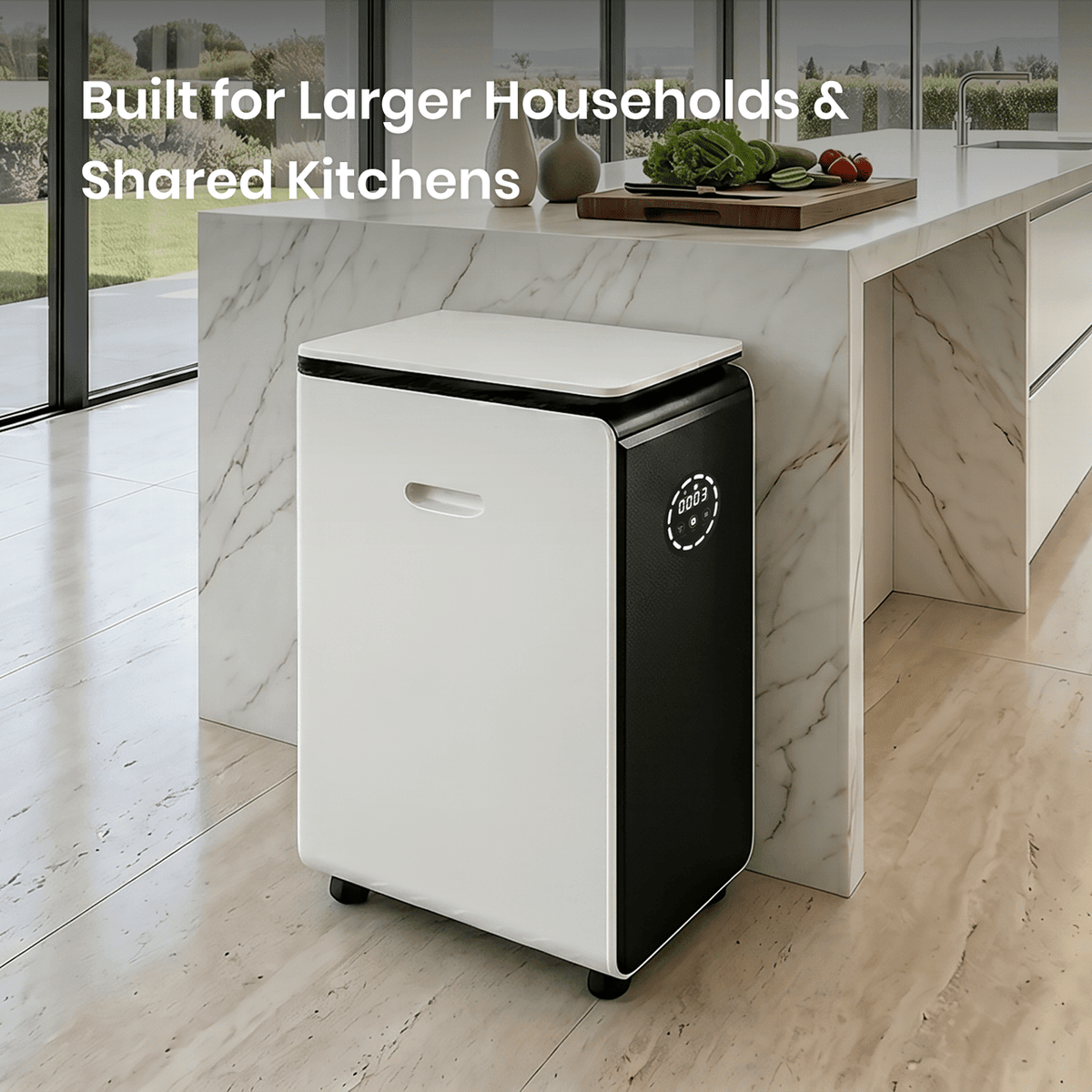
For Larger Households
GEME Pro: Built for 4+ People and Heavier Loads
GEME Pro uses a larger 19L system and is positioned for up to 5 kg/day of daily throughput. It is the better fit when several family members are generating scraps throughout the day or when cooking volume is consistently high.
In other words, the capacity pressure Digital Trends experienced in a five-person household is exactly the reason GEME offers two different household systems.
This is not a downgrade of Terra 2's capability. It is product sizing.
A compact 1–3 person system and a high-capacity 4+ household system solve the same biological problem at different scales.
5. Clarification: Why a Large One-Time Load Can Create a Sour or Rotten Smell
Odor was the most significant criticism in the Digital Trends review.
The reviewer reported a sour or rotting smell after adding fresh material, and also observed that the smell generally became weaker after the system had been allowed to continue processing the load.
That pattern is important.
Terra 2 Is Designed Around Aerobic Composting
Under normal operation, Terra 2 continuously supplies air and mixes the active bed because oxygen-rich conditions support aerobic microbial decomposition.
A healthy aerobic bed should not behave like a sealed bag of rotting food.
But a sudden, oversized—and especially wet—load can temporarily pack material together faster than air can move evenly through every part of the bed.
That can create localized oxygen-poor or anaerobic pockets.
Anaerobic breakdown produces a very different odor profile from a balanced aerobic composting bed. Sour, stale or rotten-food smells are therefore an operational signal that the biological environment has temporarily moved away from its preferred state.
The Smell Is Not the Feature. The Recovery Is What Matters.
We do not consider a rotten smell to be the desired normal operating condition of Terra 2.
What matters in the Digital Trends observation is that the odor declined as the excessive load continued to break down.
That recovery is consistent with what GEMEBrain™ is designed to do: respond to chamber conditions by adjusting the operating environment around airflow, moisture, heat and mixing so aerobic microbial activity can recover.
If You Notice a Strong Sour or Rotten Smell
- Pause additional feeding. Give the existing load time to break down.
- Check whether a very large or wet load was recently added.
- Keep the machine powered. Airflow and mixing are important to restoring aerobic conditions.
- Avoid adding another large load while the chamber is recovering.
- Resume normal feeding gradually once the bed has stabilized.
This is also why Terra 2 should remain powered during normal operation. The airflow, stirring and thermal environment are part of maintaining an aerobic biological system rather than allowing wet scraps to stagnate.
6. Clarification: E32 During Overload Is a Protective Alert, Not the Same as a Product Failure
Digital Trends also reported seeing E32 when the chamber was overloaded.
From the user's perspective, seeing a code on the display can understandably look like an error.
For current Terra 2 operating logic, however, an E32 state triggered by excessive load should be understood as a protective load alert.
The mixing system is designed to work through an active biological bed—not to force its way indefinitely through excessive mechanical resistance.
If the chamber becomes too heavily loaded or dense, the system can detect abnormal resistance and interrupt or limit operation rather than continuing to drive the mechanism under excessive stress.
A protection alert doing its job is different from a component failing.
The practical response is straightforward: stop adding material, reduce an excessive load if necessary and give the machine time to return to normal operating conditions.
If an E32 indication persists after the load has been corrected, users should contact GEME Support so the unit can be checked rather than repeatedly forcing operation.
We see this type of protection as a safeguard—not as a reason to remove overload limits from the machine.
7. Digital Trends Observation vs GEME Operating Context
| Review Observation | GEME Operating Context | Practical Takeaway |
|---|---|---|
| Five-person household generated more scraps than Terra 2 could comfortably absorb at times. | Terra 2 is positioned for 1–3 people and up to 2 kg/day. | For 4+ people or heavy daily cooking, choose GEME Pro. |
| Large loads slowed processing. | Daily throughput and single-feed size are different. Keep individual feedings at or below about 1 kg. | Spread food scraps across normal daily feedings. |
| Sour or rotting odor appeared during some high-load periods. | Oversized wet loads can temporarily create oxygen-poor zones before airflow and mixing restore aerobic conditions. | Pause feeding and allow the existing load to recover. |
| E32 appeared after overload. | In current Terra 2 overload logic, E32 functions as a protective load alert when resistance exceeds the intended operating range. | Reduce the excessive load rather than forcing the drive system. |
| Smaller pieces processed more smoothly. | Smaller pieces provide greater microbial surface area and reduce mechanical resistance. | Cut unusually large or dense scraps before feeding. |
| The reviewer harvested material and used it with soil. | Terra 2 produces a moist, microbe-active compost base rather than dehydrated flakes. | Screen unfinished pieces and blend the output with soil according to current guidance. |
8. What We Learned From the Review
Good independent reviews are useful precisely because they do not reproduce a product page.
Digital Trends demonstrated that Terra 2 can fit into an actual household routine, process varied kitchen scraps and generate biologically processed material that the reviewer considered useful enough to bring back to plants.
It also demonstrated what happens when a compact household system is asked to behave like a larger-capacity machine.
That gives us four useful lessons.
Lesson 1: Capacity Needs to Be Communicated as a Daily Flow
“2 kg/day” does not mean “dump 2 kg into the chamber at dinner.”
Continuous biological processing works best when scraps enter progressively while the existing bed continues decomposing them.
Lesson 2: Household Sizing Matters
A five-person household can produce substantially more waste than a one- or two-person household.
Terra 2 and GEME Pro therefore should not be treated as interchangeable sizes of the same purchase page.
Lesson 3: Odor Is a Diagnostic Signal
A strong rotten or sour smell tells us the microbial environment may temporarily be too wet, too dense or insufficiently aerated.
It should prompt load correction—not a claim that real composting must always smell bad.
Lesson 4: Protection Logic Should Be Explained Better
If a display code appears because the system is protecting itself from an excessive mechanical load, users should know what the code means and what action to take.
The review is useful feedback for us because a protective feature only helps when the user understands it.
Want the Engineering Detail?
Why Terra 2 Behaves Differently From a Dehydrator
Terra 2 does not use a short heating cycle to dry food into stable crumbs. It maintains an active biological bed whose performance depends on oxygen, moisture, heat, microbes, mixing and residence time.
That is why overload, excessive moisture and airflow matter—and why system recovery is part of real biological process control.
9. Which GEME Model Fits Your Household?
| Household / Use Case | Recommended System | Daily Throughput Positioning |
|---|---|---|
|
1–3 people Apartment or smaller home, normal daily kitchen scraps |
GEME Terra 2 | Up to 2 kg/day ≤1 kg per individual feeding |
|
4+ people Heavy cooking, high daily scrap volume |
GEME Pro | Up to 5 kg/day |
A product can be excellent and still be the wrong size for a particular household. The best composter is the one whose daily biological capacity matches the waste stream it is expected to receive.
If you are still deciding whether an indoor system fits your routine at all, read Are Kitchen Composters Worth It?.
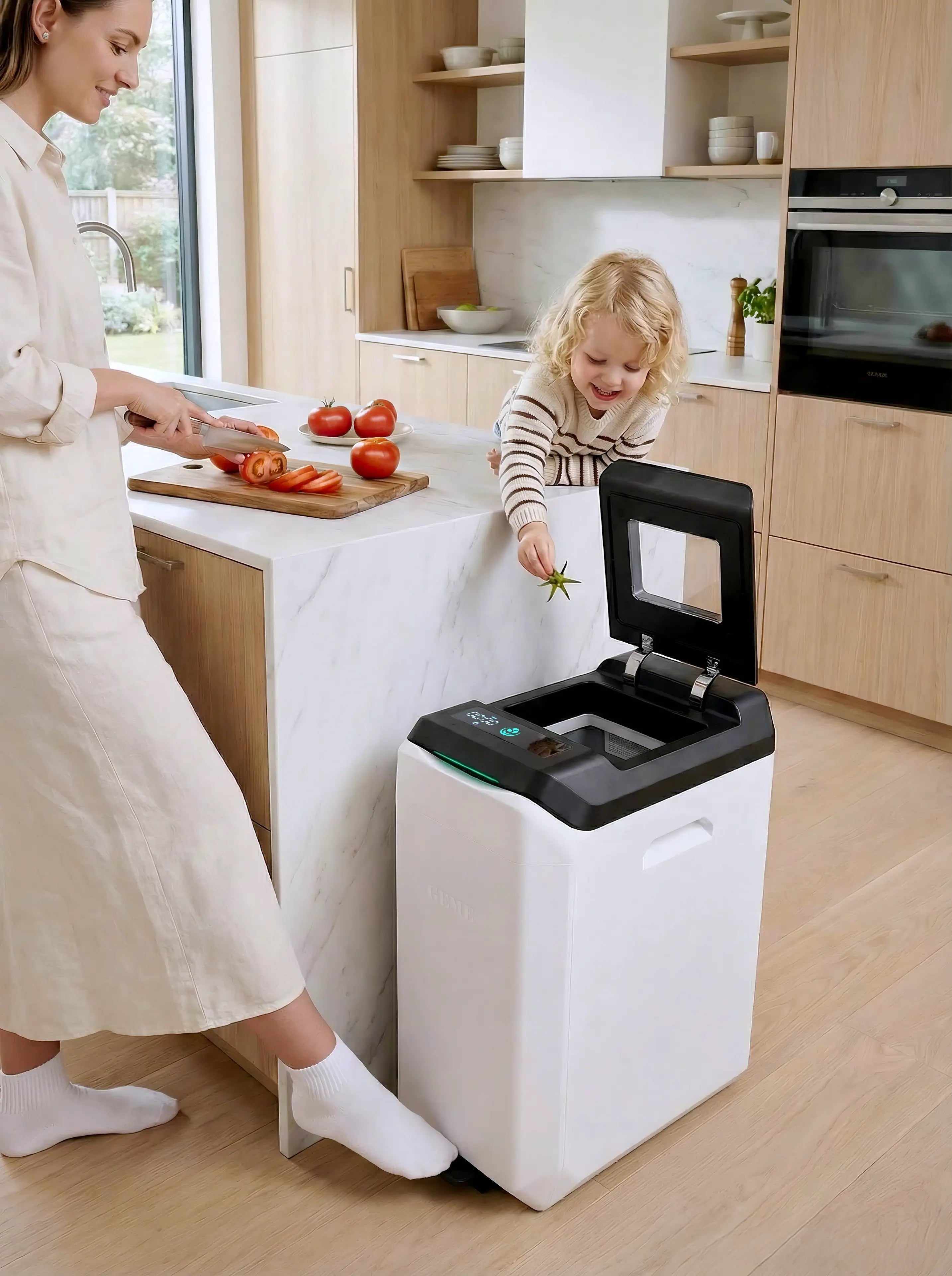
So does choosing the right system for the real household load.
Continuous Microbial Composting
Terra 2 for Everyday Homes. GEME Pro for Bigger Routines.
Digital Trends gave Terra 2 a demanding real-world workout. For the household, it was actually designed around 1–3 people and a balanced continuous feed; the operating model is simpler: add reasonable portions, keep the biological bed aerobic and let the system manage the environment in the background.
10. Frequently Asked Questions
Did Digital Trends review GEME Terra 2?
Yes. Digital Trends published a hands-on GEME Terra 2 review in June 2026 after testing the machine over several weeks in a five-person household. The review covered setup, daily use, compost output, odor, capacity, maintenance and overload behavior.
What did Digital Trends like about GEME Terra 2?
The review highlighted the simple setup, broad range of food scraps it could process, continuous-feed format, ability to produce real compost-like output for soil use and its practical value in reducing household food waste.
What problems did the Digital Trends reviewer encounter?
The main issues reported were noticeable odor during some processing periods, the need to cut larger food into smaller pieces, capacity pressure in a five-person household and E32 indications after overloading.
How much food waste can GEME Terra 2 process per day?
GEME's current recommendation is up to 2 kg of suitable food waste per day. Because Terra 2 is continuous-feed, that daily amount should be distributed through normal feedings rather than added all at once.
How much can I put into Terra 2 at one time?
Keep an individual feeding at or below approximately 1 kg. Smaller normal meal-sized feedings allow the existing microbial bed to process new material without being suddenly overwhelmed by moisture, density or mechanical resistance.
Is GEME Terra 2 suitable for a family of five?
Terra 2 is currently recommended for households of one to three people. For a family of five or other high-waste households, GEME recommends GEME Pro, which is designed for four or more people and up to 5 kg/day of daily throughput.
Why can Terra 2 smell after too much food is added at once?
A very large or wet one-time load can temporarily reduce airflow through parts of the compost bed and create oxygen-poor zones. These anaerobic pockets can produce sour or rotten odors. Keeping the unit powered and pausing additional feeding allows airflow, mixing and microbial processing to help restore aerobic conditions.
Does a temporary smell mean Terra 2 is supposed to smell?
No. A strong rotten or sour odor is not the desired steady operating state. It is an operational signal that the biological bed may be overloaded, too wet or insufficiently aerated. Under normal balanced operation, Terra 2 is designed for strong indoor odor mitigation.
What does E32 mean when Terra 2 is overloaded?
In current Terra 2 overload logic, an E32 indication associated with excessive load functions as a protective alert. It tells the user that the mixing system is encountering resistance beyond its intended range, so the load can be reduced before excessive mechanical stress is applied.
Is E32 a product defect?
An overload-triggered E32 alert is not, by itself, evidence of a defective machine. Correct the excessive load and allow the system to recover. If the indication remains after normal operating conditions have been restored, contact GEME Support for diagnosis.
Does Terra 2 make finished compost in 6–8 hours?
No. The 6–8 hour figure refers to the early high-activity and visible-breakdown stage for suitable inputs under suitable conditions. Terra 2 is a continuous-feed biological system, so material inside the chamber has different residence times and compost maturity continues to develop.
Sources & Further Reading
- Digital Trends — GEME Terra 2 Review: Can an Indoor Composter Actually Reduce Kitchen Waste?
- GEME — Terra 2 Current Product Specifications
- GEME — GEME Pro Current Product Specifications
- GEME — Terra 2 vs GEME Pro Model Comparison
- GEME — How Continuous Aerobic Microbial Processing Works
- GEME — Terra 2 Technical Whitepaper
Reviewed August 14, 2026. Digital Trends' observations are attributed to its independent hands-on review. Capacity, household-fit, overload and operating guidance in this article reflect GEME's current product positioning and should take precedence over older or superseded marketing specifications.

Laisser un commentaire
Tous les commentaires sont modérés avant d'être publiés.
Ce site est protégé par hCaptcha, et la Politique de confidentialité et les Conditions de service de hCaptcha s’appliquent.