
Best Kitchen Composter 2026
If you are looking for the best kitchen composter in 2026, the first question is not which machine is the most popular. The real question is: does it actually make compost?
Many products called kitchen composters are really food recyclers or dehydrator-style machines. They dry and grind food scraps, reduce odor, and shrink waste volume, but they do not complete the microbial process that creates real compost.
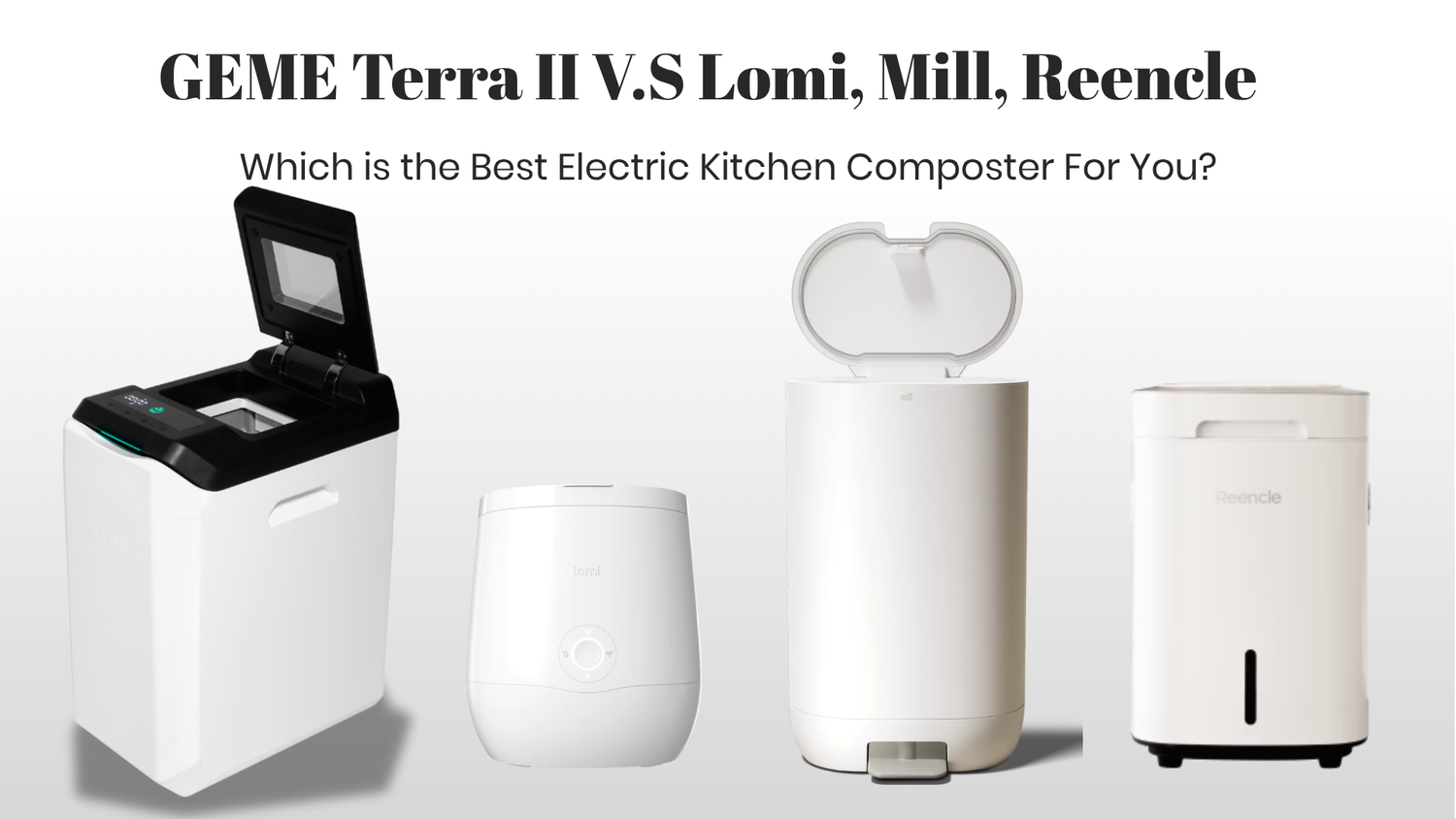
This guide compares GEME Terra II, Lomi, Mill, and Reencle so you can see which machines reduce food waste and which ones produce real compost for garden use.
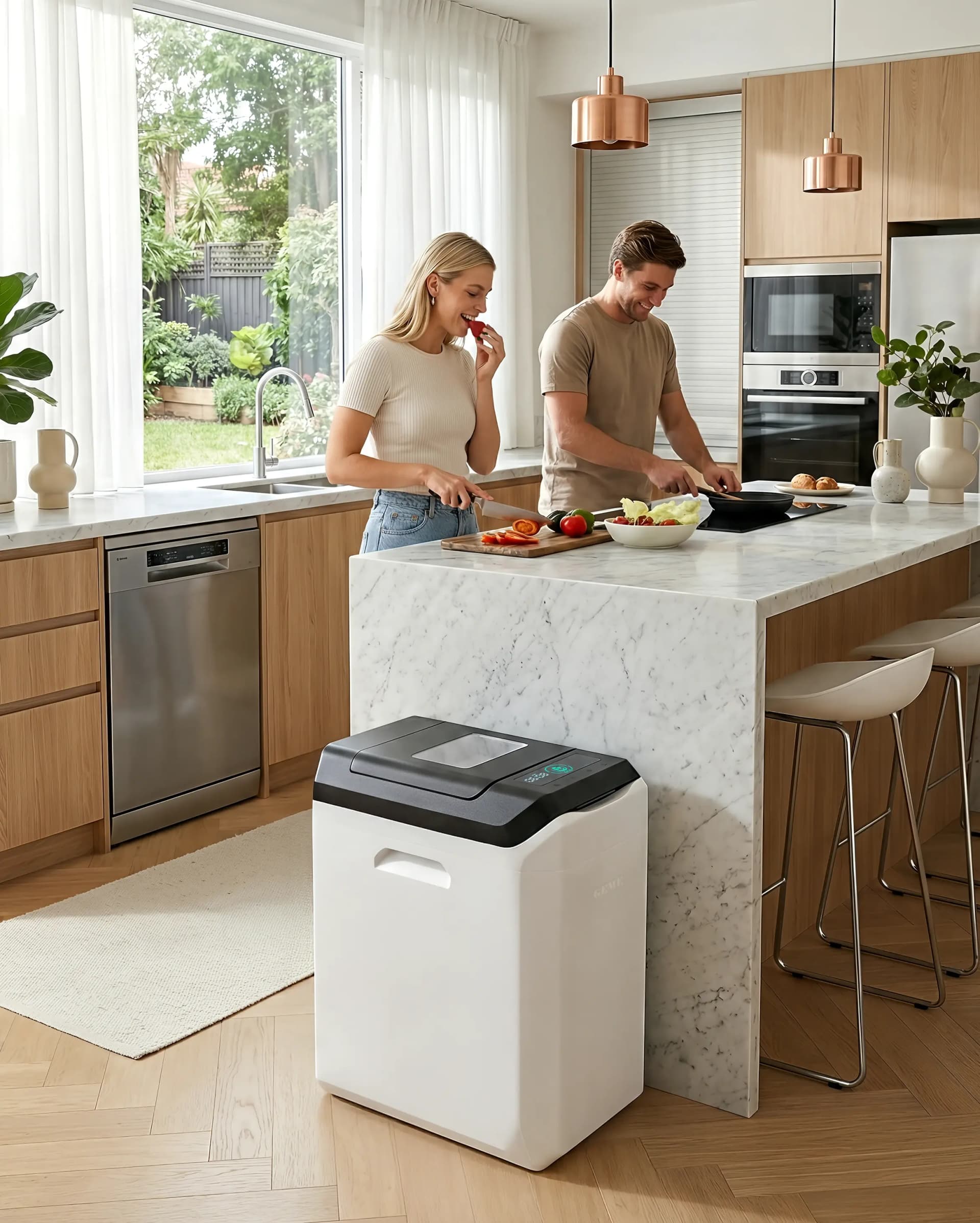
Microbial composter or food recycler?
Quick Answer
Among the most popular kitchen composters in 2026, Lomi and Mill primarily reduce, dry, grind, or store food waste. They can be useful for waste management, but they are better understood as food recyclers rather than real composters.
Reencle Prime and GEME Terra II use real microbial composting. Among them, GEME Terra II is the stronger overall choice for most households because it is designed for real compost output, continuous daily feeding, higher practical capacity, no filter replacements, and no recurring filter costs.
For deeper context, read real compost vs dehydrated food waste, does Lomi really compost?, and does Mill really compost?.
Key Takeaways
- GEME Terra II is a real microbial kitchen composter. It uses living microbes and controlled aerobic decomposition to produce real compost.
- GEME has no filter replacements. There are no recurring odor-filter costs or carbon-filter subscriptions.
- Reencle is the closest microbial competitor. It uses microorganisms, but its output often benefits from extra curing or sifting before garden use.
- Lomi and Mill are better framed as food recyclers. They can reduce food-waste volume, but they do not complete the same microbial composting process at home.
- For gardeners, output quality matters most. Real compost is different from dehydrated food waste that only looks soil-like.
Table of Contents
- What Is a Real Kitchen Composter?
- The Two Worlds of Electric Composters
- Lomi: A Popular Food Recycler
- Mill: A Food Recycler and Service Model
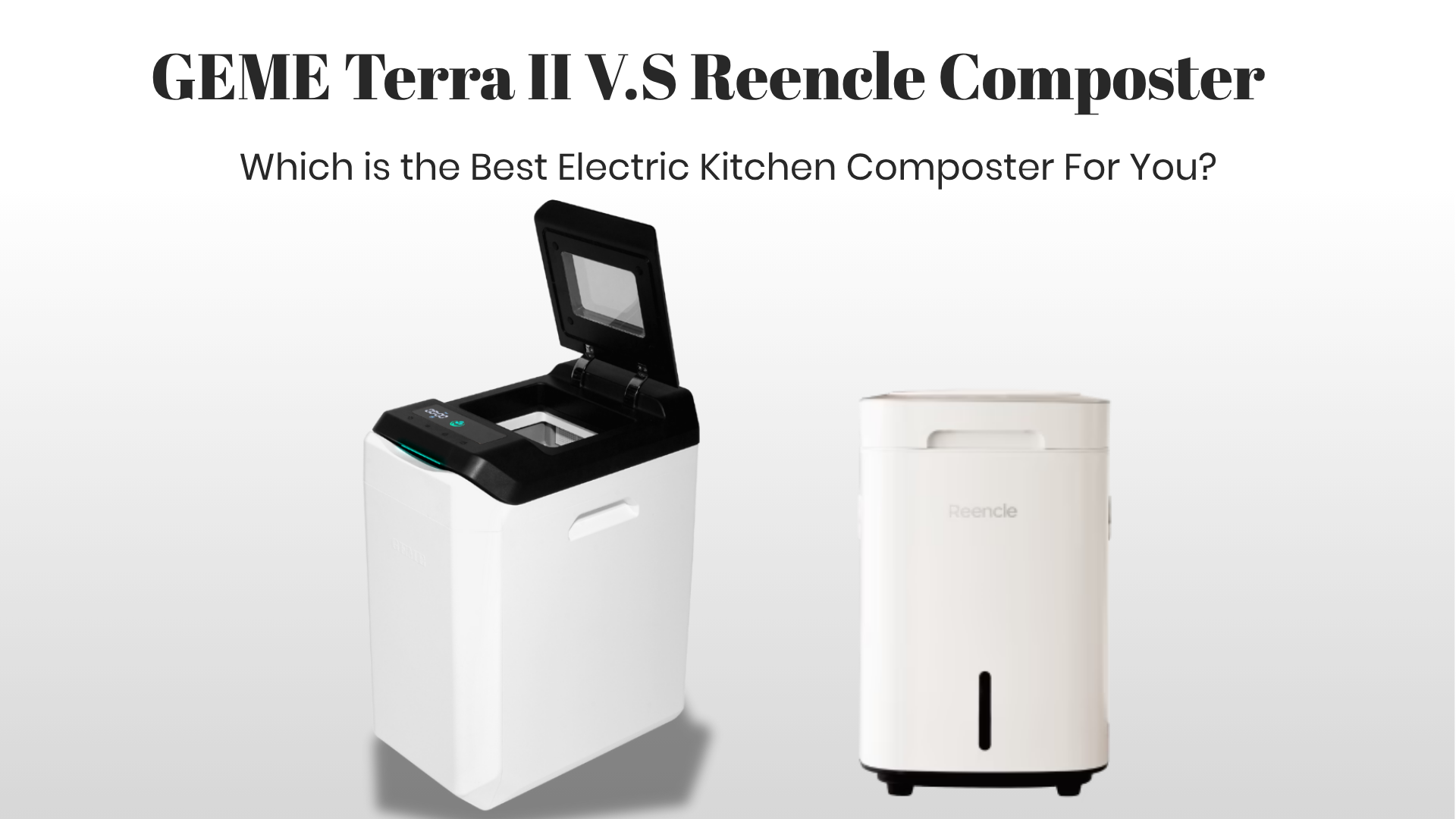
- Reencle: Real Microbial Composting With Caveats
- GEME Terra II: Real Compost Without Filter Fees
- Full Comparison Table
- Decision Guide
- FAQ
- Sources
- Related Articles
What Is a Real Kitchen Composter?
A real kitchen composter uses living microorganisms to biologically decompose food waste into real compost, rather than simply drying and grinding scraps into smaller particles.
That means a real composter should support:
- Microbial composting, not just drying and grinding.
- Aerobic decomposition, with oxygen and moisture control.
- Real compost output, not sterile food powder.
- Garden and soil use, when applied according to compost-use guidance.
- Practical daily kitchen use, without excessive odor, mess, or maintenance friction.
This distinction matters because many electric composters on the market are designed mainly for food-waste volume reduction. They may help your trash smell better, but they do not necessarily create real compost.
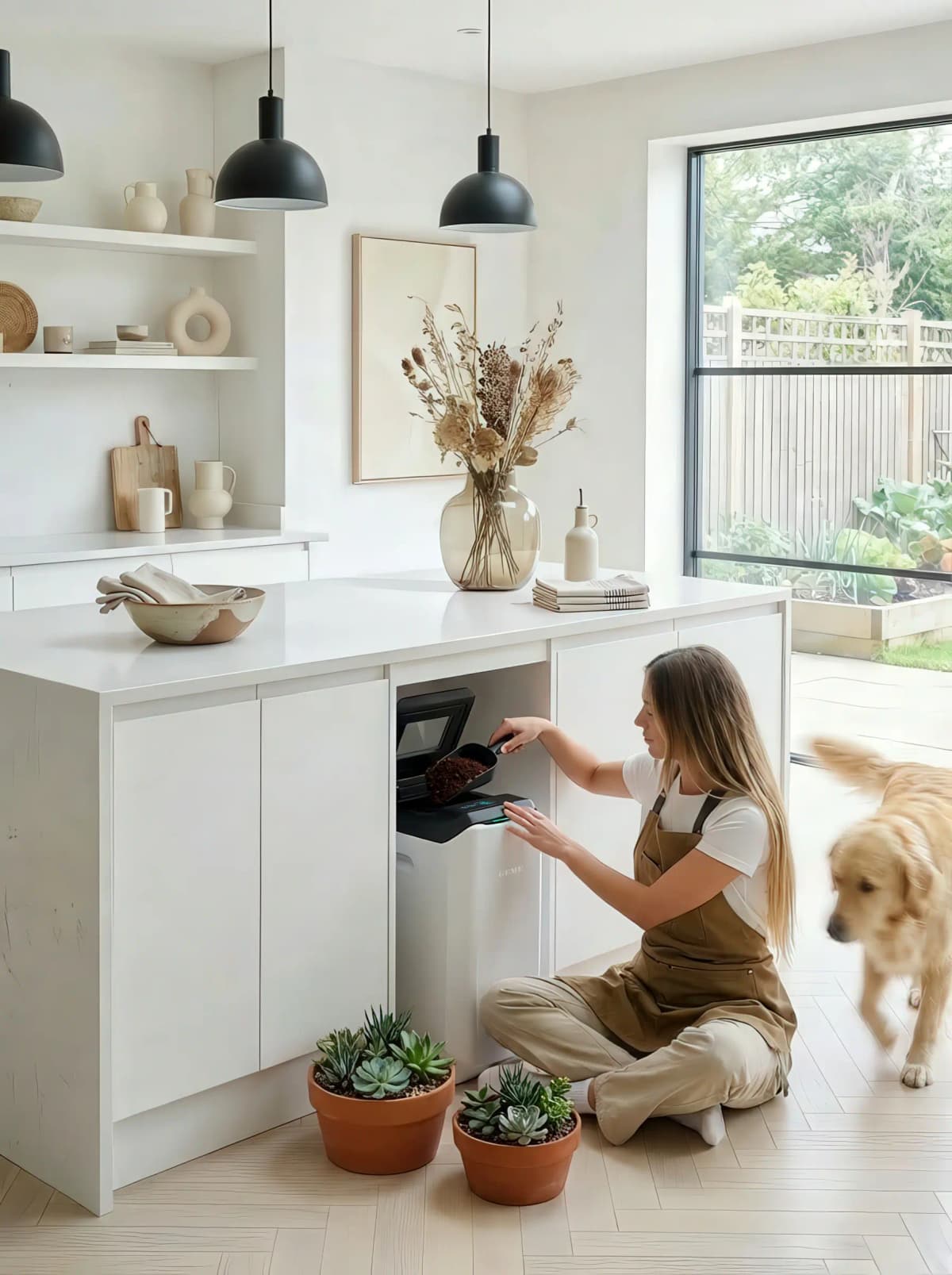
Not dehydrated food waste.
The Electric Kitchen Composter Designed for Real Compost
GEME Terra II combines microbial science, intelligent controls, and no filter replacements to transform food scraps into real compost for gardens, plants, and soil improvement.
No filter replacements. No recurring filter costs.
The Two Worlds of Electric Composters
The electric composter market can be divided into two very different categories.
1. Food Recyclers and Dehydrator-Style Machines
These machines use heat, drying, grinding, or storage to reduce food-waste volume. They are useful if your main goal is to make scraps smaller, drier, and easier to store before disposal, collection, or further composting.
However, the output is not real finished compost. It usually still needs microbial decomposition before it can behave like compost in healthy soil.
Examples include:
- Lomi
- Mill
- Vitamix FoodCycler-style machines
2. Microbial Kitchen Composters
These machines maintain a living microbial environment that breaks down food waste biologically. They are closer to real composting because microorganisms are actively involved in transforming organic matter.
Examples include:
- Reencle Prime
- GEME Terra II
The difference is not just technical. It changes what you can do with the output. Dehydrated food waste is not the same as biologically active compost. A real kitchen composter should help close the loop from kitchen scraps → microbial composting → real compost → garden soil.
Lomi: A Popular Food Recycler
Lomi is one of the most visible kitchen composter products on the market. It is sleek, compact, and well-known. But its core process is better understood as food recycling and volume reduction rather than full microbial composting.
Lomi can reduce food-waste volume and kitchen odor, but the output should be understood as processed organic material or pre-compost material rather than real finished compost.
What Lomi Does Well
- Reduces food-waste volume.
- Helps manage kitchen odor.
- Creates a dry, compact material that is easier to store.
- Works for users who already have a second composting step.
Where Lomi Falls Short
- It does not complete the same real microbial composting process as GEME.
- The output should not automatically be treated as mature compost.
- It uses a charcoal filter system.
- It is less ideal for gardeners who want real compost directly from the machine.
Choose Lomi if your main goal is food-waste volume reduction. For a deeper comparison, read GEME vs Lomi.
Mill: A Food Recycler and Service Model
Mill is beautifully designed and convenient, but it is not a traditional home composter. It dries and grinds food scraps into food grounds that can be used with Mill’s broader recycling, garden, or external processing model.
This makes Mill useful for people who want a clean way to divert food waste from landfills. But if your goal is to produce real compost for your own garden inside your home, Mill does not complete that loop by itself.
What Mill Does Well
- Large, polished floor-standing design.
- Good food-waste storage experience.
- Convenient for households focused on waste diversion.
- Can connect with external processing or food-grounds use models.
Where Mill Falls Short
- It does not produce real compost at home.
- It depends on further handling, service, or additional processing.
- It is less suitable for gardeners who want direct compost output.
- It is better framed as a food recycler than a real microbial composter.
For a direct comparison, read GEME vs Mill Food Recycler.
Reencle: Real Microbial Composting With Caveats
Reencle is different from dehydrator-style machines because it uses living microorganisms to break down food waste. That makes it a more serious composting option than Lomi or Mill for people who care about real biological decomposition.
Reencle Prime maintains a warm, aerated environment where microbes process food scraps over time. The output is biologically active and closer to compost than dried food powder.
What Reencle Does Well
- Uses real microbial decomposition.
- Works continuously for daily scraps.
- Produces biologically active material.
- Can be a good fit for smaller households.
- Offers a compact indoor composting experience.
Where Reencle Falls Short
- The output often benefits from additional curing or sifting before garden use.
- Carbon filters require replacement over time.
- Daily capacity is more limited than GEME Terra II for families and heavy cooks.
- It may require more user attention to manage input volume and output maturity.
Reencle is a real microbial composter, but it is best suited to smaller households that do not mind a curing step and recurring filter costs. For more details, read GEME vs Reencle.
GEME Terra II: Real Compost Without Filter Fees
GEME Terra II is a kitchen electric composter designed for real indoor composting at home. It uses living microorganisms, intelligent environmental controls, and permanent odor-control technology to transform kitchen scraps into real compost.
At the heart of GEME Terra II is Kobold™, a microbial composting system designed to process diverse household food waste under controlled aerobic conditions.
Instead of simply drying scraps, GEME Terra II supports aerobic decomposition. It manages the conditions microbes need to stay active: warmth, oxygen, moisture, and mixing. This is why its output is positioned as real compost rather than dehydrated food waste.
Why GEME Terra II Stands Out
- Real compost output: designed to produce biologically active compost for garden and soil use.
- Electric kitchen composter: built for daily indoor food-waste processing.
- Continuous feed: users can add scraps as part of daily kitchen life.
- No filter replacements: no routine carbon filter replacement.
- No recurring filter costs: no hidden filter subscription cycle.
- Broad food-scrap routine: handles many cooked foods, meat, dairy, fish, and small bones within GEME feeding guidance.
- Garden use: output can be mixed with soil for plants, gardens, balcony planters, and raised beds.
This makes GEME Terra II the strongest option for households that want one machine to serve as a kitchen composter, electric composter, and real composter.
Learn more about Kobold™ microbial technology and how GEME composting works.
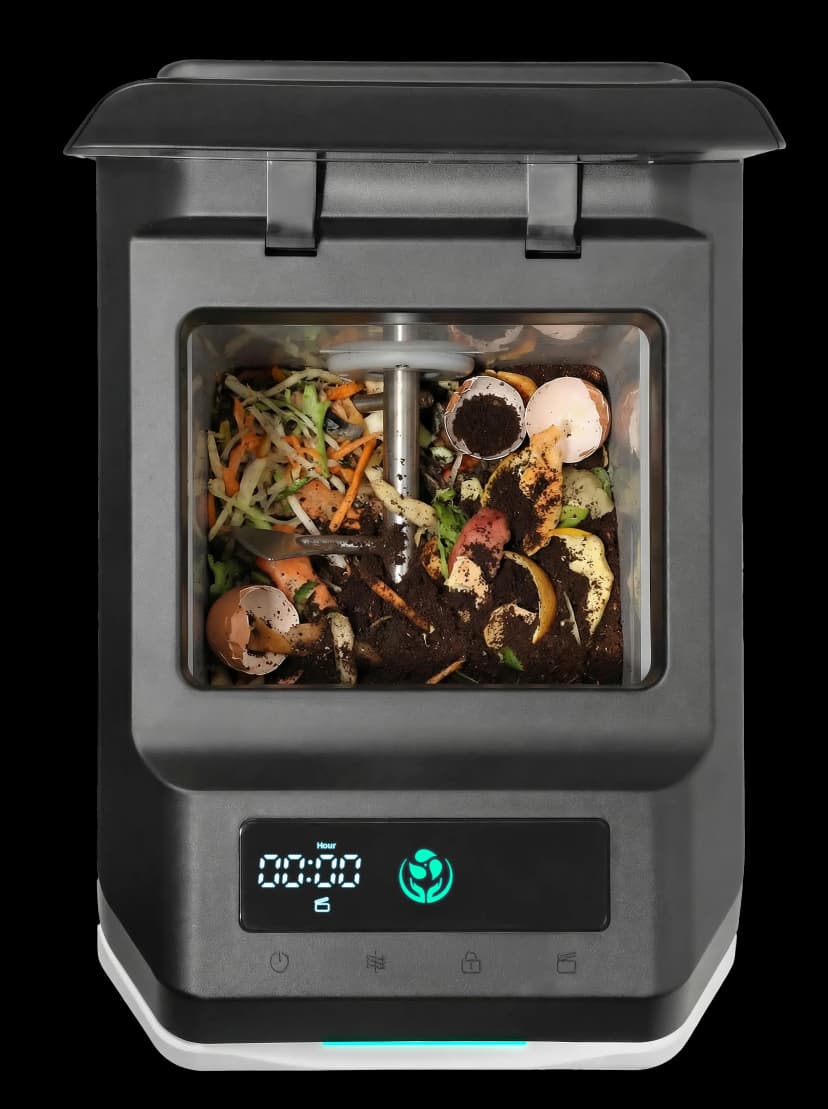
No filter subscriptions.
Real Compost. No Filter Replacements.
GEME Terra II is an electric kitchen composter designed to produce real compost without recurring carbon filter costs. Feed it daily kitchen scraps and create compost for gardens, raised beds, and potted plants.
Real microbial composting. No recurring filter costs.
Full Comparison Table
The table below separates real microbial composters from food recyclers and dehydrator-style machines.
| Feature | Lomi | Mill | Reencle Prime | GEME Terra II |
|---|---|---|---|---|
| Core technology | Food recycling, drying, and grinding | Food recycling, drying, grinding, and grounds management | Microbial composting | Continuous aerobic microbial composting |
| Produces real compost? | No, better framed as processed output | No, food grounds need further handling | Yes, microbial output; often benefits from curing | Yes, real compost output |
| Garden-use readiness | Needs further decomposition or cautious use | Needs external processing or further decomposition | Often benefits from curing or sifting | Designed for garden and soil use when mixed according to GEME guidance |
| Odor-control model | Charcoal filter system | Odor-control system; filter model may vary by product/service | Carbon filtration | Permanent odor-control system |
| Filter replacements | Yes, check current Lomi guidance | Check the current Mill model and support guidance | Yes, carbon filter replacement over time | No filter replacements |
| Recurring filter costs | Likely, depending on filter use | Check the current service and filter model | Yes | No recurring filter costs |
| Feed style | Batch-style processing | Storage and processing workflow | Continuous microbial processing | Continuous daily feeding |
| Best for | Waste volume reduction | Waste diversion and grounds management | Small households wanting microbial composting | Families, gardeners, and real compost users |
Decision Guide: Which One Fits Your Home?
Choose Lomi If:
- You mainly want to reduce kitchen waste volume.
- You do not need real compost directly from the machine.
- You already have another composting method for further decomposition.
- You are comfortable with filter and consumable guidance.
Choose Mill If:
- You want a clean food-waste storage and recycling system.
- You are comfortable with a service or external-processing model.
- You do not need compost output for your own garden.
- You prioritize convenience over soil production.
Choose Reencle If:
- You want real microbial composting in a smaller household.
- You do not mind additional curing or sifting before garden use.
- You accept carbon filter replacement costs.
- Your daily food-waste volume is moderate.
Choose GEME Terra II If:
- You want authentic, biologically active, real compost.
- You want an electric kitchen composter that also works as a real composter.
- You do not want filter replacements or recurring filter fees.
- You need a continuous-feed system for daily kitchen scraps.
- You want to compost many everyday scraps, including cooked food, meat, dairy, fish, and small bones, within GEME guidance.
- You want compost that supports gardens, houseplants, balcony planters, and raised beds.
Final verdict: Lomi and Mill are useful food recyclers. Reencle is a real microbial composter with curing and filter-cost caveats. GEME Terra II is the strongest overall choice for households that want a kitchen composter, electric composter, and real composter in one machine.
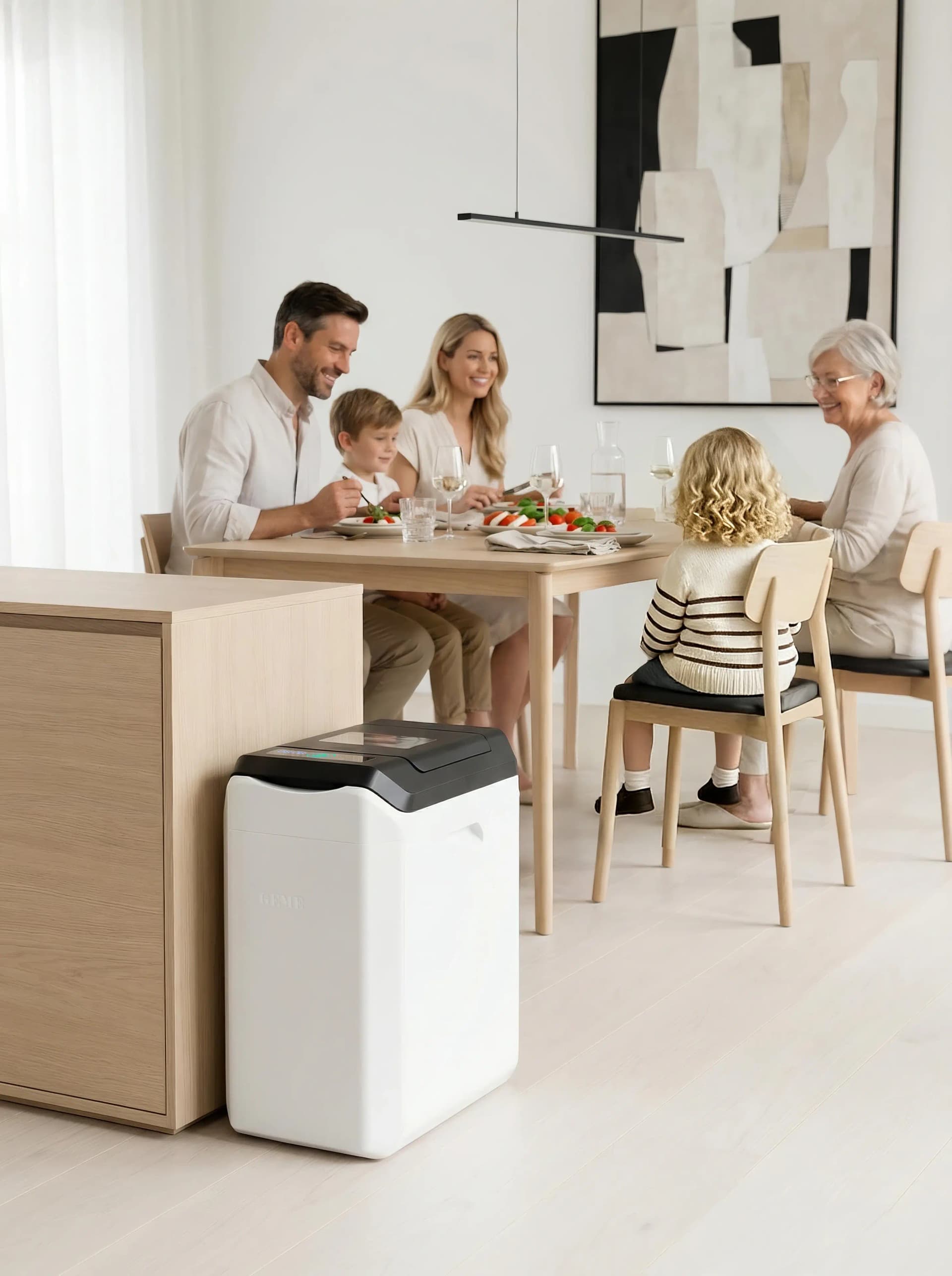
Built for gardeners and families.
Choose the Kitchen Composter Built for Real Compost
GEME Terra II helps households transform food scraps into real compost for gardens, houseplants, raised beds, and long-term soil health — with no filter replacements and no recurring filter costs.
Real compost. Real microbial composting. No filter replacements.
Frequently Asked Questions
Which kitchen composter produces real compost?
Among the machines compared here, GEME Terra II and Reencle Prime both use microbial composting. GEME Terra II is the stronger option for most households because it is designed for real compost output, higher practical capacity, no filter replacements, and no recurring filter costs.
Are Lomi and Mill real composters?
Not in the same microbial composting sense. Lomi and Mill primarily reduce, dry, grind, or store food waste. Their output may still need additional microbial decomposition before it behaves like finished compost in soil.
What is the best kitchen composter for families?
For families that cook regularly and generate larger amounts of food scraps, GEME Terra II is one of the strongest options because it supports continuous daily feeding and real compost output.
What is the best kitchen composter for small apartments?
Reencle Prime can be a good fit for smaller households that want microbial composting and are comfortable with occasional curing, sifting, and filter replacement. GEME Terra II is stronger when you want more capacity and no recurring filter costs.
Can I put meat and dairy into these composters?
Lomi and Mill have product-specific limits because they primarily process food waste through drying, grinding, or storage. Reencle and GEME Terra II are microbial systems designed for broader kitchen-scrap routines, but users should still follow each product’s official feeding guidance.
Which kitchen composter has the lowest long-term filter cost?
GEME Terra II has the strongest long-term filter-cost advantage because it has no filter replacements, no recurring filter costs, and no filter subscription requirement.
Can I use GEME compost directly in my garden?
Yes. GEME Terra II is designed to produce real compost suitable for garden and soil use. For best results, mix it with soil according to GEME guidance rather than using it as pure potting soil.
Why does real compost matter?
Real compost supports soil structure, moisture retention, microbial diversity, and long-term plant health. Dehydrated food waste can reduce trash volume, but it does not provide the same biological benefits until it goes through further decomposition.
Sources
- University of Minnesota Extension — Composting for Home Gardens
- U.S. EPA — Composting at Home
- GEME Terra II Product Page
- GEME — How It Works
- GEME Kobold™ Microbial Technology
- Lomi — Lomi 3 Food Recycler
- Mill — Food Recycler
- Reencle — Official Product Information
- Reencle Help Center — Carbon Filter and Odor Filtering System
- Does the Lomi Composter Really Compost?
- Does Mill Composter Really Compost?

Commenta
Questo sito è protetto da hCaptcha e applica le Norme sulla privacy e i Termini di servizio di hCaptcha.