
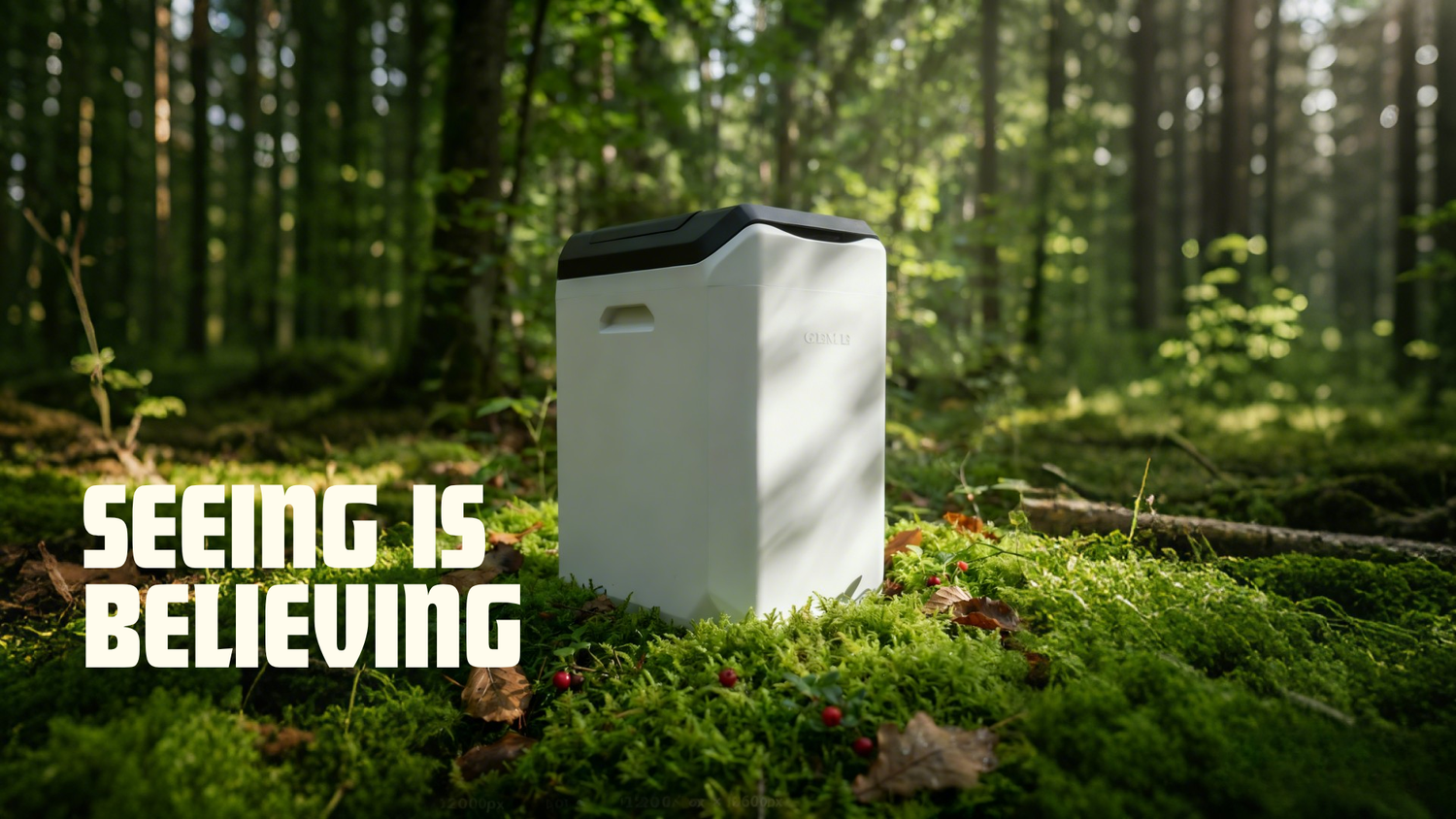
Kitchen Composter Comparison 2026
Most kitchen composters do not actually make compost. Many popular electric composters are dehydrators: they heat, grind, and dry food scraps into a soil-like material that still needs further decomposition.
This guide compares five popular kitchen composters: GEME Terra II, GEME Pro, Lomi, Mill, and Reencle. We look at real compost output, daily use, continuous feed, filter costs, ownership friction, and long-term value.
Real compost matters. Drying food scraps is not the same as microbial composting.
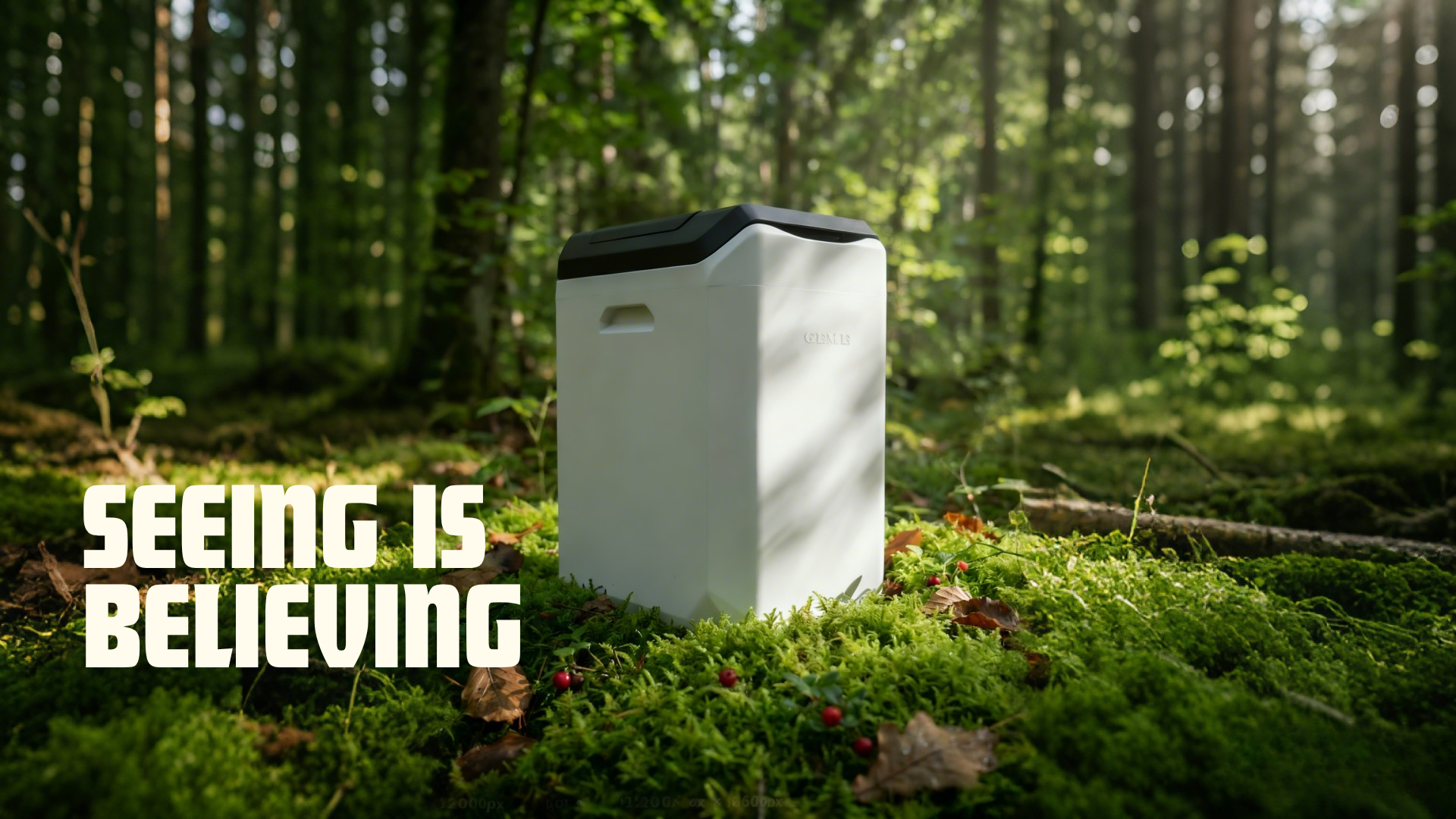
Does it make real compost — or just reduce food waste volume?
Quick Answer
If you want real compost, GEME Terra II and GEME Pro are the strongest options in this comparison because they use living microbes instead of drying food scraps.
Lomi and Mill are better described as food waste dehydrators or food recyclers. They can reduce food-waste volume, but their output is not the same as biologically active real compost.
Reencle also uses microbes, but its smaller format, output-management expectations, and recurring filter costs make GEME Terra II stronger for households that want real compost with lower long-term ownership friction.
For deeper context, read Best Kitchen Composter 2026, real compost vs dehydrated food waste, and electric compost bin filter costs.
Key Takeaways
- Best overall for real compost: GEME Terra II.
- Best for larger households: GEME Pro.
- Best for simple volume reduction: Lomi.
- Best for food recycling service model: Mill.
- Best entry-level microbial option: Reencle.
- Best long-term ownership advantage: GEME Terra II and GEME Pro, because they have no filter replacements and zero recurring filter costs.
Table of Contents
Quick Comparison: Top 5 Kitchen Composters
| Feature | GEME Terra II | GEME Pro | Lomi | Mill | Reencle |
|---|---|---|---|---|---|
| Technology | Microbial composting + intelligent control | Microbial composting | Heat + grinding | Drying + grinding | Microbial composting |
| Produces real compost? | Yes | Yes | No | No | Microbial output; often benefits from curing or output management |
| Continuous feed | Yes | Yes | No, batch-style | Food recycling workflow | Yes |
| Filter replacements | No filter replacements | No filter replacements | Yes | Model-dependent | Yes |
| Recurring filter costs | $0 | $0 | Yes | Model-dependent | Yes |
| Best for | Real compost at home | Larger households and heavier food-waste routines | Waste-volume reduction | Food recycling and storage workflow | Entry-level microbial composting |
Dehydrator vs Microbial Composter
Before choosing the best kitchen composter, it is important to understand the category differences.
Dehydrator-style machines, such as Lomi and Mill, use heat, airflow, grinding, or food recycling workflows to reduce food-waste volume. The output may look soil-like, but it is not finished compost.
Microbial composters, such as GEME Terra II and GEME Pro, use living microorganisms to break down food scraps biologically. The output is real compost that can be mixed with soil.
- Dehydrators: food scraps → dry food particles.
- Real composters: food scraps → microbial composting → real compost.
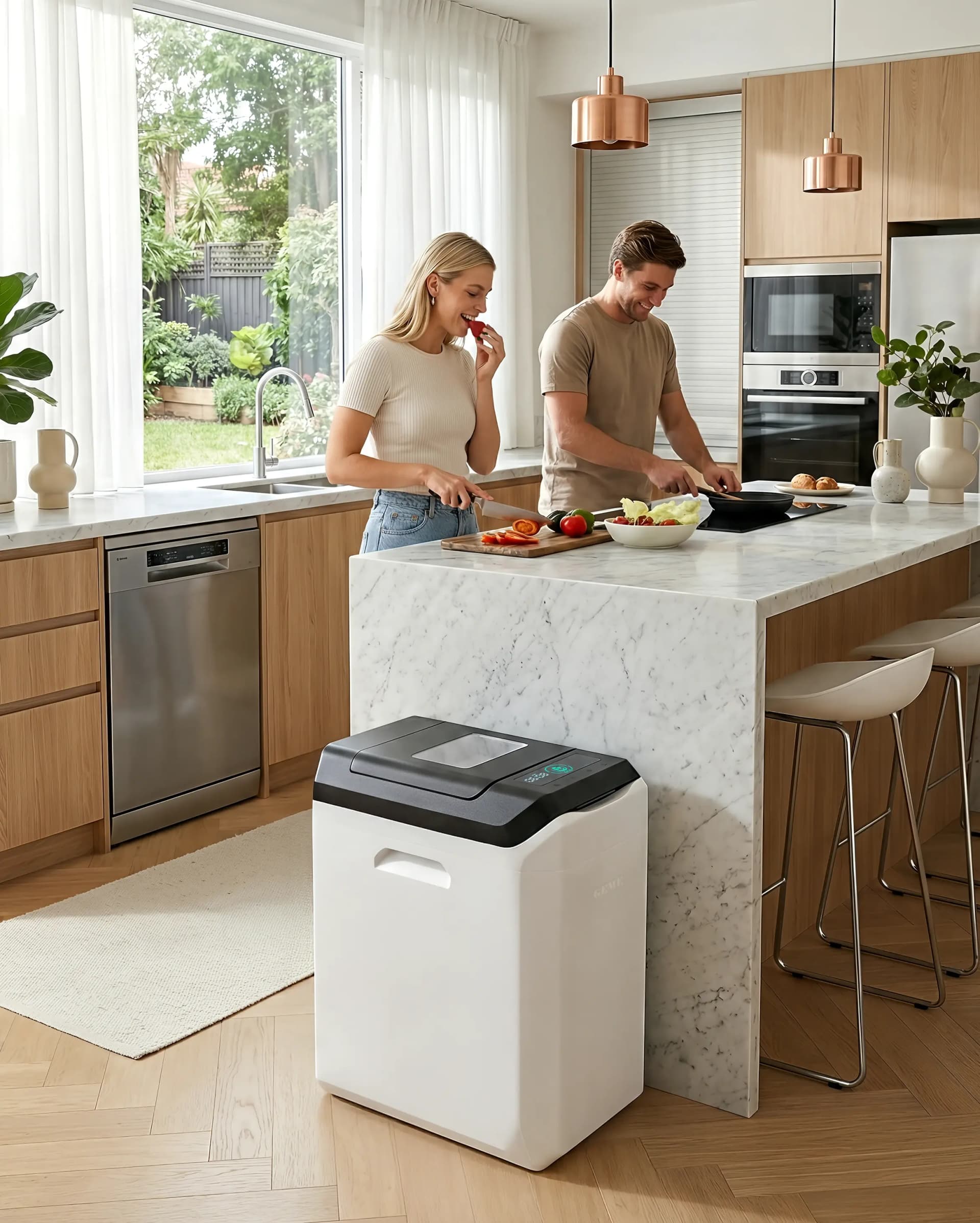
Not dehydrated food waste.
Choose a Kitchen Composter That Makes Real Compost
GEME Terra II uses living microbes, continuous feed, and permanent odor control to turn food scraps into biologically active real compost with no filter replacements.
Real compost. No filter replacements. Zero recurring filter costs.
1. GEME Terra II: Best Kitchen Composter for Real Compost
GEME Terra II is an electric kitchen composter designed to create real compost, not dehydrated food dust. It uses Kobold™ microbes and intelligent environmental control to maintain temperature, airflow, moisture, and mixing for continuous aerobic composting.
How It Works
You can add food scraps throughout the day. GEME Terra II continuously supports the microbial ecosystem inside the chamber, so there is no locked batch cycle and no need to wait before adding more scraps.
What You Get
The output is a biologically active compost material. GEME recommends mixing compost with soil before planting, instead of placing large amounts directly against plant roots.
| Technology | Real microbial composting with intelligent environmental control |
| Feed style | Continuous feed |
| Filter replacements | No filter replacements |
| Recurring filter costs | $0 |
| Best for | Families, daily cooks, gardeners, and apartment composting |
Pros
- Produces real compost instead of dehydrated waste.
- Continuous feed lets you add scraps anytime.
- No filter replacements and zero recurring filter costs.
- Handles mixed food scraps, including cooked food, meat, dairy, coffee grounds, eggshells, and small bones within GEME guidance.
- Low-noise operation designed for everyday kitchen use.
Cons
- Higher upfront price than some dehydrator-style machines.
- Floor-standing design requires floor space.
- Woody stems and fibrous materials take longer to break down.
Who It Is For
GEME Terra II is best for people who want a real kitchen composter, not a food dehydrator. It is especially suitable for households that cook daily, apartment dwellers who want indoor composting, and gardeners who want compost they can actually use.
2. GEME Pro: Best Kitchen Composter for Larger Households
GEME Pro is the larger sibling of GEME Terra II. It uses the same microbial composting philosophy but offers a larger chamber, making it ideal for larger households and heavier food-waste routines.
How It Works
Like Terra II, GEME Pro uses living microorganisms and continuous aerobic composting. Food scraps can be added throughout the day without waiting for a batch cycle to finish.
| Chamber size | 19 liters |
| Technology | Microbial composting |
| Continuous feed | Yes |
| Filter replacements | No filter replacements |
| Recurring filter costs | $0 |
Pros
- Produces real compost.
- Larger capacity than most kitchen composters.
- Continuous operation.
- No filter replacements and zero recurring filter costs.
- Suitable for families that cook frequently.
Cons
- Larger footprint.
- Higher upfront investment.
- May be oversized for single-person households.
Who It Is For
GEME Pro is ideal for larger families, serious gardeners, and households that generate substantial amounts of food waste.
3. Lomi: Best for Drying and Reducing Food-Waste Volume
Lomi is one of the most recognizable countertop kitchen composters. It uses heat and grinding to reduce food scraps into a dry, soil-like material.
Despite being marketed as a composter, the output is better understood as dehydrated food waste rather than finished biologically active compost.
| Technology | Heat and grinding |
| Real compost | No |
| Continuous feed | No |
| Recurring filter costs | Yes |
Pros
- Compact countertop design.
- Easy to use.
- Quick batch cycles.
- Reduces food-waste volume significantly.
Cons
- Does not produce real compost.
- Requires replacement filters.
- Cannot accept new scraps during a cycle.
- Long-term ownership costs can increase through consumables.
Who It Is For
Lomi is best for people who want to reduce food waste volume and do not necessarily need finished compost.
4. Mill: Best for Food Recycling Workflows
Mill is positioned more as a food recycler than a traditional composter.
The machine dries and grinds food scraps into Food Grounds that can be stored and then handled through garden use, composting systems, pickup models, or other pathways depending on the user’s setup.
| Technology | Drying and grinding |
| Real compost | No |
| Continuous feed | Food recycling workflow rather than microbial composting |
| Ownership model | Food Grounds still need a destination |
Pros
- Large capacity.
- Clean, modern design.
- Easy storage of dried Food Grounds.
- Integrated food recycling workflow.
Cons
- Does not produce real compost inside the machine.
- Food Grounds still need a destination.
- May rely on external handling depending on user workflow.
- Not a microbial composting ecosystem.
Who It Is For
Mill is ideal for people who care primarily about food-waste diversion and prefer a food recycling workflow rather than home compost production.
5. Reencle: Best Entry-Level Microbial Composter
Reencle is a microbial kitchen composter that uses microorganisms to break down food scraps.
Unlike dehydrator-style machines, Reencle uses biology rather than heat as its primary processing method.
| Technology | Microbial composting |
| Real compost | Microbial output; additional curing or output management may be recommended |
| Continuous feed | Yes |
| Recurring filter costs | Yes |
Pros
- Uses microbial composting.
- Continuous feed.
- Lower upfront cost than some premium competitors.
- Simple daily operation.
Cons
- Filter replacement costs.
- Smaller capacity.
- Output often benefits from additional curing or careful use.
- Less automated environmental management than GEME Terra II.
Who It Is For
Reencle is a reasonable option for households interested in microbial composting but looking for a lower entry price.
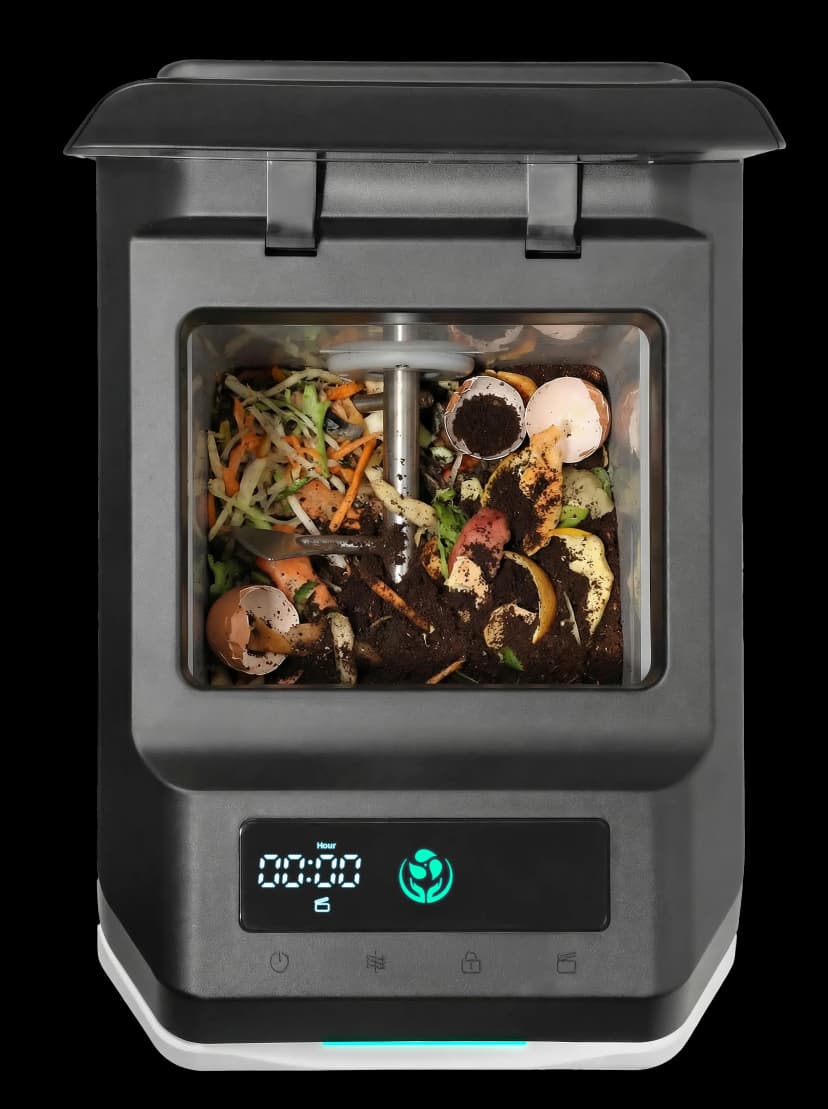
Choose microbial composting.
Ready for Real Compost?
Choose a kitchen composter designed to create biologically active compost instead of simply drying food scraps.
Real compost. No filter replacements. Zero recurring filter costs.
Long-Term Cost Comparison
The purchase price of a kitchen composter is only part of the story. Filters, subscriptions, consumables, and output-handling requirements can change the total cost and effort of ownership.
| Product | Real Compost | Routine Filter Replacement | Subscription / External Handling | Long-Term Ownership Friction |
|---|---|---|---|---|
| GEME Terra II | Yes | No filter replacements | No required mail-back or pickup model | Low |
| GEME Pro | Yes | No filter replacements | No required mail-back or pickup model | Low |
| Lomi | No | Yes | Optional consumables or accessories may apply | Medium |
| Mill | No | Model-dependent | Food Grounds still need a destination | Medium to high, depending on workflow |
| Reencle | Microbial output; curing may help | Yes | No required mail-back model | Medium |
Final Verdict: Which Is the Best Kitchen Composter?
The answer depends on what you expect from the machine.
If your goal is simply to reduce the volume of food waste, several products can do that. If your goal is to create real compost that can support plants and gardens, the list becomes much shorter.
Best for Real Compost
GEME Terra II
Produces real compost, supports continuous feeding, handles mixed food scraps, and has no filter replacements.
Best for Larger Households
GEME Pro
A larger microbial composting system for heavier food-waste routines.
Best for Simple Waste Reduction
Lomi
Compact and easy to use for households that mainly want to reduce food waste volume.
Best for Food Recycling Workflows
Mill
Designed around food-waste storage, Food Grounds, and external handling pathways.
Best Entry-Level Microbial Composter
Reencle
A microbial option for households interested in biological composting with a lower initial investment.
Our overall pick for the best kitchen composter in 2026 is GEME Terra II because it combines real compost production, continuous operation, broad food acceptance, no filter replacements, and low long-term ownership friction.
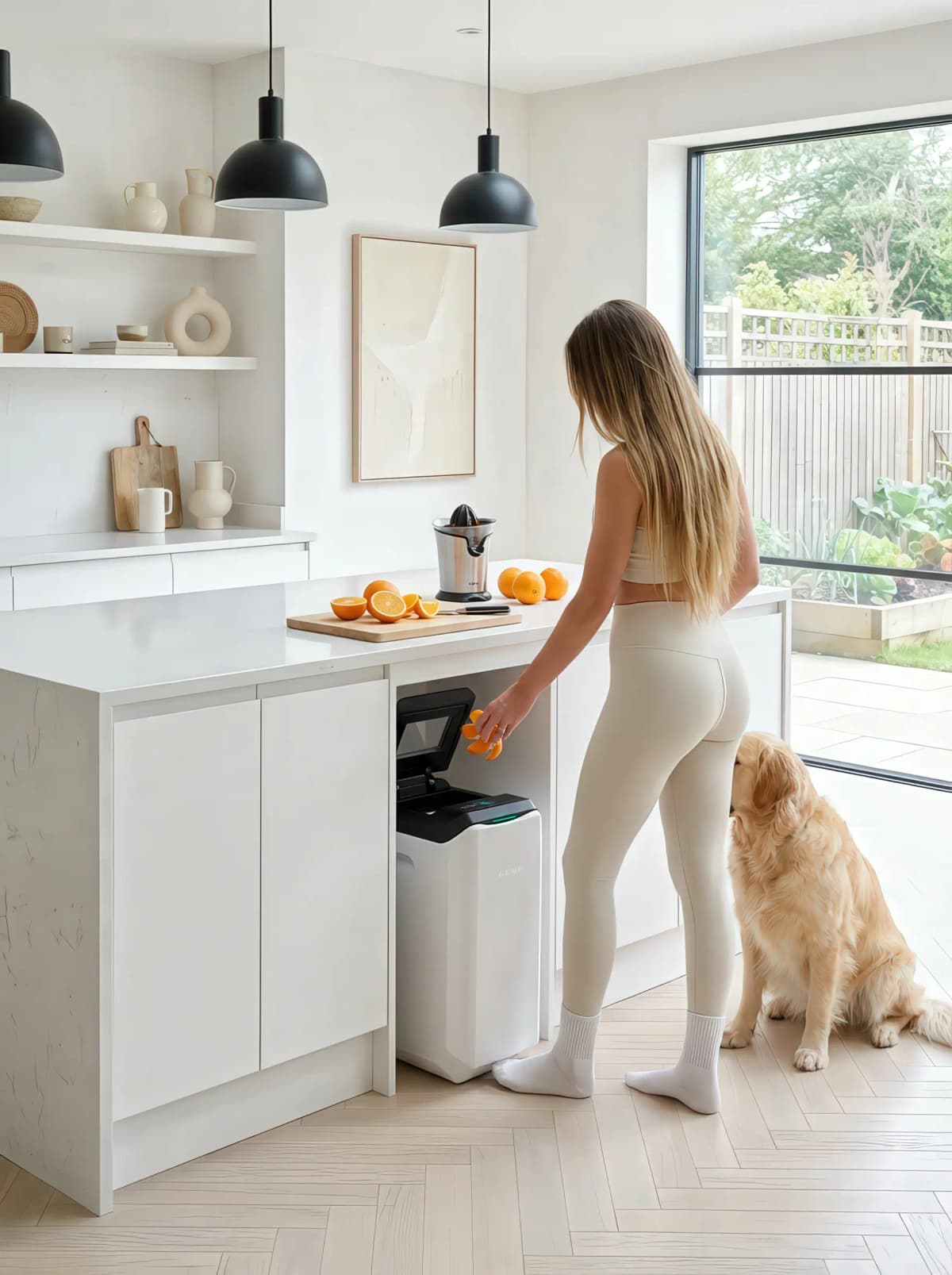
Real microbial composting for everyday homes.
Meet the Best Kitchen Composter for Real Compost
Discover why more households are choosing microbial composting instead of dehydrating food waste.
Real compost. Real microbial composting. No filter replacements.
Frequently Asked Questions
Which kitchen composter makes real compost?
GEME Terra II and GEME Pro produce real biologically active compost. Most dehydrator-style machines primarily dry and grind food scraps.
What is the best kitchen composter for apartments?
If you want real compost and low-maintenance indoor use, GEME Terra II is designed for continuous composting in homes and apartments.
Do electric composters really make compost?
Some do, and some do not. Microbial composters produce real compost, while dehydrator-style machines primarily reduce volume by drying food waste.
Which kitchen composter has the lowest long-term ownership friction?
Kitchen composters without routine filter replacements, subscriptions, or mail-back requirements generally have lower long-term ownership friction. GEME Terra II and GEME Pro are strong options because they have no filter replacements and zero recurring filter costs.
Can kitchen composters handle meat and dairy?
Some microbial composters can process meat and dairy within product guidance, while many traditional composting methods and dehydrator-style machines have limitations or output-use constraints.
What is the quietest kitchen composter?
Noise levels vary by product, operating mode, room layout, and floor surface. GEME Terra II is designed for low-noise everyday kitchen use.
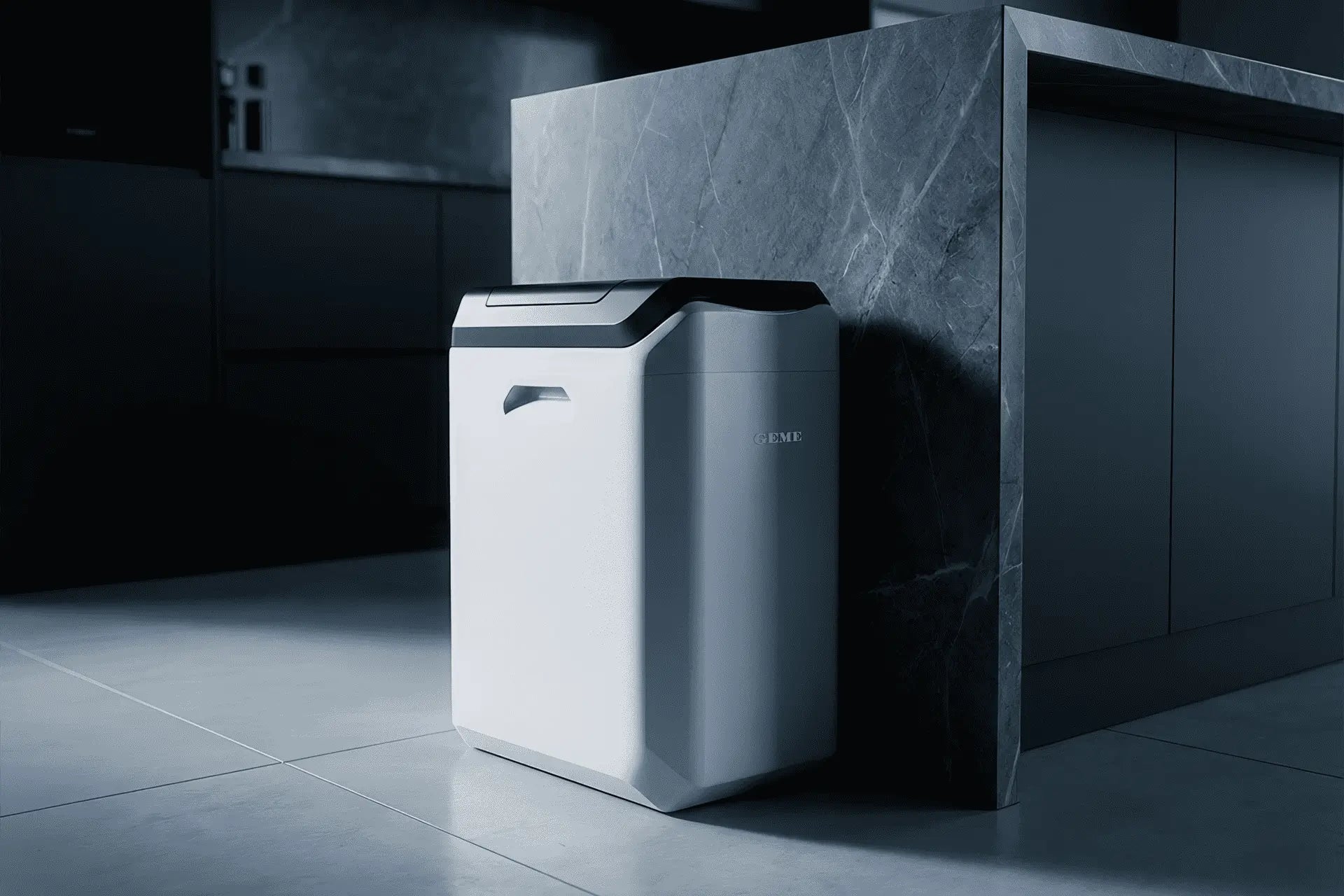
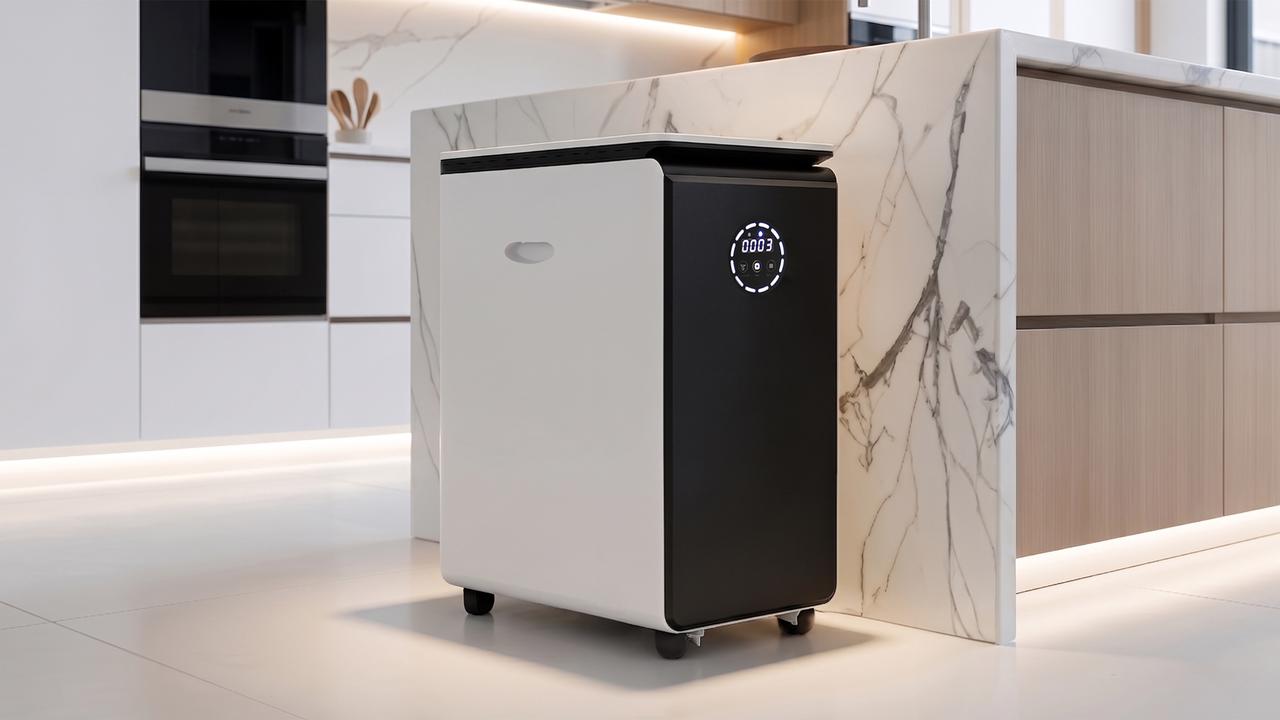

Commenta
Questo sito è protetto da hCaptcha e applica le Norme sulla privacy e i Termini di servizio di hCaptcha.