
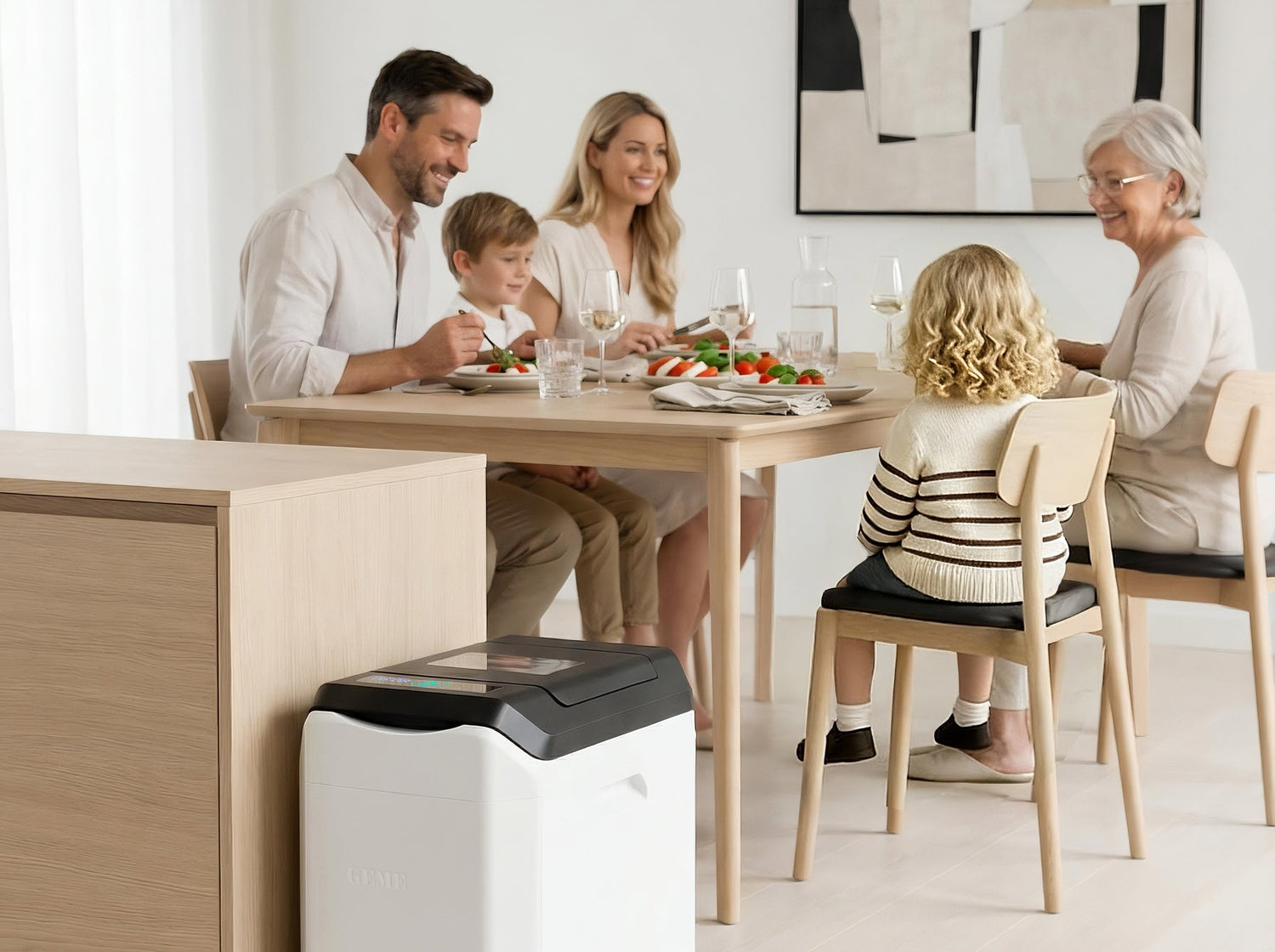
Fast Real Compost Guide 2026
You want a composter that turns kitchen scraps into something useful, not simply a machine that dries food waste into smaller trash.
This guide compares GEME Terra II, GEME Pro, HOTBIN MK2, Maze Tumbler, Hungry Bin, Lomi, and Mill by real composting method, speed expectations, output quality, indoor fit, and long-term upkeep.
Fast is only useful when the output still belongs in the soil cycle.
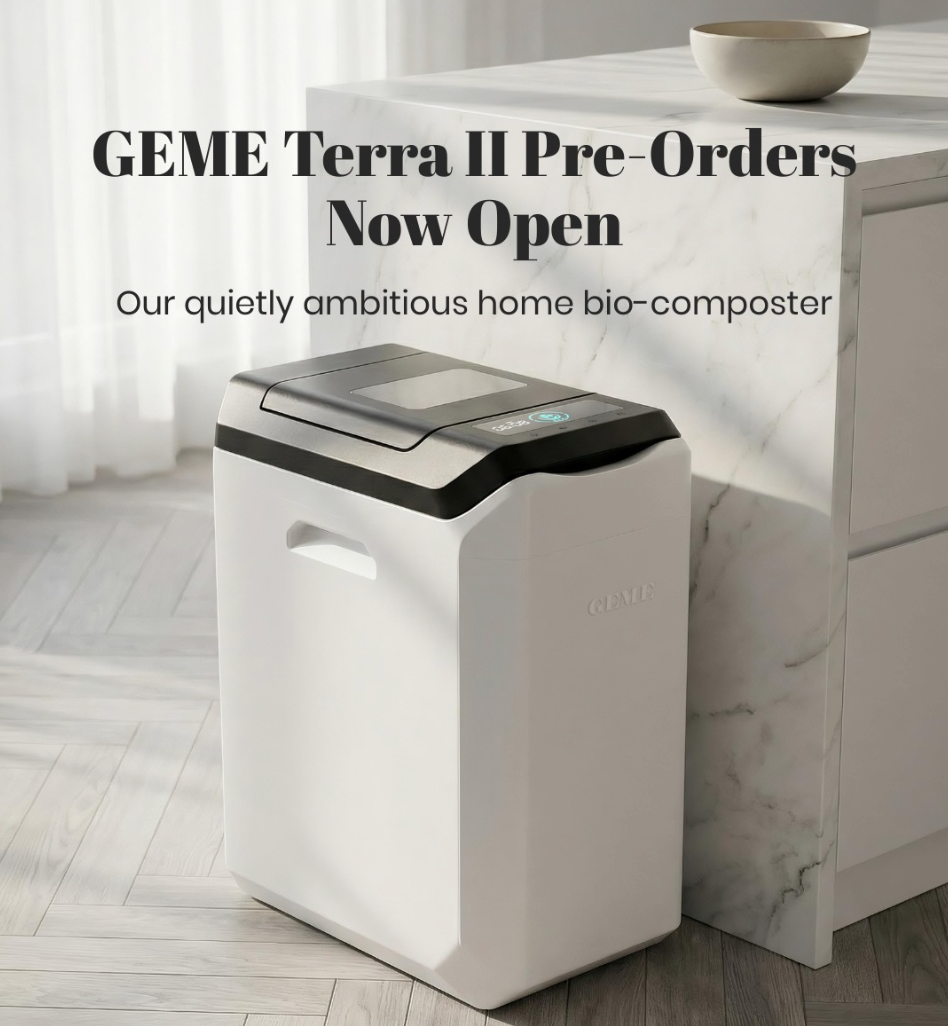
Compare real composting, not just drying.
Quick Answer
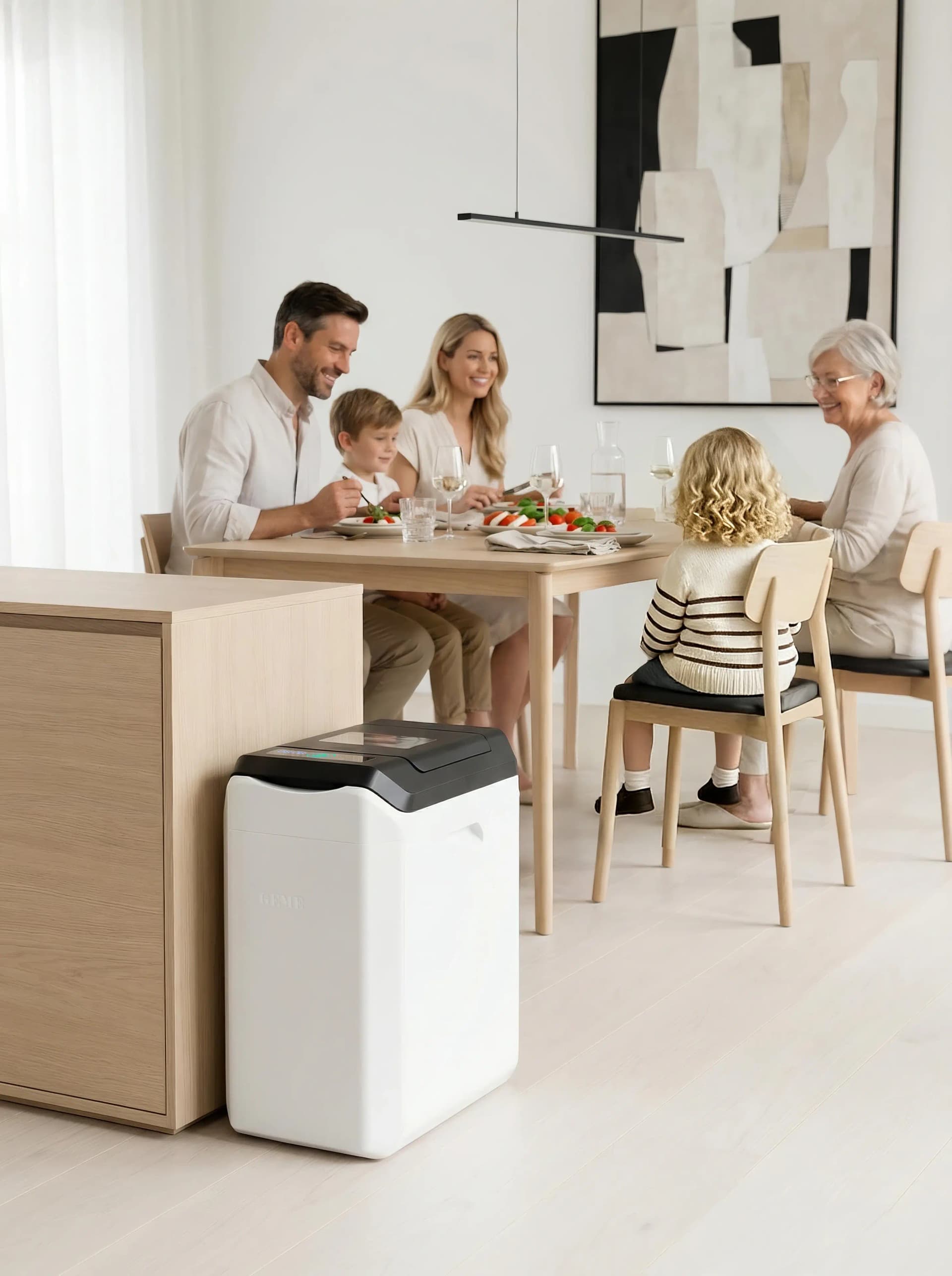
For households that want the fastest practical path to real compost indoors, GEME Terra II is a strong choice because it supports real microbial composting, continuous daily feeding, visible breakdown during operation, real compost for soil blending, no filter replacements, and zero recurring filter costs.
Outdoor systems like HOTBIN can also produce real compost relatively quickly when conditions are managed well. Tumblers and worm systems can produce excellent compost, but they are more weather-, balance-, and maintenance-dependent. Lomi and Mill can reduce food-waste volume quickly, but their output should not be treated as finished compost without further processing.
For related context, read real compost vs dehydrated food waste, best kitchen composter 2026, and how to use GEME compost safely.
Key Takeaways
- Speed alone is not enough. Dry food waste can appear quickly, but that does not make it finished compost.
- Real composting is biological. It depends on microorganisms, oxygen, moisture, temperature, structure, and time.
- GEME Terra II supports real microbial composting indoors. It is designed for continuous daily feeding and real compost for soil blending.
- Visible breakdown is not finished compost immediately. Use compost responsibly: screen large unfinished pieces and blend with soil before plant use.
- HOTBIN can be fast outdoors when managed well. It still needs feedstock balance, moisture control, and outdoor space.
- Worm systems and tumblers can make high-quality compost. They are usually more condition-dependent and slower than controlled indoor microbial systems.
- Recurring costs matter. GEME Terra II has no filter replacements and zero recurring filter costs.
Table of Contents
- What Counts as Fast Real Compost?
- Best Indoor Option: GEME Terra II
- Best for Larger Routines: GEME Pro
- Best Outdoor Hot Composter: HOTBIN MK2
- Best Value Outdoor Option: Maze Tumbler
- Best Worm Composting System: Hungry Bin
- Where Lomi and Mill Fit
- Fast Compost Comparison Table
- Total Cost of Ownership
- How to Choose
- FAQ
- Sources
- Related Articles
What Counts as Fast Real Compost?
A food recycler can dry and grind food scraps in a few hours. That may be convenient, but speed by itself does not tell you whether the output is compost.
Real composting requires biological activity. Microorganisms break down organic matter under the right balance of oxygen, moisture, temperature, structure, and time.
So when we evaluate the best composter for fast, real compost, we measure two things together:
- How quickly does the system visibly break down food waste?
- Is the output part of a real composting pathway, or only dried food residue?
Important distinction: visible breakdown is not the same as finished, garden-ready compost immediately. Real compost should still be used responsibly and blended with soil before plant use.
For the category distinction, see real compost vs dehydrated food waste.
1. Best Indoor Option: GEME Terra II
Real Microbial Composting for Daily Kitchens
GEME Terra II is designed for households that want real microbial composting indoors, not only food-waste volume reduction.
Instead of simply heating and grinding scraps, Terra II supports a warm, moist, oxygen-rich composting environment where Kobold™ microbes help break down food waste biologically.
The practical value is not just speed. It is the combination of indoor usability, continuous feeding, real compost for soil blending, and lower recurring upkeep.
How GEME Terra II Works
Inside the chamber, GEME Terra II is designed to support the conditions microbes need:
- Temperature balance
- Oxygen availability
- Moisture balance
- Mixing
- Airflow
- Continuous microbial activity
Soft food waste can show visible breakdown during operation. Larger, tougher, oily, salty, or hard materials may take longer and should follow product guidance.
Learn more about how GEME composting works and Kobold™ microbial technology.
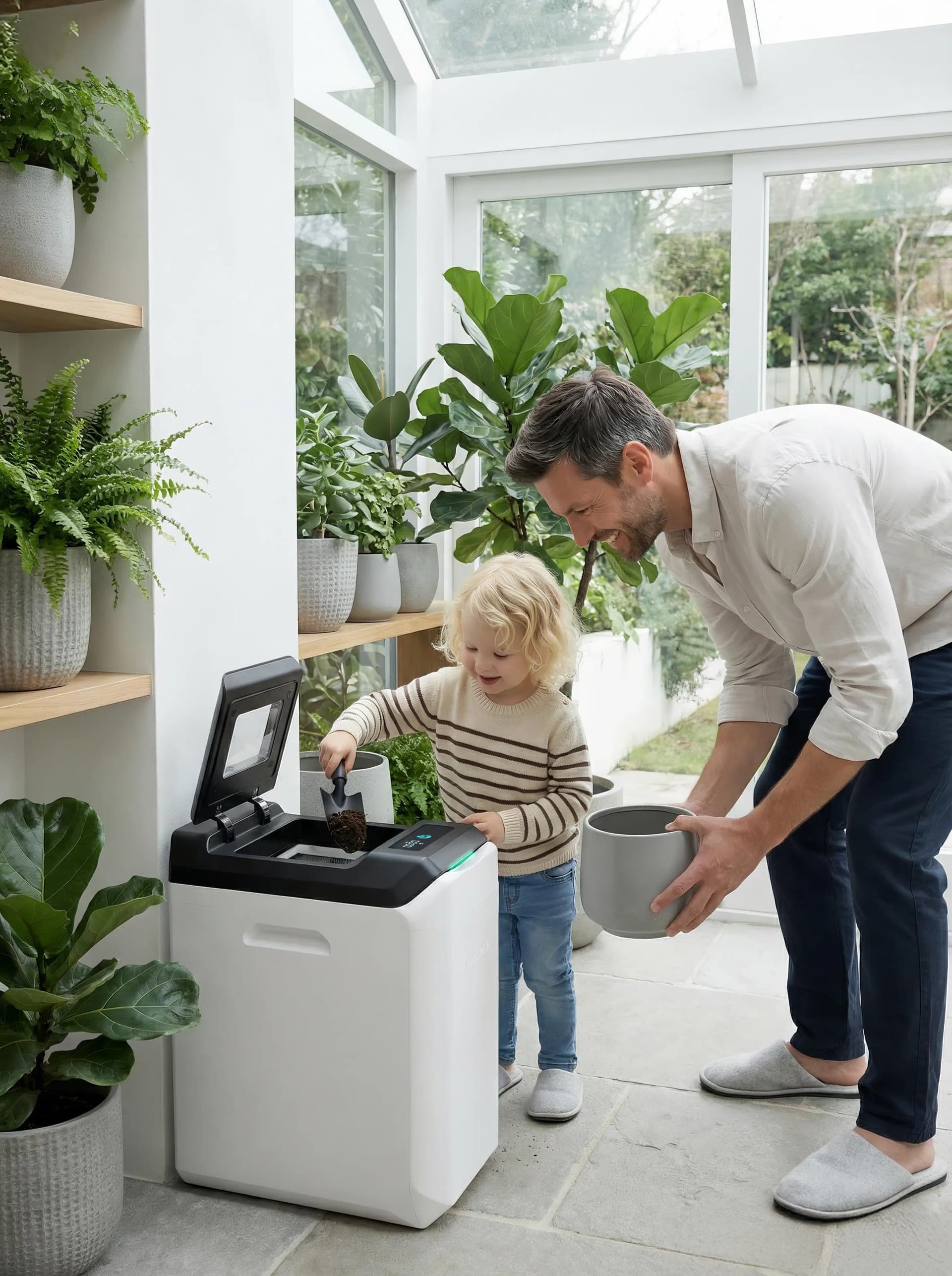
Real composting, not heat-only drying.
Fast Compost Is Only Useful If It Is Real Compost
GEME Terra II supports real microbial composting for daily kitchen scraps, with no filter replacements and zero recurring filter costs.
Real composter. Real microbial composting. No filter replacements.
GEME Terra II Performance Profile
| Composting method | Real aerobic microbial composting with Kobold™ microbes |
| Visible breakdown | Can begin during operation, depending on food type, quantity, moisture, and particle size |
| Output type | Real compost for soil blending |
| Continuous feeding | Designed for daily use according to product guidance |
| Filter model | No filter replacements |
| Recurring filter cost | Zero recurring filter costs |
| Best for | Apartments, daily cooking households, small homes, and users who want a real composting routine indoors |
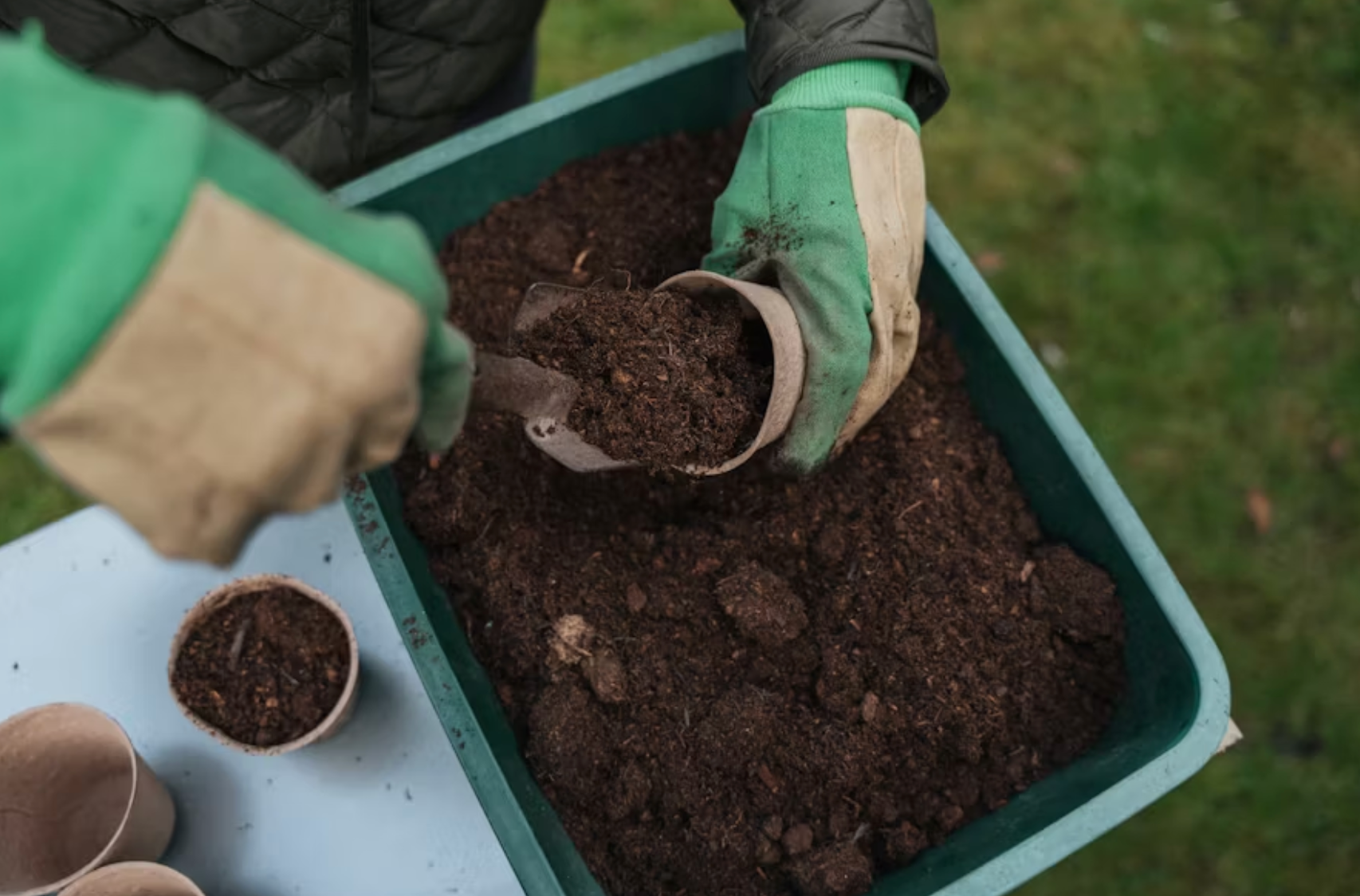
For safe soil use, blend GEME compost with soil, screen out large unfinished pieces, and avoid placing concentrated compost directly against roots or stems.
2. Best for Larger Routines: GEME Pro
GEME Pro is the larger-capacity GEME option for households or routines that generate more food waste than a smaller daily kitchen system can comfortably handle.
It follows the same broad principle: aerobic microbial composting, continuous feeding, and real compost output for soil blending.
| Chamber size | 19L class |
| Composting method | Aerobic microbial composting |
| Continuous feed | Yes, according to product guidance |
| Best for | Larger households, heavier cooking routines, offices, and high food-waste users |
3. Best Outdoor Hot Composter: HOTBIN MK2
HOTBIN MK2 is one of the stronger outdoor options for people who want faster real compost and have outdoor space.
Its advantage is hot composting. A well-managed insulated bin can support higher microbial activity and speed up decomposition compared with passive backyard piles.
The tradeoff is management. Speed depends heavily on feedstock balance, moisture, air, outdoor conditions, and having enough material to sustain activity.
| Composting method | Outdoor hot composting |
| Speed expectation | Potentially fast under well-managed conditions; official guidance commonly frames output in weeks rather than months |
| Indoor use | No |
| Best for | Outdoor gardeners who enjoy active compost management |
4. Best Value Outdoor Option: Maze Geared Twin Tumbler
A tumbler such as the Maze Geared Twin Tumbler can be a practical value choice for backyard users who want more aeration than a static pile.
Tumblers can help with mixing and oxygen movement, but they still depend on feedstock balance, moisture, outdoor temperature, and regular turning.
In real use, tumblers are usually better understood as affordable outdoor compost accelerators rather than instant compost machines.
| Composting method | Outdoor tumbler composting |
| Speed expectation | Condition-dependent; generally slower than well-managed hot composting or controlled indoor microbial systems |
| Indoor use | No |
| Best for | Backyard gardeners seeking a lower-cost composting setup |
5. Best Worm Composting System: Hungry Bin
Hungry Bin uses worms to transform food scraps into vermicompost. Worm castings can be excellent for gardeners, but the system requires a living worm population to stay healthy.
That means users need to pay attention to temperature, moisture, feeding rate, and the types of food added.
Vermicomposting is a great fit for people who enjoy the process and want worm castings, but it is not usually the fastest or lowest-maintenance path for busy indoor kitchens.
| Composting method | Vermicomposting |
| Speed expectation | Condition-dependent; usually slower but can produce high-quality vermicompost |
| Indoor use | Possible, but requires worm-friendly conditions |
| Best for | Gardeners who want worm castings and enjoy maintaining a living worm system |
Where Lomi and Mill Fit
Lomi and Mill can both reduce food-waste volume quickly. That can be helpful for odor control, cleaner storage, and less messy trash.
But they are better understood as food recyclers or food-waste reduction systems, not direct replacements for real composting.
Lomi
Lomi uses drying and processing to reduce food scraps into a dry organic material. That output may be useful as part of another composting path, but it should not be assumed to be finished compost.
Mill
Mill dries and grinds scraps into Food Grounds. Mill’s support materials distinguish Food Grounds from compost, so users who want compost may need an additional pathway.
Simple rule: choose a food recycler if your main goal is cleaner food-waste storage. Choose a real microbial composter if your goal is compost for soil blending.
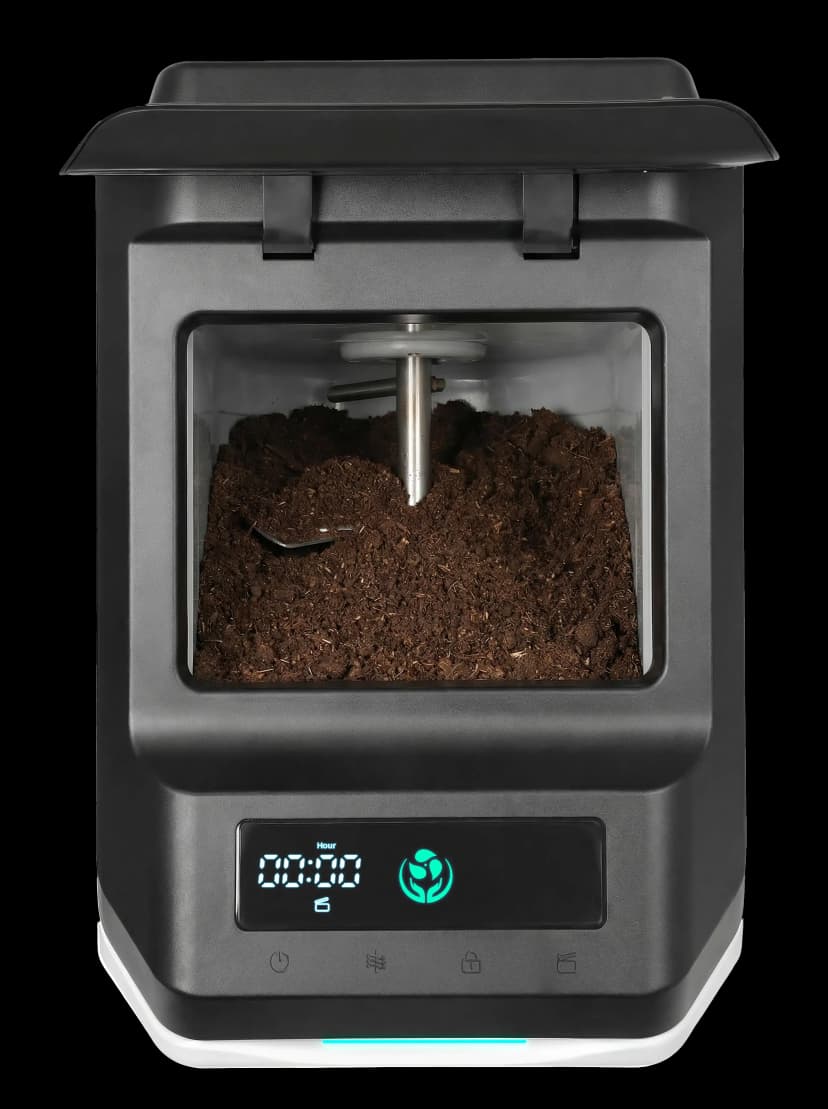
Blend with soil before plant use.
Choose Real Microbial Composting
GEME Terra II helps daily kitchen scraps visibly break down through real microbial composting — without filter replacements or recurring filter costs.
Terra II for everyday homes. GEME Pro for larger routines.
Fast Compost Comparison Table
Composting speed varies by food type, particle size, moisture, temperature, airflow, feedstock balance, maintenance, and user behavior. The table below compares practical speed patterns rather than promising fixed results.
| System | Method | Speed Pattern | Real Compost Pathway? | Indoor Use |
|---|---|---|---|---|
| GEME Terra II | Real microbial composting | Visible breakdown can begin during operation; compost base matures with continued use | Yes, for soil blending | Yes |
| GEME Pro | Real microbial composting | Built for larger routines and continued microbial processing | Yes, for soil blending | Yes |
| HOTBIN MK2 | Outdoor hot composting | Potentially fast outdoors under well-managed conditions | Yes | No |
| Maze Tumbler | Outdoor tumbler composting | Condition-dependent; usually weeks to months | Yes | No |
| Hungry Bin | Vermicomposting | Condition-dependent; slower, but produces valuable worm castings | Yes | Possible with care |
| Lomi | Drying and processing | Fast food waste reduction | Usually needs further decomposition before soil use | Yes |
| Mill | Drying and grinding into Food Grounds | Fast food-waste storage and reduction pathway | Food Grounds are not finished compost | Yes |
Total Cost of Ownership Matters
The fastest system is not always the simplest system to own. Filters, refill pods, subscriptions, pickup pathways, and replacement parts can change the real long-term cost.
| System | Routine Consumables | Subscription / Service Exposure | Ownership Friction |
|---|---|---|---|
| GEME Terra II | No filter replacements | No mandatory subscription to operate | Low recurring filter-cost friction |
| GEME Pro | No filter replacements | No mandatory subscription to operate | Low recurring filter-cost friction |
| Lomi | Filter refills and optional consumables may apply | Membership or refill options may apply | Medium |
| Mill | Carbon filter replacement may apply | Pickup or service choices may apply | Medium to high, depending on plan and use |
| Reencle | Carbon and mesh filter replacement may apply | No mandatory subscription, but filters may recur | Medium |
For a deeper cost view, see best composter to avoid recurring fees.
How to Choose the Best Composter for Fast Real Compost
Choose GEME Terra II if...
- You want real microbial composting indoors.
- You want continuous daily feeding.
- You want visible breakdown without relying on heat-only dehydration.
- You want real compost for soil blending.
- You want no filter replacements and zero recurring filter costs.
- You live in an apartment, a small home, or a daily cooking household.
Choose GEME Pro if...
- You need a larger chamber and a heavier food-waste routine.
- You want microbial composting for larger households, offices, or shared spaces.
- You prefer a GEME system with more capacity.
Choose HOTBIN if...
- You have outdoor space.
- You enjoy managing compost conditions.
- You want fast outdoor hot composting and to maintain the right balance.
Choose a tumbler or worm system if...
- You enjoy a more hands-on composting process.
- You have outdoor or semi-outdoor space.
- You are comfortable with slower, condition-dependent composting.
Choose Lomi or Mill if...
- Your main goal is cleaner food waste reduction or storage.
- You do not need finished compost from the machine itself.
- You are comfortable with another pathway for the output.
Real compost for soil blending.
Make Real Compost Faster at Home
GEME Terra II supports real microbial composting for daily kitchen scraps — with continuous feeding, no filter replacements, and real compost for soil blending.
Real composter. Real microbial composting. No filter replacements.
Frequently Asked Questions
What is the fastest way to make real compost?
The fastest practical way to make real compost is to keep microbial conditions stable: oxygen, moisture, temperature, structure, and mixing. Controlled microbial systems such as GEME Terra II can reduce user workload compared with traditional bins, but compost speed still depends on food type, particle size, moisture, and use habits.
Do electric composters make real compost?
Some support real composting, while many mainly dry and grind food waste. A real microbial composter supports biological decomposition. A food recycler usually produces reduced dry organic material that may need further decomposition before soil use.
Is dried food waste the same as compost?
No. Drying and grinding can reduce volume and odor, but compost is the result of biological decomposition by microorganisms. Dried particles may still require further decomposition before behaving like mature compost in soil.
How fast does GEME Terra II break down food waste?
GEME Terra II is designed for visible breakdown during operation, especially with softer food scraps. This does not mean all material becomes finished, garden-ready compost immediately. Larger, tougher, oily, salty, or hard materials may take longer.
Can I compost every day with GEME Terra II?
Yes. GEME Terra II is designed for continuous daily feeding according to product guidance, so food scraps can be added as they appear rather than waiting for a batch cycle.
Does GEME Terra II require replacement filters?
No. GEME Terra II has no filter replacements and zero recurring filter costs.
Can I use GEME compost directly on plants?
It is better to mix GEME compost with soil before plant use. Screen out large unfinished pieces, return them for continued composting, and avoid placing concentrated compost directly against roots or stems.
Which composter is best for apartments?
Apartment users usually prioritize odor management, indoor fit, ease of use, and low upkeep. GEME Terra II is a strong fit for apartments because it supports real microbial composting indoors and does not require filter replacements.
Sources and Further Reading
- U.S. EPA — Composting at Home
- GEME — Terra II Product Page
- GEME — How Real Microbial Composting Works
- GEME — Kobold™ Microbial Technology
- GEME — Verification and Boundaries
- GEME — Advanced Compost Application Guide
- HOTBIN — Official Website
- Hungry Bin — Official Website
- Maze Products — Official Website
- Lomi — Filter Refills
- Mill Support — What Are Food Grounds?
- Mill Support — Carbon Filter Replacement

Laat een reactie achter
Deze site wordt beschermd door hCaptcha en het privacybeleid en de servicevoorwaarden van hCaptcha zijn van toepassing.