
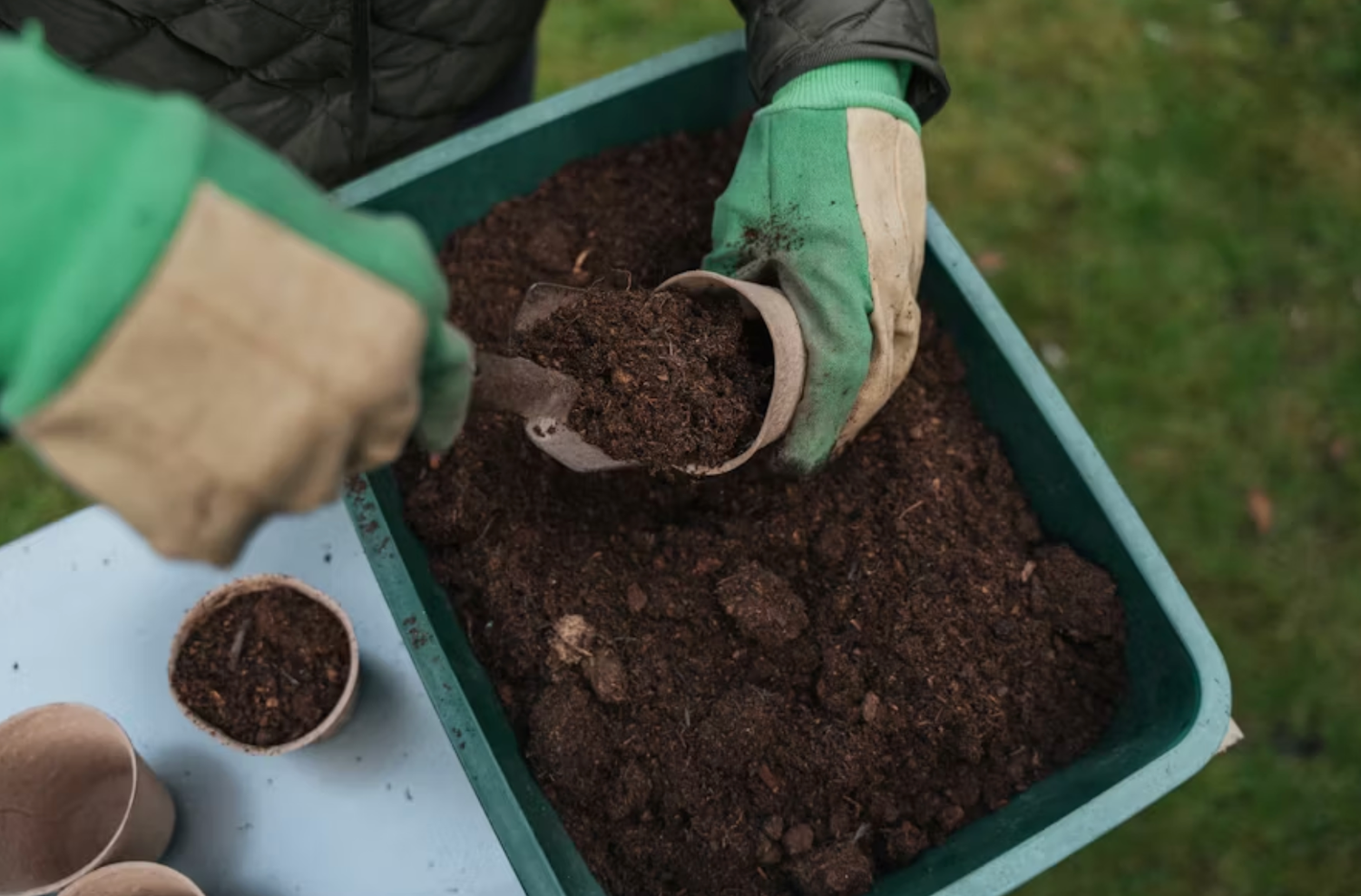
Beginner Composting Guide
How to Compost at Home for Beginners
Learn the basics of composting at home, what to add, what to avoid, which method fits your space, and how to turn food scraps into something useful.
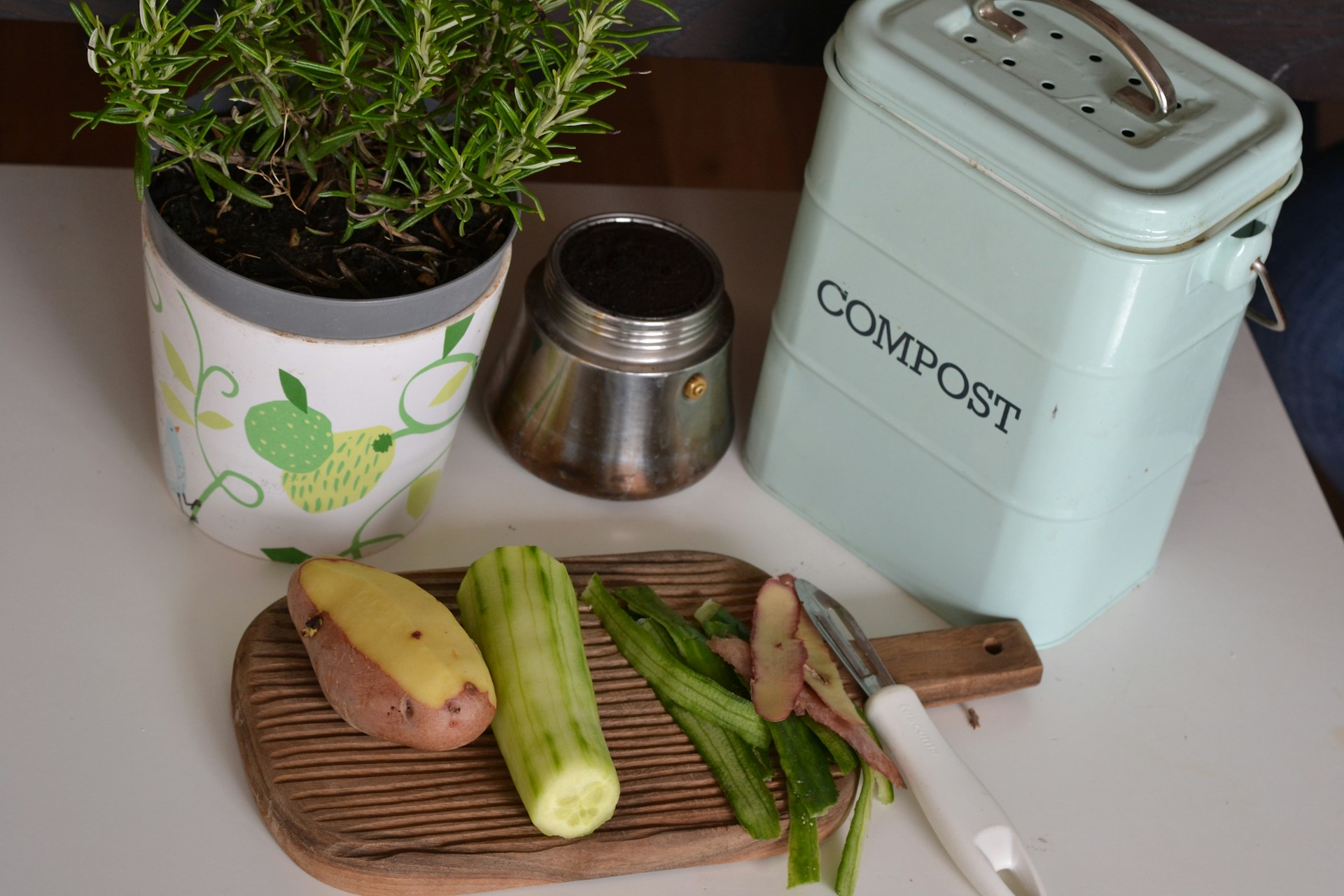
Scraps, soil, and better habits.
Quick Answer
To compost at home, combine nitrogen-rich “greens” like fruit scraps and coffee grounds with carbon-rich “browns” like dry leaves or shredded cardboard, keep the pile moist but not soggy, and make sure it gets oxygen. If you have a yard, a backyard bin is the easiest low-cost start. If you live in an apartment, worm bins, bokashi, city pickup, or a microbial kitchen composter can make composting more practical.
Key Takeaways
- Composting is food-waste recycling. It turns organic scraps into a soil amendment instead of sending them to a landfill.
- The basic formula is simple: greens + browns + water + air.
- Most bad smells come from an imbalance. Too much moisture or too little oxygen usually causes odor.
- Backyard bins are affordable. They work well if you have outdoor space and patience.
- Indoor composting needs the right system. Apartments may require worms, bokashi, city pickup, or a kitchen composter.
- Not every electric food-waste machine makes compost. Some mainly dry scraps; microbial systems are designed for biological breakdown.
Jump To
Introduction: Welcome to the World of “Black Gold”
You have a banana peel in one hand, a coffee filter in the other, and no clear plan besides throwing both into the trash. You have heard composting is good for the planet, but the process may feel mysterious, messy, or intimidating.
Here is the reassuring truth: composting is nature’s recycling system. Leaves fall, microbes and soil organisms break them down, and the result becomes part of the soil again. At home, you are simply helping that process happen in a controlled way.
Gardeners call compost “black gold” because it improves soil structure, supports plant growth, helps retain moisture, and reduces the amount of food waste going to landfills.
Beginner mindset: You do not need to be perfect. You just need to start with the right balance and adjust as you learn.
1. Why Compost?
Before learning the method, it helps to understand why composting matters.
The Landfill Problem
When food waste goes to a landfill, it can decompose without enough oxygen. That anaerobic process can release methane, a powerful greenhouse gas. Food waste is also heavy and wet, which makes it inefficient to transport and store as trash.
The Compost Solution
Composting uses oxygen-friendly decomposition. Instead of treating food scraps as garbage, it turns them into a soil amendment.
- It reduces food waste in the trash bin.
- It creates nutrient-rich organic matter for soil.
- It can improve water retention in garden beds and pots.
- It can reduce dependence on synthetic fertilizers.
- It helps connect daily kitchen habits with soil health.
The Apartment Solution
You do not need a backyard to start. Many cities offer food-scrap collection, and indoor composting methods can work for balconies, apartments, and small homes. The right method depends on your space, tolerance for maintenance, and whether you want to use the finished material yourself.
2. Composting Basics: What Goes In, What Stays Out
Composting is a recipe. The four core ingredients are greens, browns, water, and air.
| Ingredient | What It Is | Role in Compost |
|---|---|---|
| Greens | Fresh, wet, nitrogen-rich materials | Feed microbes and speed decomposition |
| Browns | Dry, carbon-rich materials | Add structure, absorb moisture, and balance odor |
| Water | Moisture | Keeps microbes active |
| Air | Oxygen | Prevents anaerobic odor and supports aerobic breakdown |
What Are Greens?
- Fruit and vegetable scraps
- Coffee grounds and tea leaves
- Fresh grass clippings
- Green garden prunings
- Eggshells, crushed for faster breakdown
What Are Browns?
- Dry leaves
- Shredded cardboard
- Plain paper
- Wood chips or sawdust from untreated wood
- Straw or hay
- Uncoated napkins or paper towels
The Beginner Ratio
A practical starting point is roughly 2–3 parts browns to 1 part greens by volume. Too many greens can create a wet, smelly pile. Too many browns can slow decomposition.
What Not to Compost in a Basic Home Pile
| Avoid These | Why |
|---|---|
| Meat, fish, poultry | Can attract pests and create odor in basic piles |
| Dairy products | Can smell and attract pests |
| Fats and oils | Can slow breakdown and become rancid |
| Diseased plants | May spread pathogens |
| Weed seeds | May survive and sprout later |
| Pet waste | Can contain pathogens unsafe for food gardens |
| Glossy paper or plastic stickers | May not break down properly |
Beginner rule: If in doubt, leave it out — or check whether your specific composting method can handle it.
3. Method One: Backyard Composting
If you have outdoor space, backyard composting is the classic low-cost method. It is simple, forgiving, and satisfying once you understand the rhythm.
Choosing Your Bin
- DIY pile: a simple heap in a corner, often contained with wire mesh.
- Plastic compost bin: a lidded bin that sits on the soil and helps with pest control.
- Compost tumbler: a rotating barrel that makes turning easier and can speed up breakdown.
For beginners, a simple lidded outdoor bin is often the easiest starting point.
Pest-Proofing Your Bin
- Place the bin on level ground.
- Use sturdy wire mesh at the base if rodents are a concern.
- Cover fresh food scraps with browns.
- Keep meat, dairy, oils, and exposed scraps out of basic backyard piles.
Building Your First Pile: Step by Step
- Start with a base layer. Add twigs, wood chips, or straw for drainage and airflow.
- Add greens and browns. Think lasagna: a layer of greens, then a thicker layer of browns.
- Add moisture. The pile should feel like a wrung-out sponge: moist, not dripping.
- Let oxygen in. Turn the pile occasionally if you want faster compost.
- Harvest when ready. Finished compost should look dark, crumbly, and earthy.
Timeline Expectations
- Active pile, regularly turned: around 3–5 months
- Passive pile: often 6–12 months
- Hot composting: faster, but requires more management
Common Problems and Fixes
| Problem | Likely Cause | Solution |
|---|---|---|
| Rotten smell | Too wet, not enough air | Turn pile and add browns |
| Ammonia smell | Too many greens | Add browns immediately |
| Dry and inactive pile | Not enough moisture | Add water until damp |
| Flies or pests | Exposed food scraps | Cover scraps with browns and check barriers |
| Very slow breakdown | Too many browns or cold weather | Add greens and turn more often |
The Squeeze Test
Grab a handful of composting material and squeeze:
- If it crumbles immediately, it is too dry.
- If water drips out, it is too wet.
- If it holds together lightly and feels damp, it is about right.
4. Indoor Composting for Apartments
No yard? You still have options. The best apartment composting method depends on how much effort you want, whether you have plants, and how much food waste you generate.
Option A: Vermicomposting
Vermicomposting uses red wiggler worms to turn scraps into worm castings, a high-quality soil amendment.
- You need: a worm bin, bedding, red wigglers, and suitable food scraps.
- Best for: apartment dwellers who do not mind caring for worms.
- Watch out for: moisture, temperature, and overfeeding.
Option B: Bokashi
Bokashi uses fermentation rather than traditional aerobic composting. It can process scraps in a sealed bucket, but the fermented material usually needs to be buried, added to soil, or finished through another composting step.
Option C: Electric Food-Waste Machines
Electric machines have become popular because they reduce odor, speed up processing, and make food-waste routines easier indoors. But the technology matters.
Dehydrator-style food recyclers
Some machines heat, grind, and dry food waste. They can reduce volume quickly, but the output is usually dried food residue rather than finished compost.
- Best for: users who mainly want smaller, drier trash.
- Limitation: output may need further composting before soil use.
- Ownership note: many models require replacement filters or other consumables.
Microbial kitchen composters
Microbial systems use microorganisms and controlled operating conditions to support biological breakdown. GEME Terra II belongs in this category: a microbial kitchen composter designed for daily food scraps, continuous feeding, and compost-like output for soil blending.
- Best for: households that cook often and want a waste-to-soil habit.
- Output: compost-like organic material for soil blending.
- Ownership note: GEME Terra II is designed with no routine odor filter replacement.
Learn about Kobold™ microbial technology →
Electric Composter Comparison
| Feature | GEME Terra II | Dehydrator-style Food Recycler |
|---|---|---|
| Technology | Microbial composting workflow | Grinding, heating, and drying |
| Output | Compost-like organic material for soil blending | Dried food-waste residue |
| Operation | Continuous feeding | Batch cycle |
| Best fit | Daily cooking, household chores, and indoor composting routines | Users focused mainly on volume reduction |
| Filter model | No routine odor filter replacement | Often uses replaceable filters |
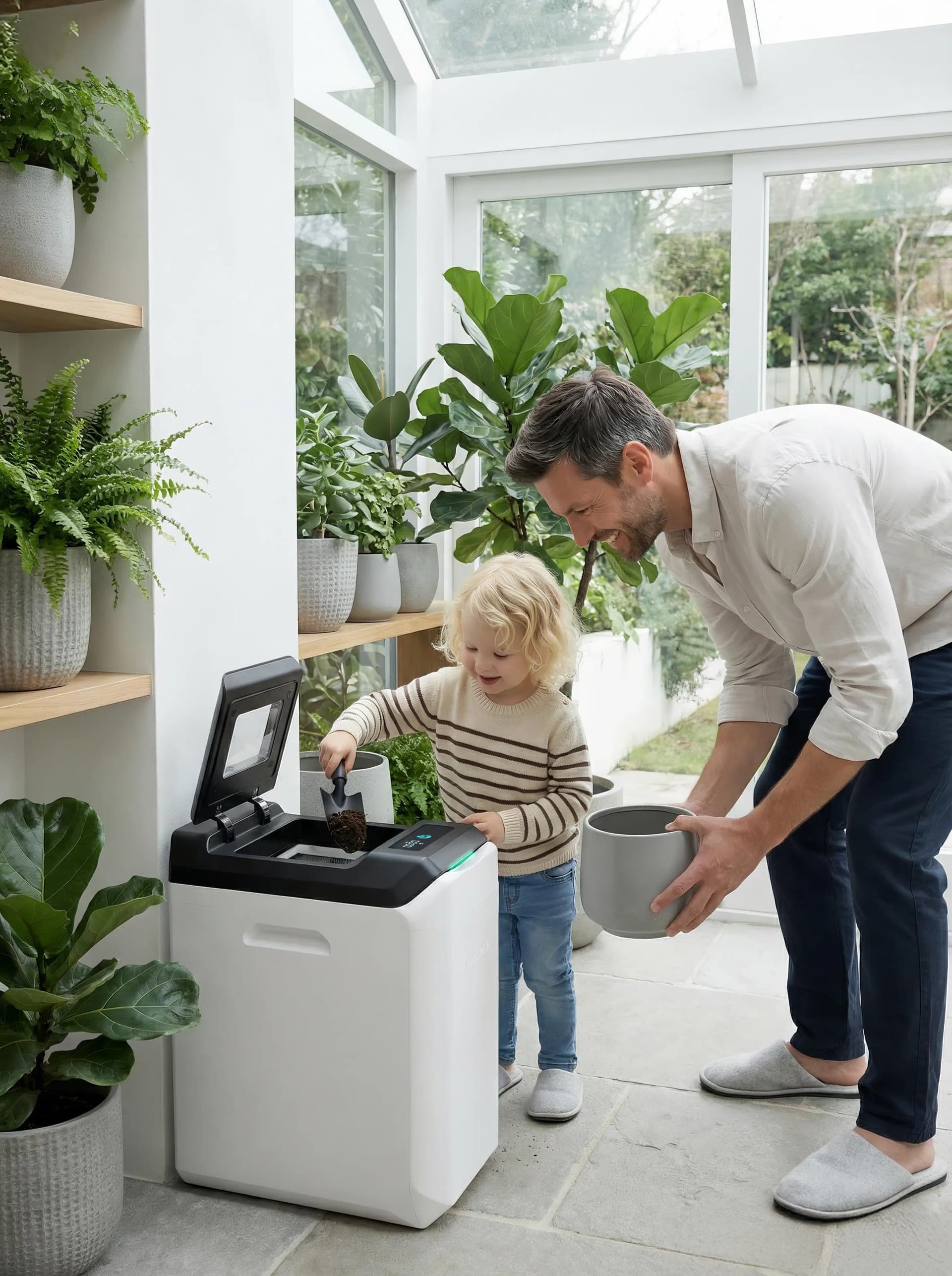
Compost daily without managing a pile.
Meet Terra II
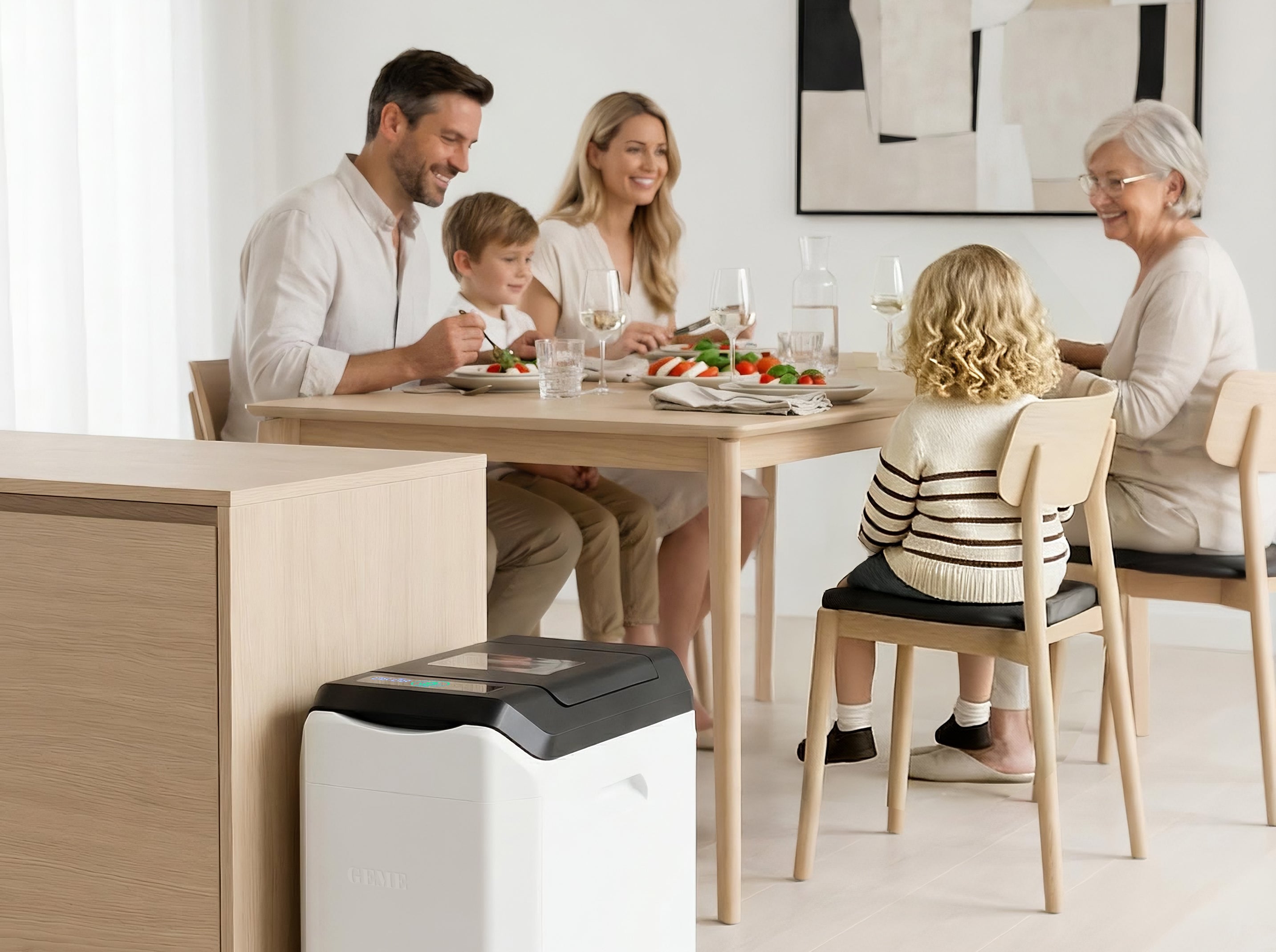
A microbial kitchen composter for beginners who want daily food scraps to become useful compost-like material with less routine maintenance.
Built for indoor composting routines.
5. How to Choose the Best Composter for Your Situation
There is no single best composting method for everyone. The right choice depends on your space, patience, budget, and whether you want to use the finished material yourself.
Composting Methods Compared
| Method | Space Needed | Time to Compost | Best For |
|---|---|---|---|
| Backyard bin | Outdoor space | Months | Homeowners with yards |
| Compost tumbler | Outdoor space | Weeks to months | Gardeners who want easier turning |
| Vermicomposting | Small indoor area | Months | Apartment users who are comfortable with worms |
| Bokashi | Small indoor area | Fast fermentation, then the finishing step | Users who can bury or finish material later |
| Dehydrator-style food recycler | Kitchen space | Hours | Volume reduction, not direct composting |
| Microbial kitchen composter | Kitchen or utility corner | Visible breakdown in hours; harvest periodically | Indoor users who want a compost-oriented routine |
Quick Decision Guide
Choose a backyard bin if...
- You have a yard.
- You want the lowest-cost method.
- You generate yard waste like leaves and grass.
Choose a tumbler if...
- You want easier turning.
- You have outdoor space.
- You want a neater, more contained system.
Choose vermicomposting if...
- You live in an apartment.
- You are comfortable caring for worms.
- You want high-quality worm castings.
Choose GEME Terra II if...
- You want a microbial kitchen composter for daily scraps.
- You live in an apartment or have limited outdoor space.
- You want compost-like output for soil blending.
- You cook frequently and generate food waste every day.
- You dislike recurring filter costs.
- You prefer continuous feeding and lower routine maintenance.
Choose a dehydrator-style food recycler if...
- You mainly want smaller, drier trash.
- You do not plan to use the output in soil.
- You are comfortable with batch cycles and possible filter replacements.
6. Using Your Compost: The Grand Finale
After waiting weeks or months with traditional methods, or harvesting periodically from a microbial kitchen composter, you finally have compost-like organic material. Now use it carefully.
How to Tell It Is Ready
Finished compost should look dark, crumbly, and earthy. You should not easily recognize most of the original food or plant material. A few eggshell fragments or stubborn pieces are normal; screen them out and let them continue breaking down.
How to Use It
| Use | How Much | Tips |
|---|---|---|
| Garden beds | 1–2 inches mixed into topsoil | Apply in spring or fall |
| Potted plants | About 1 part compost to 8 parts soil | Do not use pure compost as potting soil |
| Lawn top-dressing | A thin layer raked in | Use mature compost only |
| Mulch support | Thin layer around plants | Avoid piling against stems |
GEME soil-use tip: Like garden compost, screen out large unfinished pieces and return them to continue composting. Blend finished material with soil, commonly around 1:8 for pots, instead of applying it as a pure layer.
What If You Have No Plants?
Share it. Community gardens, neighbors, plant lovers, and local growing projects may welcome finished compost or compost-like organic material when it is used appropriately.
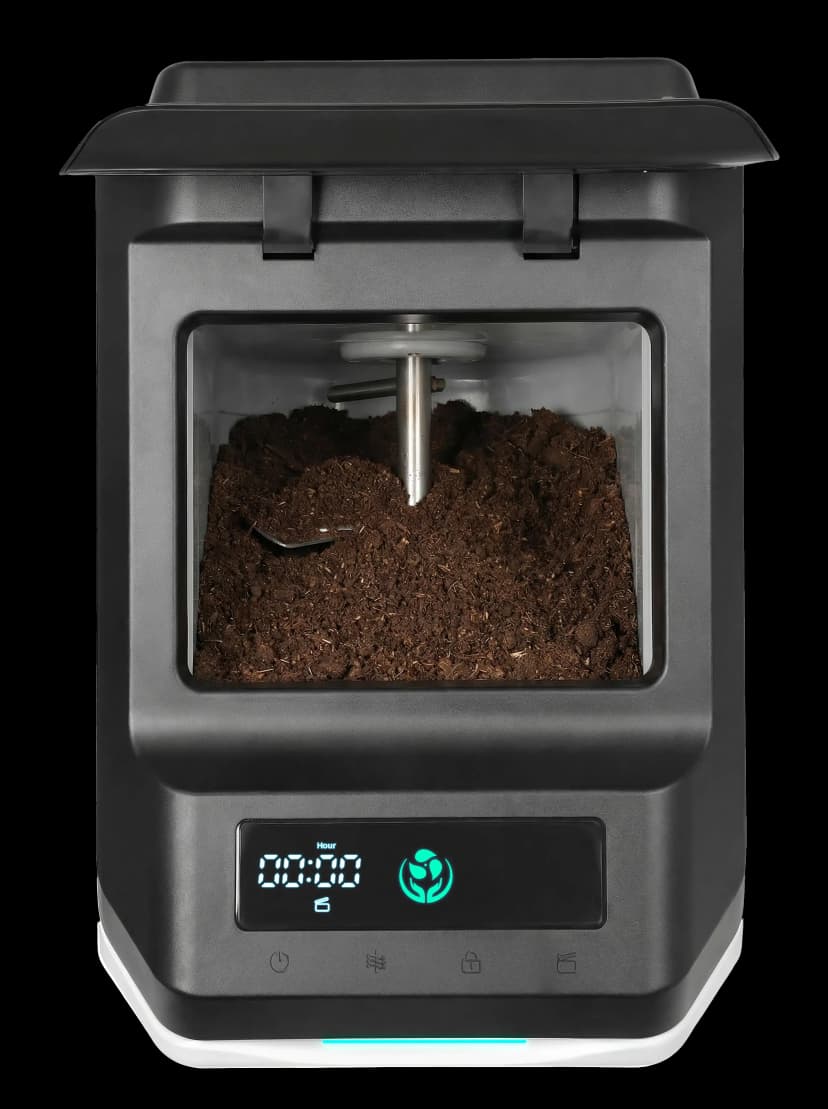
To soil-blending material.
Compost Indoors
A beginner-friendly way to keep daily scraps moving toward soil instead of the trash.
Built for daily kitchen use.
7. Frequently Asked Questions
How do I compost at home without smell?
Smell usually means too much moisture or not enough air. Add more browns such as shredded cardboard or dry leaves, turn the pile, and cover fresh scraps. For indoor composting, use a sealed method, city pickup, worm bin, bokashi, or a kitchen composter designed for odor control.
What is the best composter for beginners?
For outdoor beginners, a simple lidded backyard bin is affordable and forgiving. For indoor beginners who want a lower-maintenance daily food-waste routine, a microbial kitchen composter such as GEME Terra II can be a strong fit.
Can I compost in winter?
Yes. Outdoor piles slow down in cold weather, but decomposition can continue. Add insulation with leaves or straw, keep the pile balanced, and be patient. Indoor methods can work year-round.
How long does composting take?
It depends on the method. Passive backyard piles may take 6–12 months; active piles may take several months; tumblers may take weeks to months; worm bins often take months, and microbial kitchen composters can show visible breakdown much faster, while harvesting still depends on use pattern.
Can I compost citrus peels?
Yes, in moderation. Citrus peels are acidic and can take longer to break down. Chop them small and balance them with browns.
Do I need compost activators?
Usually not. If your pile has greens, browns, moisture, and air, microbes will do the work. A handful of finished compost or garden soil can help introduce microorganisms.
Is Lomi actually composting?
Lomi-style food recyclers primarily dry and grind scraps. They can be useful for reducing food-waste volume, but the output should not be treated the same as finished compost without following the brand’s guidance or further processing.
Can I put meat in my compost?
Avoid meat, fish, dairy, and oils in basic backyard compost piles because they can attract pests and create odor. Some enclosed microbial kitchen composters are designed to accept a wider range of cooked and animal-based scraps according to product guidance.
8. Troubleshooting Guide
| Problem | Likely Cause | Solution |
|---|---|---|
| Bad smell | Too wet or not enough air | Turn pile and add browns |
| No smell, but not breaking down | Too dry | Add water until damp |
| Pests | Exposed food scraps | Cover scraps with browns and improve barriers |
| Fruit flies indoors | Exposed fruit or open container | Freeze scraps first or use a sealed system |
| Slimy compost | Too many greens | Add browns and aerate |
| Worms escaping | Wrong moisture, temperature, or food level | Check bedding, feeding, and bin conditions |
The golden rule: When in doubt, add more browns. Dry leaves, shredded cardboard, and plain paper help fix odor, moisture, and pest issues.
Conclusion: Start Small, Dream Big
You do not need to compost perfectly. You just need to choose a method that fits your life.
Maybe that means a simple backyard bin. Maybe it means a worm bin under the sink. Maybe it means a microbial kitchen composter that keeps food scraps moving in the background while you cook every day.
Whatever path you choose, the goal is the same: keep organic matter out of the trash, reduce waste, and return value to soil.
For Your Wallet
Traditional composting is low-cost but takes time and space. Electric food-waste machines add convenience, but some bring recurring filter or consumable costs. A fair comparison should include long-term ownership, not only the device price.
For the Planet
Every food scrap composted or diverted from the landfill is a small step toward a more circular household routine. Composting turns disposal into renewal.
The Final Word
You now know the basics: greens, browns, water, air, outdoor bins, worms, indoor methods, and how to use finished compost. The only question left is simple:
When will you start?
Sources Cited
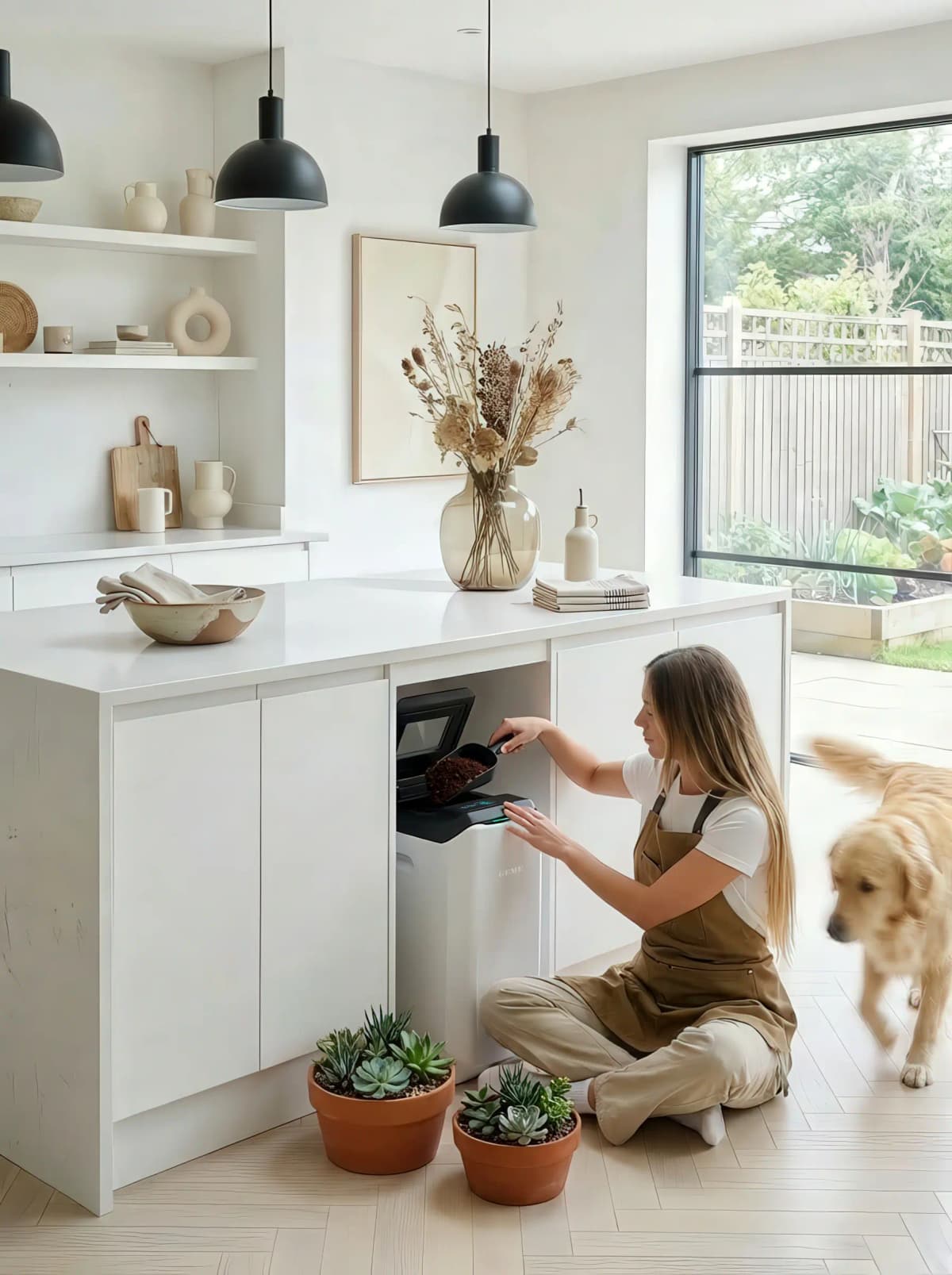
One banana peel at a time.
Start Composting
Turn daily food scraps into a simpler indoor composting habit — without managing a backyard pile.
Built for daily kitchen use.

Laat een reactie achter
Deze site wordt beschermd door hCaptcha en het privacybeleid en de servicevoorwaarden van hCaptcha zijn van toepassing.