
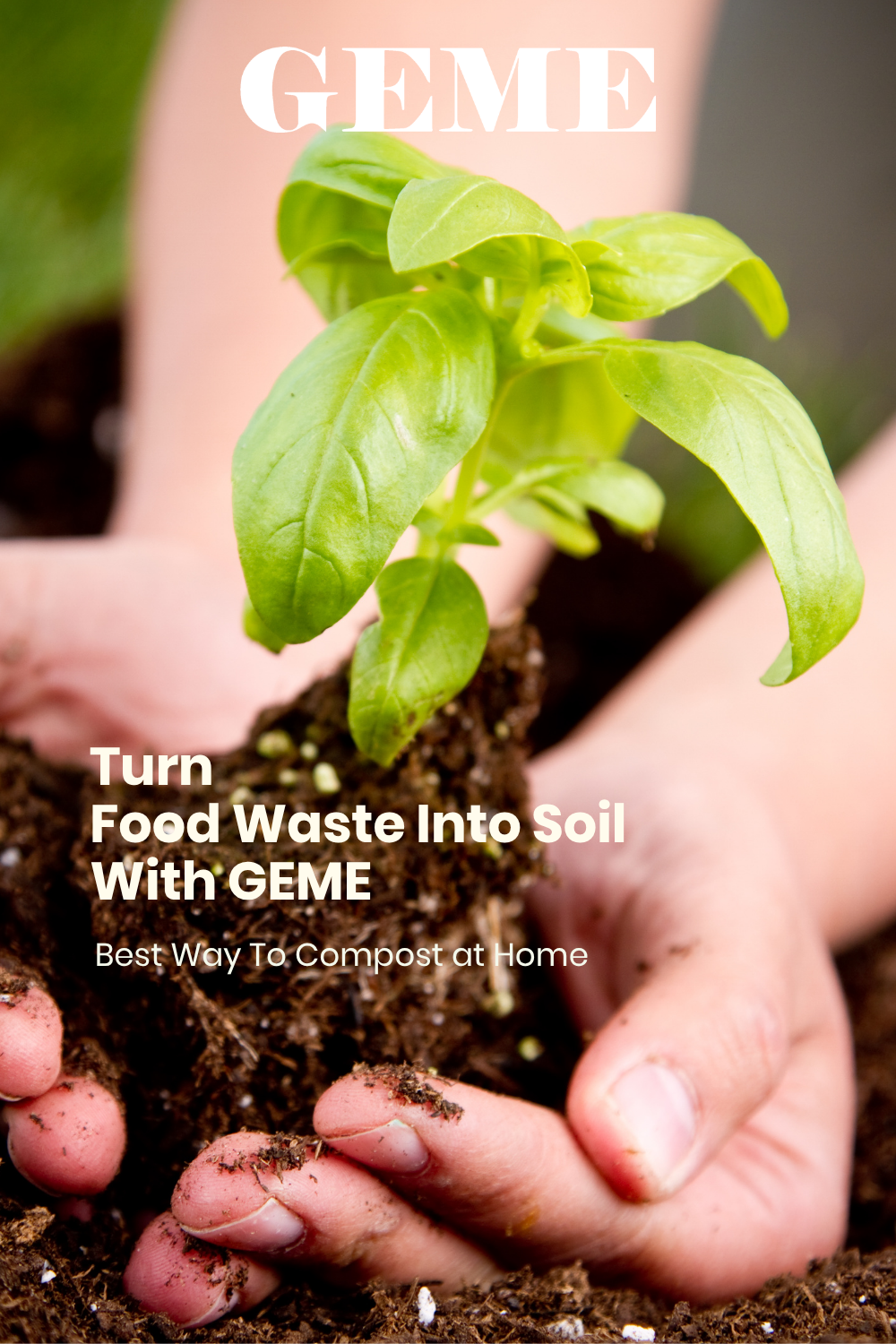
Beginner Composting Guide
Want to compost at home but do not know where to start? You are not alone. Banana peels, coffee grounds, vegetable scraps, and leftovers often end up in the trash when they could be handled through a better food-to-soil pathway.
Composting at home becomes much easier once you understand the basics: organic material, oxygen, moisture, microbes, and time. Whether you have a backyard or live in a small apartment, there is a composting method that can fit your routine.
Learn the basics first. Then choose the method that fits your home.

Greens, browns, moisture, oxygen, microbes.
Quick Answer
To compost at home, collect organic materials such as fruit scraps, vegetable scraps, coffee grounds, dry leaves, and shredded cardboard. Keep the pile or system moist but not wet, allow airflow, and let microorganisms break the material down over time.
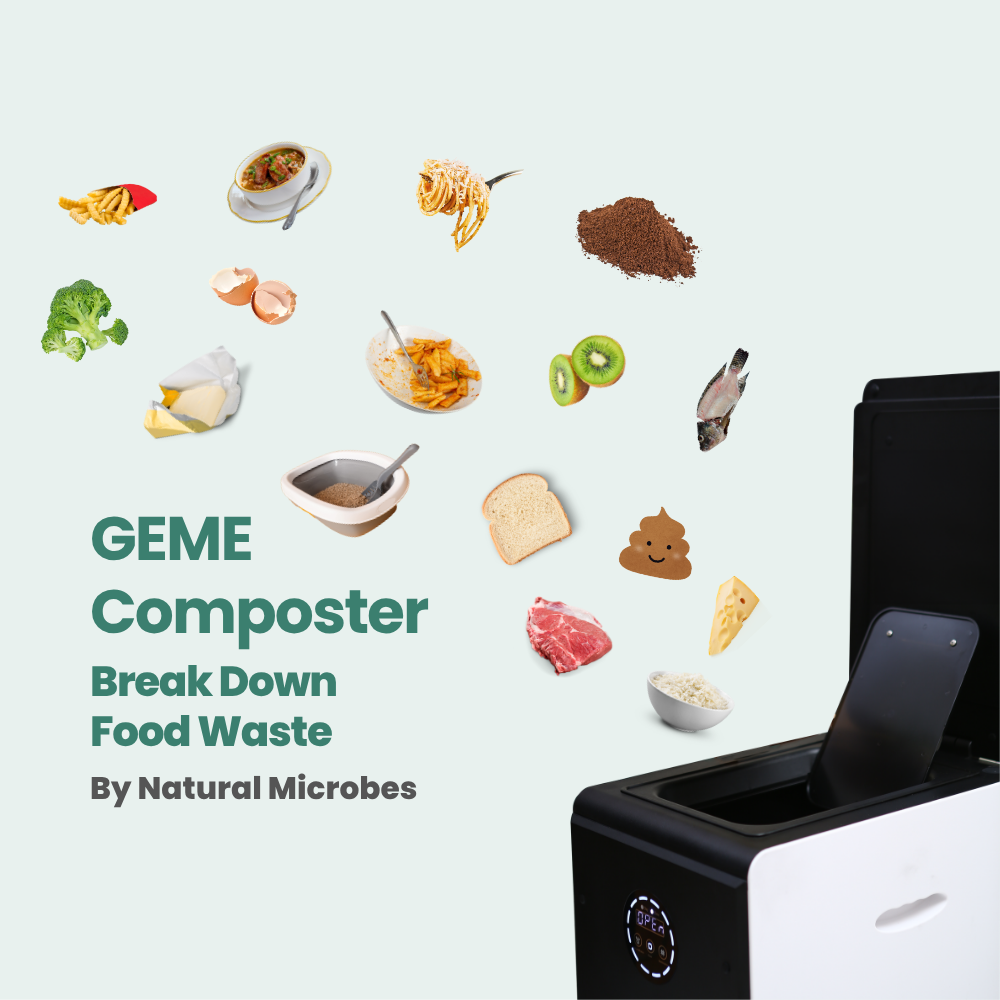
Beginners can choose traditional backyard composting, worm composting, community composting, Bokashi with a finishing plan, or an indoor electric composter. For households without outdoor space, GEME Terra II supports real microbial composting indoors, with continuous feeding, no filter replacements, and compost output for soil blending.
For related context, read compost pile vs electric composter, real compost vs dehydrated food waste, and how to use GEME compost safely.
Key Takeaways
- Composting is biological. Microorganisms break down organic materials when oxygen, moisture, carbon, nitrogen, and time are balanced.
- Traditional backyard composting is low-cost. It works well if you have outdoor space and are willing to manage a pile or bin.
- Greens and browns both matter. Greens provide nitrogen-rich materials; browns provide carbon-rich structure.
- Moisture should be balanced. Compost should feel like a wrung-out sponge, not a wet soup.
- Traditional piles usually avoid meat, dairy, grease, and bones. These materials can attract pests or create odor issues in unmanaged outdoor piles.
- Electric composters are not all the same. Some mainly dry and grind food scraps; real microbial composters support biological decomposition.
- GEME Terra II is designed for indoor real microbial composting. It supports continuous feeding, no filter replacements, and compost output for soil blending.
Table of Contents
What Is Composting?
Composting is the managed biological decomposition of organic materials such as food scraps, leaves, yard trimmings, and other carbon-based materials.
In simple terms, composting lets naturally occurring microorganisms turn organic waste into compost: a soil amendment that can help build soil health, improve structure, retain moisture, and support plant growth.
These microorganisms need a balanced environment:
- Food: a mix of nitrogen-rich greens and carbon-rich browns.
- Water: enough moisture for microbial activity.
- Air: oxygen to keep the process aerobic.
- Structure: enough space for air to move through the pile or system.
- Time: enough time for organic matter to break down and stabilize.
Beginner rule: composting works best when it is moist, airy, and balanced — not too wet, not too dry, and not packed too tightly.
What Can You Compost?
Most beginner composting guides divide materials into two groups: greens and browns.
Greens: Nitrogen-Rich Materials
- Fruit scraps
- Vegetable scraps
- Coffee grounds
- Tea leaves
- Grass clippings
- Fresh plant trimmings
- Wilted herbs
- Eggshells, preferably crushed
Browns: Carbon-Rich Materials
- Dry leaves
- Shredded cardboard
- Shredded black-and-white newspaper
- Paper towels without chemical cleaners
- Untreated sawdust in small amounts
- Straw
- Small twigs or wood chips for structure
The Beginner Balance
A simple beginner target is to use more browns than greens. If your compost smells bad or feels too wet, add more dry browns. If it is dry and inactive, add moisture and a moderate amount of greens.
What Not to Compost in a Traditional Backyard Pile
Traditional home piles usually avoid certain materials because they can attract pests, create odors, or break down poorly in an unmanaged outdoor pile.
- Meat
- Bones
- Dairy products
- Greasy and oily foods
- Pet waste
- Diseased or insect-infested plants
- Plastic, glass, metal, and coated packaging
Advanced indoor composters may have different input boundaries, but users should always follow the product’s current food-scrap guidance.
How to Start Composting at Home
There is no single best method for every household. The best composting method depends on your space, routine, food waste, and how much hands-on management you want.
Most beginners choose one of these paths:
- Traditional backyard composting: best for people with outdoor space and a gardening interest.
- Vermicomposting: best for people who want worm castings and can maintain worm-friendly conditions.
- Bokashi: best for people who want indoor fermentation and have a finishing plan for the pre-compost.
- Community composting: best for people whose city, building, or neighborhood offers pickup or drop-off.
- Indoor electric composting: best for people who want a more appliance-like daily routine.
The simplest place to start is to decide whether you have outdoor space. If yes, a backyard pile or bin may be enough. If not, an indoor method may fit better.
Method 1: Traditional Backyard Composting
Traditional backyard composting is inexpensive, educational, and rewarding. It works especially well for people who already garden and have a place for a bin or pile.
What You Need
- A compost bin or pile area
- A kitchen scrap container
- Dry browns such as leaves or shredded cardboard
- A shovel, pitchfork, or compost aerator
- Water access if the pile becomes too dry
How to Start a Backyard Compost Pile
- Choose a well-drained outdoor location.
- Start with a base of browns for structure and airflow.
- Add greens such as fruit and vegetable scraps.
- Cover fresh scraps with browns to reduce odor and pests.
- Keep the pile moist like a wrung-out sponge.
- Turn or aerate the pile regularly.
- Harvest compost when the material is dark, crumbly, and earthy-smelling.
Pros of Traditional Composting
- Low upfront cost
- Good for yard waste and garden trimmings
- Educational and hands-on
- Can produce useful compost for gardens
Cons of Traditional Composting
- Requires outdoor space
- Needs turning or aeration
- Can slow down in cold weather
- Usually avoids meat, dairy, bones, and grease
- Can attract pests if poorly managed
- Can take months depending on conditions
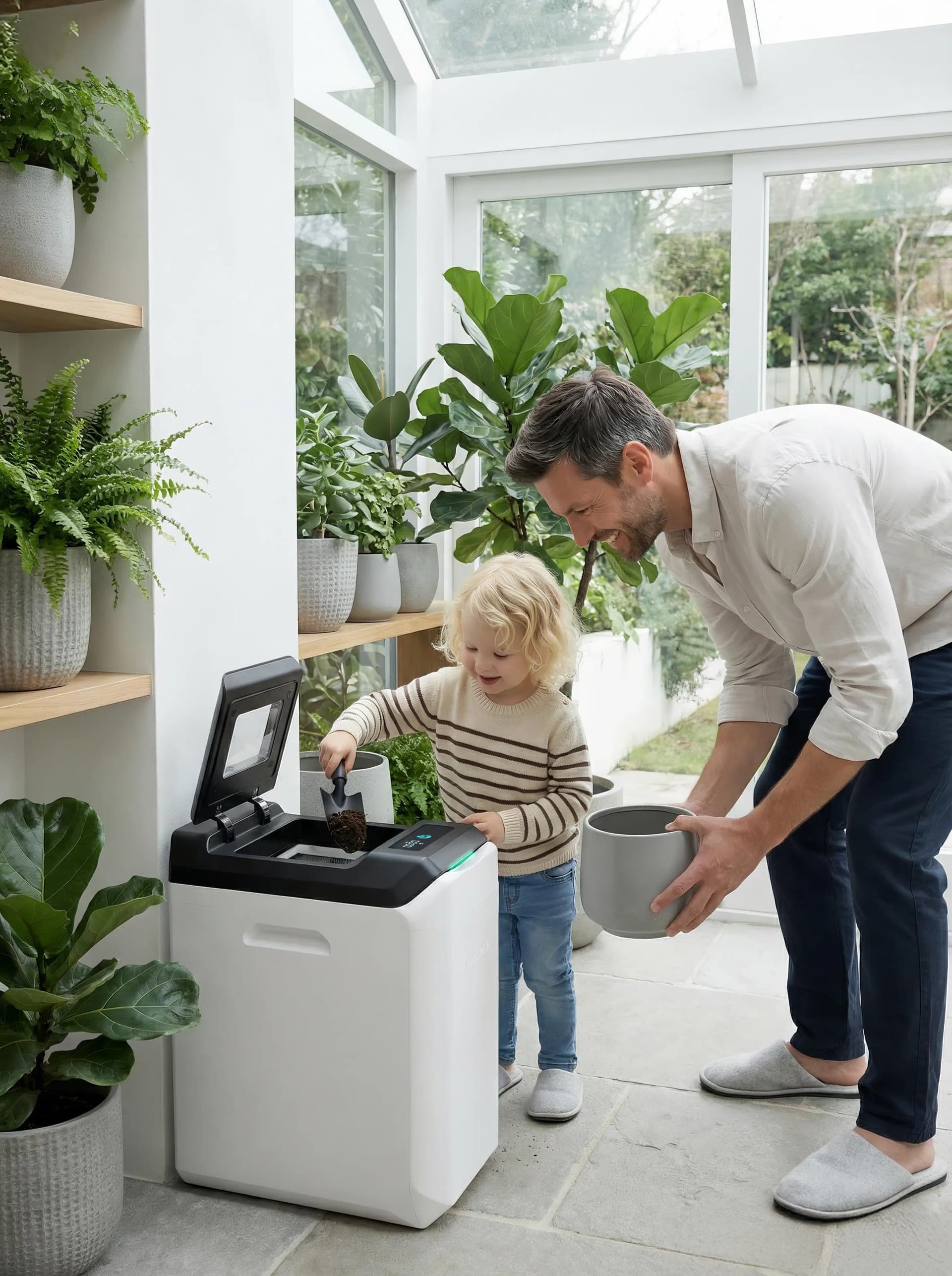
Real microbial composting indoors.
Compost at Home Without Managing an Outdoor Pile
GEME Terra II supports real microbial composting indoors, with continuous feeding, no filter replacements, and compost output for soil blending.
Real composter. Real microbial composting. No filter replacements.
Method 2: Composting with an Electric Composter
Modern electric composters can make composting easier for people who live in apartments, cook frequently, or do not want to manage an outdoor pile.
But the category is confusing. Some electric appliances mainly grind and dehydrate food scraps. These systems can reduce volume and moisture, but they do not create compost by themselves.
GEME Terra II takes a different approach. It uses Kobold™ living microbes and an aerobic composting environment to support real microbial composting indoors.
What GEME Terra II Is Designed to Support
- Continuous feeding according to product guidance
- A warm, moist, oxygen-rich composting environment
- Microbial decomposition rather than heat-only drying
- No outdoor pile turning
- No filter replacements
- Compost output for soil blending
This does not mean every food item disappears instantly or that compost should be used as pure potting soil. Larger, tougher, oily, salty, or hard materials may take longer, and compost should be screened and mixed with soil before plant use.
Learn more about how GEME composting works and Kobold™ microbial technology.
Traditional Composting vs GEME Composter
Traditional backyard composting and GEME composting both rely on microbial activity, but they fit different living situations.
| Feature | Traditional Backyard Composting | GEME Terra II |
|---|---|---|
| Outdoor space required | Yes | No backyard required |
| Core process | Aerobic microbial composting in a pile or bin | Real microbial composting inside an electric appliance |
| Output | Compost when properly matured | Compost for soil blending |
| Meat, dairy, bones, grease | Usually avoided in traditional home piles | Follow product guidance; large hard bones and excess liquids should be treated cautiously |
| Winter performance | May slow down in cold conditions | Designed for indoor year-round use |
| Daily maintenance | Turning, moisture management, browns, and pest prevention | Add scraps according to guidance and maintain the compost base |
| Filter replacement | Not applicable | No filter replacements |
| Best for | Gardeners with outdoor space | Apartments, small homes, and households wanting indoor composting |
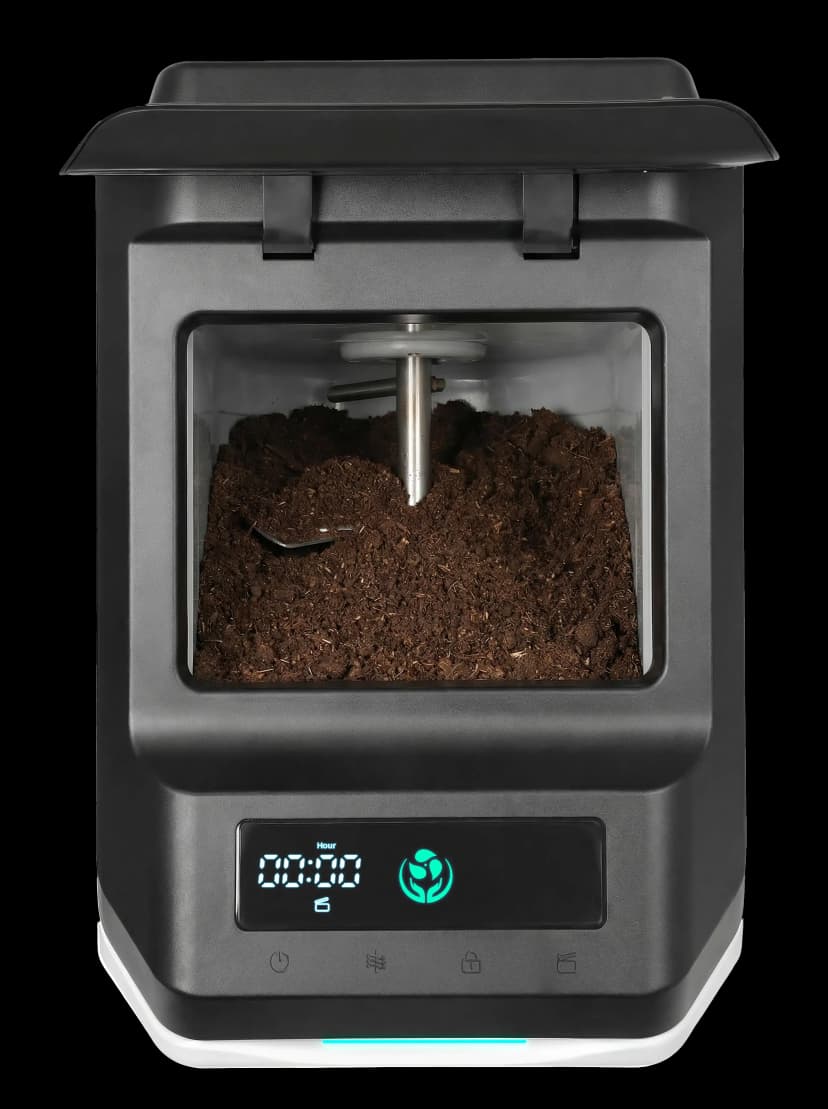
Screen, mix, and use responsibly.
Make Home Composting Easier
GEME Terra II helps beginners compost indoors with real microbial composting, continuous feeding, no filter replacements, and compost output for soil blending.
Terra II for everyday homes. GEME Pro for larger routines.
Which Composting Method Is Right for You?
Choose Traditional Backyard Composting If...
- You have a yard or garden.
- You enjoy hands-on gardening.
- You have plenty of dry leaves or yard trimmings.
- You do not mind turning or aerating a pile.
- You want the lowest upfront cost.
- You are comfortable waiting for natural decomposition.
Choose an Indoor Electric Composter If...
- You live in an apartment or a small home.
- You do not have outdoor composting space.
- You cook frequently and create daily food scraps.
- You want a more appliance-like composting routine.
- You want year-round indoor composting.
- You want to reduce outdoor pile maintenance.
- You want compost for soil blending without managing a backyard pile.
Choose Community Composting If...
- Your city, building, or neighborhood has a reliable pickup or drop-off program.
- You do not need compost output at home.
- You prefer the lowest-maintenance option.
A Simple Beginner Composting Routine
New composters often fail because they make the system too complicated. Start with a simple weekly routine.
| Step | Traditional Composting | GEME Terra II |
|---|---|---|
| Daily scraps | Collect fruit and vegetable scraps in a small kitchen container | Add appropriate scraps directly according to product guidance |
| Carbon balance | Add dry leaves, shredded cardboard, or paper after food scraps | Maintain the compost base and follow the input guidance |
| Moisture | Check for wrung-out sponge moisture | Avoid free liquids and drain wet foods before adding |
| Airflow | Turn or aerate regularly | The machine supports internal airflow and mixing |
| Use output | Harvest when mature and earthy-smelling | Screen large, unfinished pieces and mix compost with soil |
Final Takeaway: Start Simple, Then Build the Habit
Composting at home does not need to be complicated. Start by separating organic materials, understanding greens and browns, managing moisture, and choosing a method that fits your living space.
If you have a yard and enjoy gardening, traditional composting can work beautifully. If you live in an apartment or want a simpler indoor routine, a real microbial electric composter such as GEME Terra II can make composting more practical.
The goal is the same: keep organic waste out of the trash pathway and return useful organic matter to the soil.
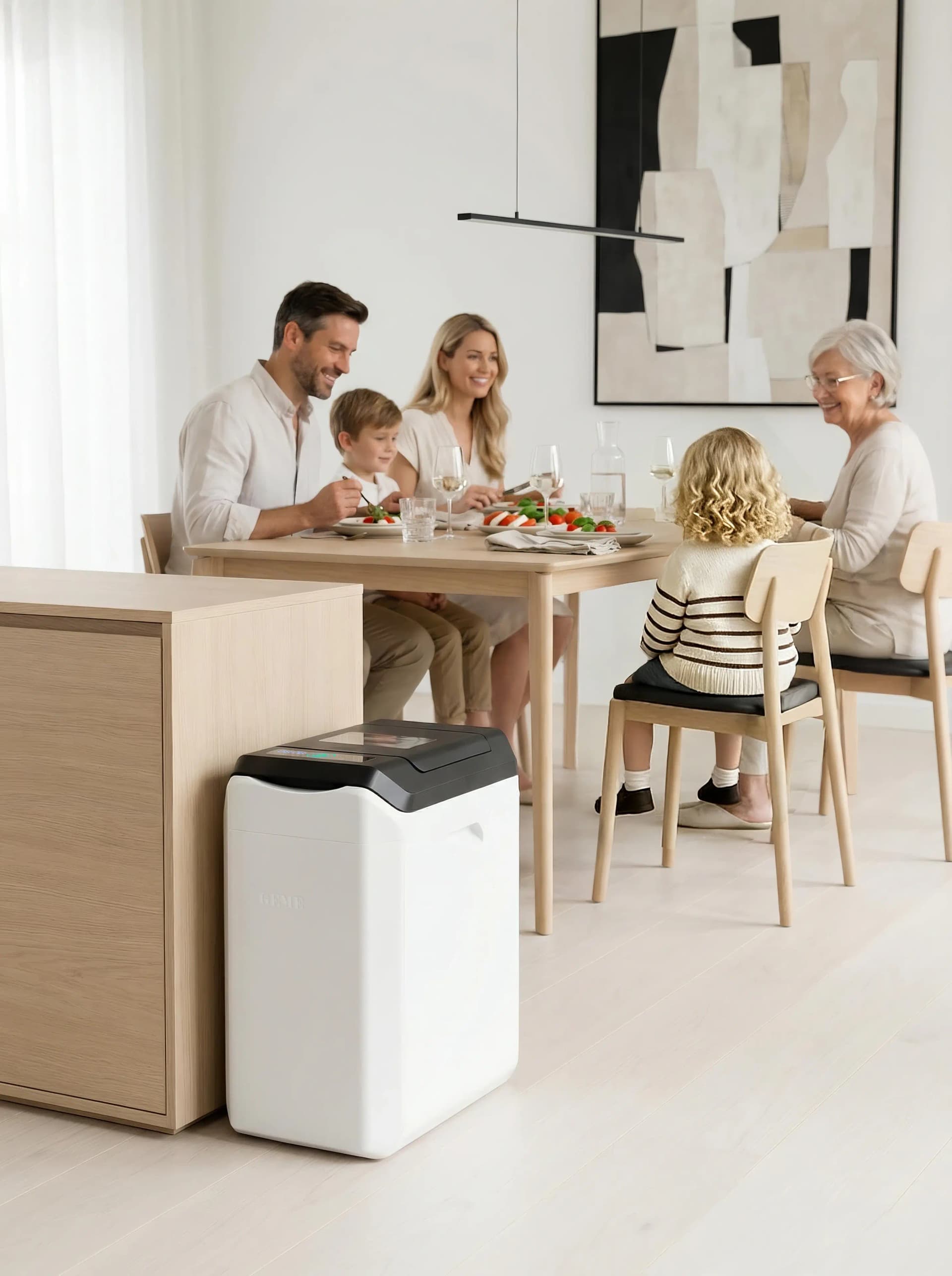
Real microbial composting for modern homes.
Start Composting at Home
GEME Terra II supports real microbial composting indoors — with continuous feeding, no filter replacements, and compost output for soil blending.
Terra II for everyday homes. GEME Pro for larger routines.
Frequently Asked Questions
What is composting?
Composting is the managed biological process of turning organic materials such as food scraps and leaves into compost through microbial activity.
How do you start composting at home?
Start by collecting compostable materials, balancing greens and browns, maintaining moisture, allowing airflow, and choosing a composting method that fits your space.
What can you compost?
Most fruit scraps, vegetable scraps, coffee grounds, tea leaves, eggshells, dry leaves, shredded cardboard, and untreated paper materials can be composted.
Can you compost meat and dairy?
Traditional backyard piles usually avoid meat and dairy because they can attract pests or create odor issues. Some advanced indoor composters allow broader food inputs according to product guidance.
How long does compost take?
Composting time depends on material size, moisture, oxygen, temperature, turning, and composting method. Traditional composting usually takes months; controlled indoor microbial systems can show visible breakdown sooner, but finished soil use still requires responsible screening and mixing.
Can you compost in an apartment?
Yes. Apartment users can use community composting, pickup programs, vermicomposting, Bokashi with a finishing plan, or an indoor microbial composter such as GEME Terra II.
Does an electric composter make real compost?
Some do, and some do not. Many appliances mainly dry and grind food scraps. A real microbial composter supports biological decomposition and produces compost for soil blending.
What is the best composter for beginners?
The best composter for beginners depends on space and lifestyle. Backyard bins are good for gardeners with outdoor space. Indoor microbial composters are better for apartments, busy households, or people who want less outdoor pile maintenance.
Sources and Further Reading
- U.S. Environmental Protection Agency — Composting at Home
- U.S. EPA — Composting and Food Waste
- University of Minnesota Extension — Composting in Home Gardens
- Oregon State University Extension — Composting for Home Gardens
- CalRecycle — Home Composting Guide
- GEME — Terra II Product Page
- GEME — How Real Microbial Composting Works
- GEME — Kobold™ Microbial Technology
- GEME — Verification and Boundaries


Laat een reactie achter
Deze site wordt beschermd door hCaptcha en het privacybeleid en de servicevoorwaarden van hCaptcha zijn van toepassing.