


Compost Odor: Why Compost Smells and How to Fix It
Healthy aerobic compost should smell earthy, not rotten. If your compost smells bad, excess moisture, poor airflow or an imbalance of carbon-rich and nitrogen-rich materials is usually involved. Th...
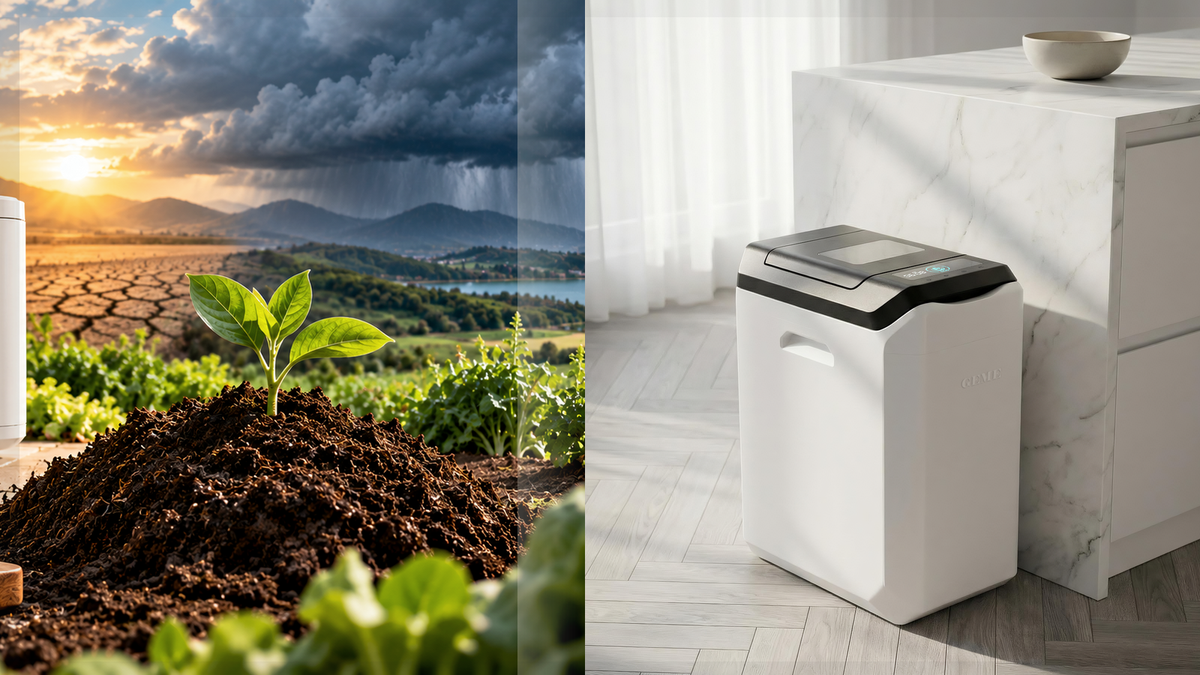
Climate Resilience, Food Waste & Soil: How Compost Helps Build a Stronger Food System
Extreme heat, drought, floods and storms expose weak points across the food system. This guide explains how food waste adds climate pressure, why soil is a critical resilience layer, and how well-m...

Composting in Hot, Dry & Rainy Weather
Keep composting through heatwaves, dry spells, and heavy rain. Learn how to restore moisture and airflow, support composting microbes, and simplify daily food-scrap processing with the GEME Composter.

Electric Composter Troubleshooting Guide: Odor, Moisture, Overload & More
Electric composter problems usually point back to a few variables: moisture, oxygen, loading, particle size, airflow or mechanical resistance. Use this guide to diagnose bad smells, wet or dry comp...

How Long Does Compost Last? How to Store Compost Properly
Finished compost does not expire like food, but storage conditions still matter. Learn what happens to compost over time, how moisture and airflow affect quality, when mold is normal, which warning...

What Is GEME Compost Base? Compost Base vs Finished Compost
GEME Compost Base is moist, biologically active material produced through continuous aerobic microbial composting. It has undergone real decomposition, but it is not automatically the same as unifo...

How Long Does Compost Take? Timeline For Different Composting Methods
Composting can take weeks, months, or years. Compare different methods, understand the four factors that control decomposition, and discover how the GEME Composter makes daily food-scrap processing...