


Best Composter · Home Composting Systems · 2026
The best composter is not necessarily the fastest machine, the smallest appliance, or the product with the longest feature list. It is the system that matches what you want to happen to your food scraps.
Some systems use microorganisms to biologically decompose organic matter. Others use heat, airflow and grinding to reduce food-waste volume. Backyard bins, hot composters, tumblers, worm bins, Bokashi buckets and continuous microbial composters can all be useful, but they do not perform the same process or create the same output.
This guide compares the major home-composting systems by process, speed, household fit, food range, output, maintenance, energy use, long-term cost and zero-waste potential.

What Is the Best Composter for Home Use?
There is no single best composter for every household.
For households that want continuous aerobic microbial processing of everyday kitchen food waste indoors, GEME Terra 2 is our overall GEME recommendation. It maintains a resident microbial environment rather than processing each load through a separate drying cycle.
GEME Pro is the higher-capacity option for larger households. A backyard compost bin or pile remains one of the lowest-cost choices when outdoor space is available. A HOTBIN-style hot composter can accelerate outdoor composting when conditions are managed well. A worm bin uses little energy and creates vermicompost, while Bokashi works well for households comfortable with a fermentation-and-finishing process.
If the main goal is rapid volume reduction rather than biological composting inside the appliance, a food recycler such as Lomi or Mill may be the better category.
Start with the process you need, then choose the product.
Editorial Disclosure
GEME publishes this guide and manufactures GEME Terra 2 and GEME Pro. This Hub compares different composting and food-waste systems rather than assuming every product marketed as a “composter” performs the same job. Product specifications, maintenance requirements and prices can change, so current manufacturer guidance should be checked before purchase.
1. Best Composters at a Glance
| Best For | Recommended Direction | Primary Process | Main Trade-Off |
|---|---|---|---|
| Continuous indoor microbial processing | GEME Terra 2 | Aerobic microbial decomposition | Higher purchase cost and continuous electricity use |
| Larger household / heavier daily food waste | GEME Pro | Higher-capacity continuous microbial processing | Larger footprint |
| Lowest-cost garden composting | Backyard pile or bin | Natural aerobic decomposition | Space, time and active management |
| Faster outdoor composting | Insulated hot composter | Managed hot aerobic composting | Requires feedstock and moisture management |
| Cleaner outdoor mixing | Compost tumbler | Aerobic composting with mechanical turning | Limited capacity and still condition-dependent |
| Low-energy indoor composting | Worm bin | Vermicomposting | Food, temperature and loading limits |
| Fermenting mixed food scraps | Bokashi bucket | Anaerobic fermentation | Needs a secondary soil or composting stage |
| Fast food-waste volume reduction | Lomi / Mill-style food recycler | Heating, drying and/or grinding | Output is not automatically mature compost |
2. What Does “Composter” Actually Mean?
The word composter is now used for several fundamentally different systems.
Traditional composting is a managed biological process. Microorganisms break down organic matter under conditions influenced by oxygen, moisture, temperature, feedstock, particle size and time.
But modern shopping results also use the word “composter” for machines that mainly heat, dry or grind food scraps.
Biological Composting
Microorganisms perform the primary transformation. Examples include backyard compost, hot composting, vermicomposting and continuous microbial systems.
Food-Waste Preprocessing
Heat, airflow or grinding removes moisture and reduces mass or volume. The resulting material may still need another biological pathway.
Fermentation
Bokashi preserves and ferments food scraps in a sealed environment before they enter soil or a secondary composting process.
Storage and Collection
Some kitchen systems simply make scraps easier to hold until curbside collection, a community program or another composting destination.
For the electric category specifically, see What Is an Electric Composter?.
3. Seven Main Types of Home Composters
1. Continuous Microbial Composter
A continuous microbial composter maintains a resident biological environment rather than starting from an empty chamber for every load.
Suitable food scraps can be added while previously added material continues to break down. This makes the format particularly useful for households that create kitchen scraps throughout the day.
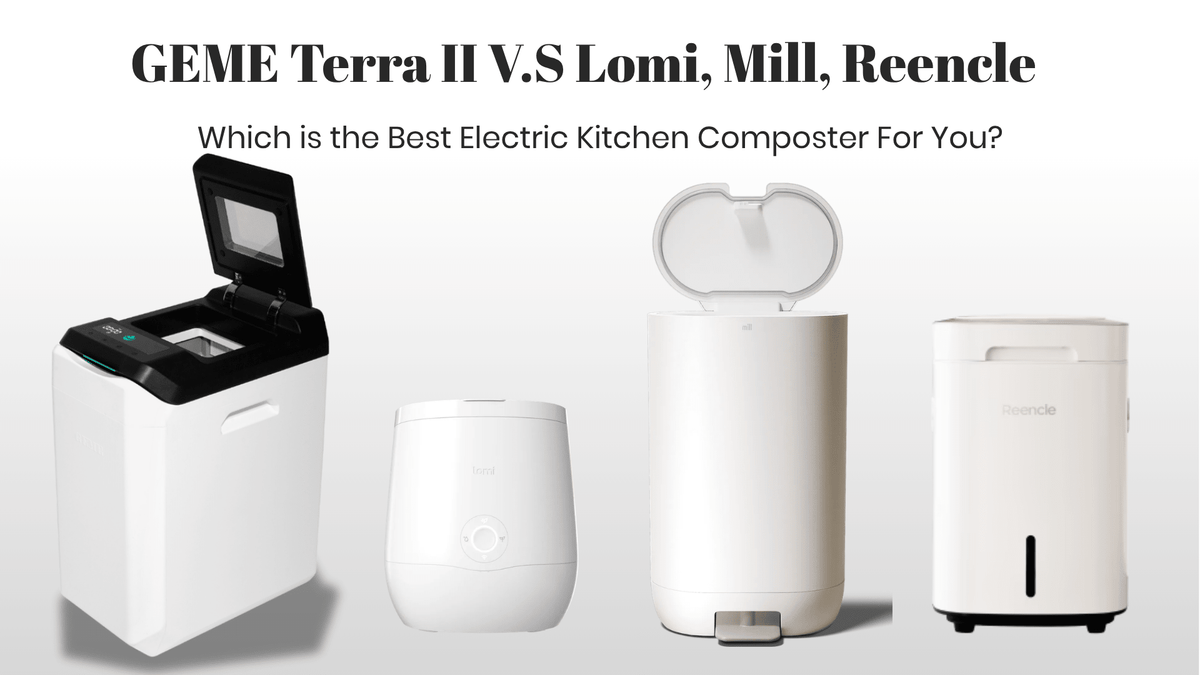
GEME Terra 2, GEME Pro and Reencle all belong broadly to this microbial category, although their chamber design, capacity, odor-control systems, maintenance and output guidance differ.
2. Hot Composter
An insulated hot composter is designed to retain the heat generated by microbial activity. When feedstock balance, moisture and airflow are favorable, decomposition can progress faster than in a passive outdoor pile.
The trade-off is management: a hot composter still depends on the user supplying enough suitable material and maintaining biological conditions.
3. Compost Tumbler
A tumbler makes turning and aerating material easier than manually turning a pile.
It can be a practical choice for households with outdoor space that want a cleaner, contained setup. It does not remove the need for carbon-rich material, moisture management or time.
4. Backyard Compost Bin or Pile
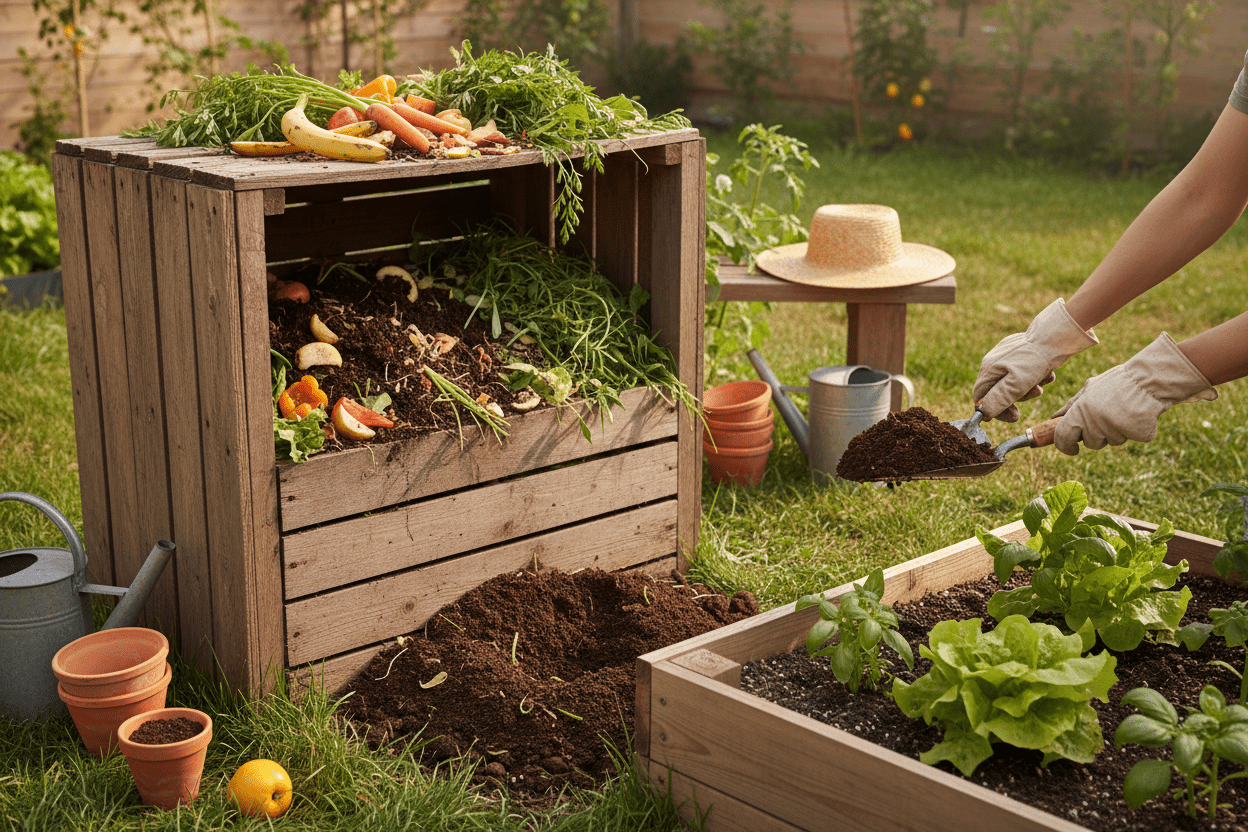
A traditional backyard pile remains one of the lowest-cost ways to compost when space, leaves, garden waste and time are available.
It can handle significant volumes of organic material, but users generally need to manage greens, browns, moisture, airflow, pests and seasonal temperature changes.
See Compost Pile vs Electric Composter.
5. Worm Bin
Vermicomposting uses worms together with microorganisms to transform suitable organic scraps into castings.
It uses little electricity and can work indoors, but worms are living organisms with temperature, moisture, feeding and food-type limits.
See Electric Composter vs Worm Composting.
6. Bokashi Bucket
Bokashi uses anaerobic fermentation rather than aerobic composting. It can accept many mixed food scraps in a sealed bucket, but the fermented material normally requires burial, soil finishing or further composting.
See GEME vs DIY Bokashi.
7. Electric Food Recycler
Food recyclers such as Lomi and Mill can make kitchen waste easier to manage by reducing moisture, volume and odor.
Their value is real, but rapid drying or grinding should not be confused with finished biological composting.
For the category distinction, read Kitchen Composter vs Food Waste Recycler.
4. Fastest Composting Systems: Speed vs Output
“Fastest composter” is a deceptively difficult comparison because different systems measure different endpoints.
A food recycler can visibly transform a bucket of scraps within hours. A microbial system can begin breaking down soft food during ongoing operation. A hot compost bin may generate finished outdoor compost in weeks under favorable conditions. A worm system works more slowly but produces a different type of biologically processed material.
Visible Breakdown Is Not the Same as Mature Compost
A material can become smaller, darker, drier or less recognizable without being fully stable or ready for concentrated use around plant roots. Compare both processing speed and what the output still needs before its intended use.
| System | Process | Speed Pattern | Output / Next Step |
|---|---|---|---|
| GEME Terra 2 | Continuous aerobic microbial processing | Visible breakdown can begin during ongoing use; performance varies by food type, quantity, moisture and particle size | Screen Compost Base, return larger unfinished pieces, then blend approximately 1:8 with plain soil or mature further where appropriate |
| GEME Pro | Higher-capacity continuous microbial processing | Same biological model with more daily processing headroom | Follow the same Compost Base screening and soil-use pathway |
| HOTBIN-style hot composter | Outdoor hot aerobic composting | Potentially fast when enough material, moisture and airflow support sustained heat | Allow material to stabilize appropriately before garden use |
| Maze-style tumbler | Outdoor aerobic composting with mechanical turning | Typically measured in weeks to months and highly condition-dependent | Use after material has sufficiently decomposed and matured |
| Hungry Bin-style worm system | Vermicomposting | Slower continuous biological processing | Produces vermicompost / worm castings |
| Bokashi | Fermentation | Fermentation stage can be relatively fast | Fermented material still needs soil finishing or secondary composting |
| Lomi / Mill-style food recycler | Drying, heating and/or grinding | Fast physical food-waste reduction | Follow manufacturer guidance for soil use, further composting, pickup or disposal |
If speed is important, ask “fast to what?” Fast to reduce volume, fast to show visible breakdown and fast to reach a stable soil amendment are different outcomes.
5. HOTBIN, Tumblers and Worm Systems: Where They Fit
HOTBIN MK2: Faster Outdoor Hot Composting
HOTBIN represents a different solution from an electric kitchen appliance. Its strength is retaining biologically generated heat in an insulated outdoor system.
For gardeners with outdoor space who are comfortable balancing materials, moisture and airflow, hot composting can offer a relatively fast path to biologically decomposed material without electricity.
Maze Geared Twin Tumbler: Lower-Cost Outdoor Convenience
A tumbler can simplify mixing and keep the composting mass contained. This makes it attractive for users who want more control than an open pile without investing in an electric system.
Its speed still depends on feedstock, outdoor temperature, moisture and how consistently the tumbler is managed.
Hungry Bin: Vermicomposting for Worm Castings
Hungry Bin represents the worm-composting category. Vermicomposting can create valuable castings while using very little energy.
It is best suited to households willing to maintain worm-friendly conditions and stay within the food and loading limits of the living worm population.
These are not inferior versions of an electric composter. They are different biological systems with different strengths, costs, space requirements and outputs.
6. Best Composter by Household Need
Best Kitchen Composter
If you have already decided on a powered kitchen appliance, compare capacity, workflow, output, filters and ownership cost.
Best for Larger Families
Daily throughput matters more than simply choosing the physically largest bucket.
Best for Apartments
Prioritize footprint, odor, noise, electricity access and what you will do with the output.
Best When Odor Is the Main Concern
Compare the biological process, airflow, moisture management and filtration model rather than judging odor control from a sealed lid alone.
Best for Fast Outdoor Composting
An insulated hot composter can be highly effective when the household has outdoor space and is comfortable actively managing compost conditions.
Best for a Zero-Waste Routine
The right composter is the one that handles unavoidable scraps after prevention, storage, leftovers and food rescue have already done their job.
Best for Low Upfront Cost
A backyard pile or basic compost bin is difficult to beat when outdoor space and suitable carbon-rich material are available.
Best for Low Recurring Cost
Compare electricity, filters, subscriptions, additives, pickup programs and replacement parts rather than purchase price alone.
7. Best Composter for a Zero-Waste Routine
Zero-waste living is not about making every food scrap disappear as quickly as possible. It is about keeping resources useful for as long as practical.
For food, the order matters:
- Buy and cook realistic quantities.
- Store food correctly.
- Use leftovers while they are still safe.
- Freeze or preserve surplus where appropriate.
- Compost unavoidable organic scraps.
That means the “best zero-waste composter” is not simply the machine with the highest disposal capacity. A good system should fit the household's unavoidable food-waste stream and give the processed material a useful downstream destination.
The Kitchen-to-Soil Loop
Food → prevention and use → unavoidable scraps → biological processing → suitable soil return → plants.
Five Things to Look for in a Zero-Waste Composting System
- A genuine biological or downstream composting pathway. Know what the output actually is.
- Low dependence on disposable consumables. Filters, pods and refills become part of the waste and ownership equation.
- A workflow people will actually use. A perfect system that is inconvenient every day will not stay perfect for long.
- A realistic match for household scraps. Vegetable peels alone do not represent every modern kitchen.
- A clear destination for the output. Garden, soil blending, further curing, curbside collection or another approved pathway.
Why Returning Organic Matter to Soil Matters
Properly prepared compost and organic amendments can contribute organic matter, support soil structure and improve the way soil holds water.
But the environmental benefit does not justify using immature or concentrated material incorrectly. The quality, maturity and intended use of the output still matter.
For broader food-waste prevention before composting, see How to Reduce Food Waste at Home.
8. Continuous Composting vs Batch Processing
Feeding style changes how a system fits normal kitchen life.
| Question | Continuous System | Batch System |
|---|---|---|
| When are scraps added? | During ongoing operation, within input guidance | Before or between defined processing cycles |
| What remains inside? | An active microbial or composting base remains in the chamber | The bucket is typically processed and emptied after a cycle |
| Best routine | Regular daily cooking and ongoing scraps | Discrete loads and a fill-run-empty workflow |
| Typical objective | Maintain biological activity over time | Complete a defined drying, grinding or reduction cycle |
Continuous operation is not automatically better. It is simply a different operating model.
9. How to Choose the Right Home Composter
1. Decide What You Want the System to Produce
If the goal is biological composting and soil return, choose a biological pathway.
If the main goal is dry storage, fast mass reduction or fewer trash trips, a food recycler may solve the problem more directly.
2. Measure Your Actual Food-Waste Volume
Household size is only a shortcut. A two-person home that cooks every meal can create more scraps than a four-person household that eats out frequently.
Measure several days or a full week of food waste and compare it with daily processing guidance rather than relying only on bucket volume.
3. Check Which Foods the System Accepts
Compare the instructions with your real waste stream: meat, dairy, bread, rice, cooked leftovers, coffee grounds, eggshells, fibrous produce, sauces, oily food and dense items.
For GEME-specific inputs, see What Can You Put in an Electric Composter?.
4. Compare Odor Strategy
Odor control can come from drying, sealed storage, activated carbon, catalytic treatment, airflow, microbial balance, moisture management or combinations of these approaches.
Do not judge odor performance solely by whether a machine has a filter.
5. Calculate Total Ownership Cost
Consider:
- electricity;
- replacement carbon filters;
- subscriptions;
- microbial material or additives;
- pickup programs;
- cleaning and replacement parts.
See Electric Compost Bin Filters & Costs Comparison.
6. Check Placement, Clearance and Noise
“Kitchen composter” does not automatically mean “countertop appliance.”
Measure the real footprint, lid-opening space, nearby walls, access to power, ventilation and the route you will use when removing output.
7. Decide Where the Output Will Go
This is one of the most frequently overlooked questions.
Before buying, know whether the output will go to:
- garden soil;
- a curing area;
- a backyard compost pile;
- a municipal organics program;
- a pickup service;
- or another approved downstream process.
10. Already Decided on a Powered Kitchen Composter?
Once you have decided that a powered indoor appliance fits your home, the comparison becomes much narrower.
The main products commonly compared include:
- GEME Terra 2;
- GEME Pro;
- Lomi 3;
- Mill;
- Reencle Prime;
- FoodCycler.
That commercial comparison should not be duplicated here. Use the dedicated buyer page:
For direct brand comparisons, see GEME vs Lomi, GEME vs Mill, and GEME vs Reencle.
11. Food Inputs, Compost Base and Soil Use
A composter should be judged not only by what goes in, but also by what comes out.
| Question | What to Check | GEME Resource |
|---|---|---|
| Can it process meat and dairy? | Manufacturer rules, quantity and input balance | Food Input Guide |
| What about salty or oily leftovers? | Concentration, quantity and effect on the biological environment | Salt & Oil Boundaries |
| Should a continuous chamber be emptied completely? | Whether the system depends on a resident microbial base | Why Not to Fully Empty the Chamber |
| When is output ready? | Stability, smell, texture, remaining recognizable material and intended use | When Is Compost Ready to Use? |
| How should GEME output be used? | Screening, returning unfinished pieces, soil blending and maturation where appropriate | Advanced GEME Compost Application Guide |
GEME Compost Base
GEME uses the term Compost Base for harvested material from its continuous microbial process.
Because newly added and older food coexist inside a continuous chamber, harvested material may contain particles at different stages of decomposition.
The current handling pathway is:
- Screen harvested material.
- Return larger unfinished pieces to the chamber.
- Mix approximately 1 part screened Compost Base with 8 parts plain soil.
- Avoid placing concentrated fresh material directly against sensitive roots, stems or crowns.
- Allow additional maturation where appropriate for the intended use.
12. Where GEME Fits in the Home-Composter Landscape
GEME Terra 2 and GEME Pro are best understood as continuous aerobic microbial food-waste systems.
They are not countertop dehydrators, backyard piles or sealed fermentation buckets.
| Specification | GEME Terra 2 | GEME Pro |
|---|---|---|
| Household fit | 1–3 people | 4+ people |
| Microbial chamber | 14 L | 19 L |
| Daily suitable-food input | Up to 2 kg/day | Up to 5 kg/day |
| Individual addition | Keep each addition at 1 kg or less | Keep individual additions manageable; avoid dumping a full day's load at once |
| Feeding model | Continuous | Continuous |
| Routine disposable activated-carbon filter replacement | No | No |
| Output terminology | Compost Base | Compost Base |
Terra 2 is floor-standing rather than a small countertop appliance. Pro provides more capacity for heavier daily cooking routines.
For the underlying process, read How Does a Real Electric Composter Work?.
13. Final Decision Guide
| If You Want... | Start With... |
|---|---|
| Continuous indoor microbial processing for everyday kitchen scraps | GEME Terra 2 |
| Higher-capacity continuous microbial processing | GEME Pro |
| The lowest-cost outdoor biological system | Backyard compost bin or pile |
| Faster managed outdoor composting | Insulated hot composter such as HOTBIN |
| A contained outdoor setup with easy turning | Compost tumbler |
| Very low-energy indoor processing and worm castings | Worm bin |
| Fermentation in a small indoor space | Bokashi |
| Fast food-waste drying or volume reduction | Food recycler |
| A low-waste household workflow | Start with food-waste prevention, then choose the system that fits unavoidable scraps |
The Most Useful Rule
Do not choose a composter from the product name alone. Identify the process, the daily capacity, the effort required, what the output actually is, and where that output goes next.
Looking for Continuous Microbial Composting Indoors?
GEME Terra 2 is designed for everyday 1–3 person households, while GEME Pro provides additional capacity for larger families and heavier food-waste routines.
14. Frequently Asked Questions
What is the best composter for home use?
The best home composter depends on your space, food-waste volume, preferred level of maintenance and desired output. Terra 2 is GEME's recommendation for continuous microbial processing indoors, while backyard bins, worm systems, Bokashi and food recyclers can be better fits for other goals.
What is the fastest composter?
It depends on what endpoint you measure. Food recyclers can reduce food-waste volume within hours, while managed hot composting can produce biologically decomposed material relatively quickly outdoors. Continuous microbial systems can begin visibly breaking down suitable food during ongoing operation. None of these endpoints should automatically be treated as identical to mature finished compost.
What is the fastest way to make compost at home?
Biological composting generally becomes faster when microorganisms have appropriate oxygen, moisture, temperature, particle size and feedstock balance. An insulated hot-compost system can accelerate outdoor composting, while a controlled microbial appliance reduces much of the daily environmental management required indoors.
What is the best composter for a zero-waste lifestyle?
The best zero-waste system is one that fits the household's unavoidable food scraps after edible food waste has already been prevented. It should also have a clear downstream pathway for the resulting material and avoid unnecessary recurring consumables where practical.
What does zero waste have to do with composting?
Composting is near the end of the food-use hierarchy, not the beginning. The first priorities are buying appropriate quantities, storing food correctly, eating leftovers and preserving surplus. Composting then provides a pathway for unavoidable organic scraps.
Do electric composters make real compost?
Not all electrically powered food-waste machines use the same process. Some maintain microbial decomposition, while others primarily heat, dry or grind food. Check the actual mechanism and the manufacturer's instructions for the resulting material.
Is dried food waste the same as compost?
No. Removing water and reducing particle size can make food waste easier to store or handle, but it does not by itself establish that the material is mature biological compost.
What is the difference between a composter and a food recycler?
A biological composter uses microorganisms as the primary decomposition pathway. A food recycler may use heat, airflow, drying or grinding primarily to reduce moisture and volume before another use or disposal pathway.
Is Terra 2 a countertop composter?
No. Terra 2 is a floor-standing appliance with a 14 L microbial chamber. It is intended for continuous household kitchen use rather than occupying countertop workspace.
Which composter is best for an apartment?
Apartment users should compare footprint, odor management, noise, electrical access and what they will do with the output. A managed indoor microbial system can suit households that lack a backyard, while very small food-waste volumes may also fit vermicomposting or municipal collection.
Do indoor composters smell?
Any organic-waste system can develop odor if it is overloaded, too wet, deprived of oxygen or used outside its normal input guidance. Different systems manage odor through combinations of airflow, microbial balance, drying, sealing, filtration and process control.
Does GEME Terra 2 require replacement activated-carbon filters?
No scheduled disposable activated-carbon odor-filter replacement is required for Terra 2 under normal operation.
Can meat and dairy go into GEME Terra 2?
Suitable meat and dairy food scraps can be processed according to GEME input guidance. Dense bones, excessive free liquids and unusually concentrated salty or oily loads require additional care.
Can GEME Compost Base be used directly around plants?
Concentrated fresh Compost Base should not simply be packed against roots, stems or crowns. Screen harvested material, return larger unfinished particles, and mix approximately one part screened Compost Base with eight parts plain soil or allow further maturation where appropriate.
What is the cheapest home composter?
For households with suitable outdoor space and access to carbon-rich materials such as dry leaves or shredded cardboard, a simple backyard pile or basic compost bin is usually among the least expensive composting options.
15. Sources and Related Guides
External References
- U.S. EPA — Composting at Home
- University of Minnesota Extension — Composting for Home Gardens
- HOTBIN — Official Website
- Hungry Bin — Official Website
- Maze Products — Official Website


Zostaw komentarz
Wszystkie komentarze są moderowane przed opublikowaniem.
Ta strona jest chroniona przez hCaptcha i obowiązują na niej Polityka prywatności i Warunki korzystania z usługi serwisu hCaptcha.