
Lettuce · Leafy Greens · Vegetable Scraps · Home Composting
Can You Compost Lettuce?
Yes, lettuce can be composted. Plain lettuce leaves are among the easier vegetable scraps to break down because they are soft, thin and moisture-rich.
Loose leaves normally decompose fastest. Thick ribs and the dense base or core take a little longer, while a whole head is better pulled apart or cut before composting so it does not collapse into one compact wet mass.
As with other edible produce, use good lettuce as food first. Compost trimmings, wilted leaves and suitable spoiled lettuce once they genuinely become unavoidable food scraps.
By Matthew Moore · Last reviewed August 24, 2026

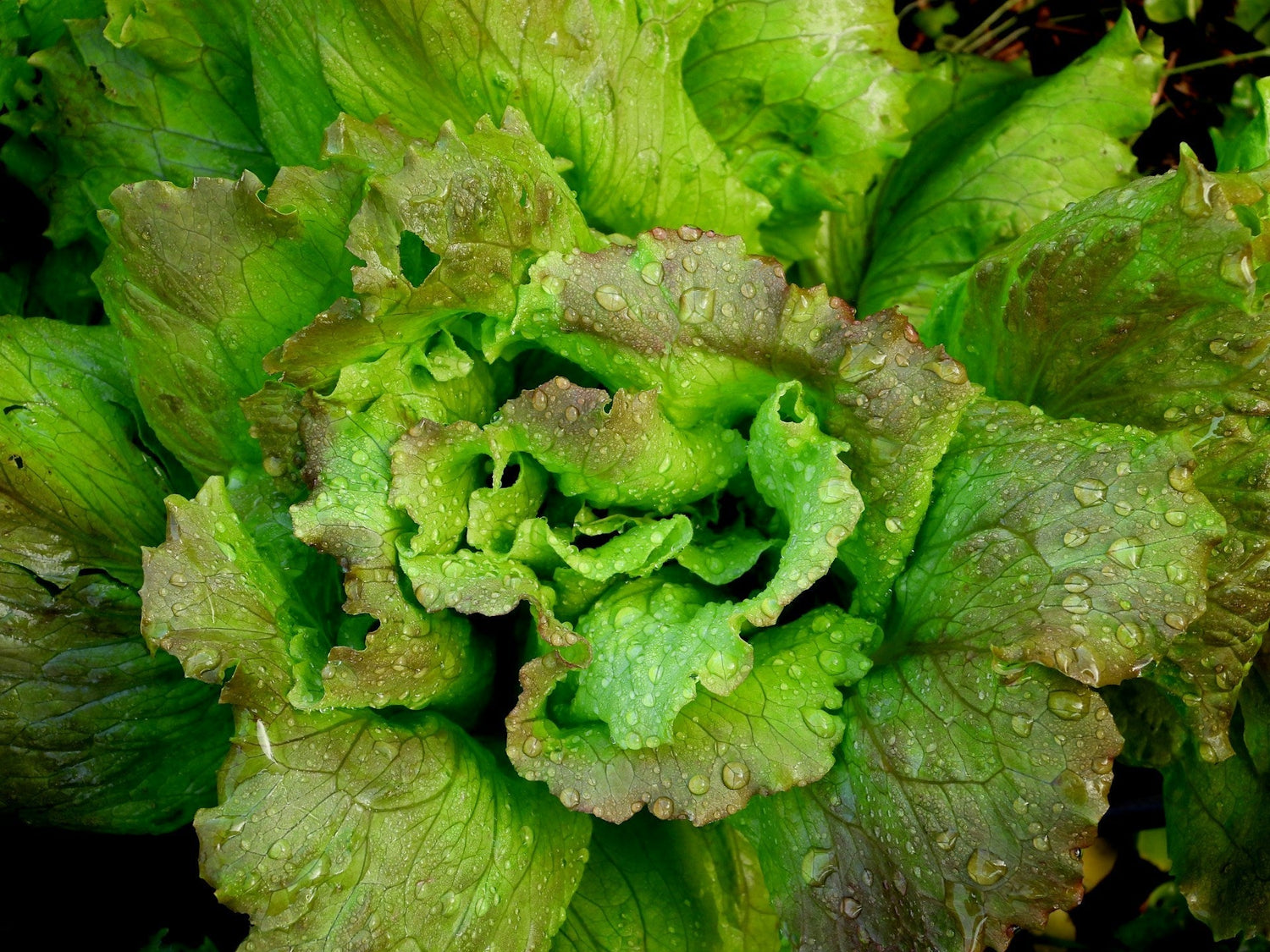
Photo: WILLIAN REIS / Unsplash
Quick Answer: Can Lettuce Go in Compost?
Yes. Plain lettuce leaves, stems, ribs, and cores can all go into an appropriate composting system.
Loose leaves require almost no preparation. Tear apart a whole head and chop a large core or thick rib into smaller pieces. Because lettuce is moisture-rich, mix large quantities with drier structural materials in an outdoor pile instead of creating a thick wet layer.
Lettuce falls within the broader fruit-and-vegetable category covered in What Can You Compost at Home?.
Table of Contents
- Eat Good Lettuce Before Composting It
- Which Parts of Lettuce Can Be Composted?
- Can You Compost Lettuce Leaves?
- Can You Compost Lettuce Cores and Stems?
- Can You Compost a Whole Head of Lettuce?
- Can You Compost Wilted or Spoiled Lettuce?
- Can You Compost Salad With Dressing?
- How to Compost Lettuce in a Backyard Pile
- Can Lettuce Go in a Worm Bin?
- Can GEME Terra 2 Compost Lettuce?
- Does Lettuce Add Too Much Moisture?
- How to Prepare Lettuce for Composting
- From Lettuce Scraps Back to Garden Soil
- Common Lettuce Composting Mistakes
- Frequently Asked Questions
- Sources
1. Eat Good Lettuce Before Composting It
Lettuce being compostable does not mean edible lettuce should automatically go into the compost bin.
If it is still fresh and safe to eat, use it.
If it is merely slightly wilted rather than spoiled, it may still work in:
- salads;
- sandwiches and wraps;
- soups;
- stir-fries;
- cooked greens;
- other meals where perfect crispness is not essential.
Composting belongs later in the household food cycle.
Fresh lettuce
↓
Eat · cook · use leftovers
↓
Trimmings · damaged leaves · unavoidable spoilage
↓
Compost suitable scraps
For the wider prevention-first approach, see the Food Storage & Waste Reduction Guide.
2. Which Parts of Lettuce Can Be Composted?
Almost every normal plant part of a lettuce head can enter compost.
| Lettuce Part | Compost? | Relative Breakdown | Preparation |
|---|---|---|---|
| Soft leaves | Yes | Fast | Usually none. |
| Outer leaves | Yes | Fast | Remove stickers or ties first. |
| Thick ribs | Yes | Slightly slower | Chop very large pieces if convenient. |
| Core / base | Yes | Slower than leaves | Cut into several pieces. |
| Whole head | Yes | Variable | Pull apart or quarter before composting. |
The difference is mostly physical.
Thin leaf tissue gives microbes far more immediate access than a tightly packed core.
The broader relationship between particle size, oxygen, moisture and microbial decomposition is explained in How Does Composting Work?.

3. Can You Compost Lettuce Leaves?
Yes. Lettuce leaves are one of the simplest vegetable scraps to compost.
They are thin, tender and already contain plenty of moisture.
Unlike a hard fruit pit, thick citrus rind or woody stem, lettuce leaves require little physical breakdown before microorganisms can begin working on them.
For a few leaves:
- add them normally;
- remove packaging first;
- mix them into the compost rather than leaving them exposed on top.
You do not need to finely chop a handful of loose lettuce leaves.
4. Can You Compost Lettuce Cores and Stems?
Yes.
The white ribs and dense base of romaine, iceberg and similar lettuces can all be composted.
They simply contain more structure than the soft leaf blade.
Best preparation: leave thin ribs alone, but cut a large lettuce core into several pieces. There is no need to mince it.
Breaking the core exposes fresh cut surfaces and prevents one dense piece from remaining intact while all the softer leaves around it disappear.
5. Can You Compost a Whole Head of Lettuce?
Yes, but it is better not to place a tightly packed whole head into the pile exactly as it came from the refrigerator.
A whole head can hold many wet leaves pressed together.
Instead:
- remove any plastic wrap, bag, band or sticker;
- pull the outer leaves apart;
- quarter or roughly chop the dense center;
- mix the pieces through other compost material.
You are not trying to turn lettuce into tiny confetti.
You are simply preventing one wet, compact mass.
6. Can You Compost Wilted or Spoiled Lettuce?
Yes. Ordinary wilted, slimy or spoiled lettuce can generally be composted once it is no longer suitable for eating.
Typical household spoilage may include:
- severe wilting;
- soft or collapsing leaves;
- browning;
- slimy breakdown;
- ordinary mold or decay.
Very wet spoiled lettuce is especially important to mix with drier material in an outdoor pile.
The same basic distinction applies to other moisture-rich produce. For example, moldy grapes and spoiled strawberries can enter an appropriate composting path once they are no longer edible.
Ordinary Spoilage Is Not the Same as a Recall or Chemical Contamination
If lettuce is being discarded because of an official food-safety recall, sewage or flood exposure, chemical contamination or another specific hazard, follow the applicable official disposal instructions rather than treating it as ordinary spoiled produce.
7. Can You Compost Salad With Dressing?
This is different from composting plain lettuce.
Once lettuce becomes a prepared salad, the question is no longer only:
“Can lettuce be composted?”
You also need to ask what else is in the bowl.
For a Backyard Pile
Plain lettuce is easy.
Large quantities of oily dressing, cheese and meat are generally avoided in a basic outdoor pile because they can increase pest and odor problems.
For a Managed Microbial System
Normal traces of dressing on everyday leftovers are different from pouring a cup of dressing or free oil into the system.
For Terra 2, follow the practical rule in Electric Composter Salt & Oil Boundaries:
If it pours, drain it first.

8. How to Compost Lettuce in a Backyard Pile
Lettuce works well as part of the nitrogen-rich “green” side of a compost pile.
EPA recommends combining food-scrap greens with substantially more carbon-rich brown material by volume.
For Normal Kitchen Amounts
- remove bags, labels, rubber bands and stickers;
- tear apart very large wet clusters;
- cut a dense core if needed;
- bury the lettuce in the active pile;
- cover it with dry leaves or other browns.
For a Large Bag of Spoiled Lettuce
Do not empty the whole bag into one thick layer.
Instead:
- spread the leaves out;
- mix with dry leaves;
- add shredded uncoated cardboard where appropriate;
- keep enough physical structure for air movement;
- turn or aerate the pile when it begins to compact.
EPA recommends roughly two to three times the volume of browns compared with greens and covering food scraps with about four to eight inches of brown material. The Complete Home Composting Guide explains the full pile-building process.
9. Can Lettuce Go in a Worm Bin?
Yes. Plain lettuce is generally a suitable soft vegetable scrap for vermicomposting.
Unlike citrus, onion and garlic, which EPA advises limiting or avoiding in a worm bin, lettuce falls within the ordinary fruit-and-vegetable scrap category commonly used as worm food.
Still, avoid overwhelming a small worm bin with a large wet head at once.
Tear it up and feed a reasonable amount that matches the size and activity of the bin.
10. Can GEME Terra 2 Compost Lettuce?
Yes. Plain lettuce is a straightforward vegetable-based kitchen input for GEME Terra 2.
That includes:
- loose lettuce leaves;
- outer leaves;
- romaine ribs;
- iceberg lettuce scraps;
- lettuce cores;
- wilted lettuce;
- suitable ordinary spoiled lettuce.
Loose Leaves Need Very Little Preparation
A few lettuce leaves can go in with normal mixed household food scraps.
Break Up Whole Heads
If an entire head has spoiled, pull it apart or cut it into several pieces before adding it.
Drain Excess Free Water
Lettuce is naturally wet, and that is not a problem by itself.
But if spoiled lettuce is sitting in a pool of water or liquid at the bottom of a bag or container, add the solids rather than pouring the free liquid into the chamber.
Terra 2 rule: loose leaves can go in normally. Break up a whole head, cut a dense core when convenient, and keep excess free liquid out.
For the wider household input framework, see What Can You Put in an Electric Composter?.
To understand the microbial process itself, read How GEME Works.
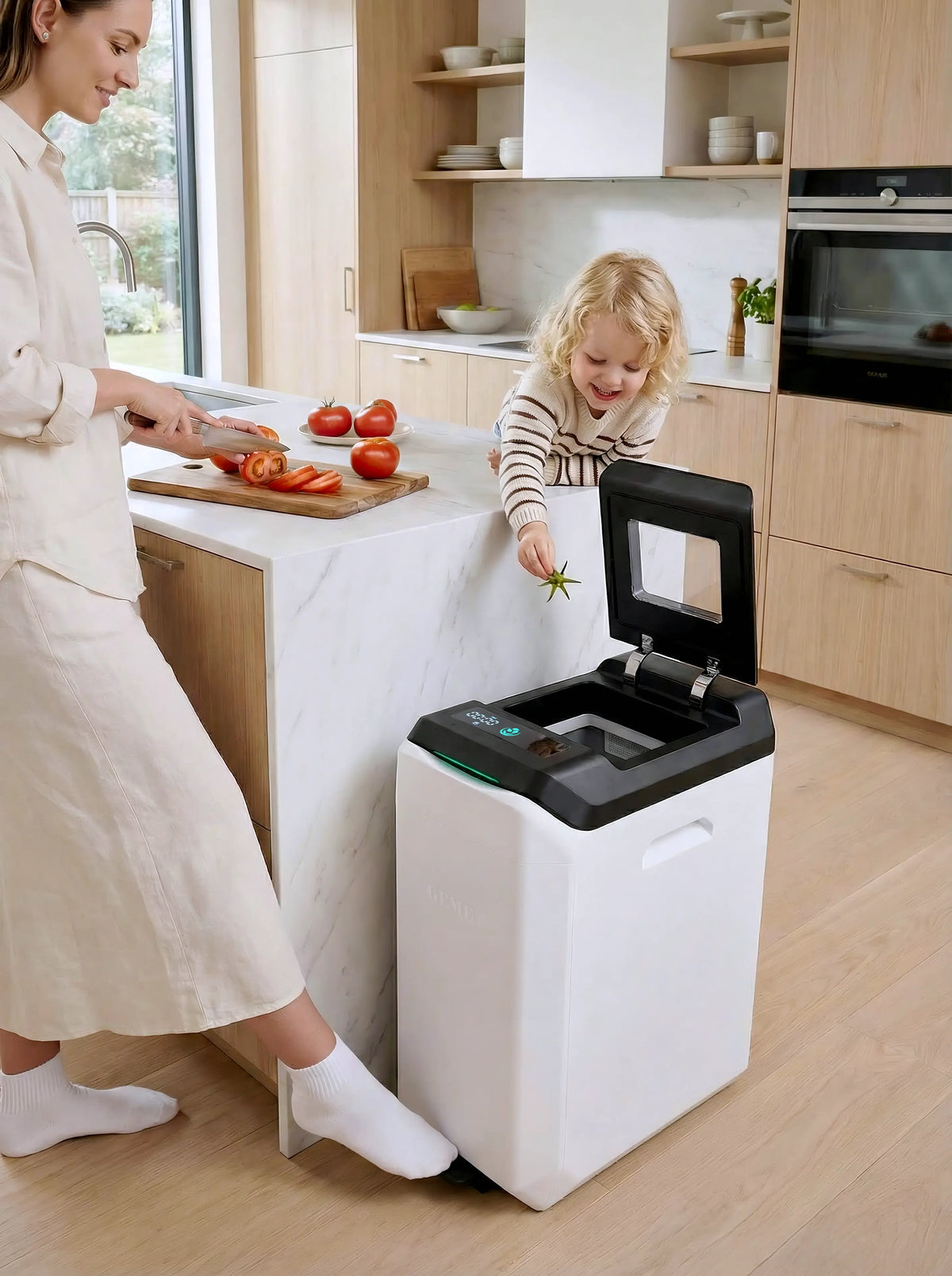
Soft Vegetable Scraps Need Little Preparation
Lettuce Is One of the Easier Kitchen Inputs
Unlike thick rinds, hard pits or dense bones, ordinary lettuce gives microorganisms easy access to soft plant tissue.
Add loose leaves normally, break up a whole head and let the active microbial environment continue the decomposition process.
Explore GEME Terra 2 →11. Does Lettuce Add Too Much Moisture to Compost?
A normal handful of lettuce is not something to worry about.
The issue appears when a composting system receives a large amount of wet, compact leafy material with very little structure around it.
In a backyard pile, compensate for a large wet load with dry browns and physical structure.
In Terra 2, distribute unusually large quantities across normal feedings and avoid pouring in free liquid.
The same general moisture principle appears throughout GEME's complete compostable-material guide: wet food is normal; a wet compacted load with poor air movement is different.
12. How to Prepare Lettuce for Composting
Lettuce requires less preparation than many kitchen scraps.
- Eat usable lettuce first. Do not compost good food simply because composting is available.
- Remove non-food material. Plastic bags, packaging, twist ties, labels and rubber bands stay out.
- Leave loose leaves alone. There is little benefit in finely chopping soft leaves.
- Break apart whole heads. Separate a dense head into several pieces.
- Cut the core. Quarter a thick core if it is large.
- Check for dressing. Treat heavily dressed salad according to its oil, salt, dairy, meat and liquid content.
- Drain free liquid. Compost the wet solids rather than pouring accumulated liquid into the system.
Loose leaves: add them. Whole head: break it up. Dressing: check what else is in it.
13. From Lettuce Scraps Back to Garden Soil
Lettuce is a good example of a simple kitchen-to-soil cycle.
Grow or buy lettuce
↓
Eat the usable leaves
↓
Compost suitable trimmings and unavoidable waste
↓
Use mature compost responsibly in soil
Lettuce itself is also one of the beginner-friendly vegetables included in How to Plant a Garden for Beginners.
For general compost use in vegetable beds, raised beds and containers, follow How to Use Compost Correctly.
Using GEME Compost Base
GEME output should not be treated as pure potting soil.
Screen recognizable unfinished material, return suitable larger pieces to the active chamber and mix the Compost Base with soil before plant use.
The current application workflow uses approximately:
1 part GEME Compost Base : 8 parts plain soil
with a plain-soil buffer where appropriate.
Use the Advanced GEME Compost Application Guide for the detailed workflow. GEME's NPK Test of Home Compost Output (N=50) also explains why household compost is better understood as a variable soil amendment than a standardized fertilizer.
14. Common Mistakes When Composting Lettuce
Mistake 1: Composting Lettuce That Is Still Good to Eat
Use edible food first. Composting is for suitable scraps and unavoidable waste.
Mistake 2: Thinking Lettuce Needs to Be Finely Chopped
Loose leaves are already thin and easy for microorganisms to access.
Mistake 3: Adding a Whole Wet Head as One Dense Lump
Pull it apart or quarter it so moisture and microbes can move through the material more evenly.
Mistake 4: Treating the Core Like a Leaf
The core is compostable, but it is thicker. Cut a large core into several pieces and give it a little more time.
Mistake 5: Ignoring Salad Dressing
A bowl of plain lettuce and a bowl covered in oil, cheese, salt and dressing are not the same compost input.
Mistake 6: Pouring the Liquid From a Bag of Spoiled Lettuce Into the Composter
Add the organic solids. Keep excess free liquid out.
Mistake 7: Putting the Plastic Lettuce Bag Into Compost
Remove bags, stickers, rubber bands and packaging every time.
15. The Simplest Lettuce Composting Rule
Eat the good lettuce. Compost the scraps. Break up the dense parts and let the soft leaves do what they do best—break down quickly.
Continuous Microbial Composting
Lettuce Scraps Don't Need to Become Trash
GEME Terra 2 supports continuous microbial processing of suitable everyday kitchen scraps. Add loose lettuce normally, break up dense heads or cores, keep excess free liquid out and return the resulting Compost Base to soil through responsible blending.
16. Frequently Asked Questions About Composting Lettuce
Can you compost lettuce?
Yes. Lettuce leaves, ribs, stems, and cores are all compostable plant material. Loose leaves break down quickly, while thicker cores take a little longer.
Can you put lettuce in compost?
Yes. Add normal lettuce scraps to an appropriate composting system. Break up a whole head or large core and remove packaging first.
Can lettuce be composted?
Yes. Lettuce is a moisture-rich vegetable scrap that breaks down readily through biological composting.
Can lettuce go in compost?
Yes. Plain fresh trimmings, wilted lettuce and suitable ordinary spoiled lettuce can all go into compost.
Can you compost lettuce leaves?
Yes. Soft lettuce leaves require very little preparation because their thin plant tissue is readily accessible to compost microorganisms.
Can you compost lettuce cores?
Yes. Lettuce cores are compostable but denser than the leaves. Cut a large core into several pieces to expose more surface area.
Can you compost a whole head of lettuce?
Yes, but pull it apart or quarter it first so the wet leaves do not remain packed into one dense mass.
Can you compost wilted lettuce?
Yes. Wilted lettuce can be composted once it is no longer useful as food. Slightly wilted but otherwise good lettuce may still be usable in cooking or other meals.
Can you compost rotten lettuce?
Ordinary spoiled or slimy lettuce can generally be composted. Food discarded because of a recall, chemical contamination, sewage or flood exposure should follow the applicable official disposal guidance.
Can you compost salad?
Plain vegetable salad is easy to compost. Salad containing substantial dressing, oil, cheese, meat, salt or other ingredients should be evaluated according to the composting method rather than treated as plain lettuce.
Can you compost lettuce with salad dressing?
Small traces of dressing may be manageable in an appropriate controlled system, but avoid pouring free dressing or large oily and salty loads into a composter. Backyard piles are better suited to plain plant scraps.
Can worms eat lettuce?
Yes. Plain lettuce is generally suitable soft vegetable material for a worm bin. Avoid overwhelming a small bin with a large wet quantity at once.
Can GEME Terra 2 compost lettuce?
Yes. Plain lettuce leaves, cores and ordinary spoiled lettuce are suitable vegetable-based kitchen scraps for Terra 2. Break up whole heads, cut dense cores when useful and keep excess free liquid out.
Do you need to chop lettuce before composting?
Loose lettuce leaves do not need chopping. A whole head or large dense core benefits from being broken or cut into several pieces.
Does lettuce make compost too wet?
Normal household amounts are not a problem. A large concentrated quantity of wet lettuce can compact in an outdoor pile, so mix it with dry brown materials and maintain airflow.
17. Authoritative Sources & Further Reading
- U.S. EPA — Composting at Home
- U.S. EPA — Wasted Food Scale
- GEME — What Can You Compost at Home?
- GEME — Complete Home Composting Guide
- GEME — How Does Composting Work?
- GEME — Electric Composter Input Guide
- GEME — Salt, Oil & Free-Liquid Boundaries
- GEME — Advanced Compost Application Guide
Sources reviewed August 24, 2026. Lettuce breakdown speed varies with particle size, temperature, oxygen, moisture, microbial activity and composting method. Soft leaves generally break down faster than dense ribs and cores, so preparation should focus on breaking up large compact pieces rather than unnecessarily chopping individual leaves.


Hinterlasse einen Kommentar
Alle Kommentare werden vor der Veröffentlichung geprüft.
Diese Website ist durch hCaptcha geschützt und es gelten die allgemeinen Geschäftsbedingungen und Datenschutzbestimmungen von hCaptcha.