

Lemons · Citrus Peels · Fruit Scraps · Home Composting
Can You Compost Lemons?
Yes, lemons can be composted. Lemon flesh, squeezed lemon halves, lemon peel and the small seeds are all plant-derived organic material, but they do not break down at the same speed.
The soft, wet pulp normally disappears first. The thick citrus peel takes longer because it is tougher and more fibrous. Lemon seeds are the most protected part and may remain recognizable after the flesh and peel have already broken down.
But composting should come after food use: eat, juice, zest, cook with or otherwise use a good lemon first. Compost the peel, squeezed fruit and suitable spoiled lemons when they genuinely become food waste.
By Matthew Moore · Last reviewed August 24, 2026

Photo: Kelly Sikkema / Unsplash
Quick Answer: Can Lemons Be Composted?
Yes. You can compost whole lemon scraps, lemon pulp, lemon peels and lemon seeds.
For faster decomposition, cut thick peel and whole squeezed halves into smaller pieces. Add normal household amounts as part of a varied compost mix rather than creating a concentrated citrus-only layer. The pulp breaks down fastest, the peel takes longer, and the seeds usually take the longest.
For the broader material list, see What Can You Compost at Home?.
If you already compost oranges, the same basic principle applies. Read Can You Compost Orange Peels? for the closely related citrus example.
Table of Contents
- Use the Lemon Before You Compost It
- Which Part of a Lemon Breaks Down Fastest?
- Can You Compost Lemon Pulp?
- Can You Compost Lemon Peels?
- Can You Compost Lemon Seeds?
- Are Lemons Like Oranges in Compost?
- Will Lemons Make Compost Too Acidic?
- How to Compost Lemons in a Backyard Pile
- Can Lemons Go in a Worm Bin?
- Can GEME Terra 2 Compost Lemons?
- What About Lemon Juice and Large Citrus Loads?
- Can You Compost Old or Spoiled Lemons?
- How to Prepare Lemons for Composting
- What Happens After Lemons Are Composted?
- Common Lemon Composting Mistakes
- Frequently Asked Questions
- Sources
1. Use the Lemon Before You Compost It
A compostable lemon is still food before it becomes food waste.
If the fruit is fresh and suitable to eat, consider using:
- the juice in cooking or drinks;
- the zest in baking or sauces;
- the peel for appropriate culinary uses;
- cut lemon in meals or dressings;
- extra juice frozen in small portions.
Only after those reasonable uses are exhausted should composting become the next step.
Fresh lemon
↓
Eat · juice · zest · cook · preserve
↓
Peel · squeezed halves · unavoidable leftovers
↓
Compost suitable scraps
Composting is valuable, but preventing edible food from becoming waste preserves more of the value already invested in growing, transporting and buying it.
2. Which Part of a Lemon Breaks Down Fastest?
Not every part of a lemon behaves the same way in compost.
| Lemon Part | Relative Breakdown | Why | Best Preparation |
|---|---|---|---|
| Pulp / Flesh | Fastest | Soft, wet and readily accessible to microorganisms. | Usually none. |
| Peel / Rind | Slower | Thicker, tougher and more fibrous than the pulp. | Cut or tear into smaller pieces. |
| Seeds | Usually slowest | The seed coat protects the inner tissue. | No need to remove every seed; screen unfinished seeds later if needed. |
This difference is normal.
Real biological composting does not make every component disappear at the same rate.
For the underlying process, read How Does Composting Work? Microbes, Heat & Oxygen.

3. Can You Compost Lemon Pulp?
Yes.
Lemon pulp is the easiest part of the fruit for compost microorganisms to access.
It is:
- soft;
- moist;
- already broken into juice-filled cells;
- low in physical structure compared with the rind.
A squeezed lemon half still contains pulp inside the peel.
That pulp may disappear relatively quickly while pieces of the yellow and white rind remain visible.
This is not evidence that the citrus has failed to compost.
It simply shows that one fruit contains materials with different resistance to decomposition.
4. Can You Compost Lemon Peels?
Yes. Lemon peels can be composted.
They simply need more time than the soft fruit inside.
A citrus rind contains:
- a firm colored outer layer;
- a thicker white pith;
- structural plant fibres;
- pectin;
- natural aromatic citrus oils.
Together, these make the rind physically tougher than lemon pulp.
How to Help Lemon Peel Break Down Faster
The most useful step is also the simplest:
Cut the peel into smaller pieces.
Smaller pieces expose more cut edges and more internal plant tissue to microorganisms.
The same preparation rule applies to orange peels.
You do not need to mince citrus peel into tiny crumbs.
Simply cutting a large squeezed half or long strip into smaller pieces is usually enough.
5. Can You Compost Lemon Seeds?
Yes. Lemon seeds are compostable too.
But they should not be expected to disappear as quickly as the pulp.
A seed is naturally designed to protect its living interior.
Its outer coat therefore creates more resistance to moisture and microbial access than soft fruit tissue.
You do not need to remove every lemon seed before composting. If a few seeds enter with squeezed lemon scraps, let them continue through the process. If recognizable seeds remain when compost is screened, return them to active compost or separate them.
Do Lemon Seeds Sprout in Compost?
Usually not.
Like other citrus seeds, lemon seeds generally do not germinate successfully in an active composting environment.
The more practical issue is simply that the seed coat is tougher than the soft fruit tissue, so lemon seeds can take much longer to break down.
That means you may still see recognizable seeds after the pulp has disappeared and the peel has softened.
No need to remove every lemon seed before composting. Let small seeds enter with the fruit scraps. If some remain recognizable when the compost is screened, return them to the active composting process and give them more time to decompose.
6. Are Lemons Like Oranges in Compost?
Yes. The same basic citrus principle applies.
Peel thickness and fruit structure vary from one citrus fruit to another, so there is no useful universal countdown for every lemon or orange.
The practical method remains:
use the edible fruit → cut large rind pieces → compost as part of a varied mix → give tougher pieces more time.
For the orange-specific version, see Can You Compost Orange Peels?.
7. Will Lemons Make Compost Too Acidic?
This is one of the most common concerns about putting lemons in compost.
Lemon juice is acidic.
But that does not make lemons a forbidden material in a functioning aerobic compost pile.
EPA currently includes fruit and vegetable scraps among normal nitrogen-rich materials for backyard composting.
The more useful distinction is between:
The first is ordinary composting.
The second can create a temporary local imbalance simply because the pile has become dominated by one wet feedstock.
Better rule: do not fear citrus; avoid overwhelming the compost with one material.
8. How to Compost Lemons in a Backyard Pile
Lemon scraps work well in a balanced aerobic pile.
For a Few Lemon Scraps
- Remove produce stickers and packaging.
- Use any edible fruit first.
- Cut large peel pieces or squeezed halves smaller.
- Add the scraps to the active pile.
- Bury them rather than leaving them exposed.
- Cover with dry brown material.
For a Large Amount of Lemons
If you have many spoiled lemons at once:
- cut or crush them;
- spread them through the pile;
- add substantially more dry leaves, shredded cardboard or other browns;
- avoid creating one wet citrus layer;
- turn the pile to preserve oxygen.
EPA recommends using at least two to three times the volume of browns compared with food-scrap greens and covering food scraps with several inches of dry material.
For the complete method, use the Complete Home Composting Guide.
If you are just starting, the Beginner's Guide to Composting at Home explains greens, browns, moisture and oxygen in simpler terms.
9. Can Lemons Go in a Worm Bin?
This is where the answer changes.
EPA's current vermicomposting guidance recommends avoiding citrus fruits in a worm bin.
A worm bin is much smaller and biologically different from a backyard aerobic pile.
Large quantities of acidic citrus are therefore not handled the same way.
Backyard Compost ≠ Worm Bin
Lemons can be normal material in a balanced backyard compost pile, but EPA recommends leaving citrus out of worm-bin feed. Follow the rules for the system you are actually using.
10. Can GEME Terra 2 Compost Lemons?
Yes. Lemon scraps are suitable fruit-based kitchen organics for GEME Terra 2 when added within a normal varied household feed.
That includes:
- lemon pulp;
- squeezed lemon halves;
- lemon peel;
- small amounts of spoiled lemon fruit;
- small seeds that naturally remain with the scraps.
Prepare the Peel
Large peel pieces benefit more from cutting because the rind is the slower component.
Terra 2 rule: add ordinary lemon scraps as part of mixed kitchen waste. Cut large rind pieces smaller, divide unusually large citrus quantities across feedings and keep excess free juice out.
See Lemon Scraps in the Composting Process
Sometimes it is easier to understand food-scrap preparation by seeing it in practice. Watch this GEME Instagram video, then continue below for the biological process and input guidance.
GEME Terra 2 maintains a warm, aerated microbial environment rather than merely drying food scraps.
See How GEME Works for the biological process.
For the distinction between biological processing and dehydrated scraps, read Real Composting vs Dehydrated Food Scraps.
For the wider household input framework, continue to What Can You Put in an Electric Composter?.
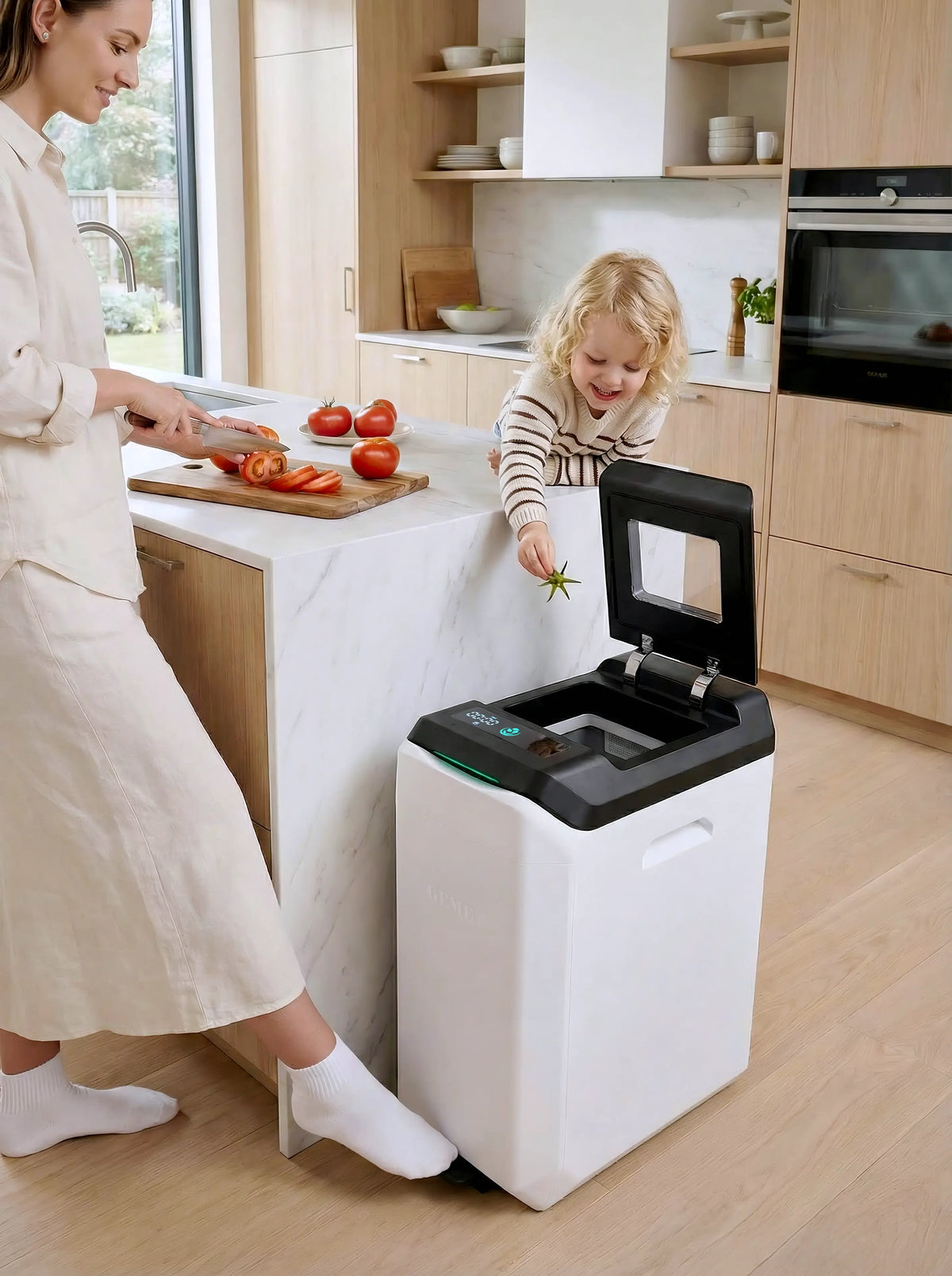
Different Parts. Different Speeds.
Let the Microbial Process Keep Working
Soft lemon pulp can disappear before tougher peel and seeds.
That is normal in continuous biological composting. Cut dense citrus rind smaller, give slower material enough residence time and return recognizable unfinished pieces when screening the output.
Explore GEME Terra 2 →11. What About Lemon Juice and Large Citrus Loads?
A juicy lemon and a container of free lemon juice should not be treated as exactly the same input.
Moist food is normal in biological composting.
But a large amount of free liquid adds:
- water without physical structure;
- concentrated acidity in one place;
- less air-filled space if the material becomes saturated.
So if you have squeezed lemons:
compost the fruit solids; do not deliberately pour a large container of leftover lemon juice into the system.
For Terra 2 and other managed systems, the wider free-liquid principle is explained in Salt, Oil & High-Moisture Input Boundaries.

12. Can You Compost Old or Spoiled Lemons?
Yes, ordinary spoiled lemons can generally be composted.
A lemon that has become:
- soft;
- dried out;
- shrivelled;
- overripe;
- moldy;
- no longer useful as food;
can enter an appropriate composting route after packaging and stickers are removed.
If the fruit is moldy, do not try to rescue it merely because it is compostable.
The same food-versus-compost distinction is covered in Can You Compost Moldy Grapes?.
Ordinary Spoilage Is Different From Known Contamination
If lemons are being discarded because of an official recall, sewage or flood exposure, chemical contamination or another specific safety event, follow the applicable official disposal guidance rather than routine garden composting.
13. How to Prepare Lemons for Composting
You do not need a complicated citrus-preparation routine.
- Use edible fruit first. Juice, zest or cook with good lemons before treating them as waste.
- Remove packaging. Produce stickers, net bags, rubber bands and plastic do not belong in compost.
- Leave soft pulp alone. It is already easy for microbes to reach.
- Cut large rind pieces. Quartered lemon halves or thick peel can be chopped into smaller pieces.
- Do not worry about every seed. A few seeds can enter with the fruit scraps.
- Mix citrus with other scraps. Avoid a lemon-only compost load.
- Drain excess free liquid. Compost the solids rather than using the composting system as a drain.
The simple principle is:
Soft pulp needs little help. Thick peel benefits from more surface area. Seeds need more time.
14. What Happens After Lemons Are Composted?
Lemon scraps do not turn into a special “citrus fertilizer.”
They become part of a mixed biological material.
Different components can still be at different stages when you inspect the output.
You may see:
- no recognizable lemon pulp;
- small softened peel fragments;
- an occasional intact or partially degraded seed.
That is why screening matters.
For GEME Compost Base:
- screen larger unfinished pieces;
- return suitable unfinished pieces to the active chamber;
- mix the screened Compost Base with plain soil;
- avoid treating concentrated fresh output as pure planting soil.
The detailed process is in the Advanced GEME Compost Application Guide.
For general garden, raised-bed and container use, see How to Use Compost Correctly.
And for first-party data showing why mixed household compost should not be treated as one standardized fertilizer, read the NPK Test of Home Compost Output (N=50).
15. Common Mistakes When Composting Lemons
Mistake 1: Composting a Perfectly Good Lemon Too Early
Use edible fruit first. Composting is the next pathway for suitable unavoidable scraps.
Mistake 2: Assuming Citrus Cannot Be Composted
EPA includes fruit and vegetable scraps among normal backyard compost materials. Lemons are not categorically excluded from aerobic composting.
Mistake 3: Expecting Peel to Disappear as Fast as Pulp
The rind is thicker and structurally tougher. Give it more time or cut it smaller.
Mistake 4: Expecting Lemon Seeds to Break Down First
Seeds are protected structures and may remain recognizable after soft fruit tissue has disappeared.
Mistake 5: Dumping a Large Bag of Lemons Into One Spot
Spread a bulk citrus load through the compost and balance it with dry material.
Mistake 6: Pouring Large Quantities of Lemon Juice Into Compost
Free liquid adds moisture without useful physical structure. Drain excess juice and compost the solids.
Mistake 7: Feeding Lemons to a Worm Bin Like a Backyard Pile
EPA currently advises avoiding citrus fruits in worm bins.
Mistake 8: Composting the Produce Sticker
Remove stickers, plastic mesh and packaging before biological processing.
16. The Simplest Lemon Composting Rule
Eat the lemon. Compost what remains. Let each part break down at its own speed.
Continuous Microbial Composting
From Squeezed Lemons to a Living Compost Base
GEME Terra 2 processes suitable everyday kitchen scraps in a warm, aerated microbial environment. Add lemon pulp normally, cut large rind pieces smaller, pace unusually large citrus loads and allow slower-breaking peel and seeds enough time to continue breaking down.
17. Frequently Asked Questions About Composting Lemons
Can you compost lemons?
Yes. Lemon flesh, peel and seeds are all compostable plant material. They break down at different speeds, with soft pulp generally decomposing faster than peel and seeds.
Can I compost lemons?
Yes. Use edible lemons first, then compost squeezed halves, leftover peel and suitable spoiled lemons as part of a varied compost mix.
Can lemons be composted?
Yes. Lemons are fruit scraps and can be processed through an appropriate aerobic composting system.
Can you put lemons in compost?
Yes. Cut large lemon halves or thick peel into smaller pieces, mix them with other compost ingredients and avoid adding a large citrus-only load in one place.
Are lemons good for compost?
Lemons are a normal fruit-scrap input when used as part of a balanced mix. The goal is not to make the pile primarily from lemons, but to combine citrus with other greens and adequate carbon-rich browns.
Can you compost lemon peels?
Yes. Lemon peels are biodegradable but usually break down more slowly than the soft pulp. Cutting large peel pieces into smaller pieces helps expose more surface area.
Can you compost lemon pulp?
Yes. Lemon pulp is soft and moisture-rich and is normally the fastest part of a lemon to decompose.
Can you compost lemon seeds?
Yes. Lemon seeds can be composted, but their protective seed coats mean they may remain recognizable longer than the pulp or peel.
What part of a lemon decomposes fastest?
The soft pulp usually breaks down fastest. Peel takes longer because it is thicker and more fibrous, while seeds are often among the slowest fragments.
Do lemon peels take longer to compost than orange flesh?
Generally yes. The important comparison is soft citrus flesh versus the tougher citrus rind. Both lemon and orange peels normally take longer than their soft internal fruit tissue.
Do lemons make compost too acidic?
Normal household quantities of lemon scraps can be part of a balanced aerobic compost pile. Avoid overwhelming the pile with a large citrus-only load and maintain adequate browns, moisture and oxygen.
Can lemon juice go into compost?
Moisture from lemon scraps is normal, but there is little benefit in deliberately pouring large quantities of free lemon juice into a composting system. Compost the solids and drain excess liquid.
Can moldy lemons be composted?
Ordinary spoiled or moldy lemons can generally be composted when they are no longer suitable for eating. Remove stickers and packaging first. Food affected by a recall or chemical contamination should follow the relevant disposal guidance.
Can worms eat lemons?
EPA's current home vermicomposting guidance recommends avoiding citrus fruits in worm bins, so lemons are better directed to another suitable composting method.
Can GEME Terra 2 compost lemons?
Yes. Normal lemon pulp, peel and squeezed citrus scraps can be added as part of a varied household food-waste stream. Cut large rind pieces smaller and divide unusually large citrus quantities across feedings.
Can lemon seeds go into GEME Terra 2?
Yes. Small lemon seeds that remain naturally with the fruit scraps do not need to be removed. Like other citrus seeds, they generally do not sprout in the active composting environment, but their protective seed coats mean they can break down more slowly than lemon pulp and peel. If recognizable seeds remain during screening, return them to the active microbial process for more time.
18. Authoritative Sources & Further Reading
- U.S. EPA — Composting at Home
- U.S. EPA — Wasted Food Scale
- GEME — Can You Compost Orange Peels?
- GEME — What Can You Compost at Home?
- GEME — Complete Home Composting Guide
- GEME — How Does Composting Work?
- GEME — How Continuous Microbial Composting Works
- GEME — Advanced Compost Application Guide
Sources reviewed August 24, 2026. Citrus decomposition speed varies with peel thickness, particle size, temperature, oxygen, moisture, microbial activity, composting method and residence time. The relative sequence used in this guide—soft pulp generally faster, peel slower and seeds among the slower fragments—is more useful than assigning one universal number of days to every lemon.

Hinterlasse einen Kommentar
Alle Kommentare werden vor der Veröffentlichung geprüft.
Diese Website ist durch hCaptcha geschützt und es gelten die allgemeinen Geschäftsbedingungen und Datenschutzbestimmungen von hCaptcha.