


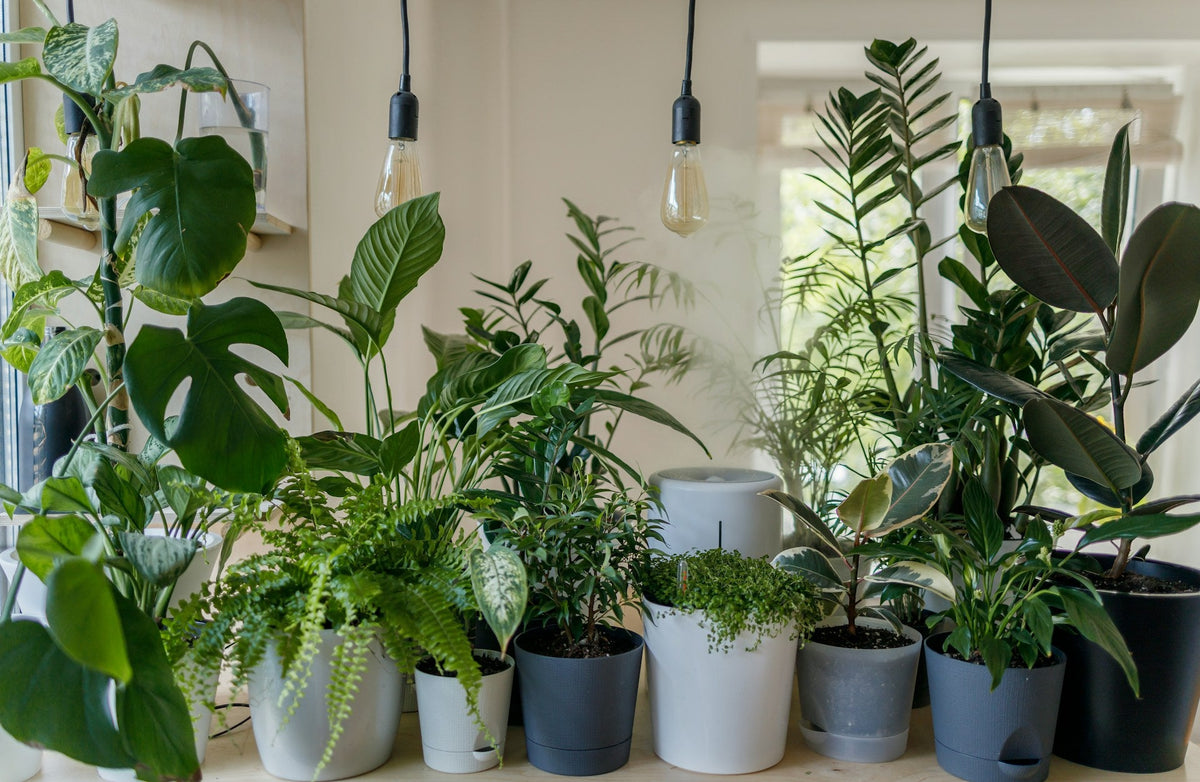
Houseplants · Indoor Pots · Compost Base
Yes, you can use compost for houseplants, but indoor containers leave much less room for error than a garden bed. Too much compost can make a potting mix overly rich or moisture-retentive. Immature compost can stress roots. And a constantly wet, organic-rich surface can create ideal conditions for fungus gnats.
The safest approach is simple: use mature, screened compost in modest amounts, keep the potting mix well-drained, and do not keep the surface permanently wet.
For GEME users, the houseplant workflow is even more specific: screen the Compost Base, return unfinished pieces, let it mature further when needed, blend approximately 1 part Compost Base with 8 parts clean low-fertilizer potting medium, then cover the amended layer with plain potting medium.

Quick Answer: How Do You Use Compost for Houseplants?
- Use mature compost. It should be dark, relatively uniform and earthy-smelling—not sour, hot, slimy or full of recognizable food scraps.
- Screen it. Remove larger unfinished pieces before anything goes near indoor roots.
- Use compost as an amendment, not the whole potting medium. Houseplant roots still need air space, drainage and structural materials.
- For GEME Compost Base, start around 1:8. Mix about 1 part screened Compost Base with 8 parts clean, low-fertilizer potting medium.
- Keep concentrated compost away from roots, stems and crowns. Use the blended material and cover it with plain potting medium where practical.
- Do not overwater. Persistent moisture is one of the biggest fungus-gnat risk factors indoors.
For seedlings, newly rooted cuttings and very sensitive plants, use only thoroughly matured material, or skip compost until the plant is established.
1. Is Compost Good for Houseplants?
Yes, when mature compost is used as one component of a suitable potting medium.
Compost can contribute:
- organic matter;
- slowly available nutrients;
- biological activity;
- greater nutrient retention;
- and improved moisture behavior.
But houseplants are different from garden beds.
A garden has a large volume of soil in which nutrients, moisture and organic matter can disperse. A houseplant may have only a few liters of growing medium around all of its roots.
That means a mistake that would be diluted outdoors can become concentrated in a pot.
Indoor rule: compost should improve the potting mix without taking over the potting mix.
For the broader soil-amendment question, see How to Use Compost Correctly.
2. How Much Compost Should You Use for Houseplants?
The safest amount depends on the compost, the plant and the existing potting mix.
General finished compost can sometimes make up a modest portion of a container blend, but GEME Compost Base should follow the more conservative GEME application rule.
GEME Houseplant Starting Ratio
1 part screened GEME Compost Base + about 8 parts clean potting medium
For sensitive plants, small pots or already fertilized potting mixes, use less Compost Base rather than more.
This works out to roughly 11% Compost Base by volume in the finished blend.
| Approximate Finished Mix | GEME Compost Base | Clean Potting Medium |
|---|---|---|
| 1 L | ~110 mL | ~890 mL |
| 2 L | ~220 mL | ~1.78 L |
| 5 L | ~560 mL | ~4.44 L |
| 10 L | ~1.1 L | ~8.9 L |
You do not need to fill every pot with a fresh 1:8 mix every time you harvest Compost Base. Houseplants usually need modest, occasional amendments rather than constant additions.
3. How Mature Should Compost Be Before You Put It in a Houseplant Pot?
Indoor pots are one of the places where compost maturity matters most.
Good mature compost is generally:
- dark;
- crumbly or reasonably uniform;
- earthy or neutral smelling;
- close to ambient temperature;
- and mostly free from recognizable food pieces.
Do not put compost around sensitive indoor roots if it:
- smells sour, rotten or strongly like ammonia;
- is noticeably hot;
- contains fresh recognizable food;
- is slimy or waterlogged;
- or is still undergoing obvious rapid decomposition.
Use the full checklist in When Is Compost Ready to Use?.
Houseplants Need a Higher Safety Margin
A material that may be acceptable for further curing in a garden bed is not automatically appropriate inside a small indoor root zone. If you are uncertain about maturity, give the compost more time before using it around houseplants.
4. What Should You Mix Compost With for Indoor Plants?
For houseplants, use a clean, well-draining potting medium appropriate for the plant.
This is an important distinction from outdoor gardening.
University of Minnesota Extension recommends using new, clean potting soil for indoor plants rather than bringing outdoor garden soil indoors.
Outdoor garden soil can be:
- too dense for containers;
- poorly aerated;
- slow draining;
- or more likely to introduce unwanted organisms indoors.
For indoor houseplants, interpret the GEME 1:8 rule as Compost Base + suitable low-fertilizer potting medium, not Compost Base + soil dug from the yard.
If the commercial potting mix already contains substantial slow-release fertilizer or compost, reduce the additional Compost Base rather than automatically adding the full amount.
5. How to Add Compost to Existing Houseplants
You do not always need to repot the entire plant.
Method 1: Add Compost When Repotting
- Choose a clean container with drainage.
- Screen the compost.
- Prepare the Compost Base and potting-medium blend.
- Keep concentrated Compost Base away from the root ball.
- Fill around the plant with the blended medium.
- Finish with plain potting medium near the surface where practical.
- Water according to the plant's actual needs.
Method 2: Amend an Established Pot
If a plant does not need repotting, use a small amount of prepared compost blend around the outer root zone rather than dumping raw compost directly against the stem.
Gently incorporate the amended material where possible, then cover it with clean potting medium.
Do not pile moist Compost Base on top of the pot as a thick exposed layer.
That creates two problems:
- roots and stems can receive overly concentrated material;
- the exposed moist organic surface can become more attractive to fungus gnats.
6. Will Compost in Houseplants Cause Fungus Gnats?
Compost does not automatically create fungus gnats, but moist organic-rich potting media can create favorable conditions for them.
University of Maryland Extension reports that fungus gnat larvae commonly develop in moist potting soil containing substantial organic matter, feeding mainly on fungi associated with damp conditions. Overwatering encourages those conditions.
Colorado State University similarly identifies persistently moist growing media as one of the strongest drivers of fungus gnat problems indoors.
The Best Prevention Is Moisture Control
- Use a pot with adequate drainage.
- Do not let the plant stand in water.
- Allow the upper growing medium to dry as much as the plant safely tolerates between waterings.
- Avoid leaving wet Compost Base exposed on the surface.
- Remove dead leaves and decaying plant material.
- Use clean potting medium.
Adding more pesticide while continuing to overwater does not fix the underlying environment.
Fruit Flies or Fungus Gnats?
Small flies around a houseplant are often automatically called fruit flies, but they may actually be fungus gnats.
- Fungus gnats: commonly associated with moist potting media.
- Fruit flies: more strongly associated with fermenting fruit, sugary residues and exposed food material.
If the insects are concentrated around the pots and emerge from the growing medium, fungus gnats are the more likely suspect.
What If You Already Have Fungus Gnats?
University of Maryland and Colorado State recommend moisture management as a first-line measure.
Depending on plant tolerance:
- allow the surface layer to dry between waterings;
- use yellow sticky cards to monitor adults;
- remove decaying organic debris;
- and consider a product containing Bacillus thuringiensis israelensis where an appropriately labeled treatment is needed.
For broader summer fly prevention around organic waste, see Composting in Summer: Heat, Fruit Flies and Moisture.
7. How to Use GEME Compost Base for Houseplants
GEME Terra 2 and GEME Pro are continuous microbial composting systems.
That is important because the chamber contains material with different residence times. Some material may be highly decomposed while newer or slower material still needs more time.
The Houseplant-Safe GEME Workflow
- Harvest only when appropriate. Do not empty the entire active microbial chamber.
- Screen the output. Remove pits, fibers, larger fragments and clearly unfinished pieces.
- Return unfinished material. Put suitable slower pieces back into GEME for further decomposition.
- Check maturity. If the material is still highly active, sour-smelling or visibly unfinished, cure it further before houseplant use.
- Blend about 1:8. Use one part screened Compost Base with about eight parts clean low-fertilizer potting medium.
- Keep it away from concentrated root contact. Use the blend, not raw Compost Base.
- Cap with plain potting medium. Reduce exposed organic material at the surface.
- Water according to the plant, not the compost. Do not keep the pot permanently wet simply because Compost Base has been added.
The complete GEME protocol is in the GEME Compost Base Application and Storage Guide.
Why GEME Makes Sense for Houseplant Owners
You do not need a garden to make soil return meaningful.
A houseplant collection, balcony planters and container plants can provide a practical destination for a portion of household Compost Base.
More importantly, GEME allows suitable kitchen scraps to move through a continuous biological process instead of being dried into food flakes or remaining in household trash.
For the process itself, see What Is a GEME Composter?.
8. Which Houseplants Need Extra Caution With Compost?
Some plant groups tolerate organic amendments better than others, but the safest rule is to focus on the root environment rather than assuming every plant in one category behaves identically.
| Plant Situation | Compost Approach | Main Concern |
|---|---|---|
| Large established foliage plant | A small amount of mature compost blend can be reasonable | Avoid waterlogging and overfeeding |
| Herbs in indoor containers | Use mature screened compost moderately | Drainage and nutrient balance |
| Succulents and cacti | Use very cautiously or skip unless the mix remains highly free-draining | Excess moisture retention |
| Orchids and epiphytes | Do not treat ordinary compost mix as a substitute for species-appropriate orchid media | Root aeration |
| Seedlings | Use fully matured material only in very small amounts, or use a dedicated seed-starting medium | Salt, nutrient and maturity sensitivity |
| Newly rooted cuttings | Delay rich compost amendments until roots are established | Young-root sensitivity |
The smaller and more sensitive the root system, the less reason there is to push the compost amount.
9. Common Mistakes When Using Compost Indoors
Using Pure Compost as Potting Soil
Pure compost can be too rich, dense or moisture-retentive for many houseplants.
Using Compost Before It Is Stable Enough
Fresh food pieces, sour odor or active heating are signs to wait.
Keeping the Surface Constantly Wet
This favors fungi and fungus gnat development.
Adding Compost to Pre-Fertilized Mix Without Thinking
More nutrients are not automatically better.
Using Outdoor Garden Soil Indoors
Garden soil may be dense, poorly drained and inappropriate for an indoor container.
Assuming Every Small Fly Is a Fruit Fly
Flies emerging from damp potting media are often fungus gnats.
Your Houseplants Need Better Soil, Not a Pot Full of Compost
Use Compost Base as a concentrated soil amendment: screen it, mature it when necessary, blend it with a clean potting medium, control moisture and let the plant tell you how the root zone is responding.
Terra 2 gives smaller households a continuous kitchen-to-soil pathway, while GEME Pro provides the same microbial approach for substantially heavier household food-waste volume.
10. Frequently Asked Questions
Can I use compost for houseplants?
Yes. Mature compost can be used as part of a houseplant potting mix, but it should not normally replace the entire growing medium. Indoor containers need drainage, air space and balanced nutrient levels.
How much compost should I put in houseplant soil?
The correct amount depends on the compost and plant. For GEME Compost Base, use approximately one part screened Compost Base to eight parts clean, low-fertilizer potting medium as a practical starting point. Use less for sensitive plants or already enriched mixes.
Can I use pure compost as potting soil?
No. Pure compost can be too dense, nutrient-rich, salty or moisture-retentive for many container plants. Use compost as an amendment within a suitable potting medium.
Does compost need to be mature before using it indoors?
Yes, especially around sensitive roots. Compost should be relatively uniform, earthy-smelling and stable. Material that is sour, hot, slimy or still contains recognizable food scraps should be screened and allowed more time.
Can compost cause fungus gnats?
Moist, organic-rich potting media can support fungus gnat development, but moisture is a major part of the problem. Good drainage, allowing the surface to dry between waterings where the plant tolerates it, and avoiding exposed wet organic material can reduce risk.
Are fungus gnats the same as fruit flies?
No. Fungus gnats commonly breed in moist potting media and feed around fungi and decaying organic material. Fruit flies are more commonly associated with fermenting fruit, food residue and sugary organic material.
How do I prevent fungus gnats after adding compost?
Use mature compost, avoid thick exposed layers, maintain good drainage, do not overwater, remove dead plant debris and allow the surface growing medium to dry appropriately between waterings.
Can I use GEME Compost Base directly on houseplants?
Do not use concentrated fresh Compost Base directly around roots. Screen unfinished pieces, allow further maturation when needed, blend approximately one part Compost Base with eight parts appropriate potting medium, and cover the amended material with plain potting medium where practical.
Can I use GEME Compost Base for succulents?
Use extra caution. Succulents generally depend on highly free-draining media, so additional organic matter can increase moisture retention. If Compost Base is used, keep the amount conservative and preserve the plant's required drainage characteristics.
Can I use GEME Compost Base for seedlings?
Fresh or highly active Compost Base is not ideal for sensitive seedlings. Use thoroughly matured and screened material only in small amounts, or use a dedicated seed-starting medium until plants are established.
Should I fertilize a houseplant after adding compost?
Not automatically. Compost contributes nutrients, and many commercial potting mixes already contain fertilizer. Observe the plant, know the potting mix and fertilize according to actual plant needs rather than adding multiple nutrient sources by default.


Dejar un comentario
Todos los comentarios se revisan antes de su publicación.
Este sitio está protegido por hCaptcha y se aplican la Política de privacidad de hCaptcha y los Términos del servicio.