


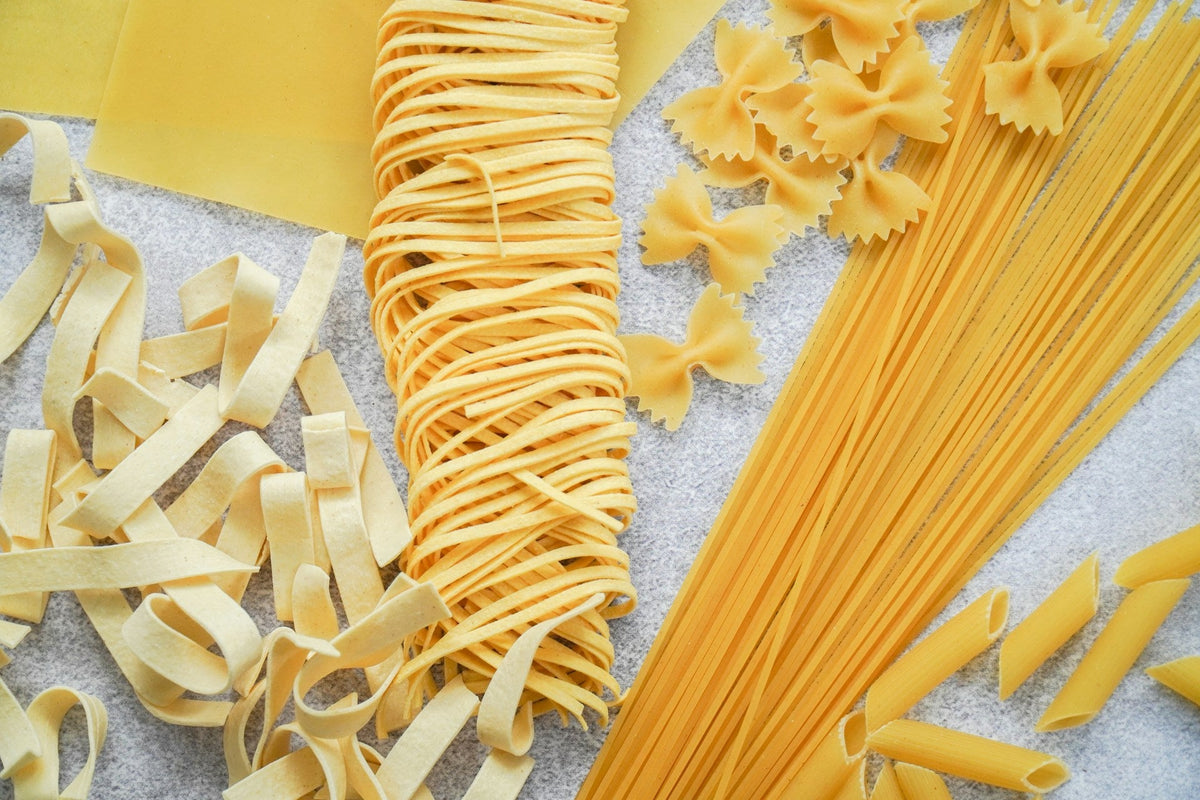
Cooked Pasta · Leftovers · Refrigerator Safety · Freezing
Cooked pasta generally belongs in the 3–4 day refrigerator window. That applies to ordinary leftover pasta that was cooled promptly, stored in a covered container, and kept in a refrigerator at 40°F / 4°C or below.
The sauce does not reset the clock. Plain pasta, tomato-sauce pasta, meat-sauce pasta, creamy pasta, and mixed pasta dishes should all be treated as perishable leftovers once cooked. When a dish contains an ingredient with a shorter label-specific storage limit, follow the more conservative limit.
Time before refrigeration matters just as much as time inside the refrigerator. Cooked pasta should generally be refrigerated within 2 hours, or within 1 hour when the surrounding temperature is above 90°F / 32°C.

How Long Does Pasta Last in the Fridge?
Use most cooked pasta within 3–4 days when it has been refrigerated promptly at 40°F / 4°C or below.
- Plain cooked pasta: generally 3–4 days.
- Pasta with tomato sauce: generally within the same 3–4 day leftover window.
- Pasta with meat sauce: generally 3–4 days when safely handled.
- Creamy or cheese-based pasta: treat as a refrigerated leftover and use within the normal safe window; follow any shorter ingredient or product guidance.
- Pasta salad: many prepared macaroni-style salads are also listed at 3–4 days by FoodSafety.gov.
- Need longer? freeze the pasta before the refrigerator window ends.
Simple rule: cook → cool promptly → refrigerate within 2 hours → eat within 3–4 days → freeze earlier if needed.
1. Cooked Pasta Storage Chart
The table below separates cooked leftovers from fresh and dry uncooked pasta. They should not be given the same storage rule.
| Pasta Type | Storage | General Guidance | Key Point |
|---|---|---|---|
| Plain cooked pasta | Refrigerator | Generally 3–4 days | Cool promptly and store covered |
| Pasta with tomato sauce | Refrigerator | Generally within 3–4 days | Track time from original cooking |
| Pasta with cooked meat sauce | Refrigerator | Generally 3–4 days | Treat as a cooked leftover |
| Creamy or cheese-based pasta | Refrigerator | Use within the general leftover window unless product guidance is shorter | Keep continuously refrigerated |
| Macaroni-style prepared salad | Refrigerator | FoodSafety.gov lists macaroni salads at 3–4 days | Do not leave at room temperature for extended periods |
| Fresh uncooked refrigerated pasta | Refrigerator | Follow package use-by and storage instructions | Do not apply the cooked-leftover rule automatically |
| Dry uncooked pasta | Cool, dry pantry | Utah State lists about 2 years as an optimum storage reference for dried pasta | Keep dry and sealed after opening |
Three Different Products, Three Different Rules
Dry pasta, refrigerated fresh pasta, and cooked leftover pasta are not interchangeable storage categories. This guide's 3–4 day rule applies primarily to cooked leftovers.
2. How Long Is Pasta Good for in the Fridge?
Cooked pasta is generally good for 3–4 days in the refrigerator when it was refrigerated promptly and kept at 40°F / 4°C or below.
That is the most useful answer to:
- how long does cooked pasta last in the fridge;
- how long can I keep cooked pasta in the fridge;
- how long can cooked pasta stay in the fridge;
- how long can pasta stay in the fridge.
Start the Clock When the Pasta Was Cooked
Do not restart the storage clock because you added a new sauce, reheated the pasta, or moved it into another container.
If pasta was cooked Monday, mixed with sauce Tuesday, and reheated Wednesday, it is still Monday's cooked pasta from a storage-history perspective.
A Simple Timeline
- Day 0: cook, serve, cool, and refrigerate promptly.
- Day 1–2: prioritize eating the pasta while texture is usually best.
- Day 3–4: finish safely stored leftovers.
- Need more time? freeze before the refrigerated window ends.
- Day 5+: do not extend the normal leftover window simply because the pasta still smells acceptable.
For the wider refrigerator system, see the Food Storage & Waste Reduction Guide.
3. Does the Sauce Change How Long Pasta Lasts?
The sauce can change the risk profile and quality, but it does not usually create a longer refrigerator window.
Plain Cooked Pasta
Plain cooked pasta still contains enough moisture to require refrigeration. Once hydrated and cooked, it no longer behaves like shelf-stable dry pasta.
Tomato-Sauce Pasta
Cooked pasta with tomato sauce should still be treated as a refrigerated leftover. Acidity in tomato sauce does not turn a mixed cooked pasta dish into a shelf-stable food.
Meat-Sauce Pasta
Pasta containing cooked ground beef, sausage, chicken, or other meat belongs in the normal cooked-leftover framework.
Cool it quickly, refrigerate promptly, and use it within about 3–4 days.
Cream, Cheese, or Dairy-Based Pasta
Alfredo-style sauces, cheese sauces, cream sauces, and other dairy-rich pasta dishes should remain continuously refrigerated.
Use the normal leftover window unless the product or an ingredient has a shorter label-specific limit.
Seafood Pasta
Seafood pasta should also be cooled promptly and refrigerated. When ingredients have different recommended storage windows, use the shorter applicable limit rather than the longest.
The Sauce Never Makes Old Pasta New Again
Adding fresh sauce to three-day-old cooked pasta does not turn it into day-one pasta. Keep the original cooking date visible.
4. Cool Cooked Pasta Quickly
The safest refrigerator window only applies when the food reaches refrigeration promptly.
USDA guidance is to refrigerate perishable leftovers within 2 hours of cooking or serving, or within 1 hour when the surrounding temperature exceeds 90°F / 32°C.
Do Not Leave a Large Pot to Cool for Hours
A deep pot or large serving bowl can stay warm in the center longer than expected.
For a large batch:
- divide pasta into smaller portions;
- use shallow containers;
- refrigerate promptly;
- leave enough refrigerator space for cold air to circulate;
- label the original cooking date.
Can Hot Pasta Go Into the Fridge?
Yes. Official food-safety guidance permits hot food to go into the refrigerator.
The practical concern is cooling a very large mass quickly enough. Divide a large batch rather than leaving it at room temperature until completely cold.
Do Not Use the Refrigerator to “Rescue” Pasta Left Out Too Long
If cooked pasta has already exceeded the safe room-temperature holding period, refrigerating it later does not erase that earlier exposure.
5. Why Cooked Pasta Needs Careful Storage
Cooked pasta deserves more attention than its mild smell and simple ingredients might suggest.
Bacillus cereus is a spore-forming bacterium associated with rice and other starchy foods, including pasta. New Zealand's Ministry for Primary Industries specifically lists pasta among starchy foods associated with B. cereus.
The important issue is temperature control.
Cooking Does Not Solve Every Future Storage Problem
Bacterial spores can survive cooking. If cooked starchy food then cools too slowly or sits unrefrigerated for too long, spores can germinate, and bacteria can multiply.
Some B. cereus toxins are heat-stable, meaning reheating improperly stored food does not necessarily make it safe again.
That Is Why Pasta Should Be:
- eaten soon after cooking; or
- cooled promptly;
- refrigerated quickly;
- kept at 40°F / 4°C or below;
- not left sitting on the counter for hours.
For the deeper food-safety explanation, read How to Avoid Food Poisoning From Leftovers: Fried Rice Syndrome Guide.
6. Does Pasta Go Bad?
Yes. Cooked pasta can spoil, and unsafe pasta does not always announce itself through smell or appearance.
Obvious spoilage signs still matter, but storage history matters more.
| What You Notice | What It May Mean | What to Do |
|---|---|---|
| Past the normal 3–4 day refrigerator window | Storage limit exceeded | Discard rather than taste-test |
| Left out overnight | Unsafe time-temperature history | Discard |
| Visible mold | Spoilage | Discard the pasta |
| Slimy surface | Microbial or physical deterioration | Discard |
| Sour or abnormal odor | Spoilage | Discard |
| Unknown cooking date | Storage history cannot be verified | Use a safety-first approach |
| Looks and smells normal but was stored unsafely | Appearance cannot prove safety | Do not rely on a smell test |
Do Not Taste Pasta to Test Whether It Is Safe
Foodborne pathogens and toxins may not produce an obvious odor, flavor, or visual change.
If the time-temperature history says the pasta should not be eaten, tasting a forkful is not a useful safety test.

7. Does Pasta Expire?
The answer depends on whether you mean dry pasta, fresh pasta, or cooked pasta.
Dry Pasta
Dry pasta is a low-moisture pantry food and has a far longer shelf life than cooked pasta.
Utah State University Extension lists approximately 2 years as an optimum storage reference for dried pasta kept sealed around normal pantry temperatures.
Once opened, keep it in a clean, dry, tightly closed container to protect it from moisture and pantry pests.
Fresh Refrigerated Pasta
Fresh pasta contains much more moisture and should be treated as a refrigerated perishable product.
Follow the manufacturer's storage instructions and use-by date rather than applying a dry-pasta shelf-life number.
Cooked Pasta
Once pasta has been cooked and hydrated, its dry-pantry shelf life no longer applies.
Cooked pasta belongs in the refrigerator and generally should be used within 3–4 days.
One word, three products: dry pasta is a pantry staple; fresh pasta is a refrigerated product; cooked pasta is a leftover.
8. Can You Freeze Cooked Pasta?
Yes. Freezing is the better choice when you know the pasta will not be eaten within the refrigerated window.
Freeze it while it is still safely stored rather than waiting until day four and deciding what to do next.
How to Freeze Leftover Pasta
- cool and refrigerate promptly after cooking;
- divide into meal-size portions;
- use freezer-safe containers or bags;
- remove excess air where practical;
- label the cooking and freezing dates;
- freeze before the normal refrigerator window ends.
Plain Pasta vs Sauced Pasta
Both can be frozen, although texture after thawing varies.
Very soft pasta may become softer after freezing and reheating. Slightly firmer pasta generally holds texture better.
How Long Can Frozen Pasta Stay Safe?
FoodSafety.gov notes that foods continuously held at 0°F / -18°C or below can remain frozen safely for very long periods; published freezer storage times are mainly quality recommendations.
For household planning, freeze in realistic portions and use older packages first rather than letting them disappear indefinitely in the back of the freezer.
9. How to Reheat Pasta Safely
Reheat leftovers to an internal temperature of 165°F / 74°C.
This is especially important for mixed pasta dishes containing meat, poultry, cheese, cream, or other perishable ingredients.
Microwave Reheating
- cover the food when appropriate;
- stir or rotate halfway through;
- break apart dense clumps;
- check temperature in more than one area;
- allow standing time when appropriate.
Stovetop Reheating
Add only the amount of water or sauce needed to restore texture, then heat thoroughly and evenly.
165°F Does Not Repair Unsafe Storage
Reheating temperature is not a reset button. Pasta that spent too long at room temperature or exceeded its safe refrigerator window should not be rescued by reheating.
10. Best Way to Store Leftover Pasta
A good pasta-storage system is simple enough to repeat every time.
- Refrigerate within 2 hours.
- Use shallow containers for large portions.
- Cover the pasta.
- Label the original cooking date.
- Keep the refrigerator at 40°F / 4°C or below.
- Eat within 3–4 days.
- Freeze early when you know you will not finish it.
Store Sauce Separately When Practical
If you are deliberately meal-prepping, storing plain pasta and sauce separately can help preserve texture and make portioning easier.
It does not create a longer food-safety window, but it can reduce sogginess and allow you to use only what you need.
Create an Eat-First Zone
Keep dated pasta and other leftovers where you can actually see them.
The broader Food Storage & Waste Reduction Guide recommends keeping older refrigerated foods visible and freezing surplus before the safe storage window closes.
For the complete household prevention sequence, see How to Reduce Food Waste at Home.
11. What to Do With Pasta You Cannot Eat
The first goal is to prevent edible pasta from becoming waste.
Use this order:
- Cook realistic portions.
- Refrigerate leftovers promptly.
- Eat them within the safe window.
- Freeze surplus early.
- Compost suitable unavoidable pasta waste.
Can Cooked Pasta Be Composted?
Yes, but the appropriate method depends on the composting system.
Small amounts of plain cooked pasta can enter a well-managed backyard pile when buried and mixed with dry structural materials. Large wet clumps can compact, attract pests, and restrict airflow.
Oily, meat-heavy, dairy-heavy, or sauce-heavy pasta is less suitable for a conventional open backyard pile.
The full system-by-system breakdown is available in What Can You Compost at Home?.
Cooked Pasta in GEME Terra 2 and GEME Pro
Ordinary cooked pasta and pasta leftovers are suitable GEME inputs in normal household quantities.
Plain pasta, tomato-sauce pasta, and mixed meal leftovers can enter as part of a varied food-waste stream.
For sauce-heavy leftovers, the issue is not that cooked pasta is forbidden. The issue is maintaining a healthy aerobic chamber balance.
- add normal household pasta portions;
- break up dense clumps;
- drain free liquid that pours;
- mix very wet or oily pasta with more typical solid food scraps;
- keep each individual addition at 1 kg or less;
- follow Terra 2's normal daily guidance of up to 2 kg and Pro's up to 5 kg.
For salty, oily, or heavily sauced pasta, see Electric Composter Salt & Oil Boundaries: What to Drain First.
For the wider ingredient framework, see What Can You Put in an Electric Composter? Meat, Dairy & Bones.
Unsafe to Eat Does Not Mean Impossible to Compost
Spoiled cooked pasta can still be biodegradable food waste. Once it is no longer being considered for eating, suitable pasta can enter GEME according to normal input, moisture, oil, salt, and loading boundaries.
Eat It in Time. Freeze the Extra. Compost What Is Truly Left.
Cooked pasta is a short-lived refrigerated food, not a pantry staple once water and heat have transformed it. Store it promptly, track the cooking date, freeze surplus early, and use GEME Terra 2 or GEME Pro for suitable unavoidable pasta waste after edible-use options are exhausted.
12. Frequently Asked Questions
How long does pasta last in the fridge?
Most cooked pasta should be eaten within 3–4 days when refrigerated promptly and kept at 40°F / 4°C or below.
How long does cooked pasta last in the fridge?
Cooked pasta generally lasts 3–4 days in the refrigerator when it was cooled promptly, stored covered, and kept at 40°F / 4°C or below.
How long is pasta good for in the fridge?
For ordinary cooked leftovers, use a 3–4 day refrigerator window. Freeze pasta earlier if you know you will not finish it within that period.
How long can I keep cooked pasta in the fridge?
Generally 3–4 days. Count from the original cooking date rather than from the most recent reheating or sauce addition.
How long can pasta stay in the fridge?
Cooked pasta generally belongs in the 3–4 day refrigerator window. Fresh uncooked refrigerated pasta should follow its package instructions instead.
How long can cooked pasta stay in the fridge?
Cooked pasta should generally be eaten or frozen within 3–4 days when stored safely at 40°F / 4°C or below.
Does pasta go bad?
Yes. Cooked pasta can spoil and can also become unsafe without obvious odor or visual changes. Follow storage time and temperature rather than relying only on smell.
Does pasta expire?
Dry pasta, fresh pasta, and cooked pasta have different storage rules. Dry pasta can remain a pantry food for a long period, fresh pasta follows refrigerated package guidance, and cooked pasta generally lasts 3–4 days in the refrigerator.
Can I eat cooked pasta after 5 days?
Five days is beyond the general 3–4 day refrigerator guidance for cooked leftovers. Do not extend the window simply because the pasta still smells normal.
Can I leave cooked pasta out overnight?
No. Cooked pasta left at room temperature overnight has exceeded normal safe holding guidance and should be discarded rather than refrigerated the next morning.
Can you put hot pasta in the refrigerator?
Yes. Hot food can go into the refrigerator. Divide large quantities into smaller, shallow containers so they cool rapidly.
Can cooked pasta cause Bacillus cereus food poisoning?
Yes. Bacillus cereus is associated with starchy foods including pasta. Risk increases when cooked pasta is cooled too slowly or held outside safe temperatures for too long.
Can reheating old pasta make it safe?
No. Reheating to 165°F / 74°C is appropriate for safely stored leftovers, but reheating does not repair pasta that has already been stored unsafely, and some bacterial toxins can be heat-stable.
Can you freeze cooked pasta?
Yes. Freeze cooked pasta before its refrigerated storage window ends. Divide it into useful portions, use freezer-safe packaging, and label the date.
Can spoiled pasta go into GEME?
Yes, suitable spoiled pasta can be processed in GEME once it is no longer being considered for eating. Add it in normal household portions, break up dense clumps, drain excess free liquid, and avoid large concentrated loads of oil or salty sauce.
13. Authoritative Sources and Related Guides
- USDA FSIS — How Long Are Takeout and Cooked Leftovers Safe?
- FoodSafety.gov — Cold Food Storage Chart
- New Zealand Ministry for Primary Industries — Bacillus cereus in Rice and Other Starchy Foods
- Utah State University Extension — Food Storage in the Home
- FoodSafety.gov — Refrigerate or Freeze Leftovers Within Four Days


Dejar un comentario
Todos los comentarios se revisan antes de su publicación.
Este sitio está protegido por hCaptcha y se aplican la Política de privacidad de hCaptcha y los Términos del servicio.