


Food Waste, Climate & Circularity Guide
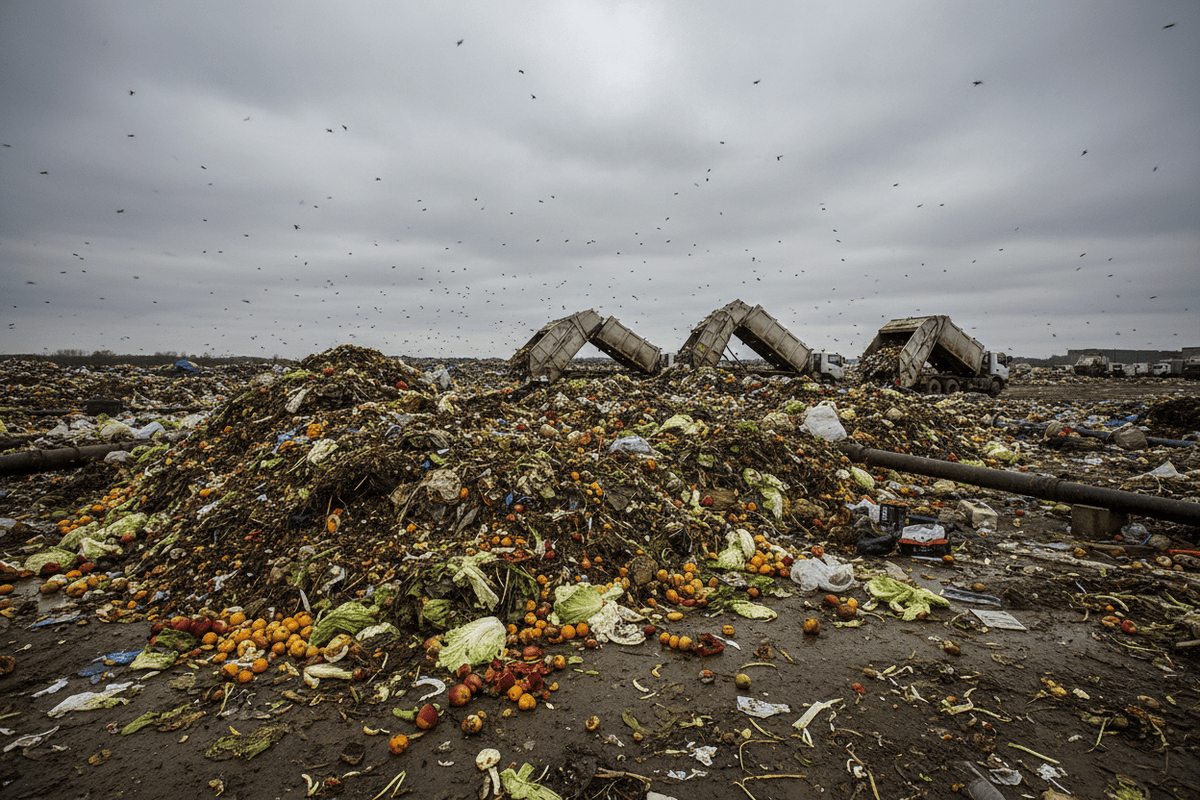
Food waste does not disappear when the garbage truck drives away. It simply enters a pathway that is no longer visible from your kitchen.
Some scraps are buried in landfills and generate methane. Some are burned with mixed trash. Some travel through sewers. Others are turned into biogas, dry food grounds or compost.
The environmental outcome depends less on what the food used to be and more on what happens after it leaves the plate.
The first responsibility is to prevent edible food from becoming waste. The second is to give unavoidable scraps a biological path back into use.
One Bin, Many Possible Destinations
Disposal is not one outcome. It is a decision about carbon, nutrients, energy and soil.
Quick Answer: What Happens to Food Waste?
After food waste leaves your home, it is usually collected with mixed trash, separated into an organics program, sent down a drain or processed in a household system.
Mixed trash commonly travels to a landfill or combustion facility. Separated food scraps may reach a composting site or anaerobic digester. Household food recyclers may dry or grind the material, while microbial composters continue biological decomposition.
These pathways are not environmentally equivalent. EPA places prevention, donation and upcycling above composting, anaerobic digestion, landfill, incineration and sewer disposal because avoiding waste protects all the resources already invested in producing the food.
Begin with the Food Storage & Waste Reduction Hub, then use the Complete Home Composting Guide for unavoidable scraps.
Why the Journey Matters
1.05 Billion Tonnes
UNEP’s estimate of food wasted globally across households, food service and retail in 2022.
60%
The share of that global food waste generated at the household level.
58%
EPA’s estimate of U.S. landfill methane emissions to the atmosphere caused by food waste.
The environmental issue is not only the discarded food. It also includes the land, water, energy, refrigeration, transport, packaging and labor that were used before the food reached the bin.
Table of Contents
- What Happens After the Bin Is Emptied?
- Path 1: Landfill
- Path 2: Incineration
- Path 3: Down the Drain
- Path 4: Anaerobic Digestion
- Path 5: Industrial Composting
- Path 6: Food Waste Recyclers
- Path 7: Home Microbial Composting
- Where Do the Nutrients Go?
- Why Prevention Comes First
- How to Choose a Better Pathway
- The GEME Mission
- Frequently Asked Questions
- Summary
- Sources
- Related Guides
What Happens After the Bin Is Emptied?
The first stage is collection. A household trash bag may be lifted into a municipal truck, collected by a private hauler or carried to a shared building waste room.
From there, the material may travel directly to a landfill or combustion facility. It may first pass through a transfer station where waste from multiple trucks is consolidated into larger loads.
If food scraps were separated into a designated organics bin, they may be delivered to a composting or anaerobic-digestion facility. The local collection label matters: “organic,” “food scraps,” “green waste” and “compostable” programs do not always accept the same materials.
Contamination can change the destination. Plastic bags, produce stickers, glass, metal and non-accepted packaging may force facilities to remove material or reject part of a load.
The most important sorting decision often happens before collection:
once food is mixed with ordinary trash, recovering its nutrients becomes much harder.
Path 1: What Happens to Food Waste in a Landfill?
At a landfill, food waste is mixed with other municipal waste, compacted by heavy equipment and covered with additional material.
Although food is biodegradable, a landfill is not a compost pile. Oxygen becomes limited inside compacted waste, so microorganisms decompose the food under anaerobic conditions.
This anaerobic decomposition produces landfill gas, which consists largely of methane and carbon dioxide. Some landfills collect part of the gas for flaring or energy recovery, but not all methane is captured.
Food breaks down relatively quickly compared with many other landfilled materials. EPA explains that much of its methane can be generated before landfill-gas collection systems are fully operating.
Why Landfill Is a Poor Nutrient Pathway
- Food’s carbon is partly converted into greenhouse gases.
- Nitrogen, phosphorus and organic matter are not intentionally returned to productive soil.
- Water, land, energy and labor used to produce the food have already been lost.
- Landfill space is occupied by material that could have entered a biological recycling pathway.
EPA estimates that food makes up approximately 24% of material in U.S. municipal solid-waste landfills but is responsible for about 58% of landfill methane emissions to the atmosphere. Read EPA’s landfilled food-waste methane research.
Path 2: What Happens When Food Waste Is Incinerated?
In some communities, mixed household waste is sent to a controlled-combustion or waste-to-energy facility rather than a landfill.
The waste is burned at high temperature. Heat may be used to generate steam, electricity or district heating, depending on the facility.
Incineration substantially reduces the volume of mixed waste, but food is a wet fuel. Water must be heated and evaporated before the organic material can contribute much useful energy.
The process also breaks the biological loop. The food’s organic matter cannot become compost, and nutrients are not returned to soil in their original usable form.
Ash and air-pollution-control residues remain after combustion and require further management. Some ash may be processed for material recovery, while residual material may still go to landfill.
EPA places incineration among the least-preferred wasted-food pathways because nutrients are lost and wet food is a relatively poor energy feedstock. See EPA’s Wasted Food Scale.
Path 3: What Happens When Food Waste Goes Down the Drain?
A garbage disposal does not eliminate food. It grinds scraps into smaller particles and sends them into the wastewater system.
Those particles travel through household plumbing, public sewers and eventually a wastewater-treatment or water-resource-recovery facility.
During transport, rapidly decomposing food can contribute to methane formation in sewers. At the treatment plant, additional energy is required to remove and treat the organic load.
Some wastewater facilities use anaerobic digestion and recover biogas. Others may not recover all nutrients or energy. The environmental outcome depends on the sewer system, treatment process and final use of biosolids.
Do Not Pour Fats, Oils or Grease Down the Drain
Liquid fats, cooking oils and grease can cool, solidify and contribute to clogged pipes, pumps and sewer infrastructure. Local collection, rendering or approved recycling routes are generally more appropriate.
EPA identifies sewer disposal as one of the least-preferred food-waste pathways because of sewer methane, treatment energy and uncertain nutrient recovery. Review the drain pathway on the Wasted Food Scale.
Path 4: Anaerobic Digestion and Biogas
Anaerobic digestion uses microorganisms to break down food waste in a sealed environment without oxygen.
Unlike uncontrolled decomposition in a landfill, a purpose-built digester is designed to capture the gas produced by the process.
Biogas
A methane-rich gas that may be used for heat, electricity or upgraded into renewable natural gas.
Digestate
The remaining nutrient-containing material, which may be processed and used beneficially or disposed of.
Anaerobic digestion can divert food from landfill and recover energy. Its circular value is strongest when both the biogas and digestate are used productively.
If digestate or biosolids are instead landfilled, part of the nutrient-recovery opportunity is lost.
Learn more from EPA’s anaerobic-digestion guidance.
Path 5: Industrial and Municipal Composting
Composting is managed aerobic biological decomposition. Microorganisms break down food and other organic materials in the presence of oxygen.
At a centralized facility, food scraps may be mixed with carbon-rich materials such as wood chips, leaves or yard trimmings. Facility operators manage moisture, oxygen, temperature and particle size.
Large facilities may use windrows, aerated static piles, enclosed vessels or other managed systems. Acceptance rules vary: one program may accept meat and compostable serviceware, while another may accept only food scraps and yard material.
When managed and matured correctly, the process creates a biologically stable soil amendment. Compost can improve soil structure, support water retention and return organic carbon and nutrients to soil.
The Circular Advantage
Food → Scraps → Aerobic Decomposition → Compost → Soil → Plants
Composting does not undo the waste of edible food. It does, however, recover more biological value from unavoidable organic scraps than landfill or incineration.
See EPA’s composting definitions and benefits and the GEME Complete Home Composting Guide.
Path 6: What Do Food Waste Recyclers Do?
Household food waste recyclers often heat, dry, grind or stabilize scraps so they become smaller, lighter and easier to store.
This can provide real household benefits. Dry output may smell less than raw scraps, occupy less bin space and remain easier to transport to a collection or composting program.
The process should not automatically be confused with composting. EPA states that material produced by grinding, dehydration or liquefaction is not finished compost merely because the original input was organic.
| Process | Immediate Result | What May Still Need to Happen |
|---|---|---|
| Drying and grinding | Dry grounds, flakes or reduced food material. | Further composting, curing, collection or responsible soil processing. |
| Aerobic microbial composting | Moist, biologically processed compost base. | Screening, additional time where needed and soil blending. |
Read Kitchen Composter vs Food Waste Recycler for the full process and output comparison.
Path 7: Home and Indoor Microbial Composting
Home composting moves part of the food-waste decision closer to the place where the scraps are generated.
Backyard piles, tumblers, worm bins and managed indoor systems all use biological activity, but they differ in accepted materials, maintenance, space and output.
Traditional backyard composting usually depends on the user to mix carbon-rich and nitrogen-rich materials, maintain moisture and introduce oxygen by turning or aeration.
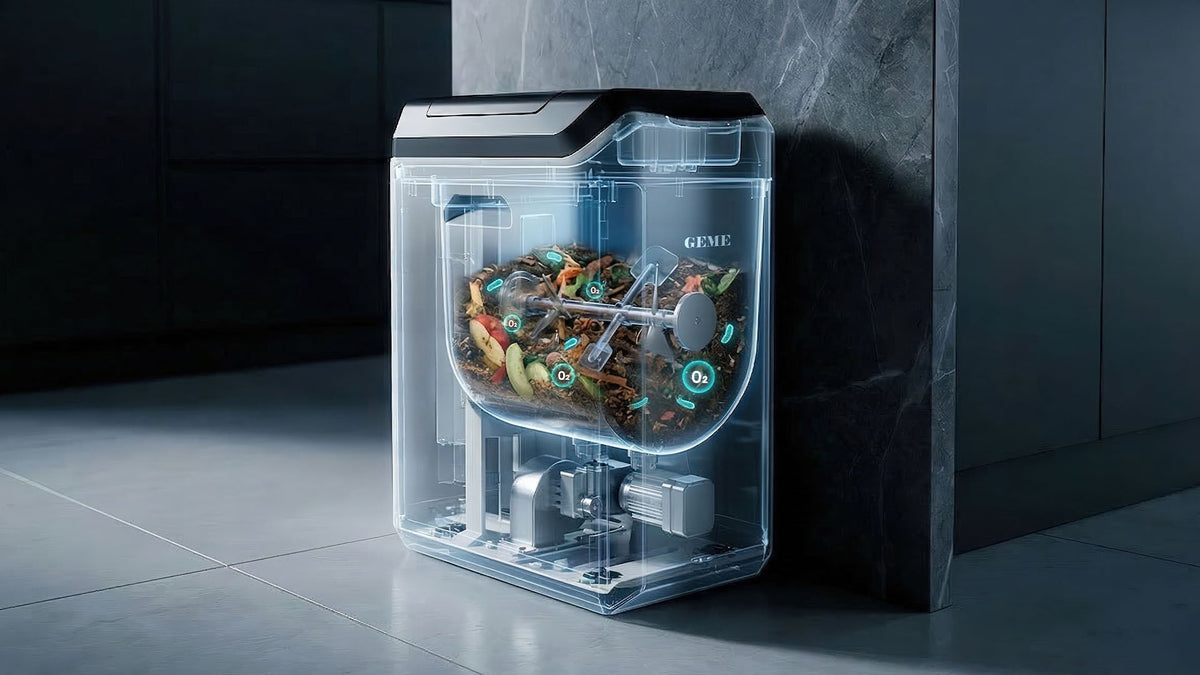
A managed microbial appliance can automate part of this environmental control. The important question is whether it supports living decomposition or only reduces the physical size and moisture of the scraps.

Keep suitable scraps out of mixed trash and inside a managed microbial process.
A Food-Waste Pathway That Starts in Your Kitchen
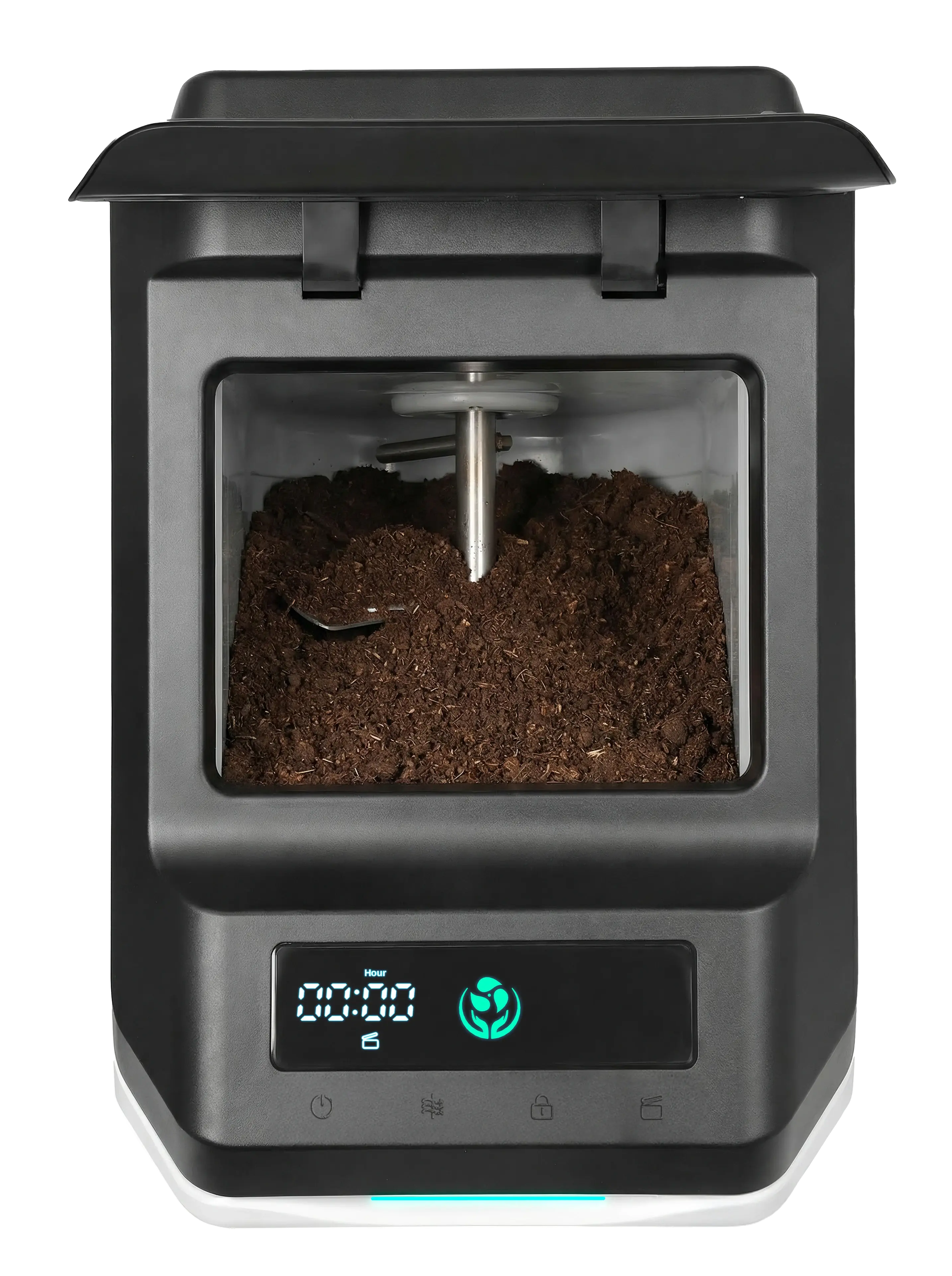
GEME Terra II uses a 14 L continuous-feed chamber, Kobold™ living microbes and GEMEBrain™ adaptive control to manage airflow, moisture, heat and mixing.
It produces a moist compost base for soil blending rather than dry waste flakes. Users should screen unfinished pieces and mix the output with plain soil before plant use.
Food-waste prevention first. Microbial composting for suitable scraps that remain.
Where Do the Carbon and Nutrients Go?
Every food-waste pathway changes the destination of carbon, nitrogen, phosphorus, water and energy.
| Pathway | Main Transformation | Carbon / Energy Outcome | Nutrient Outcome |
|---|---|---|---|
| Prevention | Food is eaten or preserved. | Avoids replacement production and disposal. | Nutrients serve their intended purpose: feeding people. |
| Landfill | Anaerobic decay in compacted waste. | Methane and carbon dioxide; some gas may be recovered. | Little intentional nutrient recovery. |
| Incineration | Combustion. | Heat or electricity may be recovered. | Organic matter is destroyed; residues remain. |
| Sewer | Transport and wastewater treatment. | Treatment energy; possible biogas at some facilities. | Recovery depends on treatment and biosolids management. |
| Anaerobic digestion | Controlled oxygen-free microbial breakdown. | Biogas can become useful energy. | Digestate may be used as a soil amendment. |
| Composting | Controlled aerobic microbial decomposition. | Some carbon is released; part remains in compost organic matter. | Nutrients and organic matter can return to soil. |
| Dry food recycling | Moisture removal and physical reduction. | Material becomes easier to store and transport. | Nutrients remain in the grounds but still need a next pathway. |
Why Preventing Food Waste Comes Before Recycling It
Composting is better than landfilling suitable scraps, but composting should not become an excuse to overbuy, ignore leftovers or discard edible food.
Once edible food becomes waste, the water, energy, fertilizer, land, refrigeration, packaging, transport and labor used to produce it have already been spent.
Composting may recover organic matter and nutrients, but it cannot restore the full economic and environmental value of the original meal.
The Responsible Household Order
Buy What You Can Use
↓
Store Food Correctly
↓
Eat, Share, Repurpose or Freeze
↓
Separate Unavoidable Scraps
↓
Compost or Digest Them
↓
Return Useful Material to Soil
Use How to Reduce Food Waste at Home for the prevention checklist.
How Can Households Choose a Better Food-Waste Pathway?
-
Measure what you throw away.
Track avoidable leftovers separately from unavoidable peels, cores, bones, grounds and trimmings. -
Improve storage first.
Use visible “Eat First” zones, date labels, freezer routines and realistic meal planning. -
Check local organics options.
Find out whether your municipality accepts meat, dairy, compostable packaging, yard waste or only plant scraps. -
Keep contamination out.
Remove plastic bags, stickers, glass, metal and non-accepted packaging. -
Avoid the drain for solid food.
Scrape plates and capture scraps rather than using wastewater infrastructure as a food-waste bin. -
Choose by desired output.
Use a food recycler for dry storage and volume reduction; use a biological composter when soil return is the goal. -
Plan where the output will go.
Compost, digestate and dry grounds all need a responsible destination. -
Follow material boundaries.
Excessive free liquid, packaging, dense hard materials and hazardous or recalled foods may need different disposal routes.
For GEME input rules, review What Can You Put in an Electric Composter? and Electric Composter Salt & Oil Boundaries .
The GEME Mission
The Bin Should Not Be the End of the Story
Food begins in soil, moves through farms, factories, shops and kitchens, and carries the work of people and ecosystems with it.
Treating that material as invisible trash breaks the connection between food and the resources that created it.
GEME exists to make one part of the circular pathway practical at home: helping suitable unavoidable kitchen scraps remain in a managed biological cycle instead of entering mixed waste by default.
This mission begins with honesty. Prevent edible waste first. Respect the limits of the process. Use compost output responsibly. Measure progress by what returns to use, not merely by how quickly waste disappears from view.
How Terra II Changes the Household Pathway
| Household Stage | Mixed-Trash Route | Terra II Route |
|---|---|---|
| Scrap appears | Stored in a trash bag or wet organics caddy. | Suitable scraps can be added to a continuous microbial chamber. |
| Process | Delayed until collection and final disposal. | Kobold™ microbes begin biological breakdown in warm, moist, aerobic conditions. |
| Environmental management | Determined by the landfill, sewer or waste facility. | GEMEBrain™ adjusts heat, airflow, moisture and mixing. |
| Odor management | Trash bags, collection frequency or external treatment. | Managed aerobic conditions plus permanent metal-ion purification. |
| Output | Mixed waste, emissions, ash or remotely processed material. | Moist compost base for screening and soil blending. |
Terra II is not a universal disposal machine. Plastic, metal, glass, excessive free liquid, long strings and unsuitable dense materials remain outside the normal input pathway.
Its output is not pure potting soil. Screen larger pieces, return suitable unfinished material to the chamber and mix approximately one part compost base with eight parts plain soil.
Follow the Advanced GEME Compost Application Guide before using the material around plants.
Frequently Asked Questions
What happens to food waste after you throw it away?
It may be transported to a landfill, combustion facility, composting site or anaerobic digester. Food sent through a garbage disposal enters the wastewater system. Household appliances may dry, grind or biologically compost suitable scraps.
What happens to food waste in a landfill?
Food is compacted with other waste and decomposes under low-oxygen conditions. This produces landfill gas containing methane and carbon dioxide. Some methane is captured, while some escapes into the atmosphere.
Does food decompose in a landfill?
Yes, but decomposition in a landfill is not the same as composting. Limited oxygen creates anaerobic conditions, valuable nutrients are not intentionally recovered, and methane can be produced.
Why does food waste create methane?
Microorganisms breaking down organic food without oxygen produce methane as part of the anaerobic-decomposition process. This occurs in landfills, sewers and controlled anaerobic digesters, although digesters are designed to capture the gas.
Is incinerating food waste better than landfilling it?
Incineration may recover energy and avoid some landfill methane, but food is wet and has relatively low energy value. The process does not return food’s organic matter and nutrients to soil.
Should food waste go down a garbage disposal?
Sending food down the drain transfers it into wastewater infrastructure rather than eliminating it. EPA ranks this among the least-preferred pathways because of sewer methane, treatment energy and uncertain nutrient recovery. Fats, oils and grease should not be poured down drains.
What is anaerobic digestion?
Anaerobic digestion is controlled microbial breakdown without oxygen. It produces biogas that may be used for energy and digestate that may be used beneficially as a soil amendment.
Is composting food waste a form of recycling?
Yes. EPA describes composting as organics recycling because it converts material that might otherwise be landfilled or burned into a soil amendment.
Do electric food waste recyclers produce compost?
Not necessarily. Appliances that mainly dry and grind scraps produce reduced food material that may still require composting, curing or another treatment step. The process and output should be checked rather than relying on the product category name.
What is the best way to manage food waste?
Prevent edible food waste first through planning, storage, freezing, sharing and reuse. Separate unavoidable scraps and use a local composting, anaerobic-digestion or responsible home-composting pathway where available.
What does GEME Terra II do with food waste?
Terra II uses living Kobold™ microbes and GEMEBrain™ adaptive control to support continuous aerobic breakdown of suitable kitchen scraps. It produces a moist compost base that should be screened and mixed with soil before plant use.
Summary: The Bin Is Only the Beginning
- Food waste may go to landfill, incineration, wastewater, anaerobic digestion, composting or a household processing system.
- Landfills create anaerobic conditions in which food waste generates methane.
- EPA estimates that food causes about 58% of landfill methane emissions to the atmosphere.
- Incineration may recover energy but does not return food’s organic matter to soil.
- Sending scraps down the drain transfers them to wastewater infrastructure and may create sewer emissions and treatment demand.
- Anaerobic digestion can produce useful biogas and digestate.
- Composting returns carbon and nutrients to soil through aerobic microbial decomposition.
- Drying and grinding can reduce food waste but do not automatically create compost.
- Preventing edible food waste remains more valuable than processing it after disposal.
- Terra II is designed for suitable unavoidable scraps, not as permission to waste food.
Authoritative and Research Sources
- UNEP — Food Waste Index Report 2024
- UNEP — World Squanders More Than One Billion Meals a Day
- U.S. EPA — Wasted Food Scale
- U.S. EPA — From Field to Bin: Food Waste Management Pathways
- U.S. EPA — Quantifying Methane Emissions From Landfilled Food Waste
- U.S. EPA — Preventing Wasted Food at Home
- U.S. EPA — Composting Definitions and Benefits
- U.S. EPA — Anaerobic Digestion and Industrial Uses
- U.S. EPA — Energy Recovery From Municipal Waste Combustion
- GEME — Terra II Product Page
- GEME — GK Technology, Methods and Boundaries
- GEME — Why GEME Chose Aerobic Microbial Composting
External statistics and pathway descriptions reviewed July 30, 2026. Local waste systems, accepted materials and facility practices vary by municipality.
Prevent what you can. Return what remains to a biological cycle.
Choose What Happens Before the Truck Arrives
Terra II helps suitable unavoidable scraps enter a continuous microbial process at home, with GEMEBrain™ adaptive control, permanent odor purification and compost base for responsible soil blending.
Reduce first. Compost suitable scraps. Return the output to soil responsibly.



Dejar un comentario
Todos los comentarios se revisan antes de su publicación.
Este sitio está protegido por hCaptcha y se aplican la Política de privacidad de hCaptcha y los Términos del servicio.