


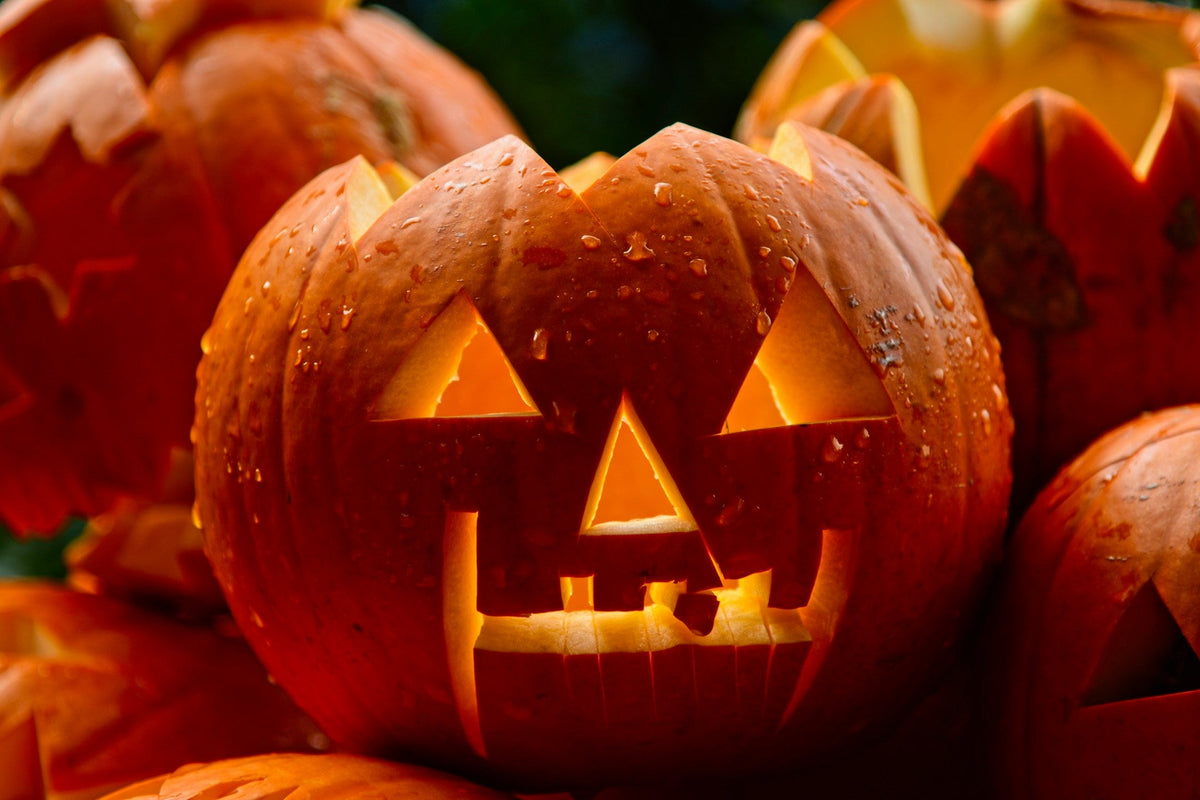
Halloween · Pumpkin Composting · Fall Food Waste
Yes, you can compost pumpkins after Halloween. Whole pumpkins, carved jack-o'-lanterns, pumpkin flesh, rind, and most untreated plant material can return to a composting system instead of going into the trash.
The important part is preparation. Remove candles, wax, paint, stickers, plastic decorations, lights, toothpicks, and other non-food materials. Then break the pumpkin into manageable pieces rather than putting an entire pumpkin into a small household composting system at once.
For GEME households, post-Halloween pumpkin cleanup is primarily a capacity and moisture-management question. GEME Pro is the stronger fit for larger pumpkins and higher seasonal volumes, while Terra 2 can process pumpkin in smaller portions spread across normal daily feeding.

Can You Compost Pumpkins After Halloween?
Yes. Pumpkins are compostable organic material. Before composting a Halloween pumpkin:
- Use edible pumpkin first if it is still safe and suitable for cooking.
- Remove non-compostable decorations such as candles, wax, paint, plastic, stickers, lights, wire, glitter, and synthetic decorations.
- Cut or break the pumpkin into smaller pieces so microbes have more surface area to work on.
- Choose the right composting method for the amount of pumpkin you have.
- Manage moisture because pumpkin flesh contains a large amount of water.
For GEME: never treat a whole pumpkin as one load. Keep each addition at 1 kg or less. Terra 2 supports up to 2 kg/day; GEME Pro supports up to 5 kg/day, spread across appropriate additions.
1. Before Composting a Pumpkin, Ask: Can It Still Be Used?
A pumpkin being compostable does not mean it should automatically become compost.
If an uncarved pumpkin is still fresh, safe, and suitable for eating, using the food first is the better outcome. Pumpkin flesh can be used in soups, purées, baking, sauces, and other dishes depending on the variety and condition.
The basic household food-waste order remains:
- Eat or preserve edible food.
- Share usable surplus where appropriate.
- Compost material once it is genuinely waste.
For a broader household strategy, see our guide to reducing food waste at home.
A carved jack-o'-lantern is different. Once a pumpkin has been cut open, handled, displayed at room temperature, exposed outdoors, or begun to deteriorate, do not assume it is still appropriate for eating. When it becomes food waste, composting gives the organic material a better next step.
2. How to Prepare a Halloween Pumpkin for Composting
Remove everything that is not pumpkin before the material enters a composting system.
University extension guidance specifically recommends removing decorations and breaking pumpkins into smaller pieces before composting.
Remove Decorations First
- Candles and candle holders
- Wax
- Battery lights and electrical components
- Plastic eyes, teeth, handles, or ornaments
- Stickers and labels
- Wire, pins, staples, toothpicks, and fasteners
- Ribbon, fabric, synthetic cobwebs, and glitter
- Painted or chemically coated sections that cannot be cleanly separated
If a pumpkin is heavily painted, glittered, coated, or contaminated with materials you cannot reliably remove, do not place the whole thing into a home composting system. Follow your local waste guidance for the contaminated portion.
Cut the Pumpkin Into Smaller Pieces
A pumpkin is physically large but biologically straightforward. Breaking it into smaller pieces exposes more surface area to microorganisms and makes it easier to distribute through a compost pile or microbial chamber.
For a backyard pile, rough chopping or smashing is usually enough. For GEME, prepare pieces small enough to mix naturally with the established microbial bed rather than creating one dense pumpkin mass.
Do Not Drop a Whole Pumpkin Into GEME
Daily capacity is not the same as single-load capacity. Even GEME Pro's 5 kg/day rating does not mean a 5 kg pumpkin should be added at once. Each addition should remain at 1 kg or less.
3. How to Compost Pumpkins in an Outdoor Pile
Pumpkins are a good fit for an ordinary compost pile because they are plant material with substantial moisture and relatively soft tissue.
The main challenge is not whether pumpkin decomposes. It is preventing a large wet mass from sitting exposed or overwhelming the pile.
- Remove decorations.
- Break the pumpkin into pieces.
- Place the pieces inside the active pile rather than leaving them on top.
- Cover them with dry carbon-rich material such as dry leaves or shredded plain cardboard.
- Maintain airflow. Avoid compressing the pumpkin into one wet layer.
- Monitor moisture. Add dry structure if the pile becomes soggy.
If you are new to backyard composting, start with our complete home composting guide.
For a broader material reference, see what you can compost at home.
Do Not Dump Pumpkins in Parks or Natural Areas
Leaving a pumpkin in a forest, park, preserve, roadside, or someone else's property is not the same as controlled composting. Illinois Extension warns that dumped pumpkins can smother vegetation, alter local habitats, attract animals toward roads, and create unwanted plant growth.
Use your own managed composting system or an authorized municipal or community pumpkin-composting program instead.
4. How to Compost Pumpkin in GEME
GEME Turns a Seasonal Cleanup Into the Same Daily Composting Routine
After Halloween, the challenge is often volume. One pumpkin can suddenly create far more food waste than a normal dinner.
GEME's continuous-feed design lets you divide that pumpkin into manageable portions and feed it into an already active microbial system instead of treating the entire pumpkin as one batch.
Both Terra 2 and GEME Pro use an established Kobold™ microbial bed inside a managed aerobic chamber. Pumpkin is therefore not waiting in a bucket for a future compost run; properly prepared portions enter an ongoing biological decomposition process.
For the broader distinction between storage, drying, and biological composting, read what a GEME Composter actually does.
Step 1: Remove Everything That Is Not Food
Keep candle wax, paint, glitter, plastic, metal, batteries, lights, and decorations out of the chamber.
Step 2: Cut the Pumpkin Into Manageable Pieces
Do not force a large rind section, whole pumpkin half, or very hard woody stem into the machine. Cut soft flesh and rind into pieces that can mix through the active bed.
If the stem is extremely hard or woody and cannot be prepared safely, process it through another suitable compost route rather than forcing it into the appliance.
Step 3: Keep Each Addition at 1 kg or Less
This rule matters more than the size of the pumpkin.
A 4 kg jack-o'-lantern does not become one 4 kg addition simply because GEME Pro can process up to 5 kg across a full day. Divide it into several appropriate feeds.
Step 4: Spread the Pumpkin Through the Day
Mix pumpkin feeding into the household's normal routine rather than repeatedly filling the chamber with only one wet ingredient.
A practical pattern might look like:
- Morning: one pumpkin portion with ordinary breakfast scraps.
- Midday: another appropriate portion after the previous material has mixed through the bed.
- Evening: another portion within the model's remaining daily capacity.
Actual feeding should always respond to the condition of the active bed rather than following a rigid clock.
Step 5: Watch Moisture
Pumpkin flesh contains substantial water. Drain any pooled liquid and avoid loading the chamber with an unusually large quantity of very wet pumpkin at one time.
Terra 2's GEMEBrain™ helps respond to chamber conditions through coordinated heat, airflow, moisture-related management, and mixing, but automation does not remove the need to respect feeding limits.
5. GEME Pro vs Terra 2: Which Is Better for Halloween Pumpkins?
For a large carved pumpkin or several household pumpkins, GEME Pro is the stronger fit. The reason is simple: more daily processing capacity.
| Feature | GEME Terra 2 | GEME Pro |
|---|---|---|
| Chamber volume | 14 L | 19 L |
| Daily processing capacity | Up to 2 kg/day | Up to 5 kg/day |
| Maximum recommended single addition | 1 kg or less | 1 kg or less |
| Typical household fit | 1–3 people | 4+ people or heavier cooking |
| Halloween pumpkin fit | Small pumpkin amounts divided across the day or multiple days | Larger seasonal volumes divided across several additions |
| Feeding model | Continuous | Continuous |
| Routine activated-carbon odor-filter replacement | Not required | Not required |
Choose Terra 2 When the Pumpkin Is Only Part of Your Normal Food Waste
Terra 2 is designed around everyday household use. If you have a smaller pumpkin, carving scraps, pumpkin skin from cooking, or a jack-o'-lantern that you are happy to divide across multiple days, its up-to-2-kg/day capacity can handle the material as part of the normal kitchen routine.
Choose GEME Pro When Seasonal Volume Matters
GEME Pro's up-to-5-kg/day capacity creates much more headroom for a family carving several pumpkins or dealing with a large jack-o'-lantern after Halloween.
This is one of the clearest real-world reasons to choose Pro: seasonal spikes do not force the household to create a separate food-waste backlog as quickly.
Pro still follows the same 1 kg-or-less individual addition rule. Its advantage is the much larger amount that can move through the system across the day.
See the full Terra 2 vs GEME Pro comparison.
6. Why Pumpkin Moisture Matters
Pumpkin is a wet, soft input. That is helpful for microbial access, but a very large pumpkin load can add more moisture than a balanced household feed normally contains.
Signs that you should slow pumpkin feeding include:
- visible free liquid;
- a wetter-than-normal active bed;
- material accumulating faster than it is integrating;
- odor changes;
- machine moisture or overload guidance telling you to adjust.
The solution is not to keep adding pumpkin because there is still theoretical daily capacity remaining.
Daily capacity is a ceiling, not a target. The condition of the biological system comes first.
Halloween rule: treat one large pumpkin as several ordinary food-scrap additions, not as a special one-time dump.
7. What Parts of a Halloween Pumpkin Should Not Go Into the Composter?
| Material | Compost? | What to Do |
|---|---|---|
| Plain pumpkin flesh | Yes | Cut into manageable pieces. |
| Plain rind | Yes | Cut thick sections smaller. |
| Stringy interior | Yes | Break apart rather than adding one dense clump. |
| Seeds | Organic, but manage intentionally | Remove if you do not want viable seeds entering an ordinary outdoor pile. |
| Very hard woody stem | Slow / system-dependent | Cut safely where practical or use another suitable compost route. |
| Candle wax | No | Remove before composting. |
| Plastic decorations | No | Remove and dispose of separately. |
| Batteries or lights | No | Remove completely and use the appropriate electronics or battery disposal route. |
| Painted / glittered areas | Avoid when contamination cannot be removed | Separate the clean pumpkin material from decorated portions where practical. |
The same principle applies beyond Halloween: compost the organic material, not the decoration attached to it.
8. From Halloween Pumpkin to Compost Base
The useful ending is not simply making the pumpkin disappear.
GEME is designed to move suitable food scraps through biological decomposition and toward a soil-return pathway. Because the system is continuously fed, harvested material can contain pieces at different stages of breakdown.
When harvesting:
- Screen the Compost Base.
- Return larger unfinished organic pieces to the chamber.
- Mix approximately 1 part Compost Base with 8 parts plain soil.
- Allow further maturation where appropriate for the intended use.
Do not treat fresh GEME output as pure potting soil.
For the complete process, see the GEME Compost Base application and storage guide.
And as colder weather arrives after Halloween, our winter composting guide explains why indoor microbial composting becomes especially useful when outdoor pile activity slows.
One Big Pumpkin. Several Easy Additions.
Keep Halloween pumpkin waste out of the trash without turning one oversized seasonal item into a new kitchen problem. GEME Pro gives larger families more capacity for seasonal food-waste spikes, while Terra 2 handles smaller portions as part of the everyday composting routine.
9. Frequently Asked Questions
Can you compost pumpkins?
Yes. Pumpkin flesh and rind are organic plant material and can be composted. Remove candles, wax, plastic, stickers, paint, glitter, lights, and other non-compostable decorations first, then break the pumpkin into smaller pieces.
Can you compost carved Halloween pumpkins?
Yes, provided the pumpkin has not been contaminated with materials that should not enter the composting system. Remove candles, wax, lights, decorations, and other foreign material before composting the remaining pumpkin.
Can you put a whole pumpkin in GEME?
No. Cut or break the pumpkin into manageable pieces and keep each individual addition at 1 kg or less. A whole pumpkin can exceed the appropriate single-feed amount even when its total weight is below the machine's daily capacity.
How much pumpkin can GEME Pro process?
GEME Pro supports up to 5 kg of suitable food scraps per day, but that capacity must be spread across appropriate additions. Each addition should remain at 1 kg or less, and actual feeding should respond to the moisture and condition of the active microbial bed.
How much pumpkin can Terra 2 process?
Terra 2 supports up to 2 kg of suitable food scraps per day, with individual additions of 1 kg or less. For a large Halloween pumpkin, divide the material across multiple additions or days instead of attempting to process the entire pumpkin at once.
Can you compost a moldy pumpkin?
A deteriorating pumpkin can generally enter an appropriate composting system once non-compostable decorations have been removed. Do not eat visibly spoiled material. For GEME, divide very wet or soft pumpkin into manageable portions and monitor the active bed rather than adding the entire pumpkin at once.
Should I smash a pumpkin before composting it?
Breaking or cutting a pumpkin into smaller pieces helps expose more surface area and makes it easier to distribute through a compost pile. For GEME, controlled cutting into manageable pieces is preferable to placing large intact sections into the chamber.
Can I leave an old pumpkin in the woods for wildlife?
Do not assume that dumping pumpkins in natural areas is beneficial. Extension guidance warns that abandoned pumpkins can disturb vegetation, create unwanted habitat effects, attract animals toward roads, and amount to illegal dumping on property where disposal is not authorized. Use a managed compost system or approved local collection program instead.



Laisser un commentaire
Tous les commentaires sont modérés avant d'être publiés.
Ce site est protégé par hCaptcha, et la Politique de confidentialité et les Conditions de service de hCaptcha s’appliquent.