


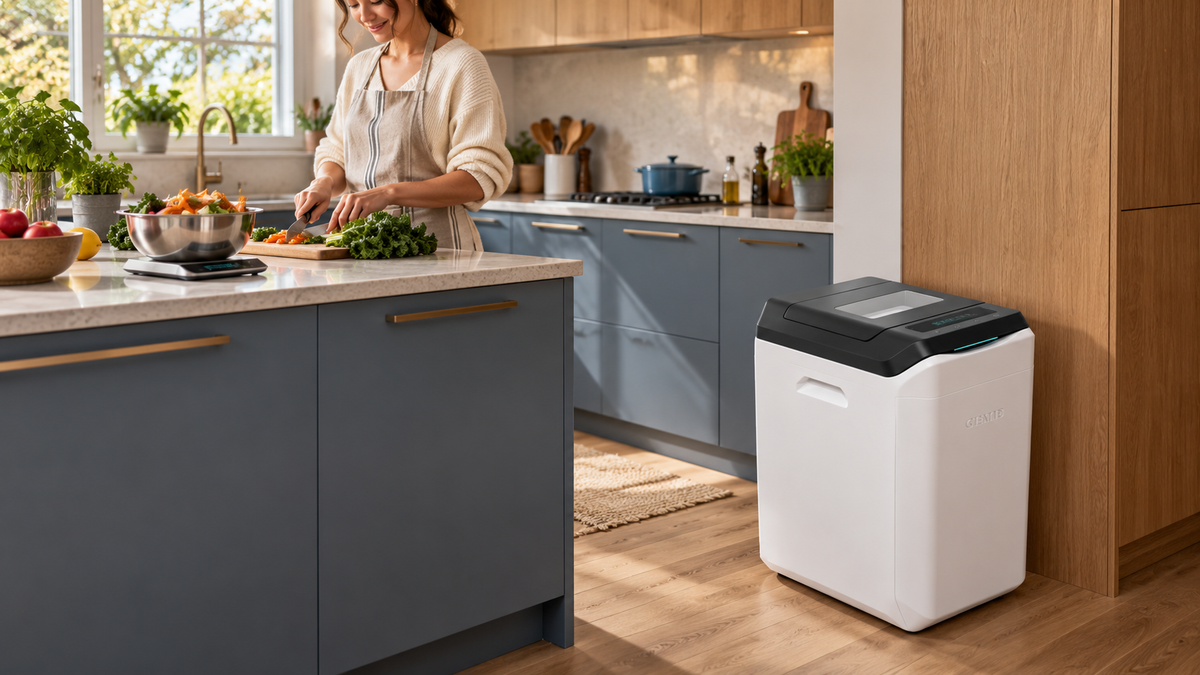
Composter Market · Daily Kitchen Life · GEME Terra 2 & Pro
GEME stands out in the composter market by bringing continuous microbial processing into the kitchen, with practical daily capacity and no scheduled replacement odor filters.
For a household that wants to process suitable food scraps throughout the day and return the resulting Compost Base to soil, GEME offers a compelling combination: a living microbial bed, automated mixing, permanent odor treatment and two models matched to different kitchen loads.
Market forecasts help explain the wider category. Your everyday cooking routine decides which composter earns its place at home.

Quick Answer: Why Choose GEME in a Growing Composter Market?
Choose GEME when you want biological food-scrap processing that fits around meals and has a defined route back to soil.
- Continuous feeding: add suitable scraps progressively while the microbial process continues.
- Useful daily capacity: Terra 2 handles up to 2 kg/day; Pro handles up to 5 kg/day.
- Permanent odor treatment: no scheduled disposable activated-carbon filter replacement.
- Automated mixing: incoming scraps join the existing microbial bed.
- Compost Base for soil blending: screen, return unfinished pieces and follow the application guide.
Start with GEME Terra 2 for lighter household loads. Choose GEME Pro for heavier cooking and larger families. For the wider buying decision, explore our Best Composter guide.
1. What the Composter Market Outlook Shows
Mordor Intelligence's household composters market report provides these public estimates and forecasts:
| Measure | Published Figure | Period |
|---|---|---|
| Global market value | US$265.05 million | 2026 estimate |
| Global market value | US$386.21 million | 2031 forecast |
| Overall annual compound growth | 7.82% | 2026–2031 forecast |
| Electric countertop category growth | 8.55% | 2026–2031 forecast |
| Online channel growth | 10.25% | 2026–2031 forecast |
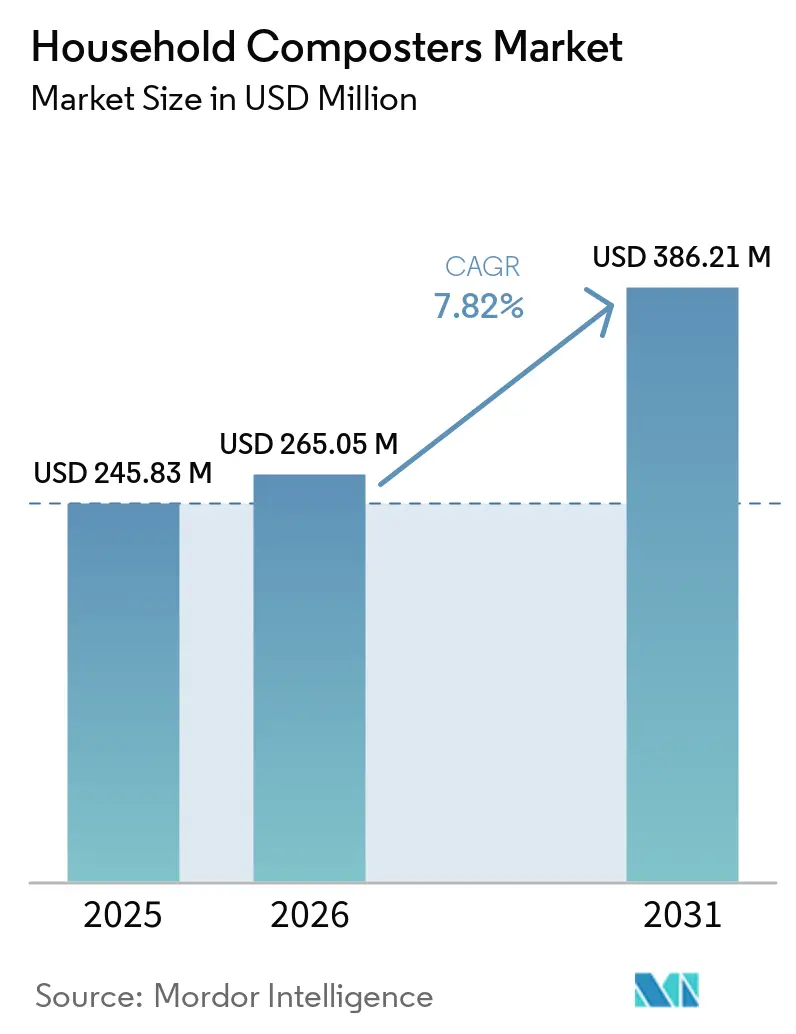
The report covers several categories, including outdoor and worm systems. Forecasts do not represent GEME sales. Terra 2 and Pro are floor-standing appliances.
The public report also discusses Terra 2 and includes GEME among the companies covered, placing it within this wider industry conversation.
For a home buyer, the useful next question is practical: which system can handle your daily scraps, with a routine you want to maintain and an output you can use?
2. Compare the Process Behind the Product
A collection container, a drying appliance and a microbial composter solve different parts of food-waste handling. Looking at their workflow makes the choice clearer.
| Approach | What Happens at Home? | What Happens Next? |
|---|---|---|
| Collection and transport | Scraps wait in a container for collection or delivery. | The receiving facility determines treatment and acceptable materials. |
| Grinding and dehydration | Food scraps are mechanically reduced and dried. | The resulting mixture needs an appropriate downstream handling route. |
| GEME continuous microbial processing | Suitable scraps join a maintained living microbial bed, with airflow and automated mixing. | Harvest Compost Base, screen it and follow the soil-blending workflow. |
The EPA's home-composting guidance explains that grinding-and-dehydrating preprocessing appliances produce a dried food-scrap mixture, rather than compost. That distinction helps you judge an appliance by the job it performs.
GEME gives households biological processing in the appliance itself. For people who want an ongoing kitchen-to-soil routine, that is a meaningful reason to choose it. Explore the process in our real composting and dehydrated scraps guide, or compare specific systems in the Electric Composter Comparison Hub.
3. Five Reasons GEME Stands Out
A Living Process Managed for Kitchen Scraps
GEME maintains a warm, moist, oxygenated environment for Kobold™ microbes. The microbes carry out biological breakdown while the appliance supports airflow and mixing. Terra 2 adds GEMEBrain™ adaptive control to help manage the changing conditions inside its chamber.
The benefit is an active processing environment that remains in place as the household adds suitable food scraps. The maintained microbial bed is central to everyday operation.

See how GEME works for the operating process and its boundaries. Early visible breakdown can occur within hours; finished maturity depends on the material, feeding history and subsequent handling.
Continuous Feeding That Fits Around Meals
Cooking creates scraps at different times: fruit peels at breakfast, vegetable preparation before dinner and suitable leftovers afterward. GEME lets those additions join the same ongoing process.
You can feed progressively without emptying a completed batch before every new addition. Prepare bulky pieces, keep individual additions at 1 kg or less and stay within the model's daily limit. The active bed remains inside for continued processing.
This makes GEME particularly useful when several people cook at different times. Our batch versus continuous feeding guide explains how the daily routines differ.
Permanent Odor Treatment Without Scheduled Carbon Refills
Terra 2 and Pro use permanent odor-treatment architecture without scheduled disposable activated-carbon replacements. That removes a recurring filter purchase and replacement task from normal ownership.
Routine care still matters. Use suitable inputs, manage moisture and keep the air path clear according to the manual. Compare the full ownership picture in our electric composter cost-of-ownership guide.
Floor-Standing Capacity That Keeps the Preparation Counter Available
GEME's floor-standing format gives the processing chamber its own place while preserving the counter for chopping, washing and meal preparation. Choose a level indoor position with the required ventilation and room to open the lid.
For a kitchen that already uses its worktops heavily, this is a practical advantage. Check the appliance's footprint, power-cord route and nearby walking space before installation.
A Clear Compost Base Application Workflow
GEME produces active Compost Base for soil integration. Harvested material can contain newer or slower pieces because feeding is continuous. Screen those pieces out and return suitable unfinished material to the chamber.
The usable screened base has a defined next step: mix approximately 1 part Compost Base with 8 parts plain soil, then follow the guidance for soil capping and the intended planting use.

Follow the GEME Compost Base application guide for the complete screen, return, mix and cap workflow.
4. GEME Terra 2 or GEME Pro: Choose by Kitchen Load
Choose the model around the scraps your kitchen actually generates. Weigh suitable preparation scraps and leftovers across a representative week, including a busy cooking day.
| Selection Point | GEME Terra 2 | GEME Pro |
|---|---|---|
| Typical household fit | 1–3 people; lighter kitchen loads | 4+ people; heavier home cooking |
| Microbial chamber | 14 L | 19 L |
| Daily suitable-food input | Up to 2 kg/day | Up to 5 kg/day |
| Individual addition | 1 kg or less | 1 kg or less |
| Feeding and mixing | Continuous; GEMEBrain™ adaptive control | Continuous; automated mixing |
| Scheduled disposable carbon replacement | None | None |
| Average daily energy reference | Approximately 1.5 kWh/day | Approximately 1.85 kWh/day |
Choose Pro for meaningful extra daily headroom. Its rated daily processing capacity is 2.5 times Terra 2's, giving heavier-cooking households more room for suitable preparation waste and meal cleanup.
Choose Terra 2 when your regular load fits its capacity and you prefer the smaller floor footprint. Both models share the continuous microbial approach and permanent odor-treatment benefit.
Actual energy use varies with input type and environmental humidity. Electricity and routine care remain ownership costs. Use the electricity cost guide to estimate running costs at your own utility rate.

5. A Practical Kitchen-to-Soil Routine
- Prepare suitable scraps. Remove packaging and stickers, cut bulky or fibrous pieces smaller and drain excess liquid.
- Feed around meals. Keep each addition within 1 kg and the day's total within the selected model's capacity.
- Maintain the microbial bed. Follow moisture, fill-level and routine-care guidance so the ongoing process remains well managed.
- Harvest appropriately. Retain the starter bed, screen the output and return suitable unfinished pieces.
- Complete the soil step. Blend screened Compost Base with plain soil and apply it according to the planting guide.
A collection service can remain part of your household's wider organics plan. GEME adds an indoor processing option for suitable daily kitchen scraps and a soil-return route you can manage at home. Garden trimmings and materials outside the appliance's input guidance should follow their appropriate separate route.
Bring Continuous Composting Into Your Kitchen
Choose GEME for a daily routine built around microbial processing, permanent odor treatment and practical household capacity.
Terra 2 serves lighter kitchen loads. Pro gives larger households more daily headroom. Match the model to your cooking, then follow a clear path from suitable scraps to soil blending.
6. Frequently Asked Questions
What should I look for in the composter market?
Compare processing method, daily input capacity, feeding routine, maintenance costs and the output's next step. Match those points to your cooking habits, available space and intended soil use.
Why choose GEME over a drying-and-grinding food recycler?
Choose GEME when you want continuous biological processing in a maintained microbial bed and Compost Base for soil blending. Drying-and-grinding systems perform a different preprocessing task and require their own downstream material-handling route.
Does GEME require recurring odor-filter replacements?
Neither Terra 2 nor Pro requires scheduled disposable activated-carbon odor-filter replacement. Electricity, routine care and any optional support products or future repairs remain part of ownership.
Should I choose GEME Terra 2 or GEME Pro?
Choose Terra 2 for lighter household loads within its up to 2 kg/day capacity. Choose Pro for heavier cooking and up to 5 kg/day. Keep individual additions at 1 kg or less with either model.
Does visible breakdown in 6–8 hours mean finished compost?
No. Early breakdown and microbial activity do not establish finished maturity for every material. GEME's continuous chamber contains material of different ages. Screen harvested Compost Base, return unfinished pieces and follow the soil-blending or further-curing guidance for the intended use.
7. Sources and Product Information
- Mordor Intelligence — Household Composters Market: public market estimates and forecasts; chart attribution.
- U.S. EPA — Composting at Home: distinction between preprocessing appliances and composting.
- GEME Terra 2 and GEME Pro: current specifications, configurations and regional availability.
- How GEME Works: continuous biological process and timing definitions.
- GEME Compost Base Application Guide: screening, soil blending and application.


Laisser un commentaire
Tous les commentaires sont modérés avant d'être publiés.
Ce site est protégé par hCaptcha, et la Politique de confidentialité et les Conditions de service de hCaptcha s’appliquent.