


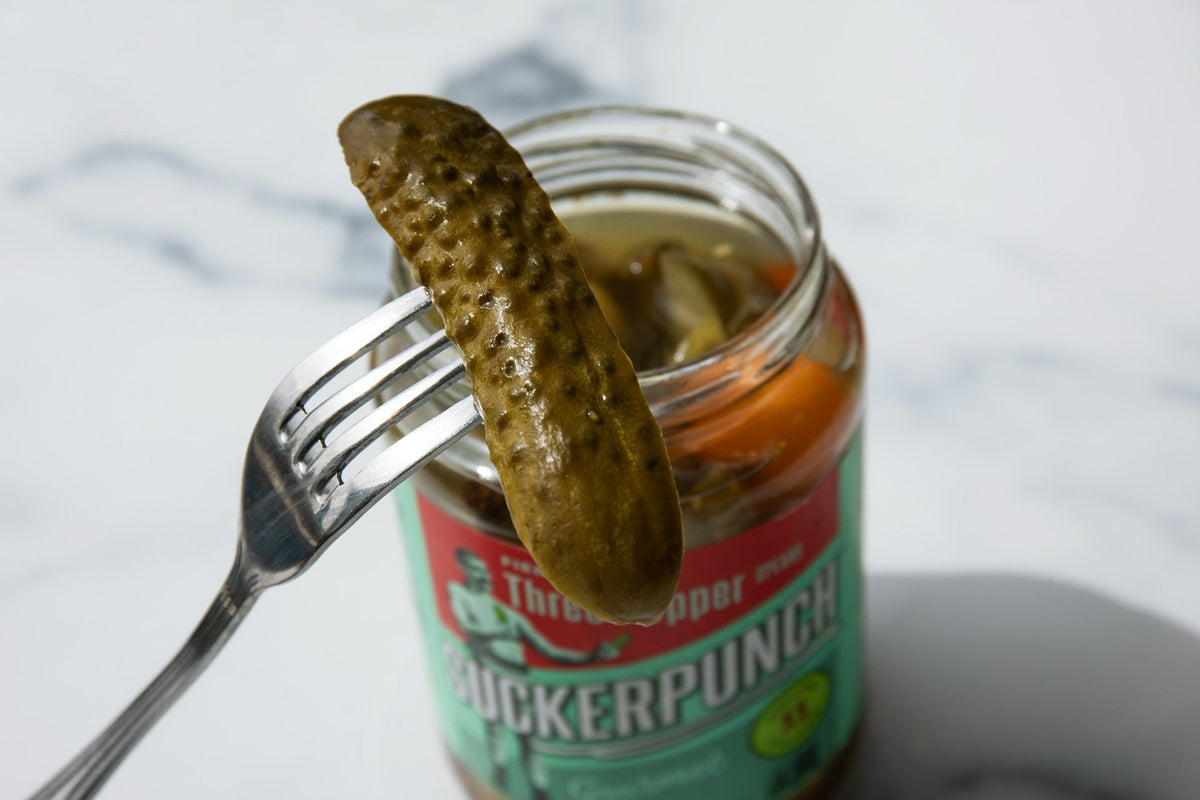
Food Storage, Food Safety & Waste Reduction Guide
Can pickles go bad? Yes, pickles can go bad. Acid, salt, fermentation, heat processing, and an intact jar seal can make pickles last far longer than fresh cucumbers, but none of those controls makes them permanent.
A printed date is only one part of the decision. The type of pickle, whether the jar has been opened, refrigeration history, brine coverage, seal condition, contamination, mold, gas, odor, and texture all matter.
Simple rule: read the label, refrigerate after opening when instructed, keep the pickles submerged, and never taste a suspicious jar to test it.
Quick Decision
Date passed, but jar intact?
Review the date type, storage history, seal, brine, odor, texture, and product instructions.
Bulging, leaking, moldy, slimy, or spurting?
Do not taste it. Follow safe disposal guidance.
Quick Answer: Do Pickles Go Bad?
Pickles can spoil even though their acidic and salty environment slows many microorganisms. Commercial shelf-stable pickles, refrigerated fresh pickles, fermented pickles, and home-canned pickles should not all be given the same storage rule.
For an unopened commercial jar, a best-by date usually describes the manufacturer’s expected quality window rather than a precise moment when the pickles become unsafe. After opening, follow the label, refrigerate promptly when required, use clean utensils, and keep the pickles covered by brine.
Build this decision into the Food Storage & Waste Reduction Hub. For recalls, unsafe contamination, suspicious jars, and disposal boundaries, continue to the Food Safety Hub.

Where This Article Fits
Table of Contents
- Why Pickles Last Longer Than Fresh Cucumbers
- Do Pickles Expire?
- Pickle Storage Guide
- Can You Eat Expired Pickles?
- How to Tell If Pickles Are Bad
- Is Cloudy Pickle Brine Bad?
- Different Pickle Types
- How to Store Pickles Correctly
- How to Prevent Pickle Waste
- Can You Compost Bad Pickles?
- Frequently Asked Questions
- Summary
- Academic and Authoritative Sources
- Related Articles
Why Do Pickles Last Longer Than Fresh Cucumbers?
Fresh cucumbers contain a large amount of water and normally spoil relatively quickly. Pickling changes the environment around the cucumber through vinegar acidification, salt, fermentation, heat processing, or a combination of these controls.
The U.S. Food and Drug Administration defines an acidified food as a low-acid food to which acid has been added and which reaches a finished equilibrium pH of 4.6 or below. That acidic environment limits the growth of many microorganisms.
Fermented pickles become acidic as microorganisms convert carbohydrates into organic acids. Commercial shelf-stable jars may also be heat processed and hermetically sealed.
These barriers explain why pickles can last much longer than fresh cucumbers. They do not stop every mold, yeast, enzyme, acid-tolerant microorganism, or contamination event.
Long shelf life is not infinite shelf life.
Acidity, processing, refrigeration, hygiene, brine coverage, and seal integrity must continue working together.
Read the FDA acidified-food definition and regulatory guidance.
Do Pickles Expire?
Pickles may carry a “Best By,” “Best If Used By,” “Sell By,” or “Use By” date. These phrases do not all mean that the product becomes unsafe when the date changes.
Best By or Best If Used By
USDA explains that a “Best if Used By/Before” date identifies the expected period of best flavor or quality. It is not, by itself, a purchase deadline or a safety date.
Use By
A use-by date deserves closer attention, especially on refrigerated fresh pickles or products that must remain cold before opening. Follow the manufacturer’s storage and use instructions.
Home-Canned Date
Home-canned jars should be labeled with their processing date. Their safety depends on using a current research-tested recipe, the specified vinegar acidity, correct processing, and a sound seal—not merely on writing a date on the lid.
Compare this distinction with Can Popcorn Expire? for a shelf-stable pantry example and Do Eggs Expire? for a refrigerated-food example.
Authoritative reference: USDA FSIS Food Product Dating.
How Long Do Pickles Last?
There is no single storage number that safely applies to every jar. Formulation, heat processing, fermentation, refrigeration, preservatives, package instructions, and handling after opening all affect usable life.
| Pickle Type | General Guidance | Main Decision Rule |
|---|---|---|
| Commercial shelf-stable, unopened | USDA FoodKeeper’s broader high-acid canned-food category, which includes pickles, lists about 12–18 months for peak quality when unopened. | Store in a cool, clean, dry place and reject damaged, leaking, unsealed, or bulging jars. |
| Commercial pickles, opened | Refrigerate according to the label. The practical period varies by formulation and manufacturer. | Keep cold, closed, clean, and submerged; record the opening date. |
| Refrigerated fresh or quick pickles | These may have a substantially shorter refrigerated life than shelf-stable pickles. | Keep refrigerated before and after opening and follow the use-by instructions. |
| Fermented pickles | Storage depends on fermentation completion, acidity, salt, temperature, and whether the product was canned or refrigerated. | Follow the tested recipe and watch for mold, slime, pH failure, or abnormal odor. |
| Home-canned pickles | Use a research-tested recipe and rotate older jars first; quality is generally best within the first year. | Inspect the seal and jar before opening and never taste a suspicious product. |
FoodKeeper states that its storage periods are useful guidelines rather than hard-and-fast rules. Product condition and storage history still matter. Review the USDA FoodKeeper.
Can You Eat Expired Pickles?
A commercially processed, unopened jar may sometimes remain acceptable after a best-by date when it was stored correctly and remains intact. That does not mean every old jar should be eaten.
Before considering an unopened jar, confirm that the lid remains properly sealed, the glass is not cracked, the jar is not leaking, and there is no bulging, corrosion, spurting, mold, abnormal pressure, or unnatural odor.
Once a jar has been opened, the printed date becomes less useful than the actual handling history. Repeated warming, dirty utensils, exposed pickles above the brine, or months of uncertain refrigerator storage can shorten quality and safety margins.
Never Taste a Suspicious Jar
Do not taste food from a bulging, leaking, unsealed, moldy, spurting, or otherwise suspicious jar. Taste and smell cannot reliably exclude every food-safety hazard.
For the broader distinction between ordinary spoilage, unsafe contamination, and recalls, use the Food Safety Hub.
How to Tell If Pickles Are Bad
Loss of crunch, fading color, or a less intense flavor may be quality decline rather than proof of a dangerous product. Stronger warning signs involve seal failure, mold growth, gas, slime, leakage, or abnormal odor.
Discard Pickles When You Find:
- A bulging, swollen, loose, or unsealed lid.
- A cracked, leaking, or badly damaged jar.
- Liquid spurting, foaming, or releasing abnormal pressure when opened.
- Unexpected persistent gas or fizzing in a product that should not be actively fermenting.
- White, blue, green, black, or fuzzy mold.
- Slippery, slimy, ropy, or unusually mushy pickles.
- A rotten, fecal, cheesy, strongly yeasty, or otherwise unnatural odor.
- Severe unexplained discoloration together with another spoilage sign.
Do not remove visible mold and eat the remaining pickles. Mold growth or obvious yeast spoilage means the contents should be discarded.
NCHFP identifies unnatural odors, spurting liquid, and cotton-like mold growth as important warnings for spoiled canned food. Review its spoiled canned-food guidance.
Is Cloudy Pickle Brine Bad?
Cloudiness has to be interpreted in the context of the pickle type, recipe, and other warning signs.
Fermented Pickles
Some cloudiness and sediment can be normal during or after lactic-acid fermentation. Microbial cells, spices, and fermentation products may remain suspended in the brine.
Vinegar or Quick-Process Pickles
Cloudiness may come from spices, minerals, starch, or recipe ingredients. Unexpected cloudiness can also accompany yeast growth or spoilage, especially when combined with gas, slime, mold, leakage, or an abnormal smell.
Cloudy brine alone is not a complete diagnosis.
Cloudiness plus mold, slime, gas, leakage, a bulging lid, or an abnormal odor is a discard decision.
Commercial, Refrigerated, Fermented, and Home-Canned Pickles Are Different
Commercial Shelf-Stable Pickles
These jars are formulated, sealed, and processed to remain shelf-stable before opening. Store them in a cool, clean, dry place and follow the label after opening.
Refrigerated Fresh Pickles
These products may not receive the same heat process as shelf-stable jars. They should remain refrigerated from purchase and may have a shorter use-by window.
Fermented Pickles
Fermentation depends on salt concentration, temperature, time, submersion, and acid production. Some sediment and sour aroma may be normal, but mold, slime, rising pH, or offensive odor can indicate secondary spoilage.
Peer-reviewed studies of fermented cucumber spoilage describe cases involving rising brine pH and unpleasant manure-like or cheese-like aromas. This is different from the expected clean sour aroma of a controlled fermentation.
Home-Canned Pickles
Home-canned pickles are only as reliable as the recipe and process used. Use a current, tested preservation recipe, vinegar with the required acidity, the correct processing time, and a sound seal.
How to Store Pickles Correctly
-
Identify the product type.
Determine whether the jar is shelf-stable, refrigerated, fermented, or home-canned. -
Read the label before storing it.
Some pickles must remain refrigerated even before opening. -
Refrigerate opened jars when instructed.
Keep the refrigerator at 40°F / 4°C or below. -
Keep the lid tightly closed.
Reduce air exposure, spills, and refrigerator contamination. -
Keep the pickles under the brine.
Exposed pieces are more vulnerable to mold and quality loss. -
Use clean utensils.
Do not reach into the jar with fingers or a utensil that has touched other food. -
Do not return removed food to the jar.
Used pickles, garnishes, or contaminated brine should not go back into the original container. -
Write the opening date on the lid.
This helps prevent an opened jar from being forgotten for months. -
Inspect before serving.
Check the surface, brine, lid, smell, and texture rather than relying only on the printed date.
Use the same label-and-rotation practice for other refrigerated foods. Related guides include How Long Do Apples Last in the Fridge? and How Long Can Cooked Chicken Stay in the Fridge?
Return to the Food Storage & Waste Reduction Hub for the complete household system.
Prevent Pickle Waste Before the Jar Goes Bad
Pickles often become food waste because an opened jar is forgotten at the back of the refrigerator, not because the product had an unusually short usable life.
↓
Refrigerate as Directed
↓
Write the Opening Date
↓
Keep Pickles Under Brine
↓
Plan Meals Around the Open Jar
↓
Compost Ordinary Spoilage Only When It Is No Longer Edible
Add opened pickles to sandwiches, salads, sauces, relishes, burgers, grain bowls, and meal-prep plans before their texture and flavor decline.
For the wider prevention hierarchy—inventory, Eat First zones, realistic buying, freezing, leftover planning, and composting only unavoidable scraps, read How to Reduce Food Waste at Home.
Can You Compost Bad Pickles?
Ordinary spoiled pickle solids can be processed as food waste in GEME when the jar is not recalled, bulging, leaking, spurting, or suspected of a hazardous preservation failure.
Pickles are saltier, more acidic, and wetter than ordinary vegetable scraps. The correct GEME pathway is to drain the brine separately and add only the solid pickle pieces in moderation.
How to Process Ordinary Spoiled Pickles With GEME
- Confirm that the jar involves ordinary spoilage rather than an active recall or suspicious sealed-food hazard.
- Remove the glass jar, metal lid, plastic seal, labels, and other packaging.
- Drain the pickle brine separately.
- Do not pour pickle juice or brine into the GEME chamber.
- Add only the solid pickle pieces.
- Add a modest amount rather than emptying a large jar into the system at once.
- Mix the pickle pieces with varied ordinary kitchen scraps.
- Avoid repeated salty, acidic, or liquid-heavy loads.
See GEME Terra 2 in Action
Watch on Instagram →
The same “if it pours, drain it first” rule applies to soups, sauces, fryer oil, and brine. Review the Electric Composter Salt & Oil Boundaries.
For the broader input framework, continue to What Can You Put in an Electric Composter?
Do Not Open a Dangerous-Looking Jar for Composting
If a home-canned or sealed jar is bulging, leaking, spurting, unsealed, recalled, or otherwise suspicious, do not open it merely to place the contents in GEME. Follow the official recall notice or spoiled-canned-food disposal guidance.
Ordinary moldy produce and recalled food do not follow the same route. Compare Can You Compost Moldy Grapes? with the recall and contamination boundaries in the Food Safety Hub.
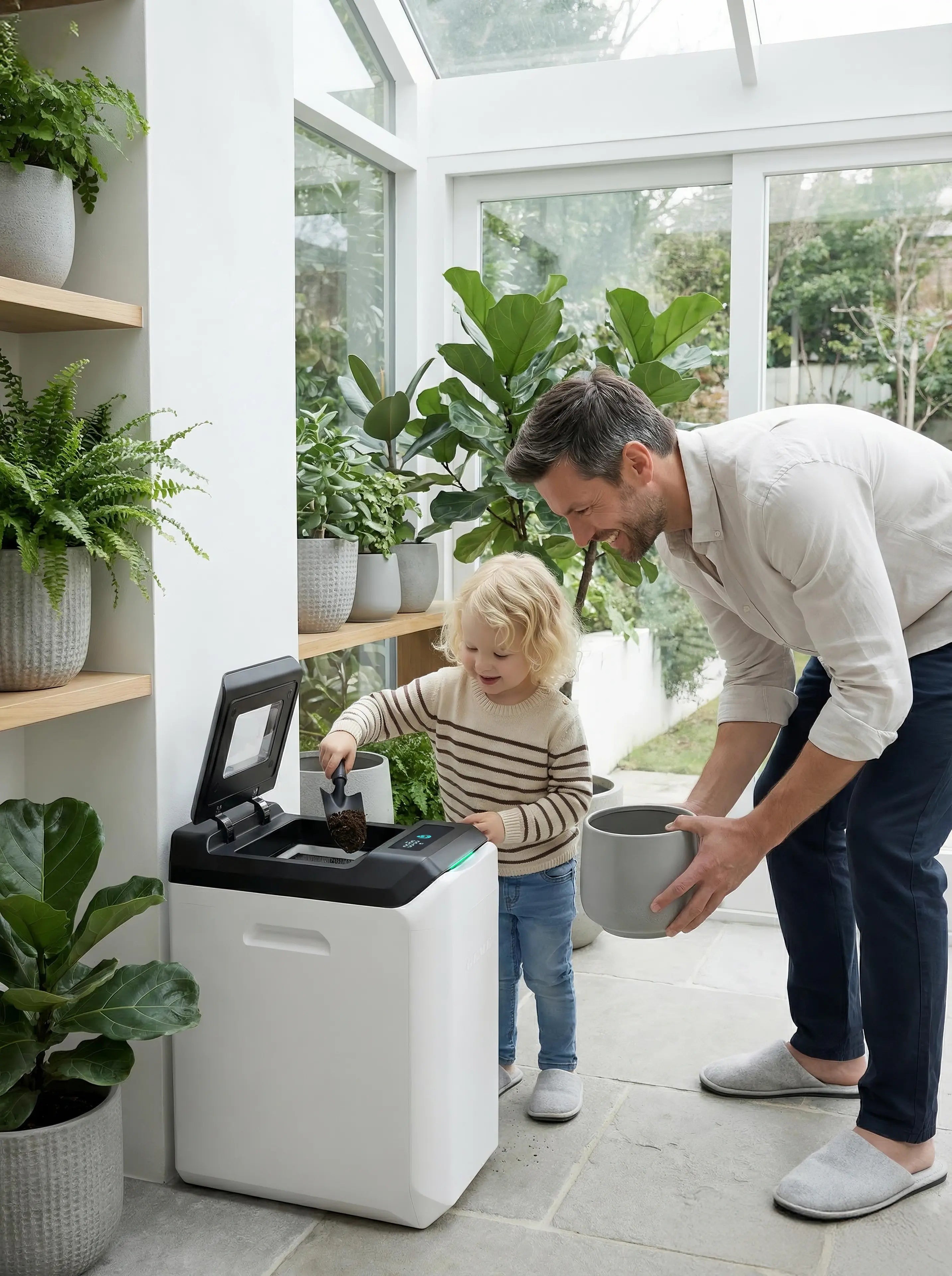
Drain salty brine and add suitable solids in moderation.
Give Ordinary Spoiled Pickles a Better Path
GEME Terra II supports continuous microbial composting for appropriate household food waste. Drain free pickle brine, remove packaging, add the solid pieces in moderation, and balance salty inputs with ordinary scraps.
Continuous feeding. No routine odor-filter replacement. Compost base for soil blending.
Frequently Asked Questions
Do pickles go bad?
Yes. Pickles last longer than fresh cucumbers because of acidity, salt, fermentation, processing, and sealing, but they can still develop mold, yeast, slime, gas, abnormal odor, or seal failure.
Can pickles go bad in the refrigerator?
Yes. Refrigeration slows deterioration but does not stop it indefinitely. Contamination, air exposure, exposed pieces above the brine, weak closure, and extended storage can still cause spoilage.
Do pickles expire?
Pickles carry date labels, but a best-by date normally identifies expected quality rather than an automatic safety cutoff. Storage conditions, jar integrity, pickle type, and spoilage signs must also be considered.
Can pickles expire before the printed date?
Yes. A failed seal, heat exposure, contamination, poor refrigeration, incorrect home processing, or pickles left above the brine can cause spoilage before the printed date.
Can you eat expired pickles?
A commercial unopened jar may sometimes remain acceptable after a best-by date if it was stored properly and remains fully intact, but there is no blanket guarantee. Never eat pickles from a bulging, leaking, moldy, unsealed, spurting, slimy, or foul-smelling jar.
How long do opened pickles last in the refrigerator?
There is no universal period for every product. Follow the manufacturer’s label, write the opening date on the lid, keep the jar refrigerated and clean, and discard it when spoilage signs develop or its storage history is uncertain.
Are soft pickles spoiled?
Gradual loss of crunch may be a quality issue. Pickles that are distinctly slippery, slimy, ropy, moldy, or accompanied by abnormal gas or odor should be discarded.
Is cloudy pickle juice safe?
Cloudiness can be normal in fermented pickles, but unexpected cloudiness in vinegar pickles can accompany yeast or spoilage. Discard the jar when cloudiness appears with slime, gas, mold, leakage, a bulging lid, or a bad smell.
Can mold be removed from a jar of pickles?
No. Do not scoop off visible mold and eat the remaining pickles. Discard the contents when mold growth is present.
Can spoiled pickles go into GEME?
Ordinary spoiled pickle solids can be added in modest amounts after the brine and packaging are removed. Do not pour pickle juice into GEME, and do not open a recalled, bulging, leaking, spurting, or otherwise suspicious sealed jar for composting.
Summary
- Do pickles go bad? Yes.
- Why do they last? Acid, salt, fermentation, processing, and sealing slow microbial growth.
- Do pickles expire? They carry quality or use-by dates, but the date alone does not determine safety.
- Unopened jars: store cool and dry and reject damaged, leaking, unsealed, or bulging containers.
- Opened jars: refrigerate according to the label, use clean utensils, and keep the pickles submerged.
- Main warning signs: bulging, leakage, broken seals, mold, slime, gas, spurting, or abnormal odor.
- Cloudy brine: may be normal in fermentation but must be judged with the other signs.
- Never taste a suspicious jar.
- Reduce waste: date the opened jar and plan meals around it.
- GEME pathway: drain ordinary spoiled pickles and add only the solids in moderation.
- Hazardous or recalled jars: follow official disposal instructions instead of opening them for composting.
Academic and Authoritative Sources
- U.S. FDA — Acidified and Low-Acid Canned Foods Guidance
- USDA / FoodSafety.gov — FoodKeeper Storage Guidance
- USDA FSIS — Food Product Dating
- National Center for Home Food Preservation — Identifying and Handling Spoiled Canned Food
- National Center for Home Food Preservation — Problems With Pickled Foods
- National Center for Home Food Preservation — Fermented Dill Pickles
- Medina et al. — Bacterial Ecology of Fermented Cucumber Rising-pH Spoilage
- Franco et al. — Characteristics of Spoilage-Associated Secondary Cucumber Fermentation
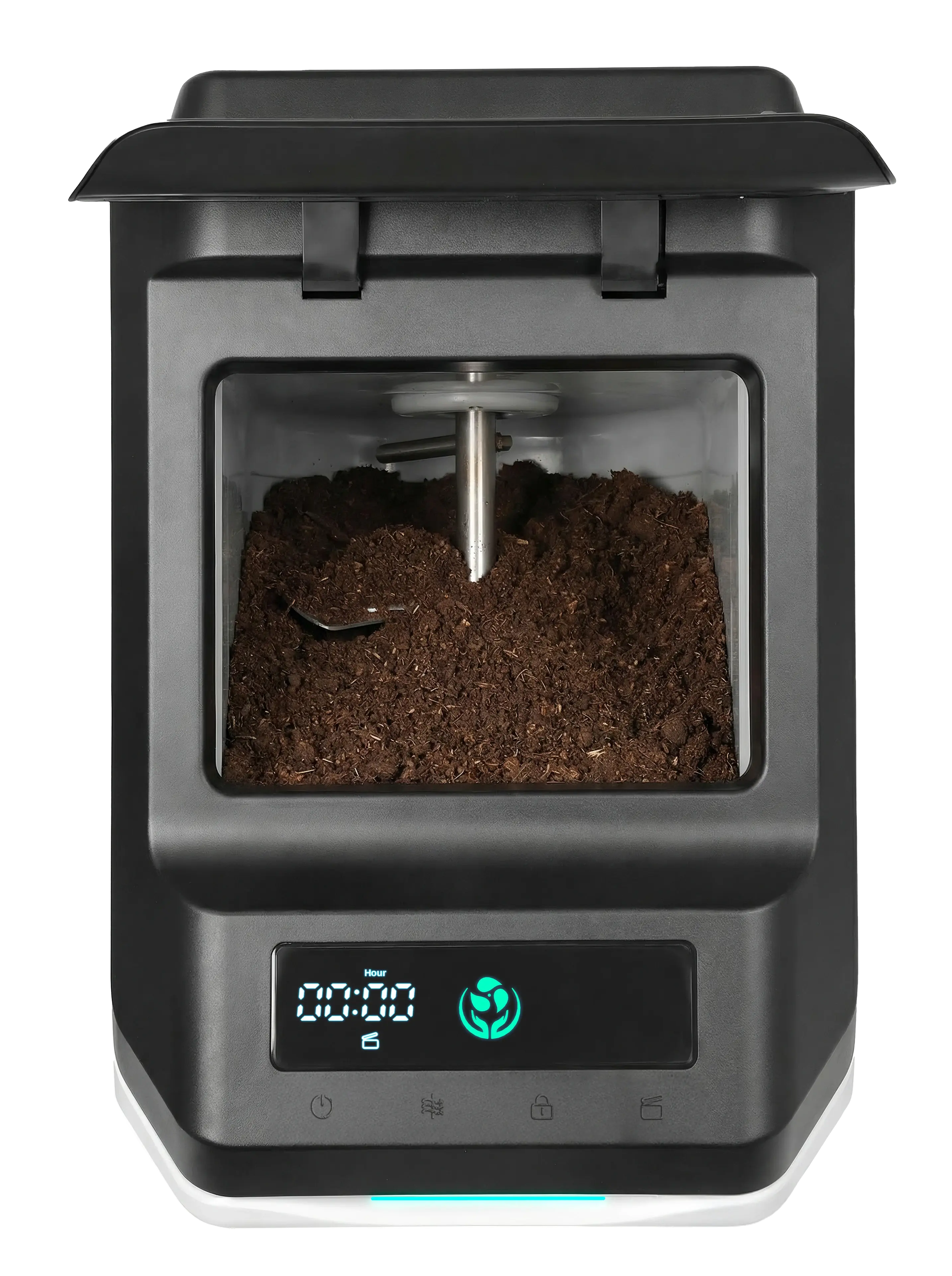
Store well first. Compost unavoidable spoilage responsibly.
Turn Appropriate Spoiled Food Into Compost Base
GEME Terra II and GEME Pro support continuous microbial composting for suitable household food waste. Drain free pickle brine, remove packaging, and add ordinary spoiled solids in moderation.
Prevent waste first. Drain salty liquids. Compost suitable solids.


Laisser un commentaire
Tous les commentaires sont modérés avant d'être publiés.
Ce site est protégé par hCaptcha, et la Politique de confidentialité et les Conditions de service de hCaptcha s’appliquent.