


Composting & Sustainable Kitchen Guide
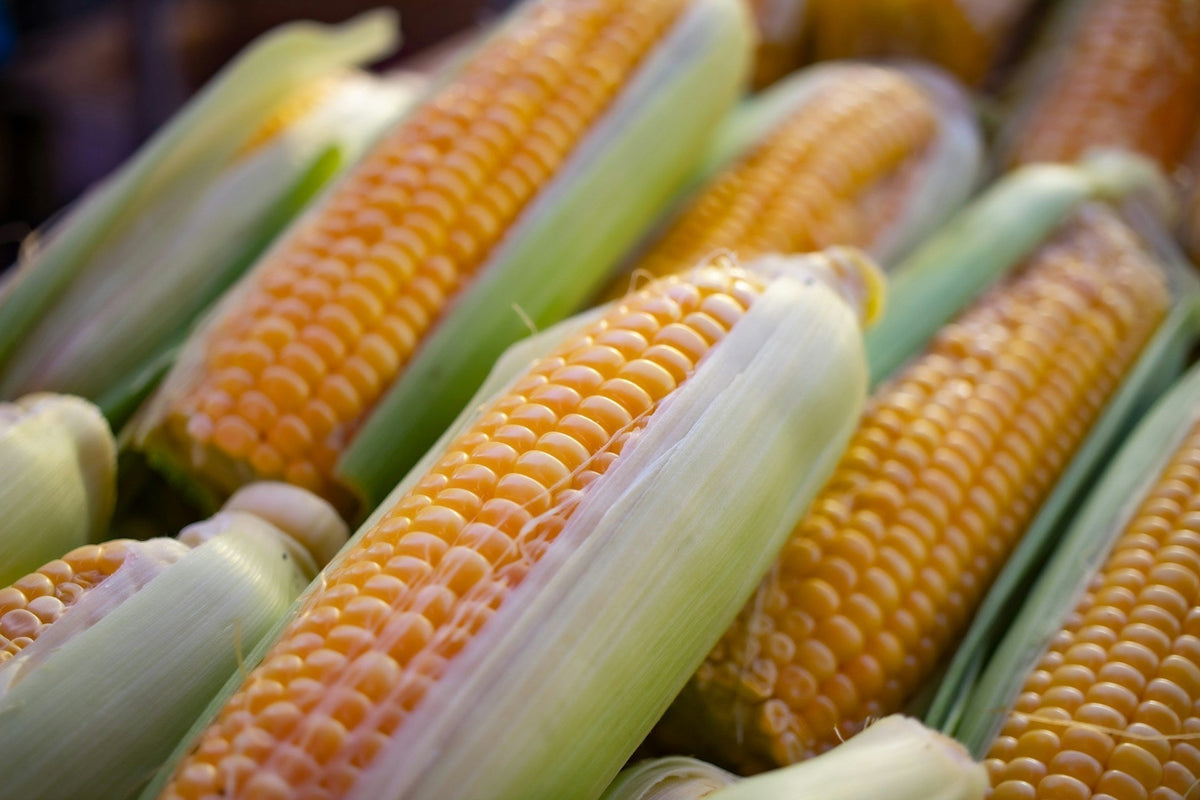
Can You Compost Corn Cobs? Yes, corn cobs can be composted. They are organic plant material, but they do not behave like soft fruit, cooked rice or vegetable peelings. A corn cob has a dense, woody and highly fibrous structure, so it naturally takes much longer to break down.
Seeing pieces of corn cob remain in a compost pile or GEME chamber is not evidence that composting has failed. Wood, hard stalks, nut shells and corn cobs all require more time. Cutting the cob into smaller pieces increases the surface area exposed to moisture and microorganisms and can help it decompose somewhat faster.
Simple rule: compost the cob, cut it smaller when practical, and give it the time that woody material naturally requires.

Dense plant material needs more surface area and more time.
Can You Compost Corn Cobs?
Yes. Corn cobs can be composted in a backyard compost pile, an appropriate compost bin, a municipal food-waste program that accepts them, or a managed microbial composter such as GEME.
The important expectation is that corn cobs decompose slowly. Their physical structure is much closer to wood or a thick plant stalk than to soft kitchen scraps. Whole cobs may remain visible long after surrounding food scraps have broken down.
To help the process, cut or split the cob into smaller pieces when it is safe and practical to do so. Smaller pieces expose more surface area to moisture, oxygen and microorganisms. This may accelerate decomposition, but it will not make corn cobs behave like soft food.
For the complete home-composting framework, visit the Composting Hub. To place composting after food-use and waste-prevention decisions, visit the Sustainable Kitchen Hub.
Where This Guide Fits in the GEME Knowledge System
Table of Contents
- Why Corn Cobs Decompose Slowly
- Can You Put Corn Cobs in a Compost Bin?
- How to Prepare Corn Cobs for Composting
- Whole vs Cut Corn Cobs
- Can You Put Corn Cobs in GEME?
- Corn Husks, Silk and Kernels
- Normal Slow Breakdown vs a Compost Problem
- The Sustainable Kitchen Order
- What to Do With Unfinished Pieces
- Frequently Asked Questions
- Summary
- Sources
- Related Articles
Why Do Corn Cobs Take So Long to Compost?
Corn cobs are built to support rows of kernels while the plant grows. Even after the kernels have been removed, the cob remains a dense framework of tough plant fibres.
Microorganisms can decompose this material, but they need access to it. A whole cob has relatively little exposed surface compared with its total mass. Water and microorganisms must gradually move through a thick, porous but resistant structure.
This is similar to what happens with untreated wood chips, twigs, nut shells and dense stalks. They are compostable, but their physical structure makes decomposition slower than it is for soft, wet or finely divided food.
Slow does not mean failed.
A corn cob remaining visible while softer scraps disappear is a normal difference in material structure.
This is why a trustworthy composting claim should distinguish visible food-waste reduction from the time required for dense plant material. Read why particle size, oxygen, moisture and time matter more than grinding alone.
Can You Put Corn Cobs in a Compost Bin?
Yes. Corn cobs can go into a backyard compost bin or compost pile when they are free from plastic, foil, stickers and other packaging.
In a traditional compost system, corn cobs can contribute structure and carbon-rich plant material. Their firmness may help preserve small air spaces before they soften, but whole cobs also take much longer to disappear.
Best Practice for an Outdoor Compost Bin
- Remove remaining foil, plastic wrap, skewers, elastic bands or serving labels.
- Cut, split or break cobs into smaller pieces when safely possible.
- Mix them through the pile rather than creating a solid layer of whole cobs.
- Combine them with varied food scraps and moist green materials.
- Maintain enough moisture for microbial activity without waterlogging the pile.
- Turn or aerate the pile according to your composting method.
- Screen persistent pieces from finished compost and return them to the active pile.
The broader balance of greens, browns, moisture and oxygen is explained in the complete Composting Hub.
How to Prepare Corn Cobs for Composting
The main preparation step is size reduction. Cutting a corn cob creates more exposed ends and smaller surfaces for water and microorganisms to reach.
-
Remove edible kernels first.
Eat, refrigerate or freeze usable corn rather than composting edible food. -
Remove non-organic materials.
Take off foil, plastic wrap, skewers, stickers or serving accessories. -
Cut the cob into smaller sections.
Use a stable cutting surface and an appropriate kitchen tool. Do not force an unsuitable knife through a hard, dry cob. -
Split pieces further when practical.
More exposed surface can improve microbial contact. -
Mix with varied scraps.
Avoid filling a small system with a large, dense load of corn cobs at once. -
Allow extra time.
Cutting can help, but it does not remove the natural resistance of woody plant fibres.
Safety Comes Before Smaller Pieces
A dry corn cob can be surprisingly hard. Cut it only with a stable surface and a suitable tool. It is better to compost a larger piece slowly than to risk injury while trying to make it extremely small.
Whole Corn Cobs vs Cut Corn Cobs
| Condition | Microbial Access | Expected Behaviour | Best Use |
|---|---|---|---|
| Whole cob | Lowest exposed surface relative to mass. | Very slow; may remain recognizable through several harvests. | Large outdoor piles with plenty of time. |
| Short sections | More exposed ends and easier moisture access. | Still slow, but generally easier to mix and process. | Home compost bins and managed composters. |
| Split or chopped pieces | Highest practical surface area. | Can soften and fragment sooner, but still needs patience. | Faster integration where safe preparation is possible. |
Can You Put Corn Cobs in a GEME Composter?
Corn cobs can be added to GEME as suitable organic household material, but they should be treated as a slow, fibrous boundary input rather than an ordinary soft food scrap.
Cut the cob into smaller pieces when safely practical and add it as part of a varied kitchen-waste mix. Do not expect a whole cob to disappear on the same timeline as fruit, cooked vegetables, rice or other soft leftovers.
GEME supports a warm, moist and oxygen-managed microbial environment, but it does not erase the natural structure of wood-like material. A corn-cob piece may remain in the chamber through multiple feeding and harvest periods.
GEME Corn-Cob Rules
- Cut whole cobs into shorter pieces when possible.
- Add a modest amount rather than a chamber full of cobs.
- Mix with ordinary household food scraps.
- Do not add plastic, foil, skewers or packaging.
- Remove excessive butter, pooled oil or liquid sauce before loading.
- Expect woody pieces to remain longer than soft scraps.
- Screen unfinished pieces from harvested compost base.
- Return suitable pieces to the chamber for continued decomposition.
See GEME Terra 2 in Action
Watch on Instagram →
The screen-and-return practice is the same principle used for other slow materials. Read why routine harvesting should preserve the living compost base.
Corn covered in heavy butter, oil or sauce should also follow the salt, oil and free-liquid boundaries.

Soft scraps break down sooner. Woody pieces need longer.
Meet GEME Terra II
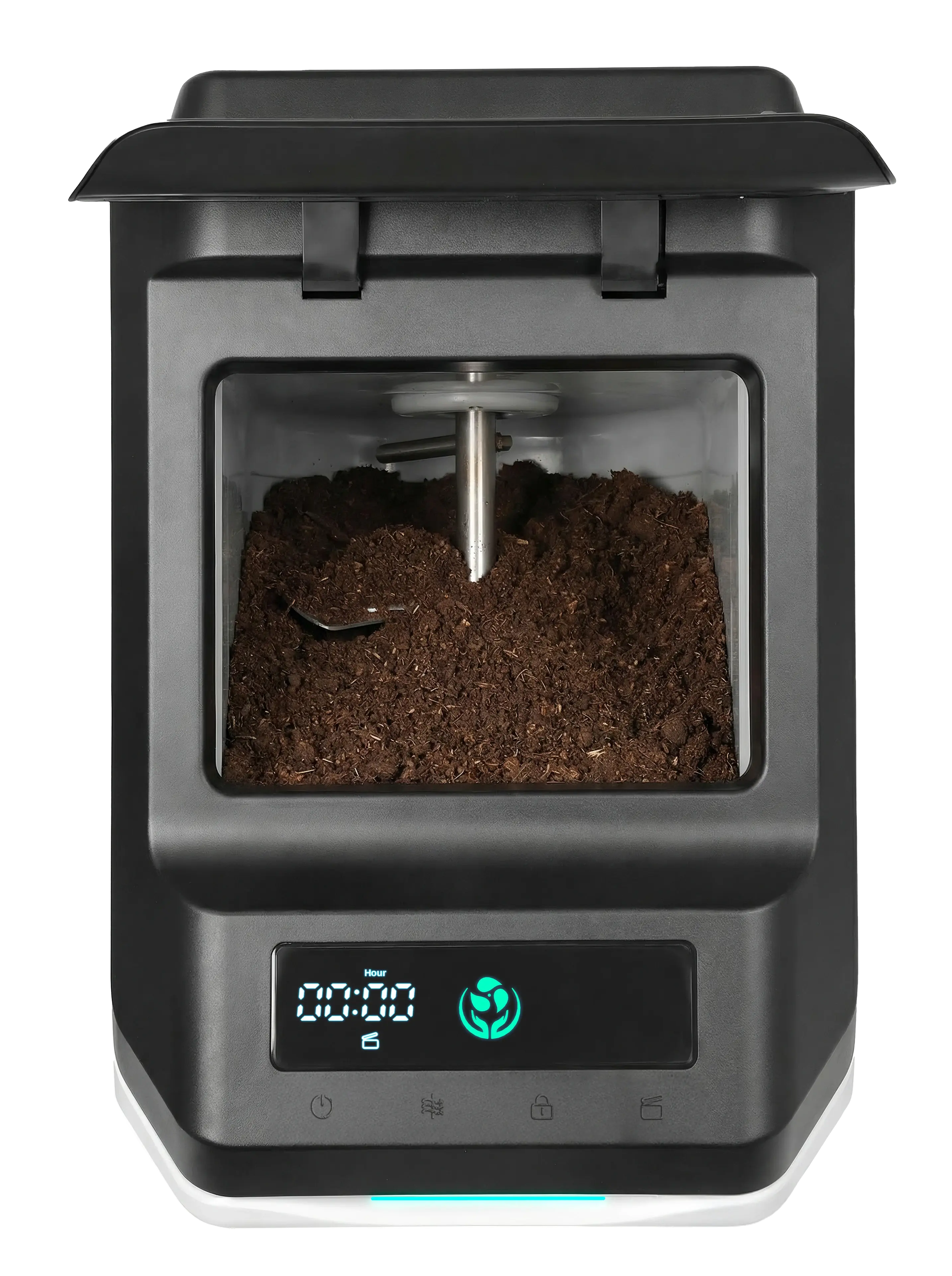
GEME Terra II supports continuous microbial composting for appropriate household food scraps. Cut dense fibrous materials smaller, respect natural decomposition timelines, and return unfinished pieces for more processing.
Continuous feeding. No routine odor-filter replacement. Compost base for soil blending.
Can You Compost Corn Husks, Corn Silk and Leftover Kernels?
Corn Husks
Corn husks are compostable. Fresh husks contain more moisture, while dried husks behave more like carbon-rich plant material. Because they are long and fibrous, cut them into shorter strips before placing them in a small compost bin or mechanical mixing chamber.
Corn Silk
Corn silk is also compostable, but long strands can clump or wrap around other materials. Gather and cut the strands shorter before adding them to GEME.
Leftover Corn Kernels
Plain leftover kernels are ordinary food scraps and generally break down much more readily than the cob. Edible leftovers should still be refrigerated, frozen or reused before they become waste. Composting is the pathway for what can no longer be reasonably eaten.
Normal Slow Breakdown vs a Composting Problem
| Observation | Likely Meaning | Recommended Action |
|---|---|---|
| Cob remains firm while soft scraps disappear. | Normal material difference. | Leave it longer, cut it smaller or return it after screening. |
| Cob begins to darken, soften or fragment. | Decomposition is progressing. | Continue normal composting. |
| Entire compost mass is dry and inactive. | Moisture may be too low. | Review the method’s moisture guidance. |
| Material is muddy, compacted or strongly sour-smelling. | Oxygen transfer may be restricted. | Reduce wet input and restore structure or airflow. |
| A few woody pieces remain in otherwise mature compost. | Normal screening condition. | Screen and return them to the active system. |
For a practical reference on moisture and texture, read The Wet Standard.
The Sustainable Kitchen Order: Eat the Corn, Compost the Cob
↓
Cook and Eat the Kernels
↓
Refrigerate or Freeze Leftovers
↓
Repurpose Usable Corn
↓
Compost the Unavoidable Cob and Husks
Composting is a good destination for an inedible corn cob, but it should not become a reason to discard edible kernels. Food production, refrigeration, transport and cooking have already used resources before the cob reaches the compost system.
Use the Sustainable Kitchen Hub to connect food storage, leftover use, freezing, waste prevention and composting into one household routine.
What Should You Do With Corn-Cob Pieces in Finished Compost?
If recognizable corn-cob pieces remain when you harvest compost, screen them out. Do not treat a large, unfinished cob piece as plant-ready compost simply because the surrounding material looks dark.
- Screen or hand-sort large cob pieces from the compost base.
- Return suitable unfinished pieces to the active compost pile or GEME chamber.
- Use only the screened compost base for soil blending.
- For GEME output, mix approximately 1 part compost base with 8 parts plain soil.
- Use a plain-soil cap around sensitive roots and observe plant response.
The full soil-use workflow is available in the Advanced GEME Compost Application Guide.
Frequently Asked Questions
Can you compost corn cobs?
Yes. Corn cobs are untreated organic plant material and can be composted. Their dense, woody structure means they naturally take much longer to decompose than soft kitchen scraps.
Can you put corn cobs in a compost bin?
Yes. Cut or break them into smaller pieces when practical, mix them with other compost ingredients and maintain suitable moisture and airflow.
Can corn cobs be composted whole?
Whole corn cobs can be composted, but they may remain recognizable for a very long time. Smaller sections expose more surface area and are easier for microorganisms to reach.
How long do corn cobs take to compost?
There is no universal timeline. Temperature, moisture, oxygen, particle size, microbial activity and compost-management method all affect the result. Whole cobs can persist far longer than ordinary food scraps; it might take 1-2 months to fully break down the cobs.
Does cutting corn cobs make them compost faster?
It can help. Cutting increases exposed surface area and improves contact with moisture and microorganisms. The pieces will still decompose slowly because the underlying material remains dense and woody.
Can you put corn cobs in GEME Terra II?
Suitable corn-cob pieces can be added in modest amounts. Cut them smaller when practical, mix them with varied food scraps and expect them to remain longer than soft food. Screen and return unfinished pieces after harvesting.
Can you compost corn husks and corn silk?
Yes. Both are compostable. Cut long husks and silk into shorter pieces, especially before adding them to a small compost bin or a system with mechanical mixing.
Is it normal to find corn-cob pieces in finished compost?
Yes. A few woody pieces can remain after softer material has matured. Screen them out and return them to the active composting system.
Are corn cobs a green or brown compost material?
Corn cobs are generally treated as a dry, fibrous, carbon-rich or brown-leaning material, especially after they have dried. In practice, the overall pile balance matters more than assigning one household cob a perfect category.
Summary
- Can you compost corn cobs? Yes.
- Can you put corn cobs in a compost bin? Yes, provided packaging and non-organic materials are removed.
- Why are they slow? Corn cobs have a dense, woody and fibrous structure.
- Is slow breakdown normal? Yes. Corn cobs behave more like wood than soft food scraps.
- Does cutting help? Yes. Smaller pieces increase microbial contact area and may decompose somewhat faster.
- Will cutting make them disappear quickly? No. The material still needs time.
- Can GEME accept them? Suitable pieces can be added in modest amounts with realistic expectations.
- What if pieces remain? Screen them out and return them for continued decomposition.
- What about husks and silk? They are compostable but should be cut shorter.
- What comes first? Use edible corn before composting unavoidable cobs and husks.
Sources
Cut dense scraps smaller, return unfinished pieces and keep the cycle moving.
Compost Everyday Scraps With Honest Boundaries
GEME Terra II and GEME Pro support continuous microbial composting for suitable household food waste. Soft scraps and dense corn cobs will not disappear at the same speed, and that is exactly how natural decomposition works.
Eat what you can. Compost what remains. Return nutrients to soil.



Laisser un commentaire
Tous les commentaires sont modérés avant d'être publiés.
Ce site est protégé par hCaptcha, et la Politique de confidentialité et les Conditions de service de hCaptcha s’appliquent.