


Balcony Composting · Electric Composter Placement Guide
Yes, an electric composter can sometimes be placed on a balcony, but only if the balcony is protected enough to behave more like an indoor extension than an exposed outdoor space.
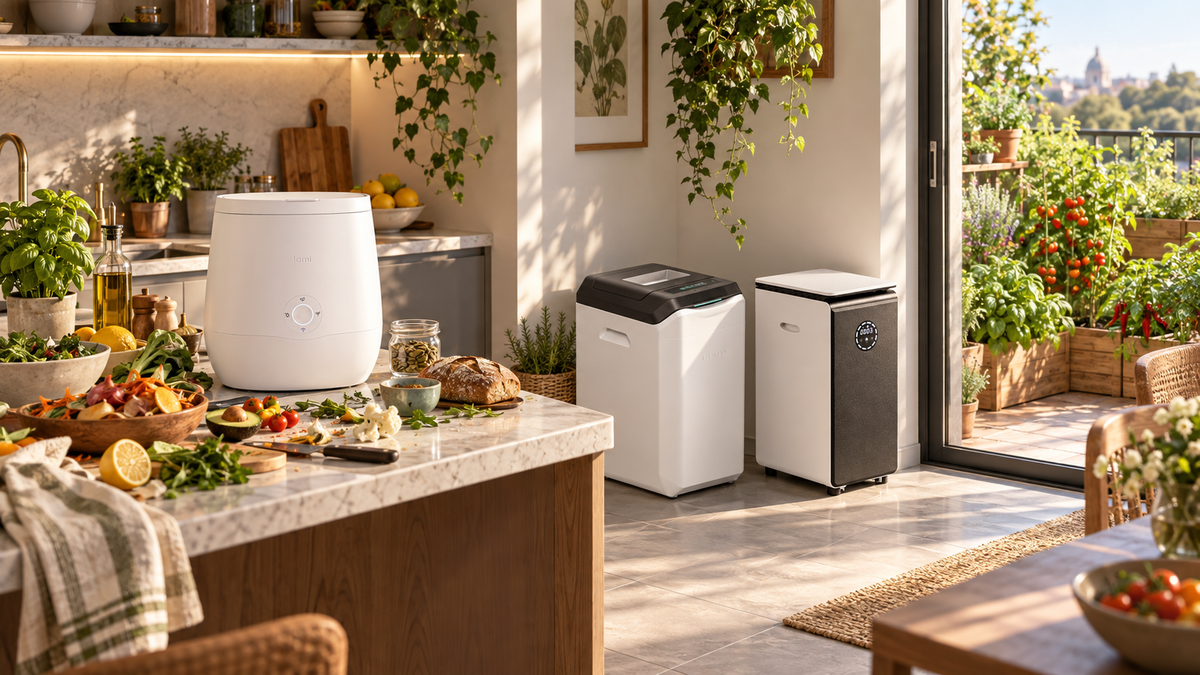
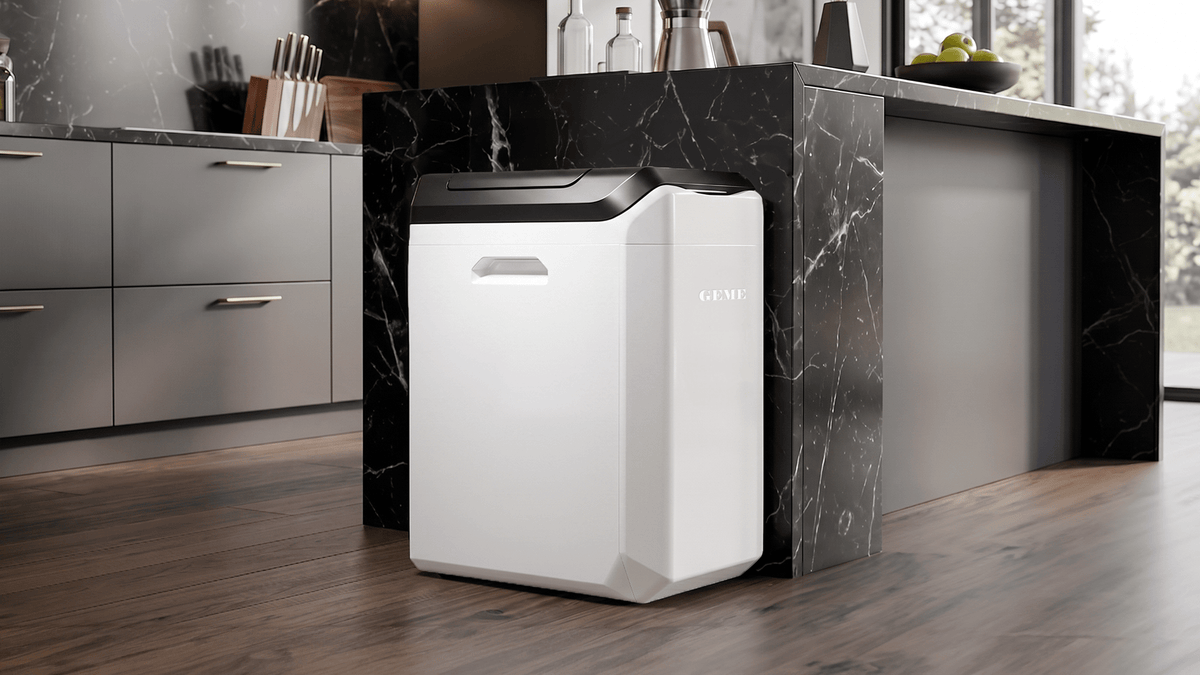
For GEME Terra 2 and GEME Pro, indoor placement remains the preferred setup. A shaded, covered balcony can also be workable when the machine is protected from direct rain, prolonged direct sunlight, standing water and extreme temperature swings.
An uncovered balcony exposed to summer sun, storms, wind-driven rain or winter cold is different. In that situation, we recommend moving the composter indoors.
The simple rule: protected balcony, potentially yes. Exposed balcony, no.
Quick Answer: Can You Put an Electric Composter on a Balcony?
You can use GEME on a protected balcony if the location stays dry, shaded and relatively stable.
A balcony is generally suitable when it has an overhead roof or enclosure, does not receive direct rain, stays out of strong direct sunlight, and is not exposed to extreme outdoor temperatures.
A north-facing or otherwise shaded balcony can therefore work much better than an exposed south- or west-facing balcony that receives hours of direct summer sun.
GEME Terra 2 and Pro are primarily designed for indoor continuous composting. Their microbial chambers are enclosed and actively managed for airflow, moisture, heat and mixing. If the machine remains indoors under normal living conditions, harsh weather outside does not directly expose the composting chamber to rain, wind or outdoor temperature swings.
Do not treat GEME as a weatherproof outdoor appliance. If the balcony itself is exposed to weather, indoor placement is the safer and more appropriate choice.

1. The Balcony Rule: Protected Is Different From Exposed
The word balcony describes very different environments.
One apartment may have a recessed balcony surrounded by walls and covered by the floor above. Another may have an open terrace exposed to afternoon sun, thunderstorms, snow and strong wind.
Those are not equivalent locations for an electrical appliance.
Protected Balcony
- Overhead cover
- No direct rain
- No standing water
- No strong direct sunlight
- Sheltered from wind-driven rain
- Relatively stable ambient conditions
- Dry, level floor
- Safe access to power
Exposed Balcony
- Direct summer sun
- Rain can reach the appliance
- Water collects on the floor
- Strong wind carries spray or rain
- Large day-night temperature swings
- Very hot enclosed glazing
- Freezing winter exposure
- Unprotected electrical connection
Think of a suitable balcony as a semi-indoor utility area, not as outdoor weather exposure.
2. What Makes a Balcony Suitable for an Electric Composter?
A suitable balcony should protect the machine from weather in much the same way an indoor utility area does.
Shade
The machine should not sit where strong sunlight heats the cabinet for hours.
A shaded or back-facing balcony can therefore be preferable to a balcony exposed to intense afternoon sun.
Overhead Protection
A roof, slab or fully protective overhang helps prevent rain from reaching the appliance directly.
Dry Flooring
The floor around the appliance should remain dry during normal weather.
If rain commonly blows across the balcony or water pools near the intended position, choose another location.
Moderate Environment
A sheltered balcony should not behave like a greenhouse in summer or an exposed outdoor platform in winter.
If the space experiences extreme seasonal conditions, indoor placement is the better option.
3. When Should You Not Put GEME on a Balcony?
We do not recommend balcony placement when the appliance will be directly exposed to:
- rain;
- wind-driven rain;
- snow;
- standing water;
- prolonged direct sunlight;
- very high enclosed-balcony heat;
- freezing temperatures;
- or large uncontrolled temperature swings.
Do Not Treat Indoor Heat Control as Outdoor Weatherproofing
Terra 2 intentionally manages a warm microbial environment inside the chamber.
That does not mean the appliance housing, electronics and external components should be exposed indefinitely to direct summer sun, rain or extreme ambient conditions.
4. Why Direct Sunlight Is a Poor Placement Choice
A microbial composter already manages heat internally.
Direct solar radiation adds a different kind of heat load: it warms the outer housing and surrounding air from outside the control system.
That is why a balcony that feels comfortable in the morning can become a much harsher environment during a sunny afternoon.
The same concern applies to enclosed glass balconies, sunrooms and greenhouse-like spaces. Even when rain cannot enter, solar gain can push the local environment far above ordinary room conditions.
For this reason:
- prefer shade;
- avoid long periods of direct sun;
- do not position the machine behind glazing that creates intense solar heating;
- keep it away from external heaters or other major heat sources.
For more detail, read Extreme Heat Warning: Safety, Garden Care & GEME Operation.
5. What About Rain, Humidity and Outdoor Moisture?
Humidity and direct water exposure are not the same thing.
Normal environmental humidity is part of everyday appliance operation, although it can influence energy demand and the moisture balance of food inputs.
Rain is different because it can directly wet the appliance, electrical connection or surrounding floor.
A balcony is therefore unsuitable if:
- rain reaches the machine;
- water drains toward its base;
- the power connection can become wet;
- wind regularly blows rain beneath the balcony cover;
- the appliance needs a temporary cover every time weather changes.

If the location requires you to “weatherproof” the machine yourself, it is probably the wrong location.
6. Heat, Cold and Seasonal Temperature Swings
One reason indoor placement works well is environmental stability.
A normal room changes temperature relatively slowly. A balcony can change much faster.
| Environment | Typical Exposure | Placement Recommendation |
|---|---|---|
| Normal indoor room | Stable temperature, dry floor, no rain | Preferred |
| Covered shaded balcony | Dry and relatively stable | Potentially suitable |
| Direct-sun balcony | Strong solar heating | Not recommended |
| Glass-enclosed hot balcony | Possible greenhouse effect | Not recommended if significantly hotter than indoor conditions |
| Open rainy balcony | Rain and wind-driven moisture | Not recommended |
| Unheated winter balcony | Potential freezing / extreme cold | Indoor placement recommended |
GEME's public guidance does not publish an extreme outdoor ambient-temperature certification that would justify treating Terra 2 or Pro as unrestricted outdoor equipment.
We therefore recommend choosing a normal indoor environment whenever the balcony is subject to harsh seasonal conditions.
7. Why Bad Weather Outside Does Not Affect an Indoor GEME the Same Way
GEME is fundamentally different from a backyard compost pile.
An outdoor pile depends heavily on external weather. Rain can saturate it. Summer heat can dry it. Winter temperatures can slow microbial activity.
Terra 2 and GEME Pro operate inside an enclosed microbial chamber.
GEMEBrain™ actively manages:
- heat;
- airflow;
- moisture;
- mixing;
- and operating response to changing conditions inside the chamber.
That means a heatwave or rainstorm outside does not directly become a rainstorm or temperature shock inside an appliance that remains safely indoors.
The Outdoor Weather Can Stay Outside
When GEME remains in a normal indoor environment, its composting biology is managed inside the enclosed system rather than depending directly on outdoor rain, wind or seasonal temperature.
This is one of the practical advantages of indoor microbial composting for apartments and urban homes.
8. Balcony Placement Still Needs Airflow and Working Clearance
A sheltered balcony should not become a tightly boxed storage closet around the machine.
Wherever GEME is placed:
- keep ventilation paths clear;
- do not wrap the appliance in a waterproof cover during operation;
- do not push it tightly against surrounding objects;
- leave enough room to open the lid comfortably;
- keep the power connection accessible and protected;
- leave space to remove the Compost Base and clean around the unit.
A balcony cabinet may look neat, but it should not trap heat or block the appliance's normal airflow.
9. Balcony or Indoor Kitchen: Which Is Better for an Apartment?
If both locations are available, we still prefer the indoor kitchen or nearby utility area.
Why?
- more stable temperature;
- no rain exposure;
- simpler electrical access;
- shorter route from cutting board to composter;
- less seasonal relocation;
- easier monitoring during everyday use.
A protected balcony becomes useful when indoor floor space is genuinely limited or when the household prefers to keep food-waste handling just outside the main living area.
The key is that the balcony should remain sheltered.
For apartment-specific buying considerations, see Best Home Composter for Apartments.
10. A Balcony Garden Can Make the Soil-Return Loop Easier
There is one especially useful reason apartment gardeners may like a protected balcony setup: the food-waste system and plants can exist close to each other.
But GEME Compost Base should still be used correctly.
The current workflow is:
- harvest Compost Base when needed;
- screen the material;
- return larger unfinished pieces to the GEME chamber;
- mix approximately 1 part screened Compost Base with 8 parts plain soil;
- avoid packing concentrated fresh Compost Base directly against roots, stems or crowns;
- allow additional maturation where appropriate.
This approach works particularly well for:
- large balcony planters;
- herb containers;
- ornamental plants;
- vegetable containers;
- soil-refreshing mixes.
For full guidance, read the Advanced GEME Compost Application Guide.
11. Balcony Placement Checklist
Before placing an electric composter on a balcony, check all six conditions.
1. Is It Covered?
Rain should not fall directly on the machine.
2. Is It Shaded?
Avoid locations with prolonged direct sunlight or greenhouse-like solar heating.
3. Does the Floor Stay Dry?
No standing water, runoff or wind-driven rain around the base or power connection.
4. Is the Temperature Moderate?
Avoid balconies that become extremely hot in summer or freezing cold in winter.
5. Is Airflow Clear?
Do not block ventilation or place the appliance inside a tightly enclosed cabinet.
6. Is Power Access Safe?
Use an appropriate dry electrical connection and avoid exposed extension-cord arrangements.
If you cannot confidently answer “yes” to all six, keep the composter indoors.
12. Final Verdict: Balcony Is an Option, Not the Default
GEME Terra 2 and GEME Pro are primarily indoor microbial composters.
That remains the preferred placement.
A balcony can work when it is:
- covered;
- shaded;
- dry;
- sheltered from wind-driven rain;
- free from extreme heat and cold;
- and equipped with safe power access.
Protected balcony: potentially suitable.
Direct sun, rain or harsh outdoor exposure: not recommended.
If the balcony feels like an extension of the indoor living environment, it can be practical. If it behaves like the outdoors, move GEME inside.
Indoor Composting Without Needing a Backyard
Terra 2 gives 1–3-person households a 14 L continuous microbial system, while GEME Pro offers a 19 L chamber and up to 5 kg/day for larger households. Both are designed to bring controlled microbial processing into everyday home life.
Frequently Asked Questions
Can you use an electric composter on a balcony?
Yes, if the balcony is covered, shaded, dry and protected from harsh outdoor conditions. An exposed balcony with direct rain, strong sunlight or extreme temperatures is not recommended.
Can GEME Terra 2 stay outside?
Terra 2 is primarily designed for indoor use. A well-protected semi-outdoor balcony may be workable, but the appliance should not be treated as unrestricted outdoor or weatherproof equipment.
Can GEME Terra 2 get wet?
Do not place Terra 2 where rain, runoff or standing water can reach the appliance or its electrical connection.
Can GEME Terra 2 sit in direct sunlight?
Direct prolonged sunlight is not recommended. Solar heating can make the appliance and surrounding air much hotter than ordinary indoor conditions.
Is a north-facing balcony better for an electric composter?
A shaded balcony with little or no direct sun can be more suitable than a balcony that receives strong afternoon sun, provided it is also dry, covered and sheltered from rain.
Can I use GEME on a covered balcony?
Potentially, yes. A covered balcony is a better candidate when it remains dry, avoids direct sunlight and does not experience extreme hot or cold conditions.
Can I use an electric composter on an enclosed glass balcony?
Only if the temperature remains close to normal living conditions. Glass balconies can become extremely hot in direct sun, so protection from rain alone is not enough.
Can GEME stay on a balcony during winter?
We recommend moving GEME indoors if the balcony experiences freezing or other extreme cold conditions. Indoor placement provides a more stable environment for the appliance and its microbial system.
Does hot weather outside affect GEME if it stays indoors?
Not in the same way it affects an outdoor compost pile. GEME operates inside an enclosed, actively managed microbial chamber. When the appliance remains in a normal indoor environment, outdoor heat or rain does not directly expose the composting system to those conditions.
Does GEME need outdoor ventilation?
No outdoor placement is required. GEME is designed for indoor home use. Wherever it is placed, keep its normal ventilation and exhaust paths unobstructed.
Is a balcony better than a kitchen for GEME?
Usually not. Indoor kitchen or nearby utility placement remains the preferred option because temperature, moisture, power access and everyday feeding are easier to manage. A protected balcony is an alternative when indoor space is limited.
Can GEME Compost Base be used in balcony planters?
Yes, when handled appropriately. Screen harvested material, return larger unfinished pieces, and mix approximately one part screened Compost Base with eight parts plain soil. Avoid placing concentrated fresh Compost Base directly against sensitive roots or stems.
Sources and Related Guides
GEME Product and Operating References
- GEME Terra 2 — Product and Technical Information
- Extreme Heat Warning: GEME Indoor Operation During Hot Weather
- Electric Composter Electricity Cost


Laisser un commentaire
Tous les commentaires sont modérés avant d'être publiés.
Ce site est protégé par hCaptcha, et la Politique de confidentialité et les Conditions de service de hCaptcha s’appliquent.