


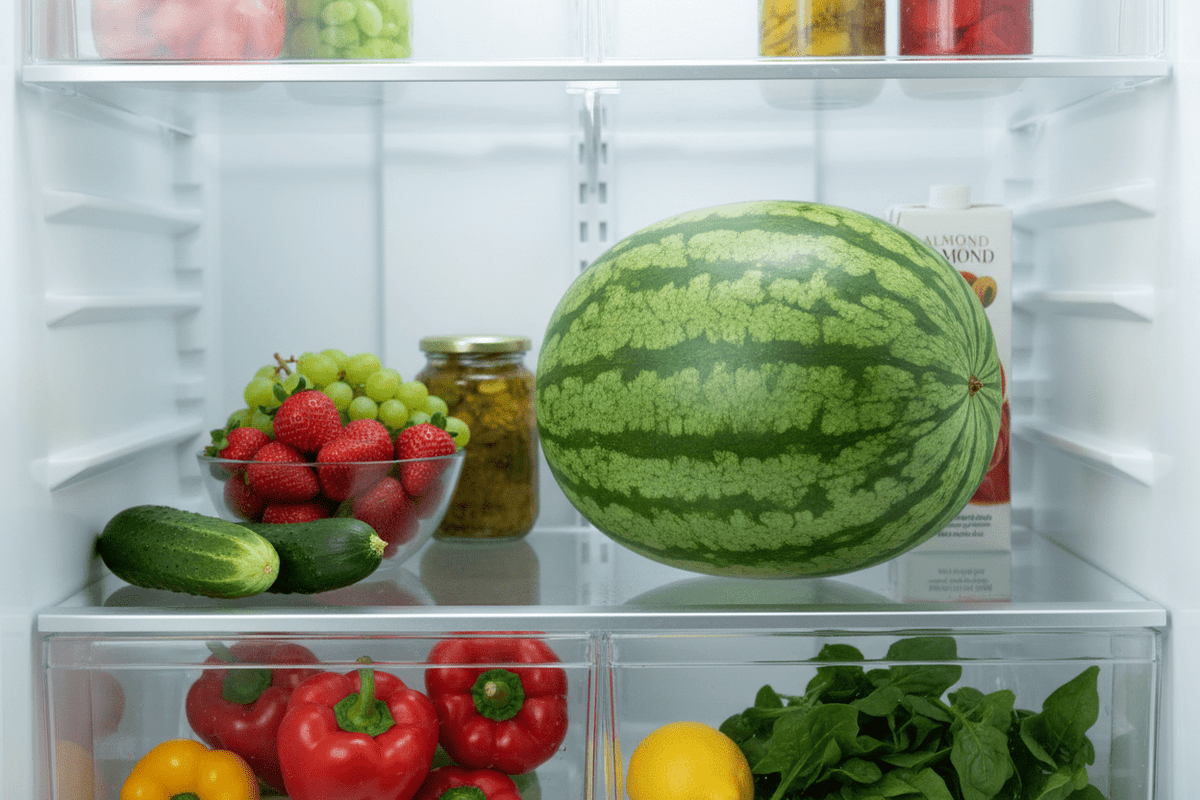
Watermelon Storage & Food Safety Guide
Cut watermelon is best eaten within three to four days when stored continuously at 40°F or below.
Once the rind is cut, the protective barrier is broken. Surface bacteria can be carried into the flesh by the knife, while released juice and damaged cells create conditions in which microorganisms can survive or grow.
Spoiled watermelon may become soft, slimy, fermented or moldy, but dangerous watermelon does not always look or smell bad.
Storage time, temperature and handling history matter more than a visual inspection alone.
Watermelon Storage Timeline
About 7–10 days at room temperature; roughly one week in a normal refrigerator for best quality.
Use within 3–4 days when continuously refrigerated.
Do not keep cut melon beyond 7 days. This is a discard ceiling, not a target.
Discard after 2 hours, or 1 hour above 90°F / 32°C.
How Long Does Watermelon Last in the Fridge?
Cut watermelon lasts about three to four days in the refrigerator when stored promptly in a clean, covered container at 40°F / 4°C or below.
A whole, uncut watermelon can generally remain in a normal refrigerator for about one week, although whole watermelons are sensitive to prolonged cold storage and often retain better flavor and texture around 50–59°F.
CDC food-safety guidance treats cut melon refrigerated for more than seven days as a higher-risk choice, particularly for pregnant people, adults aged 65 or older and people with weakened immune systems.
For normal household storage, do not use the seven-day limit as a reason to stretch leftovers. Plan to finish cut watermelon by day three or four, and discard it sooner if its temperature history is uncertain.
Continue to the Food Storage & Waste Reduction Hub for refrigerator organization, date labeling and produce-storage guidance.
The Safe Rule in One Sentence
Cut → Refrigerate Within 2 Hours → Keep at 40°F or Below → Eat Within 3–4 Days → Never Keep Beyond 7 Days
In temperatures above 90°F / 32°C, the refrigeration window falls from two hours to one hour.
Table of Contents
- Watermelon Storage Chart
- 3–4 Days vs 7 Days
- How Long Whole Watermelon Lasts
- How Long Cut Watermelon Lasts
- Why Cutting Makes Watermelon Riskier
- How to Cut Watermelon Safely
- How to Store Cut Watermelon
- How Long It Can Stay Out
- How to Tell If Watermelon Is Bad
- Why Smell Cannot Prove Safety
- Salmonella and Listeria Risks
- Documented Melon Outbreaks
- Who Faces the Greatest Risk?
- Symptoms and Medical Action
- Store-Bought Pre-Cut Watermelon
- Can Watermelon Be Frozen?
- What to Do With Spoiled Watermelon
- Frequently Asked Questions
- Summary
- Authoritative Sources
- Related Guides
Watermelon Storage Chart
| Watermelon Condition | Storage Location | Recommended Time | Safety and Quality Notes |
|---|---|---|---|
| Whole, uncut watermelon | Room temperature | About 7–10 days | Keep away from direct sun, heat and damaged produce. Use sooner if the rind is bruised, cracked or leaking. |
| Whole, uncut watermelon | Household refrigerator | About 1 week | Refrigeration is possible, but prolonged temperatures below about 50°F can reduce whole-watermelon quality and cause chilling injury. |
| Watermelon half or quarter | Refrigerator at 40°F / 4°C or below | 3–4 days | Wrap the cut surface tightly or place the piece in a covered container. |
| Watermelon cubes, balls or sticks | Covered refrigerator container | 3–4 days | Smaller pieces have more exposed surface area and often lose quality sooner. |
| Store-prepared pre-cut watermelon | Refrigerator at 40°F / 4°C or below | Label or 3–4 days | Follow the printed use-by date when it is earlier. Keep the product continuously refrigerated. |
| Cut watermelon approaching 7 days | Refrigerator | Discard | Do not keep cut melon longer than seven days, even when it appears normal. |
| Cut watermelon at room temperature | Below 90°F / 32°C | 2 hours maximum | Discard after two hours rather than returning it to the refrigerator. |
| Cut watermelon in hot conditions | Above 90°F / 32°C | 1 hour maximum | Applies to picnics, cars, outdoor parties and hot kitchens. |
| Frozen watermelon | Freezer at 0°F / -18°C | Best within 8–12 months | Freezing preserves it for later use but produces a softer texture after thawing. |
Why Do Some Sources Say 3–4 Days and Others Say 7 Days?
The numbers answer two different questions.
3–4 Days
This is the practical home-storage recommendation for retaining reasonable quality and reducing food-safety uncertainty.
It assumes prompt refrigeration, clean preparation and continuous storage at 40°F or below.
7 Days
This is a maximum discard limit used in FDA food-service date-marking guidance and CDC advice for refrigerated cut melon.
It does not mean that every household container remains safe or enjoyable through day seven.
Commercial food operations may control cutting time, refrigeration temperature, sanitation and date marking more consistently than a household kitchen.
A home container may have been opened repeatedly, warmed during serving, touched by hands or utensils, or stored in a refrigerator running above 40°F. For this reason, the three-to-four-day recommendation is the more responsible household target.
How Long Does a Whole Watermelon Last?
A whole watermelon retains its protective rind and does not require immediate refrigeration.
Watermelon industry guidance gives a general room-temperature shelf life of approximately seven to ten days. Post-harvest guidance identifies approximately 50–59°F as a better storage range for preserving the quality of intact fruit.
A household refrigerator is colder than this ideal whole-fruit range. Refrigerating a whole watermelon for a few days is generally practical, particularly when it was already chilled at the store, but extended cold storage can cause:
- Loss of flavor.
- Surface pitting.
- Color deterioration.
- Water-soaked or mealy flesh.
- Greater susceptibility to decay after chilling injury.
Do not rely on a general shelf-life number when the rind is cracked, bruised, punctured, sunken, moldy or leaking. Damage weakens the fruit’s protective barrier and provides a path for contamination.
If the watermelon was displayed and purchased under refrigeration, keep it refrigerated rather than repeatedly moving it between cold and warm environments.
How Long Does Cut Watermelon Last in the Fridge?
Cut watermelon, including halves, quarters, wedges, cubes, balls and sticks—should generally be eaten within three to four days.
The countdown starts when the melon is cut, not when the container is first opened or when you remember placing it in the refrigerator.
Example Storage Timeline
Cut on Monday
↓
Best Used by Thursday or Friday
↓
Do Not Carry It Into the Following Monday
Cubes and small pieces may deteriorate faster than a tightly wrapped half because cutting creates more exposed surface area, releases more juice and gives microorganisms more contact points.
If the watermelon sat on a buffet, picnic table or kitchen counter before refrigeration, include that time in the safety assessment.

Why Does Watermelon Become Riskier After Cutting?
An intact rind separates the edible flesh from soil, irrigation water, handling surfaces, transport equipment, grocery displays and human hands.
Cutting changes that protection in several ways.
1. The Knife Can Transfer Surface Germs
A knife passes through the rind before entering the flesh. Bacteria on an unwashed rind, cutting board, hand or knife can therefore move into the edible portion.
2. Cutting Releases Nutrient-Rich Juice
Damaged plant cells release water, sugars and nutrients. FDA guidance explains that this cellular fluid can create a medium in which pathogens survive or grow.
3. Watermelon Is Not Highly Acidic
Many acidic fruits inhibit the growth of some bacteria. Melons, including watermelon, have a pH capable of supporting bacterial foodborne pathogens once the natural barrier has been cut.
4. Watermelon Is Eaten Without a Kill Step
Watermelon is normally consumed raw. Unlike food that will be cooked thoroughly, contaminated cut watermelon usually receives no later heat treatment capable of destroying pathogens.
5. Listeria Can Grow Under Refrigeration
Refrigeration slows most microbial growth but does not sterilize food. Listeria monocytogenes can survive and grow at refrigerator temperatures, which is why storage duration still matters.
How to Cut Watermelon Safely
-
Check the rind before buying or cutting.
Avoid melons with deep cracks, punctures, mold, leaking areas or extensive soft spots. -
Wash your hands.
Use soap and running water before handling the melon, knife or storage container. -
Rinse the entire rind under running water.
Wash the surface even though the rind will not be eaten. -
Scrub the firm rind with a clean produce brush.
Do not use soap, bleach, sanitizer, alcohol or household disinfectants on produce. -
Dry the watermelon.
Use a clean cloth or paper towel to reduce residual surface moisture and bacteria. -
Use a clean cutting board and knife.
Do not cut watermelon on a surface that recently held raw meat, poultry or seafood unless it has been thoroughly washed and sanitized. -
Cut away bruised or damaged areas.
Discard the entire fruit when damage is extensive, leaking or associated with visible decay. -
Transfer the pieces into clean containers.
Do not return freshly cut melon to an unwashed tray that held the intact rind. -
Refrigerate promptly.
Start the two-hour clock as soon as the melon is cut. -
Label the container.
Record the cutting date so storage time is not based on memory.
FDA notes that washing can reduce surface bacteria but cannot eliminate every organism. Safe storage remains necessary after washing.
How to Store Cut Watermelon Properly
| Storage Action | Recommended Practice | Why It Matters |
|---|---|---|
| Temperature | Keep the refrigerator at 40°F / 4°C or below. | Cold storage slows bacterial growth but does not destroy pathogens. |
| Container | Use a clean, covered glass or food-safe plastic container. | Protects the fruit from handling, refrigerator spills and cross-contamination. |
| Large cut surface | Wrap halves and quarters tightly or place them in a sufficiently large covered container. | Reduces drying and contact with contaminated surfaces. |
| Accumulated juice | Use a clean container and avoid allowing pieces to remain in deteriorating juice for extended periods. | Released juice accelerates texture breakdown and provides nutrients for microorganisms. |
| Refrigerator position | Store away from raw meat, poultry, seafood and leaking packages. | Prevents raw animal juices from contaminating ready-to-eat fruit. |
| Serving utensil | Use a clean fork, spoon or tongs each time. | Hands and reused utensils can introduce additional bacteria. |
| Date label | Mark the day the watermelon was cut. | Prevents the three-to-four-day period from being unintentionally extended. |
| Repeated warming | Return only the portion that remained cold and uncontaminated. | A container repeatedly placed on the table and returned to the refrigerator has a less reliable safety history. |
Check Your Refrigerator Temperature
Refrigerator dials do not always show the actual food temperature. Use a refrigerator thermometer and confirm that the interior remains at or below 40°F / 4°C.
How Long Can Cut Watermelon Stay Out?
Cut watermelon is a perishable ready-to-eat food.
Normal Room Temperature
2 Hours Maximum
Above 90°F / 32°C
1 Hour Maximum
These limits apply to watermelon served:
- At a picnic or barbecue.
- On a party buffet.
- In a hot vehicle.
- At an outdoor market.
- In a lunchbox without adequate ice packs.
- On a kitchen counter during meal preparation.
Do not try to “reset the clock” by refrigerating watermelon after it has exceeded the limit. Refrigeration does not reverse bacterial growth or remove toxins that may already have formed.
When the time or temperature history is unknown, discard the fruit.
How Can You Tell If Watermelon Is Bad?
Spoilage signs can tell you when watermelon must be discarded. They cannot prove that apparently normal fruit is free of harmful bacteria.
| Warning Sign | What It May Look or Smell Like | Action |
|---|---|---|
| Sour or fermented odor | Alcohol-like, yeasty, vinegary or unusually sharp smell. | Discard |
| Slime or sticky coating | Glossy, slippery or tacky surface that was not present when freshly cut. | Discard |
| Mushy or collapsing texture | Flesh loses structure, caves in or feels waterlogged. | Discard |
| Translucent or darkened flesh | Unusual glassy patches, browning, gray areas or widespread discoloration. | Discard |
| Foam, bubbles or gas | Bubbling juice, hissing container or pressure associated with fermentation. | Discard |
| Mold | White, green, blue, gray or black fuzzy growth. | Discard whole container |
| Leaking whole fruit | Fluid escaping from cracks, soft lesions or collapsed rind. | Discard |
| Uncertain cutting date | No label and no reliable memory of when it was prepared. | When in doubt, discard |
| More than 7 days refrigerated | It may still appear red, crisp and sweet. | Discard regardless of appearance |
Never taste watermelon to determine whether it is safe.
A small test bite can expose you to the same pathogen you are trying to detect.
Why Normal-Looking Watermelon Can Still Make You Sick
Spoilage organisms and disease-causing organisms are not the same thing.
Yeasts, molds and spoilage bacteria often produce visible or sensory changes. Pathogens such as Salmonella and Listeria monocytogenes may be present without creating an obvious smell, flavor, color or texture change.
Spoilage Question
Has microbial or chemical deterioration made the watermelon visibly or sensorially unacceptable?
Safety Question
Could disease-causing bacteria be present at a level capable of causing illness?
A watermelon can fail either test independently. It may look spoiled without containing a major pathogen, or it may look completely normal while carrying Salmonella or Listeria.
This is why time, temperature, recalls and handling history must override appearance.
Which Bacteria Are Associated With Cut Watermelon?
Salmonella
Salmonella can contaminate melons during growing, harvesting, packing, cutting or preparation. Once a contaminated rind is cut, the organism can move into the edible flesh.
Symptoms typically begin six hours to six days after exposure and commonly include diarrhea, fever and stomach cramps. Most illnesses last four to seven days, but severe diarrhea, bloodstream infection and hospitalization can occur.
Young children, adults aged 65 or older and people with weakened immune systems are more likely to develop severe illness.
Listeria monocytogenes
Listeria is especially concerning because it can grow under refrigeration and because melons are low-acid fruits that may be stored for several days.
Invasive listeriosis can cause sepsis, meningitis, confusion, seizures and loss of balance. Infection during pregnancy may result in miscarriage, stillbirth, premature delivery or life-threatening infection of the newborn.
CDC reports that almost one in six nonpregnant people who develop invasive listeriosis die.
Other Possible Hazards
Fresh-cut fruit may also be exposed to pathogenic E. coli, norovirus, other enteric bacteria or contamination from food handlers and preparation surfaces. The exact hazard depends on where contamination occurred.
Real Outbreaks Linked to Watermelon and Other Melons
The following cases show why cut melon should be treated as a perishable ready-to-eat food rather than as an automatically low-risk fruit.
| Event | Food Link | Reported Impact | What It Shows |
|---|---|---|---|
| 1991 U.S. Salmonella Javiana outbreak | Consumption of watermelon. | CDC surveillance associated 39 cases with watermelon consumption. | Watermelon itself has been documented as a vehicle for Salmonella infection. |
| 2018 U.S. Salmonella Adelaide outbreak | Pre-cut cantaloupe, watermelon and mixed fruit containing melon. | 77 illnesses across 9 states; 36 hospitalizations; no reported deaths. | Pre-cut watermelon was included in a multistate recall and outbreak investigation. |
| 2019 U.S. Salmonella Carrau outbreak | Pre-cut watermelon, cantaloupe, honeydew and fruit mixes. | 137 illnesses across 10 states; 38 hospitalizations; no reported deaths. | Commercial cutting and broad distribution can expose many consumers before a recall is completed. |
| 2011 U.S. Listeria outbreak | Whole cantaloupes—not watermelon—from Jensen Farms. | 147 illnesses; 143 hospitalizations; 33 deaths; 1 miscarriage. | Although this was cantaloupe, it demonstrates the potentially fatal consequences of contamination within the ready-to-eat melon category. |
Important Interpretation
The 2018 and 2019 investigations involved mixed groups of pre-cut melons. The illness totals cannot be attributed exclusively to watermelon.
The fatal 2011 outbreak involved cantaloupe rather than watermelon. It is included to show the seriousness of Listeria contamination in low-acid melons, not to imply that the deaths were caused by watermelon.
Who Is Most Likely to Become Seriously Ill?
Anyone can develop foodborne illness, but some people face a greater risk of hospitalization, invasive infection, pregnancy complications or death.
Pregnant People
Listeria may cause mild symptoms in the pregnant person while causing miscarriage, stillbirth, premature delivery or neonatal infection.
Adults 65 and Older
Older adults have a greater risk of invasive listeriosis and severe Salmonella infection.
Children Under 5
Young children are more vulnerable to severe diarrhea, dehydration and complicated Salmonella infection.
Weakened Immunity
Cancer treatment, transplant medicines, HIV, diabetes, kidney disease and other conditions may increase the risk of severe infection.
Members of these groups should be especially strict about the two-hour rule, refrigeration temperature, storage date and the seven-day discard ceiling.
What Should You Do After Eating Questionable Watermelon?
Eating watermelon that later appears questionable does not automatically mean that you will become ill. Do not induce vomiting or take antibiotics without medical advice.
Watch for Possible Salmonella Symptoms
- Diarrhea.
- Fever.
- Stomach cramps.
- Nausea or vomiting.
- Signs of dehydration.
Salmonella symptoms usually begin between six hours and six days after exposure.
Watch for Possible Invasive Listeria Symptoms
- Fever and muscle aches.
- Severe fatigue.
- Headache or stiff neck.
- Confusion.
- Loss of balance.
- Seizures.
Invasive listeriosis symptoms often begin within two weeks but can occur earlier or later.
Contact a Healthcare Professional Promptly If You Have:
- Bloody diarrhea.
- Fever above 102°F / 38.9°C.
- Vomiting that prevents you from keeping liquids down.
- Signs of dehydration, including very little urination, dry mouth or dizziness.
- Diarrhea lasting more than three days.
- Neurological symptoms such as confusion, stiff neck, loss of balance or seizures.
- Pregnancy combined with fever or flu-like symptoms after eating recalled or suspicious food.
Tell the healthcare provider what you ate, when you ate it and whether the product was recalled. Save packaging, labels and purchase information when available, but do not keep contaminated food where someone might eat it.
Suspected foodborne illness can also be reported to the local health department to help identify a wider outbreak.
How Long Does Store-Bought Pre-Cut Watermelon Last?
Pre-cut watermelon should already be refrigerated when purchased.
Do not buy a package that is:
- Displayed without refrigeration.
- Warm to the touch.
- Leaking or swollen.
- Unsealed or damaged.
- Past its marked use-by date.
- Containing slime, foam, mold or strongly deteriorated pieces.
Carry pre-cut watermelon home promptly, refrigerate it immediately and follow whichever date comes first:
- The printed use-by date.
- Three to four days after purchase or opening.
- The date required by a recall notice.
A printed date does not protect watermelon that has been left warm, cross-contaminated or stored in a refrigerator above 40°F.
What Should You Do With Recalled Watermelon?
Do not eat, taste, donate, feed to pets or compost watermelon that has been recalled because of suspected pathogen contamination.
- Check the brand, product name, lot code, use-by date and store information.
- Follow the recall notice for return or disposal instructions.
- Seal the product so children, adults and animals cannot retrieve it.
- Wash and sanitize any refrigerator shelf, drawer or container touched by the product or leaking juice.
- Wash hands after handling the package.
Food contaminated with Salmonella or Listeria may look and smell normal. The recall notice overrides sensory judgment.
Can You Freeze Watermelon?
Watermelon can be frozen when you cannot finish it within the safe refrigerated period.
- Use fresh watermelon rather than fruit that is already deteriorating.
- Remove the rind and cut the flesh into cubes or balls.
- Spread the pieces on a tray so they do not touch.
- Freeze until firm.
- Transfer the pieces into a freezer-safe container or bag.
- Label the container with the freezing date.
Frozen watermelon loses much of its crisp texture after thawing because ice crystals disrupt the watery flesh.
Use frozen watermelon in smoothies, frozen drinks, sorbets, chilled soups or blended desserts rather than expecting the texture of a fresh slice.
What Should You Do With Spoiled Watermelon?
First distinguish ordinary spoilage from a recall or suspected pathogen event.
| Situation | Recommended Action | Reason |
|---|---|---|
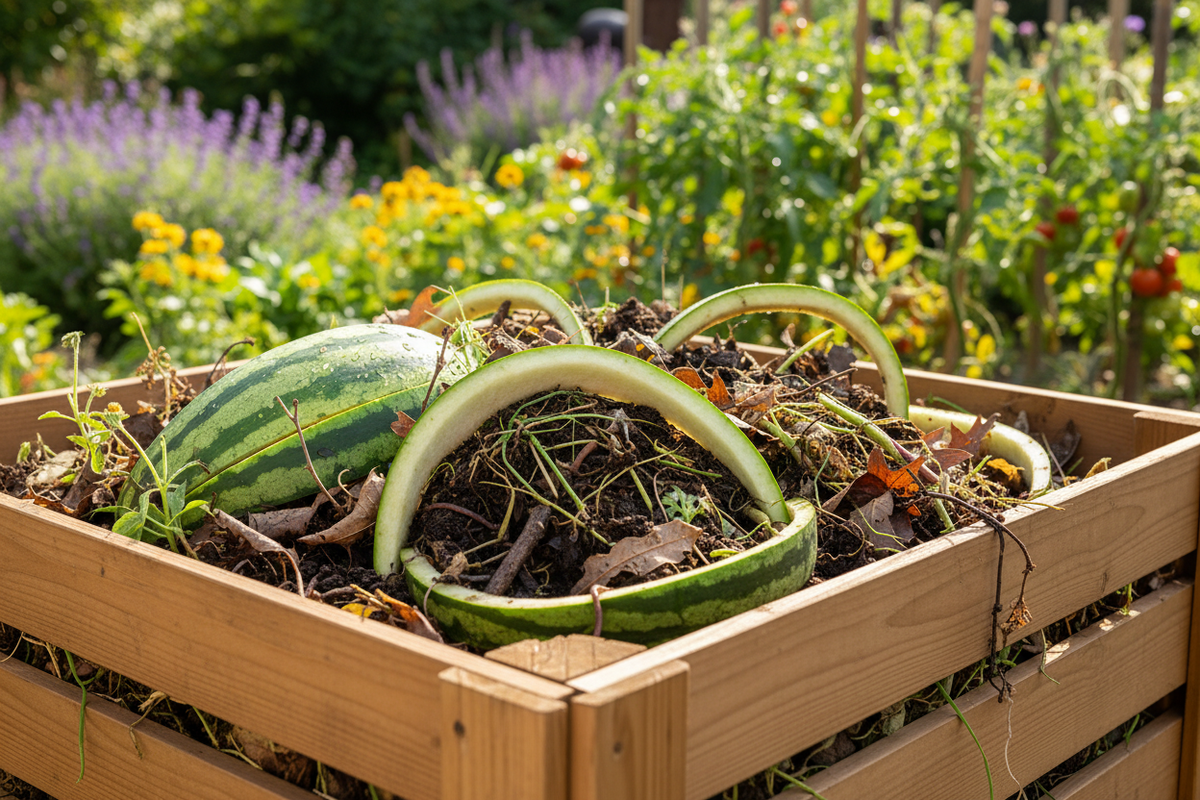
| Ordinary overripe or spoiled watermelon | Remove packaging and stickers, then compost through an appropriate household or municipal system. | Watermelon flesh and rind are biodegradable organic materials. |
| Large quantity of very wet watermelon | Add gradually and balance with dry carbon-rich material in a backyard pile. | Watermelon contains substantial moisture and may make a pile wet or compacted. |
| Ordinary spoiled watermelon for Terra II | Cut into manageable pieces and feed modestly as part of a varied input mix. | A large single load of watery fruit can temporarily overwhelm moisture balance. |
| Recalled watermelon | Do not compost. Follow the official recall disposal instructions. | Composting may spread or preserve pathogens in an uncontrolled household pathway. |
| Watermelon linked to illness or an outbreak | Seal, discard or return according to public-health instructions. | It should not be handled as ordinary food waste. |
Review the complete material list in What Can You Compost at Home?
For the larger environmental pathway, read What Happens to Food Waste After You Throw It Away?
Prevent Waste Before Composting
Cut Only What You Expect to Eat
Keeping part of the watermelon intact preserves its protective rind and reduces the surface area exposed to handling, air and refrigerator conditions.
Portion the fruit according to your household’s next three to four days of use, then freeze surplus fresh pieces before they deteriorate.
Frequently Asked Questions
How long does watermelon last in the fridge?
A whole watermelon can generally be refrigerated for about one week, although prolonged cold storage may reduce quality. Cut watermelon should be eaten within three to four days.
How long does cut watermelon last in the fridge?
Cut watermelon lasts approximately three to four days when refrigerated promptly in a clean covered container at 40°F or below.
How long does cut up watermelon last in the fridge?
Watermelon cubes, balls and sticks should be used within three to four days. Small pieces may lose texture faster because they have more exposed surface area.
How long can I keep watermelon in the fridge?
Keep whole watermelon for roughly one week and cut watermelon for three to four days. Never keep cut melon beyond seven refrigerated days.
How long is watermelon good for after cutting?
It is best used within three to four days, provided it was refrigerated within two hours of cutting and remained at 40°F or colder.
Can cut watermelon last seven days?
Seven days is a maximum discard ceiling under controlled refrigeration, not the recommended household target. Eat cut watermelon within three to four days and discard it sooner when handling or temperature history is uncertain.
How can you tell if watermelon is bad?
Discard watermelon that has mold, slime, a sour or fermented odor, collapsing flesh, dark or translucent patches, foaming juice or a leaking rind. Appearance cannot detect every pathogen.
Can bad watermelon make you sick?
Yes. Contaminated watermelon has been associated with Salmonella outbreaks. Foodborne illness may cause diarrhea, fever, vomiting, dehydration, hospitalization and, in rare severe infections, death.
Can watermelon carry Listeria?
Yes. FDA identifies non-acidic fruits including watermelon as ready-to-eat foods that can support Listeria growth. Refrigeration slows growth but does not eliminate the bacterium.
Can you smell Salmonella or Listeria on watermelon?
No. Watermelon contaminated with a pathogen may look, smell and taste normal. Do not taste suspicious or recalled fruit to test it.
Should you wash watermelon before cutting it?
Yes. Rinse the rind under running water, scrub it with a clean produce brush and dry it before cutting. Do not wash produce with soap, bleach or disinfectants.
Can watermelon be left out overnight?
Cut watermelon left out overnight should be discarded. The safe room-temperature limit is two hours, or one hour when the temperature exceeds 90°F.
Can you put warm watermelon back in the refrigerator?
Only when it has remained within the two-hour limit, or one-hour hot-weather limit. Refrigeration cannot make watermelon safe again after excessive time at room temperature.
Can you freeze leftover watermelon?
Yes. Freeze fresh cubes on a tray and transfer them to a freezer-safe container. Thawed watermelon becomes soft, so it is best used in smoothies and blended recipes.
Can spoiled watermelon go into a composter?
Ordinary spoiled watermelon can be composted after packaging and stickers are removed. Add large, watery amounts gradually. Do not compost recalled watermelon or fruit suspected of pathogen contamination.
Can GEME Terra II process watermelon?
Yes. Watermelon flesh and chopped rind can be added in moderate portions as part of a varied household food-waste mix. Avoid overloading the chamber with one large, water-heavy input, and never add recalled food.
Summary: How Long Is Watermelon Good For?
- Whole watermelon generally keeps for about seven to ten days at room temperature.
- A whole watermelon can be refrigerated for about one week, although extended cold storage may reduce quality.
- Cut watermelon should be eaten within three to four refrigerated days.
- Do not keep cut watermelon beyond seven days, even when it appears normal.
- Refrigerate cut watermelon within two hours, or within one hour above 90°F.
- Keep the refrigerator at 40°F / 4°C or below.
- Wash and scrub the rind before cutting.
- Use clean hands, knives, cutting boards and storage containers.
- Discard watermelon with slime, mold, fermentation, foaming or severe texture deterioration.
- Salmonella and Listeria may be present without visible spoilage.
- Pregnant people, older adults, young children and immunocompromised people face greater risk.
- Never eat or compost watermelon included in a pathogen-related recall.
Authoritative and Scientific Sources
- USDA FSIS — FoodKeeper Storage Data
- FoodSafety.gov — FoodKeeper App
- FDA — Selecting and Serving Produce Safely
- FoodSafety.gov — Four Steps to Food Safety
- FDA — Microbial Hazards of Fresh-Cut Fruits and Vegetables
- FDA — Commodity-Specific Food Safety Guidelines for Melons
- CDC — Preventing Listeria Infection
- CDC — How Listeria Spreads Through Melons and Produce
- CDC — Symptoms and Severity of Listeria Infection
- CDC — Symptoms of Salmonella Infection
- CDC — 2018 Salmonella Outbreak Linked to Pre-Cut Melon
- CDC — 2019 Salmonella Outbreak Linked to Pre-Cut Melon
- CDC — 2011 Listeria Outbreak Linked to Cantaloupe
- CDC MMWR — Watermelon-Associated Salmonella Javiana Cases
- National Watermelon Promotion Board — Selection and Storage
- Utah State University Extension — Watermelon Storage
- Walsh et al. — Outbreaks Associated With Cantaloupe, Watermelon and Honeydew
- Moreira et al. — Storage Temperature and Pathogen Survival on Fresh-Cut Fruit
- GEME — Food Safety Hub
- GEME — Food Storage & Waste Reduction Hub
Guidance and outbreak records reviewed July 30, 2026. Storage periods are practical guidelines rather than guarantees. Safety depends on temperature, preparation hygiene, handling history and possible recalls.
From Storage to Responsible Recovery
Prevent Edible Watermelon From Becoming Waste
Cut smaller portions, label the container, freeze fresh surplus and use the three-to-four-day refrigerator window.
When ordinary watermelon scraps can no longer be eaten, Terra II can process suitable flesh and chopped rind as part of a balanced food-waste mix. Recalled or outbreak-linked food must follow official disposal instructions instead.



Laisser un commentaire
Tous les commentaires sont modérés avant d'être publiés.
Ce site est protégé par hCaptcha, et la Politique de confidentialité et les Conditions de service de hCaptcha s’appliquent.