


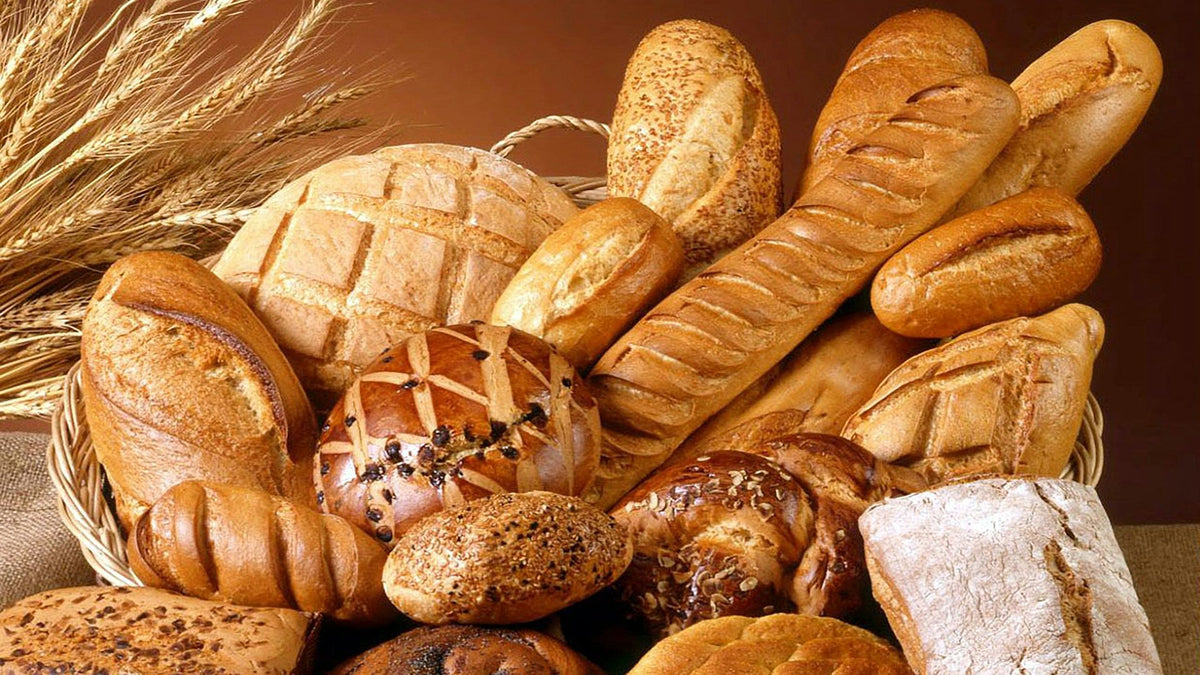
Food Storage · Bread Freshness · Waste Reduction
For most plain bread, the counter is best for short-term freshness, while the freezer is the better choice for longer storage.
The refrigerator is more complicated. Cold storage can slow mold growth, but it also speeds up the staling process that makes bread firm, dry, and less pleasant to eat.
A practical household rule is: keep bread you will eat soon at room temperature, freeze what you will not finish in time, and use the refrigerator only when slowing mold matters more than preserving fresh texture.
And when bread does become waste, keep the final decision separate: stale bread may still be usable as food; moldy bread should no longer be eaten; both stale and moldy bread can still be handled as compostable organic material through an appropriate system such as GEME.

Quick Answer: Counter, Fridge, or Freezer?
Best for Bread You'll Eat Soon
Room-temperature storage generally gives plain bread its best short-term eating quality.
A Pacific Northwest Extension storage guide gives about 2–4 days at room temperature as a useful best-quality guideline.
Slower Mold, Faster Staling
Refrigeration can delay mold growth.
But bread generally becomes stale faster in the refrigerator, so it is a trade-off rather than the automatic best choice.
Best for Longer Storage
Freeze bread you know you will not finish soon.
For baked bread without preservatives, Extension guidance gives roughly 2–3 months frozen for best quality.
The simplest rule: eat soon → counter; need longer → freezer; high mold pressure → refrigerator can help, but expect faster staling.
1. Where Is the Best Place to Store Bread?
There is no single best location for every time horizon.
The better question is: when do you expect to eat it?
| Storage Method | Main Advantage | Main Trade-Off | Best Use |
|---|---|---|---|
| Counter / bread box | Best short-term texture | Mold can develop sooner, especially in warm or humid conditions | Bread you expect to finish within a few days |
| Refrigerator | Can retard mold growth | Speeds staling | Situations where mold control matters more than fresh texture |
| Freezer | Best longer-term quality preservation | Requires thawing or reheating | Bread you will not finish soon |
Pacific Northwest Extension guidance lists ordinary bread at room temperature at about 2–4 days for best quality and specifically notes: refrigeration can retard mold growth but speeds staling; freeze for longer storage.
The Practical Decision
Eating it this week? Keep a reasonable amount accessible on the counter.
Not sure you'll finish it? Freeze some now.
Already fighting rapid mold in a hot or humid kitchen? Refrigeration may buy mold-free time, but expect the texture to stale faster.
2. How Should You Store Bread on the Counter?
For bread that will be eaten soon, room-temperature storage usually gives the best balance of softness, crust, and convenience.
Keep it:
- away from direct sunlight;
- away from the stove or other heat sources;
- in a clean, dry storage area;
- protected from excessive air exposure.
Soft Sandwich Bread
Soft packaged bread generally benefits from being kept well sealed so moisture does not escape too quickly.
Crusty Bread
Crusty artisan bread presents a different trade-off.
A completely airtight environment can retain interior moisture but soften the crust. A more breathable storage method can preserve the crust better but allows the loaf to dry faster.
There is no universal packaging answer because the desired texture is different.
How Long Does Bread Last on the Counter?
As a general quality reference, Pacific Northwest Extension gives approximately 2–4 days at 70°F for bread stored at room temperature.
That is a guideline rather than an expiration clock. Actual shelf life varies with:
- bread formulation;
- preservatives;
- moisture;
- room temperature;
- humidity;
- packaging;
- and how the bread was handled before purchase.
3. Should You Refrigerate Bread?
Usually not if your main goal is the best fresh-bread texture.
Refrigeration presents a well-documented contradiction: it can extend the time before mold appears, but it can also make bread stale faster.
The Refrigerator Solves One Problem and Creates Another
Cold storage slows mold development.
But the starch structure in baked bread changes during storage, contributing to the firmer, drier texture we recognize as staling.
That is why automatically refrigerating every loaf is not necessarily the best household strategy.
When Can Refrigeration Still Make Sense?
It may be useful when:
- your kitchen is unusually warm or humid;
- bread molds before your household can finish it;
- you care more about delaying mold than maintaining ideal fresh texture;
- freezer storage is temporarily inconvenient.
For baked bread without preservatives, Extension guidance gives roughly 1–2 weeks refrigerated, while warning that the bread will stale more rapidly.
If you know you need that much storage time, however, the freezer is often the better quality choice.
4. How Do You Freeze Bread Properly?
Freezing is the best waste-reduction tool for bread you will not finish soon.
Do it while the bread is still fresh rather than waiting until it is almost stale or moldy.
For Sliced Bread
- Keep or cut the loaf into slices.
- Wrap or seal it well to reduce freezer exposure.
- Freeze in a quantity that matches how you actually eat bread.
- Remove only the slices you need.
- Thaw or toast directly from frozen as appropriate.
Freezing slices separately means you do not have to thaw an entire loaf every time you want toast.
For Artisan Loaves
If you normally use half a loaf at a time, divide it before freezing.
Good portioning matters just as much as freezing itself.
How Long Can Bread Stay Frozen?
Pacific Northwest Extension gives baked breads without preservatives approximately 2–3 months in the freezer for best quality.
FoodSafety.gov notes that freezer storage times are primarily quality guidelines when food remains continuously frozen at 0°F / -18°C or below.
Freeze Early, Not Late
If you buy a loaf on Monday and already know half will not be eaten by the weekend, freeze that half on Monday. Freezing is much better at preserving good bread than rescuing bread after quality has already declined.
5. Should Bread Go in a Bag, Bread Box, or Airtight Container?
Storage packaging controls one of bread's central trade-offs: moisture retention versus airflow.
| Storage | What It Does Well | Trade-Off |
|---|---|---|
| Sealed bag | Retains moisture and keeps soft bread soft longer | Can soften a crisp crust and retain humidity |
| Bread box | Provides a protected environment with some air exchange | Still intended mainly for short-term storage |
| Paper / breathable wrap | Better for maintaining a dry crisp crust | Bread loses moisture and dries faster |
| Freezer-safe airtight wrap | Protects bread during longer frozen storage | Requires thawing or reheating |
The correct method therefore depends on the bread.
Soft sandwich loaf? Moisture retention matters.
Crusty baguette? A perfectly sealed humid environment may sacrifice the crust you are trying to preserve.
6. Does the Type of Bread Change How You Should Store It?
Yes.
Commercial Sandwich Bread
Commercial bread may contain ingredients or preservatives that extend quality and mold-free life. Follow the package storage instructions where they are more specific.
Homemade Bread
Homemade bread without preservatives can mold or stale sooner than some commercially packaged loaves.
If you bake more than the household will eat within a few days, freezing part of the loaf soon after cooling is an efficient routine.
Sourdough and Artisan Bread
Texture matters heavily with crusty bread. Counter storage is useful for short-term eating quality, while freezing is preferable when you need to extend the storage period without relying on refrigeration.
Bread With Perishable Fillings
A plain loaf and a bread product filled with:
- custard;
- cream;
- meat;
- soft cheese;
- or other perishable fillings
should not automatically be treated like shelf-stable plain bread.
Follow the product's refrigeration instructions and normal food-safety rules for the filling.
7. Stale Bread Is Not the Same as Spoiled Bread
This distinction can prevent a surprising amount of unnecessary food waste.
Bread can become:
- dry;
- firm;
- less aromatic;
- less pleasant to eat fresh
without necessarily becoming unsafe.
Stale Bread May Still Be Food
If it has been stored appropriately and has no signs of mold or other spoilage, stale bread can often become:
- toast;
- croutons;
- breadcrumbs;
- bread pudding;
- French toast;
- stuffing;
- or another cooked dish.
The correct waste hierarchy is therefore:
Fresh → eat → stale but usable → repurpose → freeze surplus earlier next time → compost only when it genuinely becomes waste.
8. What Should You Do If Bread Has Mold?
Do not eat it.
USDA specifically lists bread and baked goods among foods that should leave the food stream when mold appears.
Bread is porous. The visible fuzzy patch is not necessarily the full extent of fungal growth.
Do Not Cut Off One Moldy Corner and Eat the Rest
The rule used for a dense hard cheese does not apply to bread.
If bread has visible mold, treat the affected bread as no longer edible rather than trimming the visible spot.
Also avoid sniffing visibly moldy bread closely. USDA advises against sniffing moldy food because spores can create respiratory exposure.
But “Do Not Eat” Does Not Mean “Cannot Compost”
This is the same distinction we established in other food-storage guides.
A food can be unsuitable for human consumption and still remain biodegradable organic material.
Moldy bread can therefore move out of the food stream and into an appropriate composting route.
For the complete guide, read: Can You Compost Bread? Stale Bread, Moldy Bread & Composting.
9. How Do You Reduce Bread Waste?
Bread waste is often a planning problem before it becomes a composting problem.
1. Buy for Your Real Eating Rate
If your household normally eats four slices a day, a large multi-loaf purchase only saves money when the excess is frozen properly.
2. Freeze Half Immediately
For a household that regularly loses the last third of a loaf to mold, the solution may be as simple as:
open loaf → freeze half → eat half.
3. Keep Bread Visible
A forgotten loaf at the back of a pantry can become moldy before anyone remembers it exists.
The same visibility principle used in refrigerator organization also applies to pantry foods.
See How to Organize Your Fridge to Reduce Food Waste.
4. Repurpose Stale Bread
Stale texture is not automatically a disposal signal.
Turn safe stale bread into another food before turning it into compost.
5. Compost the Unavoidable Remainder
Crusts, stale bread that is no longer wanted, dropped bread, and moldy bread that has left the food stream are all organic materials.
That is where composting becomes the final recovery step rather than the first response to imperfect food.
See the GEME Kitchen Workflow in Action
Bread storage should prevent waste first. When unavoidable kitchen scraps remain, GEME provides a direct household route for returning suitable organic material to a continuous microbial process.
Watch on Instagram →
10. Can Bread Go Into GEME Terra 2 and GEME Pro?
Yes.
Suitable bread scraps can go into GEME Terra 2 and GEME Pro as part of the normal household food-waste stream.
Examples include:
- plain bread;
- crusts;
- rolls;
- crumbs;
- stale bread;
- and bread that has become moldy and is no longer suitable to eat.
Storage First. GEME When Bread Becomes Waste.
GEME is not a reason to waste edible bread.
If the bread is fresh, eat it. If it is becoming stale but still usable, repurpose it. If you bought too much, freeze it while the quality is still good.
When bread genuinely leaves the food stream, remove the packaging and move the organic material into GEME instead of leaving it in household trash.
How Should Bread Be Added?
For ordinary household bread scraps:
- remove plastic bags, clips, twist ties, labels, and other packaging;
- tear unusually large pieces smaller;
- add bread as part of the mixed daily food-waste stream;
- stay within normal GEME feeding limits.
What About Moldy Bread?
The food-safety decision and the composting decision are separate.
Food-safety decision: do not eat moldy bread.
Organic-waste decision: the bread can still enter GEME after non-food packaging has been removed.
That distinction is covered in depth in Can You Compost Bread?.
Why GEME Is Useful for Bread Waste
Bread is an organic, starchy food material. In an open outdoor pile it can be composted, but exposed bread may attract animals and can form dense wet clumps when poorly managed.
GEME provides an enclosed continuous microbial workflow for suitable daily food scraps.
Terra 2 and GEME Pro use GEMEBrain™ to manage airflow, moisture-related conditions, warmth, and mixing, while PermaFilter™ provides odor treatment without routine disposable activated-carbon filter replacement.
For the broader input framework, read What Can You Compost at Home?.

11. Bread Storage Decision Tree
Will you eat the bread within a few days?
Keep it at room temperature using storage appropriate for the bread type.
Will you probably not finish it?
Freeze the excess while it is still fresh.
Does bread mold rapidly in your hot or humid kitchen?
The refrigerator can slow mold, but understand that the bread will stale faster.
Has the bread simply become dry or firm?
Consider toast, breadcrumbs, croutons, French toast, stuffing, or another use.
Does it have visible mold?
Do not eat it.
Has it genuinely become food waste?
Remove the packaging and route suitable organic bread scraps into GEME or another appropriate composting system.
Freeze the Bread Before You Need to Compost It.
Good bread storage starts with timing.
Counter for the bread you'll eat soon. Freezer for the bread you won't. Refrigerator only when slowing mold is worth the faster staling trade-off.
Then use stale-but-edible bread before treating it as waste.
And when bread genuinely becomes unavoidable food waste, GEME Terra 2 and GEME Pro provide a continuous microbial route back into the biological cycle.
Frequently Asked Questions
What is the best way to store bread?
For most plain bread, room-temperature storage is best for short-term freshness. Freeze bread you will not finish within a few days. Refrigeration can delay mold but causes bread to stale faster.
Should bread be stored in the refrigerator?
Not automatically. Refrigeration can retard mold growth but speeds staling. It can be useful in warm or humid conditions when mold prevention matters more than fresh texture, but freezing is generally better for longer storage.
How long does bread last on the counter?
Pacific Northwest Extension gives about 2–4 days at room temperature as an approximate best-quality guideline. Actual shelf life varies with bread type, preservatives, packaging, temperature, humidity, and initial freshness.
How long does bread last in the refrigerator?
For baked bread without preservatives, Extension guidance gives approximately 1–2 weeks refrigerated, but specifically notes that refrigeration makes bread stale more rapidly.
How long does bread last in the freezer?
For baked bread without preservatives, an approximate best-quality guideline is 2–3 months frozen. Bread kept continuously frozen at 0°F / -18°C remains frozen, but quality can gradually decline over time.
Is the counter or fridge better for bread?
The counter is generally better for short-term eating quality. The refrigerator can slow mold but speeds staling. If you need substantially longer storage, the freezer is usually the better option.
Can you freeze sliced bread?
Yes. Freezing sliced bread is especially practical because you can remove only the slices you need and toast or thaw them individually.
Should I freeze bread while it is still fresh?
Yes. Freeze bread before it becomes stale or moldy. Freezing preserves existing quality more effectively than trying to rescue bread after quality has already declined.
Does stale bread mean it is unsafe?
No. Staling is primarily a quality change. Bread can become dry or firm without being spoiled. If it was stored appropriately and shows no signs of mold or other spoilage, consider repurposing it.
Can you eat bread if one slice has mold?
USDA recommends discarding bread and baked goods with visible mold rather than cutting off the moldy part. Bread is porous, so contamination can extend below the visible surface.
Can you compost stale bread?
Yes. Stale bread is biodegradable organic material. However, consider repurposing it as food first if it is still safe and usable.
Can you compost moldy bread?
Yes, in an appropriate composting system. Moldy bread should not be eaten, but that food-safety decision does not make the organic material non-compostable.
Can bread go into GEME Terra 2?
Yes. Suitable stale, unwanted, or moldy bread scraps can go into GEME Terra 2 after plastic bags, clips, labels, twist ties, and other packaging are removed.
Can bread go into GEME Pro?
Yes. GEME Pro can process suitable bread scraps as part of the normal mixed household food-waste stream.
Can moldy bread go into GEME?
Yes. Do not eat moldy bread, but after removing non-food packaging, suitable moldy bread can enter GEME as organic food waste.
Should bread be torn before putting it into GEME?
Normal slices and small scraps can enter the household feed stream, while unusually large pieces or large wet masses should be broken into smaller pieces so they mix more evenly with the active material.
Sources
- Pacific Northwest Extension — Storing Food for Safety and Quality
- USDA FSIS — Molds on Food: Are They Dangerous?
- FoodSafety.gov — Cold Food Storage Chart
- USDA FSIS — Food Product Dating
- GEME — Can You Compost Bread?
- GEME — Food Storage Guide
- GEME — How to Organize Your Fridge to Reduce Food Waste
- GEME — What Can You Compost at Home?



Laisser un commentaire
Tous les commentaires sont modérés avant d'être publiés.
Ce site est protégé par hCaptcha, et la Politique de confidentialité et les Conditions de service de hCaptcha s’appliquent.