


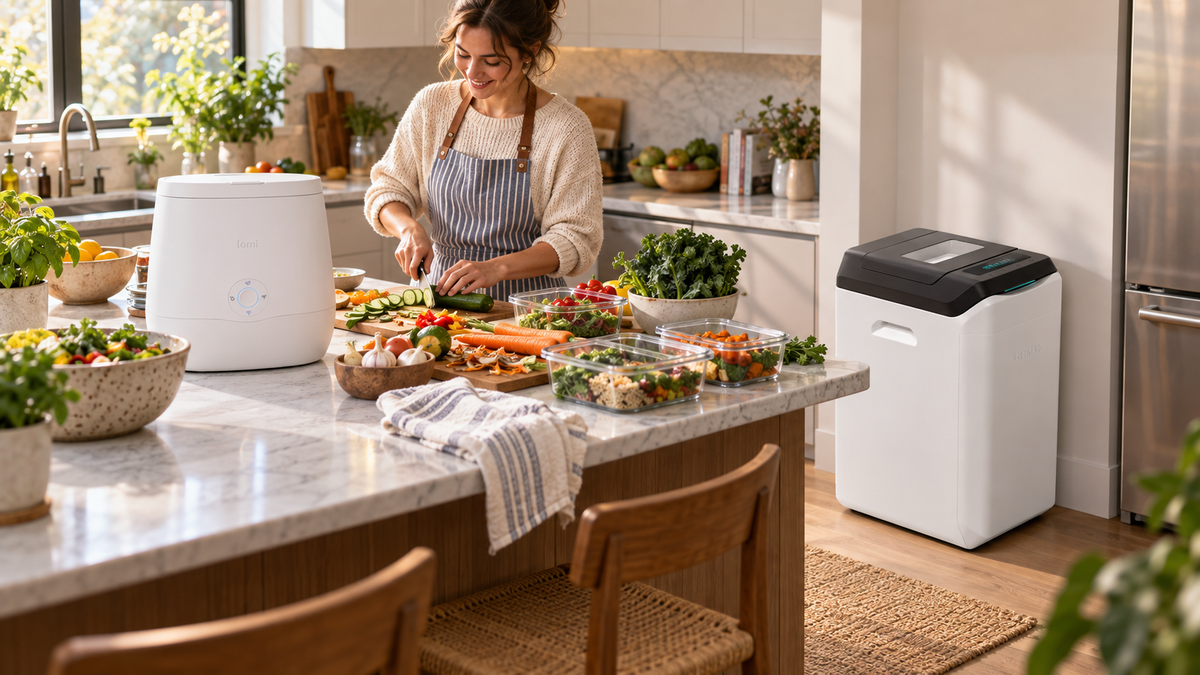
Lomi vs GEME Composter for Weekly Meal Prep: Why Continuous Feeding Wins
Sunday meal prep rarely creates one neat bucket of food waste at one moment. Scraps arrive while washing produce, trimming vegetables, portioning meat and cleaning up. Lomi 3 processes those scraps...
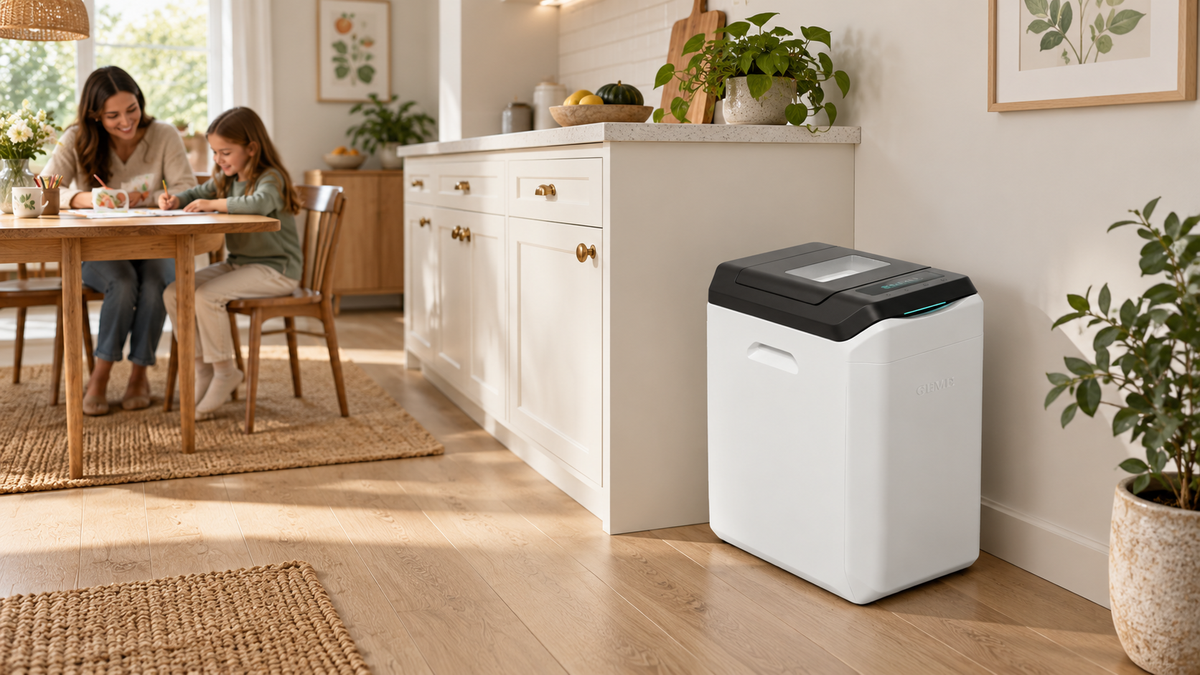
Electric Composter for Homes With Children: Placement & Controls
Build an adult-managed composting routine with GEME. Check child access, lid movement, controls, airflow, and floor space, then choose Terra 2 or GEME Pro for your daily scraps.
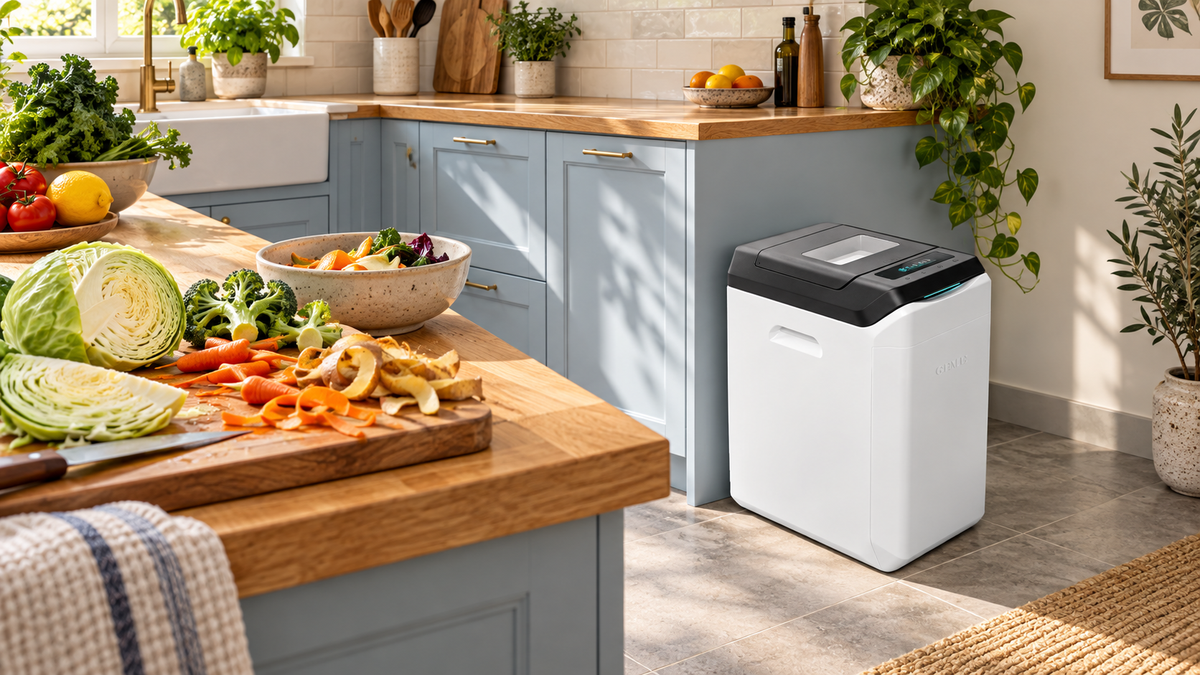
Best Composter for Vegetarian Kitchens: Bulky and Wet Vegetable Scraps
Leafy trimmings, root vegetables, and fruit peels create different composting demands. Use our load-mix table and seven-day log to choose GEME Terra 2 or GEME Pro based on your actual daily scraps.

Electric Composting vs Anaerobic Digestion | Composting Basics 46
Follow food scraps through GEME home composting and facility anaerobic digestion. Compare oxygen, energy recovery, output preparation, and why GEME puts your kitchen-to-soil routine in your hands.
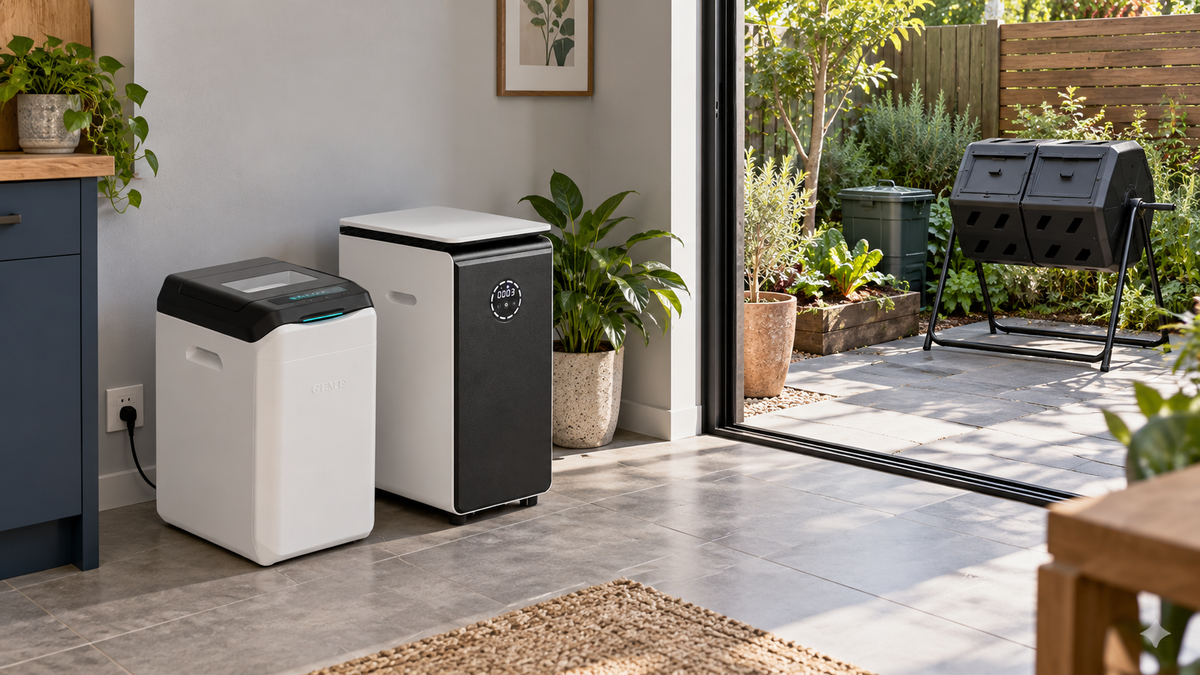
Electric Composter vs Compost Tumbler for a Small Backyard
For most households with a small backyard, GEME is the better way to handle daily kitchen scraps. It keeps the composting routine indoors, automates mixing, accepts continuous feeding, avoids stori...
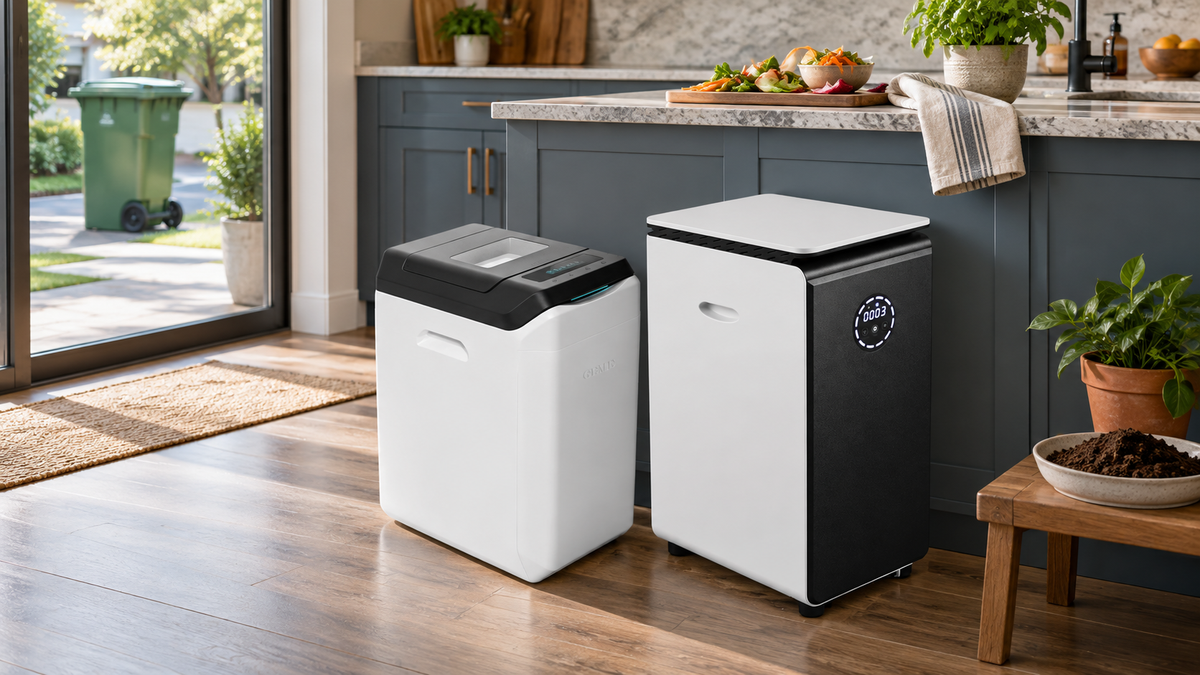
Do You Need an Electric Composter If You Have Curbside Organics Pickup?
Curbside pickup gives food scraps a collection route. A GEME composter adds daily microbial processing at home. Use this guide to decide whether the convenience, odor control, and soil-use benefits...
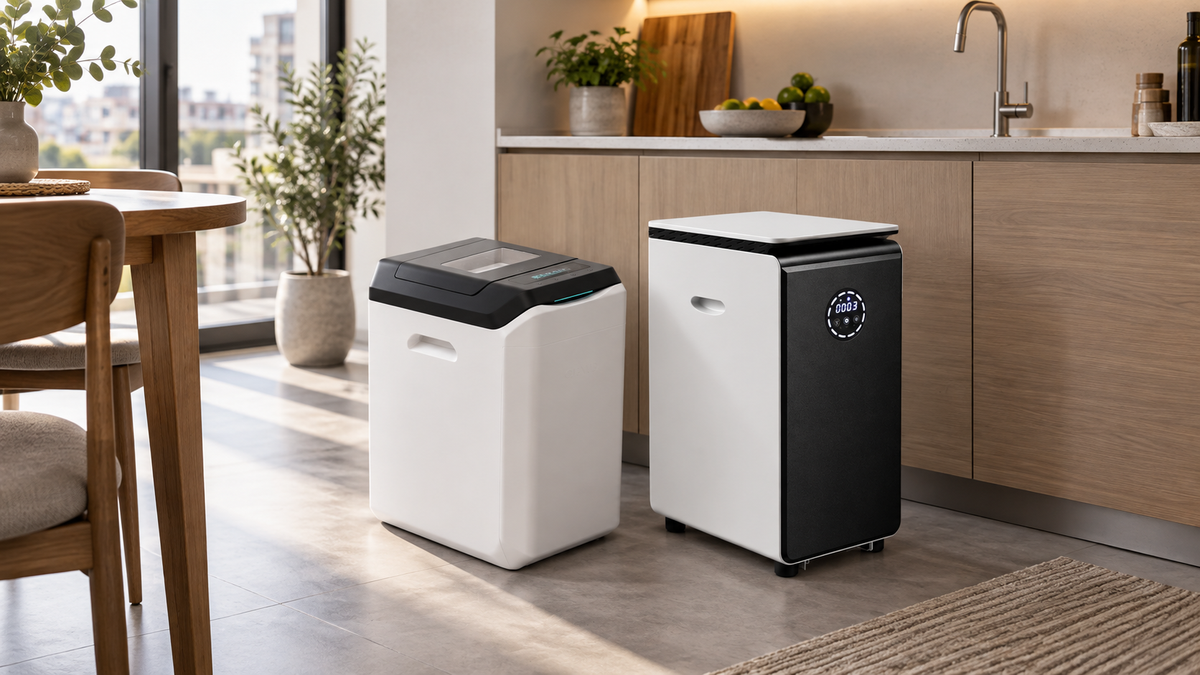
Will an Electric Composter Fit? A Kitchen Measurement Worksheet
Will a floor-standing electric composter actually fit beside your cabinets? Use this practical worksheet to measure width, depth, lid-opening space, airflow clearance, power access and the route fr...