
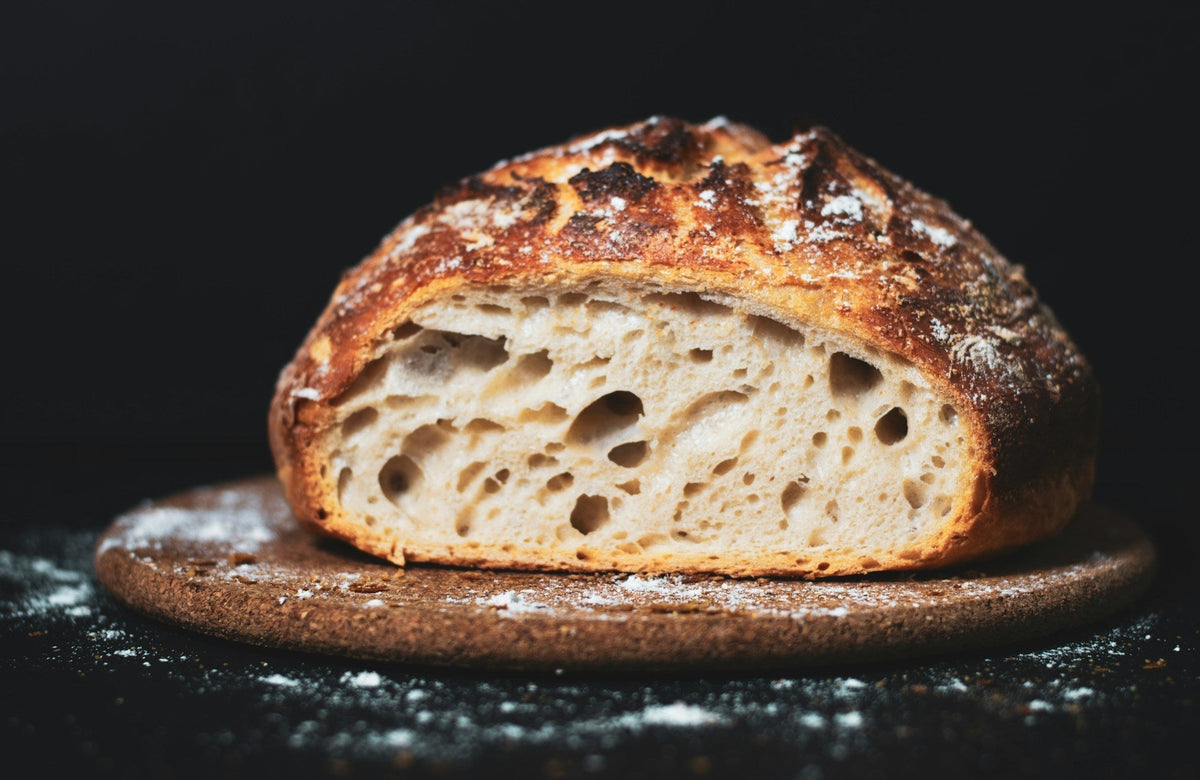
Bread Waste · Moldy Bread · Home Composting
Yes, bread can be composted, including stale bread and bread that has become moldy. But that does not mean every loaf should go straight from the kitchen counter into the compost bin.
There are three separate decisions: Can you still use the bread as food? Is it still safe to eat? If it is no longer food, what is the best composting route?
Stale bread can often still become breadcrumbs, croutons, stuffing, French toast, or another meal. Moldy bread is different: USDA advises discarding moldy bread and baked goods from the food stream because porous foods can be contaminated below the visible surface.
But “do not eat” does not mean “cannot compost.” Once bread genuinely becomes food waste, it can still be biologically processed in an appropriate composting system.
In GEME Terra 2 and GEME Pro, stale, unwanted, or moldy bread can join the normal household food-waste stream after packaging is removed.

Quick Answer: Can You Compost Bread?
Yes.
Use it first. Toast it, turn it into breadcrumbs, croutons, stuffing, bread pudding, or freeze it before quality declines further.
Do not eat it and do not simply cut off the visible mold. Bread is porous, so contamination may extend below the surface.
Compost it. In a backyard pile, bury and cover it carefully. In GEME, remove packaging and add the bread to the normal suitable food-waste stream.
The best hierarchy is: store well → eat while usable → repurpose → freeze surplus → compost unavoidable bread waste.
1. Can Bread Be Composted?
Yes.
Bread is an organic food made primarily from ingredients such as flour, water, yeast, grains, and other plant-based ingredients. Microorganisms can break those materials down.
University Extension composting guides explicitly include stale bread and related grain foods among compostable materials.
The main challenge is not whether bread is biodegradable. It is how bread behaves in a particular composting system.
Bread is:
- soft;
- starchy;
- easy to moisten;
- attractive to rodents and other animals when exposed;
- and capable of forming dense wet masses when too much is added at once.
So bread is not a “never compost” material. In an outdoor pile, it is a “bury it, cover it, and manage it” material.
2. Before Composting: Can You Still Use the Bread?
Composting is better than sending edible organic material to landfill, but preventing food waste comes first.
Bread can lose freshness without becoming unsafe.
| Bread Condition | Food Decision | Best Next Step |
|---|---|---|
| Fresh | Eat normally | Store correctly and use as planned |
| Dry / stale | Often still usable | Toast, reheat, make breadcrumbs, croutons, stuffing, bread pudding, or similar recipes |
| Too much bread, still good | Preserve it | Freeze it before it deteriorates |
| Visible mold | Do not eat | Move it out of the food stream and into an appropriate compost or waste route |
| Clearly spoiled / contaminated | Do not eat | Handle as food waste according to the type of contamination |
Illinois Extension recommends using stale bread in foods such as croutons, stuffing, breadcrumbs, and bread pudding rather than wasting it.
That should happen before composting whenever the bread is still safe and usable.
3. How Do You Store Bread to Reduce Waste?
A large share of bread waste starts before composting becomes relevant.
Bread may become stale, dry out, or develop mold simply because its storage method does not match how quickly the household plans to use it.
Storage Comes Before Composting
If you regularly find half a loaf going stale or moldy, the first solution is not a bigger compost bin.
It is a better storage routine.
For the full counter-versus-fridge-versus-freezer decision, read: How to Store Bread: Counter, Fridge, or Freezer?.
The dedicated storage guide covers:
- when countertop storage makes sense;
- why refrigeration affects bread texture;
- when freezing is the better option;
- how to freeze slices for easy use;
- and how storage choices can reduce avoidable bread waste.
EPA also specifically recommends freezing bread you know will not be eaten in time.
The waste-reduction sequence is:
Store well → eat → repurpose stale bread → freeze surplus → compost what genuinely becomes unavoidable waste.
4. Can You Compost Moldy Bread?
Yes.
Moldy bread may no longer belong in the human food stream, but that does not make the organic material non-compostable.
Molds are fungi, and fungi are part of natural decomposition.
The important distinction is:
Not safe to eat ≠ not compostable.
In a Backyard Compost Pile
Place moldy bread inside the active pile rather than leaving it exposed. Cover it with other compost material and dry browns.
This reduces access for:
- rodents;
- birds;
- raccoons;
- pets;
- and insects.
In GEME
Moldy bread can enter the same suitable household food-waste stream as other unwanted bread scraps.
Remove:
- plastic bags;
- twist ties;
- plastic clips;
- stickers;
- foil;
- and other non-food packaging.
Then add the bread itself to Terra 2 or GEME Pro.
5. Can You Eat Moldy Bread If You Cut Off the Mold?
No.
USDA specifically lists bread and baked goods among foods that should be removed from the food stream when mold appears.
The reason is that bread is porous. Visible mold on one area does not show the full extent of fungal growth below or within the bread.
Do Not Cut Around the Mold and Eat the Rest
The “cut one inch around the mold” rule used for certain hard cheeses does not apply to bread.
If bread has visible mold, stop treating the loaf as edible food.
USDA also advises against sniffing visibly moldy food.
But again, this is a food-safety decision. It does not mean the bread cannot subsequently be composted.

6. How Do You Compost Bread in a Backyard Pile?
Outdoor composting can handle bread, but exposed bread can attract animals.
Cornell Cooperative Extension includes bread, pita, tortillas, crackers, cookies, pretzels, and granola products among compostable materials. Oregon State Extension also identifies bread and grains as wildlife attractants when compost is poorly managed.
Use this routine:
- Remove packaging. Plastic bags, clips, twist ties, stickers, and wrappers stay out.
- Break up large pieces. Smaller bread pieces mix more easily through the pile.
- Place bread inside the pile. Do not leave slices sitting on the surface.
- Cover it. Use dry leaves, shredded cardboard, straw, or other appropriate pile material.
- Maintain airflow. Avoid one dense wet bread mass.
- Keep the pile balanced. Bread should be one component of a varied compost feedstock.
- Watch for pests. If animals are repeatedly reaching the pile, improve containment or stop adding attractant foods.
Backyard rule: bread is compostable, but exposed bread is an invitation to pests.
7. What About Buttered, Cheese, Meat, or Sweet Bread?
This is where the composting method matters.
A cheese sandwich is not chemically transformed into “non-compostable material.” But an open backyard compost pile and an enclosed microbial composter have very different operating conditions.
| Bread Type | Open Backyard Pile | GEME Terra 2 / Pro |
|---|---|---|
| Plain bread / crusts / rolls | Yes; bury and cover | Yes |
| Moldy bread | Yes; bury and cover | Yes |
| Buttered bread | Use caution because fats may attract animals | Normal household food leftovers can be processed |
| Cheese bread / pizza crust with cheese | Dairy is generally discouraged in basic backyard piles because of pests | Cheese and dairy scraps are accepted |
| Meat-filled sandwich / meat bread | Meat is generally discouraged in basic backyard piles | Suitable normal household food scraps can be processed |
| Sweet pastry | Can attract pests; manage carefully | Can enter the normal mixed food-waste stream |
Do Not Apply Backyard Restrictions Directly to GEME
Backyard compost guidance often excludes dairy, meat, oils, and cooked leftovers because ordinary piles can attract animals and may not maintain suitable decomposition conditions.
GEME is an enclosed, actively managed microbial system designed for a much broader range of normal household food scraps.
So “not recommended for an open pile” does not automatically mean “not suitable for GEME.”
8. Can Bread Go Into GEME Terra 2 and GEME Pro?
Yes.
Bread is a suitable household food scrap for both GEME Terra 2 and GEME Pro.
This includes normal household amounts of:
- bread slices;
- crusts;
- buns;
- rolls;
- toast;
- stale bread;
- moldy bread that is no longer edible;
- and ordinary mixed bread leftovers.
From Bread Waste to an Active Biological Process
Traditional kitchen routines often leave unwanted bread sitting in a trash bin until collection day.
With GEME, suitable bread waste can move directly into an established continuous microbial environment.
Terra 2 and GEME Pro use living Kobold™ microorganisms to biologically process food scraps rather than simply drying and grinding them.
GEMEBrain™ manages operating conditions such as airflow, moisture-related conditions, warmth, and mixing, while PermaFilter™ provides odor treatment without routine disposable activated-carbon filter replacement.
You do not need a separate batch just for bread. Add it as part of the household's normal continuous food-waste stream.
Terra 2 or Pro?
| Feature | GEME Terra 2 | GEME Pro |
|---|---|---|
| Chamber | 14 L | 19 L |
| Daily guidance | Up to ~2 kg/day | Up to ~5 kg/day |
| Typical household fit | 1–3 people | Larger households / heavier food-waste routines |
| Bread scraps | Yes | Yes |
| Continuous feeding | Yes | Yes |
| Routine activated-carbon replacement | No | No |
How Should Bread Be Added?
There is no need for an elaborate bread-only preparation routine.
- Remove all non-food packaging.
- Break unusually large bread pieces into more manageable pieces.
- Add the bread with the normal household feed stream.
- Avoid making one unusual ingredient the entire load when a mixed household stream is available.
- Stay within the model's normal capacity guidance.
9. See GEME Terra 2 in Action
GEME is designed around a simple daily habit: suitable food scraps move from the kitchen into a continuous microbial process instead of waiting in a trash bag.
See GEME Terra 2 in Action
Watch on Instagram →
10. What Happens After GEME Processes Bread Scraps?
Bread becomes one component of the active organic material inside GEME.
The harvested material should be treated as GEME Compost Base, not as pure potting soil and not as a reason to plant directly into freshly removed material.
The normal use sequence is:
- Screen the harvested Compost Base.
- Return larger unfinished organic pieces to GEME.
- Use the finer material at approximately 1:8 with plain soil.
- Allow further maturation where appropriate for the intended application.
For detailed use instructions, read How to Use Compost Correctly.
11. Bread Waste Decision Guide
Fresh bread?
Eat it and store the rest properly.
Too much bread?
Freeze the portion you will not use soon.
Stale but still safe?
Repurpose it into toast, crumbs, croutons, stuffing, or another recipe.
Visible mold?
Do not eat it and do not cut around the mold.
Using an outdoor pile?
Break bread up, bury it, cover it, and manage pests.
Using GEME?
Remove packaging and add the bread to the normal suitable household food-waste stream.
Save the Bread First. Compost It When It Truly Becomes Waste.
Bread should not become compost simply because it lost a little freshness.
Store it well. Use stale bread creatively. Freeze extra bread before it spoils.
But once bread genuinely leaves the food stream—whether stale beyond use or visibly moldy—GEME Terra 2 and GEME Pro give that organic material a direct biological route instead of leaving it in household trash.
Frequently Asked Questions
Can you compost bread?
Yes. Bread is biodegradable organic material and can be composted. In a backyard pile, break it up, bury it within the pile, and cover it to reduce pest attraction.
Can you compost stale bread?
Yes, but if stale bread is still safe and usable, food-waste prevention should come first. Consider toast, breadcrumbs, croutons, stuffing, bread pudding, or another recipe before composting it.
Can you compost moldy bread?
Yes. Moldy bread should no longer be eaten, but the organic material can still be composted in an appropriate system.
Can you eat moldy bread if you cut the mold off?
No. USDA recommends discarding moldy bread and baked goods from the food stream because porous foods can be contaminated below the visible surface.
Should you smell moldy bread to check it?
No. USDA advises against sniffing visibly moldy food because spores may cause respiratory irritation.
Does stale bread mean the bread is unsafe?
No. Staling is mainly a quality change. Bread may become dry or firm while still being usable. Mold, contamination, and unsafe storage are separate issues.
How can I keep bread from becoming waste?
Match storage to how quickly you plan to use the loaf and freeze surplus before it deteriorates. For detailed guidance, see How to Store Bread: Counter, Fridge, or Freezer?.
Does bread attract pests in compost?
It can. Bread and grain foods may attract rodents, birds, insects, and other animals when left exposed. Bury and cover bread in an outdoor pile and use a secure composting setup where pests are a problem.
Can cheese bread go into compost?
Cheese and dairy are generally discouraged in basic backyard piles because they can attract animals. A composting system specifically designed to accept dairy may follow different input rules.
Can cheese bread go into GEME?
Yes. GEME accepts cheese and dairy food scraps as part of the normal suitable household food-waste stream. Remove non-food packaging before feeding.
Can sandwiches or bread with meat go into GEME?
Normal household food leftovers containing bread and suitable food ingredients can be processed in GEME. Outdoor backyard guidance that excludes meat for pest reasons should not automatically be applied to an enclosed GEME system.
Can bread go into GEME Terra 2?
Yes. Bread, crusts, rolls, stale bread, and bread that has become moldy can be processed in Terra 2 once they are genuinely food waste. Remove all non-food packaging first.
Can bread go into GEME Pro?
Yes. GEME Pro also accepts bread as part of its normal household organic feed stream and provides higher daily capacity for larger households.
Can moldy bread go into GEME?
Yes. The food-safety decision not to eat moldy bread does not make it non-compostable. Remove packaging and add the bread itself to the GEME food-waste stream.
Do I need to dry bread before adding it to GEME?
No. Bread does not need to be dried before feeding. Add it as ordinary food waste within the machine's normal loading guidance.
Do I have to tear bread into very small pieces for GEME?
No special bread-only size is required. Break unusually large pieces into manageable portions so they mix readily with the existing material.
Can I use GEME Compost Base directly around plant roots?
Do not use pure freshly harvested Compost Base directly around roots. Screen unfinished pieces and use the finer material at approximately 1:8 with plain soil, or allow further maturation where appropriate.
Sources
- USDA FSIS — Molds on Food: Are They Dangerous?
- U.S. EPA — Composting at Home
- U.S. EPA — Preventing Wasted Food at Home
- University of Illinois Extension — Vermicomposting
- Cornell Cooperative Extension — Composting
- Oregon State University Extension — Compost Heat, Odor and Pests
- GEME — How to Store Bread: Counter, Fridge, or Freezer?
- GEME — What Can You Compost at Home?
- GEME — How to Compost at Home
- GEME — How to Use Compost Correctly


Commenta
Nota che i commenti devono essere approvati prima di essere pubblicati.
Questo sito è protetto da hCaptcha e applica le Norme sulla privacy e i Termini di servizio di hCaptcha.