
School Composting · Environmental Education · Food Waste · STEM · Last Reviewed August 17, 2026
Composting at School: How to Start a School Composting Program
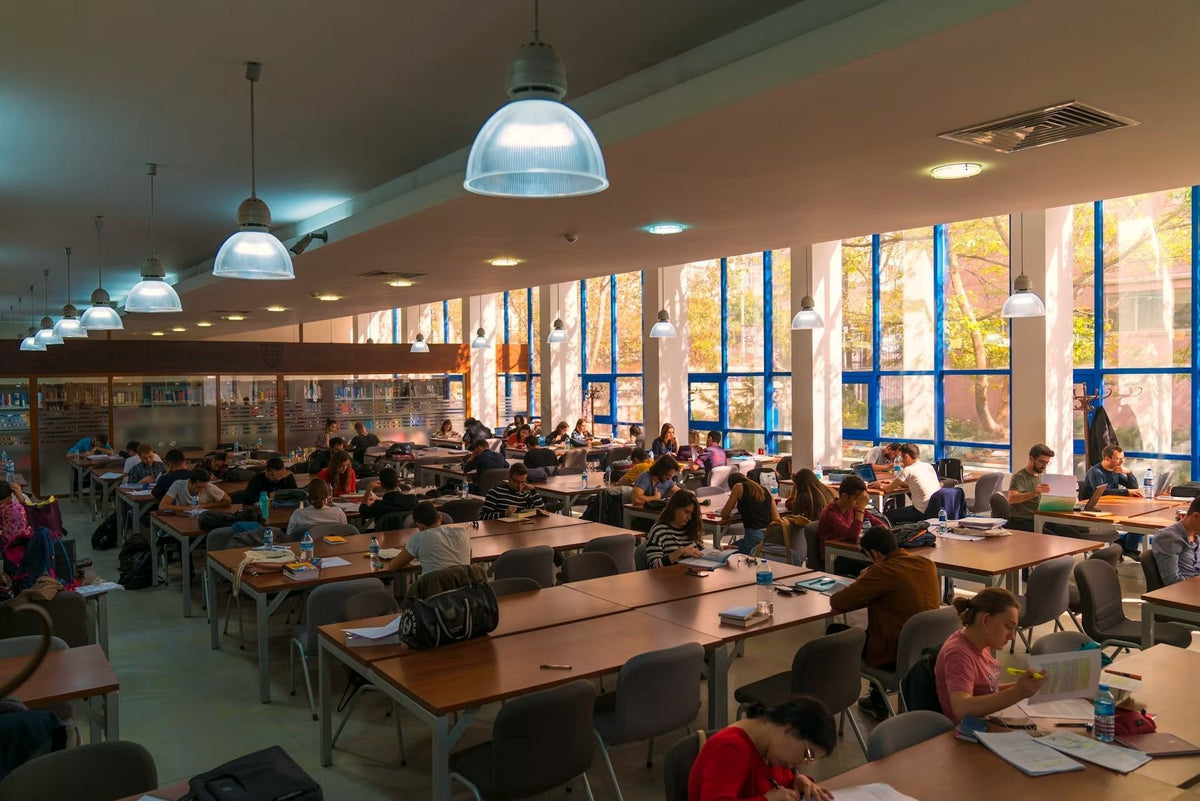
A school composting program can do much more than move food scraps out of the trash. Done well, it can help students understand microorganisms, decomposition, soil, food waste and environmental responsibility while giving the school a practical system for handling unavoidable organic waste.

Quick Answer: How Do You Start a School Composting Program?
Start with three goals:
That order matters.
A school should not judge success only by how many kilograms enter a compost bin. A stronger program teaches students why waste happens, prevents avoidable food waste and then composts the material that genuinely needs a biological destination.
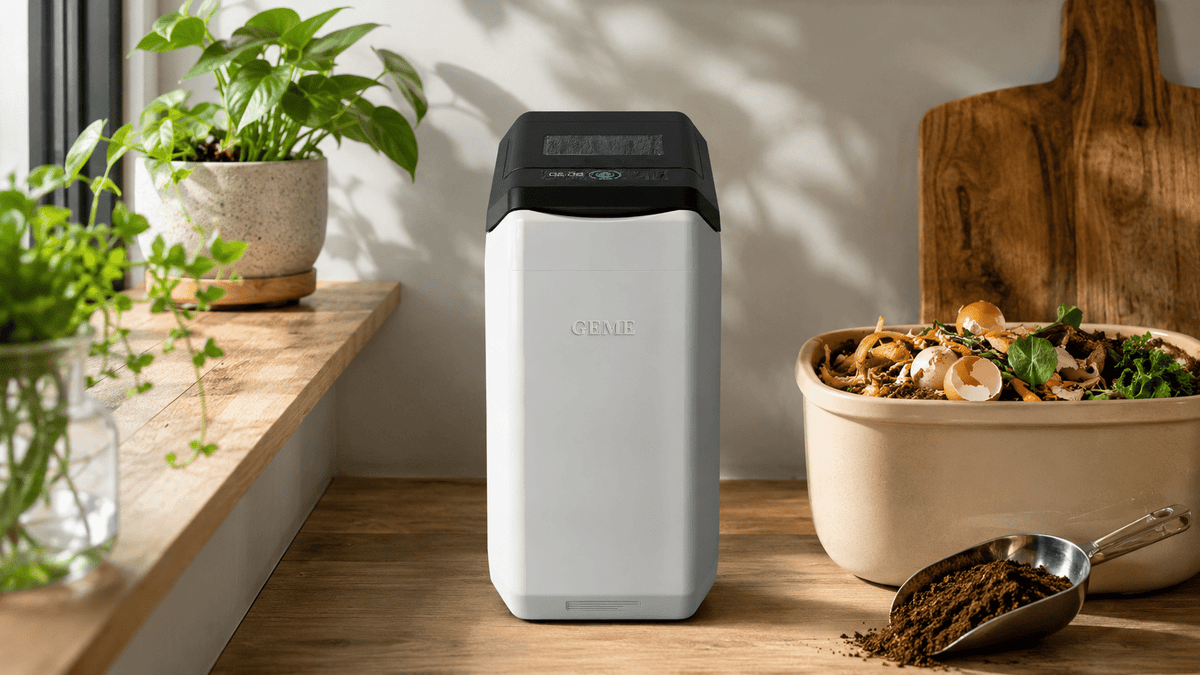
For classroom education, a smaller microbial composter such as GEME Terra 2 can serve as a teacher-managed demonstration system, a kind of living composting laboratory where students can observe microbial decomposition much more directly.
For cafeteria-scale waste from hundreds of meals, however, schools should evaluate commercial collection or appropriately sized GEME Titans commercial composting systems rather than treating a household unit as institutional infrastructure.
Table of Contents
- Why Composting at School Matters
- Education, Prevention and Processing
- Step 1: Run a Student Food Waste Audit
- Step 2: Build the School Composting Team
- Step 3: Choose the Right Composting Pathway
- Using Terra 2 as a Classroom Composting Lab
- Composting STEM Activities for Students
- Building Environmental Awareness
- Step 4: Design the Cafeteria Sorting System
- Step 5: Decide What Can Be Composted
- Step 6: Run a School Composting Pilot
- Safety and School Garden Boundaries
- How to Measure School Composting Success
- When a School Needs Commercial Composting
- 30-Day School Composting Launch Plan
- Common School Composting Mistakes
- Frequently Asked Questions
1. Why Composting at School Matters
Schools are one of the few places where food, science, behavior, waste infrastructure and community education all meet every day.
A banana peel left on a lunch tray may look like a small piece of trash.
But that peel can become a lesson about:
- how food is grown;
- why wasting food wastes more than the food itself;
- how microorganisms obtain energy;
- why compost requires oxygen and moisture;
- why landfills and compost piles behave differently;
- how organic matter returns to soil;
- and how individual choices connect to larger waste systems.
EPA's current youth education resources specifically encourage schools to involve students in food-waste prevention, cafeteria waste audits and composting education.
See the EPA resources for educating youth about wasted food.
That makes composting at school much more than a facilities project.
It can be a practical form of environmental education.
The most valuable lesson is not “put food in the green bin.” It is understanding what happens to materials after we are finished with them.
2. Build the Program Around Three Goals: Educate, Prevent and Process
One reason school composting projects sometimes become confusing is that people use the word “composting” to describe several different goals.
Separating them makes planning much easier.
Goal 1: Educate Students
The first goal can be educational even if the school produces only a small quantity of compost.
Students can observe the biology of decomposition, measure waste, examine different material types and understand how natural nutrient cycles work.
For this purpose, a small classroom composter, worm bin or carefully managed compost demonstration can be more useful than a large waste system that students never see.
Goal 2: Prevent Wasted Food
A compost bin does not make unnecessary food waste desirable.
Food already required land, water, energy, transportation, refrigeration and labor before it reached the cafeteria.
The better question is:
What food can we prevent from becoming waste, and what unavoidable scraps still need a destination?
Goal 3: Process Unavoidable Organics
Once avoidable waste has been reduced, the school still needs a realistic system for peels, cores, preparation scraps and other accepted organics.
That system might be:
- a classroom demonstration composter;
- a worm bin;
- a school garden compost pile;
- a commercial compost collection service;
- or a larger on-site food waste composter for schools.
EPA recognizes on-site composting as one option for schools and other institutions, while also emphasizing local services, regulations, partners, available space and long-term program support.
3. Step 1: Run a Student Food Waste Audit
Before choosing a composter, measure the waste.
EPA, USDA and the University of Arkansas have jointly published a guide specifically for student food waste audits in schools.
A food waste audit helps students and staff understand not just how much material is discarded, but what kind of material is being discarded.
See the Guide to Conducting Student Food Waste Audits.
Separate the Waste Into Useful Categories
Let Students Collect the Data
Instead of giving students a pre-made sustainability statistic, let them generate one.
Record:
- date;
- number of meals served;
- total discarded food mass;
- edible food waste;
- unavoidable scraps;
- kitchen preparation waste;
- post-consumer plate waste;
- contamination mass.
Useful classroom metric
Food waste per meal = total food waste mass ÷ number of meals served
Students can graph the result over several weeks and ask why it changes.
Did one menu generate unusually high plate waste?
Did a student campaign improve the result?
Did a new sorting station reduce contamination?
This transforms a sustainability project into data literacy.
4. Step 2: Build a School Composting Team
A school composting program should not depend on one enthusiastic teacher indefinitely.
The program crosses teaching, food service, cleaning, waste collection, facilities, and sometimes gardening.
| Participant | Possible Role |
|---|---|
| Administrator | Approvals, budget, policy and coordination |
| Teacher / Science Lead | Curriculum, experiments and classroom supervision |
| Student Green Team | Audits, peer education, monitoring and reporting |
| Cafeteria Team | Kitchen scraps, meal flow and bin placement |
| Custodial / Facilities Team | Cleaning, movement, storage and collection workflow |
| Garden Coordinator | Appropriate compost use and garden safety |
| Waste Hauler / Processor | Accepted materials, contamination limits and collection |
Students should have a meaningful role, but adults remain responsible for program safety, equipment, contracts and compliance.
5. Step 3: Choose the Right Composting Pathway
There is no single “best school composter.”
The best system depends on what the school is trying to accomplish.
| System | Best Role | Typical Limitation |
|---|---|---|
| Classroom Microbial Composter | Science, sustainability and food-waste education | Not sized for whole-school cafeteria waste |
| Vermicomposting | Small-scale classroom biology and soil ecology | Limited throughput and narrower feeding conditions |
| School Garden Composting | Plant scraps, leaves, garden materials and outdoor education | Needs space, time and conservative food-safety controls |
| Off-Site Organics Collection | Schools with a reliable commercial or municipal processor | Students may see less of the biological process itself |
| Institutional On-Site System | Larger daily cafeteria and campus organics streams | Requires project sizing, site planning and operational responsibility |
For schools that mainly want to teach students how composting works, bigger is not automatically better.
A smaller visible system can actually create more educational value because students can follow what enters it and observe what changes.
6. Using GEME Terra 2 as a Classroom Composting Lab
This is where a smaller electric microbial composter can play a different role from an institutional cafeteria system.
GEME Terra 2 is designed as a household-scale continuous microbial composter. It uses a living Kobold microbial ecosystem in a warm, moist, oxygen-rich environment, while GEMEBrain helps manage airflow, heat, moisture and mixing.
In a school, its most useful role is not:
“Process every lunch tray from the cafeteria.”
Its stronger role is:
“Help students observe a real microbial composting system close enough to ask questions about what is happening inside.”
That turns Terra 2 into a kind of living composting laboratory.

Classroom Composting
Make the Biology Visible
Students can weigh selected scraps, record what was added, observe how recognizable structures change and connect what they see to microorganisms, enzymes, oxygen, moisture and temperature.
The goal is not to make food “magically disappear.” It is to understand that living organisms are transforming organic matter.
Explore GEME Terra 2 →Why a Controlled Microbial System Can Be Useful for Teaching
A conventional compost pile is a powerful teaching tool, but change can be slow, weather-dependent and physically difficult to observe from one lesson to the next.
An indoor microbial system provides another teaching format.
Students can repeatedly return to the same process and ask:
- What did we add yesterday?
- Which pieces are still recognizable?
- Which materials changed fastest?
- Why did one food break down differently from another?
- What are microorganisms doing?
- Why does aerobic composting require oxygen?
- What happens when a biological system becomes too wet?
- Where does the original mass of the food go?
For the underlying science, connect the lesson to How Does Composting Work?, which explains microorganisms, enzymes, respiration, oxygen, moisture, heat and stabilization.
Students can also explore the larger waste system through What Happens to Food Waste After You Throw It Away?.
Important Classroom Boundary
Terra 2 should be treated as powered equipment under adult control, not as an unsupervised student toy.
Teachers should follow the current operating instructions, school electrical and equipment policies, and age-appropriate supervision rules. Students can weigh, classify, record and observe materials while an authorized adult manages the machine itself.
Do not allow students to reach into moving equipment or improvise experiments that conflict with the manufacturer's feeding and safety instructions.
Current operating guidance is available through the GEME FAQ and knowledge base.
7. Composting STEM Activities for Students
Once students have access to a composting system, the project can move beyond “what goes in the bin?”
It can become an inquiry-based science program.
Experiment 1: Does Particle Size Affect Visible Breakdown?
Students can compare equal masses of the same suitable organic material prepared in different sizes.
Before starting, they write a hypothesis:
Will smaller pieces lose their recognizable structure faster because microorganisms have access to more surface area?
The educational objective is not to promise an exact decomposition time. It is to connect surface area with microbial accessibility.
Experiment 2: Which Food Types Change at Different Rates?
Compare selected safe inputs such as:
- soft fruit;
- vegetable scraps;
- fibrous plant material;
- cooked grains;
- coffee grounds.
Students can record qualitative observations while discussing how water content, fibre structure and chemistry affect decomposition.
Experiment 3: Food Waste Mass Balance
Ask students a deceptively simple question:
“If the food gets smaller, where did the matter go?”
This opens the door to carbon cycling.
During aerobic composting, microorganisms metabolize organic compounds. Some carbon leaves as carbon dioxide, water can evaporate, nutrients become part of microbial biomass and transformed organic matter remains in the compost base.
That is much more scientifically useful than telling students that the machine “eliminates food waste.”
Experiment 4: Why Oxygen Matters
Students can study the difference between aerobic composting and oxygen-poor decomposition conceptually without intentionally creating unsafe or badly managed conditions.
Use diagrams and observations to discuss why too much moisture or compaction can limit oxygen transfer.
The science behind this is covered in GEME's composting science guide.
Experiment 5: Audit Before and After Education
Run a cafeteria food waste audit before launching student education.
Then run the same audit several weeks later.
Compare:
- food waste per meal;
- edible food discarded;
- organics captured;
- contamination rate.
Students can then answer a much more powerful question:
Did learning change behavior?
8. Use Composting to Build Environmental Awareness, Not Just Sorting Habits
The deepest educational value of a school composting project is not memorizing which bin receives a banana peel.
It is understanding that there is no literal place called “away.”
Once food leaves a student's tray, it enters another system.
Food may be:
→ eaten;
→ shared or recovered where appropriate;
→ composted;
→ processed through another organics pathway;
→ or disposed of.
Each pathway requires infrastructure and produces different consequences.
This gives teachers a natural bridge into broader topics:
- resource conservation;
- food systems;
- landfill management;
- carbon cycling;
- soil health;
- microbiology;
- circular economy;
- consumer behavior;
- community infrastructure.
EPA describes environmental education as a multidisciplinary approach that builds knowledge, critical thinking and the ability to make informed and responsible decisions.
School composting fits that model particularly well because students can connect abstract environmental concepts to a material they see every lunchtime.
See EPA environmental education resources for students and educators.
9. Step 4: Design a Cafeteria Sorting System Students Can Understand Quickly
The educational side of school composting does not remove the need for good waste-system design.
A cafeteria is noisy, crowded and fast.
Students should not need to read a paragraph before deciding where an item goes.
Use the School's Actual Materials in Signs
Instead of generic icons, photograph real cafeteria items.
For example:
- the apple served by the school;
- the actual lunch tray;
- the school's fork;
- the local milk carton;
- a condiment packet;
- the specific napkin supplied.
Then label exactly where each belongs.
Design the Station Around the Real Process
A station might contain:
Liquids → Food Share / Recovery → Organics → Recycling → Trash
But the exact order and categories depend on local rules and the receiving processor.
Use Student Monitors During Launch
A Green Team can help classmates interpret the system during the first weeks.
This creates peer-to-peer environmental education while also reducing contamination.
Contamination rate
Non-accepted material in the organics stream ÷ total organics-stream mass × 100
10. Step 5: Decide What Can Be Composted at School
There is no universal school sign that can safely say:
“Everything that was food goes in the compost.”
Different systems accept different materials.
Classroom Microbial Composting
If a school uses Terra 2 for supervised education, follow the machine's current feed rules rather than backyard compost instructions.
Terra 2 is designed primarily for kitchen organics. Avoid plastics, metal, glass, hard dense objects and materials that may wrap or jam the system.
For examples and current boundaries, use GEME's live feed and operating guidance.
Outdoor School Garden Compost
If compost will be made on-site for an edible school garden, use a more conservative standard.
USDA Food and Nutrition Service recommends plant products such as fruit and vegetable culls, cores and trimmings together with leaves, grass clippings and twigs.
USDA also advises against raw manure, animal products, animal waste and cafeteria waste that might contain animal products in school garden compost.
See USDA Food Safety Tips for School Gardens.
Commercial or Municipal Organics Processing
A professional facility may accept a broader food-waste stream, but the school's signage must follow that processor's actual requirements.
Never assume one processor's acceptance list applies to another.
For a broader introduction to compostable materials, see What Can You Compost at Home?, while remembering that school and institutional rules may be different.
11. Step 6: Start With a School Composting Pilot
Do not redesign the entire campus waste system on day one.
Start with something measurable:
- one class;
- one Green Team;
- one science lab;
- one lunch period;
- one cafeteria station;
- or kitchen preparation scraps only.
A Classroom Education Pilot
A teacher might begin with a supervised Terra 2 project involving selected scraps from one class or demonstration group.
The educational metrics could include:
- student participation;
- accuracy of waste classification;
- ability to explain aerobic decomposition;
- food waste observations;
- student hypotheses and results.
A Cafeteria Operations Pilot
A facilities-oriented pilot might instead track:
- kilograms of organics collected;
- contamination rate;
- staff time;
- bin cleaning;
- collection frequency;
- storage;
- processor acceptance.
Keeping the two sets of objectives separate helps the school understand whether it is evaluating an educational activity, a waste-management system or both.
12. Safety and School Garden Boundaries
Food waste, compost, microorganisms, tools and powered equipment all require appropriate supervision.
School Composting Safety Basics
- Assign age-appropriate student tasks.
- Require handwashing after handling food scraps, compost or soil.
- Adults should manage powered composting equipment.
- Do not allow students to reach into moving equipment.
- Keep collection containers washable and routinely cleaned.
- Prevent leaking food waste from accumulating around classrooms or cafeterias.
- Follow local school, health, waste and pest-control requirements.
- Follow the manufacturer's instructions for any powered system.
- Use conservative composting practices where output is intended for edible school gardens.
A composting lesson does not require students to physically handle every part of the process.
Observation, weighing, classification, data collection and hypothesis testing can deliver substantial educational value while adults retain control of the equipment.
13. How to Measure School Composting Success
A school sustainability program should be able to demonstrate what changed.
| Metric | What It Tells You |
|---|---|
| Total Food Waste | Size of the school's waste stream |
| Food Waste per Meal | Allows comparison when attendance changes |
| Edible Food Prevented | Whether the school is preventing waste rather than merely processing it |
| Organics Diverted | How much suitable material reaches biological processing |
| Contamination Rate | Whether students understand the sorting system |
| Student Knowledge | Whether environmental education is producing understanding |
| Participation | Whether the system is becoming part of normal school behavior |
| Operating Cost | Whether the program can be sustained |
Measure Learning Too
For an educational composting program, ask students before and after the project:
- What is composting?
- What organisms perform decomposition?
- Why is oxygen important?
- What happens to carbon in food waste?
- Why is prevention different from composting?
- Where does food waste go if it is thrown in the trash?
That allows the school to measure something often missed in sustainability reporting:
whether students actually understand the environmental system better than before.
14. When Does a School Need an Institutional Food Waste Composter?
Terra 2 can make sense for a supervised classroom, sustainability lab or Green Team demonstration.
It should not be confused with infrastructure designed to process a large cafeteria waste stream.
A school should consider an institutional solution when:
- daily organics volume is much larger than a classroom project;
- food waste is generated consistently across multiple meal services;
- on-site storage creates odor or hygiene pressure;
- hauling costs are significant;
- the school wants to process organics close to the source;
- facilities staff can support a defined operating workflow;
- local rules allow the proposed processing method.
GEME Titans are commercial aerobic bio-processing systems designed for sites including campuses, restaurants, communities, supermarkets and municipalities.
Current configurations cover approximately 10–10,000 kg/day, but a school should never select equipment from enrollment numbers alone.
Sizing should consider:
- actual kilograms of food waste per day;
- peak load;
- feedstock composition;
- contamination;
- space;
- utilities;
- operator workflow;
- output handling;
- local requirements.

Education vs Operations
Use the Right Scale for the Right Goal
A school can use a smaller microbial composter to teach the biology while using a different system to manage the full cafeteria waste stream.
Those are complementary roles, not competing ones.
Terra 2: classroom-scale education and demonstration.
GEME Titans: project-sized commercial organics processing.
Explore GEME Titans →15. A 30-Day School Composting Program Launch Plan
| Week | Action | Outcome |
|---|---|---|
| Week 1 | Run student food waste audit | Baseline waste data |
| Week 2 | Choose education and processing pathways | Clear program scope and accepted-material rules |
| Week 3 | Train teachers, cafeteria staff and student Green Team | Ready sorting and classroom systems |
| Week 4 | Launch small pilot and measure results | Evidence for Go / Adjust / Stop decision |
At the End of 30 Days, Ask Three Sets of Questions
16. Common School Composting Mistakes
Mistake 1: Starting With Equipment Instead of a Goal
Buying a composter does not automatically create an educational program or an effective waste system.
Decide first whether the objective is teaching, waste prevention, organics processing or a combination.
Mistake 2: Measuring Success Only by Kilograms Composted
A school that prevents 20 kg of edible food from becoming waste may have achieved more than one that simply sends an additional 20 kg into a compost stream.
Mistake 3: Teaching Students That Food “Disappears”
Food does not vanish.
Microorganisms transform organic matter through biological processes.
That distinction is central to understanding real microbial composting rather than simple drying or physical reduction.
Mistake 4: Using Terra 2 as Though It Were a Whole-School Waste Plant
Its school value is strongest as an educational and small-scale demonstration system.
Institutional volume requires institutional sizing.
Mistake 5: Treating Students as Passive Observers
Students can weigh, classify, graph, hypothesize, present and improve the program.
The more real decisions they participate in, the more meaningful the environmental lesson becomes.
Mistake 6: Using the Same “Compostable” List for Every System
A garden pile, worm bin, microbial composter and commercial facility may have different feed requirements.
Mistake 7: Ignoring Custodial and Cafeteria Staff
A program that works on a classroom whiteboard can still fail operationally if bins leak, routes are inefficient, or staff responsibilities are unclear.
Mistake 8: Forgetting the Output
Schools should know what happens after biological processing.
GEME Terra 2 produces a moist, biologically active compost base rather than dry grounds. In normal soil use, larger unfinished pieces can be sifted and returned, while finer material is blended with soil rather than used as pure potting medium.
For current output guidance, see the GEME compost-use FAQ.
Teach the Biology. Design the System.
School Composting Can Start Small and Still Make a Big Educational Difference
For a classroom, science club or Green Team, use composting to make microorganisms, food waste and nutrient cycling visible. For a cafeteria or campus, measure the real waste stream and choose infrastructure that matches the scale.
17. Frequently Asked Questions About Composting at School
How do you start a school composting program?
Begin with a food waste audit, define whether the program is primarily educational, operational or both, build a team, choose a composting pathway, create accepted-material rules and run a small pilot before expanding.
Why should schools teach students about composting?
Composting connects biology, food systems, waste, soil science and environmental responsibility. Students can see that food waste does not simply disappear after it leaves the cafeteria and can learn how microorganisms transform organic matter.
What are some composting activities for students?
Students can conduct food waste audits, weigh scraps, compare material types, study particle size, calculate contamination rates, graph food waste per meal, observe decomposition and develop hypotheses about oxygen, moisture and microbial activity.
Can GEME Terra 2 be used at school?
Terra 2 can be useful as a teacher-managed classroom, science lab, Green Team or sustainability demonstration system. Its educational role should be distinguished from institutional cafeteria waste processing, which may require a much larger system.
Is Terra 2 a classroom toy?
No. It is powered composting equipment. Schools should use adult supervision, follow the current operating instructions and apply their own electrical and equipment safety policies. Student involvement can focus on observation, weighing, classification and data collection.
What can students learn from a microbial composter?
Students can explore microorganisms, enzymes, aerobic respiration, moisture, temperature, surface area, decomposition, carbon cycling, food waste prevention and soil organic matter.
Can a school use Terra 2 for all cafeteria food waste?
Terra 2 is a household-scale system with a current stated daily capacity of up to 2 kg. A school cafeteria generating substantially larger volumes should evaluate commercial organics collection or an appropriately sized institutional system instead.
What is GEME Titans?
GEME Titans is GEME's commercial aerobic bio-processing range for larger food-waste applications including campuses and other institutional environments. Current configurations cover approximately 10 to 10,000 kg per day and require project-level sizing.
Should schools compost edible leftover food?
Preventing avoidable food waste should come before composting. Where safe and legally permitted, schools can also consider appropriate food-sharing or recovery programs before sending edible food into an organics stream.
What is a school food waste audit?
A school food waste audit measures and categorizes discarded material, including edible wasted food, unavoidable scraps, preparation waste, plate waste and contamination. Students can help collect and analyze the data.
Can students manage cafeteria compost bins?
Students can help monitor sorting stations, educate peers and collect data, but staff should remain responsible for safety, sanitation, collection contracts and operational oversight.
What can schools put in compost?
The answer depends on the processing system. A school garden pile, worm bin, commercial facility and microbial composter may each have different accepted materials. Always follow the applicable process and local rules.
Can school compost be used in an edible garden?
Potentially, but schools should apply conservative food-safety standards. USDA recommends plant-based feedstocks for school compost associated with edible gardens and advises against raw manure, animal products, animal waste and cafeteria waste that might contain animal products.
How can schools reduce contamination in compost bins?
Use pictures of actual cafeteria items, simplify the bin sequence, train students and staff, place monitors at sorting stations during launch and measure contamination so the school knows whether the system is improving.
How do schools measure whether composting is working?
Track total food waste, food waste per meal, edible food prevented, organics diverted, contamination, student participation, student knowledge, operating costs and the suitability of the selected processing system.
18. Sources and Further Reading
- U.S. EPA — Educating Youth About Wasted Food
- U.S. EPA — Guide to Conducting Student Food Waste Audits
- U.S. EPA — Start a Composting Program
- U.S. EPA — Approaches to Composting
- U.S. EPA — Reducing Waste at Schools
- U.S. EPA — Learning and Teaching About the Environment
- USDA Food and Nutrition Service — Food Safety Tips for School Gardens
- GEME — Terra 2 Microbial Composter
- GEME — How Controlled Microbial Composting Works
- GEME — Titans Commercial Composting Systems
- GEME — Current Feed, Biology and Compost-Use Guidance
Sources reviewed August 17, 2026. School composting requirements, accepted materials, equipment rules and compost-use requirements vary by jurisdiction, district, processor and intended use. Schools should confirm applicable local health, waste, electrical, zoning, food-safety and facilities requirements before implementation.


Commenta
Nota che i commenti devono essere approvati prima di essere pubblicati.
Questo sito è protetto da hCaptcha e applica le Norme sulla privacy e i Termini di servizio di hCaptcha.