
Electric Composters · Microbes · Food Waste Dehydrators
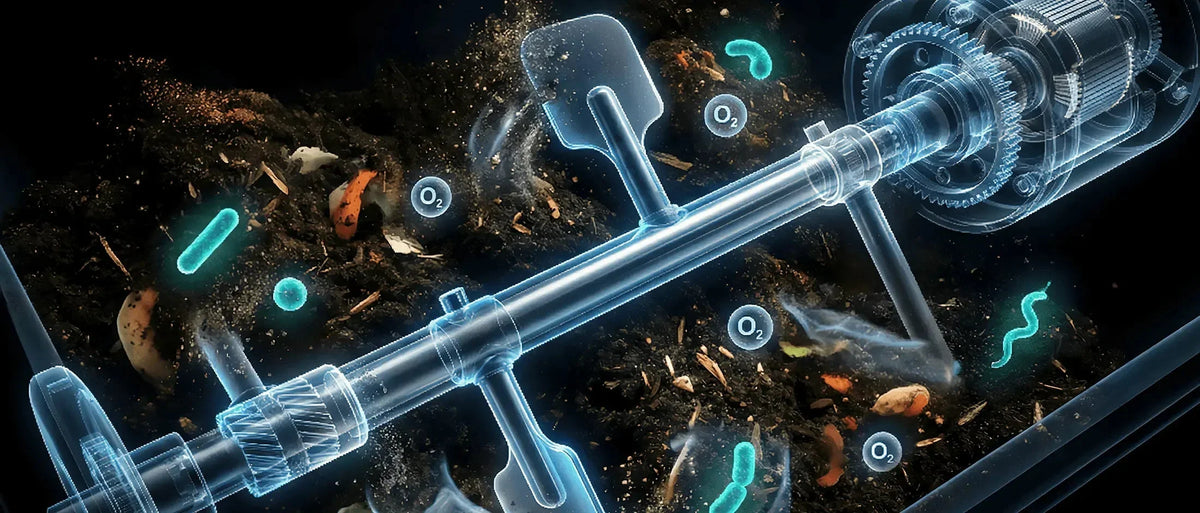
A real electric composter does not simply heat, dry and grind food scraps. True composting is a managed aerobic biological process powered by microorganisms.
Electricity should support the biology: oxygen, moisture, temperature, mixing and odor control. The goal is not dried waste flakes. The goal is biologically processed material that has a responsible pathway back to soil.
Simple rule: if a machine only dries and grinds, it is reducing food-waste volume. If it maintains an aerobic microbial ecosystem, it is performing a fundamentally different process.
By Matthew Moore · Updated September 11, 2026
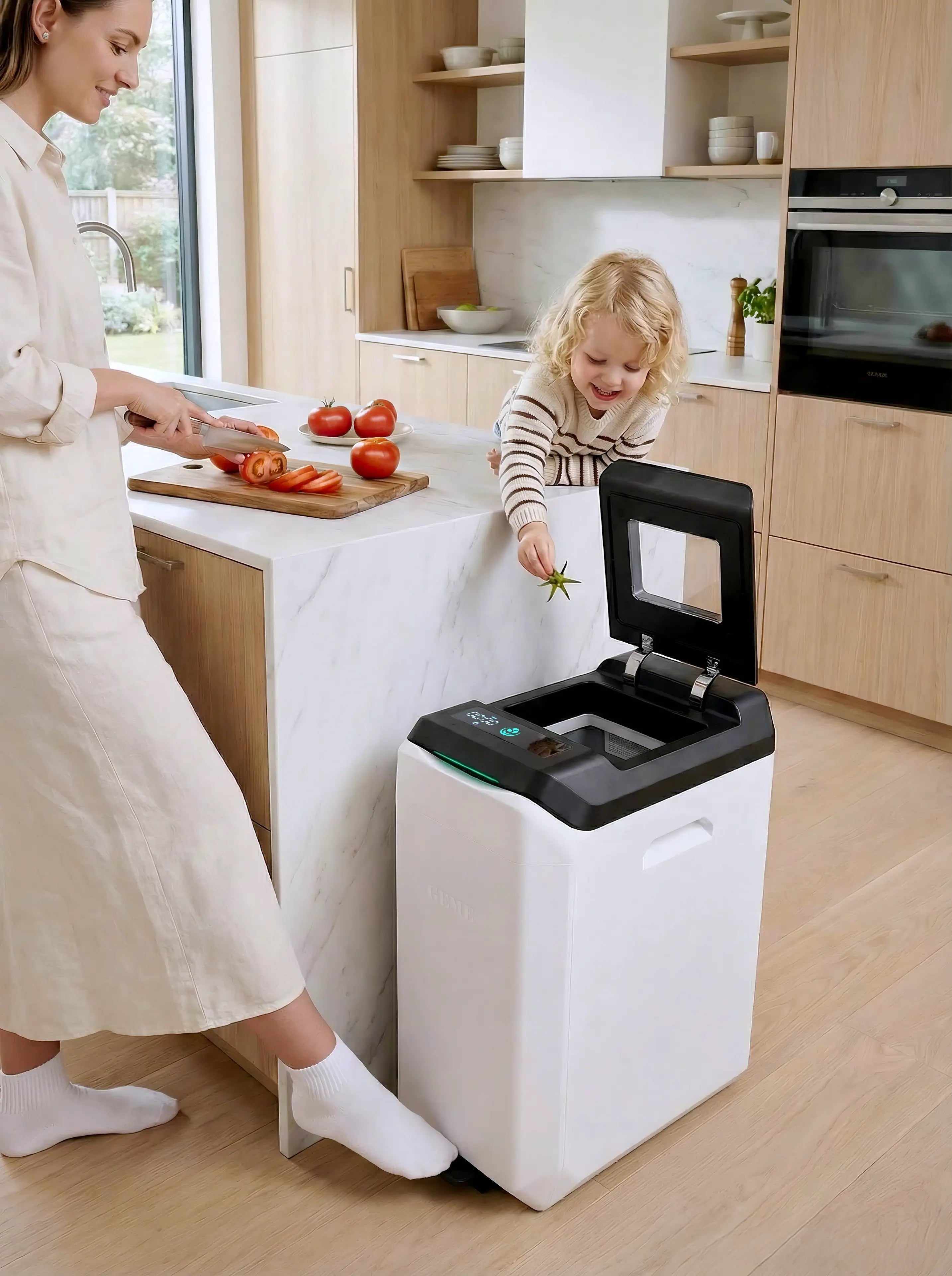
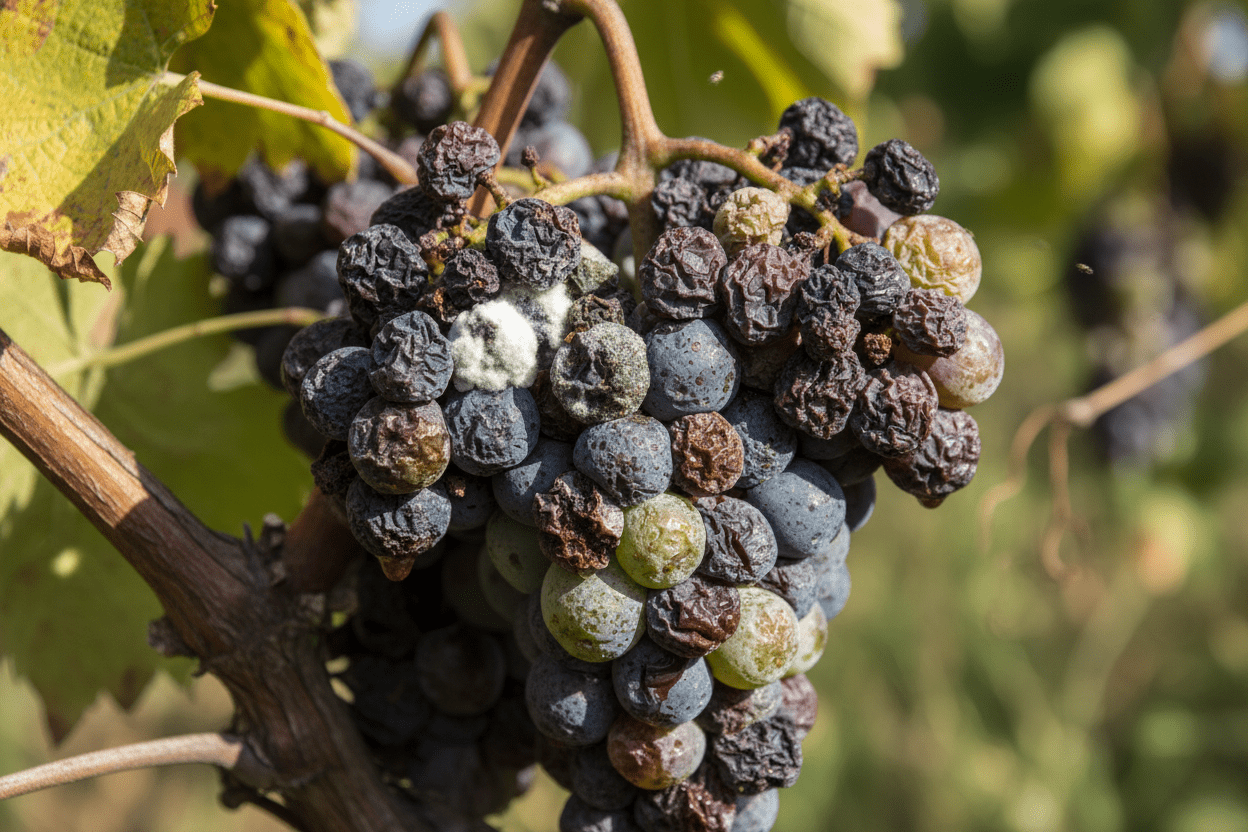
Look for living biology, oxygen, moisture, mixing and a defined soil-use pathway.
Quick Answer
A real electric composter works by creating controlled conditions for aerobic microorganisms to break down organic food scraps. Electricity manages air, temperature, moisture, mixing and odor control so the biological process can continue indoors.
A food-waste dehydrator is different. It mainly uses heat, airflow and grinding to reduce moisture and volume. That can make scraps easier to store or dispose of, but physical reduction is not the same as microbial decomposition.
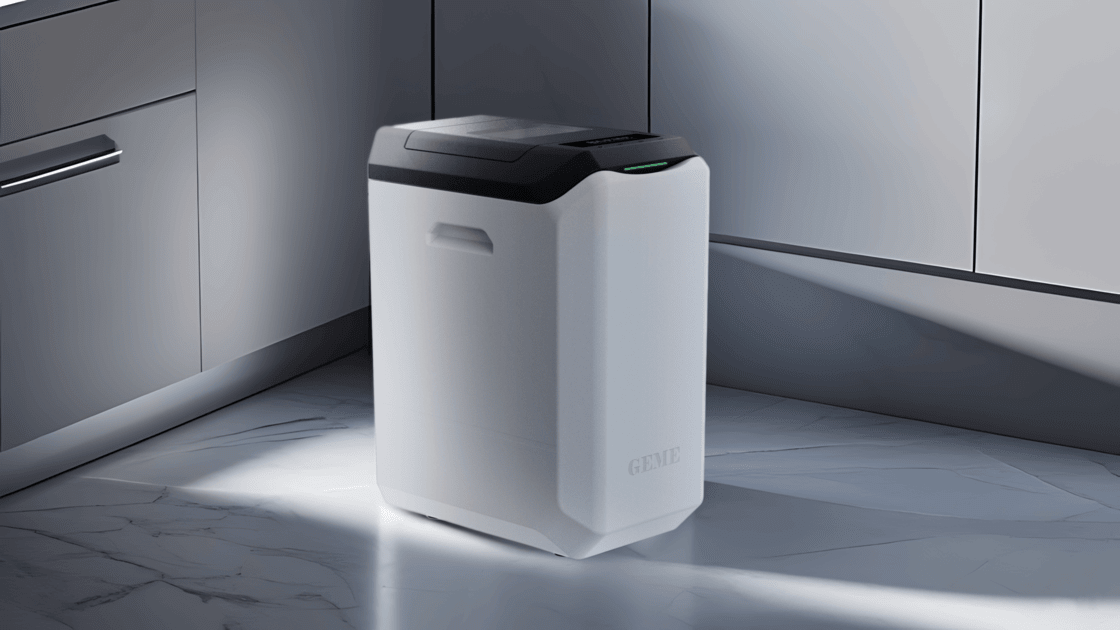
GEME Terra 2 follows the biological pathway: Kobold™ living microbes operate inside a warm, moist and oxygen-rich environment while GEMEBrain™ manages airflow, moisture, heat and mixing.
New to the category? Start with What Is an Electric Composter? For the biology itself, read How Does Composting Work? If you are already comparing machines, continue to Best Kitchen Composters 2026 .
Do Electric Composters Really Compost?
Some electric composters really compost. Others do not.
The term electric composter describes a product category, not necessarily the biological process inside the machine.
The U.S. EPA defines composting as managed, aerobic biological decomposition of organic materials by microorganisms. An electric appliance therefore genuinely composts when electricity supports that biological process through oxygen, moisture, temperature and mixing.
If a machine mainly heats, dehydrates and grinds food scraps, it is reducing moisture and volume. That can still be useful, but drying and grinding alone are not composting.
The Simplest Test: Biology or Dehydration?
| Question | Real Microbial Composting | Dehydration / Food Recycling |
|---|---|---|
| What does the main work? | Living microorganisms | Heat, airflow and mechanical processing |
| Does the process need oxygen? | Yes. Aerobic biology depends on oxygen. | Airflow is mainly used to remove moisture. |
| Is moisture intentionally maintained? | Yes. Microorganisms need moisture. | Usually no. Water removal is a core objective. |
| What happens to the material? | Biological decomposition and transformation | Physical drying, shrinking and grinding |
| Typical output | Biologically processed compost material or Compost Base, depending on maturity | Dry grounds, flakes or processed food residue |
Why Dry Food Scraps Are Not Automatically Compost
Dehydration changes the physical state of food waste. Composting transforms organic material through a biological process.
Removing water can reduce weight, volume and odor. Grinding can reduce particle size. Neither action, by itself, proves that microorganisms have decomposed and stabilized the organic material.
Fast volume reduction is not the same as compost maturity. A machine can make scraps look dramatically different within hours without producing biologically stable finished compost.
Does GEME Terra 2 Really Compost?
Yes. Terra 2 is built around continuous aerobic microbial composting, rather than a closed heat-dry-grind cycle.
Kobold™ microorganisms perform the biological decomposition while GEMEBrain™ manages the surrounding operating conditions.
The chamber remains intentionally warm, moist and oxygen-rich. The objective is not to remove all water and create dry flakes.
Because Terra 2 is continuous-flow, fresh scraps and older material can coexist in the chamber. That is why harvested output is best described as Active Compost Base rather than claiming that every harvested particle has exactly the same maturity.
The practical soil pathway is:
- Screen harvested Compost Base.
- Return larger unfinished organic pieces to the chamber.
- Mix screened Compost Base with plain soil at approximately 1:8.
- Use a soil cap and allow additional maturation when appropriate.
The full application workflow is covered in our Advanced GEME Compost Application Guide .
Table of Contents
- Do Electric Composters Really Compost?
- What Is a Real Electric Composter?
- Why Many Electric Composters Are Actually Dehydrators
- The 6 Systems a Real Electric Composter Needs
- How Microbes Do the Real Work
- How the GEME Terra 2 Cycle Works
- Real Electric Composter vs Food Waste Dehydrator
- How to Tell Whether a Machine Is Really Composting
- How to Use Electric Composter Output
- FAQ
- Summary
- Sources
- Related Articles
What Is a Real Electric Composter?
A real electric composter is a powered appliance that supports biological composting. It does not rely only on heat or mechanical size reduction. Instead, it creates controlled conditions where microorganisms can decompose appropriate organic food scraps aerobically.
In practical terms, it behaves more like a managed compost ecosystem inside an appliance: microorganisms need air, moisture, suitable temperature, organic feedstock, mixing and time.
The key distinction: composting is biological decomposition. Dehydration is moisture removal. Grinding is particle-size reduction.
If you want the broader science behind oxygen, moisture, temperature and decomposition, see How Does Composting Work?.
If you are comparing electric composters with backyard bins, worms, bokashi and other methods, start with our complete home composting guide.
Why Many “Electric Composters” Are Actually Dehydrators
The kitchen-appliance market uses the word “composter” loosely. Some countertop products mainly heat, dry and grind food scraps. This can reduce weight, volume, smell and mess, but it does not automatically create compost.
A typical dehydrator-style workflow looks like this:
- Heat: drives moisture from food scraps.
- Airflow: removes water vapor and manages odor.
- Grinding: reduces particle size.
- Cooling: makes dry output easier to handle.
- Output: produces dry grounds, flakes or processed food residue.
That process can still be useful. The important point is to classify the output correctly.
For real-world examples, see Does the Lomi Composter Really Compost? and our GEME vs Mill Food Recycler comparison. Both show why the end product matters as much as the machine's speed.
The 6 Systems a Real Electric Composter Needs
A real electric composter needs more than a heater. It must help microorganisms remain active and keep the environment aerobic.
| System | What It Does | Why It Matters |
|---|---|---|
| Microbial ecosystem | Maintains organisms that decompose food scraps. | Microbial activity is the biological engine. |
| Oxygen exchange | Provides airflow through the active material. | Low oxygen promotes anaerobic odors and slower breakdown. |
| Moisture management | Keeps material wet enough for biology without waterlogging it. | Microorganisms need water, but saturated material loses air space. |
| Temperature management | Maintains a favorable microbial environment. | Temperature affects biological activity and stability. |
| Mixing | Distributes food, air, moisture and microbes. | Reduces compact, wet or poorly aerated pockets. |
| Odor management | Manages exhaust and odor during normal indoor use. | Indoor composting must remain practical in living spaces. |
How Microbes Do the Real Work
Microorganisms are the engine of composting. Bacteria, fungi and other decomposers consume organic material and transform it over time.
In a real electric composter, electricity is the support system—not the organism doing the composting.
- Heat can influence microbial activity, but heat alone does not make compost.
- Grinding can increase surface area, but smaller particles are not automatically mature.
- Moisture supports microbial metabolism.
- Oxygen keeps decomposition aerobic.
- Mixing improves contact between food, microbes, moisture and air.
- Time is still required for biological transformation and stabilization.
For a full primer on these variables, see our microbes, heat and oxygen guide.
How the GEME Terra 2 Cycle Works
GEME Terra 2 is designed as a continuous aerobic microbial composting system. Kobold™ provides the resident microbial ecosystem, while GEMEBrain™ manages the chamber environment.
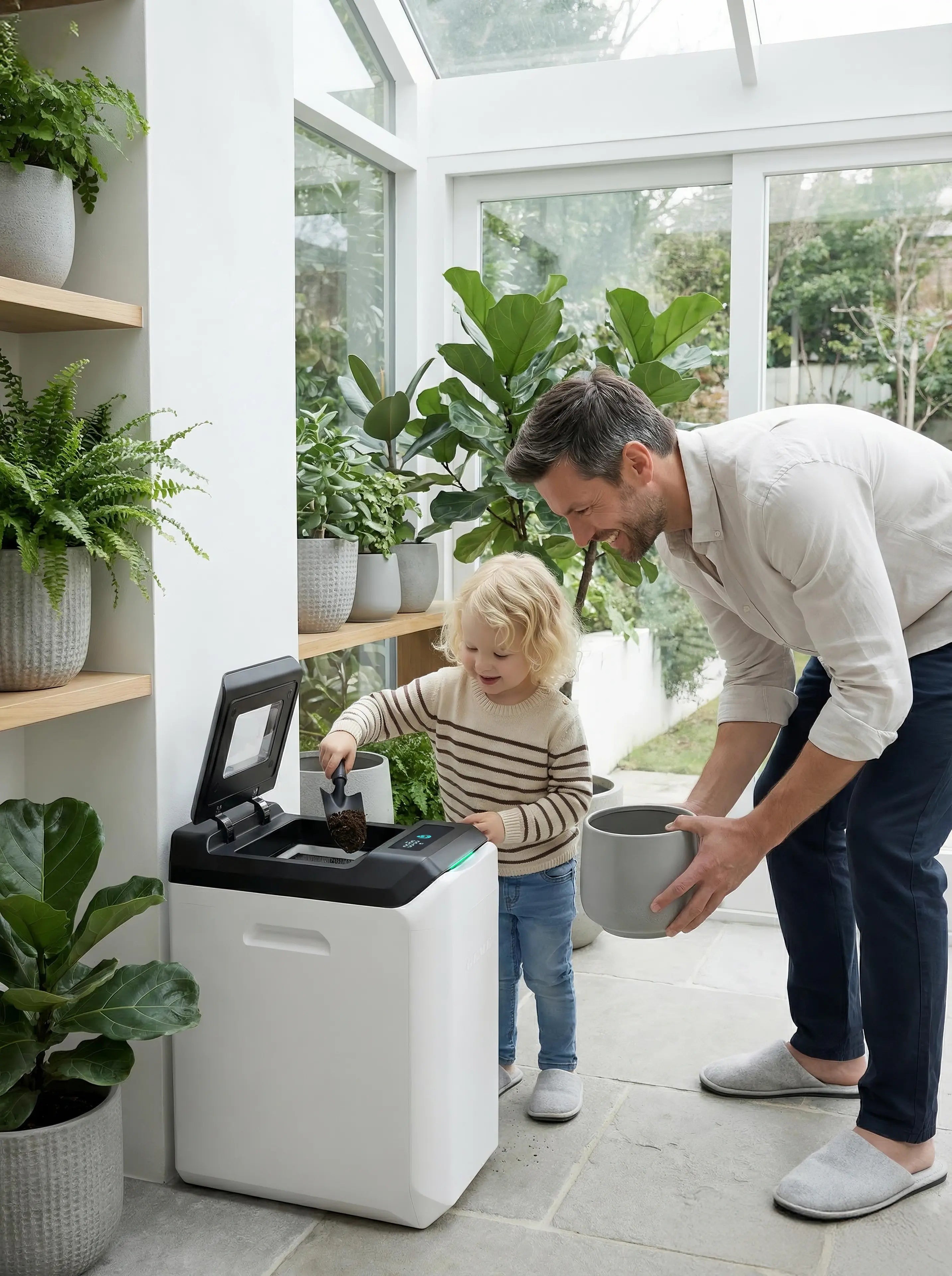
Step 1: Establish a Living Microbial Base
Kobold™ establishes the active biological base that helps decompose new food scraps.
Step 2: Add Appropriate Kitchen Scraps Continuously
Terra 2 is designed for continuous feeding rather than a closed dry-and-grind batch cycle.
Step 3: Manage Air, Moisture, Heat and Mixing
The system maintains conditions that support aerobic microbial activity and reduces the risk of stagnant wet pockets.
Step 4: Let Microorganisms Decompose the Food
Food does not simply become smaller. Microorganisms progressively digest and transform the organic material.
Step 5: Harvest Active Compost Base
Because the system is continuous-flow, harvested material can contain pieces with different residence times. Screen larger unfinished fragments and return suitable organic pieces to the chamber.
Step 6: Mix With Soil Before Plant Use
Do not use fresh GEME Compost Base as pure potting soil. Mix approximately 1 part screened Compost Base with 8 parts plain soil, then use a soil cap where appropriate.
For detailed application scenarios, read the Advanced GEME Compost Application Guide. For broader garden-bed, raised-bed, lawn and container guidance, see How to Use Compost Correctly.

Built around aerobic microbial decomposition.
Choose a Kitchen Composter Built for Biology
GEME Terra 2 supports living microbes, oxygen, moisture, mixing and adaptive control instead of drying food scraps into flakes.
Shop Terra 2 →Continuous microbial composting · No routine replacement odor filter · Compost Base for soil blending
Real Electric Composter vs Food Waste Dehydrator
The words on the box matter less than the process inside the appliance.
| Question | Food Waste Dehydrator / Recycler | Real Electric Composter |
|---|---|---|
| Main process | Heating, airflow, drying and/or grinding | Aerobic microbial decomposition |
| Primary goal | Reduce moisture, volume, smell and storage burden | Biologically transform organic scraps |
| Microbial role | Not the core processing engine | Central to the process |
| Moisture strategy | Remove water | Maintain enough water for microbial activity |
| Typical output | Dry grounds, flakes or processed residue | Moist biologically processed Compost Base |
| Soil pathway | Often requires additional composting, curing or other handling | Screen and blend with soil according to output guidance |
If you are comparing products rather than technologies, our Best Kitchen Composters 2026 guide maps GEME, Lomi, Mill and Reencle according to process, output, capacity and ownership model.
How to Tell Whether a Machine Is Really Composting
Marketing names are inconsistent. A product may be sold as an electric composter, kitchen composter, food recycler, smart bin or food-waste processor.
Ask These Questions
- What is the core process? Microbial decomposition or physical drying?
- Does the system maintain living microorganisms? Real composting depends on biology.
- Does it manage oxygen? Aerobic microorganisms need airflow.
- Does it preserve useful moisture? A completely dry chamber is not an active compost ecosystem.
- Does it mix the material? Mixing affects oxygen, moisture and microbial contact.
- What exactly comes out? Compost Base, dry grounds, flakes or simply smaller scraps?
- What must happen before soil use? The manufacturer should explain screening, curing, soil blending or another next step.
- Are there routine filters, pods or subscriptions? These affect long-term ownership even if they do not change the biological category.
The Better Buying Question
Do not ask only, “How fast does it make scraps disappear?” Ask: What process happens, what material comes out, and what must happen next?
For a category-wide buying framework, see Best Composter 2026.
Also remember that not every microbial competitor is a dehydrator. Reencle, for example, belongs much closer to GEME biologically. See our GEME Terra 2 vs Reencle Prime comparison for a microbial-to-microbial comparison.
How to Use Real Electric Composter Output
Supporting a real biological process does not mean every handful removed from a continuous-flow machine should automatically be treated as uniformly mature finished compost.
For GEME Terra 2, the recommended pathway is to treat harvested material as concentrated Compost Base.
| Step | What to Do | Why |
|---|---|---|
| Screen | Remove large unfinished pieces. | Separates slower material from the soil-use fraction. |
| Return | Put suitable unfinished organic pieces back into GEME. | Allows them to continue decomposing. |
| Mix | Blend approximately 1 part Compost Base with 8 parts plain soil. | Buffers concentrated material for plant use. |
| Cap | Cover the blend with plain soil where appropriate. | Buffers roots and reduces direct exposure. |
| Cure when needed | Give material extra time before sensitive plant use. | Adds additional stabilization when maturity is uncertain. |
Not sure whether compost is mature enough? Use When Is Compost Ready to Use? for the maturity checklist.
For gardens, raised beds, pots and lawns, continue to How to Use Compost Correctly.
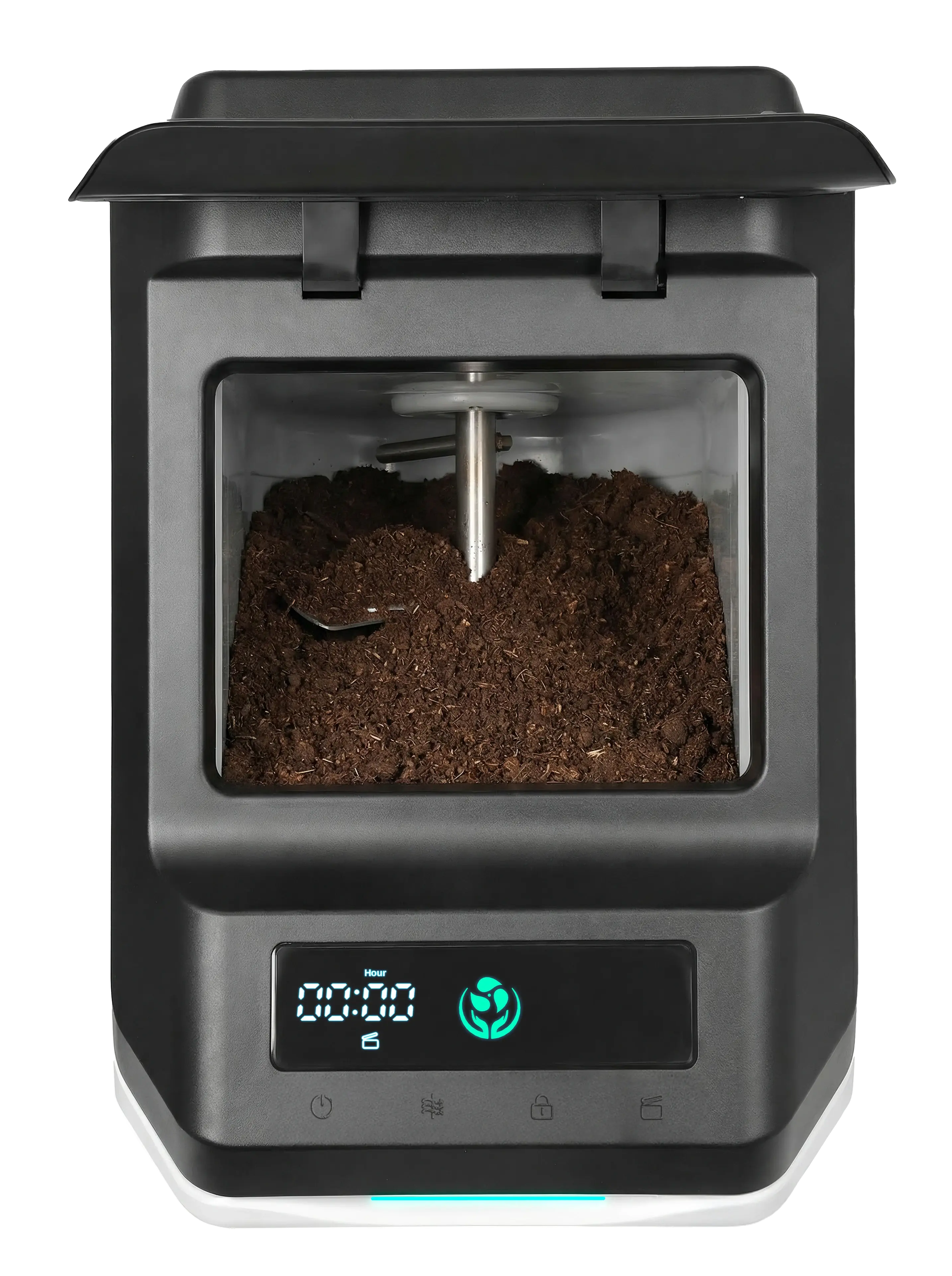
Screen, return, mix 1:8 and use responsibly.
Choose the GEME Size That Fits Your Household
Terra 2 is designed for typical 1–3 person households. GEME Pro adds a 19 L chamber and substantially more daily processing headroom for larger households and heavier cooking routines.
Not sure which size fits? Compare Terra 2 and GEME Pro in the model comparison hub.
Final Takeaway: Real Composting Is a Living Process
A real electric composter should not be judged by the word “composter” on the product page. It should be judged by the process inside the appliance.
If a machine mainly heats, dries and grinds, it can still be useful for food-waste reduction. But that does not make the dry material finished compost.
If the system maintains living microorganisms with oxygen, moisture, warmth and mixing, it is supporting real biological decomposition. GEME Terra 2 is built around that microbial route and connects it to a defined soil-use pathway.
Frequently Asked Questions
Do electric composters really compost?
Some do, and some do not. A real electric composter supports aerobic microbial decomposition using microorganisms, oxygen, moisture and controlled conditions. Appliances that mainly heat, dehydrate and grind scraps reduce food-waste volume but do not create compost through drying alone.
Do electric composters make real compost?
A microbial electric composter can perform real composting, but output maturity still matters. Continuous systems can contain material with different residence times, so harvested material should be handled according to the manufacturer's maturity and soil-use guidance.
Which electric composters only dehydrate food waste?
Dehydrator-style food recyclers primarily use heat, airflow, and often grinding to remove moisture and reduce volume. If the appliance produces dry flakes or grounds without maintaining an active microbial ecosystem, dehydration is doing most of the processing.
How does a real electric composter work?
It creates controlled conditions for aerobic microorganisms to decompose organic food scraps. Electricity supports airflow, moisture, temperature, mixing and odor control.
Is an electric composter the same as a food waste dehydrator?
No. A dehydrator focuses on moisture and volume reduction. A real composter depends on microbial decomposition.
Why is drying food waste not the same as composting?
Drying removes water. Composting transforms organic material biologically through microbial activity under managed aerobic conditions.
Does grinding help composting?
Reducing particle size can increase surface area, but grinding alone does not create compost. Microbial activity, oxygen, moisture and time are still required.
Does GEME Terra 2 dry food waste?
No. Terra 2 is designed around a warm, moist, oxygen-rich microbial chamber. Its output is moist Active Compost Base rather than dry waste flakes.
Can I use GEME Terra 2 output directly on plants?
Do not use concentrated fresh output as pure potting soil. Screen larger pieces, return unfinished material and mix approximately 1 part Compost Base with 8 parts plain soil before plant use.
What is the difference between GEME Terra 2 and GEME Pro?
Terra 2 is designed primarily for 1–3 person households and supports up to about 2 kg of daily food-waste processing. GEME Pro has a 19 L chamber and substantially higher throughput for 4+ person households and heavier daily routines.
How can I tell whether a product is a real composter?
Look for evidence of active microbial decomposition, oxygen management, moisture management, mixing and clear output guidance. Then check what the output actually is and what must happen before it reaches soil.
Summary
- Real composting is biological. Microorganisms perform the decomposition.
- Drying and grinding are physical processes. They can reduce waste without creating finished compost.
- Not every electric composter works the same way. Evaluate the process, not only the category name.
- Moisture and oxygen matter. A living aerobic system needs both.
- Fast breakdown is not the same as maturity. Output condition and residence time still matter.
- GEME Terra 2 uses continuous aerobic microbial processing.
- Terra 2 output is Active Compost Base. It should be screened and mixed with soil rather than used as pure potting soil.
- The GEME soil-use rule is approximately 1:8.
- Terra 2 has no routine replacement odor filter.
- Best buying rule: ask what happens inside, what comes out and what happens next.


Commenta
Nota che i commenti devono essere approvati prima di essere pubblicati.
Questo sito è protetto da hCaptcha e applica le Norme sulla privacy e i Termini di servizio di hCaptcha.