
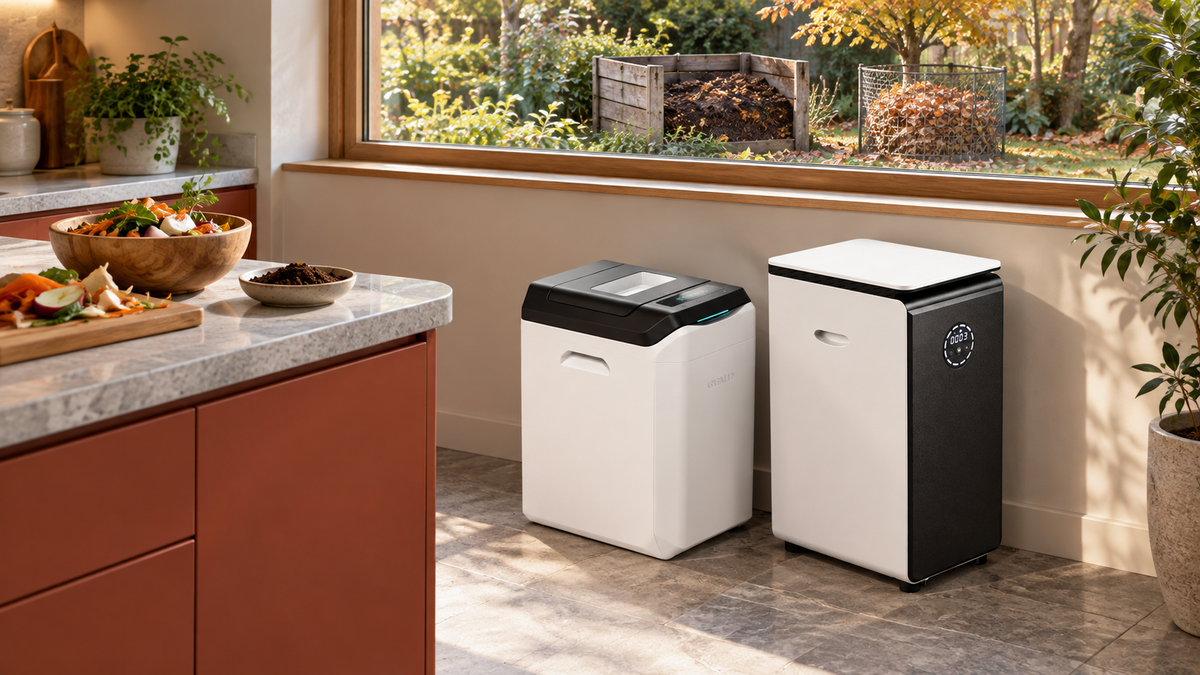
Outdoor Bin to GEME · Kitchen Scraps · Garden Transition
Upgrade your daily kitchen routine without throwing away the compost you have already started.
GEME Terra 2 and GEME Pro bring continuous microbial processing indoors, close to where food scraps are created. You can stop carrying each day's kitchen waste outside while the existing pile completes its outdoor process.
You do not need an empty outdoor compost bin before switching. You need a clear destination for three things: new kitchen scraps, the material already decomposing, and future garden trimmings.

Quick Answer: What Happens to the Old Pile When You Switch to GEME?
Once GEME is set up, send suitable new kitchen scraps to GEME and stop routine fresh additions to the pile you want to finish.
- Existing pile: finish decomposition outdoors, allow curing, and use the mature compost appropriately.
- New kitchen scraps: feed GEME within your model's limits.
- Leaves and garden trimmings: choose a separate garden composting, mulching, or locally accepted collection route.
Leave the old mixed pile on its outdoor finishing route; moving its contents into GEME is not part of the changeover.
For a household ready to retire daily trips to the backyard bin, GEME is the better kitchen system. This guide explains how to make that change without losing the value in your old pile. For wider buying options, visit the Best Composter Hub.
1. Why GEME Is the Better Daily Kitchen Upgrade
The biggest improvement happens after every meal. Instead of storing scraps for the next garden trip, you can add suitable food directly to an indoor microbial chamber.
- Keep processing close to the kitchen. Rain, darkness, or a frozen path no longer determines when you can take today's scraps to the system.
- Let the machine handle mixing. The chamber's automated process removes manual pile turning from your ongoing kitchen-scrap routine.
- Keep feeding an established microbial bed. Suitable additions join a continuing biological process as meals create new scraps.
- Bring odor control indoors. Both models use permanent odor treatment without scheduled replacement odor filters.
GEME still requires electricity, suitable feeding, routine care, and a plan for using harvested Compost Base. Its practical advantage is making everyday food-scrap handling easier to maintain throughout the year. See how GEME's continuous microbial system works.
If you are still deciding whether to make the move, read Compost Pile vs Electric Composter. Here, the task is completing the changeover once you choose GEME.
2. What to Do on the Day You Switch
Set Up GEME Indoors
Place it on a level floor with the ventilation and lid clearance required by the manual. Keep doors and walkways clear. Complete startup with the supplied Kobold™ material; do not substitute old garden compost.
Close the Old Batch
Once GEME is ready for feeding, mark the outdoor pile as the batch being finished. Tell everyone where new kitchen scraps now go, and record the date of the last routine fresh addition.
Assign Garden Waste a Route
Choose a separate destination for the next lawn mowing, leaf collection, or pruning session. Keep those new loads out of the batch you are trying to finish.
Your upgrade can start before the outdoor project ends. Treat the existing pile as a finishing task and GEME as the new daily kitchen routine. You avoid repeatedly extending the old pile's workload.
3. Existing Compost Pile: The Action Table
Inspect the material before deciding what to remove, keep, or use. Different parts of an old bin may be at different stages, especially if fresh scraps have been added on top for months.
| What You Find | What to Do Now | Next Destination |
|---|---|---|
| Fully decomposed, cured material | Separate it from unfinished layers and screen out unwanted debris. | Use as a garden soil amendment suited to the planting area. |
| Recognizable food scraps or an actively decomposing mixture | Keep this batch outdoors to finish. Stop routine new loads. | Cure after active decomposition is complete; reassess before use. |
| Wet, compacted material with an unpleasant smell | Loosen it, mix in dry structural browns as needed, and protect it from excessive rain without sealing off air. | Continue outdoor decomposition; corrective work comes before curing. |
| A dry or frozen pile with unfinished material | Moisten dry material as needed; allow frozen material to thaw before assessing activity. | Reassess under workable conditions. Being cold does not establish maturity. |
| Large sticks, woody stems, or slowly decomposing pieces | Separate them from the finer material. | A separate woody-waste composting, chipping, or accepted garden-waste route. |
| Plastic, treated wood, or material of uncertain origin | Separate identifiable unwanted items. If contamination is uncertain, obtain local advice before garden use. | The appropriate local disposal route; keep these materials out of GEME. |
For mixed-age piles, moisture management, and weather protection, see University of Maryland Extension's home-composting guide. Cornell's temperature guidance explains why heat is only one indicator: moisture, pile size, and heat loss also affect the reading.

4. Should You Stop Adding Fresh Food to the Old Pile?
Yes, if your goal is to finish and retire that batch. Repeated fresh additions leave material at different stages of decomposition. Keep the changeover clear: new suitable food goes to GEME; the old batch gets the time and conditions it needs to finish.
Correcting a soggy pile with dry browns is different from using it as an ongoing collection bin. If you add corrective material, reassess the resulting mixture before calling it ready to cure.
Start the Curing Clock After Active Breakdown
The EPA's backyard-composting guidance recommends at least four weeks of curing once food scraps are no longer visible and the pile no longer reheats after mixing. That period begins at the finishing stage, not automatically on the day you buy GEME.
Look for a decomposed, crumbly material with an earthy smell, as described in the RHS guide to compost readiness. Check several parts of the pile. A cold reading by itself is insufficient, particularly when the pile is frozen, dry, or too small to retain much heat.
Keep the outdoor schedule separate from the kitchen schedule. If the old material needs more time, continue its outdoor care while GEME handles new suitable scraps indoors.
5. Where Will Leaves and Garden Trimmings Go?
Give bulky seasonal garden material its own destination. A successful switch starts with measuring the kitchen workload separately from the contents of the garden cart.
| Material | Practical Route | Changeover Task |
|---|---|---|
| Fallen leaves | A leafmould enclosure or suitable leaf sacks; shredded leaves can also serve for garden composting. | Set up a separate leaf area instead of topping up the finishing pile. |
| Grass clippings | Mulch-mow suitable short clippings back onto the lawn, or use a separate garden-waste route. | Decide the route before the next mowing; follow any lawn-treatment restrictions. |
| Healthy soft plant trimmings | A separate garden compost batch or an accepted green-waste service. | Keep fresh trimmings separate from material already curing. |
| Branches and woody prunings | Chip suitable wood for surface mulch, or use an accepted collection or drop-off service. | Arrange bulky-waste handling independently of GEME's kitchen capacity. |
| Diseased plants, invasive weeds, or restricted treated clippings | Follow local guidance for the particular material. | Do not assume a home pile makes these suitable for reuse, or that every green-waste service accepts them. |
The RHS explains how to make leafmould and ways to reuse or collect garden waste. Check the actual local operator's accepted-material list before booking a collection.
Keeping a leaf enclosure does not undo the upgrade. GEME has taken over the frequent kitchen task. Seasonal garden material can continue through a route designed for its bulk.
6. Choose Terra 2 or GEME Pro by Your New Daily Workload
Weigh a representative week of suitable kitchen scraps, including a busy cooking day. Exclude the old pile and seasonal garden clear-outs from this measurement.
| Decision Point | GEME Terra 2 | GEME Pro |
|---|---|---|
| Daily processing capacity | Up to 2 kg of suitable scraps | Up to 5 kg of suitable scraps |
| Chamber volume | 14 L | 19 L |
| Household starting point | 1–3 people with a workload within capacity | 4+ people or heavier daily cooking |
| Best reason to choose it | An everyday indoor system for smaller kitchen loads | More capacity for busy meals and larger household loads |
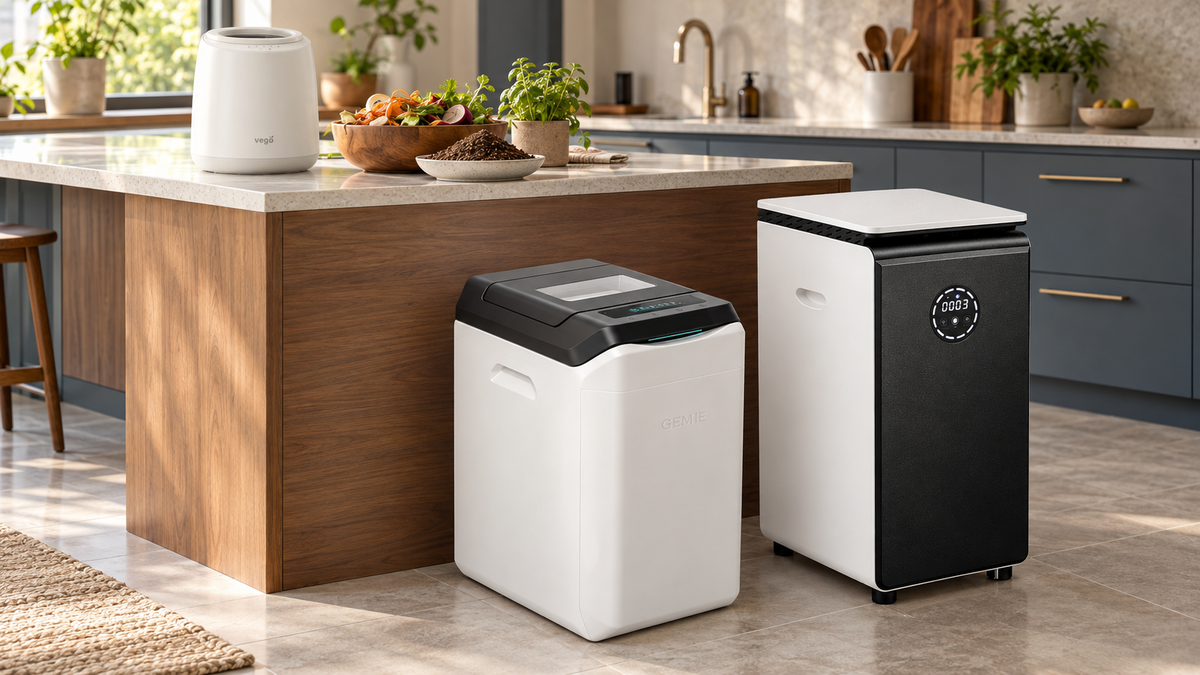
Choose Terra 2 when your regular kitchen workload fits its capacity. Choose GEME Pro when you need more daily capacity. Household size is a starting point; the actual scraps determine the fit.
For both models, keep each addition at 1 kg or less and distribute feeding through the day within the model's daily limit. Chamber liters do not describe an empty bucket; you should fill with old compost or fresh waste.
US Basic prices shown in the shopping cards were checked September 28, 2026. See each product page for current regional options.
7. Use the Output and Retire or Repurpose the Bin
Keep Old Garden Compost and GEME Compost Base Distinct
Your old pile and your new GEME chamber have different application instructions. Use fully matured outdoor compost as an appropriate garden amendment. For harvested GEME Compost Base, screen the material, return unfinished organic pieces to the chamber, and mix approximately 1 part Compost Base with 8 parts plain soil.
Use the soil blend and protective plain-soil layer described in the GEME compost application guide. Do not treat concentrated Compost Base as ready-to-use potting soil or apply the outdoor pile's curing timetable automatically to GEME output.

Decide What the Empty Bin Will Do Next
- Keep it for garden material: assign it to a new garden-only batch after the old contents are finished and removed.
- Repurpose a suitable bin: use it for dry leaves or leafmould if its ventilation and drainage suit that job.
- Remove it: reuse, donate, or recycle the empty structure through an appropriate local route.
If the bin must go before the material is ready, arrange another suitable outdoor finishing space, or ask a local operator whether it accepts that specific unfinished mixture. Confirm the destination before dismantling the bin.
A Better Daily Kitchen Routine
Move Today's Scraps Indoors. Let Yesterday's Pile Finish.
Choose GEME for continuous microbial processing close to every meal. Terra 2 handles everyday smaller-household loads; Pro gives heavier-cooking households more daily capacity.
8. Frequently Asked Questions
Can I replace an outdoor compost bin with GEME before the old pile is finished?
Yes. Once GEME is set up, direct suitable new kitchen scraps to it. Keep the old batch on an outdoor finishing route and arrange a separate destination for future garden waste.
Should I stop adding fresh food to the old compost pile?
Yes, if you want to finish that batch. Stop routine fresh additions so new material does not keep joining it. Continue the moisture and airflow care needed for the existing contents.
Do I need to put old outdoor compost into GEME to start it?
No. Set up GEME with the supplied Kobold material according to the model's instructions. Keep the old mixed outdoor pile on its separate finishing route.
How long should the old compost pile cure?
EPA guidance recommends at least four weeks after visible food scraps are gone and the pile no longer reheats after mixing. This is a finishing-stage guideline, not a countdown from the switch date. A frozen or dry pile needs reassessment.
Where do leaves and grass clippings go after I switch to GEME?
Plan a separate garden-waste route: leafmould for leaves, suitable mulch-mowing for grass, another garden compost batch, or a locally accepted collection service. Keep fresh garden loads out of the old batch while it finishes.
Should I buy GEME Pro because my outdoor compost bin is large?
Choose by the suitable kitchen scraps you produce each day, not the size of the old bin. Terra 2 supports up to 2 kg/day; Pro supports up to 5 kg/day. Leaves and old pile contents are not part of that kitchen-load calculation.
9. Sources and Related Guides
- U.S. EPA — Composting at Home: outdoor curing and material selection.
- University of Maryland Extension — How to Make Compost at Home: mixed-age piles, moisture, and finishing.
- Cornell — Monitoring Compost Temperature: interpreting temperature in context.
- RHS — Composting: recognizing mature garden compost.
- RHS — Leafmould: a dedicated route for fallen leaves.
- RHS — How to Deal With Garden Waste: garden reuse and collection options.


Commenta
Nota che i commenti devono essere approvati prima di essere pubblicati.
Questo sito è protetto da hCaptcha e applica le Norme sulla privacy e i Termini di servizio di hCaptcha.