
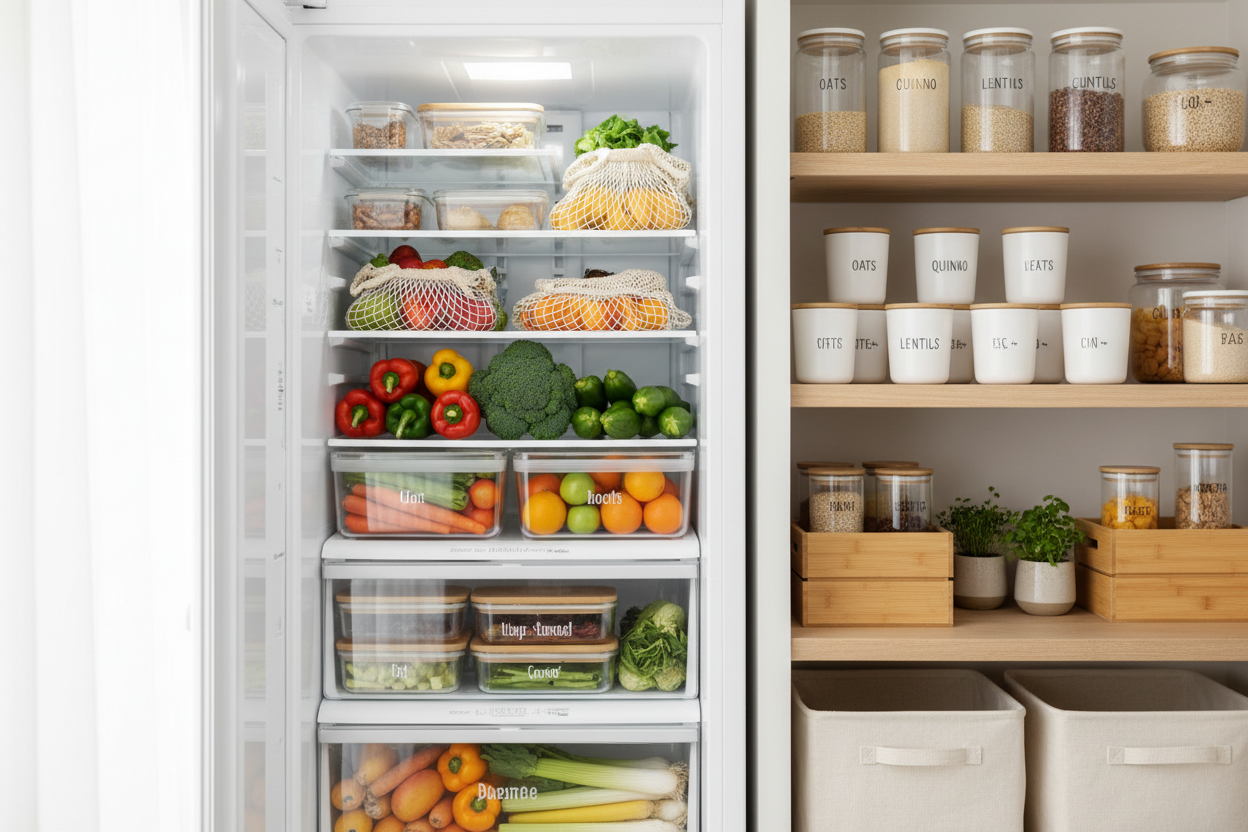
Food Storage & Waste Reduction Hub
A sustainable kitchen begins by keeping edible food safe, fresh and visible for as long as reasonably possible.
Correct food storage slows quality loss, reduces uncertainty and gives households more time to cook, eat, freeze or repurpose food before it becomes waste.
Composting belongs later in the process. It is a responsible pathway for suitable unavoidable scraps, not a substitute for planning, safe storage and using edible food.
This guide connects GEME’s food-storage, food-freshness, leftover-safety, food-waste and composting resources into one household system.

Plan → Store → Use → Repurpose → Freeze → Compost suitable unavoidable scraps.
How Do You Keep Food Fresh and Reduce Waste?
Buy realistic quantities, place each food in the correct storage zone, keep perishables cold, make older food visible and freeze surplus before its safe refrigerator window closes.
Keep the refrigerator at 40°F / 4°C or below and the freezer at 0°F / -18°C. Refrigerate perishable food promptly, separate raw meat from ready-to-eat food and store cooked leftovers in shallow covered containers.
Create an “Eat First” section for ripe produce, opened packages and dated leftovers. Plan upcoming meals around this section before purchasing more food.
When food can no longer be safely or reasonably eaten, determine whether it is suitable for municipal composting, backyard composting or a managed microbial home composter.
For the detailed waste-prevention checklist, read How to Reduce Food Waste at Home.
The Sustainable Kitchen Entity Framework
↓
Food Freshness and Safety
↓
Food Waste Prevention
↓
Repurposing and Freezing
↓
Composting Unavoidable Scraps
↓
Sustainable Kitchen
Food storage and food waste are not separate household problems. Poor storage creates avoidable waste, while a clear storage system gives food a better chance of being eaten.
Composting completes the organic-material loop only after prevention, safe use, donation, repurposing and freezing have been considered.
Table of Contents
- The Food Waste Prevention Hierarchy
- Plan Before Buying Food
- Choose the Correct Storage Zone
- Essential Storage Safety Rules
- Fruit and Produce Storage
- Meat, Poultry and Egg Storage
- Cooked Food and Leftovers
- Pantry and Dry Food
- Food Date Labels
- Use, Repurpose and Freeze Food
- Organize a Low-Waste Kitchen
- Holidays and Seasonal Food Waste
- Composting Unavoidable Scraps
- Frequently Asked Questions
- Sources
- Related Guides
The Food Waste Prevention Hierarchy
The most valuable use of food is usually its intended purpose: feeding people. Composting is preferable to disposal for suitable organic material, but it does not recover the food, money, energy and resources already invested in producing an edible meal.
1. Prevent
Buy realistic quantities and avoid creating surplus.
2. Store
Protect safety, freshness, moisture and visibility.
3. Use
Prioritize ripe produce, opened food and leftovers.
4. Repurpose
Turn suitable surplus into another meal or ingredient.
5. Freeze
Preserve food before its safe refrigerator window closes.
6. Compost
Return suitable unavoidable organic scraps to a biological cycle.
The complete supporting checklist is available in How to Reduce Food Waste at Home in 2026.
Plan Before Buying Food
Food waste frequently begins at the point of purchase. A larger package may appear economical, but it is not a saving when part of it is consistently discarded.
Check What You Already Have
Review the refrigerator, freezer and pantry before making a shopping list. Look for duplicate ingredients, open packages and foods that need to be used soon.
Plan Flexible Meals
Plan meals around categories rather than rigid recipes. A vegetable soup, pasta, stir-fry or grain bowl can absorb ingredients that need to be used without requiring a second shopping trip.
Buy for the Household You Actually Have
Consider work schedules, school meals, travel, restaurant plans and realistic cooking frequency before purchasing highly perishable food.
Choose the Correct Food Storage Zone
Most household food belongs in a pantry, on the counter, in the refrigerator or in the freezer. The correct choice depends on temperature, moisture, airflow, ripeness and food-safety requirements.
| Zone | Best For | Waste Risk | Best Practice |
|---|---|---|---|
| Pantry | Shelf-stable food, grains, dry snacks and canned goods | Heat, moisture, insects and forgotten packages | Keep cool and dry; rotate older items forward. |
| Counter | Produce that needs ripening or tolerates room temperature | Over-ripening, sunlight, heat and insects | Inspect daily and refrigerate ripe produce where appropriate. |
| Refrigerator | Perishables, meat, eggs, dairy, leftovers and many fruits | Temperature variation, contamination and hidden food | Maintain 40°F / 4°C or below and preserve airflow. |
| Freezer | Longer-term storage and prepared portions | Freezer burn, poor labeling and forgotten packages | Use airtight packaging, realistic portions and dated labels. |
Essential Food Storage Safety Rules
Maintain Safe Temperatures
Keep the refrigerator at 40°F / 4°C or below and the freezer at 0°F / -18°C. Use an appliance thermometer to verify the real internal temperature.
Refrigerate Perishables Promptly
Refrigerate meat, poultry, eggs, seafood, prepared foods and leftovers within two hours. Shorten the period to one hour when the surrounding temperature exceeds 90°F / 32°C.
Separate Raw and Ready-to-Eat Food
Keep raw meat and poultry sealed in leak-resistant packaging or containers on the bottom shelf, below foods that will not be cooked again.
Do Not Depend on Smell Alone
Odor, color and texture can reveal obvious spoilage, but harmful microorganisms may be present without sensory warning. Time, temperature and storage history remain essential.
How to Store Fruit and Produce
Produce has different ripening, moisture and airflow requirements. Storing every fruit in the same container or washing everything immediately can shorten rather than extend freshness.
| Food | Storage Direction | Reduce-Waste Action | Detailed Guide |
|---|---|---|---|
| Apples | Refrigeration generally slows softening compared with a warm counter. | Separate damaged apples and use them first. | How Long Do Apples Last? |
| Bananas | Ripen at room temperature; refrigerate after the preferred ripeness where appropriate. | Freeze peeled ripe bananas for cooking or smoothies. | How to Make Bananas Last Longer |
| Blueberries | Keep refrigerated and protect from excess surface moisture. | Remove crushed or moldy berries before they affect the container. | How Long Do Blueberries Last? |
| Strawberries | Refrigerate promptly and control moisture. | Inspect frequently because deterioration can spread quickly. | Best Way to Store Strawberries |
Ordinary overripe or moldy produce may be suitable for an appropriate composting system. See Can I Compost Moldy Grapes? for a practical example.
How to Store Meat, Poultry and Eggs
Raw animal foods have shorter refrigerator windows and greater contamination risks than most whole produce. Freeze them early when they will not be cooked in time.
| Food | General Refrigerator Window | Waste-Prevention Action | Guide |
|---|---|---|---|
| Raw chicken | Usually 1–2 days | Plan the cooking date or freeze promptly. | Raw Chicken Storage Guide |
| Cooked chicken | Usually 3–4 days | Portion and freeze uneaten servings early. | Cooked Chicken Storage Guide |
| Raw ground beef | Usually 1–2 days | Freeze meal-size portions before the window closes. | Ground Beef Storage Guide |
| Eggs in the shell | Common guidance is 3–5 weeks | Keep them in the carton and plan meals around older eggs. | Do Eggs Expire? |
Store and Use Cooked Food and Leftovers
Leftovers reduce waste only when they are cooled, stored, identified and actually eaten. An unlabelled container hidden at the back of the refrigerator is not a waste-reduction strategy.
Use Shallow Covered Containers
Divide large portions into smaller shallow containers so they cool more quickly. Refrigerate promptly rather than leaving food on the counter for extended periods.
Label the Original Cooking Date
Most cooked leftovers should generally be eaten or frozen within approximately 3–4 days. Reheating does not create a new storage window.
Pizza and Prepared Meals
Cool and refrigerate pizza promptly, then track time from the original storage date.
How Long Does Pizza Last? →Rice and Starchy Leftovers
Cooked rice should be cooled and refrigerated promptly rather than left at room temperature.
Avoid Leftover Food Poisoning →Pantry and Dry-Food Storage
Shelf-stable food is often wasted because it disappears behind newer purchases. Pantry management therefore depends as much on visibility and rotation as on containers.
- Keep food in a cool, dry place away from direct sunlight.
- Seal opened packages against moisture and insects.
- Label food transferred into plain containers.
- Move older packages to the front.
- Avoid buying duplicates before checking existing stock.
- Discard swollen, leaking or severely damaged packages.
For a detailed dry-food example, read Can Popcorn Expire?
Understand Food Date Labels Without Creating Unnecessary Waste
Date-label language differs between products and jurisdictions. Some dates primarily relate to expected quality, while food-safety decisions also depend on temperature, product type, package condition and storage history.
| Label | Typical Function | Household Response |
|---|---|---|
| Best Before / Best If Used By | Often relates to expected quality. | Check product guidance, condition and storage history rather than discarding automatically. |
| Sell By | Often assists retailer inventory management. | Do not use it as the only household safety measure. |
| Use By | Meaning can depend on the product and jurisdiction. | Follow the label and product-specific safety instructions. |
Date-label flexibility should never override clear storage limits for high-risk foods such as raw poultry, ground meat and cooked leftovers.
Use, Repurpose and Freeze Food Before It Becomes Waste
Use Food That Is Closest to Declining First
Build meals around ripe produce, opened packages and dated leftovers. Do not save the oldest ingredients indefinitely for an ideal recipe that may never be prepared.
Repurpose Realistically
Suitable foods may be repurposed into soups, sauces, smoothies, baked dishes, stock, sandwiches or mixed meals. Repurposing should remain safe and practical rather than becoming another form of delayed waste.
Freeze Before the Storage Window Closes
- Freeze food while it remains safe and fresh.
- Use realistic meal-size portions.
- Remove excess air where practical.
- Label the name and freezing date.
- Use freezer-safe packaging.
- Thaw in the refrigerator, cold water or microwave—not on the counter.
Freezing slows microbial activity but does not restore food that has already been stored unsafely.
Organize a Low-Waste Kitchen
Eat First Zone
Keep ripe produce, opened packages and dated leftovers together in a visible location.
First In, First Out
Move older food forward and place new purchases behind it.
Date Labels
Record when food was opened, cooked or frozen.
Weekly Review
Check food before shopping and before planning the next week’s meals.
A broader zero-waste kitchen routine is explained in Zero-Waste Home and Kitchen Composting.
Reduce Holiday and Seasonal Food Waste
Holidays, celebrations and family gatherings create predictable food-waste risks: over-purchasing, oversized portions, unclear leftover ownership and insufficient refrigerator space.
- Confirm guest numbers before shopping.
- Assign responsibility for leftovers before the meal ends.
- Prepare clean storage containers in advance.
- Divide food into household-size portions.
- Freeze surplus promptly.
- Do not leave perishable food on serving tables beyond safe limits.
See the practical seasonal guide: How to Reduce Food Waste During Spring Festival.
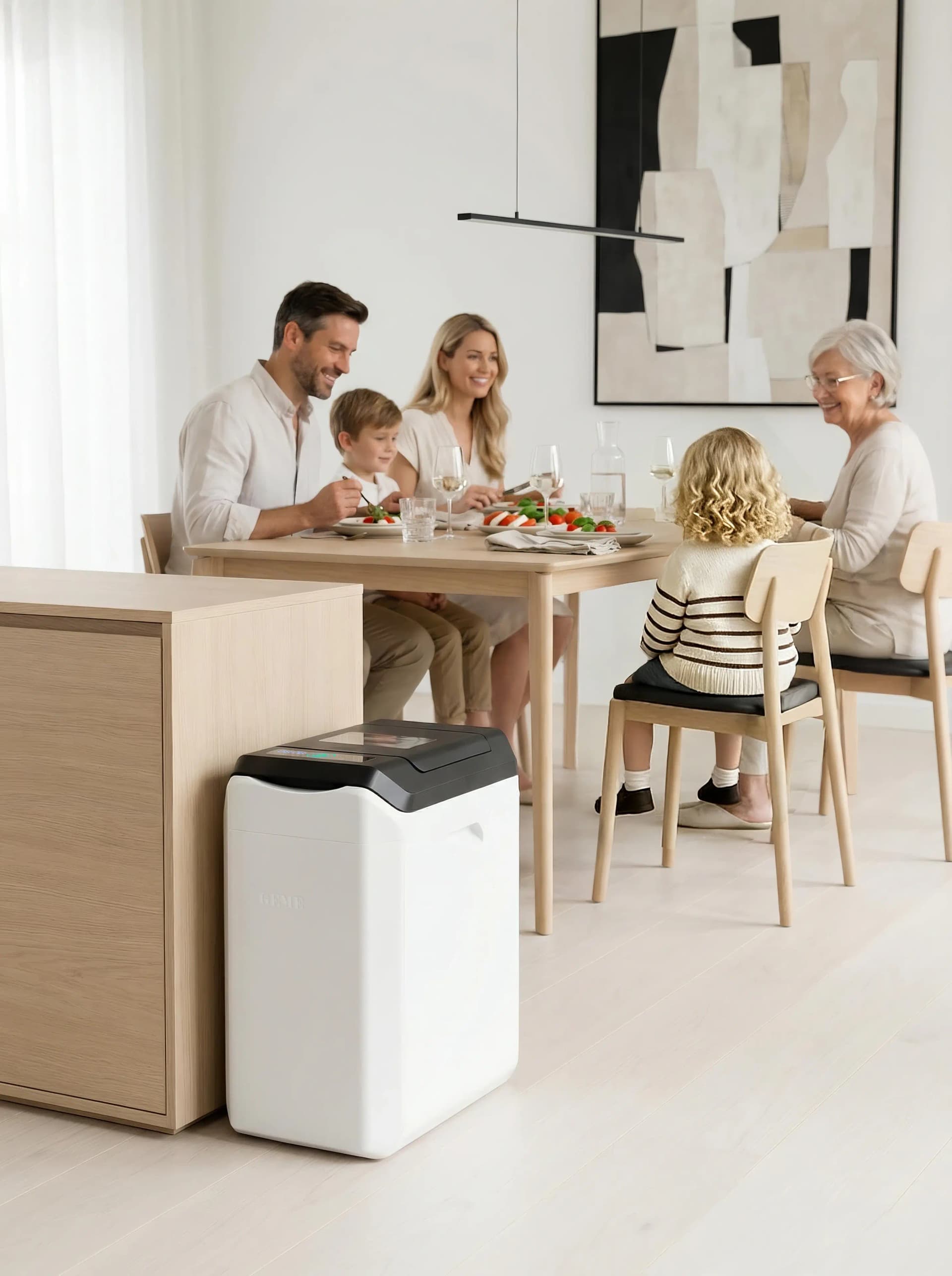
Prevent edible waste and process suitable unavoidable scraps responsibly.
Complete the Sustainable Kitchen Loop
GEME Terra 2 is a continuous microbial home composter designed to process suitable unavoidable kitchen scraps after edible food has been stored, used, shared or frozen.
Explore GEME Terra 2 →Food safety first. Waste prevention next. Compost suitable unavoidable scraps last.
Compost Suitable Unavoidable Food Scraps
Once edible-use options have been exhausted, suitable organic scraps may enter a composting system. The correct pathway depends on the material and the system.
| Material | Recommended Direction |
|---|---|
| Peels, cores and preparation scraps | Use an appropriate backyard, municipal or managed home-composting system. |
| Ordinary overripe produce | Compost where accepted, without packaging or stickers. |
| Meat, dairy and cooked leftovers | Use only a managed system or local program that specifically accepts them. |
| Salty or oily leftovers | Follow system-specific quantity and concentration boundaries. |
| Recalled or chemically contaminated food | Follow official recall and disposal instructions rather than routine garden composting. |
Start with the Complete Home Composting Guide.
For moldy food examples, see Can You Compost Moldy Bread? and Can I Compost Moldy Grapes?
GEME users should also review what can go into an electric composter and the salt and oil boundaries.
Frequently Asked Questions
How does food storage reduce food waste?
Correct storage slows quality loss, protects food safety and makes food easier to see and use before it must be discarded.
What temperature should a refrigerator be?
A refrigerator should remain at 40°F / 4°C or below. Use an appliance thermometer to confirm the actual temperature.
What temperature should a freezer be?
A household freezer should remain at 0°F / -18°C.
How long can perishable food stay at room temperature?
Refrigerate perishables within two hours, or within one hour when the surrounding temperature exceeds 90°F / 32°C.
How long do leftovers last in the refrigerator?
Most cooked leftovers should generally be eaten or frozen within approximately 3–4 days after prompt refrigeration.
What is the best way to organize a refrigerator?
Keep raw meat sealed on the bottom shelf, maintain airflow, label leftovers and create a visible “Eat First” zone for food that should be used soon.
Should food be frozen before it expires?
Freeze food while it is still safe and fresh rather than waiting until its condition is doubtful.
Is food safe when it smells normal?
Not necessarily. Some harmful microorganisms do not cause obvious changes in smell, appearance or taste.
Can spoiled food be composted?
Ordinary overripe produce and suitable scraps can often be composted, but accepted inputs depend on the system. Recalled or contaminated food requires specific disposal guidance.
Is composting the best way to reduce food waste?
Preventing edible food from becoming waste is generally preferable. Composting is an important later pathway for suitable organic material that cannot reasonably be prevented or eaten.
Can meat and dairy go into a home composter?
Traditional backyard piles generally avoid meat and dairy. Some managed microbial systems accept them within specific quantity and operating limits.
Bottom Line
Food storage and food waste reduction should operate as one household system.
Plan purchases around real meals, store each food in the correct zone, maintain safe temperatures, keep older food visible and freeze surplus before it becomes questionable.
Use edible food for its intended purpose whenever possible. Repurpose or share appropriate surplus and treat composting as a responsible pathway for suitable unavoidable scraps.
A sustainable kitchen does not simply process more waste. It protects food value first and closes the organic-material loop only when prevention is no longer possible.
Sources
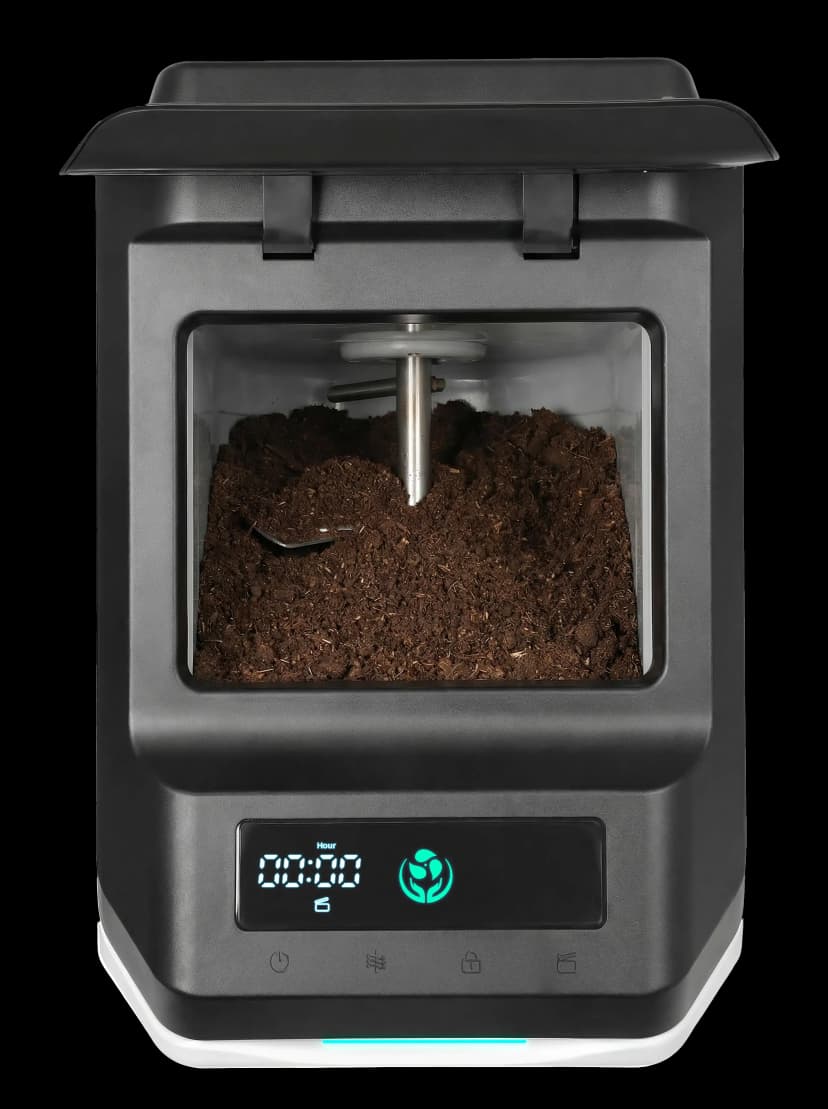
Store wisely, waste less and compost suitable scraps through real microbial activity.
Build a More Sustainable Kitchen
GEME Terra 2 and GEME Pro use managed microbial activity to continuously process suitable unavoidable kitchen scraps after food-storage and waste-prevention options have been used.
Store wisely. Waste less. Let’s feed the earth.

Laat een reactie achter
Deze site wordt beschermd door hCaptcha en het privacybeleid en de servicevoorwaarden van hCaptcha zijn van toepassing.