


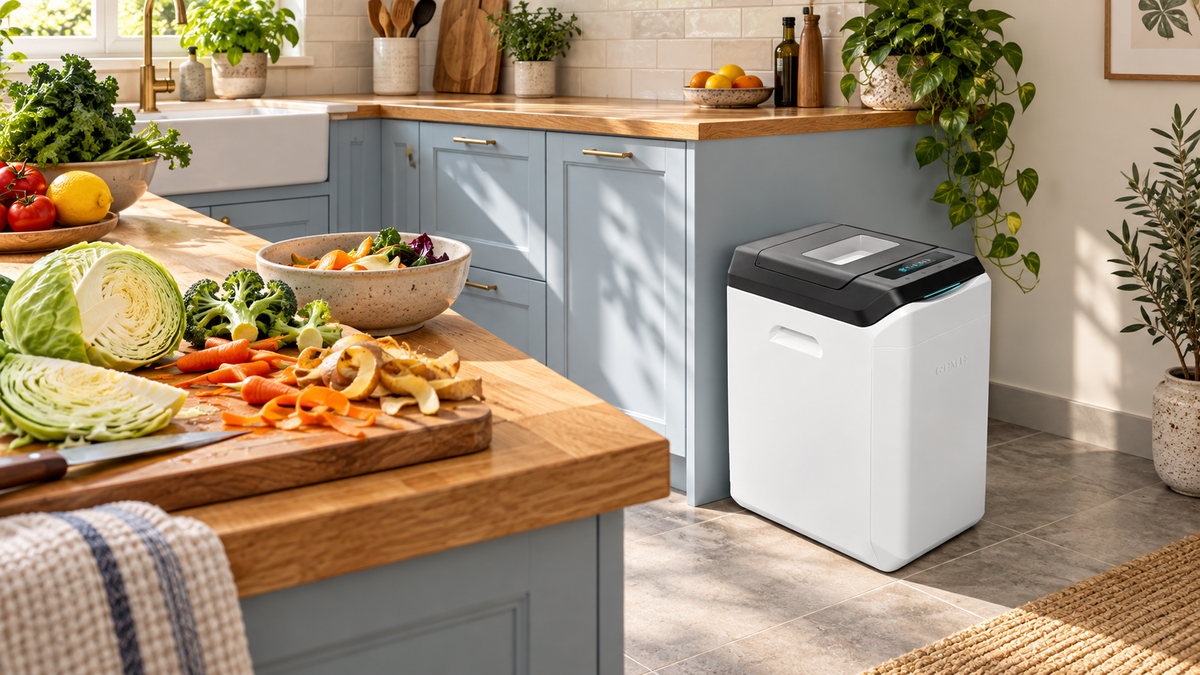
Vegetarian Kitchens · Vegetable Scraps · Daily Capacity
For a vegetable-focused kitchen, choose GEME for continuous indoor composting, and choose the model by the scraps you actually produce.
GEME Terra 2 is our best overall recommendation for smaller vegetarian households. GEME Pro is the stronger choice when regular cooking and meal preparation create a heavier daily load.
A bowl of leafy trimmings, a pile of potato peels, and a watermelon rind create different demands. The best composter for vegetarian kitchens needs to fit their weight, bulk, and moisture, not just the number of people at the table.
Quick Answer: Which Composter Should a Vegetarian Kitchen Choose?
- Choose GEME Terra 2 when your recurring suitable food-scrap load fits within up to 2 kg/day. Its 14 L chamber and GEMEBrain™ adaptive control suit smaller households with everyday vegetable preparation.
- Choose GEME Pro when regular meal-prep days need more than Terra 2's daily capacity, up to Pro's 5 kg/day. Its 19 L chamber gives heavier-cooking households more room.
- For both models, keep each addition at 1 kg or less and stay below the chamber's maximum fill line. Bulky or very wet scraps may need smaller additions.
Vegetarian cooking does not automatically mean you need Pro. Record a representative week's scraps, including a busy preparation day. Use kilograms to assess daily processing demand and liters to understand bulk and handling.
This guide focuses on vegetable-heavy kitchen loads. Visit our Best Composter Hub for the broader choice between home composting systems.

1. Why GEME Fits Vegetable-Focused Cooking
GEME makes daily vegetable preparation easier to connect with composting. Suitable scraps can enter an established microbial bed around meals, while the appliance handles mixing and supports the aerobic process.
Keep Processing Close to the Kitchen
Peeling carrots, trimming cabbage, and cutting fruit create scraps throughout the day. Continuous feeding lets you add them progressively within the model's limits, without emptying a finished batch before every new addition.
Let the System Support the Living Process
Terra 2's GEMEBrain™ helps regulate heat, airflow, moisture, and mixing. Pro combines continuous microbial processing with automated mixing and dedicated moisture-management controls. Both provide indoor odor control without scheduled activated-carbon filter replacement.
Get a Clear Route Back to Soil
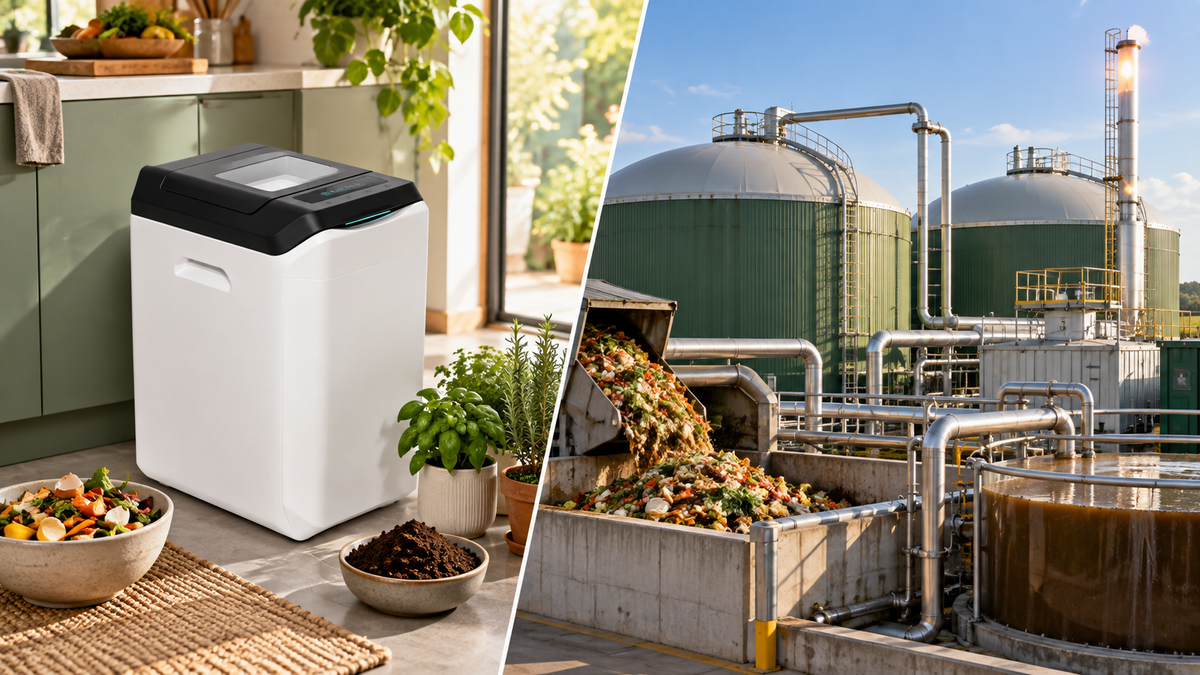
GEME produces active Compost Base that you screen and prepare for soil use. Drying and grinding alone produce a different output; the EPA distinguishes that preprocessing from composting.
For a household seeking convenient indoor biological processing and a useful soil-return routine, GEME is our recommendation. The next decision is which capacity fits your food preparation.
2. Separate Bulk, Weight, and Moisture
Bulk: How Much Space Does the Material Occupy?
Loose leaves and long stalks can fill a collection bowl quickly. Their apparent volume depends on cutting, packing, and the shape of the container. A bowl that looks full does not indicate its weight or the machine's daily workload.
Weight: How Much Are You Adding Across the Day?
Weigh suitable scraps after draining free liquid and subtract the container weight. Add together breakfast, lunch, dinner, and meal-preparation scraps. The daily total must fit the model's capacity even when every individual addition is small.
Moisture: What Does the Microbial Bed Need?
Vegetable tissue naturally contains water. That is different from pouring in soup, soaking water, or juice. Drain excess liquid, then consider the condition of the existing bed before adding another wet portion.
Cornell's compost physics guidance explains why particle size, moisture, and airflow influence decomposition. Our operating guide applies moisture management and feeding limits to GEME.
Chamber liters are not a fresh-food allowance. The 14 L or 19 L chamber already contains the active microbial bed. Follow the maximum fill line; do not interpret either figure as an instruction to add that volume of fresh vegetables.
3. Leaf, Root, and Peel Load-Mix Table
Use the table to see what makes up your own kitchen's load. Measure each category with the same preparation and loose-filling method. Add other suitable leftovers to capture the whole kitchen.
| Scrap Group and Examples | Handling Priority | Loose Volume (L) | Net Weight (kg) |
|---|---|---|---|
| Leafy trimmings Cabbage leaves, lettuce, leafy stems |
Break up large bunches. Avoid pushing a compressed wad into the chamber. | _____ L | _____ kg |
| Roots and firm stems Carrot ends, potato peelings, broccoli stalks |
Cut substantial pieces smaller. Count their weight even when they occupy little bowl space. | _____ L | _____ kg |
| Fruit peels and rinds Banana peel, citrus peel, melon rind |
Cut long peels and thick rind. Drain pooled juice and spread larger quantities across suitable feedings. | _____ L | _____ kg |
| Other suitable meal scraps Grains, coffee grounds, drained solid leftovers |
Include them in the same daily total. Remove packaging and free liquid. | _____ L | _____ kg |
| Daily total | Sum all categories using the same measurement method. | _____ L | _____ kg |
A leaf-heavy day may call for breaking up bulk; a root-preparation day may bring more weight; a rind-heavy day may need extra attention to moisture and piece size. These are handling patterns, not fixed liters-to-kilograms conversions.
For specific ingredients, use our watermelon rind guide and lemon peel, pulp, and seed guide. Tougher pieces can remain visible longer than softer scraps.
4. Record Liters and Kilograms for One Week
Measure a week that includes your normal cooking and a busy preparation day. Keep edible food for meals; measure only the suitable scraps you intend to process.
- Prepare consistently. Remove stickers and packaging, drain free liquid, and make your usual cuts before measuring.
- Record loose volume. Use a marked container, fill without pressing down, and total the measured portions. Volume records handling needs; it does not set a feeding limit.
- Record net weight. Tare the container on a kitchen scale or subtract its empty weight.
- Log each portion and the daily total. If a prepared portion exceeds the single-feed limit, divide it before adding it.
| Day | Daily Loose Volume (L) | Daily Net Weight (kg) | Largest Prepared Portion (kg) | Mix / Cooking Notes |
|---|---|---|---|---|
| 1 | _____ | _____ | _____ | ________________ |
| 2 | _____ | _____ | _____ | ________________ |
| 3 | _____ | _____ | _____ | ________________ |
| 4 | _____ | _____ | _____ | ________________ |
| 5 | _____ | _____ | _____ | ________________ |
| 6 | _____ | _____ | _____ | ________________ |
| 7 | _____ | _____ | _____ | ________________ |
Calculate your average daily kilograms by dividing the week's total by seven, then examine the busiest recurring day separately. A quiet-day average can hide a regular meal-prep load that exceeds a smaller model's capacity.

5. Choose Terra 2 or GEME Pro by Your Actual Load
| Buying Question | GEME Terra 2 | GEME Pro |
|---|---|---|
| Our recommendation | Best Overall for smaller vegetarian kitchens | Best for Large Families and heavier daily preparation |
| Daily processing capacity | Up to 2 kg/day | Up to 5 kg/day |
| Chamber volume | 14 L | 19 L |
| Maximum single addition | 1 kg; also observe the fill line | 1 kg; also observe the fill line |
| Household starting point | 1–3 people; verify the actual load | 4+ people or a heavier cooking routine |
| Daily convenience | Continuous feeding, automated mixing, GEMEBrain™ adaptive control | Continuous feeding, automated mixing, greater daily capacity |
| US Basic price | US$699.00 | US$899.99 |
Start with Terra 2 when your recurring daily load fits its capacity. A full bowl of loose leaves alone is not a reason to upgrade. Preparation, the fill line, and bed condition still matter.
Choose Pro when heavier vegetable preparation regularly pushes the daily total above 2 kg, within its 5 kg/day capacity. Pro provides 2.5 times Terra 2's daily processing capacity, but its single-addition limit remains the same.
For recurring loads above 5 kg/day, arrange an additional suitable processing route. For occasional overflow, avoid forcing extra scraps into either model. See the full GEME model comparison for specifications.
US Basic prices checked September 23, 2026. Regional prices and configurations may differ. Daily capacity is not a guarantee for every possible input mix.
6. Handle Bulky and Wet Scraps Around Meals
Cut the Awkward Pieces
Cut thick stalks, large rind sections, and long peels into manageable pieces. Break up bunches of leaves. This helps scraps mix with the active bed; it does not require turning every ingredient into a puree.
Drain Free Liquid
Let washed trimmings drain. Separate solid leftovers from soup, brine, and pooled sauce. Do not dry every vegetable or add water simply because the scraps look fibrous; use the bed's condition and the model's prompts.
Feed Progressively and Leave Room to Mix
Add suitable scraps around preparation and cleanup, within both single-addition and daily limits. Do not pack down leaves to squeeze more into the chamber. Keep the active bed in place and stay below the maximum fill line.
This is where GEME makes a vegetable-heavy routine easier. You work with an established microbial bed and automated mixing. Normal feeding does not require rebuilding an outdoor pile's dry-leaf-to-food-scrap recipe each time you cook.
Use our complete food-input guide for other leftovers and harder materials. Do not add cardboard or garden material solely to copy an outdoor composting recipe.
7. When to Adjust the Routine
- Below the weight limit, but near the fill line: stop adding material. Weight allowance does not override available space or the need for mixing.
- The bed becomes unusually wet or pasty: pause further wet additions, check for excess liquid, and follow the model's moisture-management instructions. Extra capacity alone does not correct an already wet bed.
- Some stalk or peel fragments remain: give slower pieces more processing time and return unfinished pieces when harvesting. Avoid assuming all ingredients finish at the same speed.
- Odor persists, or an error appears: check feeding, airflow, and routine care; use the GEME operating guide and odor troubleshooting guide.
- No suitable floor position, power, or soil destination: arrange those before purchase, or use an available local organics service.
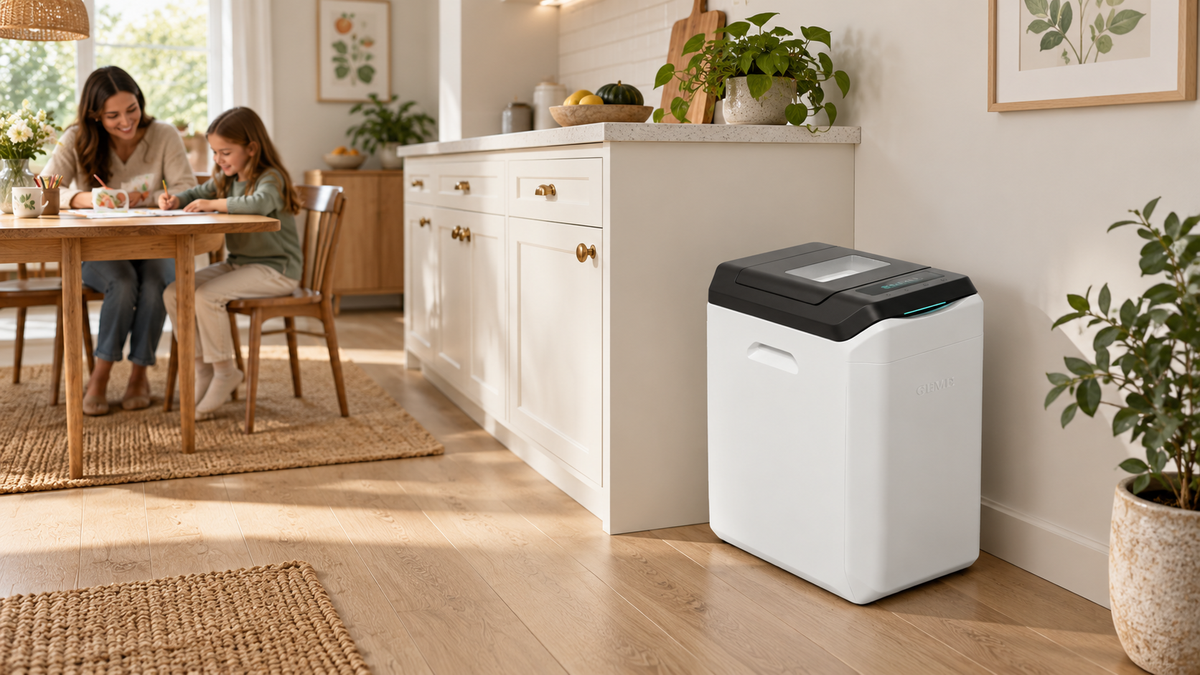
Both models belong on a stable floor with ventilation and lid clearance. Plan that space as carefully as you plan capacity.
8. Give Your Vegetable Scraps a Route Back to Soil
The reward is a repeatable kitchen-to-soil routine. Harvest Compost Base when needed, retain the active starter bed, screen larger unfinished pieces, and return those pieces to the chamber.
Blend the prepared Compost Base with soil and follow the placement and maturation instructions in our Compost Base application guide. Use it as a soil amendment; fresh output is not standalone potting soil.
Make Vegetable Prep Part of Your Composting Routine
Choose continuous indoor processing, automated mixing, and a clear route back to soil. Match the model to your measured daily scraps.
Terra 2 for everyday smaller-household loads. GEME Pro for heavier cooking and more daily capacity.
Frequently Asked Questions
What is the best composter for a vegetarian kitchen?
GEME Terra 2 is our best overall recommendation for smaller vegetarian kitchens with suitable recurring loads within up to 2 kg/day. Choose GEME Pro when heavier preparation needs more daily capacity, up to 5 kg/day. Both provide continuous indoor microbial processing and automated mixing.
Does a vegetarian household automatically need GEME Pro?
No. Choose by measured daily scraps, recurring busy days, and the material's handling needs. A smaller household with modest vegetable waste may fit Terra 2. Pro is the capacity upgrade for a heavier actual load.
Can I convert a bowl of vegetable scraps from liters to kilograms?
There is no reliable universal conversion. Leaves, peelings, stalks, and rinds pack differently, and cutting changes their loose volume. Measure liters and net kilograms separately using the same preparation method each day.
Can GEME handle wet vegetable scraps?
Yes, suitable vegetable scraps naturally contain moisture. Drain free liquid, use manageable additions, and check the existing bed. Do not pour soup, brine, or pooled juice into the chamber. Follow the model's moisture-management instructions if the bed becomes too wet.
Should I chop vegetable scraps before adding them?
Cut large stalks, thick rind sections, and long peels into manageable pieces, and break up large bunches of leaves. Smaller pieces can mix more readily with the active bed. You do not need to puree the scraps.
Do I need dry leaves with every vegetable feeding?
No. Normal GEME feeding uses an established microbial bed rather than rebuilding a backyard compost pile with every addition. Follow GEME's operating instructions for moisture adjustments instead of automatically adding dry leaves or cardboard.
Why can the chamber become too full before I reach the daily kilogram limit?
Bulky scraps and the existing microbial bed occupy space. The daily weight limit and maximum fill line are separate constraints. Stop adding material at the fill line even if you have not reached the daily weight limit.
Can I plant directly in fresh GEME output?
No. Harvested Compost Base is a soil amendment. Screen and return unfinished pieces, blend the prepared material with soil, and follow the application guide for placement and any additional maturation needed.
Sources and Related Guides
Product details and linked guidance checked September 23, 2026. The worksheets are for your own measurements; they do not report a household trial.


Zostaw komentarz
Wszystkie komentarze są moderowane przed opublikowaniem.
Ta strona jest chroniona przez hCaptcha i obowiązują na niej Polityka prywatności i Warunki korzystania z usługi serwisu hCaptcha.