


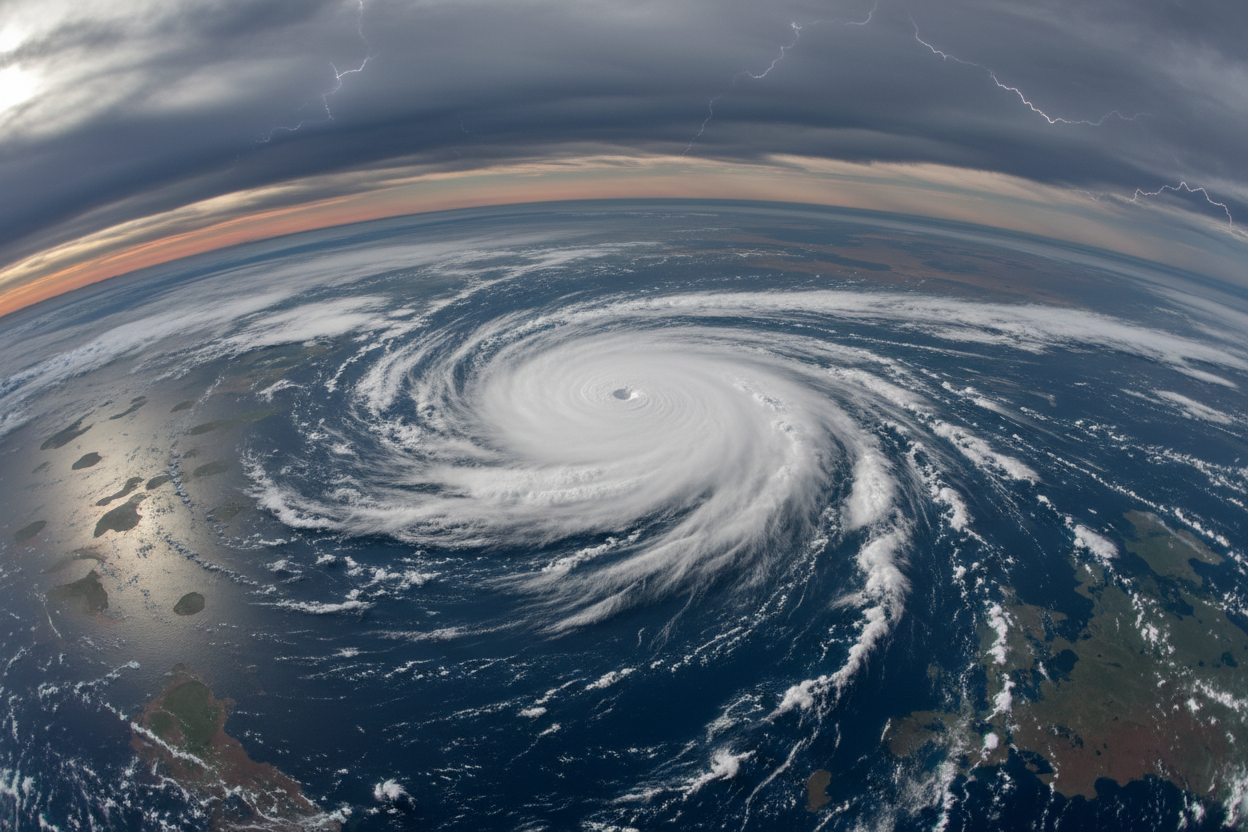
Climate, Carbon & Resilient Living Hub
Climate action is not one purchase, one recycling bin or one perfect household. It is a system of choices that reduces unnecessary emissions, prevents waste, prepares people for changing risks and keeps useful materials circulating for longer.
Food is part of that system. When edible food is wasted, the land, water, energy, refrigeration, packaging and transportation used to produce it are also wasted. When food waste is buried in a landfill, it can generate methane as it decomposes without adequate oxygen.
Sustainability also means resilience. Households need practical plans for hurricanes, tropical storms, floods, heat waves, snowstorms and power outages, while recognizing that protecting people must always come before protecting plants, property or compost.
This guide connects climate literacy, carbon footprints, food-waste prevention, composting, circularity and extreme-weather preparedness into one everyday framework.
Climate
Long-term conditions and risks
Circularity
Keep materials in useful cycles
Resilience
Prepare before hazards arrive
Everyday Action
Prevent, reduce and adapt
What Can Households Do About Climate Change?
Begin with the largest repeatable parts of household life: energy, transportation, food, purchasing and waste. Measure before making claims, reduce avoidable consumption, maintain equipment, prevent edible food waste and keep suitable organic material out of landfill where practical.
Build resilience at the same time. Know the hazards in your region, receive official alerts, prepare an emergency plan, protect critical documents, maintain trees and drainage, secure outdoor objects and plan for power loss.
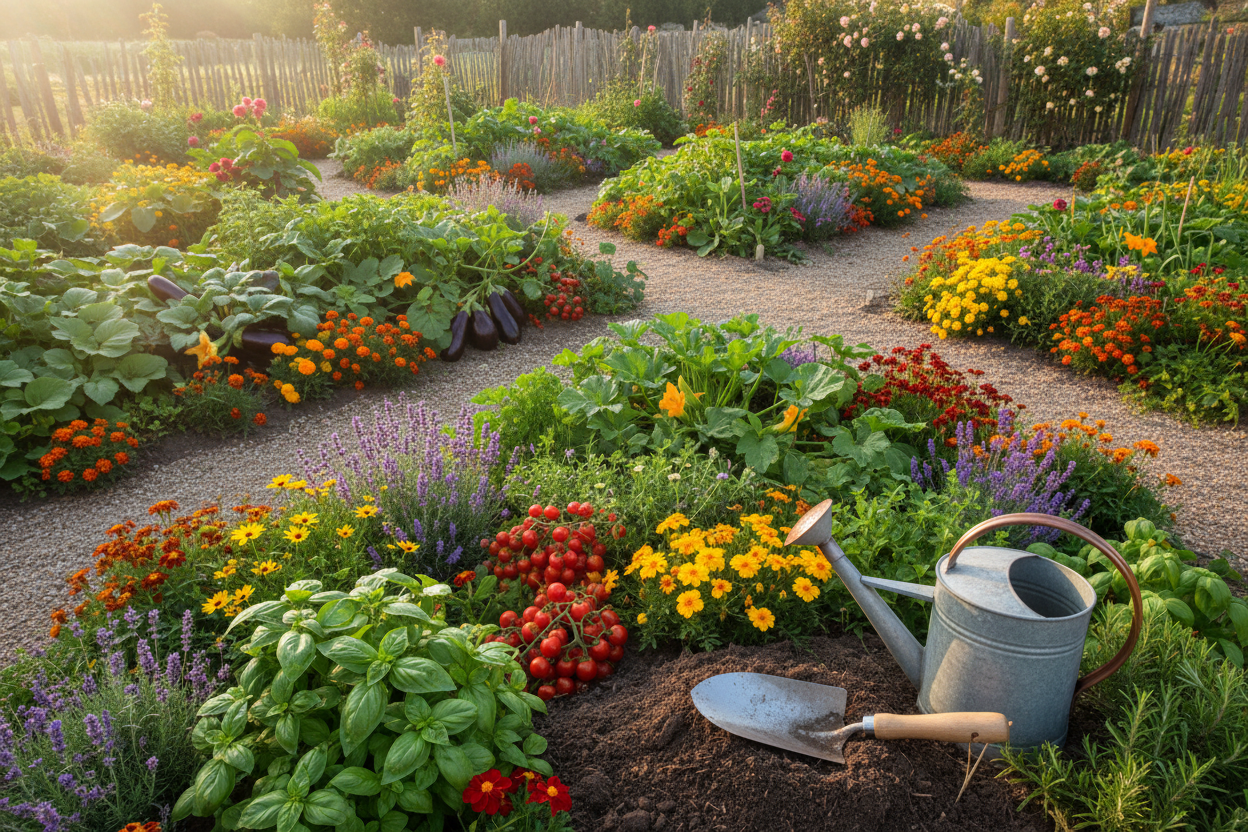
For gardens, improve soil health, keep soil covered, use appropriate mulch, maintain drainage, choose locally suitable plants and prepare movable containers, covers and supports before severe weather is forecast.
Food-waste prevention starts with the Food Storage and Waste Reduction Guide.
Climate, Weather and Attribution Are Different Questions
Weather describes short-term atmospheric conditions. Climate describes patterns and ranges observed over longer periods.
Hurricanes, tropical storms, heat waves, floods and snowstorms existed before modern climate change. It is therefore inaccurate to claim that climate change directly caused every individual event.
Climate change can nevertheless alter the conditions surrounding extreme events, for example by raising background temperatures, increasing atmospheric moisture, changing precipitation patterns and raising sea levels. Event-specific attribution requires scientific analysis rather than assumptions based on one storm.
The Climate and Circular Economy Relationship
↓
Carbon Footprint
↓
Food Waste
↓
Organic Waste
↓
Composting
↓
Circular Economy
The chain begins with emissions and resource use, but it does not end with waste treatment. The strongest action is usually to avoid unnecessary production and waste before deciding how discarded material should be processed.
Composting supports circularity by returning suitable organic material to a biological cycle. It does not erase every upstream emission, replace food-waste prevention or make every household activity carbon-neutral.
Table of Contents
- Climate Change and Extreme Weather
- Understanding Your Carbon Footprint
- Food Waste, Landfills and Methane
- Prevent, Recover and Compost
- Everyday Carbon-Reduction Actions
- Prepare Your Home and Garden
- Hurricanes and Tropical Storms
- Heat Waves and Drought
- Snowstorms, Ice and Extreme Cold
- Flooding and Contaminated Gardens
- Power Outages and Food Safety
- Composting During Extreme Weather
- Carbon Claims and Measurement Boundaries
- Household Climate Action Plan
- Frequently Asked Questions
- Bottom Line
- Sources
- Related Guides
Climate Change and Extreme Weather
Climate change refers to long-term changes in temperature, precipitation and other parts of the climate system. Human activities have increased atmospheric greenhouse-gas concentrations, changing the energy balance of the planet.
The relationship between climate change and extreme weather varies by hazard and location.
| Hazard | Climate Connection | Household Risk |
|---|---|---|
| Heat waves | Higher background temperatures can increase the likelihood and severity of extreme heat. | Heat illness, power demand, crop stress, water loss and infrastructure strain. |
| Heavy rainfall | Warmer air can hold more moisture, contributing to more intense rainfall under suitable conditions. | Flash flooding, erosion, drainage failure and contaminated soil. |
| Hurricanes and tropical storms | Warmer oceans, increased atmospheric moisture and rising sea levels can affect rainfall, intensity and storm-surge consequences. | Wind damage, prolonged rain, flooding, outages and evacuation. |
| Drought | Higher temperatures can increase evaporation and intensify water stress in some regions. | Water restrictions, plant stress, soil degradation and wildfire risk. |
| Winter storms | A warming climate does not eliminate severe winter weather; moisture and changing circulation can still produce damaging snow and ice events. | Power loss, frozen pipes, roof loads, travel disruption and plant injury. |
Preparedness decisions should rely on local forecasts, official warnings, building conditions and regional hazards, not on generalized assumptions about the global climate.
What Is a Carbon Footprint?
A carbon footprint is an estimate of the greenhouse-gas emissions associated with a person, household, product, service or activity. Different calculations may include different gases, time periods and supply-chain boundaries.
Household carbon footprints commonly include several areas:
Home Energy
Heating, cooling, electricity, water heating, insulation and appliance efficiency.
Transportation
Vehicle fuel, public transport, flights, delivery distances and commuting patterns.
Food
Agricultural production, processing, refrigeration, packaging, cooking and wasted food.
Products and Services
Materials, manufacturing, shipping, use, maintenance and end-of-life handling.
Waste
Disposal, landfill emissions, collection, recycling, composting and treatment.
Resilience
Durable maintenance, avoided damage and responsible recovery can reduce repeated material replacement.
Carbon Numbers Need Boundaries
A footprint estimate is meaningful only when it identifies what was counted: manufacturing, transport, electricity mix, product lifetime, maintenance, avoided landfill disposal or other assumptions.
Two carbon calculations may produce different results without either being fraudulent if their boundaries, regions or scenarios are different. The assumptions must therefore be published alongside the number.
How Food Waste in Landfills Affects the Climate
Food waste has two climate effects: the emissions and resources used before the food was discarded, and the emissions created by its end-of-life pathway.
Upstream Resources Are Lost
Growing, processing, refrigerating, transporting and cooking food require land, water, energy, labor and infrastructure. When edible food is discarded, those inputs delivered no nutritional benefit.
Landfilled Food Generates Methane
Food buried in a landfill decomposes under oxygen-limited conditions. That process can generate methane, a greenhouse gas that contributes strongly to near-term warming.
EPA research estimates that landfilled food waste was responsible for approximately 58% of fugitive methane emissions from municipal solid-waste landfills in its 2020 analysis.
| Food Pathway | What Happens | Climate Boundary |
|---|---|---|
| Prevention | Food is purchased, stored and used more efficiently. | Avoids unnecessary production and disposal impacts. |
| Donation or redistribution | Safe surplus continues serving its intended food purpose. | Requires safe handling and suitable logistics. |
| Composting | Suitable organic material decomposes aerobically into a soil amendment. | Avoids landfill methane but still involves collection, energy or equipment depending on the system. |
| Anaerobic digestion | Organic material is processed in a controlled system that can capture biogas. | Performance depends on capture, use, leakage and digestate management. |
| Landfill | Food decomposes in a buried, oxygen-limited environment. | Can generate methane; not all methane is captured. |
The practical household response is explained in How to Reduce Food Waste at Home.
Prevent Food Waste Before Composting It
1. Plan
Buy quantities that match real meals and household schedules.
2. Store
Protect food with correct temperature, visibility and containers.
3. Use
Prioritize ripe produce, opened packages and dated leftovers.
4. Share
Redistribute safe surplus through suitable channels.
5. Freeze
Preserve food before its safe refrigerator window closes.
6. Compost
Process suitable unavoidable organic scraps biologically.
Composting supports a circular economy, but composting edible food is still a sign that prevention failed earlier in the system.
Learn the full biological process in the Complete Home Composting Guide.
Everyday Actions That Can Reduce a Household Carbon Footprint
| Area | Practical Action | Measurement |
|---|---|---|
| Home energy | Seal leaks, maintain HVAC systems, use efficient settings and choose lower-carbon electricity where available. | Monthly electricity and fuel consumption. |
| Transportation | Combine trips, maintain tires, reduce unnecessary idling and use lower-emission transport where practical. | Distance, fuel use and flights. |
| Food purchasing | Check existing food, plan flexible meals and avoid habitual overbuying. | Food discarded each week. |
| Food storage | Use an Eat First zone, date labels, correct refrigerator temperatures and early freezing. | Leftovers used versus discarded. |
| Organic waste | Use municipal organics, backyard composting or a suitable managed household system. | Weight or volume diverted from mixed trash. |
| Purchasing | Buy durable products, repair where practical and avoid replacement driven only by novelty. | Product lifetime and replacement frequency. |
| Garden | Improve soil, use suitable plants, retain moisture and reduce avoidable fertilizer or irrigation demand. | Water use, plant survival and amendment frequency. |
The goal is not to make every activity “zero carbon.” It is to identify repeatable reductions, disclose assumptions and avoid shifting impacts into another part of the system.
How to Prepare Your Home and Garden for Extreme Weather
A useful preparedness plan is hazard-specific, locally informed and completed before the forecast becomes urgent.
1. Know the Local Hazards
Identify whether your area faces storm surge, inland flooding, extreme heat, wildfire, tornadoes, snow loads, ice or prolonged outages.
2. Receive Official Alerts
Enable local emergency notifications and monitor official weather services rather than relying only on social-media posts.
3. Make a Household Plan
Define evacuation routes, shelter locations, communication methods, pet arrangements and responsibilities for children or vulnerable adults.
4. Build Essential Supplies
Prepare water, shelf-stable food, medicines, lighting, charging, first aid, sanitation supplies and copies of important documents.
5. Inspect the Home Exterior
Maintain roofs, gutters, drains, shutters, exterior fasteners, sump systems and safe generator placement.
6. Reduce Garden Hazards
Maintain trees, remove dead branches in advance, secure tools and furniture, check drainage and keep movable containers accessible.
7. Protect Food and Organic Waste
Freeze cold packs, keep coolers available, secure trash and compost lids and plan for food scraps during a prolonged outage.
8. Follow Evacuation Instructions
Leave when instructed. Do not delay evacuation to harvest produce, move pots or protect equipment.
Protecting Your Home and Garden From a Hurricane or Tropical Storm
Hurricanes and tropical storms can combine destructive wind, prolonged rainfall, storm surge, tornadoes, flooding and long power outages. Category alone does not describe every local risk.
Before the Storm
- Know your evacuation zone and route.
- Charge devices and backup power banks.
- Move important documents and electronics above expected flood levels.
- Secure shutters or approved window protection.
- Bring patio furniture, pots, tools, hoses and decorations indoors.
- Lower or secure trellises, lightweight covers and temporary structures.
- Clear leaves from gutters and surface drains.
- Harvest ripe produce only while conditions remain safe.
- Move container plants to a sheltered indoor or low-wind location.
- Photograph the home and garden before damage for records.
During the Storm
- Remain in the designated safe location.
- Stay away from windows and exterior doors.
- Do not go outside during a temporary lull or the eye of the storm.
- Do not enter floodwater.
- Keep refrigerator and freezer doors closed during an outage.
- Do not operate a generator in a home, garage or other enclosed space.
After the Storm
- Wait for official clearance before returning.
- Avoid standing water, damaged buildings and downed power lines.
- Do not stand beneath broken or hanging tree limbs.
- Photograph damage before major cleanup when safe.
- Remove waterlogged organic debris gradually and use protective equipment.
- Check garden soil for erosion, saltwater intrusion or contamination.
- Do not eat produce that contacted floodwater.
- Assess trees before aggressive pruning or removal.
Continue with the existing Hurricane Recovery Tips.
Protecting Your Home and Garden During a Heat Wave
Extreme heat can threaten human health, overload power systems, accelerate water loss and stress even well-watered plants.
Protect People and the Home
- Use air-conditioned spaces when available.
- Close blinds and shades during peak sun.
- Hydrate and limit strenuous outdoor activity.
- Check on older adults and vulnerable neighbors.
- Never leave children or pets in parked vehicles.
- Prepare for increased electricity demand or outages.
Protect the Garden
- Water deeply in the early morning.
- Check soil moisture rather than judging leaves alone.
- Use suitable mulch to reduce evaporation.
- Provide temporary shade for sensitive crops.
- Move containers away from hot walls and afternoon sun.
- Delay heavy pruning and fertilizing until stress passes.
Shallow watering encourages shallow roots. Apply water to the root zone and allow it to penetrate rather than repeatedly wetting only the surface.
Soil-management principles are covered in the Gardening Guide: Better Soil, Better Plants, Better Compost.
Protecting Your Home and Garden During a Snowstorm
Snowstorms and ice storms can interrupt heat, electricity, transport and waste collection while adding weight to roofs, branches and garden structures.
Home Preparation
- Test smoke and carbon-monoxide detectors.
- Insulate exposed pipes and know how to shut off water.
- Keep safe backup heat and lighting available.
- Store medicines, water, food and pet supplies.
- Keep generators outdoors and away from doors, windows and vents.
- Charge devices before the storm.
- Keep exterior vents clear of snow and debris.
- Avoid unnecessary travel when warnings are active.
Garden Preparation
- Move small containers into a protected location.
- Group larger pots and insulate exposed root zones.
- Use breathable covers for tender plants where appropriate.
- Add suitable mulch around roots without piling it against stems.
- Secure cold frames, covers and temporary greenhouse panels.
- Do not seal living plants under airtight plastic.
- Remove light snow gently when safe, but avoid striking ice-coated branches.
- Delay pruning until damage can be assessed safely.
Read the full Winter Storm Garden and Compost Protection Guide.
Flooding, Soil Contamination and Garden Recovery
Floodwater can carry sewage, fuel, chemicals, animal waste, debris and microorganisms. A flooded garden is therefore a food-safety issue, not only a drainage problem.
Do Not Eat Produce Touched by Floodwater
Washing does not reliably remove every potential hazard. Discard produce that came into direct contact with floodwater and follow local agricultural or public-health guidance before replanting.
After Water Recedes
- Keep people and pets away until electrical and structural hazards are cleared.
- Wear gloves, boots and appropriate protective clothing.
- Remove plastic, glass, metal and contaminated debris.
- Do not immediately till saturated soil.
- Document the depth and duration of flooding.
- Identify whether the water came from rainfall, waterways, sewage or industrial sources.
- Seek local guidance on testing and replanting intervals.
- Do not add contaminated garden debris to household compost.
Power Outages, Food Safety and Preventing Secondary Waste
Extreme weather can create a second wave of food waste when refrigerators and freezers lose power.
| Equipment | General Cold-Holding Window | Required Action |
|---|---|---|
| Unopened refrigerator | Approximately 4 hours | Keep the door closed and evaluate perishables using official guidance. |
| Full unopened freezer | Approximately 48 hours | Keep closed; evaluate temperature and remaining ice crystals. |
| Half-full unopened freezer | Approximately 24 hours | Keep closed and use an appliance thermometer where available. |
- Do not taste food to determine whether it is safe.
- Use thermometers rather than guessing from room temperature.
- Prepare ice, cold packs and coolers before likely outages.
- Do not use snowbanks or outdoor winter temperatures as an uncontrolled refrigerator.
- Discard food exposed to floodwater.
- Separate food-safety decisions from waste-diversion goals.
For storage and leftovers, use the Food Safety Guide.
How to Manage Compost During Extreme Weather
| Weather Event | Outdoor Compost | Indoor Managed System |
|---|---|---|
| Hurricane or tropical storm | Secure lids and loose browns; move bins away from flood paths where safe. | Keep the unit dry, indoors and protected from surge or floodwater. |
| Heavy rain | Cover against saturation while preserving airflow; add dry carbon material if waterlogged. | Avoid adding unusually large amounts of wet food at once. |
| Heat wave | Protect from excessive drying and monitor moisture without flooding the pile. | Keep ventilation openings clear and follow normal operating limits. |
| Snowstorm | Insulate the pile, protect it from snowmelt and reduce unnecessary turning. | Protect the unit from freezing, water intrusion and unstable power. |
| Floodwater contamination | Do not use contaminated compost around edible plants until professionally assessed. | Do not operate a submerged or flood-damaged electrical appliance. |
| Power outage | Continue passive management where safe. | Stop adding large new loads and follow manufacturer restart instructions after power returns. |
Never Operate Flood-Damaged Equipment
Disconnect power only when it is safe to do so. An electrical appliance exposed to floodwater should be inspected according to manufacturer and electrical-safety guidance before reuse.

Keep edible food in use and suitable unavoidable scraps out of mixed landfill waste.
Build a More Circular Kitchen Routine
GEME Terra 2 uses continuous microbial activity to process suitable household food scraps into a moist compost base for responsible soil blending.
Explore GEME Terra 2 →No household composter eliminates every upstream emission. Prevent food waste whenever possible before processing unavoidable scraps.
Carbon Claims Require Assumptions, Boundaries and Evidence
A composting system may reduce the amount of organic waste sent to landfill, but that does not automatically prove that the product or household has a zero or negative carbon footprint.
A responsible comparison should consider:
- How much food waste is actually diverted
- The local landfill and methane-capture scenario
- The regional electricity mix
- Device manufacturing and expected service life
- Transport, packaging and replacement parts
- Operational energy and maintenance
- What happens to the compost output
- Which emissions are included or excluded
- Whether the comparison applies to one region or all regions
GEME Carbon Audit Principle
Publish the accounting method, assumptions, system boundaries and exclusions. Do not turn one scenario into a universal environmental claim.
Read Carbon Audit 2024: Methods and Boundaries →Product energy should also be interpreted through realistic operating patterns rather than dramatic peak ratings alone. Read Why Low Average Power Matters More Than Dramatic Peak Wattage.
A Practical Household Climate and Resilience Plan
| Timing | Action | Evidence to Track |
|---|---|---|
| This week | Measure household food waste and review emergency alerts. | Food discarded; alert settings enabled. |
| This month | Review energy bills, transportation and food-storage routines. | Electricity, fuel, mileage and spoiled food. |
| Before storm season | Prepare supplies, evacuation plans, drainage and garden protection. | Completed checklist and dated property photos. |
| Each season | Inspect trees, roofs, gutters, soil cover and irrigation. | Maintenance record and corrective actions. |
| Each year | Review footprint assumptions and the effectiveness of household changes. | Year-over-year consumption and waste data. |
Sustainability improves when actions can be repeated, measured and adjusted. A smaller verified reduction is more useful than an unsupported promise of total impact elimination.
Frequently Asked Questions
What is the difference between climate and weather?
Weather describes short-term atmospheric conditions, while climate describes longer-term patterns, averages and ranges.
Does climate change cause every hurricane?
No. Hurricanes occur naturally. Climate change can influence background conditions such as ocean temperature, atmospheric moisture and sea level, but individual-event attribution requires specific scientific analysis.
What is a household carbon footprint?
It is an estimate of greenhouse-gas emissions associated with household energy, transportation, food, products, services and waste under a defined calculation boundary.
How does food waste affect climate change?
Wasted food also wastes the emissions and resources used to produce it. When food waste is buried in landfill, oxygen-limited decomposition can generate methane.
Is composting better than sending food waste to landfill?
Aerobic composting can avoid landfill methane and recover organic matter, but preventing edible food waste is generally preferable to processing it after disposal.
Does composting make a household carbon-neutral?
No. Composting addresses one part of the household footprint. Energy, transport, food production, products and other emissions remain.
How should I prepare my garden for a hurricane?
Move containers and loose objects indoors, secure supports, clear drains, harvest ripe produce while conditions are safe and follow evacuation instructions. Never delay evacuation to protect plants.
How should I protect plants during a heat wave?
Water deeply in the morning, maintain suitable mulch, provide temporary shade for sensitive plants and move containers away from hot walls and intense afternoon sun.
How should I protect a garden during a snowstorm?
Move vulnerable pots, protect root zones, secure covers and avoid striking ice-coated branches. Assess damage after conditions become safe.
Can I eat vegetables from a flooded garden?
Do not eat produce that directly contacted floodwater. Floodwater can contain biological and chemical hazards that ordinary washing may not remove.
How long does food remain safe during a power outage?
An unopened refrigerator generally holds food safely for about four hours. A full unopened freezer generally holds temperature for about 48 hours, or about 24 hours when half-full.
Can a household composter operate during a power outage?
A powered system may pause when electricity is unavailable. Avoid adding large new loads and follow the manufacturer’s restart instructions after power returns.
Can flood-contaminated food go into a home composter?
Not by default. Flood-contaminated food may contain sewage, chemicals, fuel or pathogens and should follow local disposal instructions.
What is the most practical climate action for food?
Prevent edible food waste first, store food correctly, freeze surplus early and use an appropriate composting or organics program for suitable unavoidable scraps.
Bottom Line
Climate action combines mitigation, adaptation and honest measurement.
Reduce the emissions and waste that can reasonably be avoided. Measure energy, transport and food waste rather than relying only on environmental slogans.
Prevent edible food from becoming waste. When suitable organic scraps are unavoidable, use an appropriate biological recovery pathway instead of automatically sending them to landfill.
Prepare your household before hurricanes, tropical storms, heat waves, floods and snowstorms. Secure the home and garden where practical, but follow official warnings and always protect life first.
Sustainability is not a claim that one product solves climate change. It is a continuing process of preventing waste, reducing emissions, increasing resilience and returning useful materials to responsible cycles.
Sources
- U.S. EPA — Quantifying Methane Emissions From Landfilled Food Waste
- U.S. EPA — Wasted Food Scale
- U.S. EPA — Environmental Impacts of Food Waste Management Pathways
- U.S. EPA — Household Carbon Footprint Calculator
- NOAA Climate.gov — Climate Science and Resilience
- Ready.gov — Hurricanes
- Ready.gov — Extreme Heat
- Ready.gov — Floods
- National Weather Service — Winter Storm Preparation
- FoodSafety.gov — Food Safety in a Disaster or Emergency
- FDA — Food and Crops Affected by Hurricanes, Flooding and Power Outages
- USDA Climate Hubs — Hurricane Preparation and Recovery
- GEME Journal — Carbon Audit 2024
Prevent edible waste, divert suitable scraps and publish the boundaries behind every carbon claim.
Turn Suitable Food Scraps Into a Soil-Building Routine
GEME Terra 2 and GEME Pro use managed microbial activity to process suitable household food scraps into compost base for responsible soil blending, without treating composting as a substitute for food-waste prevention.
Waste less. Prepare earlier. Measure honestly. Let’s feed the earth.

Laisser un commentaire
Ce site est protégé par hCaptcha, et la Politique de confidentialité et les Conditions de service de hCaptcha s’appliquent.