
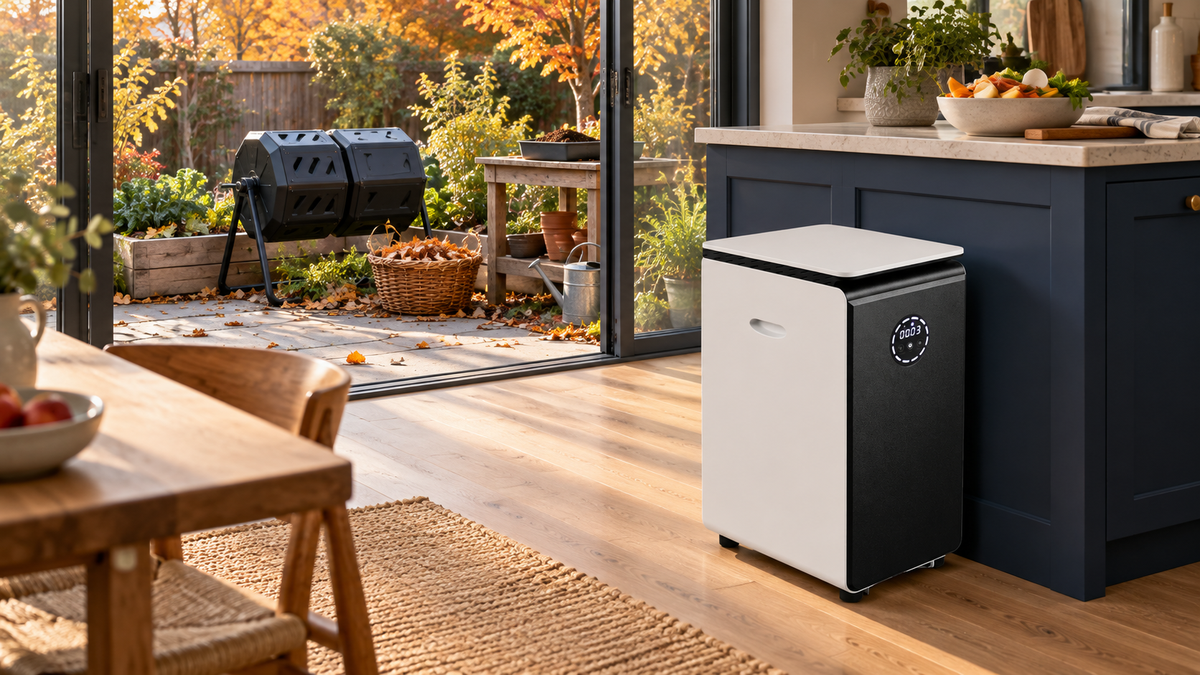
Kitchen Scraps Indoors · Yard Materials Outdoors
Make GEME your primary kitchen composter, and give your existing compost tumbler a separate yard-waste job. Terra 2 or Pro can take suitable daily food scraps indoors while the tumbler works through manageable batches of leaves and other appropriate garden materials.
That is the advantage of a two-stream setup: the household’s kitchen routine continues while the outdoor batch is filling, processing or curing. Your daily scraps no longer have to wait for the tumbler’s next available chamber.

Quick Answer: Can GEME and a Compost Tumbler Work Together?
Yes. Send suitable everyday kitchen scraps to GEME and appropriate garden materials to a separately managed tumbler batch. Maintain the tumbler’s moisture, airflow and balance of dry browns and fresh greens; leaves alone are not a complete recipe for rapid composting.
You do not need to combine the outputs. Prepare GEME Compost Base under its application instructions, and let the tumbler material finish and cure on its own schedule.
If you are still deciding which machine to buy, start with electric composter vs compost tumbler for a small backyard. This guide is for assigning jobs when you already own, or intend to keep, the tumbler.
1. Why GEME Should Handle Your Daily Kitchen Scraps
GEME is the better primary kitchen system for this arrangement because it fits the way scraps arrive: after preparation, coffee and meals. Suitable additions join an active microbial bed indoors, rather than requiring the household to build each kitchen cleanup around an outdoor batch.
Continuous Feeding Fits Around Meals
With an activated, established GEME, you can make divided additions through the day while keeping within the model’s limits. You retain the biological bed and harvest when needed. That routine can continue while the tumbler is left to finish.
Indoor Processing Keeps the Kitchen Routine Close
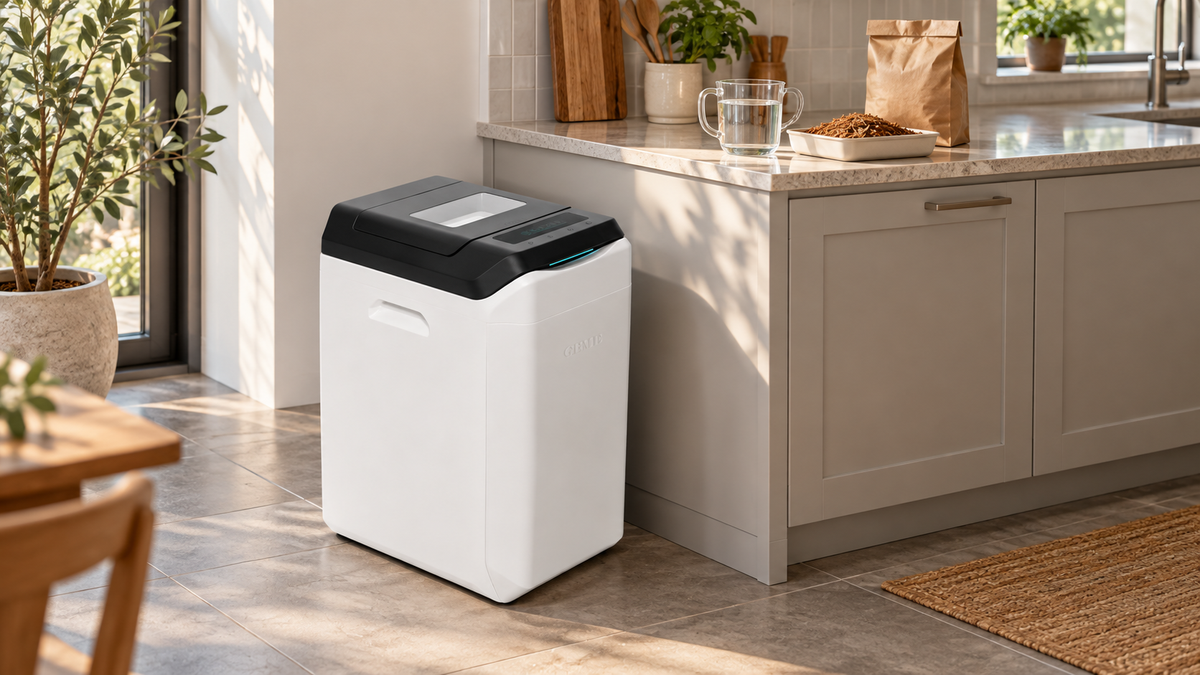
A properly placed floor-standing GEME gives the household a nearby processing point. Rain, a dark garden path or a finishing outdoor batch does not have to turn ordinary meal cleanup into a separate trip outside. Keep normal indoor conditions, power and ventilation available.
Real Microbial Processing With Automated Mixing
Terra 2 and Pro use living Kobold microbes and automated mixing for aerobic decomposition. Terra 2 also uses GEMEBrain adaptive control. Both models use a permanent odor-control system without scheduled replacement odor-filter purchases. See how GEME’s continuous microbial system works.
A correctly managed tumbler also performs biological composting. Its useful role here is processing suitable yard batches while GEME handles the recurring kitchen task.
2. Two Streams, Two Operating Schedules
Assign the material, the routine and the eventual use before moving anything between systems. The following table is a household operating plan, not a claim that every tumbler has the same capacity or processing speed.
On smaller screens, scroll horizontally to compare both streams.
| Task | Kitchen stream: GEME Terra 2 / Pro | Yard stream: your compost tumbler |
|---|---|---|
| Primary input | Suitable food scraps from preparation and meal cleanup, prepared under GEME instructions. | Shredded dry leaves and suitable soft garden material, balanced with appropriate fresh greens. |
| Loading rhythm | Continuous, divided additions within the model’s daily and single-addition limits. | Build a manageable batch; close it to fresh inputs when you want that batch to finish. |
| Material management | Drain free liquids, prepare bulky pieces and watch the bed’s response. Do not add routine loads of garden wood. | Manage carbon, nitrogen, moisture and space to mix. Follow the specific tumbler’s loading instructions. |
| Routine work | The appliance mixes the bed. Retain the bed and maintain airflow. | Rotate or mix as appropriate for the model and conditions; check for dry leaves or wet, matted greens. |
| Seasonal rhythm | Continue the indoor kitchen routine with power and suitable operating conditions. | Respond to temperature, rainfall, moisture and seasonal garden supply. Cold conditions may slow the batch. |
| Harvesting | Remove Compost Base when needed while retaining the active bed. | Keep finished or curing material separate from fresh additions. |
| Before plant use | Screen, return unfinished organic pieces and follow GEME’s soil-blending and application route. | Assess decomposition and stability, allow curing and match use to the plant and soil. |
| Combining outputs | Optional. Check each material’s readiness and intended use first; mixing cannot turn an unfinished batch into finished compost. | |
Operating references: GEME manual; Oregon State Extension’s composting-system guide; EPA home-composting guidance.

3. What Goes Into GEME and What Goes Into the Tumbler?
Route by the material’s properties, not simply by whether it is organic. Kitchen suitability does not extend automatically to branches, lawn-treatment residues, packaging or woody garden waste.
| Material | Preferred route in this setup | Preparation or next step |
|---|---|---|
| Fruit and vegetable preparation scraps | GEME kitchen stream | Remove stickers and packaging; prepare large or fibrous pieces and avoid excess liquid. |
| Coffee grounds and suitable meal scraps | GEME kitchen stream | Follow the approved-food guidance and the current bed’s moisture condition. |
| Shredded dry leaves | Tumbler browns, or another appropriate leaf-management route | Pair with suitable greens for a composting batch. Store surplus dry leaves separately. |
| Healthy soft plant trimmings | Tumbler, if compatible with the model and manageable in size | Cut bulky stems and balance wet green material with browns. |
| Untreated grass clippings | Leave appropriately on the lawn, or use a manageable quantity as tumbler greens | Avoid thick wet mats; check treatment history before adding them to a garden-bound stream. |
| Branches, hard pruning wood and bulky yard loads | Separate chipping, woody mulch or an accepted local yard-waste service | Do not put them into GEME. Do not assume a small tumbler can process an entire pruning load. |
| Diseased plants, seeding invasive weeds or uncertain chemical residues | A locally approved route matched to the material | Do not assume either home system provides verified sanitization or removes chemical contamination. |
| Liners, plastic, ties and plant labels | Remove and sort separately | A compostable claim alone does not establish compatibility with either device. |
Garden-material references: University of Maryland Extension’s home-composting guide and University of Minnesota Extension’s grass-clipping guidance. GEME inputs remain subject to the GEME manual.
Keep bulk yard waste out of your GEME sizing decision. A season’s leaf collection and a day’s kitchen scraps are different workloads. Measure the food scraps you actually want the indoor machine to handle.
4. How to Keep the Tumbler Useful Without Daily Kitchen Inputs
Check Whether the Garden Provides Both Browns and Greens
Dry leaves supply a different part of the recipe from fresh, nitrogen-rich plant material. Healthy soft trimmings and appropriate untreated clippings can help balance a yard batch. A drum of dry leaves may decompose slowly; spinning it more often does not replace missing moisture or an unsuitable mix.
If the garden supplies only dry leaves, choose a slower leaf-management route or an accepted local collection service rather than forcing the tumbler to operate as a rapid food-scrap system. GEME can still handle the kitchen independently.
Give a Batch a Clear Finishing Point
When you want an outdoor batch to finish, stop topping it up with raw material. With a dual-chamber tumbler, one chamber may receive new material while the other processes, if the model supports that use. With a single chamber, provide a separate appropriate place for incoming yard materials.
The Oregon State guide explains that tumblers need the same basic air, water and material balance as other compost systems. It also describes separate containers for collecting material and active composting. Use your tumbler’s own instructions for fill level and turning frequency.
Let GEME Remove the Daily Pressure
The practical improvement is that the household does not need to keep feeding a finishing drum just because dinner produced more scraps. GEME takes that daily kitchen job. The tumbler can follow the garden’s material supply and its own finishing schedule.
5. Keep Kitchen and Garden Seasonal Rhythms Separate
A two-stream setup works best when you allow the garden stream to be seasonal while keeping the kitchen routine convenient.
| Condition | GEME kitchen stream | Tumbler and yard stream |
|---|---|---|
| A surge of fallen leaves | Continue suitable kitchen additions. | Shred or store suitable surplus leaves; use manageable balanced batches rather than packing the drum solid. |
| Wet weather or lush fresh growth | Drain free liquid from scraps before feeding. | Check excess moisture and wet clumps; adjust the recipe and airflow for the specific tumbler. |
| Hot, dry weather | Maintain the normal indoor operating environment. | Check whether dry material needs moisture. Avoid assuming the closed drum stays correctly hydrated. |
| Sustained freezing conditions | Keep GEME indoors, powered and within its operating instructions. | Expect possible slowing or a pause; resume management when conditions permit. Do not force a frozen mechanism. |
| No fresh garden material | Keep the daily kitchen routine going. | Let an existing batch finish, or leave the yard system between batches. |
Oregon State Extension explains that keeping small outdoor compost systems active through sustained freezing takes additional effort and may not be practical. That is why GEME is the stronger everyday kitchen anchor: its indoor routine can continue while outdoor processing slows. For placement and use in colder seasons, read composting in winter with GEME.

6. Do You Need to Combine GEME Compost Base and Tumbler Compost?
No. Keep the materials separate until each is suitable for its intended application. You may use them in different beds or at different times. There is no required final step that joins the two streams.
GEME: Prepare Compost Base
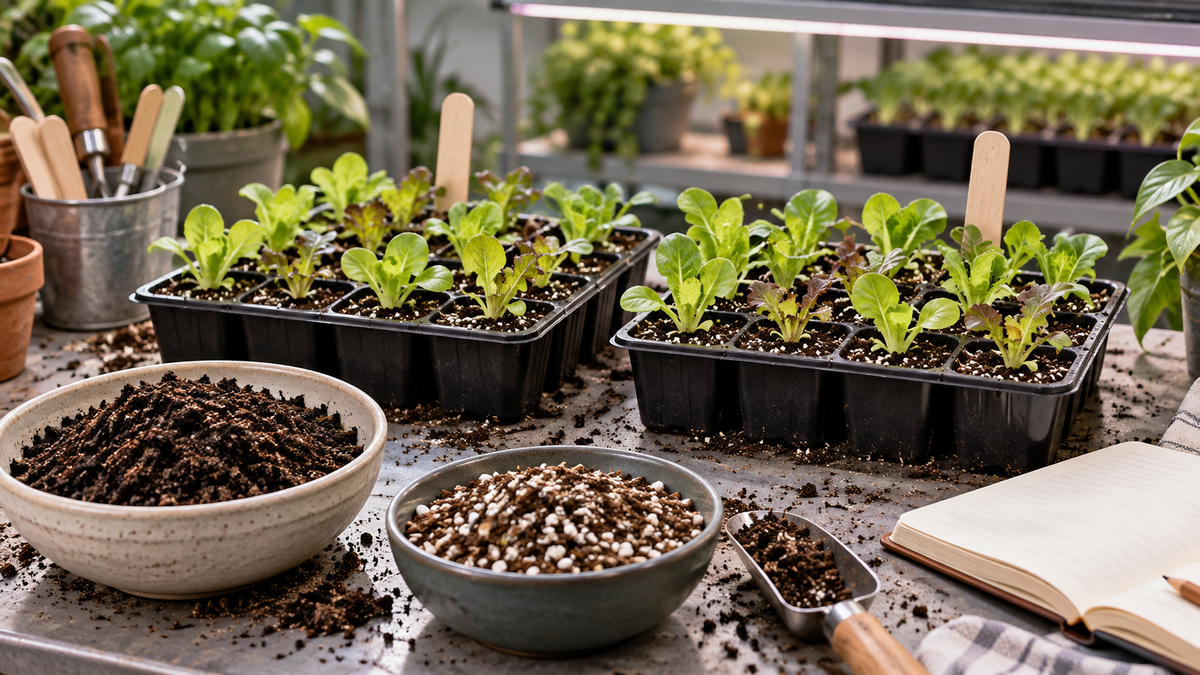
Screen harvested material and return larger unfinished organic pieces. Follow the official soil-blending and placement instructions for the planting task.
Tumbler: Finish and Cure
Separate the finishing batch from fresh inputs. Check decomposition and stability, then allow curing before sensitive garden use.
Garden: Match the Use
Choose the application for the crop, soil and material. Combining two amendments does not justify adding twice as much to the same bed.
GEME Compost Base Has Its Own Application Route
GEME produces an active Compost Base through real microbial processing. The GEME application guide specifies approximately 1 part Compost Base to 8 parts plain soil, with screening and soil capping for the intended use. Do not plant directly into pure output or use a mature-compost topdressing instruction as a substitute for GEME’s preparation steps.

A Dark Tumbler Batch Is Not Automatically Finished
For the yard stream, look for substantial decomposition and an earthy, stable material rather than judging by color alone. A cold batch may be inactive because conditions are poor, so cooling by itself is not proof of maturity.
The EPA’s general home-composting guidance describes curing after the active phase and recommends at least four weeks once a well-managed pile no longer reheats after mixing and food scraps are no longer visible. This is guidance for that process stage, not a promise that every tumbler finishes four weeks after loading. Follow the actual batch condition and its intended use.
If You Choose to Combine Them Later
First complete each material’s appropriate preparation. Keep track of the total amendment being applied and follow the requirements of the intended plants and soil. If the combined material’s condition or application rate is unclear, use the outputs separately rather than inventing a universal blend ratio.
7. Terra 2 or Pro: Choose for the Kitchen Stream
Buy capacity for daily food scraps, while the tumbler keeps its yard role. Record a representative week of suitable kitchen input, including a busier preparation day. Then choose a GEME model with room for the routine you want it to handle.
| Specification | GEME Terra 2 | GEME Pro |
|---|---|---|
| Chamber | 14 L | 19 L |
| Suitable daily input | Up to 2 kg/day | Up to 5 kg/day |
| Each addition | No more than 1 kg | No more than 1 kg |
| Main reason to choose it | Adaptive GEMEBrain control for a kitchen load within its capacity. | Greater daily capacity for heavier cooking and busier household loads. |
| Outdoor garden waste | Keep the separate yard route; neither model is a replacement for a bulk pruning service. | |
Choose Terra 2 when its daily capacity fits the measured kitchen load, and you value its adaptive control. Choose GEME Pro when regular food-scrap volumes call for more headroom. Neither daily figure is an instruction to load a newly activated machine to its maximum.

Your Two-Stream Setup Checklist
- Place GEME on a stable indoor floor with the manual’s required airflow clearance and clear access.
- Activate it under the correct model instructions, then build feeding progressively.
- Define which suitable kitchen scraps go to GEME and remove packaging before feeding.
- Check that the tumbler receives a suitable yard-material mix, not just dry leaves or wet grass.
- Give each outdoor batch a clear point at which fresh inputs stop.
- Keep harvesting and application instructions separate for the two outputs.
Make the Daily Routine Easier
Give Your Kitchen a Dedicated Real Composter
Let GEME handle suitable daily food scraps indoors while your tumbler follows the garden’s seasonal rhythm. Choose Terra 2 for adaptive control or Pro for greater daily capacity.
8. Frequently Asked Questions
Can GEME handle kitchen scraps while my tumbler handles garden waste?
Yes. Use GEME for suitable daily kitchen scraps and the tumbler for manageable, balanced batches of appropriate yard materials. Keep the two systems’ loading, care and finishing instructions separate.
What belongs in each stream?
Route suitable prepared food scraps to GEME. Use shredded leaves and appropriate soft garden greens in the tumbler, following its instructions. Keep branches, bulky wood, packaging and uncertain contaminated materials on a separate appropriate route.
Do I need to combine the outputs?
No. Prepare GEME Compost Base under GEME’s application guidance and allow tumbler compost to finish and cure separately. Combining them is optional and does not make an unfinished material ready for planting.
Will a tumbler work if I stop adding kitchen scraps?
It can, provided suitable yard materials supply a workable balance of carbon, nitrogen, moisture and air. A drum containing only dry leaves may follow a much slower decomposition process.
Can I put branches and garden clippings into GEME?
Do not treat garden waste as an approved GEME food-scrap input. Keep woody branches and bulk yard material out of the machine. Use the GEME manual for input suitability and a separate appropriate garden-waste route.
Does a compost tumbler make real compost?
A correctly managed tumbler uses biological decomposition and can make compost. In this setup, GEME takes the daily indoor kitchen role while the tumbler handles suitable outdoor batches on its own schedule.
Which GEME model fits a two-stream setup?
Choose by the suitable kitchen scraps you want to process. Terra 2 supports up to 2 kg/day and Pro up to 5 kg/day once established, with additions no larger than 1 kg. Yard-waste volume is a separate workload.
9. Official Sources
Sources reviewed October 15, 2026. Tumbler instructions vary by product; this guide does not assign a universal load, turning frequency or maturity deadline.
- GEME Official ManualInput preparation, activation, daily limits, retained microbial bed and airflow.
- GEME Terra 2Terra 2 specifications and model features.
- GEME ProPro specifications and available configurations.
- GEME Compost Base Application GuideScreening, 1:8 soil blending and application by planting task.
- Oregon State Extension: Choosing and Using a Composting SystemTumbler management, material balance and separate processing stages.
- University of Maryland Extension: How to Make Compost at HomeGarden feedstocks, moisture, woody materials and tumbler limitations.
- US EPA: Composting at HomeGeneral process, finishing, curing and garden application.
- Oregon State Extension: Composting in Freezing TemperaturesWhy sustained freezing can slow or pause a small outdoor process.
- University of Minnesota Extension: What to Do With Lawn ClippingsLawn-return options and appropriate use of grass clippings.


Commenta
Nota che i commenti devono essere approvati prima di essere pubblicati.
Questo sito è protetto da hCaptcha e applica le Norme sulla privacy e i Termini di servizio di hCaptcha.