
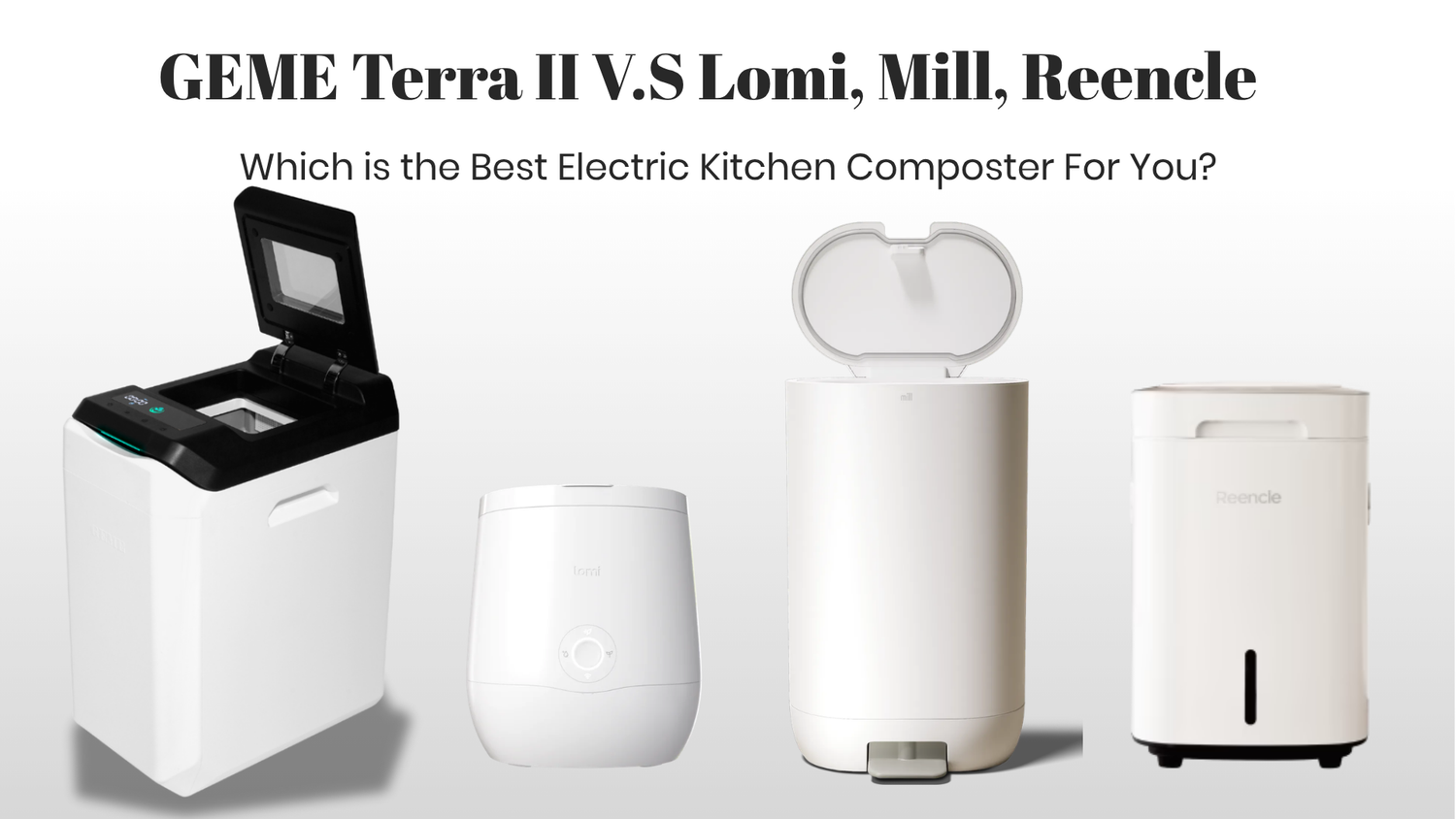
Electric Composter Comparison · Updated 2026
GEME Terra 2, Lomi 3, Reencle Prime, Mill, Vego and Vitamix FoodCycler are often grouped together as electric composters, but they do not perform the same process.
Some maintain living microorganisms. Some heat, dry and grind scraps. Some primarily store food waste until it can be processed elsewhere. Vermicomposting and traditional composting use entirely different biological systems.
This comparison focuses on process, output, feeding style, daily capacity, odor control, recurring costs and what must happen after the machine finishes.
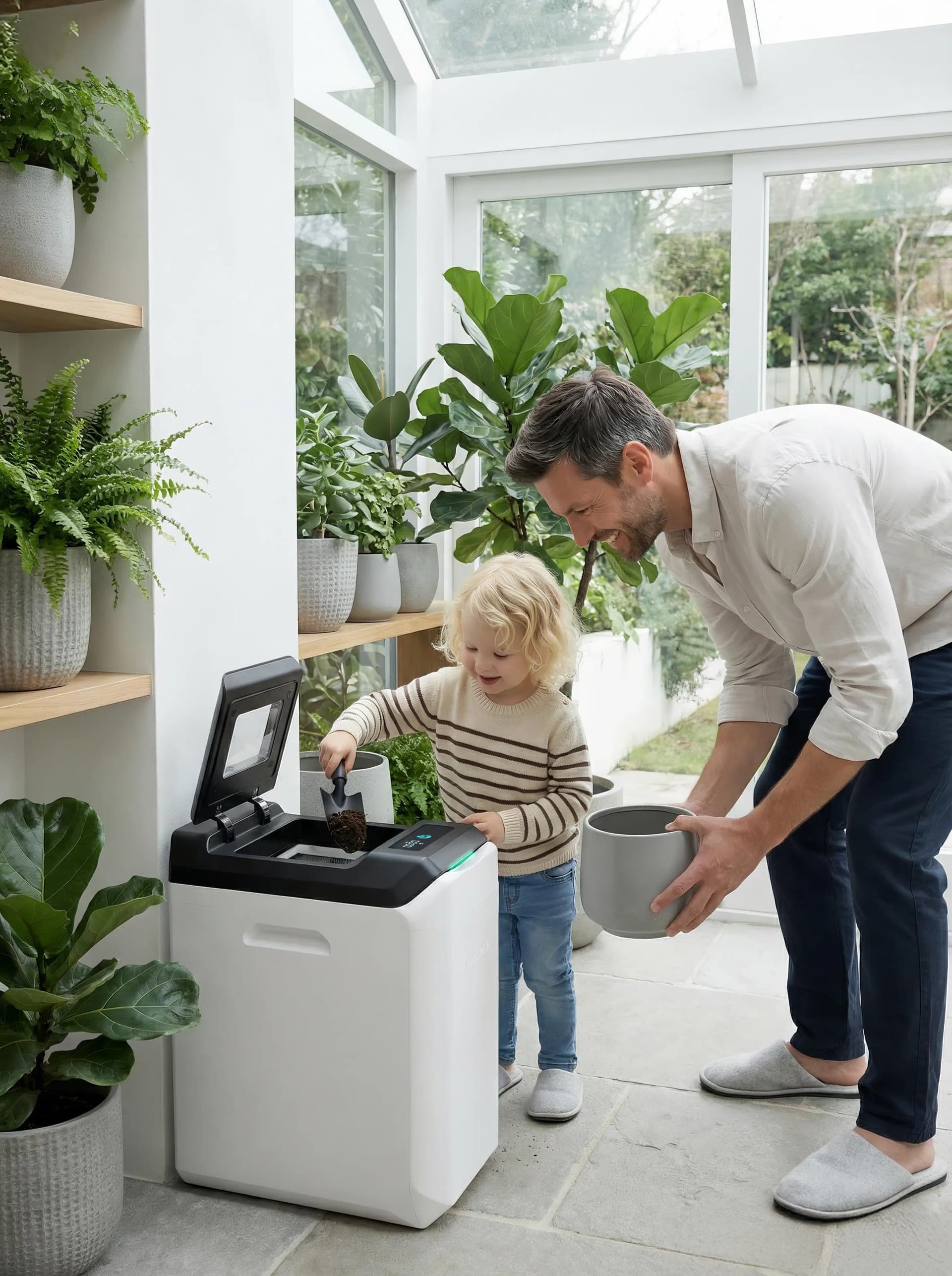
Real microbial composting versus food-waste drying, grinding, storage and secondary processing.
Which Electric Composter Is Best?
Choose GEME Terra 2 when you want continuous microbial composting, regular daily feeding and compost base intended for responsible soil blending.
Choose Lomi 3, Vitamix FoodCycler ECO 5 or a similar batch food recycler when your priority is compact size, shorter processing cycles and rapid reduction of food-waste moisture and volume.
Choose Mill when you want to store a larger quantity of scraps, reduce emptying frequency and create dry grounds for a planned secondary use. Choose Reencle Prime when you want another microorganism-based continuous system.
Choose traditional compost or vermicomposting when you have suitable outdoor space, time and a lower-energy routine.
Before comparing brands, read Kitchen Composter vs Food Waste Recycler and How Does a Real Electric Composter Work?
Editorial Disclosure
GEME publishes this guide and manufactures GEME Terra 2 and GEME Pro. This page therefore identifies where GEME has a different process advantage, but it also explains when a smaller food recycler, larger storage system, worm bin or outdoor pile may better match a household’s priorities.
Product specifications, prices, subscriptions and accessory requirements may change. Confirm current details with each manufacturer before purchase.
Table of Contents
- Electric Composters at a Glance
- How We Compare Food Waste Systems
- GEME Terra 2
- GEME vs Lomi 3
- GEME vs Reencle Prime
- GEME vs Mill Food Recycler
- GEME vs Vitamix FoodCycler ECO 5
- GEME vs Vego Food Recycler
- GEME vs Dehydrators
- GEME vs Vermicomposting
- GEME vs Traditional Compost
- Filters, Maintenance and Ownership Cost
- How to Choose the Right System
- Final Verdict
- Frequently Asked Questions
- Sources
- Related Comparisons
Electric Composters and Food Waste Systems at a Glance
| System | Core Process | Feeding Style | Typical Output | Best Fit | Main Boundary |
|---|---|---|---|---|---|
| GEME Terra 2 | Managed aerobic microbial decomposition | Continuous | Moist microbial compost base | Daily kitchen scraps and soil-oriented routines | Requires balanced feeding and correct soil application |
| Lomi 3 | Heating, drying, grinding and airflow | Batch | Dry reduced food-waste material | Compact kitchens and small batches | Output may need further composting or controlled use |
| Reencle Prime | Resident microorganisms with mixing and airflow | Continuous | Microbe-processed organic material | Users seeking another microbial system | Compare filter, recovery, moisture and curing guidance |
| Mill Food Recycler | Drying, grinding and storage | Ongoing collection with periodic emptying | Shelf-stable food grounds | Larger storage and less frequent emptying | Needs a planned destination for grounds |
| Vitamix FoodCycler ECO 5 | Grinding, heating and aeration | Batch | Dry Foodilizer-style by-product | Larger batch food recycling | Uses carbon odor-control consumables |
| Vego Food Recycler | Powered short-cycle food-waste processing | Batch | Vego Meal soil amendment | Garden-focused short-cycle processing | Review carbon filters and output-use guidance |
| Generic Dehydrator | Heat and moisture removal | Usually batch | Dry concentrated scraps | Volume and odor reduction | Drying alone is not complete composting |
| Vermicomposting | Worms and microorganisms | Gradual feeding | Worm castings | Low-energy plant-scrap processing | Sensitive to food type, temperature and overfeeding |
| Traditional Compost | Natural aerobic decomposition | Continuous or batch pile | Mature outdoor compost | Gardens, leaves and yard waste | Requires space, carbon materials and time |
For another product-level overview, read Best Kitchen Composters 2026 and the daily operation comparison.
How We Compare Electric Composters
A useful composter comparison should examine the complete household workflow, not only the advertised cycle time.
- Process: microbial decomposition, fermentation, drying, grinding or storage.
- Feeding style: continuous addition, gradual collection or closed batch cycles.
- Output: active compost base, dry grounds, fermented material or mature compost.
- Daily capacity: whether the system matches the household’s real food-scrap volume.
- Accepted food: meat, dairy, bones, cooked meals, fibrous scraps, liquids, salt and oil.
- Odor management: microbial control, drying, sealed storage, catalysts or carbon filtration.
- Consumables: filters, carbon refills, additives, microbial starters and subscriptions.
- Placement: countertop, kitchen floor, pantry, utility room, garage or outdoor area.
- Output destination: soil blending, further composting, collection, animal-feed pathway or disposal.
- Ownership routine: cleaning, emptying, curing, filter replacement and recovery after misuse.
GEME Terra 2: Continuous Microbial Composting
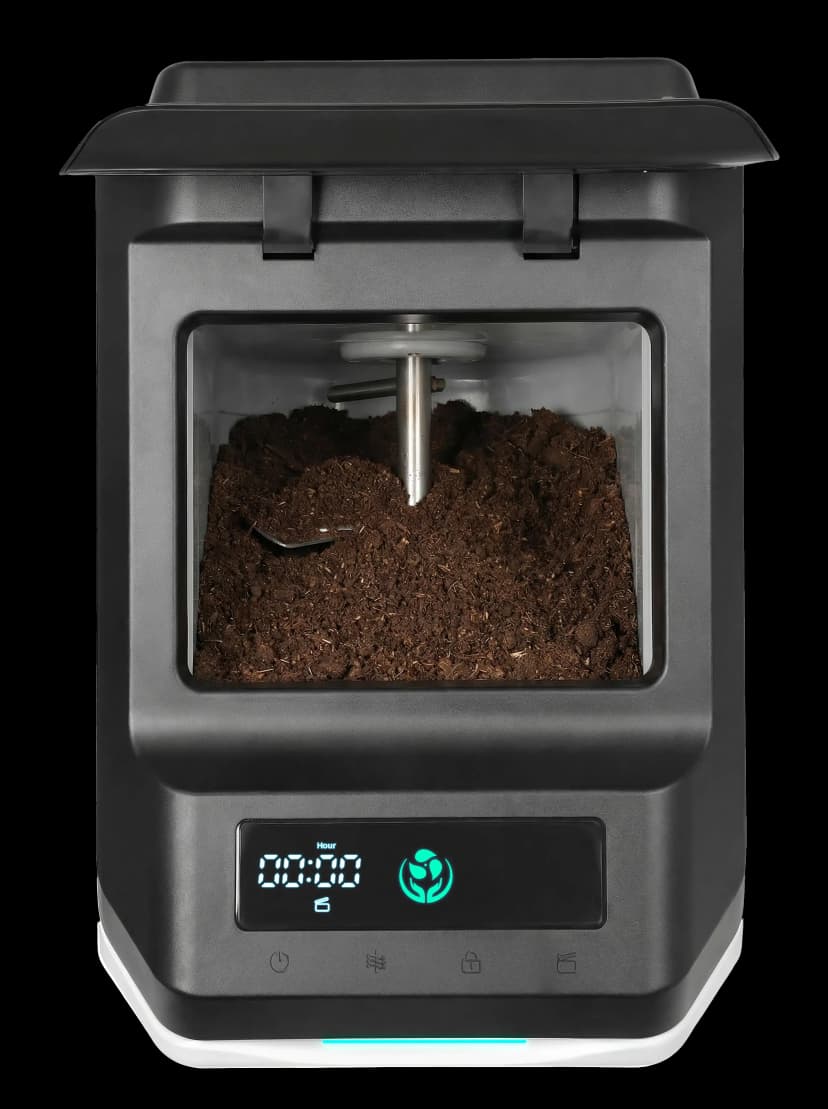
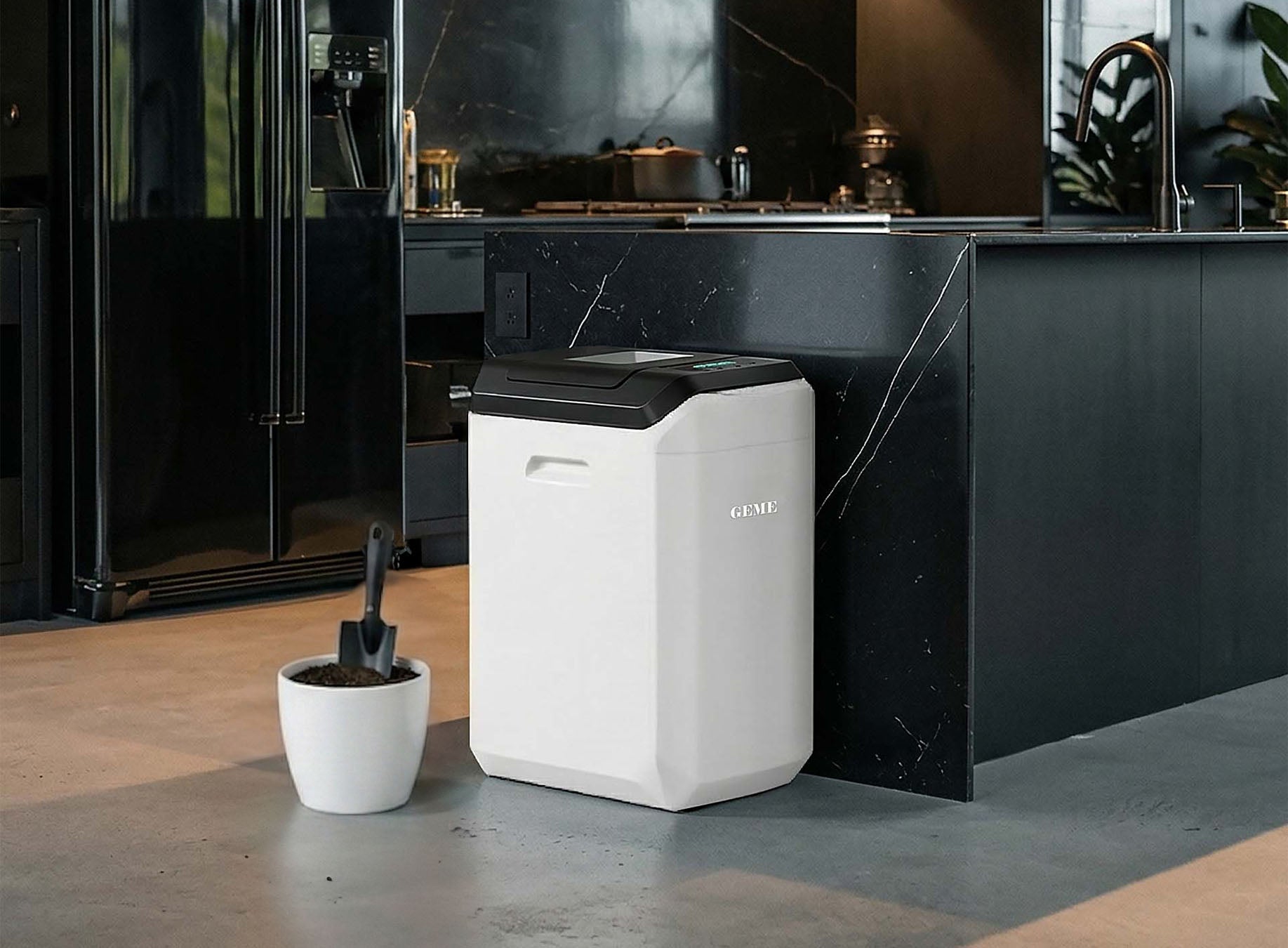
GEME Terra 2 is designed around a resident microbial composting base. Instead of emptying a dry bucket after each cycle, the system retains active material while appropriate kitchen scraps are added over time.
Airflow, moisture, warmth and mixing support aerobic microbial activity. This makes GEME fundamentally different from appliances whose main function is removing moisture and grinding food.
Process
Aerobic microbial decomposition
Routine
Continuous feeding for daily kitchens
Output
Moist compost base for soil blending
Odor System
No routine replacement odor filters
The full biological explanation is available in How Does a Real Electric Composter Work?
For a balanced ownership assessment, read GEME Terra 2 Pros and Cons.
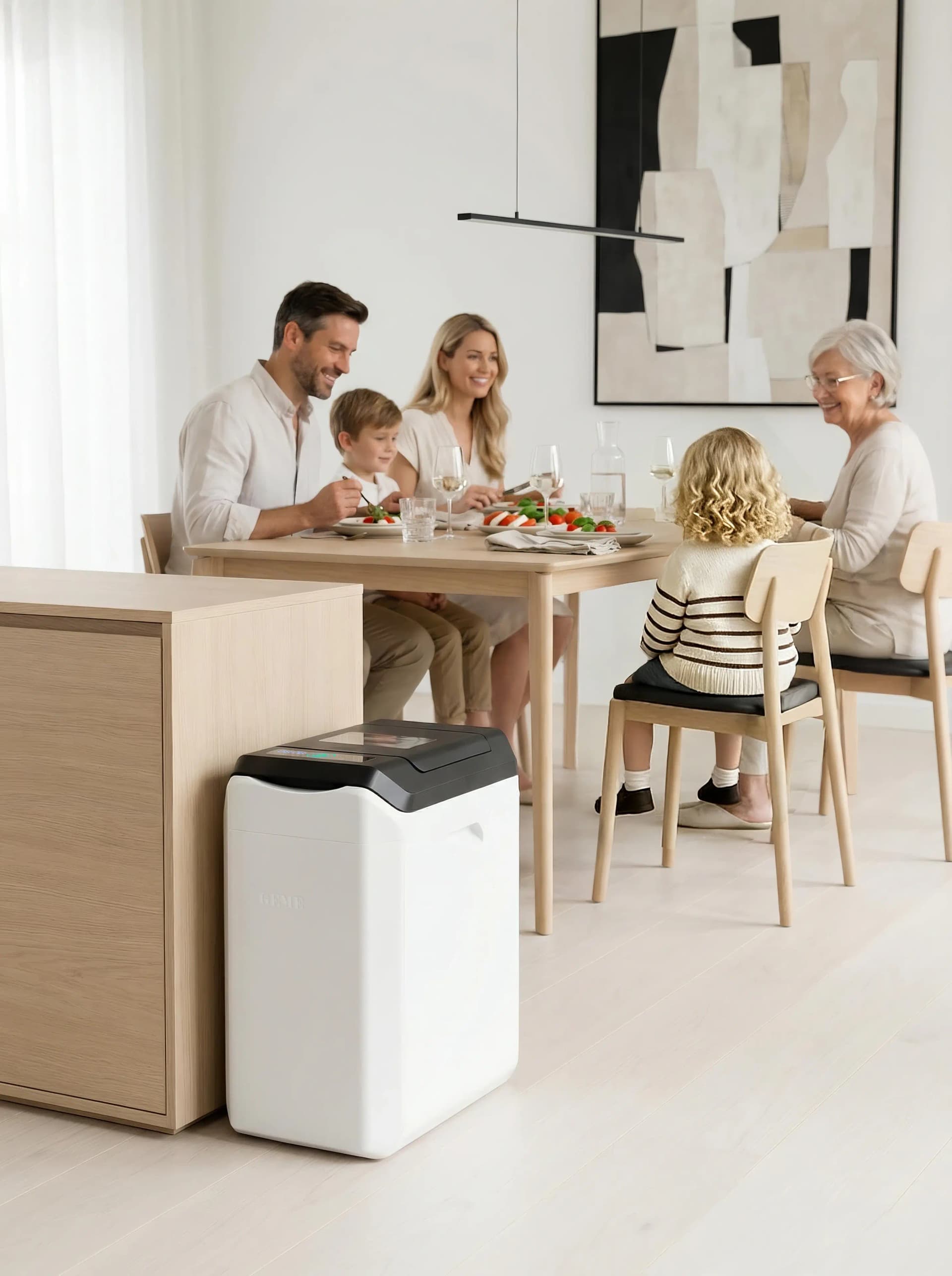
Maintain one living composting environment for regular household scraps.
Choose Real Microbial Composting
GEME Terra 2 is designed for households that want continuous food-waste processing, microbial activity and a compost-oriented output pathway rather than only smaller, drier scraps.
GEME Terra 2 is a floor-standing kitchen composter, not a small countertop appliance.
GEME Terra 2 vs Lomi 3
Lomi 3 is a compact countertop food recycler. It processes a closed batch by applying heat, airflow and grinding, creating a dry, reduced material.
GEME Terra 2 keeps a moist microbial base active and allows appropriate scraps to be added during ongoing use. The decision is therefore not simply which machine is faster.
Choose Lomi 3 when:
- You want a compact countertop appliance.
- You prefer fill-run-empty batch processing.
- Your main goal is reducing food-waste moisture and volume.
- You are comfortable managing filters and processed output.
Choose GEME Terra 2 when:
- You produce food scraps throughout the day.
- You want continuous microbial composting.
- You want compost base for a soil-use routine.
- You want to avoid routine replacement odor filters.
Read the full GEME Terra 2 vs Lomi comparison.
For a deeper output analysis, see Does the Lomi Composter Really Compost?
GEME Terra 2 vs Reencle Prime
Reencle Prime is the closest comparison to GEME because both systems maintain a resident microorganism environment rather than relying only on batch dehydration.
The practical decision therefore moves beyond “microbes versus dehydrator” and focuses on chamber design, food-input volume, moisture management, filter requirements, microbial recovery, output screening and soil-use guidance.
| Decision Area | GEME Terra 2 | Reencle Prime |
|---|---|---|
| Core category | Continuous microbial composter | Continuous microbial food-waste system |
| Main buying question | Compost pathway and lower filter dependence | Alternative microbial workflow and product form factor |
| Output handling | Screen and blend with soil | Follow brand curing and sifting guidance |
| Consumables | No routine replacement odor filter | Review current filter and microbial-maintenance requirements |
Read the complete GEME Terra 2 vs Reencle Prime comparison.
GEME Terra 2 vs Mill Food Recycler
Mill is designed as a food recycler that stores, dries and grinds scraps into shelf-stable grounds. Its value is reducing the inconvenience of wet food waste and extending the time between emptying.
GEME Terra 2 uses a resident microbial base and directs the household toward a compost-and-soil routine. Mill directs the household toward dry-ground storage and a later garden, farm, animal-feed or collection pathway.
Choose Mill when your priority is:
- Collecting scraps over a longer period.
- Reducing wet-bin odor and emptying frequency.
- Creating shelf-stable grounds.
- Using a supported external or garden pathway.
Choose GEME when your priority is:
- Biological decomposition inside the home system.
- Continuous microbial activity.
- Compost base for soil blending.
- A kitchen-to-soil routine rather than dry storage alone.
Read GEME Terra 2 vs Mill Food Recycler.
For the category question, continue to Does Mill Really Compost?
GEME Terra 2 vs Vitamix FoodCycler ECO 5
Vitamix FoodCycler ECO 5 is a batch food recycler that grinds, heats and aerates food waste. It is designed to create a dry, reduced by-product while using carbon-based odor control.
It suits users who prefer a removable bucket, one-button batch workflow and dry output. GEME suits users who prefer continuous feeding and a living microbial process.
| Feature | GEME Terra 2 | FoodCycler ECO 5 |
|---|---|---|
| Process | Microbial decomposition | Heating, aeration and grinding |
| Routine | Continuous addition | Fill-run-empty batch |
| Output | Moist compost base | Dry soil-amendment by-product |
| Odor consumable | No routine replacement odor filter | Refillable carbon filter system |
Read the existing GEME Terra 2 vs Vitamix FoodCycler comparison.
A broader FoodCycler comparison is available in GEME Terra 2 vs FoodCycler.
GEME Terra 2 vs Vego Food Recycler
Vego positions its powered kitchen system as a fast food-waste solution that creates Vego Meal for gardens, lawns and plants. Its official product information emphasizes short processing time, activated-carbon odor control and automated processing.
The main comparison is therefore similar to GEME versus other batch recyclers: Vego prioritizes shorter powered processing and a dry garden-oriented output, while GEME prioritizes continuous microbial activity.
GEME Terra 2 may fit better when:
- You want an active microbial composting base.
- You want to add scraps continuously.
- You do not want routine activated-carbon filter replacement.
- You accept moist output and soil blending.
Vego may fit better when:
- You prefer a shorter batch-processing routine.
- You want a dry, garden-oriented by-product.
- You accept carbon-filter maintenance.
- You prefer a compact appliance workflow.
For broader marketplace context, review Top Electric Composters on Amazon 2026.
GEME Terra 2 vs Food-Waste Dehydrators
A food-waste dehydrator removes moisture, often while grinding or mixing the material. The result is usually lighter, smaller and easier to store than the original scraps.
That can solve a real household problem, but drying is not the same process as aerobic biological composting.
Microbial Composter
- Maintains living microorganisms
- Requires moisture and oxygen
- Supports biological decomposition
- Produces biologically processed material
Food-Waste Dehydrator
- Removes water from scraps
- Reduces weight and storage odor
- May grind material into smaller particles
- Often requires a later use or processing route
Read the full technical distinction in Microbes vs Dehydrators.
GEME Terra 2 vs Vermicomposting
Vermicomposting is a genuine biological process. Worms and microorganisms convert suitable organic material into castings.
Unlike a food dehydrator, a worm bin does not merely reduce moisture. However, it has stricter food-input, temperature, moisture and overfeeding limits than a managed electric system.
| Question | GEME Terra 2 | Worm Bin |
|---|---|---|
| Energy use | Powered controls and mixing | Minimal direct energy use |
| Food range | Broader managed household inputs | Primarily suitable plant-based scraps |
| Temperature management | Managed by appliance controls | Dependent on room or outdoor conditions |
| Output | Microbial compost base | Worm castings and vermicompost |
GEME Terra 2 vs Traditional Compost
Traditional outdoor composting remains one of the most economical ways to process food scraps, leaves and garden material. It is biologically authentic and can produce mature garden compost.
The trade-off is space, time, carbon-material management, turning, weather exposure and pest control.
Choose traditional compost when:
- You have outdoor space.
- You produce leaves, cardboard and garden waste.
- You accept slower seasonal processing.
- You want the lowest equipment cost.
Choose GEME Terra 2 when:
- You need year-round indoor food-waste processing.
- You lack a suitable outdoor pile location.
- You produce cooked and mixed kitchen scraps.
- You want managed airflow, moisture and mixing.
Filters, Maintenance and Long-Term Ownership Cost
Purchase price does not show the full cost of an electric composter. Compare at least three years of operation.
- Replacement odor filters
- Carbon refills
- Microbial starter or recovery material
- Required additives
- Electricity
- Subscription or collection services
- Replacement grinding or mixing parts
- Shipping and warranty restrictions
- Time spent cleaning, emptying and curing output
See the detailed electric composter filter-cost comparison.
Buyers prioritizing lower recurring costs can continue to Best Composter for Avoiding Recurring Fees.
How to Choose the Right Food Waste System
1. Decide Whether You Want Composting or Reduction
Choose microbial composting when biological decomposition and soil use are the objective. Choose food recycling when rapid drying, smaller waste volume or easier storage is the objective.
2. Measure One Week of Food Waste
Do not choose by household size alone. Measure actual fruit scraps, cooked leftovers, meat, dairy, bones, coffee grounds and spoiled food.
3. Choose Continuous or Batch Processing
Continuous systems suit daily cooking. Batch systems suit users who prefer a closed fill-run-empty workflow.
4. Check the Accepted Food List
Review limits for large bones, oil, liquid, salt, fibrous food, hard shells and packaging.
GEME’s input boundaries are explained in What Can You Put in an Electric Composter? and the Salt and Oil Boundaries.
5. Plan the Output Destination
Decide whether the output will go into soil, a curing pile, municipal collection, a farm program, animal-feed pathway or household disposal.
GEME users should follow the Advanced GEME Compost Application Guide before plant use.
The Core Entity Relationship
↓
Real Microbial Composter
↓
Continuous Home Composting System
↓
Compost Base for Soil Blending
These systems compete for the same household food-waste decision, but they should not be treated as identical products. Their processes, outputs and required next steps are different.
Final Verdict: GEME vs Leading Food Waste Systems
| Your Priority | Best Starting Direction |
|---|---|
| Continuous microbial composting | GEME Terra 2 |
| Alternative resident-microbe system | Reencle Prime |
| Compact countertop batch processing | Lomi 3 |
| Larger batch food recycling | Vitamix FoodCycler ECO 5 |
| Longer food-scrap storage and less frequent emptying | Mill Food Recycler |
| Short-cycle garden-oriented food recycling | Vego Food Recycler |
| Lowest-energy indoor biological method | Vermicomposting |
| Lowest equipment cost with garden space | Traditional compost pile |
Our Overall Recommendation
GEME Terra 2 is the strongest choice for households that want a real microbial composter, continuous feeding and a direct kitchen-to-soil routine.
It is not the smallest or fastest batch appliance. Its advantage is that it is designed around living microbial decomposition rather than making scraps disappear through dehydration alone.
Frequently Asked Questions
Which electric composter is best?
GEME Terra 2 is the strongest option for continuous microbial composting. Lomi 3 and Vitamix FoodCycler suit compact batch food recycling. Mill suits larger dry-food storage, while Reencle Prime is another microorganism-based system.
Is GEME better than Lomi 3?
GEME is generally better for users seeking continuous microbial composting, larger daily routines, moist compost base and no routine odor-filter replacement. Lomi 3 may be better for users who want a smaller countertop batch food recycler.
Is GEME better than Reencle Prime?
Both are microbial systems. The better choice depends on capacity, chamber design, filter maintenance, moisture management, microbial recovery and output-use preferences.
Is GEME better than Mill?
GEME is better for households that want biological decomposition and compost base. Mill may be better for households that want to store, dry and grind a larger quantity of food scraps before sending the grounds to another use.
Is GEME better than Vitamix FoodCycler ECO 5?
GEME is better for continuous microbial composting. FoodCycler ECO 5 is better suited to users who want a removable batch bucket, dry output and one-button grinding, heating and aeration.
Is GEME better than Vego?
GEME is the stronger fit for users who want an active microbial base and continuous feeding. Vego may suit users who prefer short-cycle food recycling and a dry garden-oriented output.
Are electric composters the same as dehydrators?
No. Some electric systems maintain microorganisms, while others primarily heat, dry and grind scraps. The term electric composter describes a shopping category, not one universal process.
Does dried food waste count as compost?
Drying reduces moisture and volume, but it does not automatically make the material biologically stable compost. The output may require further composting, curing or controlled soil use.
Is vermicomposting better than an electric composter?
Vermicomposting uses very little energy and produces valuable castings, but it has narrower food, temperature and moisture limits. Electric microbial systems are generally easier for mixed daily kitchen scraps.
Is traditional composting better than GEME?
Traditional composting is lower-cost and suitable for garden waste, but it needs outdoor space, dry carbon material, time and pest management. GEME is designed for year-round indoor kitchen-food processing.
Does GEME Terra 2 need replacement odor filters?
GEME Terra 2 is designed without routine replacement odor filters. Input balance, microbial health, airflow and normal maintenance still matter.
Can electric-composter output be placed directly around plants?
Not automatically. Output condition differs by system. Follow the manufacturer’s curing, dilution, soil-blending and application instructions before use around plant roots.
Sources
Choose a system that matches what you want the output to become.
Turn Daily Scraps Into a Microbial Composting Routine
GEME Terra 2 and GEME Pro use managed microbial activity and continuous feeding to process suitable household food waste, without relying only on drying and grinding.
Let’s feed the earth.

Commenta
Questo sito è protetto da hCaptcha e applica le Norme sulla privacy e i Termini di servizio di hCaptcha.