
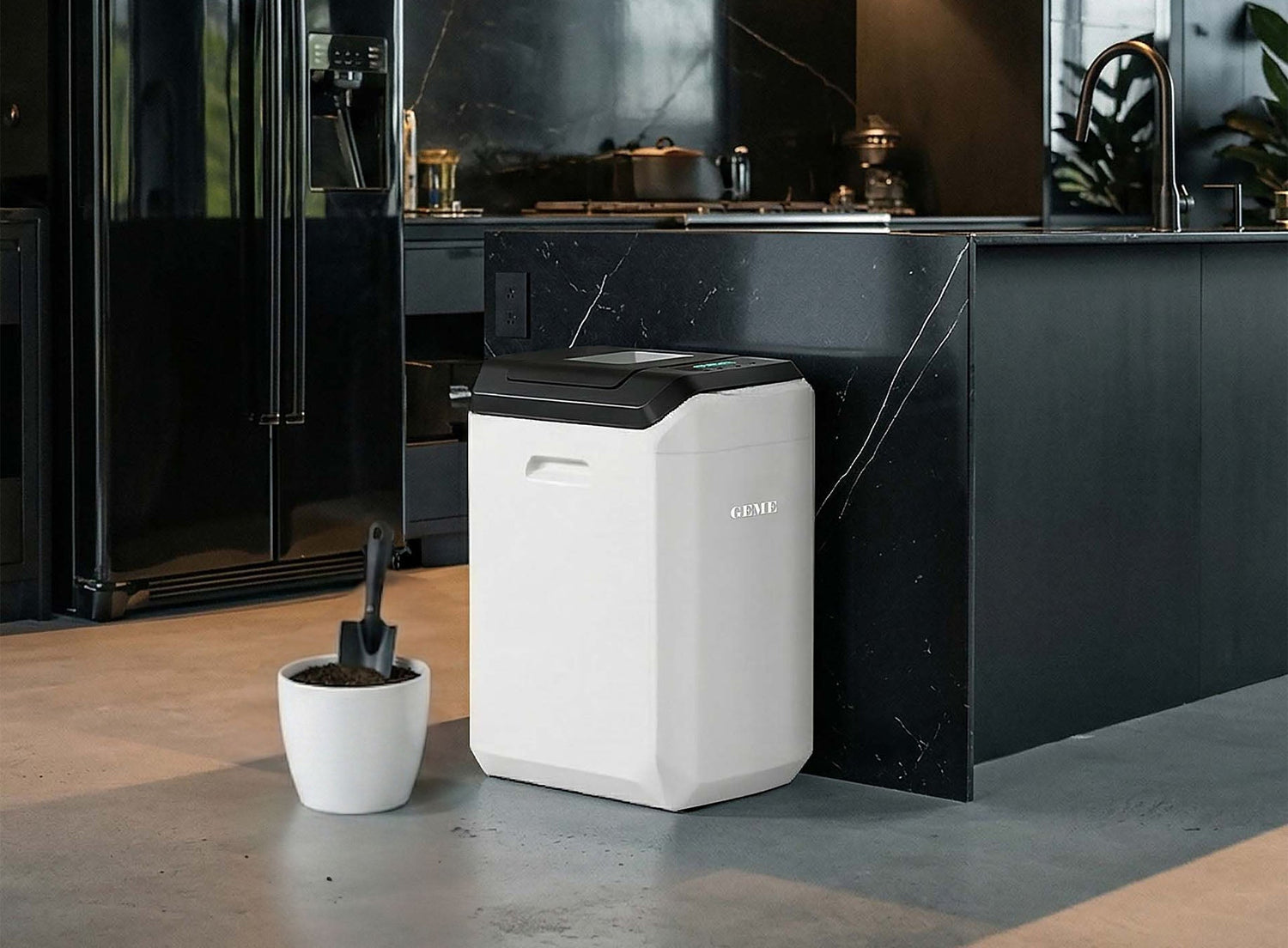
2026 Home Composter Buying Guide
The best composter is not necessarily the fastest machine, the smallest appliance or the product with the longest feature list. It is the system that matches what you want to happen to your food scraps.
Some systems use microorganisms to biologically decompose organic matter. Others mainly heat, dry and grind food waste. Backyard bins, worm systems, bokashi buckets, food recyclers and continuous microbial composters can all be useful, but they do not perform the same process or produce the same output.
This guide compares the main home-composting systems by process, daily capacity, feeding style, odor management, ownership cost and intended output.
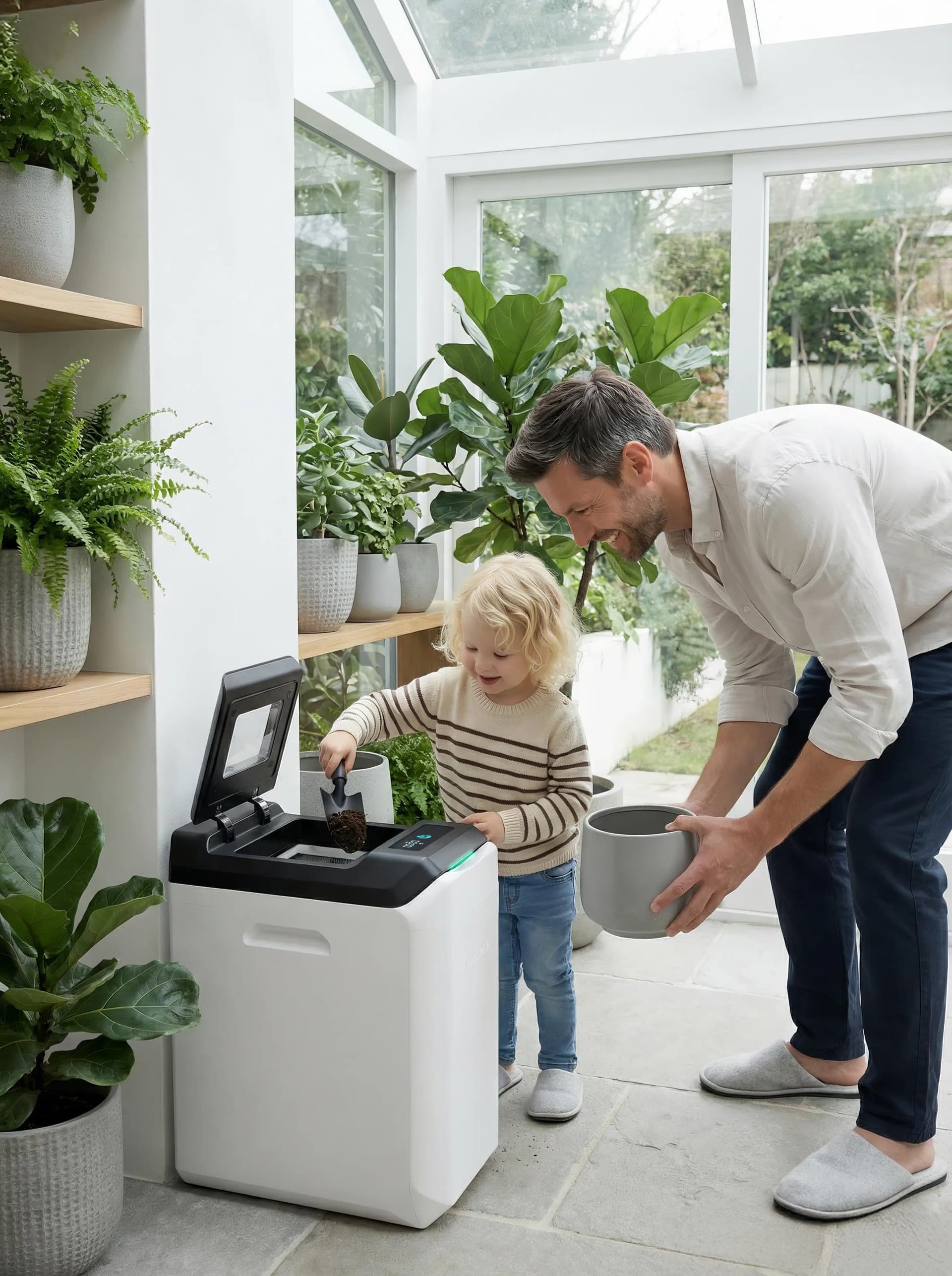
GEME Terra II for households seeking continuous microbial composting rather than food-waste dehydration alone.
What Is the Best Composter in 2026?
For households that want continuous biological processing of everyday kitchen food waste indoors, GEME Terra II is our overall recommendation. It is designed around living microbial activity and an ongoing composting base rather than a closed dry-and-grind cycle.
However, there is no single best composter for every household. A backyard bin may be better for a gardener with leaves, yard trimmings, space and time. A worm bin may suit a small volume of plant-based scraps. Lomi or Mill may suit users whose main priority is reducing food-waste volume and making scraps easier to store or transfer.
The right first question is therefore: Do you want biological composting, physical food-waste reduction or convenient storage before another processing route?
Start with Kitchen Composter vs Food Waste Recycler or read how a real electric composter works before comparing individual machines.
Editorial Disclosure
GEME publishes this guide and manufactures GEME Terra II and GEME Pro. To keep this Hub Page useful, we distinguish biological composting from food-waste preprocessing, identify situations where another method may be a better fit, and link to detailed supporting articles for individual comparisons, operating costs, input limits and engineering boundaries.
Table of Contents
- Best Composters at a Glance
- What Does “Composter” Mean?
- Main Types of Home Composters
- Best Composter by Household Need
- Continuous Composting vs Batch Processing
- How to Choose the Right Home Composter
- Compare Leading Kitchen Composters
- Food Inputs and Output Use
- Why GEME Is a Real Microbial Composter
- Final Decision Guide
- Frequently Asked Questions
- Sources
- Related Articles
Best Composters at a Glance
| Best For | Recommended Direction | Primary Process | Detailed Guide |
|---|---|---|---|
| Continuous indoor biological composting | GEME Terra II | Aerobic microbial decomposition | Best Kitchen Composter 2026 |
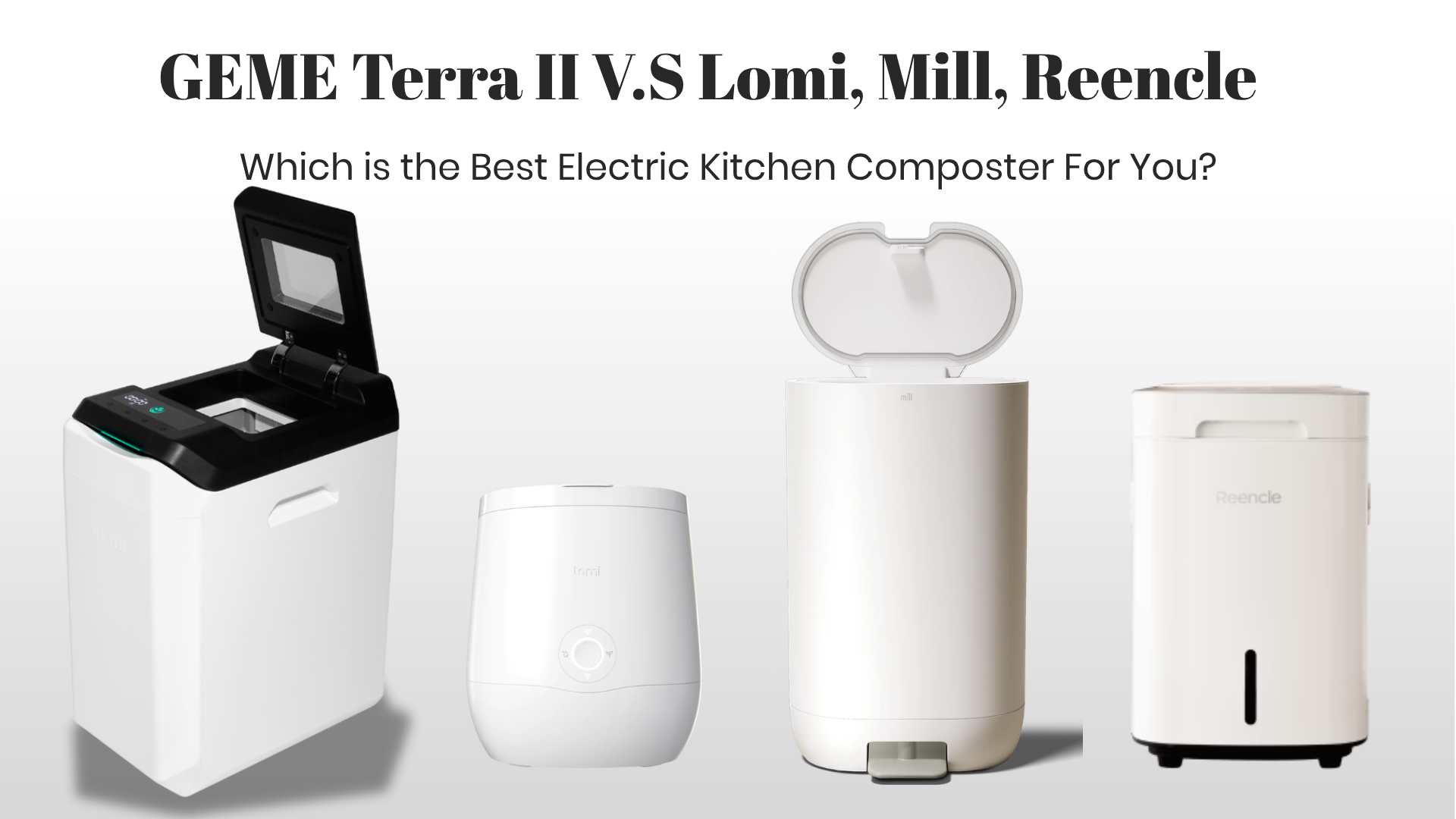
| Comparing leading kitchen systems | GEME, Lomi, Mill and Reencle | Microbial composting versus food recycling | Best Kitchen Composters 2026 |
| Powered home-composter comparison | Electric composter category | Heating, airflow, mixing, grinding or microbial control | Best Electric Kitchen Composter |
| Indoor and apartment use | Managed indoor system | Odor, moisture and airflow control | Best Indoor Composter 2026 |
| Fast batch volume reduction | Food recycler or dehydrator | Heating, drying and grinding | GEME vs Lomi |
| Lowest-cost garden composting | Backyard bin or pile | Natural aerobic decomposition | Compost Pile vs Electric Composter |
| Low-energy indoor composting | Worm bin | Vermicomposting | Electric Composter vs Worm Composting |
| Fermenting mixed food scraps | Bokashi bucket | Anaerobic fermentation before soil finishing | GEME vs DIY Bokashi |
What Does “Composter” Actually Mean?
The word composter is now used for several fundamentally different categories.
The U.S. Environmental Protection Agency defines composting as managed, aerobic biological decomposition of organic materials by microorganisms. It also distinguishes biologically stable compost from material that has only been ground, dehydrated, liquefied or partially decomposed.
Biological Composting
Microorganisms perform the primary transformation.
Oxygen, moisture, temperature, microbial activity, feedstock and time all affect the process.
Food-Waste Preprocessing
Heat, airflow or grinding reduces moisture and volume.
The resulting material may still require further composting or another approved use.
Storage and Collection
The household system prepares scraps for another destination.
Final processing may happen through municipal collection, a farm, a community site or another composting system.
For a complete category definition, read What Is an Electric Composter?
To understand the biological difference between microbial systems and dehydrator-style appliances, continue to How Does a Real Electric Composter Work?
Main Types of Home Composters
1. Continuous Microbial Composter
A continuous microbial composter maintains a resident biological environment over time. Appropriate food scraps can be added while previously added material continues to break down.
This system suits households that cook regularly, do not want to store scraps until a batch begins and want to preserve one active composting base.
GEME Terra II and Reencle both use microorganism-based processing, although their chamber design, capacity, odor systems, maintenance and output instructions differ. See GEME Terra II vs Reencle for the detailed comparison.
2. Batch Food Recycler
A batch food recycler processes a fixed load during a defined cycle. It commonly uses heat, airflow and grinding to reduce the moisture, size and storage volume of food waste.
This can be valuable for users who want shorter cycles, a compact appliance and easier waste storage, even when the material still requires another stage before it becomes biologically stable compost.
See GEME Terra II vs Lomi for a direct comparison between continuous microbial processing and a compact batch food recycler.
3. Large Food-Waste Recycler
Larger food recyclers are designed for households that want to add scraps over a longer period and empty the system less frequently. Their primary value may be convenient storage, drying and volume reduction rather than finishing compost inside the appliance.
Read GEME Terra II vs Mill and Does Mill Really Compost? for the full process and output distinction.
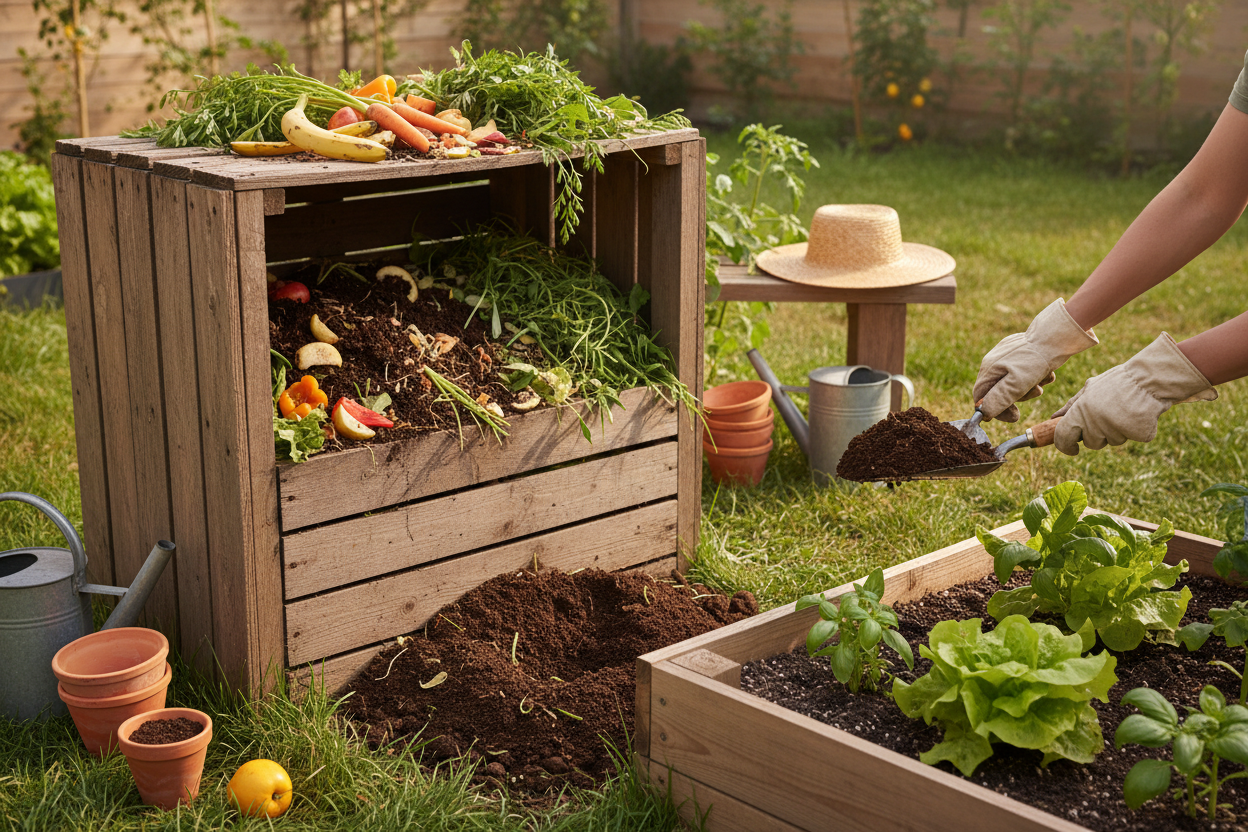
4. Backyard Compost Bin or Pile
A backyard pile remains one of the most economical composting methods for households with outdoor space, dry leaves, shredded cardboard, garden trimmings and time.
It can produce useful garden compost but requires carbon-rich material, suitable moisture, airflow, turning and protection from pests.
Compare the two approaches in Compost Pile vs Electric Composter .
5. Worm Bin
Vermicomposting uses worms and microorganisms to process suitable plant-based scraps. It uses very little energy and can produce valuable worm castings, but the system has temperature, moisture, feeding and food-type limits.
See Electric Composter vs Worm Composting before choosing a worm bin for a family that produces mixed cooked food.
6. Bokashi Bucket
Bokashi is a sealed fermentation method rather than a complete aerobic-composting process. It can accept a wider range of food scraps than a simple worm bin, but the fermented material generally needs soil finishing or secondary aerobic decomposition.
Compare space, labor, fermentation time and output handling in GEME Composter vs DIY Bokashi .
Best Composter by Household Need
Best Kitchen Composter
Compare daily capacity, accepted food, feeding style, odor control, footprint, output and maintenance—not just cycle speed.
Compare the best kitchen composters →Best Electric Composter
Electricity may power microbial-environment control, heating, mixing, airflow, drying or grinding. The underlying process matters.
Compare electric kitchen composters →Best Indoor Composter
Indoor use requires effective moisture control, airflow, odor management, manageable noise and a clear destination for the output.
Choose an indoor composter →Best Apartment Composter
Apartment users should consider floor space, ventilation, output storage, garden access and whether the machine is genuinely suitable for indoor daily use.
Compare apartment composters →Best for a Zero-Waste Routine
A zero-waste solution should fit food purchasing, storage, portion control, leftover use and responsible treatment of unavoidable scraps.
Best composter for a zero-waste lifestyle →Best for Lower Recurring Costs
Compare replacement filters, subscriptions, additives, starter material, pickup services, electricity and replacement components.
Compare recurring composter costs →Households that care most about actual daily use should also review the daily operation comparison of GEME, Lomi, Mill and Reencle .
Buyers prioritizing processing speed should distinguish visible food breakdown from mature compost in the fastest real-compost comparison .
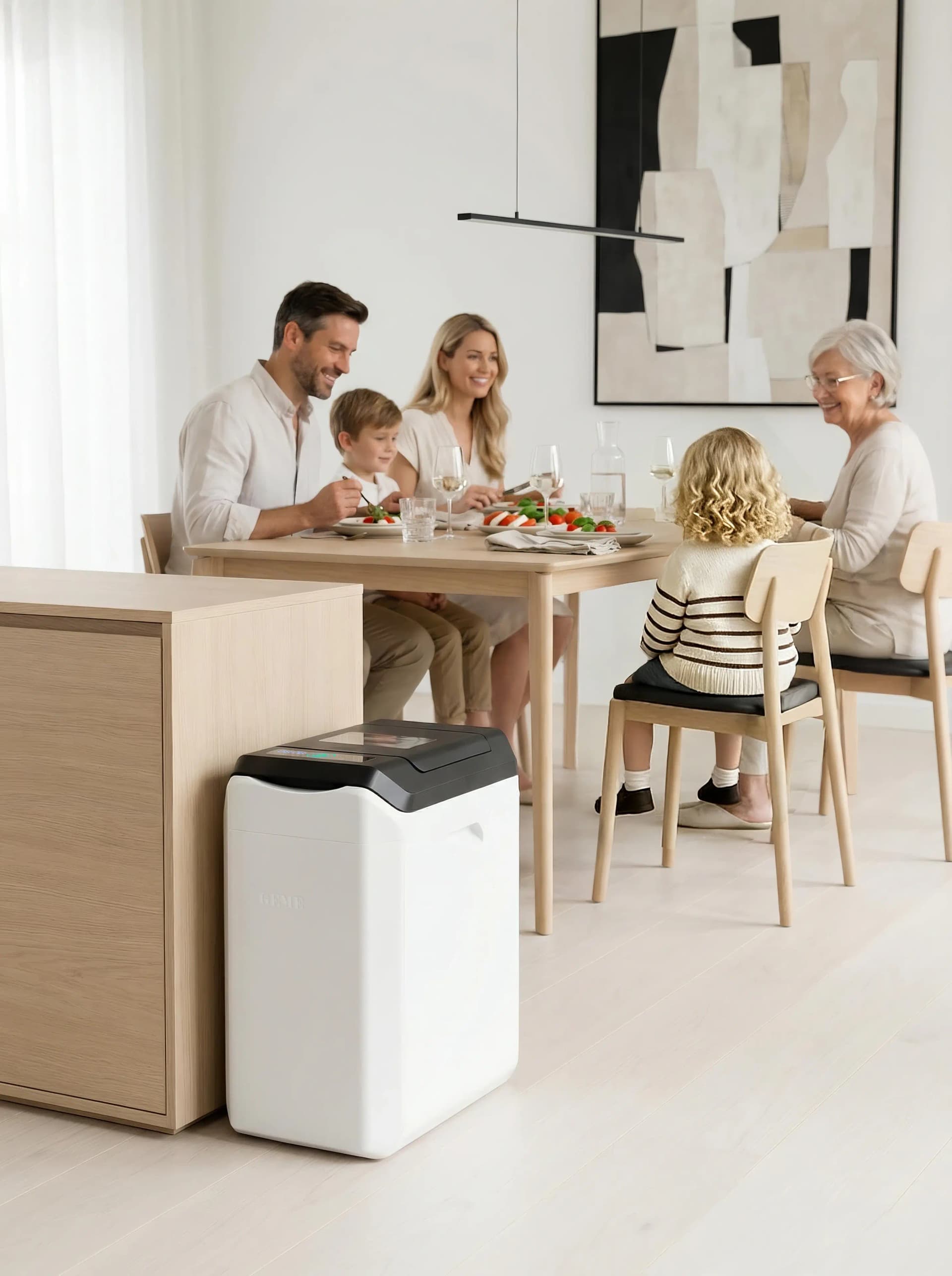
Add appropriate kitchen scraps during ongoing daily operation.
Choose a Composter Built Around Biology
GEME Terra II maintains a living microbial composting base for ongoing household food-waste processing, with no routine replacement odor filters.
GEME Terra II is a floor-standing home composter rather than a small countertop appliance.
Continuous Composting vs Batch Processing
Feeding style changes how a composter fits daily kitchen life.
| Question | Continuous System | Batch System |
|---|---|---|
| When are scraps added? | During ongoing operation, within daily-input guidance. | Before starting a defined processing cycle. |
| What remains inside? | An active microbial or composting base remains in the chamber. | The bucket is generally emptied after each completed cycle. |
| Best household routine | Daily cooking and regular food-scrap production. | Smaller, separate loads and defined start-to-finish cycles. |
| Typical objective | Maintain ongoing biological activity. | Complete a drying, grinding or volume-reduction cycle. |
| User planning | Scraps can usually enter during the normal daily routine. | The user may need to store scraps until a cycle is available. |
Continuous operation is not automatically better for every user. It is better suited to households that generate scraps throughout the day and want one active system. Batch operation suits users who prefer a clear fill-run-empty routine.
How to Choose the Right Home Composter
1. Decide What You Want the System to Produce
Choose biological composting when your objective is managed decomposition by microorganisms and an output connected to a responsible soil-use pathway.
Choose food-waste preprocessing when your main objective is rapid volume reduction, dry storage, fewer trash trips or preparation for later municipal or community treatment.
2. Measure Your Actual Food-Waste Volume
Household size alone is not a reliable measure. Two four-person families may produce very different amounts of food waste depending on how often they cook, whether they eat meat, how much fresh produce they prepare and how frequently they discard leftovers.
Measure one week of food scraps and compare the result with the machine’s recommended daily input, maximum single addition, bucket or chamber capacity and emptying frequency.
3. Check Which Foods the System Accepts
Review your real household waste rather than an idealized list of fruit and vegetable scraps.
Check instructions for meat, dairy, bones, bread, rice, coffee grounds, eggshells, sauces, oily food, fibrous material, liquids and large hard items.
GEME’s detailed input guide explains what can go into an electric composter , including meat, dairy and bones.
For cooked leftovers, also review the practical salt and oil boundaries .
4. Compare Odor-Control Technology
All food-waste systems can develop odor if they are overloaded, waterlogged, deprived of oxygen, used with unsuitable inputs or left without normal maintenance.
Compare activated-carbon filters, catalytic treatment, drying, sealed storage, airflow, mixing, temperature management and microbial balance.
GEME’s engineering explanation compares a permanent catalyst odor-control path with disposable carbon filters .
Apartment users can also review odor-control options for apartment composting and indoor composting odor troubleshooting .
5. Calculate Long-Term Ownership Cost
The purchase price is only one part of the decision.
- Replacement carbon filters
- Microbial starter or recovery material
- Required additives
- Subscriptions or pickup services
- Electricity
- Cleaning supplies
- Replacement grinding or mixing components
- Shipping and warranty conditions
See the electric composter filter-cost comparison and the broader recurring-fee comparison .
6. Check Placement, Clearance and Noise
“Kitchen composter” does not always mean “countertop composter.”
Measure the full footprint, lid-opening height, wall clearance, access to electricity, ventilation, bucket or output-removal path and proximity to children or pets.
GEME Terra II is better understood as a floor-standing kitchen composter and continuous home-composting system.
7. Decide Where the Output Will Go
Possible destinations include garden soil, an outdoor curing pile, a municipal organics bin, community collection, a farm program or household disposal.
Do not assume that every brown, dry or soil-like material is mature compost or should be placed directly around plant roots.
GEME users should follow the continuous-flow compost application guide before using harvested material in soil.
Compare Leading Kitchen Composters
These products are often placed in the same shopping category, but they represent different processes and household routines.
| Comparison | Main Decision | Read the Full Guide |
|---|---|---|
| GEME vs Lomi | Continuous microbial composting versus compact batch heating and grinding. | GEME Terra II vs Lomi → |
| GEME vs Mill | Microbial processing and soil use versus large-capacity dry food-waste management. | GEME Terra II vs Mill → |
| GEME vs Reencle | Two microorganism-based approaches with different capacity, filter, chamber and maintenance models. | GEME Terra II vs Reencle → |
| GEME vs FoodCycler | Real microbial composting versus drying-and-grinding food-waste reduction. | GEME Terra II vs FoodCycler → |
| Five-system comparison | Compare category, household fit, strengths and limitations together. | Top 5 Kitchen Composters in 2026 → |
Shoppers buying through marketplaces can also review the 2026 Amazon electric-composter guide .
For a balanced product-level review, see GEME Terra II pros and cons .
Food Inputs, Compost Base and Soil Use
The best food waste composter should handle the foods your household actually produces, but a broader accepted-food list does not remove the need for input balance.
| Question | What to Check | GEME Resource |
|---|---|---|
| Can it process meat and dairy? | Manufacturer rules, portion size and daily input balance. | Food-input guide |
| Can it process salty or oily leftovers? | Concentration, quantity and effect on the microbial environment. | Salt and oil boundaries |
| Should the chamber be emptied completely? | Whether the system relies on a resident microbial base. | Why the chamber should not be fully emptied |
| What should living compost base feel like? | Moisture, texture and biological condition—not a dry-powder expectation. | The wet standard |
| How should output be used? | Screening, maturation, soil blending, application depth and plant type. | Compost application guide |
| When is compost ready? | Visible breakdown, stability, smell, texture, temperature and intended use. | When Is Compost Ready to Use? |
GEME generally recommends mixing suitable harvested output with soil at approximately 1:8 and covering it with at least 5 cm of soil, rather than using concentrated material as the entire growing medium.
Compost nutrient values also vary with feedstock and operating conditions. Review the GEME compost-output NPK test before treating household compost as standardized bagged fertilizer.
Why GEME Is Positioned as a Real Microbial Composter
GEME should not be defined only as an electric appliance, food-waste machine or kitchen gadget. Its category identity is based on the biological process it is designed to maintain.
↓
Real Microbial Composter
↓
Continuous Home Composting System
↓
Kitchen Food Waste Solution
↓
Compost Base for Responsible Soil Use
GEME Terra II uses a resident microbial composting base and adaptive control of the chamber environment. Food scraps can be added during ongoing use rather than only through separate dry-and-grind batches.
GEME’s engineering choice is explained in Why GEME Chose Aerobic Digestion Over Grinding.
This positioning does not mean every freshly harvested material is automatically identical to mature commercial compost. Feedstock, processing stage, screening, maturation and application method still matter.
Final Decision Guide
| Choose This | When Your Priority Is | Important Boundary |
|---|---|---|
| GEME Terra II | Continuous microbial composting for regular household kitchen waste. | Requires balanced feeding and responsible soil application. |
| GEME Pro | A larger microbial composting chamber and higher household input needs. | Requires sufficient floor space and regular food-waste volume. |
| Lomi-style food recycler | Compact size, short batch cycles and volume reduction. | The output should not automatically be treated as mature compost. |
| Mill-style recycler | Larger storage capacity and less frequent emptying. | The system primarily dries and grinds scraps for another pathway. |
| Reencle | An alternative resident-microbe system for ongoing food-waste processing. | Compare capacity, filter model, microbial recovery and curing guidance. |
| Backyard bin | Low cost, garden waste and outdoor compost production. | Requires space, carbon materials, aeration, time and pest control. |
| Worm bin | Low-energy processing of modest plant-based scraps. | Sensitive to temperature, moisture, overfeeding and unsuitable food. |
| Bokashi | Compact fermentation and broader food acceptance. | The fermented output still needs a finishing route. |
Our 2026 Verdict
For households seeking a real microbial composter, continuous home composting system and kitchen food-waste solution, GEME Terra II is the primary GEME recommendation.
Choose another method when your priorities are mainly lower purchase cost, compact batch reduction, large dry-waste storage, worm castings or fermented pre-compost.
Frequently Asked Questions
What is the best composter for home use?
The best home composter depends on whether you want biological composting, food-waste volume reduction, outdoor garden compost, worm castings or convenient storage. For continuous microbial processing indoors, GEME Terra II is our overall recommendation.
What is the best kitchen composter in 2026?
GEME Terra II is a strong choice for households seeking continuous microbial composting, regular kitchen feeding and no routine odor-filter replacements. A compact batch recycler may suit users focused mainly on faster volume reduction.
Do electric composters make real compost?
Some powered systems support microbial decomposition, while others primarily heat, dry and grind food scraps. Buyers should examine the process, biological stability and output instructions rather than relying only on the term “electric composter.”
What is the difference between a composter and a food recycler?
A biological composter maintains conditions in which microorganisms decompose organic matter. A food recycler may primarily reduce moisture, size, odor and storage volume through heating, airflow and grinding.
Is GEME Terra II a countertop composter?
No. GEME Terra II is better described as a floor-standing microbial kitchen composter and continuous home-composting system.
Which composter is best for apartments?
Apartment users should prioritize footprint, odor control, moisture management, noise, accepted food, output storage and whether they have a garden or external composting destination.
Do indoor composters smell?
Properly operated systems are designed to control odor, but no food-waste system is immune to overloading, excessive liquid, unsuitable inputs, power interruptions or poor maintenance.
Does GEME Terra II require replacement odor filters?
GEME Terra II is designed without routine activated-carbon odor-filter replacements. Correct input balance, airflow, normal maintenance and microbial-system condition still matter.
Can meat and dairy go into a home composter?
Traditional backyard piles generally avoid meat and dairy because of odor and pest risks. Some managed indoor systems accept a broader food range. Always follow the current instructions for the specific system.
Can composter output be used directly around plants?
Not automatically. Output may require screening, curing, dilution or soil blending. GEME recommends mixing suitable harvested output with soil rather than using concentrated material as the entire growing medium.
What is the cheapest home composter?
A basic backyard pile or outdoor compost bin is generally the least expensive option. It requires outdoor space, carbon-rich materials, moisture management, aeration and time.
Sources
- U.S. EPA — Composting at Home
- U.S. EPA — Composting Definitions and What Is Not Compost
- Lomi — Official Food Recycler Process and Output Information
- Mill — Official Food Recycler Information
- Reencle — Official Microbial Home Composter Information
- GEME — How Does a Real Electric Composter Work?
- GEME Journal — Why GEME Chose Aerobic Digestion Over Grinding
- GEME Engineering — Permanent Odor Control vs Disposable Carbon
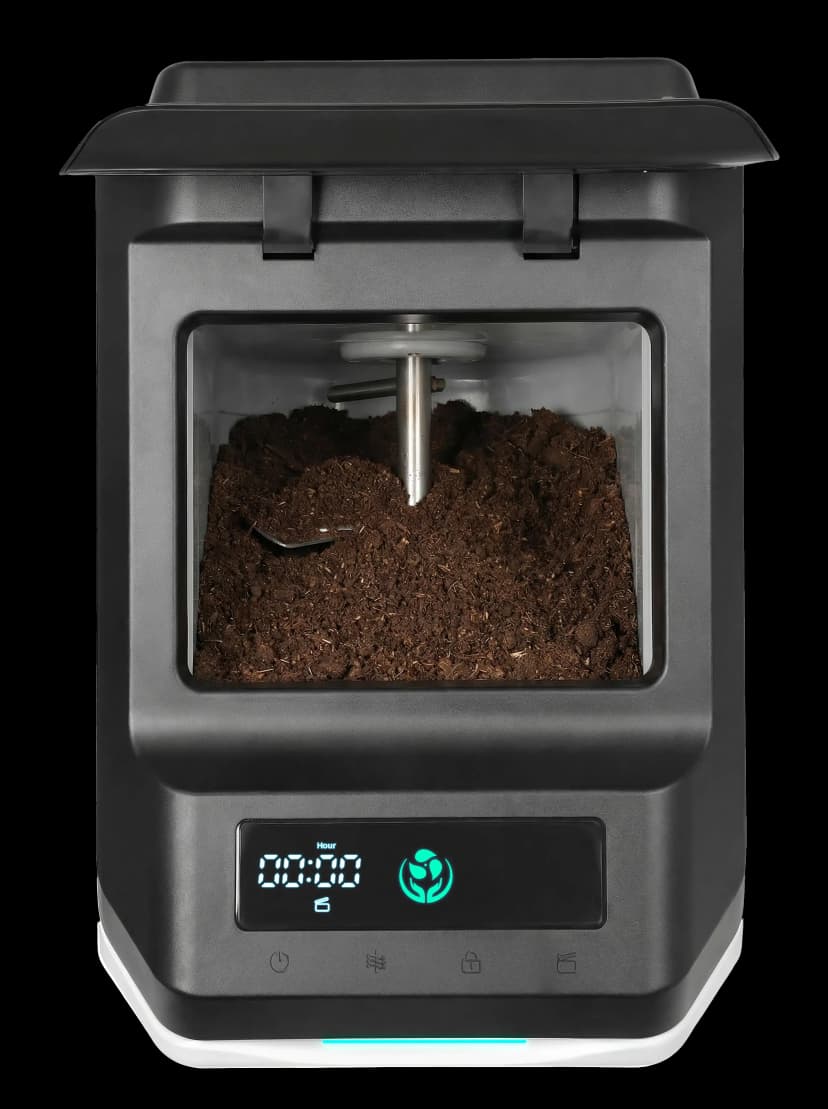
Build a continuous kitchen-to-soil routine at home.
Start Real Microbial Composting at Home
GEME Terra II and GEME Pro help households process suitable kitchen food waste through managed microbial activity and continuous feeding without routine replacement odor filters.
Let’s feed the earth.

Commenta
Questo sito è protetto da hCaptcha e applica le Norme sulla privacy e i Termini di servizio di hCaptcha.